

Borbonica History Schedule Tickets Location | Authorizations
The Galleria Borbonica, the Bourbon Tunnel in Naples, Italy
The Galleria Borbonica is a historic tunnel dug in 1853 on the orders of King Ferdinand II of Bourbon.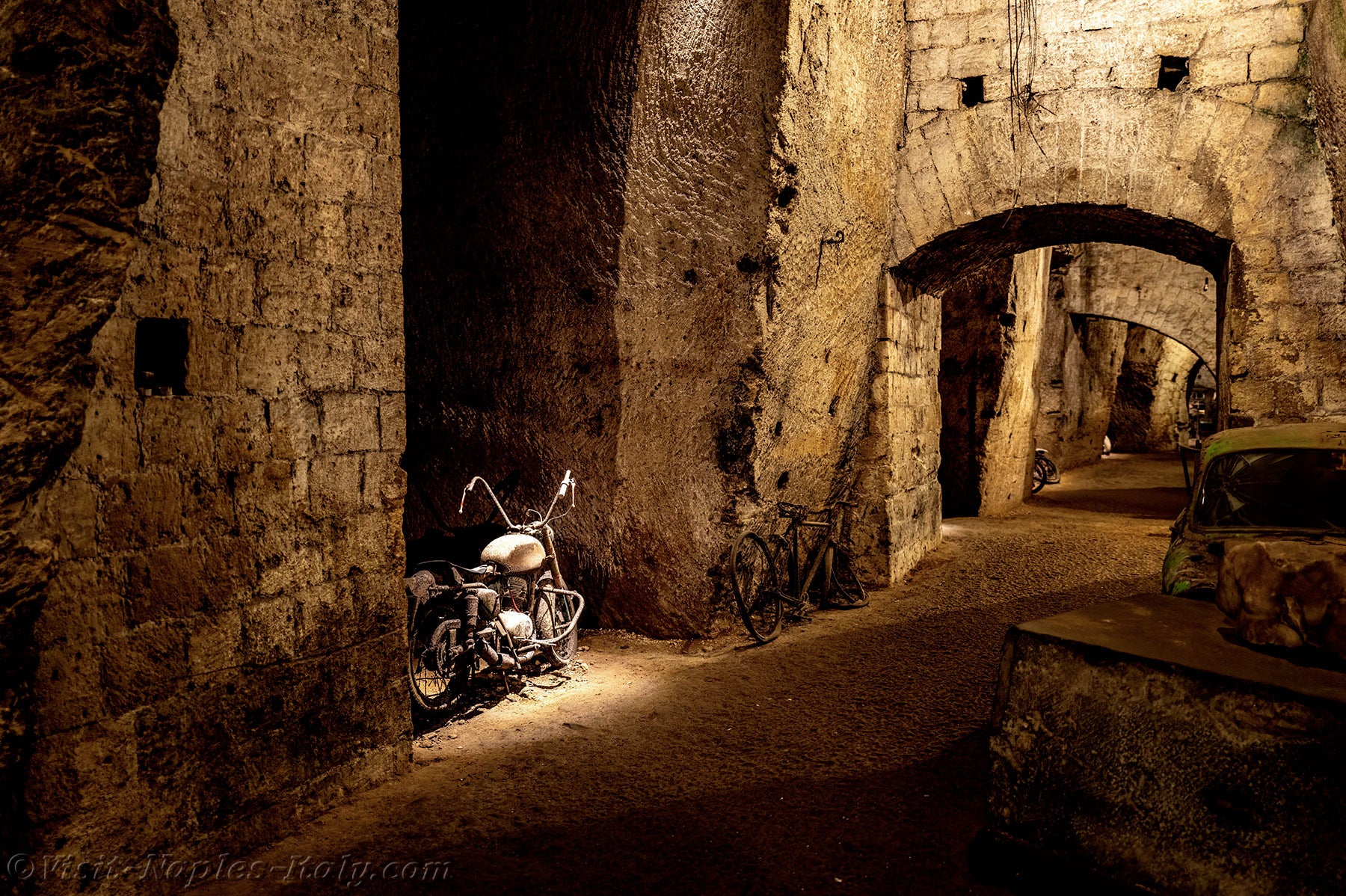
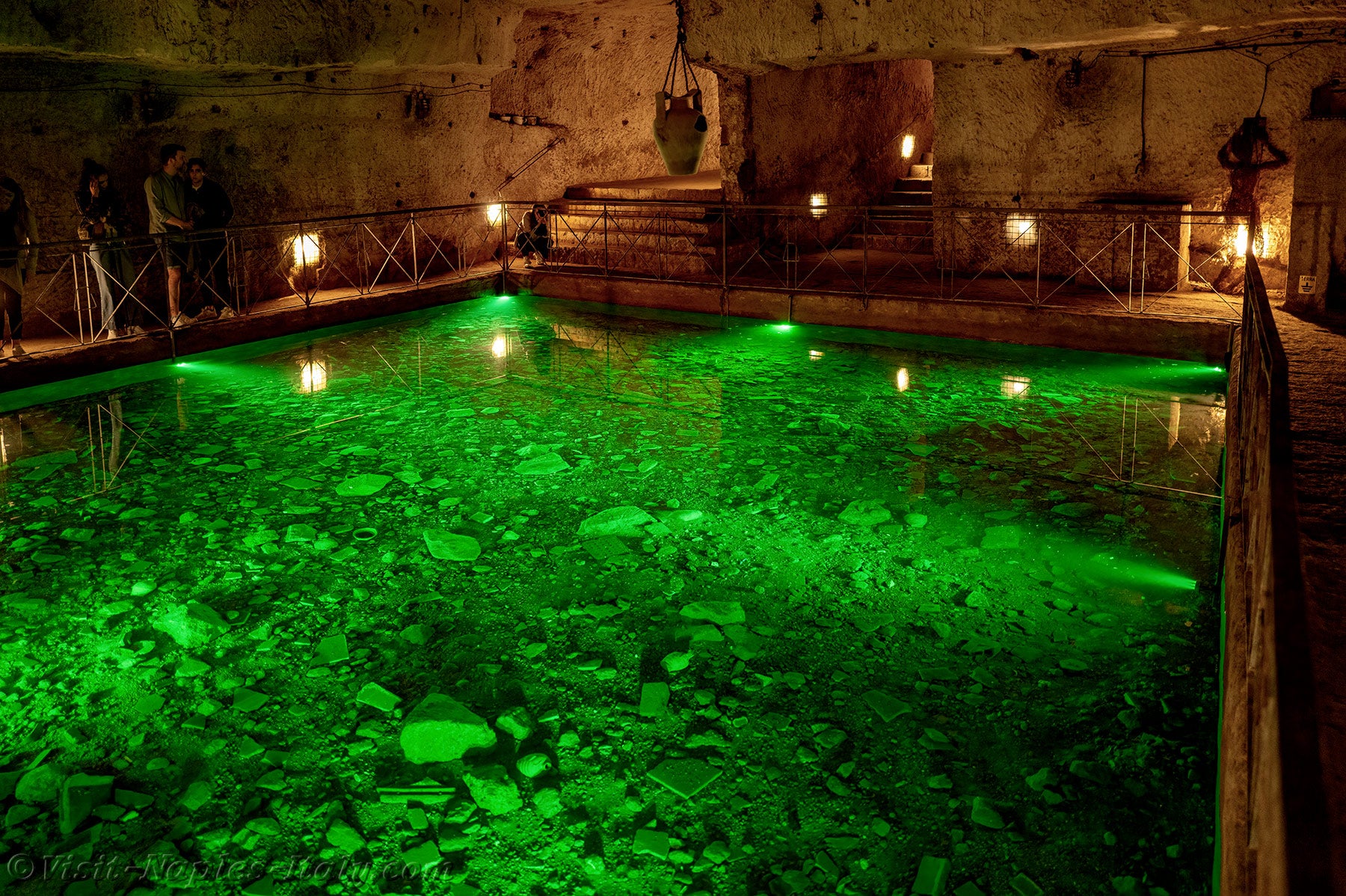
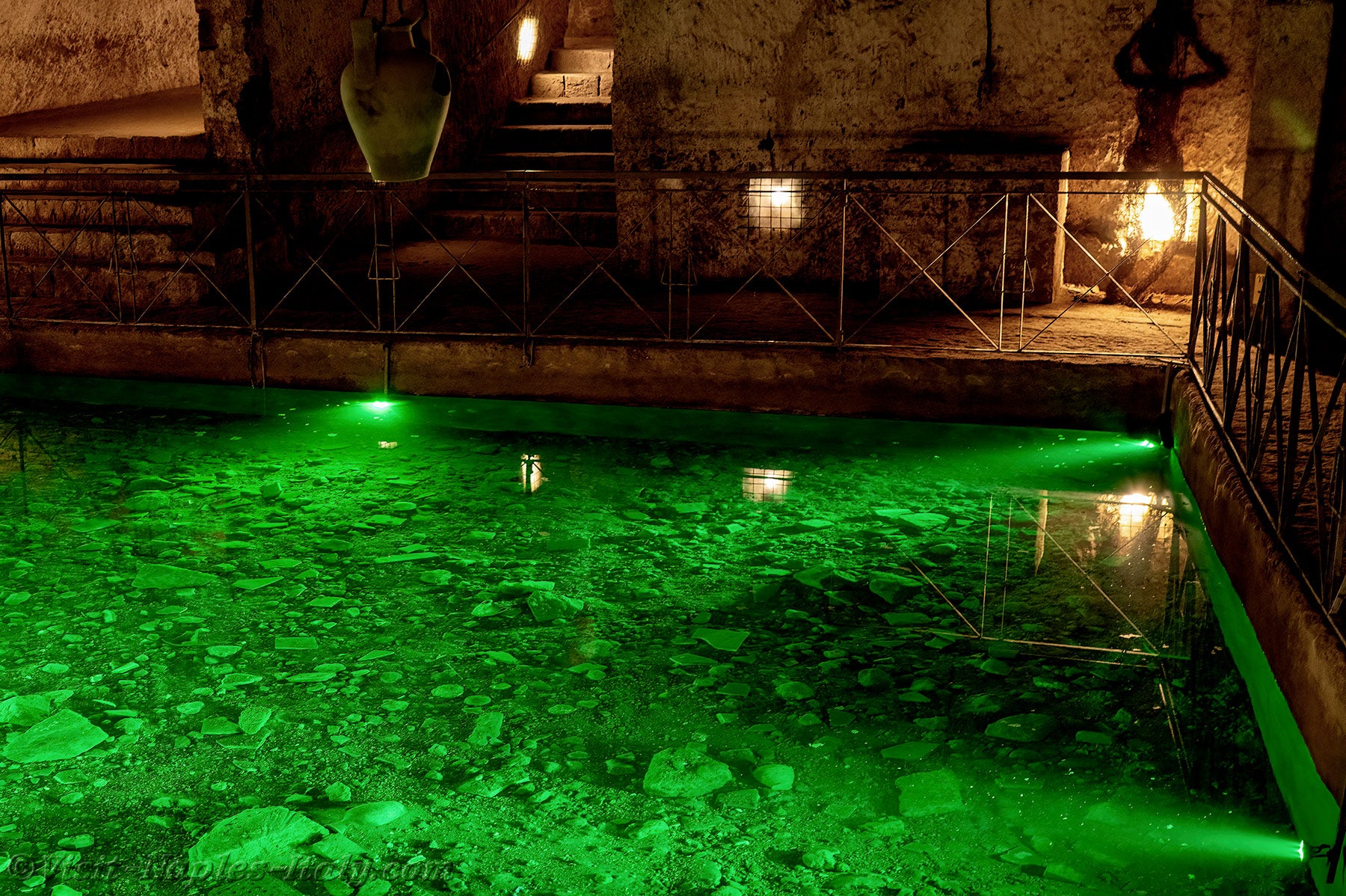
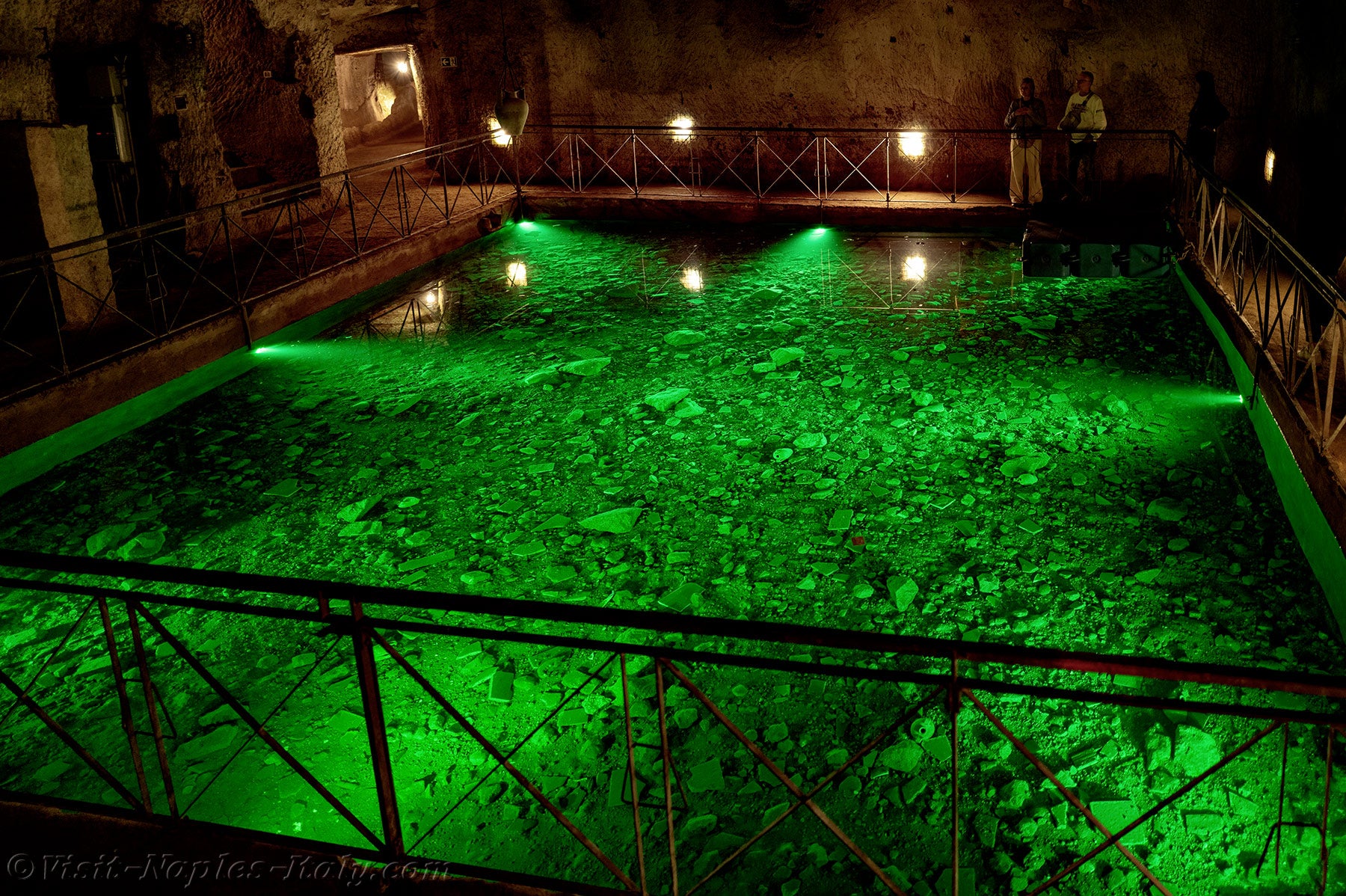
The Galeria Borbonica, Bourbon Tunnel The appeal of a visit here goes far beyond this historical reminder, as the galleries connected to the tunnel also pass through sections of the ancient Naples aqueduct where there are still water cisterns that once supplied the palaces situated on Mount Pizzofalcone, beneath which the Borbonica Gallery was dug.
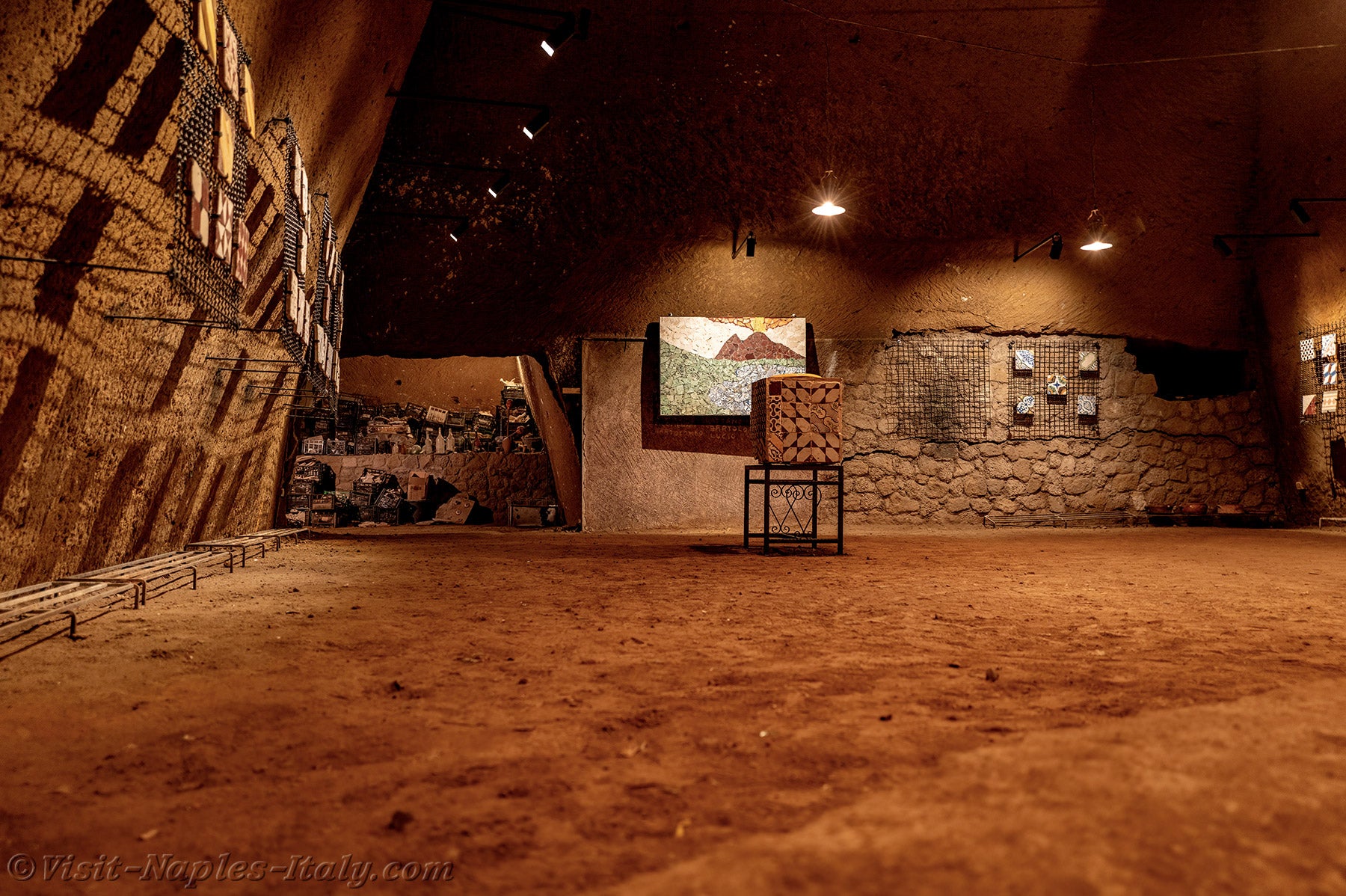
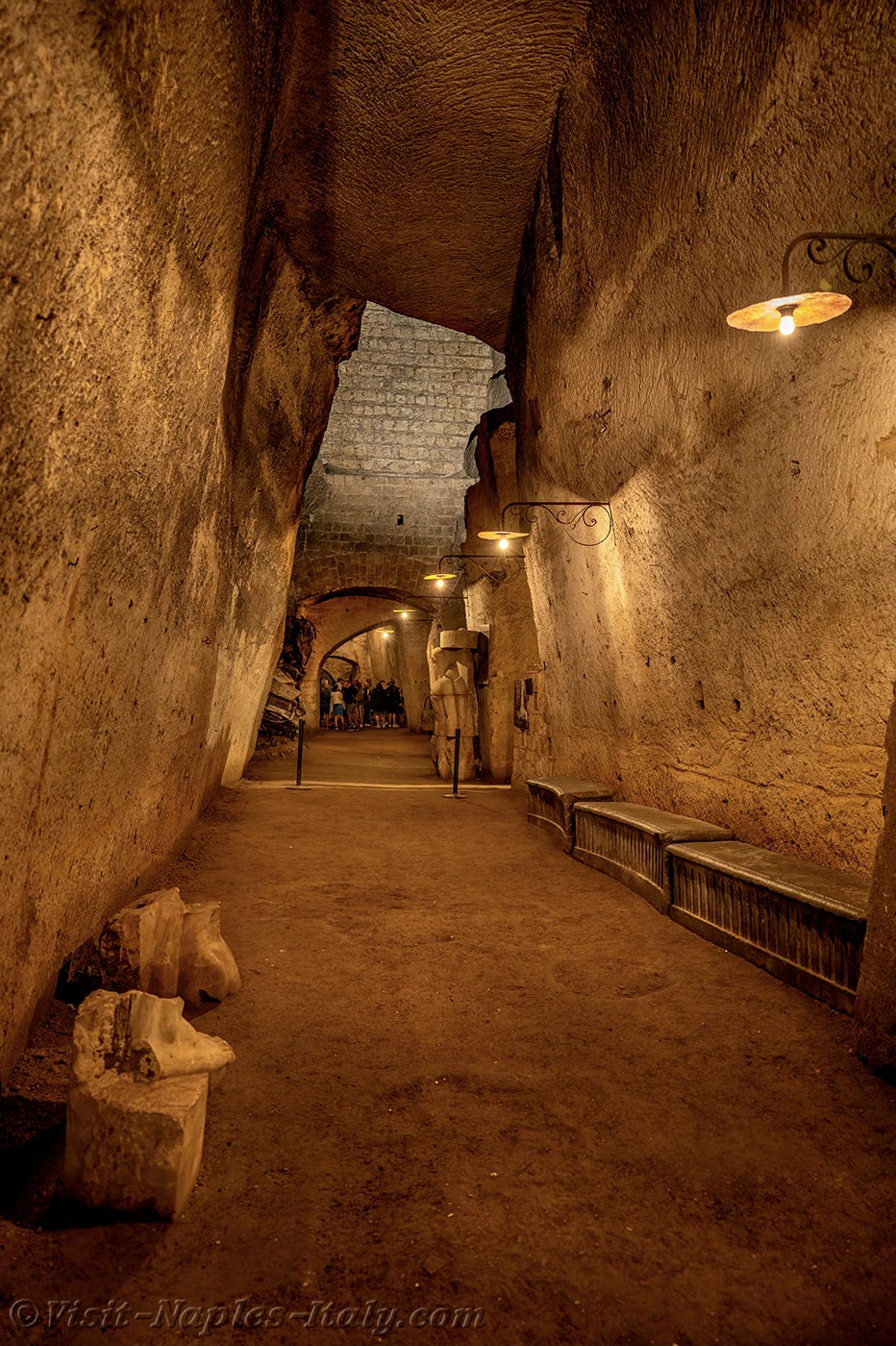
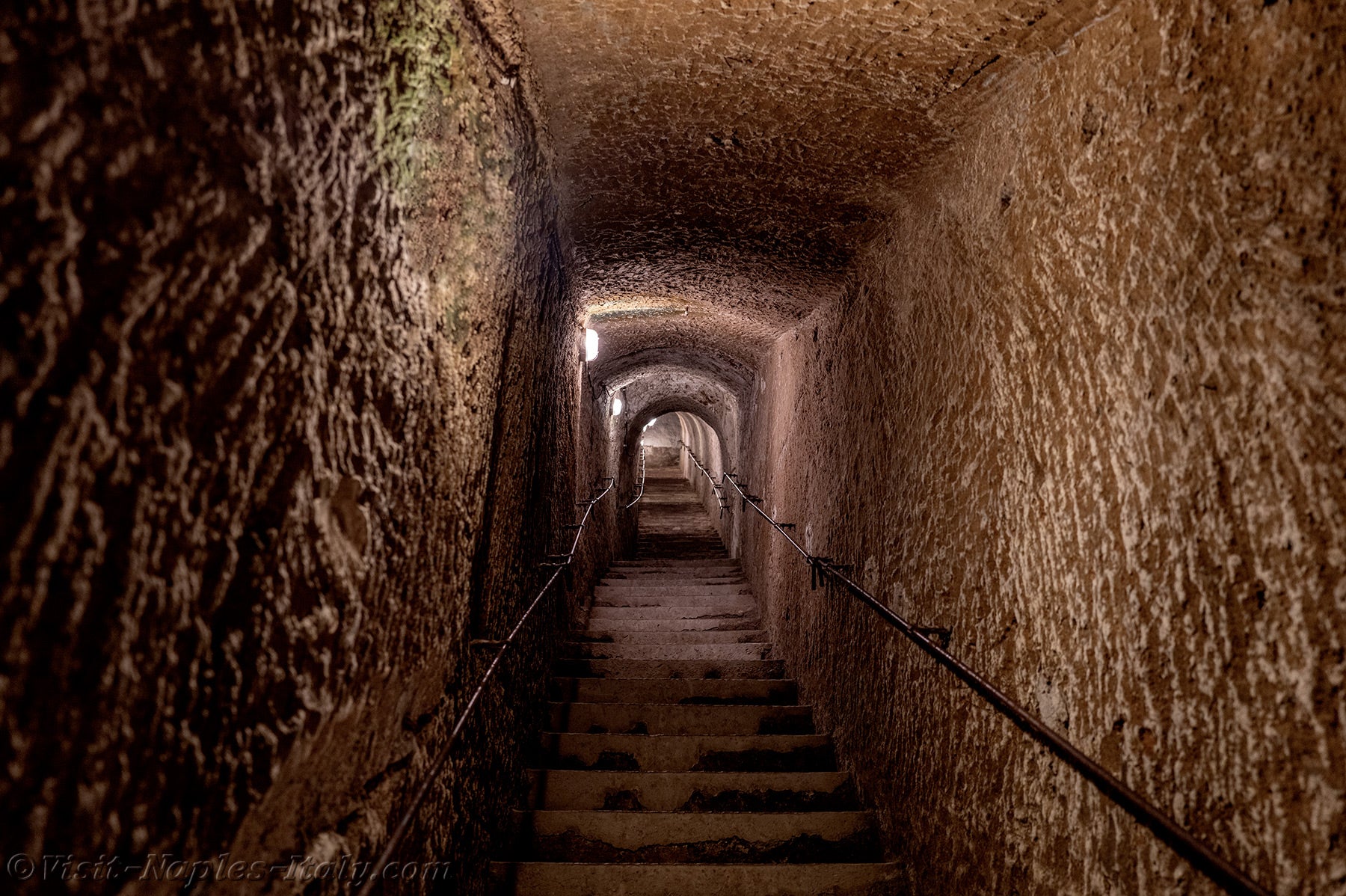
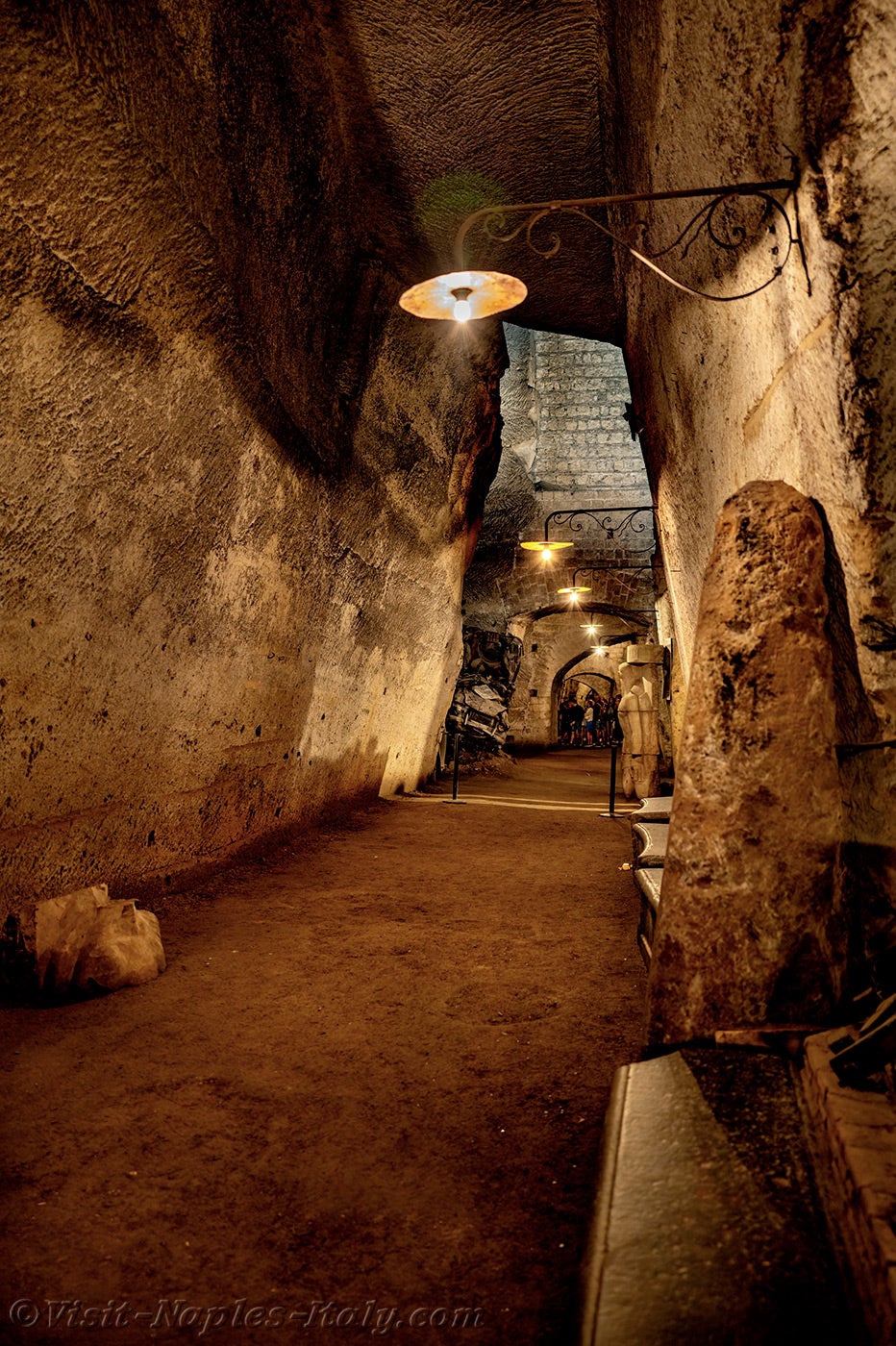
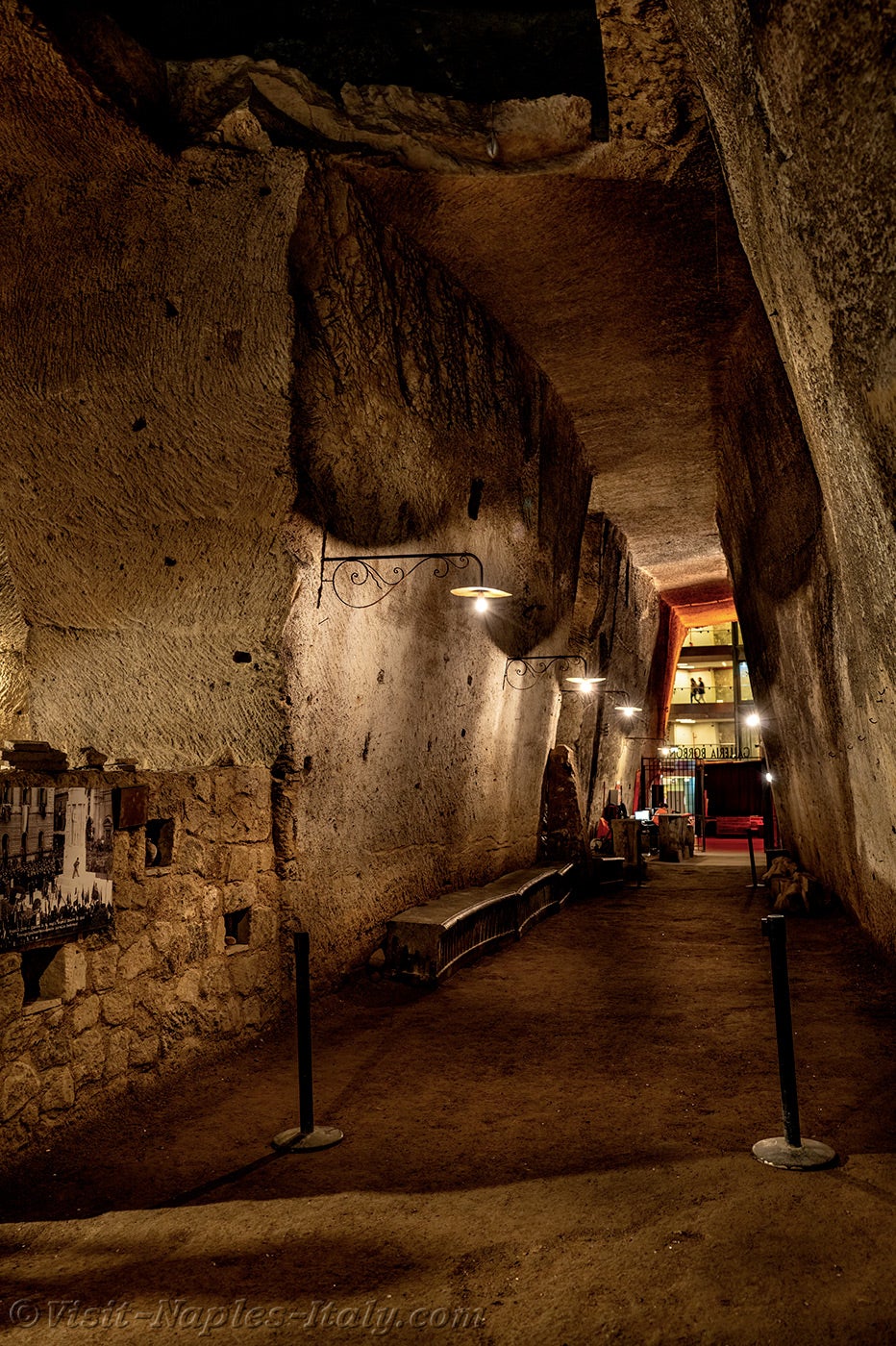
Upon entering the gallery, one is struck by the imposing size of the chambers that open up before us, all hewn with pickaxes from the rock of Naples.
You feel very small when visiting the most imposing sections, beneath their twelve-metre-high ceiling!
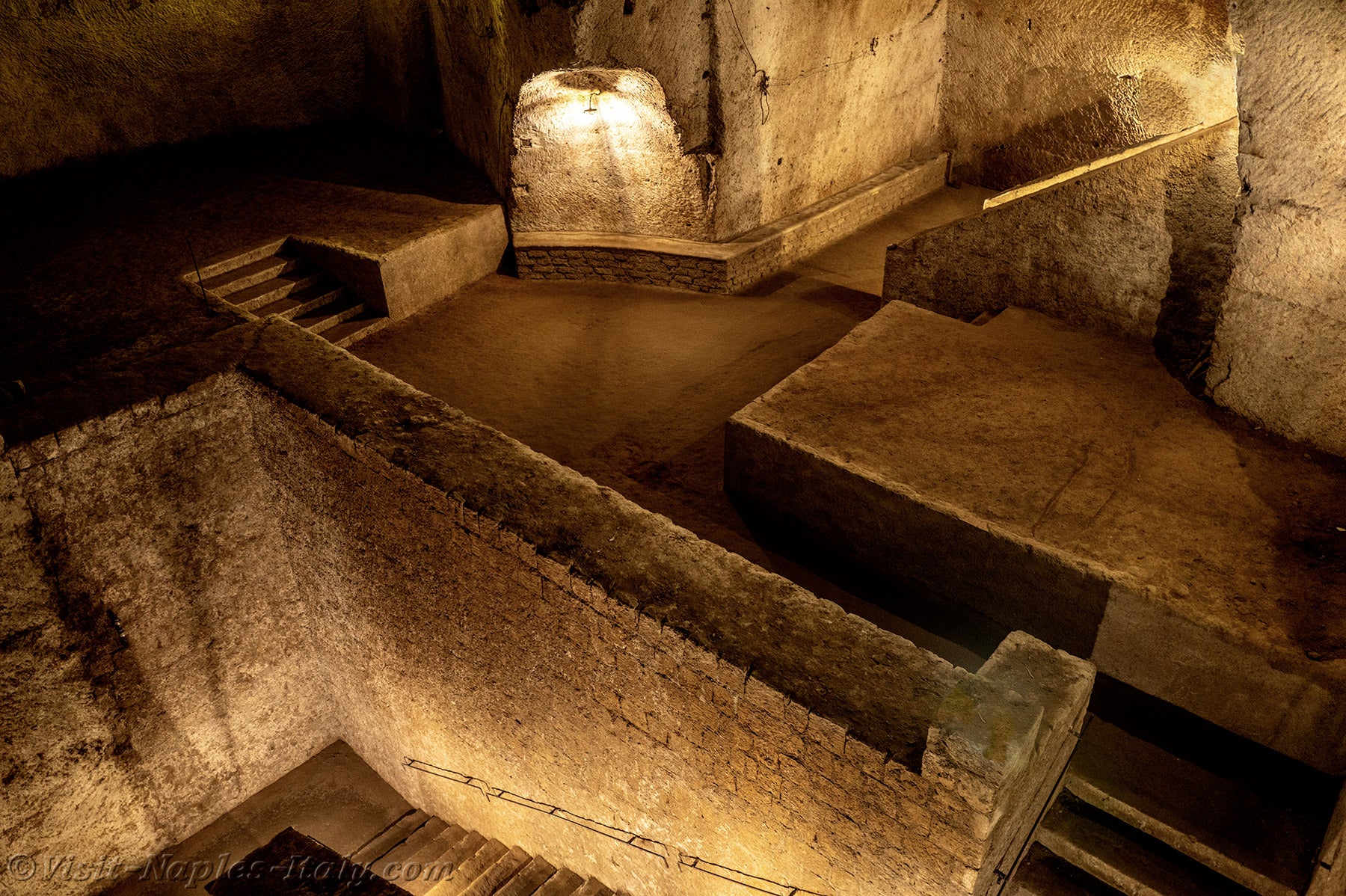
The Galeria Borbonica, Bourbon Tunnel The association that has brought this gem of Naples’ history to the fore has created guided tours that wind through vast chambers developed over the centuries, and pass by the ancient water cisterns which are beautifully lit.
We are underground, and yet we feel at ease here; everything is perfectly organised and the quality of the guides who lead tours of the galleries is excellent: they are welcoming and know how to immerse us in the history of this unique place.
Just one regret: having to leave the amazing Borbonica Gallery after our visit!
The History of the Borbonica Gallery
The origin of the Borbonica Gallery is political.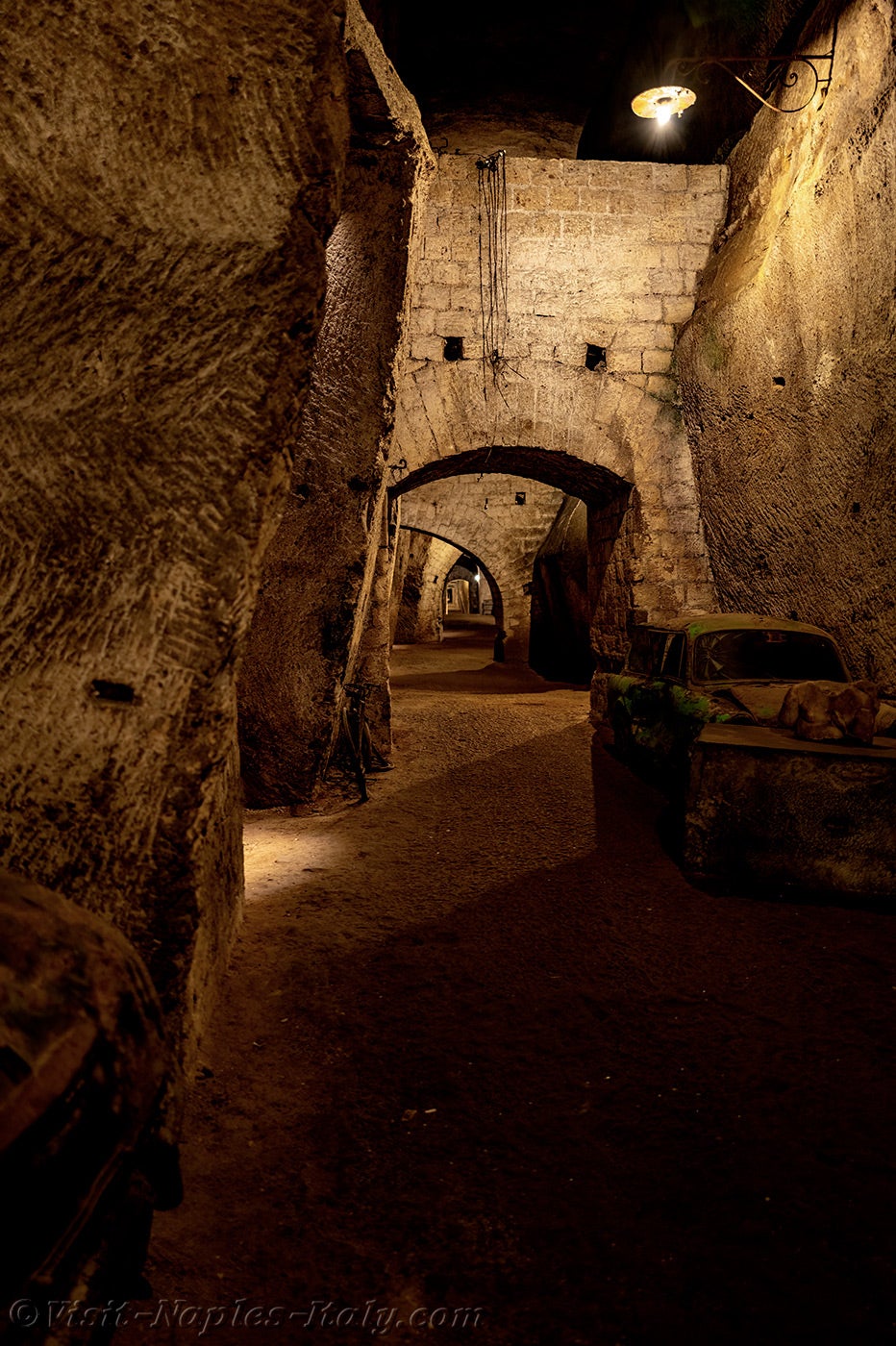
The Galeria Borbonica It all began in February 1853, when King Ferdinand II of Bourbon asked the architect Enrico Alvino to dig a tunnel, as he feared a repeat of the popular uprisings that had taken place in 1848.
The planned tunnel was intended to allow him to flee the Royal Palace in Naples in the event of riots, whilst being wide enough for his cavalry squadrons to pass through it as well.
The entrance to the tunnel was to be located on what is now Piazza del Plebiscito, behind the columns of the Basilica of San Francesco di Paola, which stands opposite the Royal Palace the exit was to lead to the barracks located on Via Pace (now Via Domenico Morelli), next to Piazza Vittoria.
This represented a distance of approximately 430 metres, with the tunnel running under Mount Pizzofalcone.
The Galeria Borbonica, Bourbon Tunnel Two parallel tunnels were planned, one leading towards the royal palace and the other leading away from it.
The interior of each of these tunnels was to measure 12 metres in height and width.
One can imagine the scale and cost of such an undertaking at that time, when workers had to dig with pickaxes.
Most of the tunnel was dug out of the tuff that makes up the greater part of the ground in Naples.
However, in some places the rock was harder.
The Galeria Borbonica, Bourbon Tunnel Finally, one had to take into account the water cisterns connected to the underground aqueducts that occupied this part of the city’s subsoil to supply water to the grand palaces.
Only one of the two planned tunnels was excavated: the one that started from Via Pace, now Via Domenico Morelli, before work was halted in 1855 due to insufficient funding and the numerous technical difficulties encountered as the tunnel was being dug.
The tunnel proved its worth during the Second World War by serving as a refuge for the Neapolitans during the bombing of the city.
The Galeria Borbonica, Bourbon Tunnel Between 5,000 and 10,000 Neapolitans took refuge there every time an air-raid warning was sounded.
To accommodate such a large number of people, additional work was carried out, including the installation of toilets and electricity, etc., to better accommodate the refugees.
After the war, the improvements made to the tunnel found a new purpose.
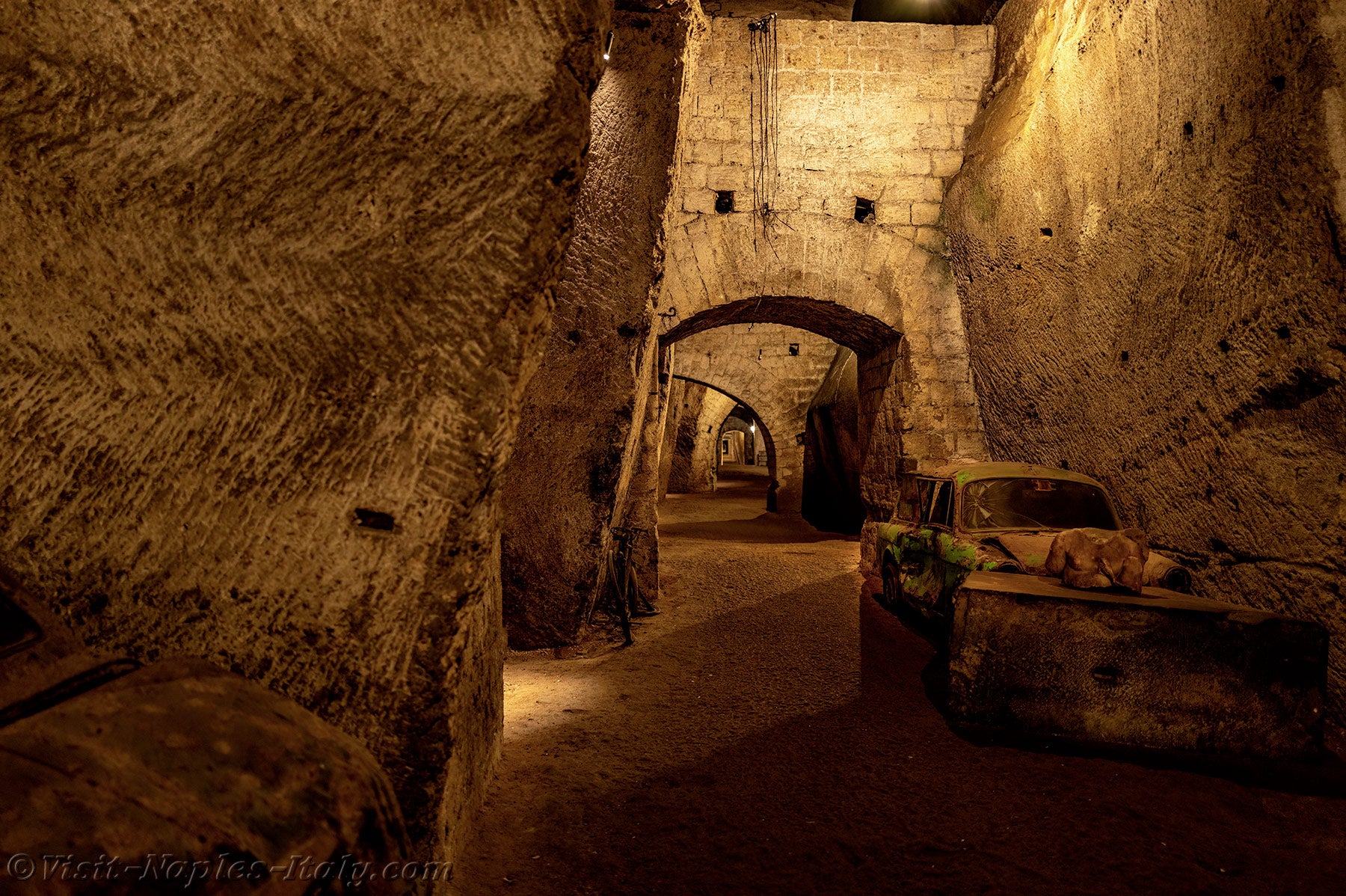
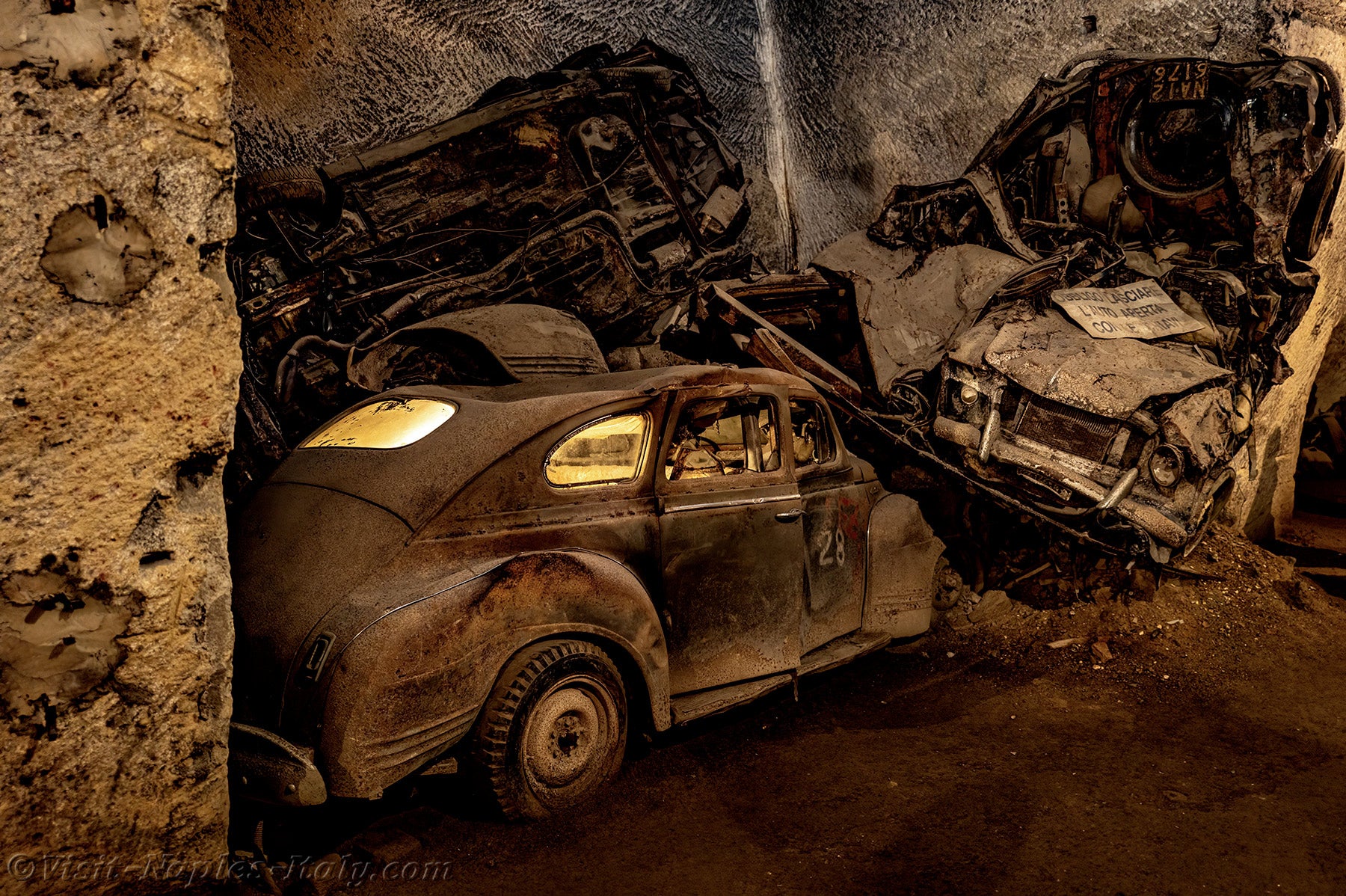
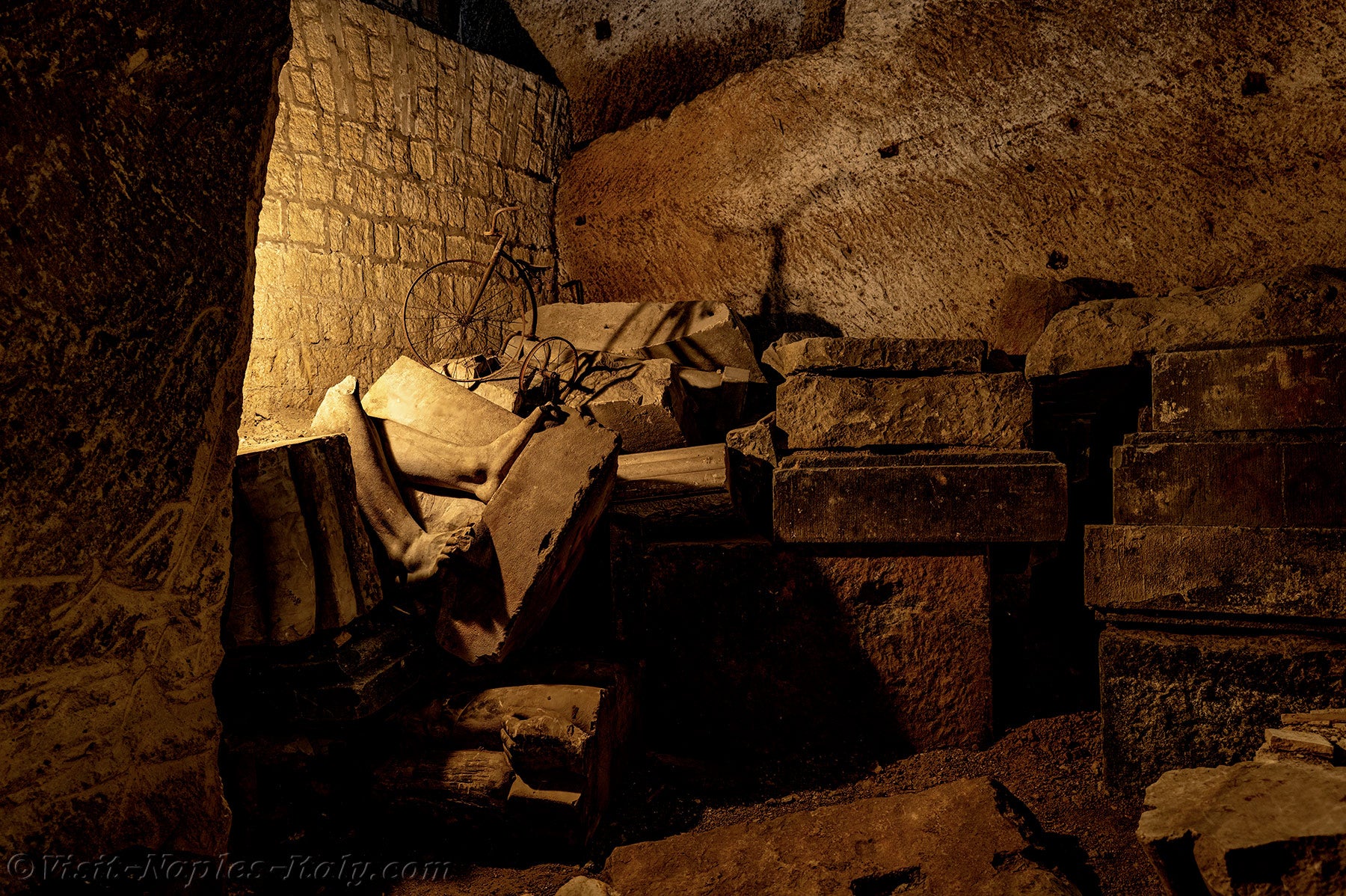
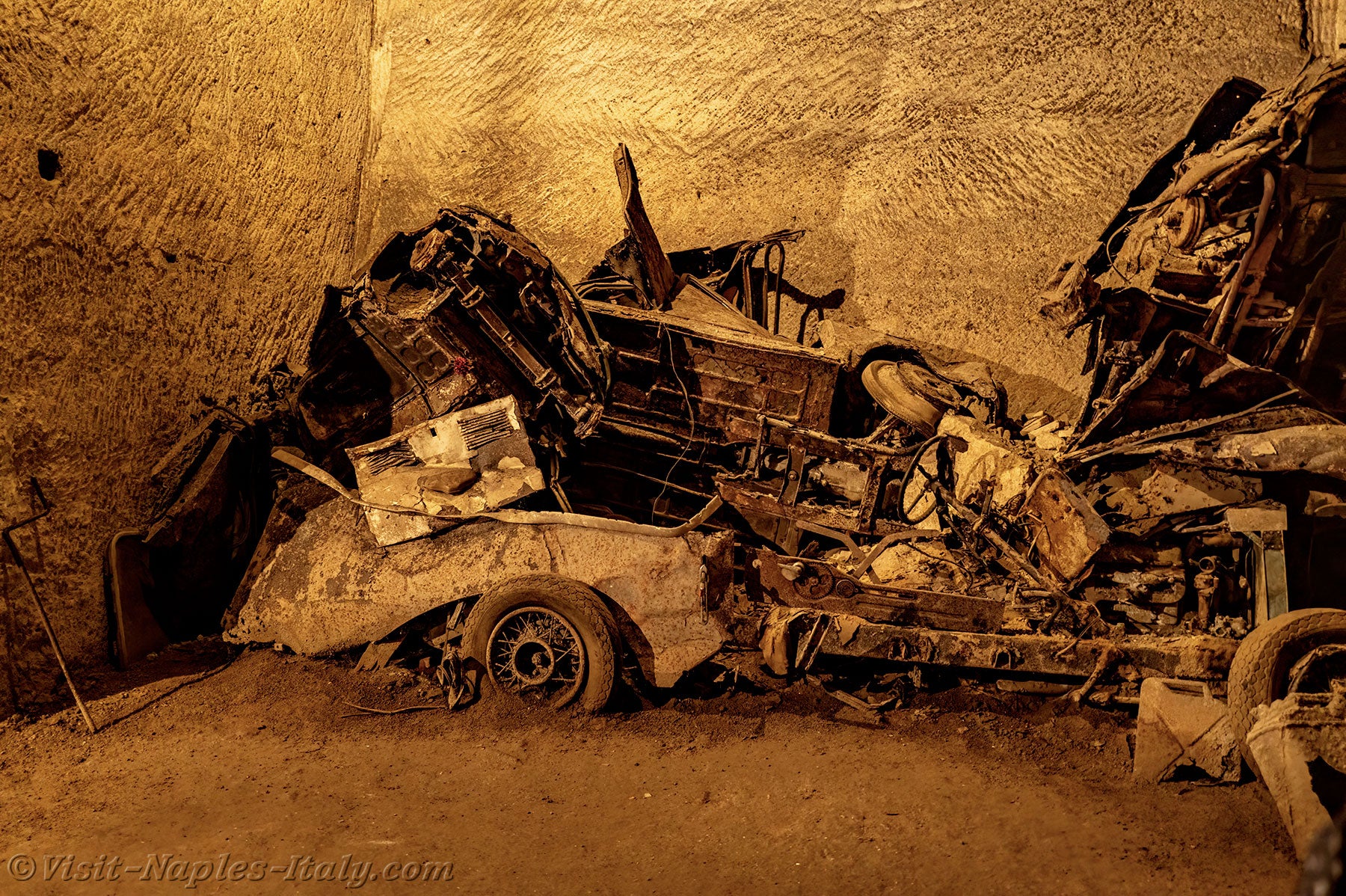
From the end of the war until the 1970s, the Borbonica tunnel served as a municipal impound: mainly for storing cars and motorbikes that had been impounded.
The Galeria Borbonica But, over the years, vehicles that were never claimed by their owners—who were unable or unwilling to pay the fine—began to pile up.
To solve the problem of these abandoned cars which were taking up more and more space, a simple solution was found: to stack them up one on top of the other as they accumulated.
It was cheaper than removing these wrecks from the tunnel, for which a landfill site would have had to be found in Naples or the surrounding area.
Several projects, each more outlandish than the last, were proposed to give the tunnel a new lease of life.
One of them involved turning the tunnel into a horror-themed water park, visited aboard boat-trains.
The Galeria Borbonica, Bourbon Tunnel Another plan involved building a crystal structure by cutting through the rock down to street level in order to illuminate the tunnel via a glass tower.
Finally, and in a far more realistic manner, an underground car park was built at the tunnel entrance; this car park still exists today.
But the story of the Borbonica Tunnel was not over yet.
In 2007, geologists who were taking samples in the tunnel discovered a passage that opened onto a large cavity.
The Galeria Borbonica, Bourbon Tunnel It was discovered that this passage was used in the 17th century by the well-diggers responsible for maintaining the underground aqueduct that ran through there.
This discovery demonstrated the historical importance of the tunnel which had restored access to the cisterns built between 1627 and 1629 to be connected to the ancient aqueduct of Naples.
This led to the creation of the cultural association “Borbonica Sotterranea”, which, after many years of effort, now allows us to visit the Borbonica tunnel to our great delight.
Borbonica History Schedule Tickets Location | Authorizations
Back to Top of Page