

Catacombs Art History Schedule Tickets Location | Authorizations
Art History History Catacombs | Frescoes
The Catacombs of San Gennaro in Naples, Italy
The origins of the catacombs: the crypt of San Agrippino
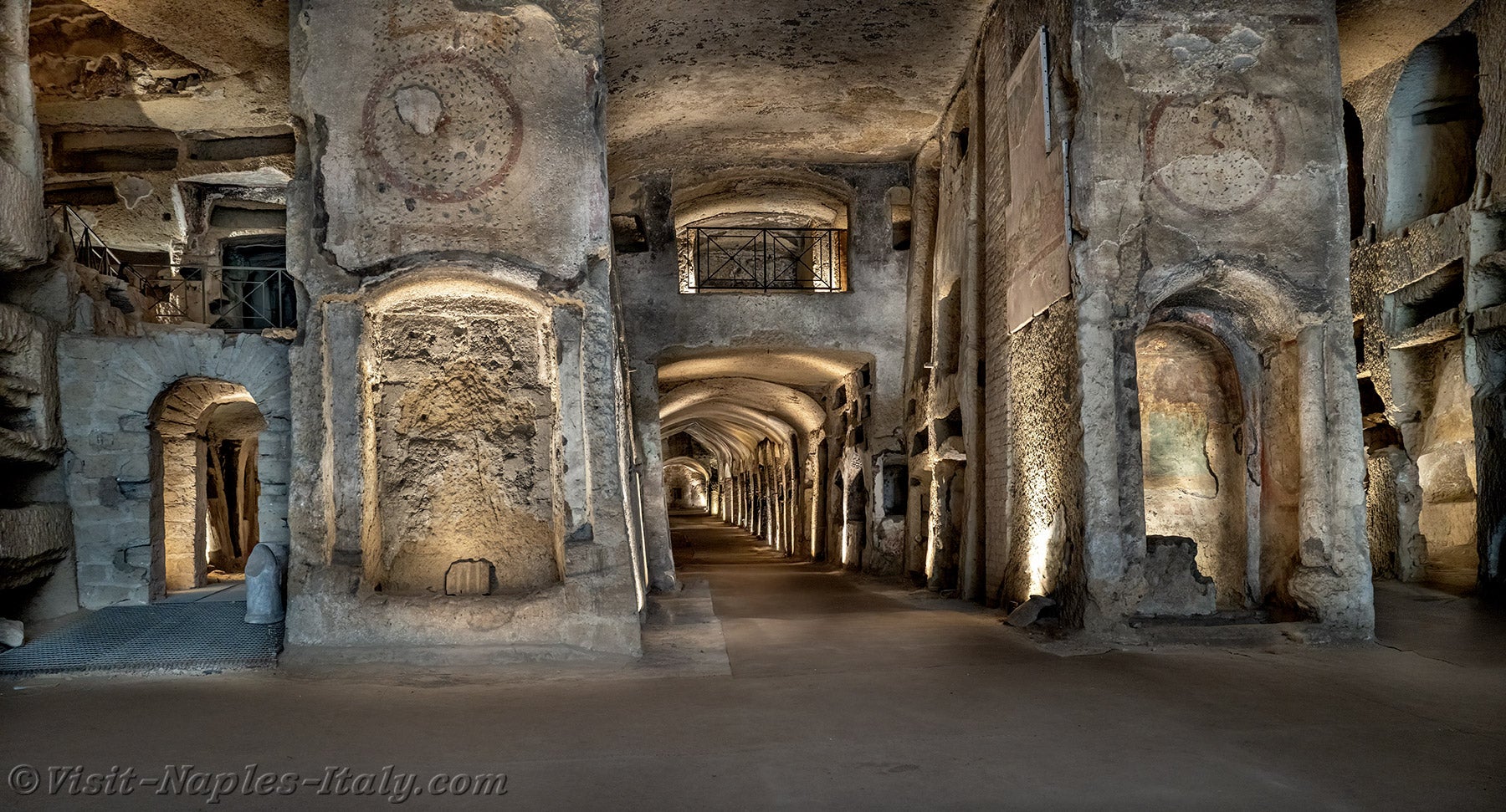
Lower vestibule of the catacombs Before the 3rd century, there were only cemeteries in Naples; there were no underground galleries or cavities in which bodies could have been buried.
The history of the Catacombs of Naples dates back to the 3rd century, when the body of Saint Agrippino, Bishop of Naples, was laid to rest in a noble tomb in a crypt located on the site of the present-day catacombs.
The Neapolitans began to venerate the tomb of this saint, who had a reputation for continuing to perform miracles after his death.
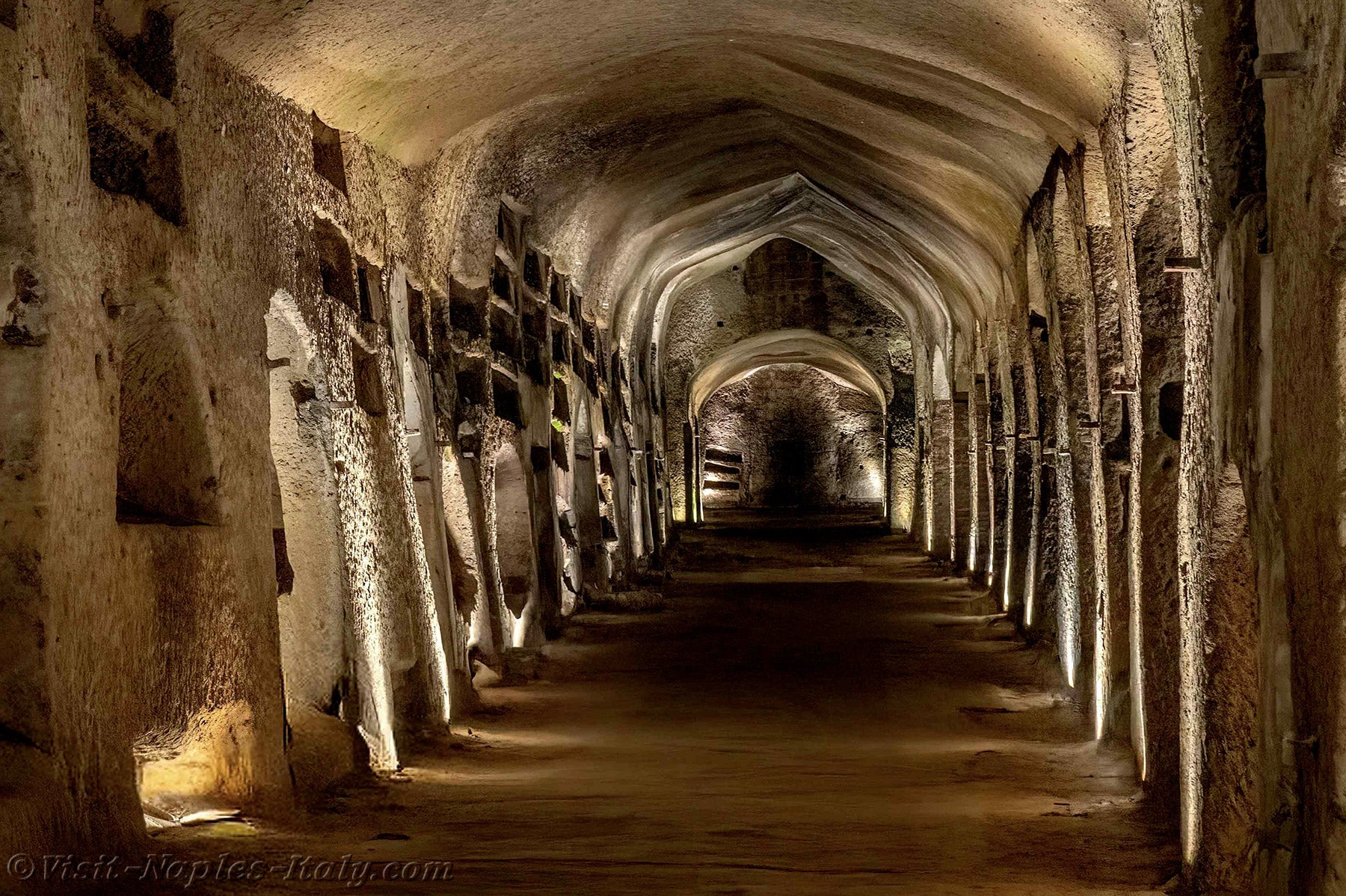
Lower vestibule of the catacombs The miracles performed by Saint Agrippino meant that many Neapolitans wished to be buried alongside him, and work began on digging the first tombs and galleries around his grave.
The most obvious of these miracles was therefore giving rise to these magnificent catacombs which we know today as the Catacombs of San Gennaro.
The crypts of San Agrippino and San Gennaro gave rise to the Catacombs
The fame of the crypt of San Agrippino, which continued to grow thanks to the religious fervour of the Neapolitans, increased further at the beginning of the 4th century.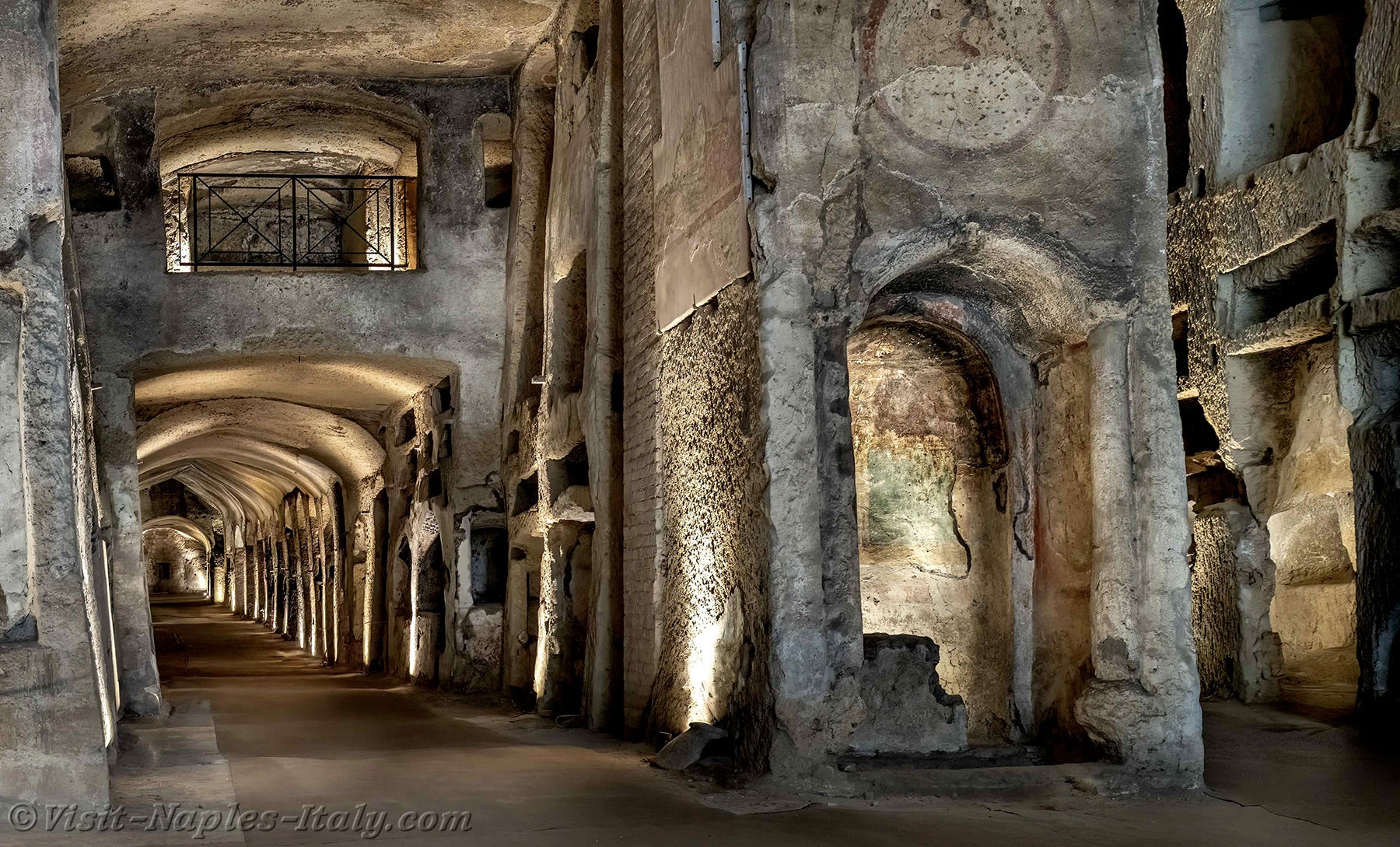
Lower vestibule of the catacombs Between the years 413 and 431, the then Bishop of Naples, Saint Zosimus, had the body of the martyr Saint Januarius transferred from Agnana, where it had been laid to rest, to be buried alongside Saint Agrippinus.
Saint Gennaro, born in 272, is also known as Saint Januarius of Benevento; he was the Bishop of Rome and was martyred alongside his companions on 19 September 305.
The religious fervour of the Neapolitans for the two saints who were still performing miracles from their tombs was such that it was necessary to enlarge what were then merely crypts to turn them into proper catacombs with new galleries to accommodate the bishops, dukes and other illustrious figures who all wished to be buried there.
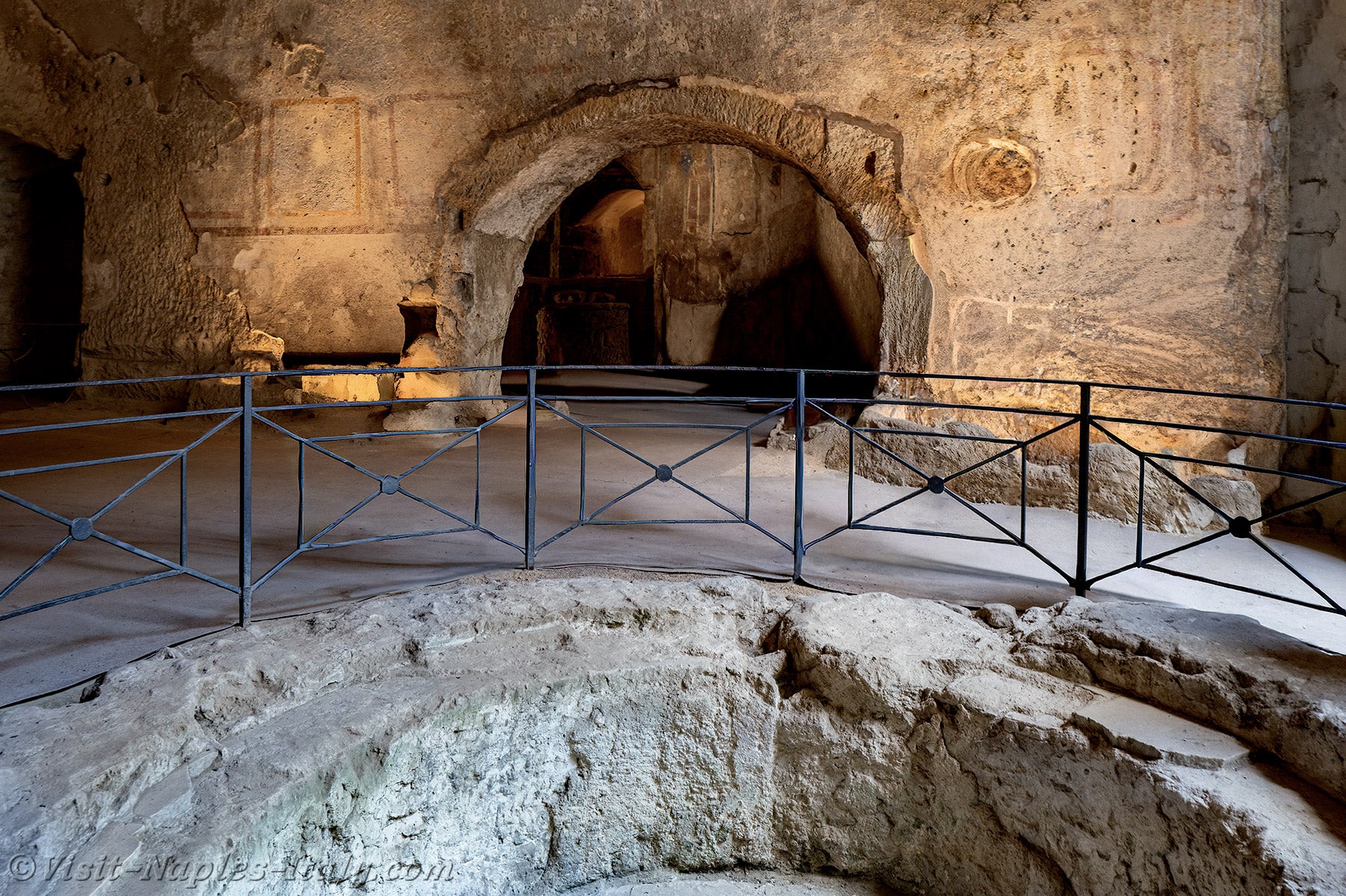
The baptismal font of Paul II Between 762 and 766, Byzantine iconoclasm—which prohibited the veneration of images—prevailed in Naples, to the extent that Bishop Paul II had taken refuge within the catacombs of San Gennaro to celebrate Mass, initiation ceremonies for catechumens and baptisms.
The catacombs thus became the seat of the emergency episcopal palace of Bishop Paul II.
When visiting the catacombs, one can still see the baptismal font of Paul II, built in 762, the interior of which was originally covered in marble.
The Catacombs of San Gennaro: the most sacred and revered place in Naples
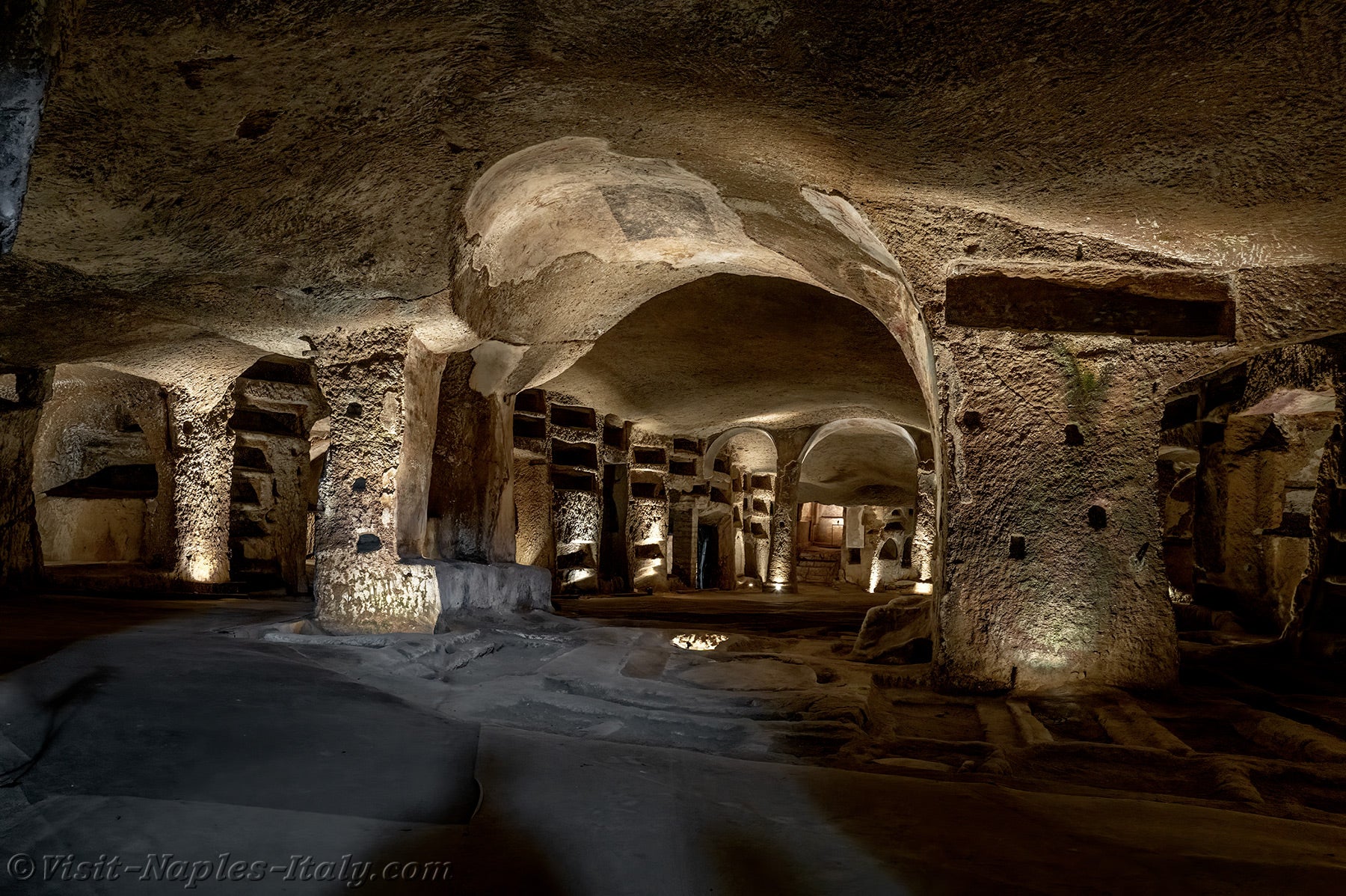
Upper-level basilica And so, within a short space of time, the catacombs became the most sacred and revered place in Naples, a true place of pilgrimage.
So much so that it was then decided to dig further to create an underground basilica where Mass could be said near the many galleries already leading to the new tombs.
The Capodimonte hill is made up of Neapolitan yellow tuff, a relatively soft volcanic rock that is easy to dig through.
To carry out such work properly, specialised workers from the “Fossore” guild in Naples were called upon; they were responsible for digging the new galleries and tombs as and when required.
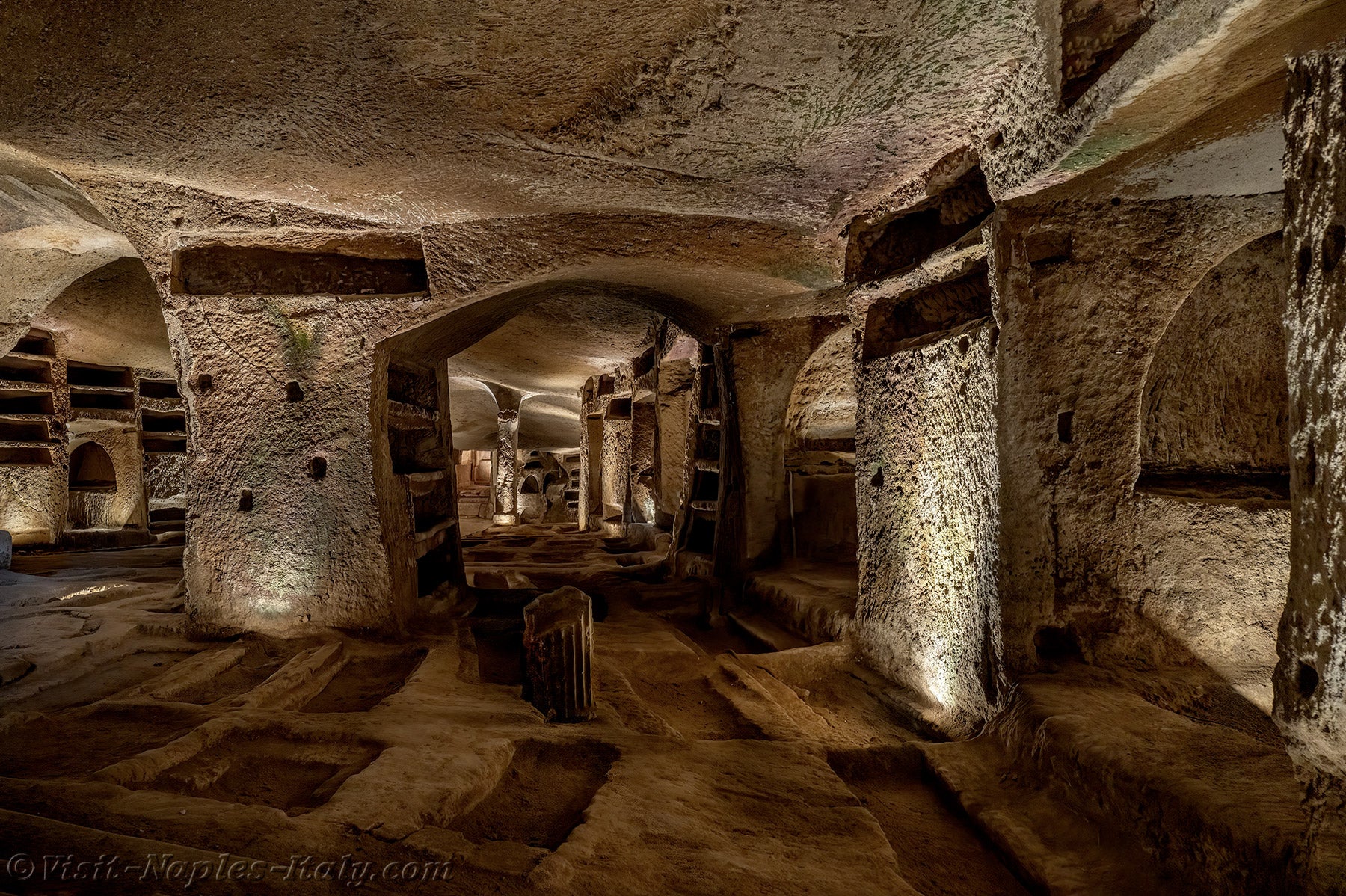
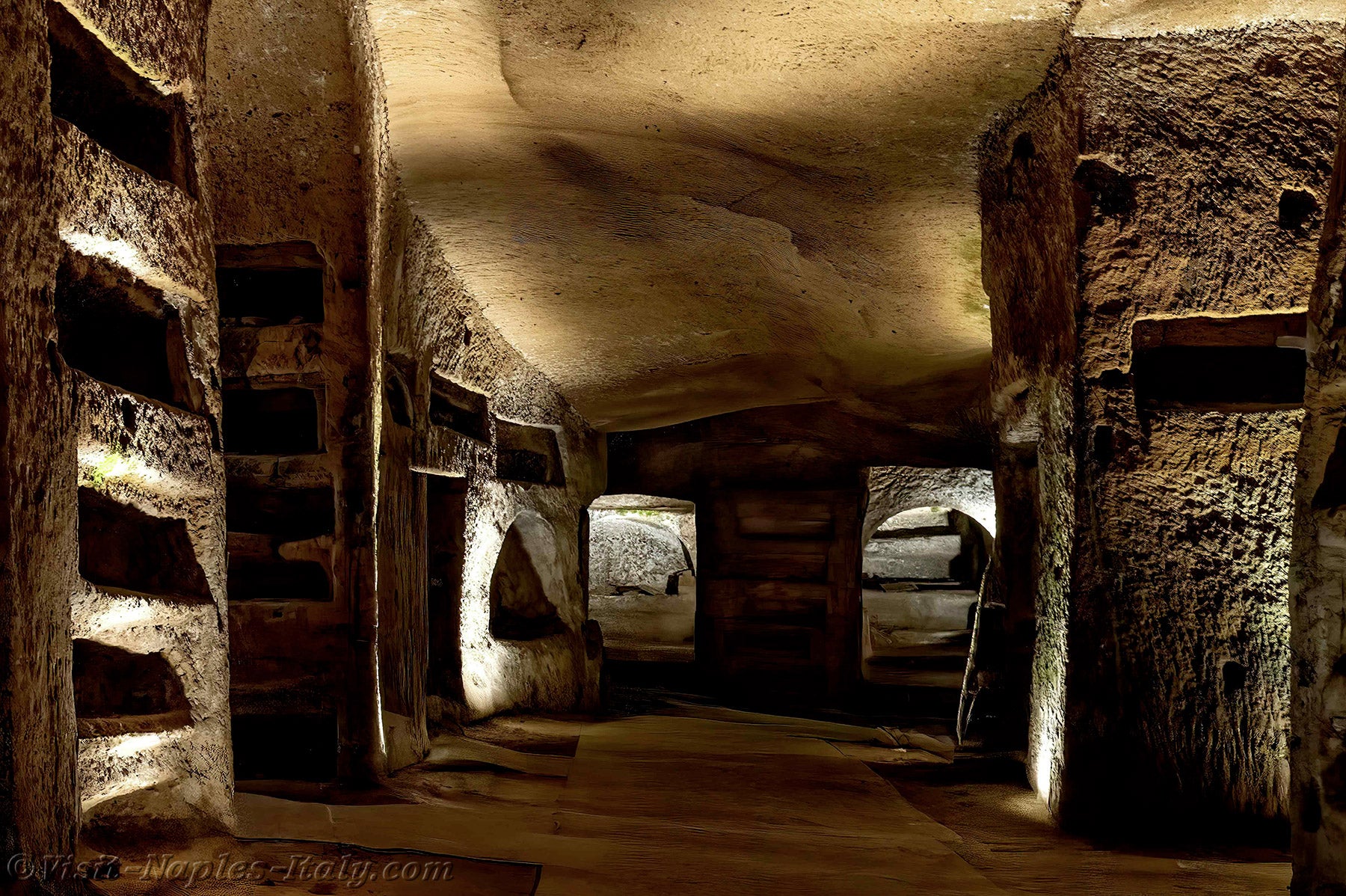
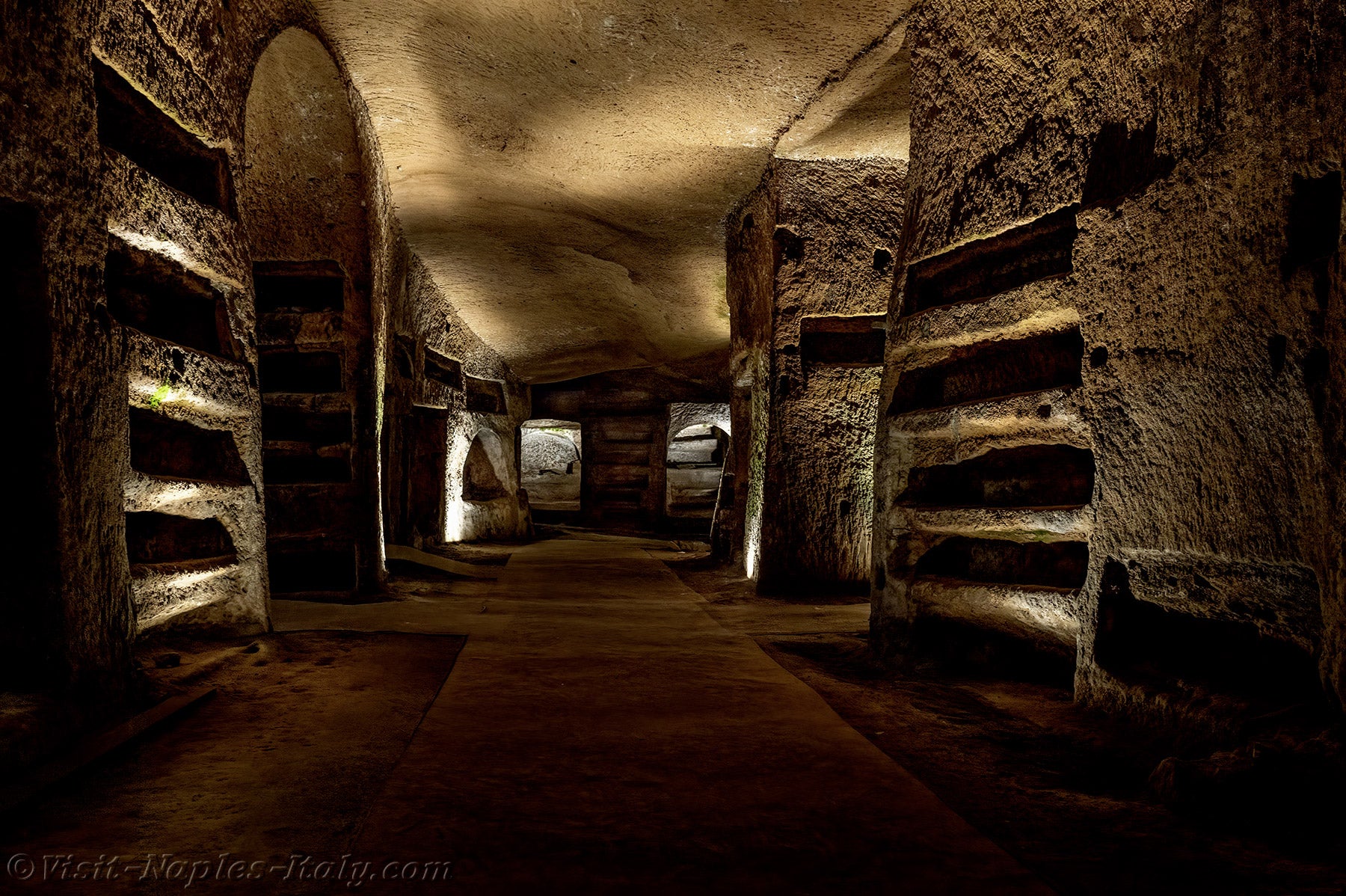
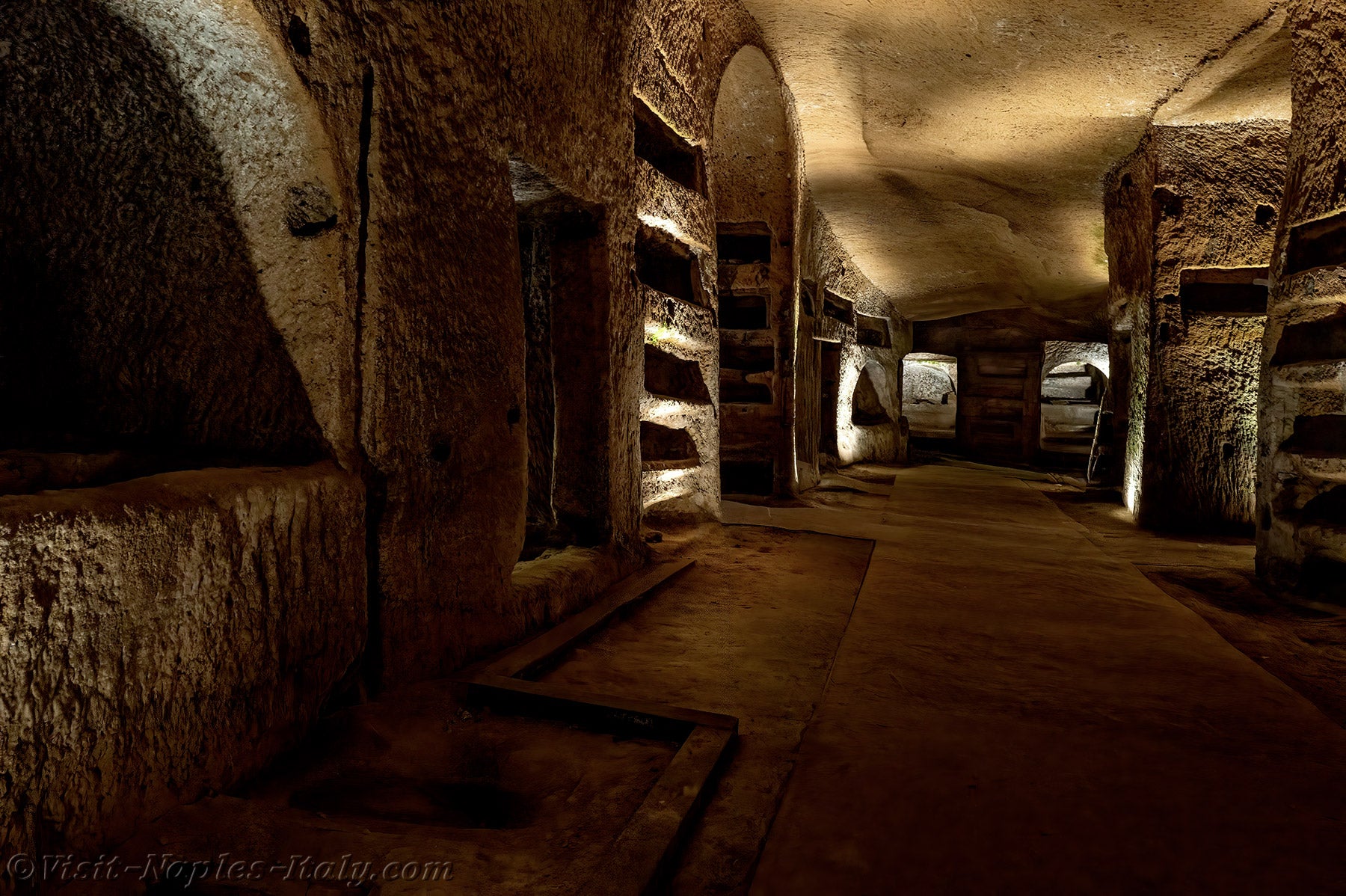
Upper-level basilica The Catacombs of San Gennaro are not merely a series of galleries and niches dug one after the other, for the “Fossore” made use of the malleability and softness of Naples’ yellow tuff to create volumes, suites of arches, and rows of galleries worthy of rivalling religious architecture.
These impressive catacombs of San Gennaro that can be admired today are the work of this ancient guild of the “Fossore”.
The decline of the Catacombs of San Gennaro
But the heyday of the Catacombs of San Gennaro did not last long.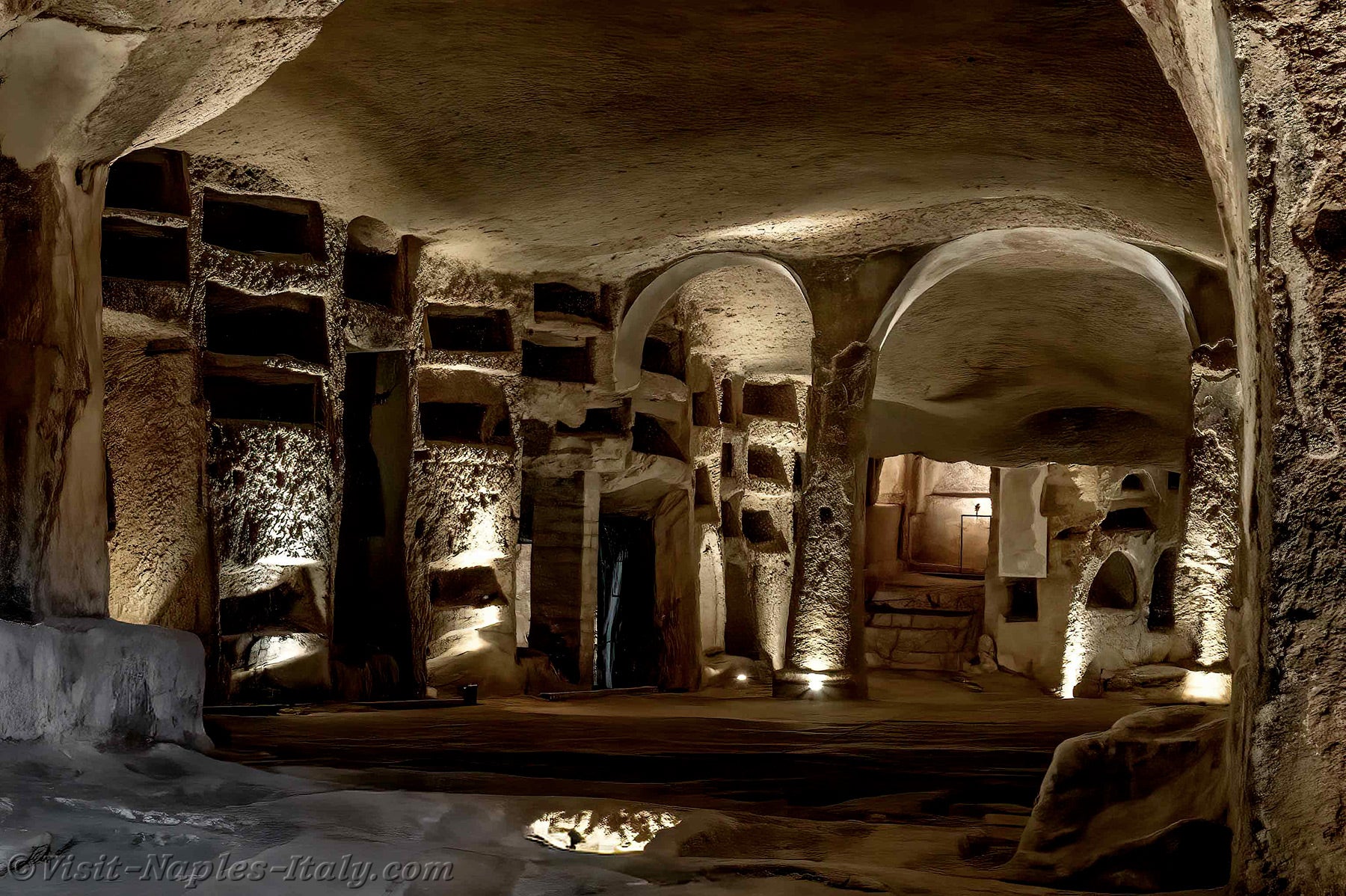
Upper-level basilica Four centuries later, in 831, the Lombard prince of Benevento Sicone I laid siege to the city of Naples and carried off the body of Saint Gennaro in order to take it to his home in Benevento, which was also Saint Gennaro’s city of origin: January of Benevento.
After the removal of Saint Gennaro’s body, the Bishop of Naples, Saint John IV, wished to protect all the relics that were in the catacombs by transferring them to other locations, mainly to Naples Cathedral.
However, he himself and Saint Anastasius, his successor, were still buried in the catacombs.
This marked the beginning of the abandonment and gradual ruin of the catacombs of San Gennaro, which fell victim to vandalism and looting.
There are no longer any bodies in the Catacombs of San Gennaro
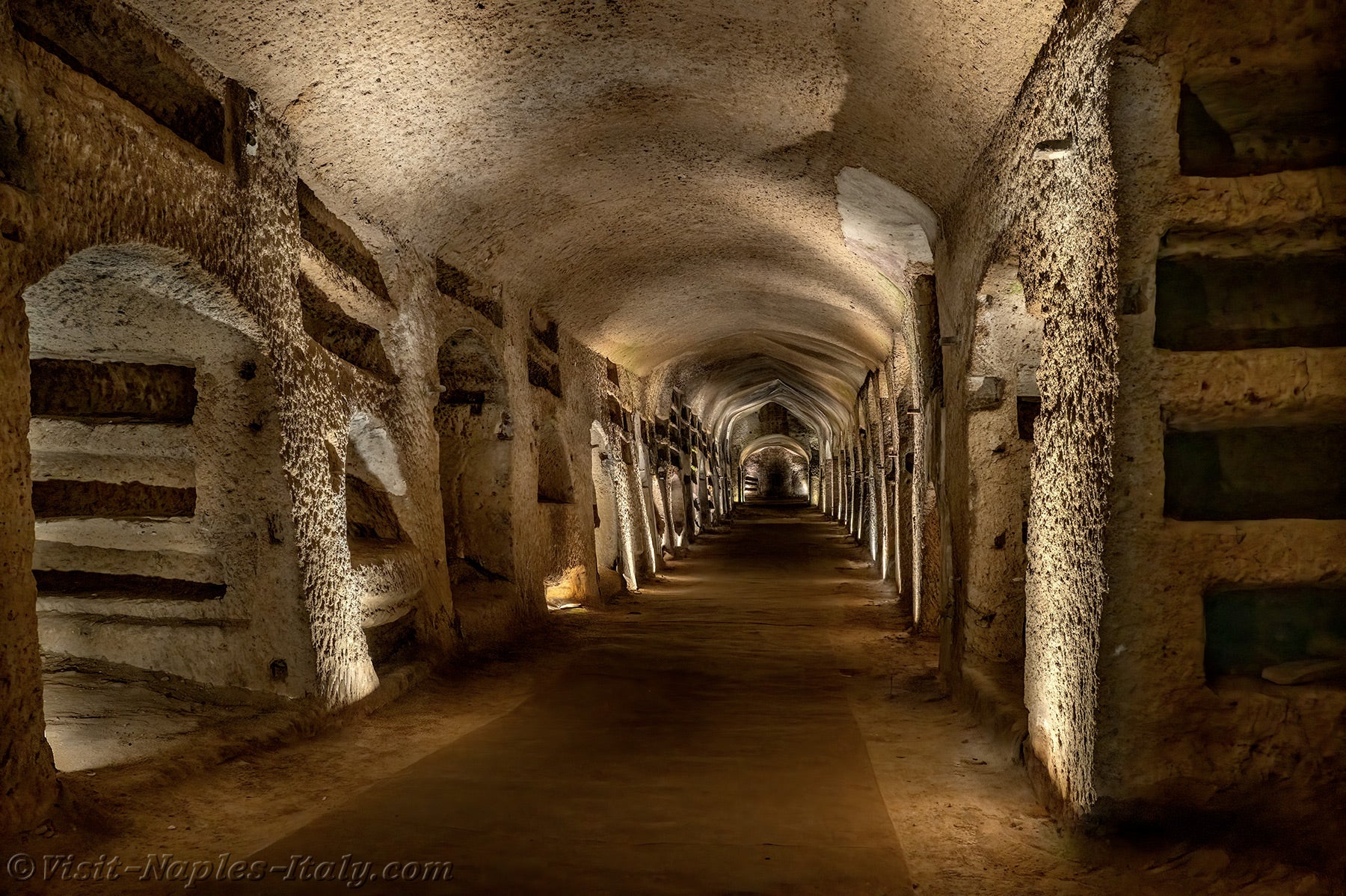
Lower vestibule of the catacombs It is estimated that around three thousand people have been buried over the centuries in the Catacombs of San Gennaro.
From the 17th century onwards, all the bodies found in the catacombs were transferred to the Fontanelle Cemetery in Naples; this ossuary was used to bury the dead following the terrible plague epidemic of 1656, followed by the cholera epidemic of 1836-1837.
It is worth recalling the fundamental role of Emperor Napoleon Bonaparte’s edict of 1804, which prohibited the burial of the dead within city limits.
To reassure those reluctant to enter a venue where skeletons might still be found, there are none at all in the Catacombs of San Gennaro.
The underground world of the Catacombs of San Gennaro
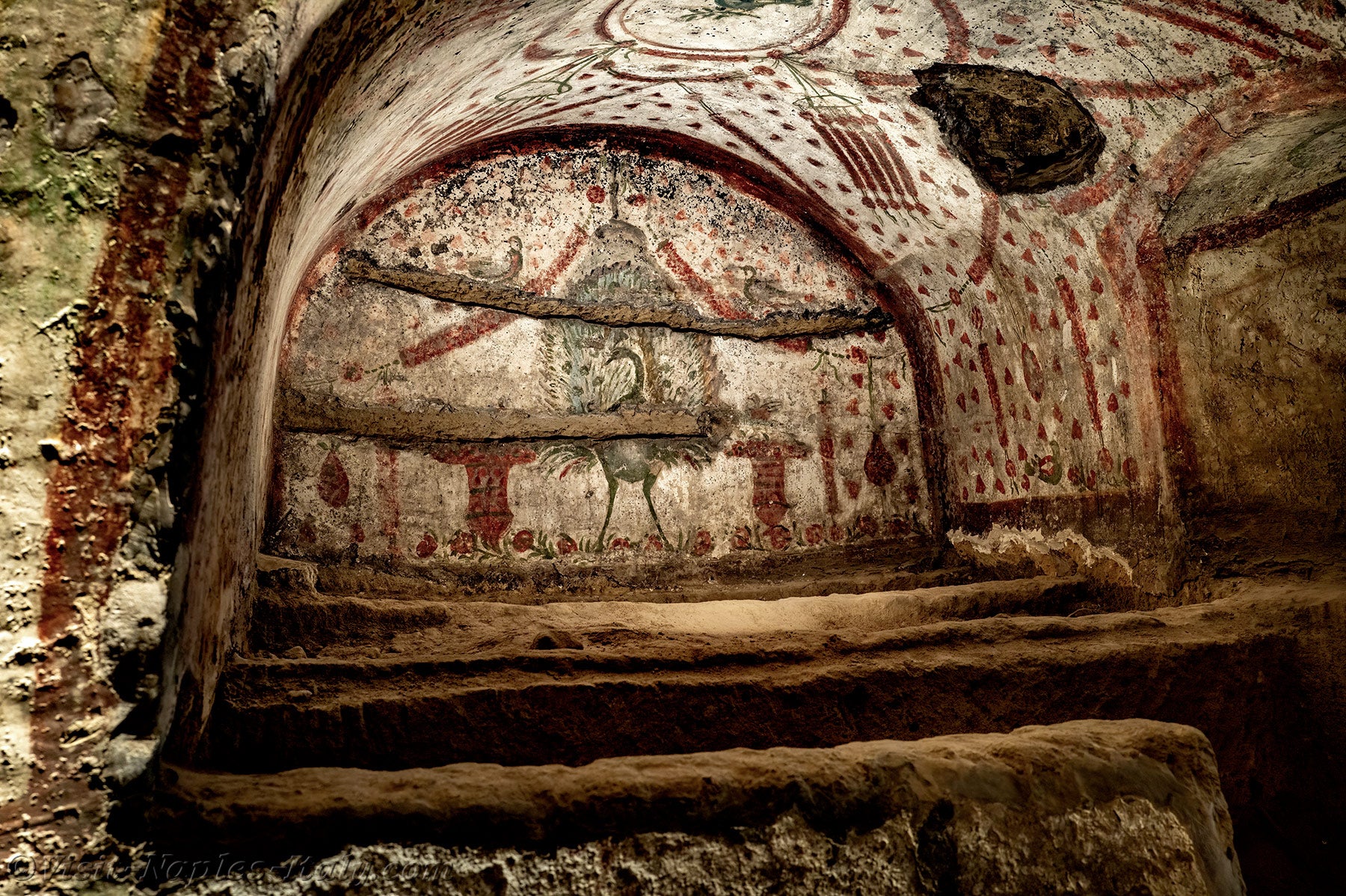
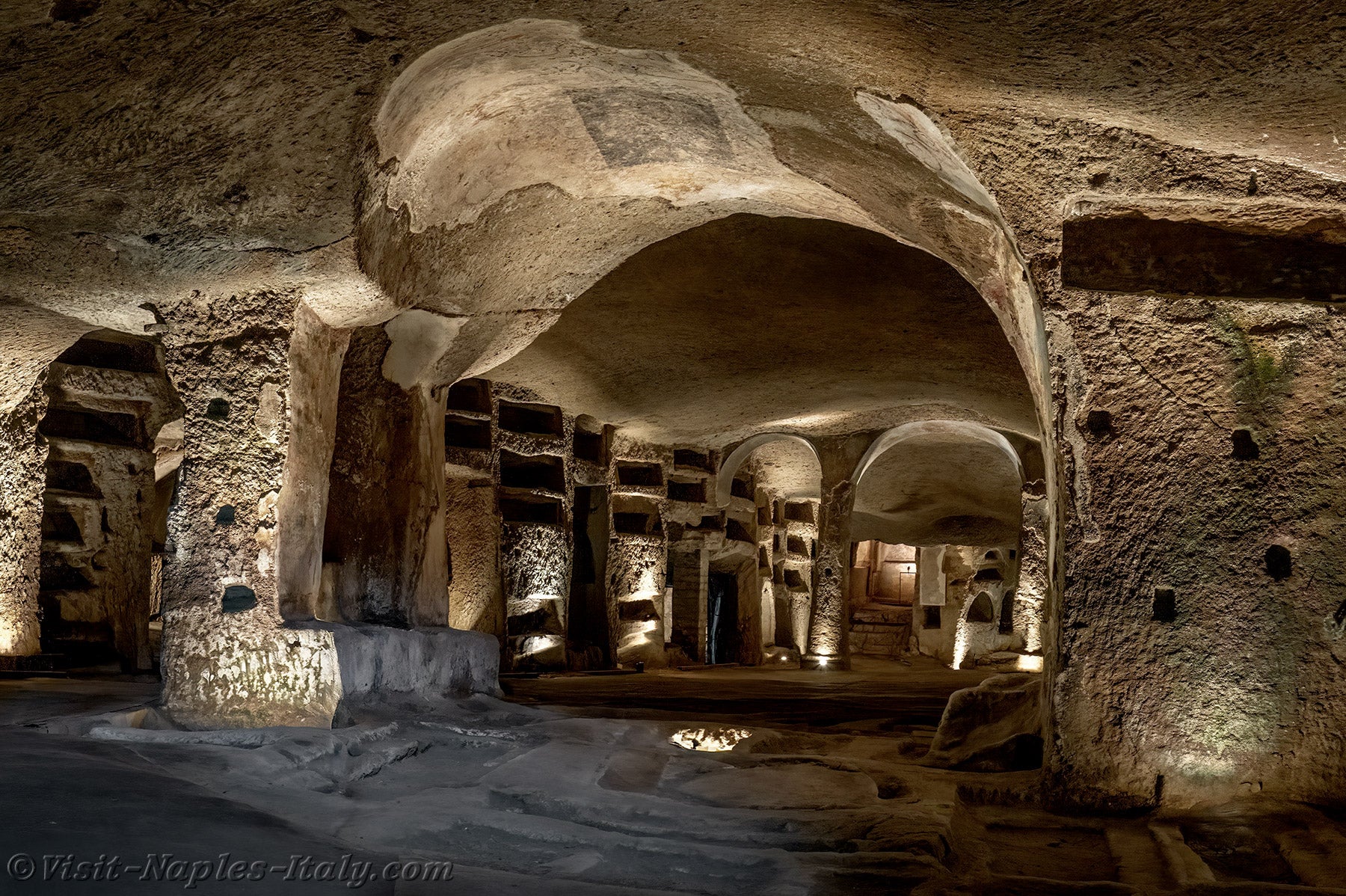
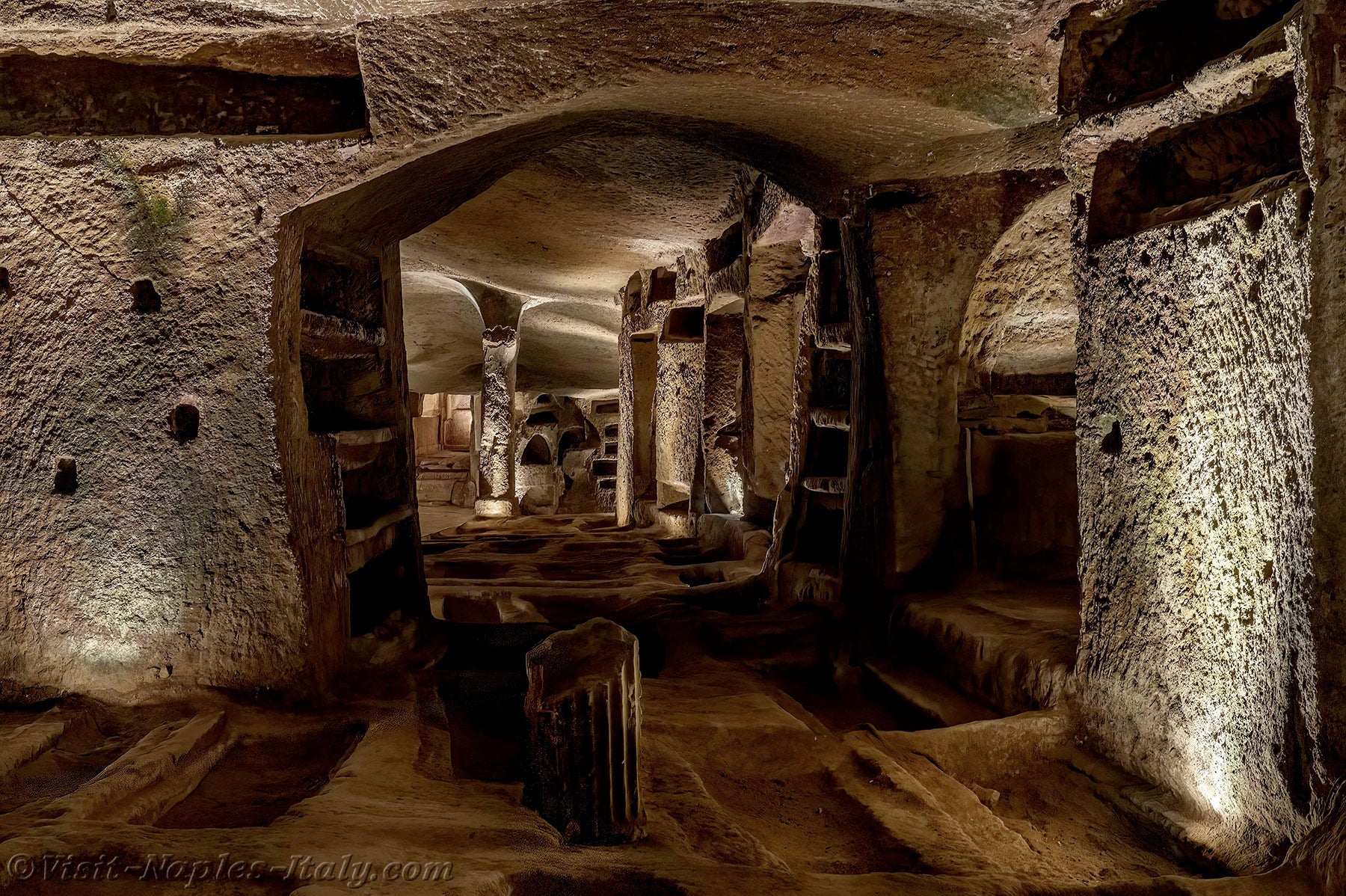
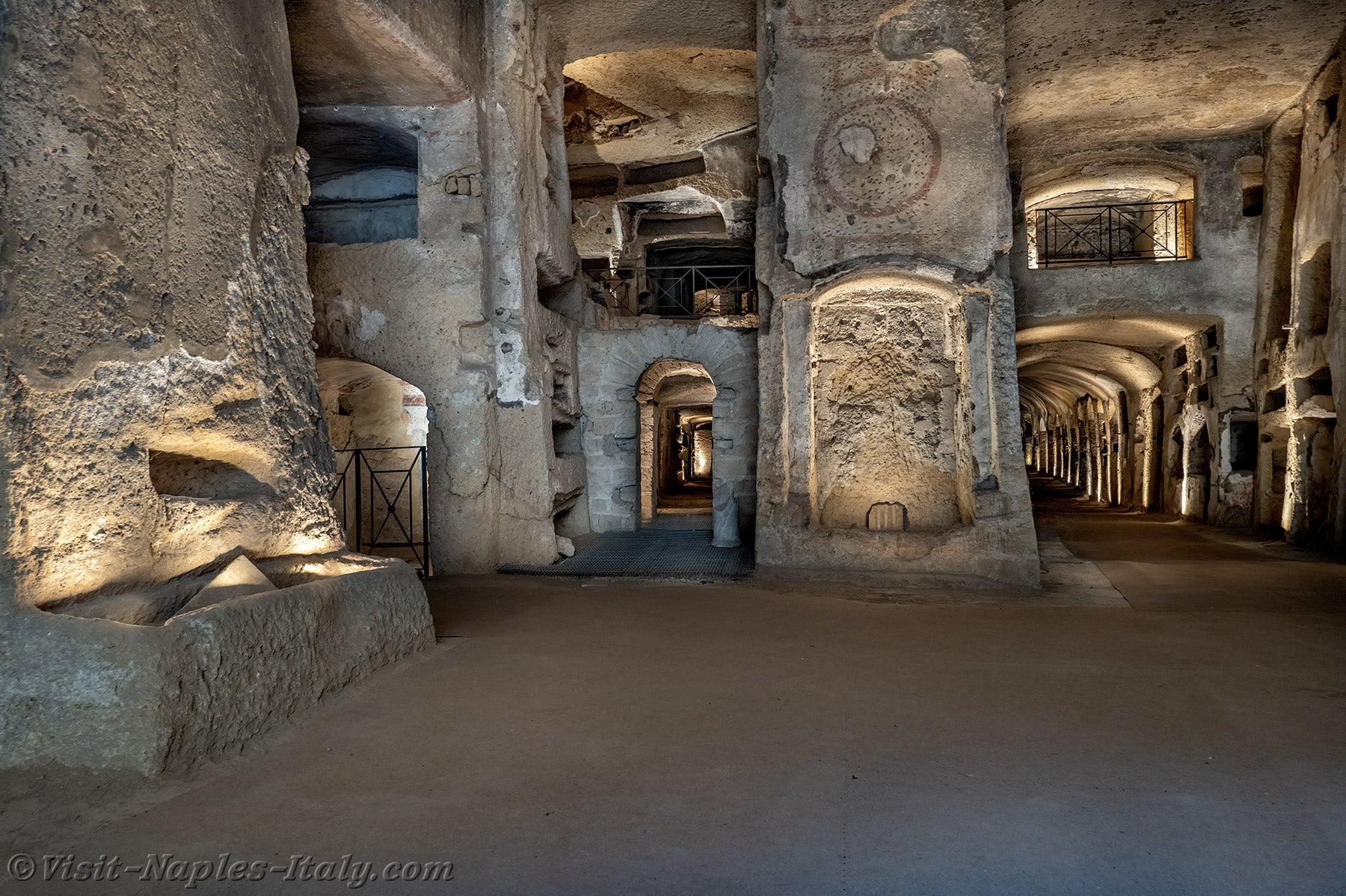
Peacock fresco Upon entering these catacombs, one discovers a vast and airy underground world.
The high ceilings, the width of the galleries, the beauty of the rows and the play of light and shadow amaze visitors.
These catacombs were excavated with a balance of scale and aesthetics, whilst at the same time giving them an intimate feel, so that the tombs within blend perfectly into the whole, yet retain their own space and identity.
An identity reinforced by the beautiful frescoes still visible on some of them.
Art History History Catacombs | Frescoes
Catacombs Art History Schedule Tickets Location | Authorizations
Back to Top of Page