

Neapolis Underground Neapolis Schedule Tickets Location | Authorizations
Neapolis Roman Forum | Cardine and Macellum | The Shops | The Tavern
Neapolis, the underground Naples beneath the Roman Forum at San Lorenzo Maggiore
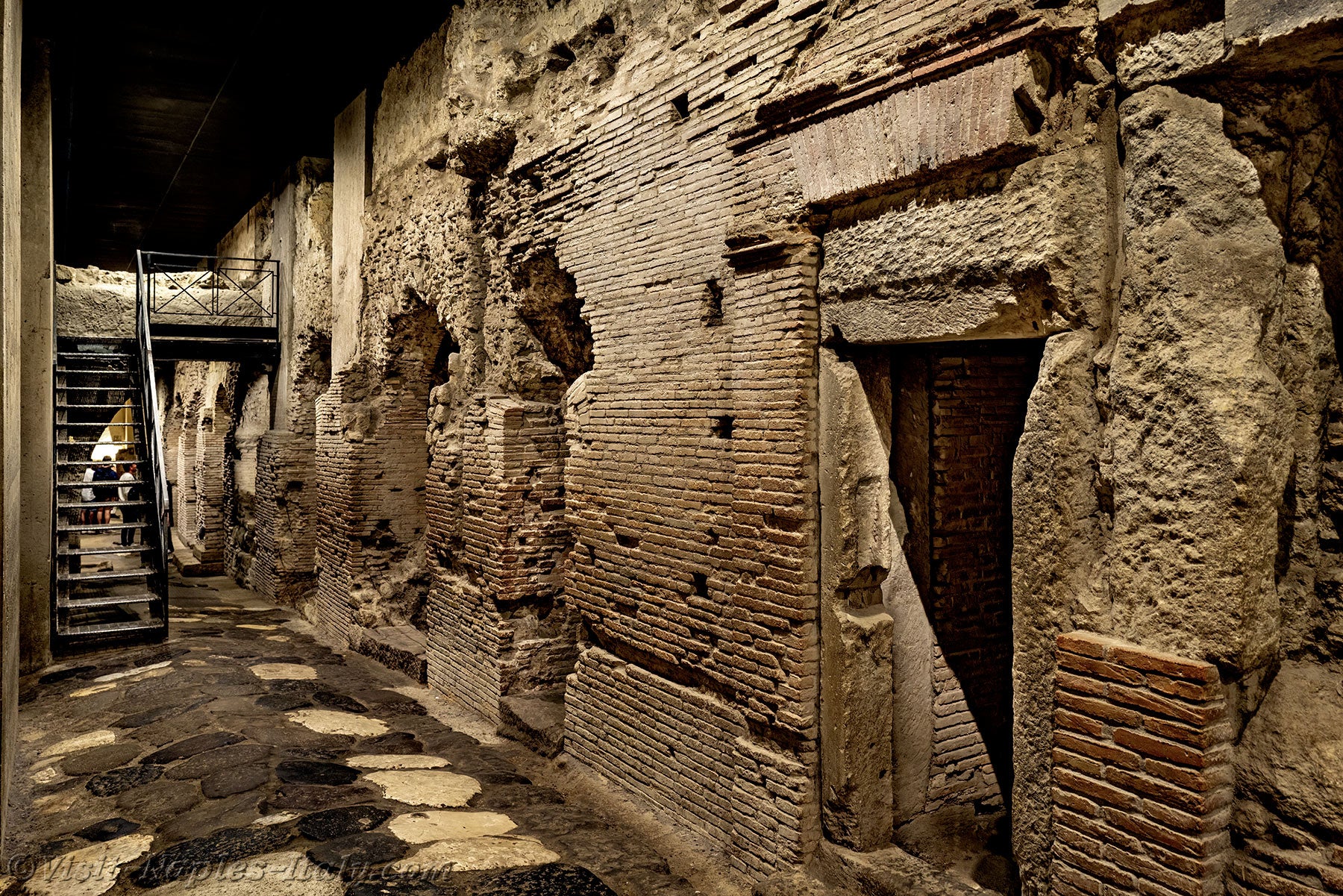
The Cardine of Underground Neapolis During the period of Greek colonisation, the centre of the city of Naples was the Agora, founded at the end of the 6th century BC by colonists from Cumae and Athens.
This Agora subsequently became the Forum Vetus in Roman times, a Roman forum which largely followed the layout of the Greek Agora.
The exact location of the Agora and the Forum is Piazza San Gaetano, in front of the Basilica of San Lorenzo Maggiore.
The underground Neapolis, which you can visit, lies approximately ten metres below the transept and the convent of the Basilica of San Lorenzo Maggiore.
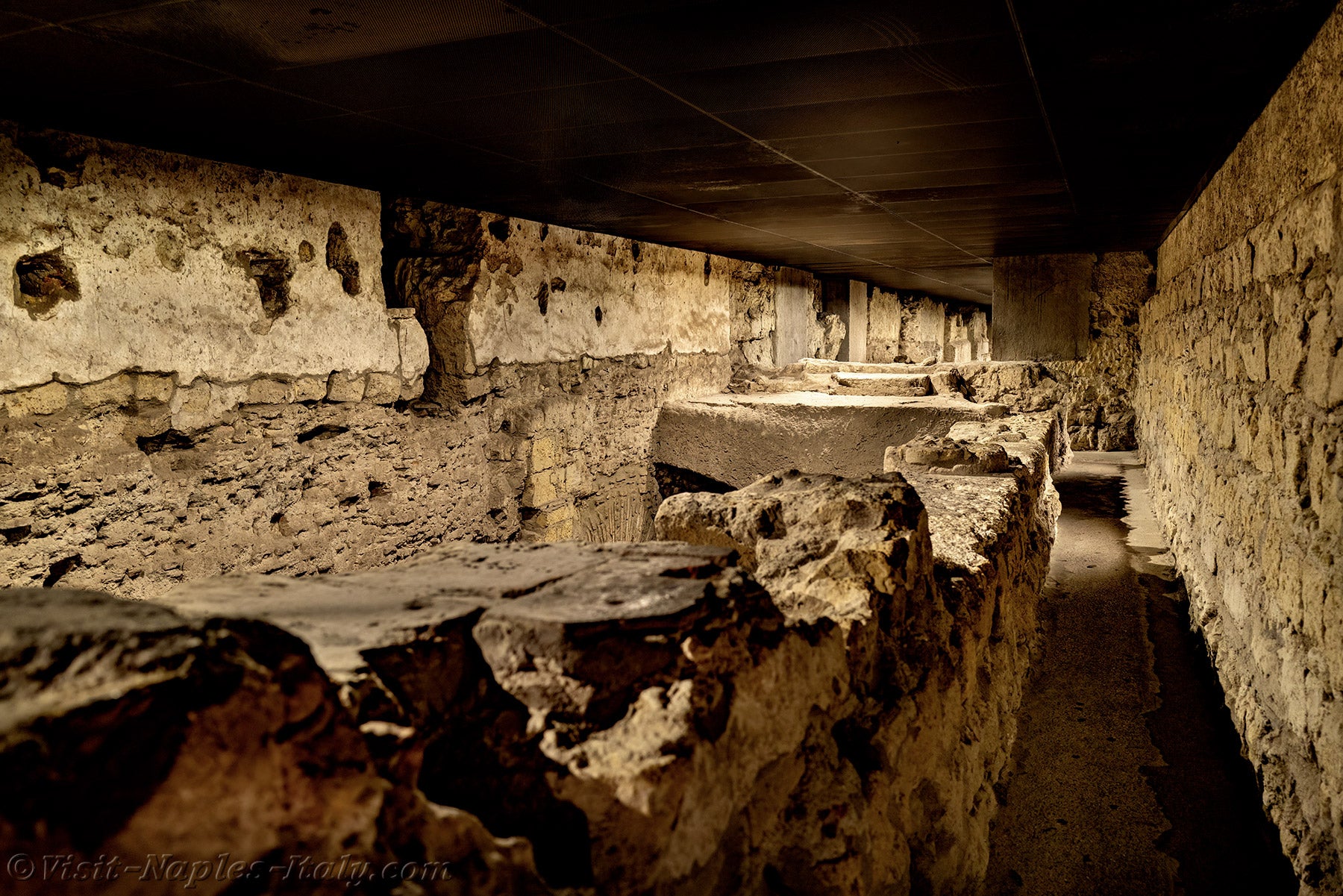
Upper part of the Cardine It is the most important archaeological site in Naples, offering visitors the chance to imagine the lives of the ancient Neapolitans, the ancestors of the Neapolitans who live and go about their daily lives just a few metres above.
The Decumani
The Greek city of Neapolis had a square layout, divided into four large areas by three major parallel streets known as the Decumani.These streets were equidistant and ran through Neapolis from east to west.
These three Decumani were named Decumanus Superior, Maggiore and Inferior.
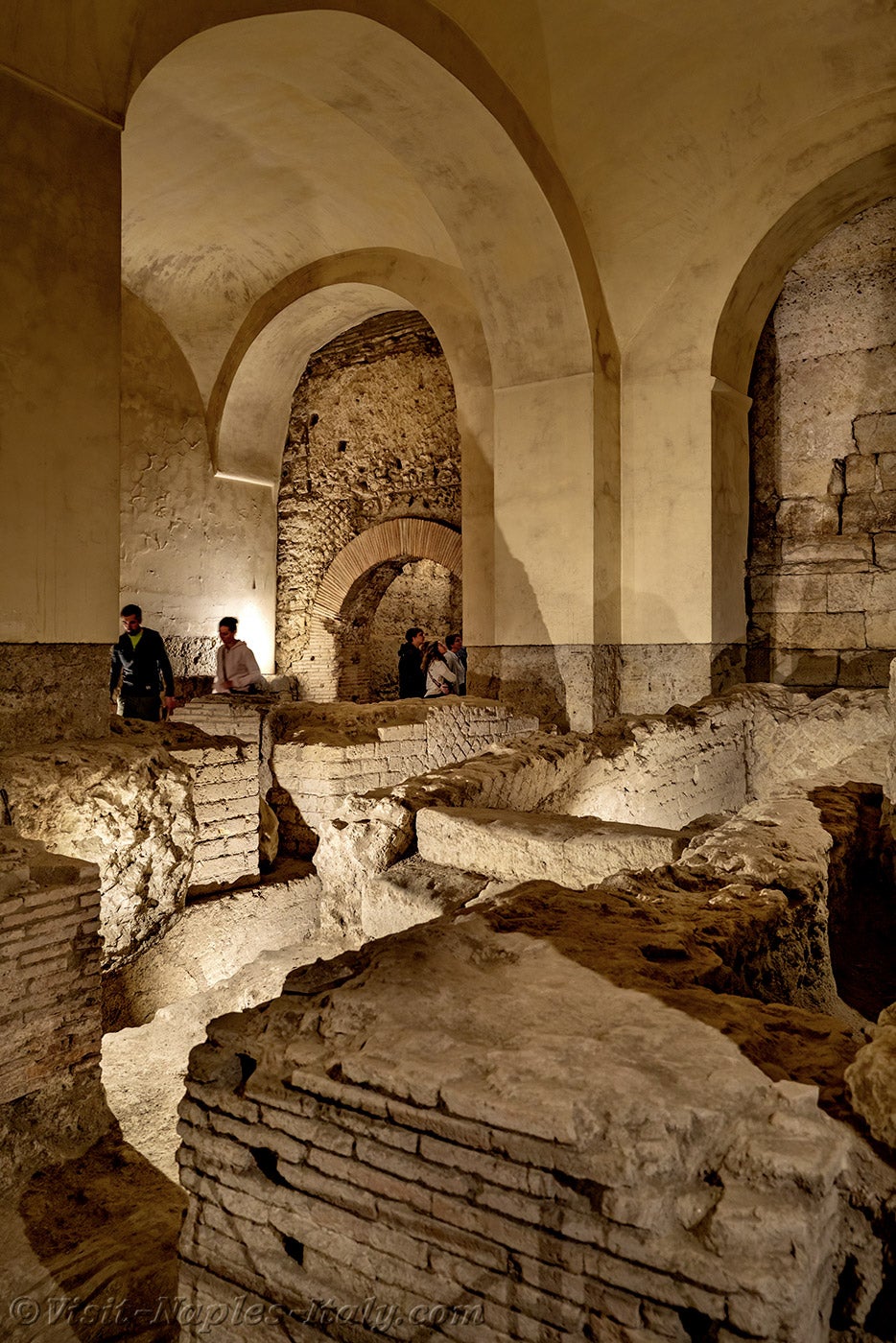
Remains of Cryptoporticus The Decumanus Superior, dedicated to Apollo, ran from Via della Sapienza to the junction with Via del Sole, and ended at Santi Apostoli.
The Decumanus Maggiore, dedicated to the Dioskouros, ran from San Pietro a Majella to Castel Capuano, crossing Via dei Tribunali.
Finally, the Decumanus Inferior, dedicated to Ceres, ran from Piazza San Domenico via Via Nilo and Via San Biagio dei Librai to the Porta Furcillensis, crossing Via Forcella.
These long Decumani were crossed at right angles by around twenty streets known as Stenopi by the Greeks and Cardini by the Romans, streets running north-south.
Where they crossed, they formed a chequerboard pattern of rectangular blocks known as Insulae, which measured approximately 35 metres wide by 185 metres long.
Neapolis Roman Forum | Cardine and Macellum | The Shops | The Tavern
Neapolis Underground Neapolis Schedule Tickets Location | Authorizations
Back to Top of Page