

Neapolis Underground Neapolis Schedule Tickets Location | Authorizations
Neapolis Roman Forum | Cardine and Macellum | The Shops | The Tavern
The Cryptoporticus of the underground Neapolis in Naples: a tavern
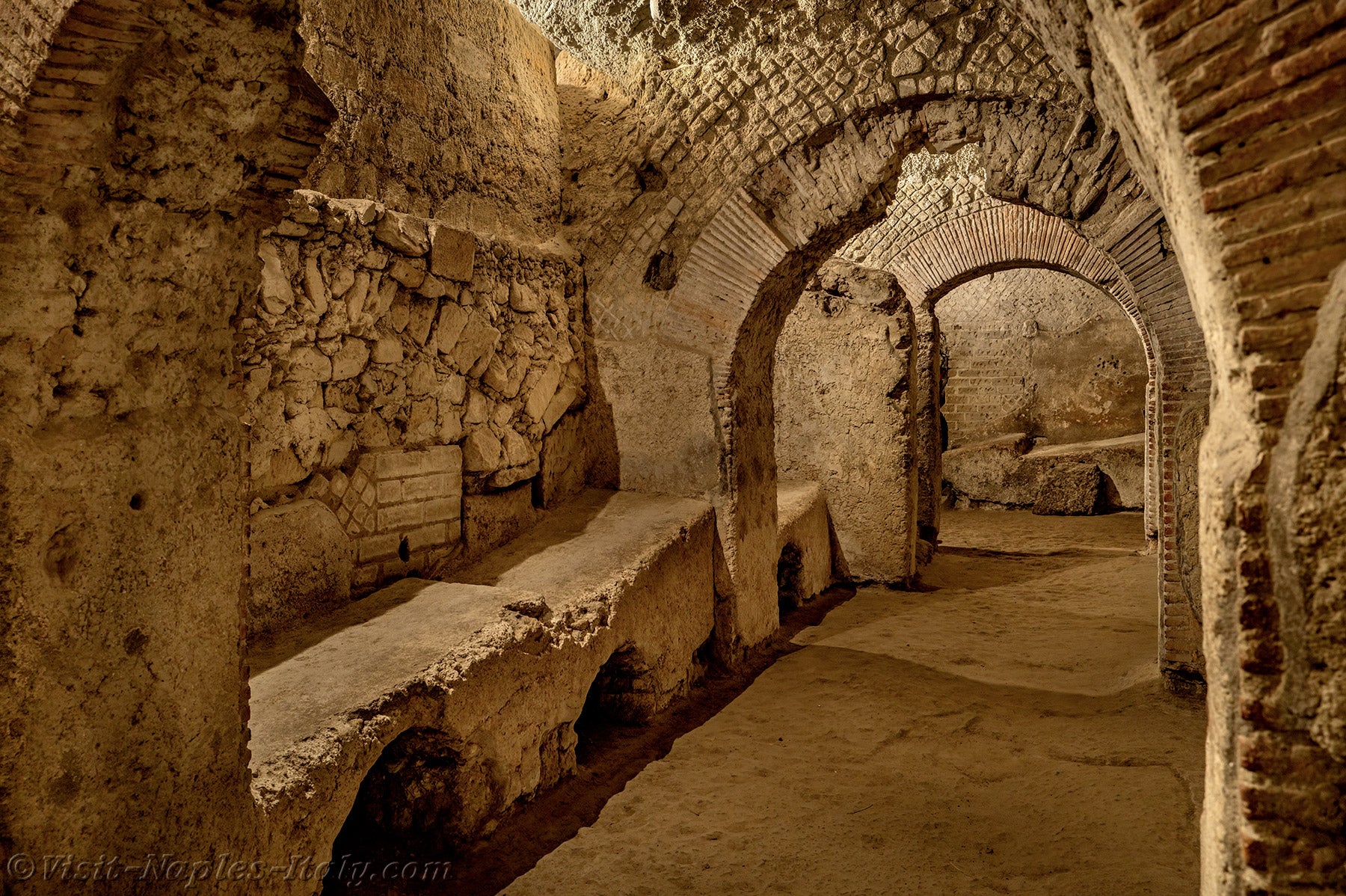
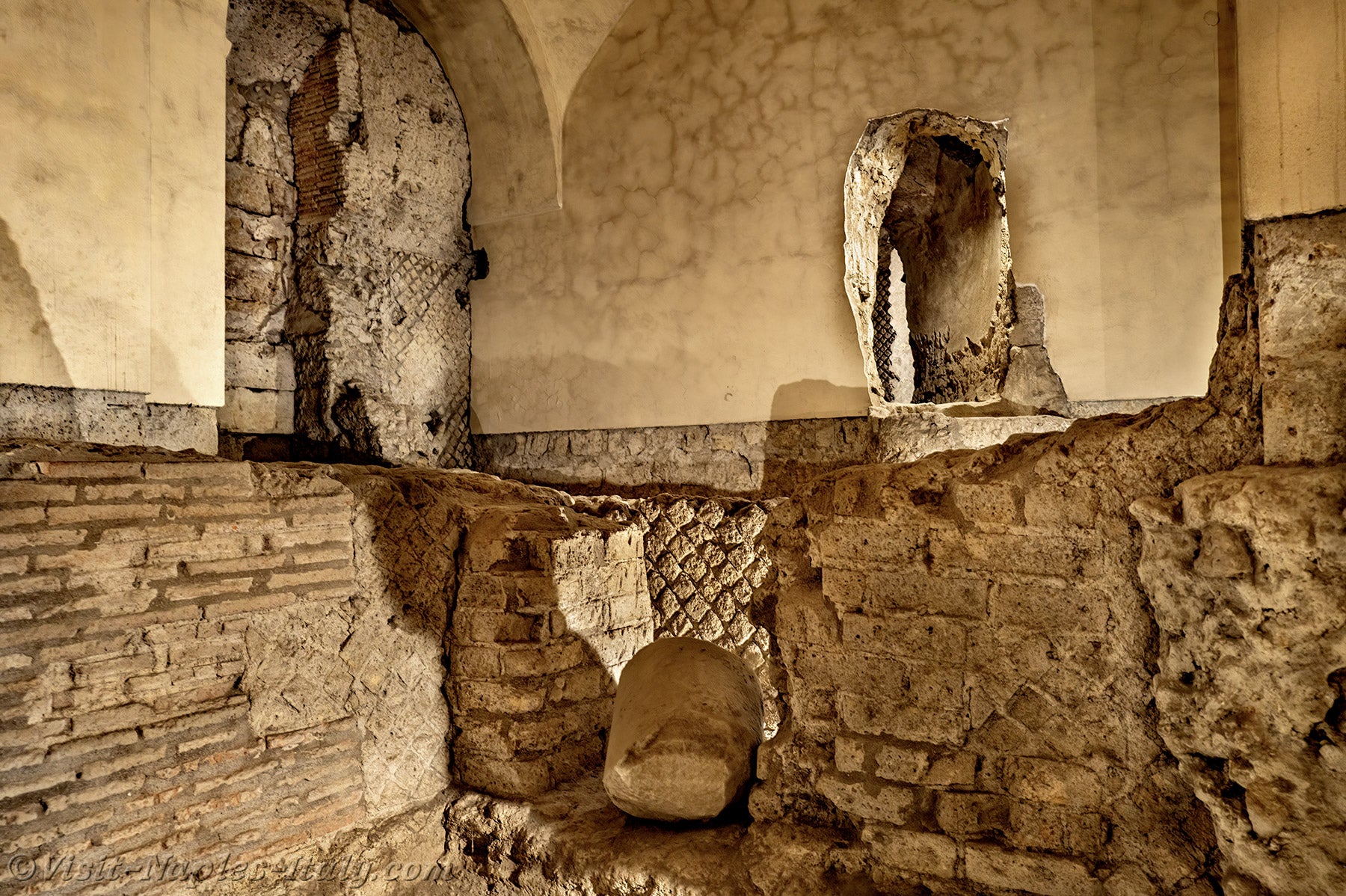
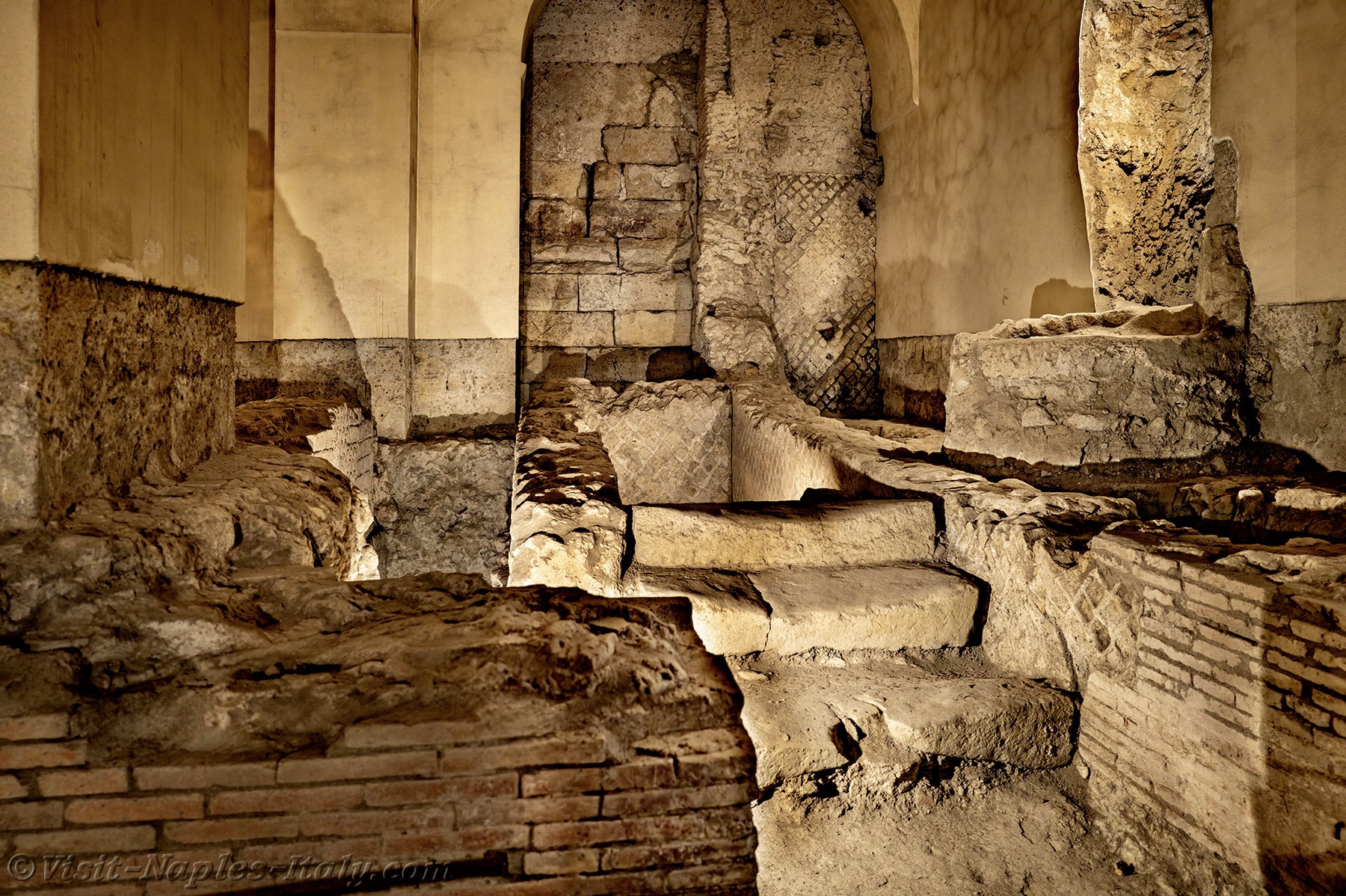
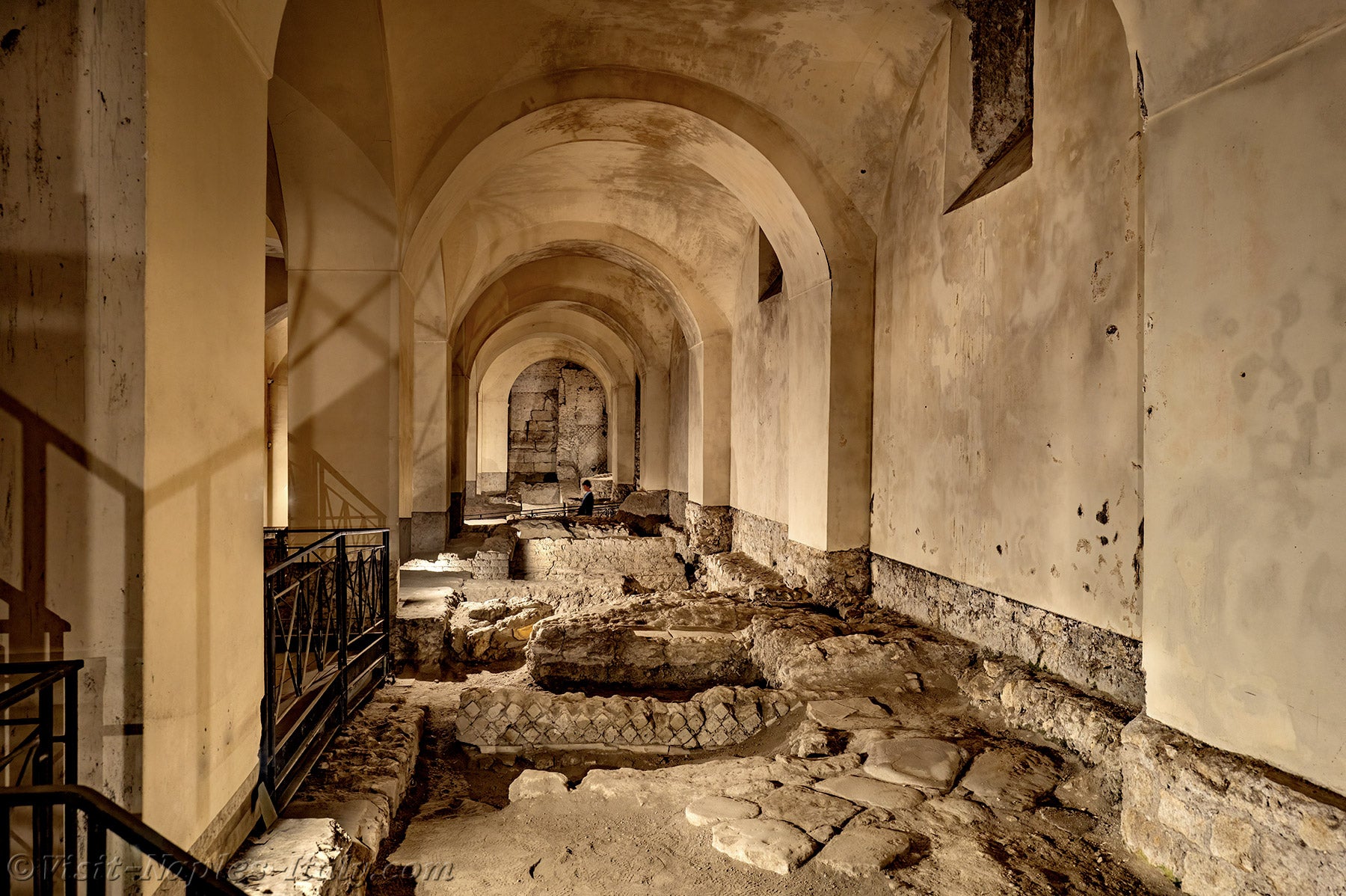
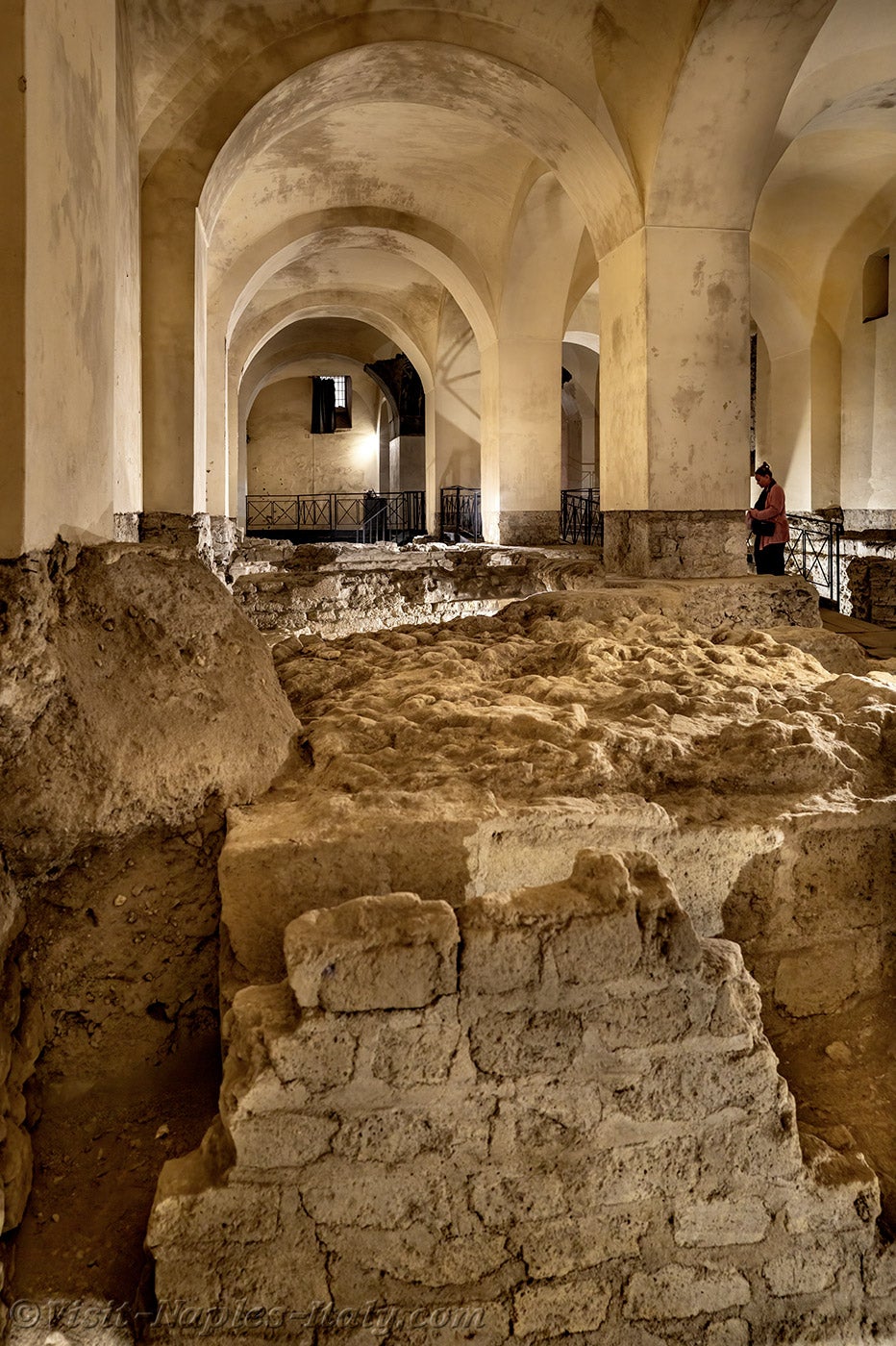
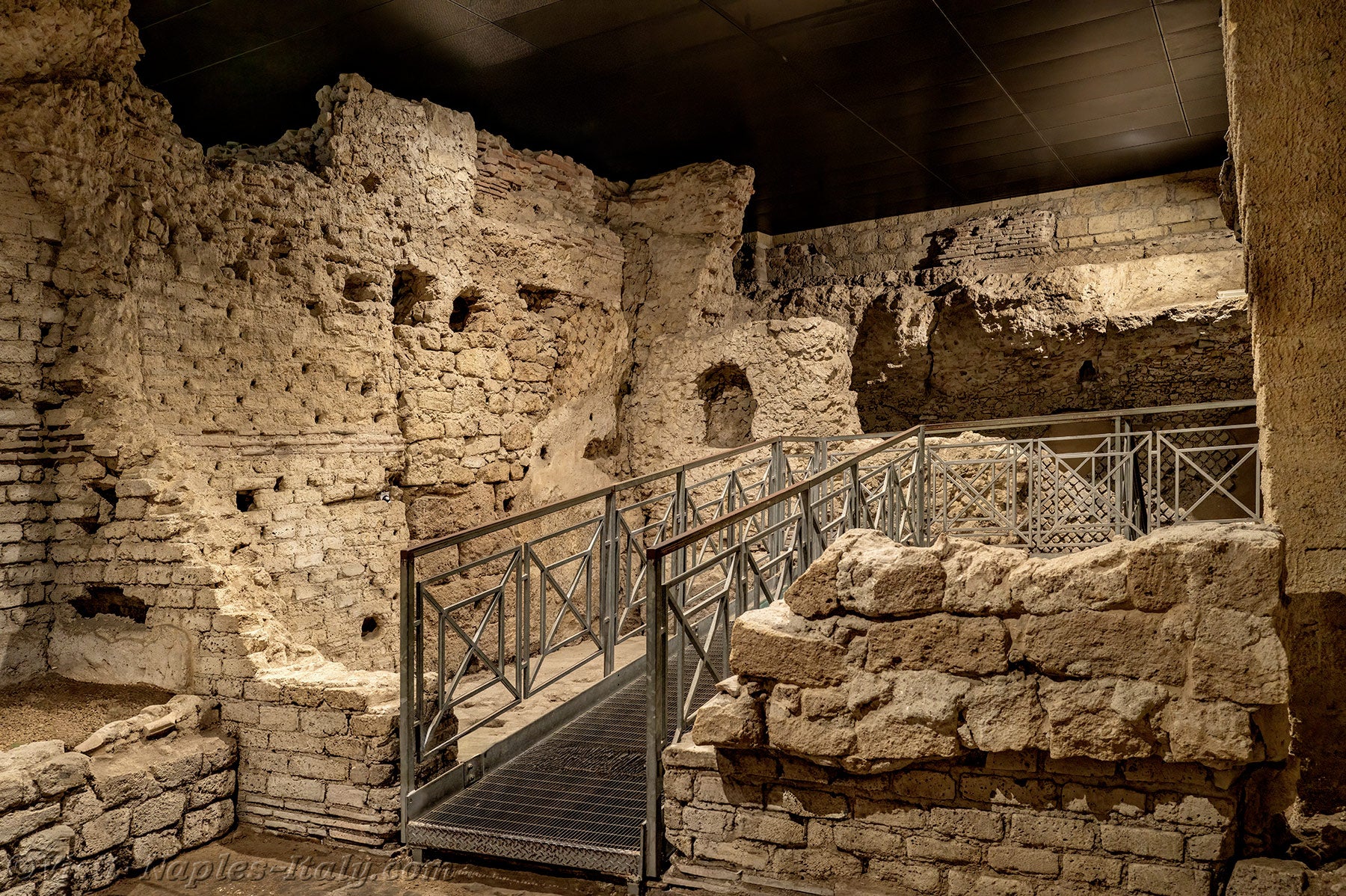
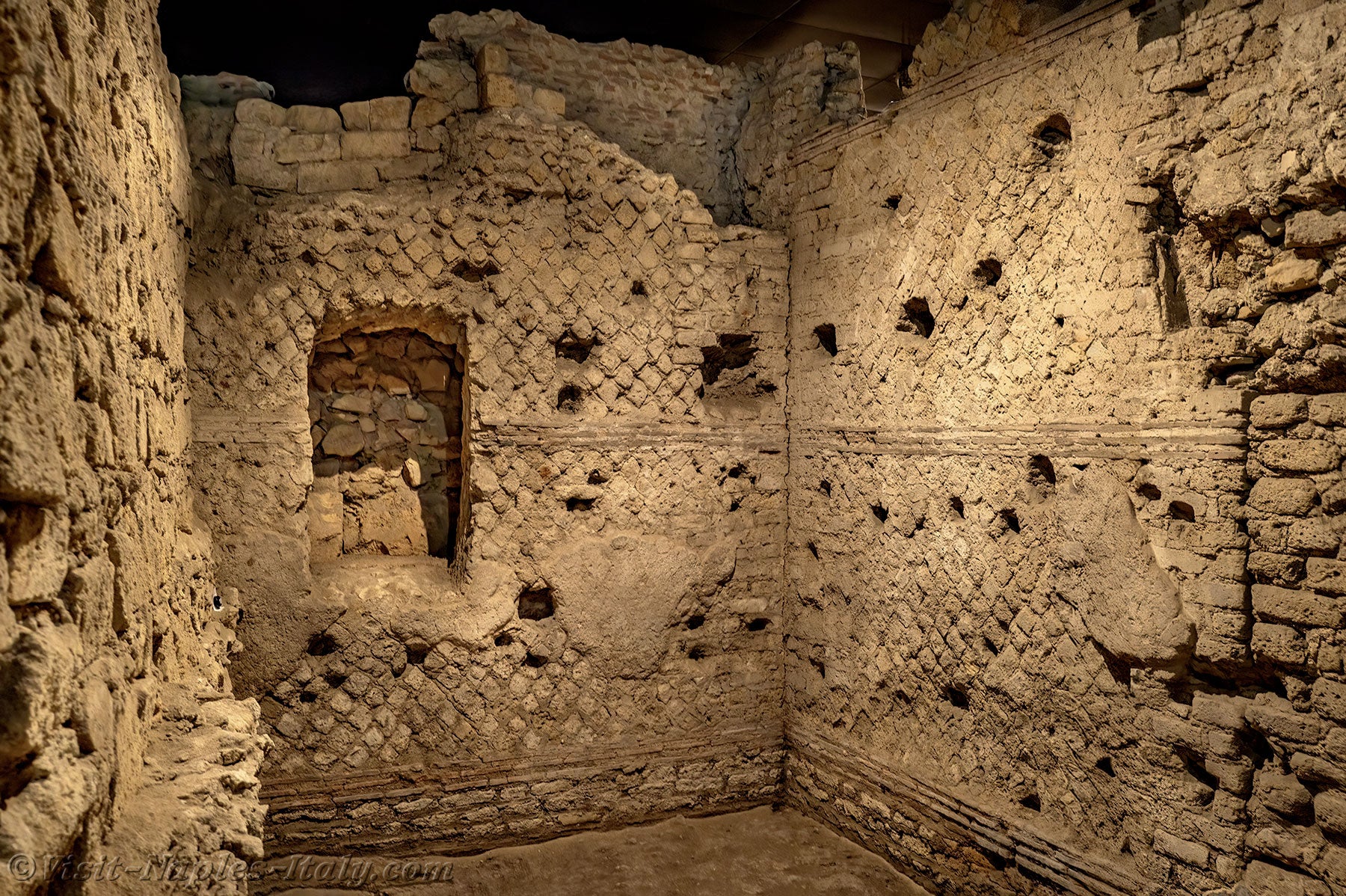
Cryptoporticus of the Underground Neapolis The cryptoporticus of Neapolis takes the form of a long, covered arcade comprising five distinct sections with stone benches set at an angle along their walls.
It was long believed that these were counters intended for the display of goods and that the cryptoporticus was an extension of the shops.
Recent discoveries contradict this theory, as it has been observed that these benches are sloped lengthways, which cannot be consistent with the display of fruit and vegetables sold in the Macellum, as these would roll along the counter.
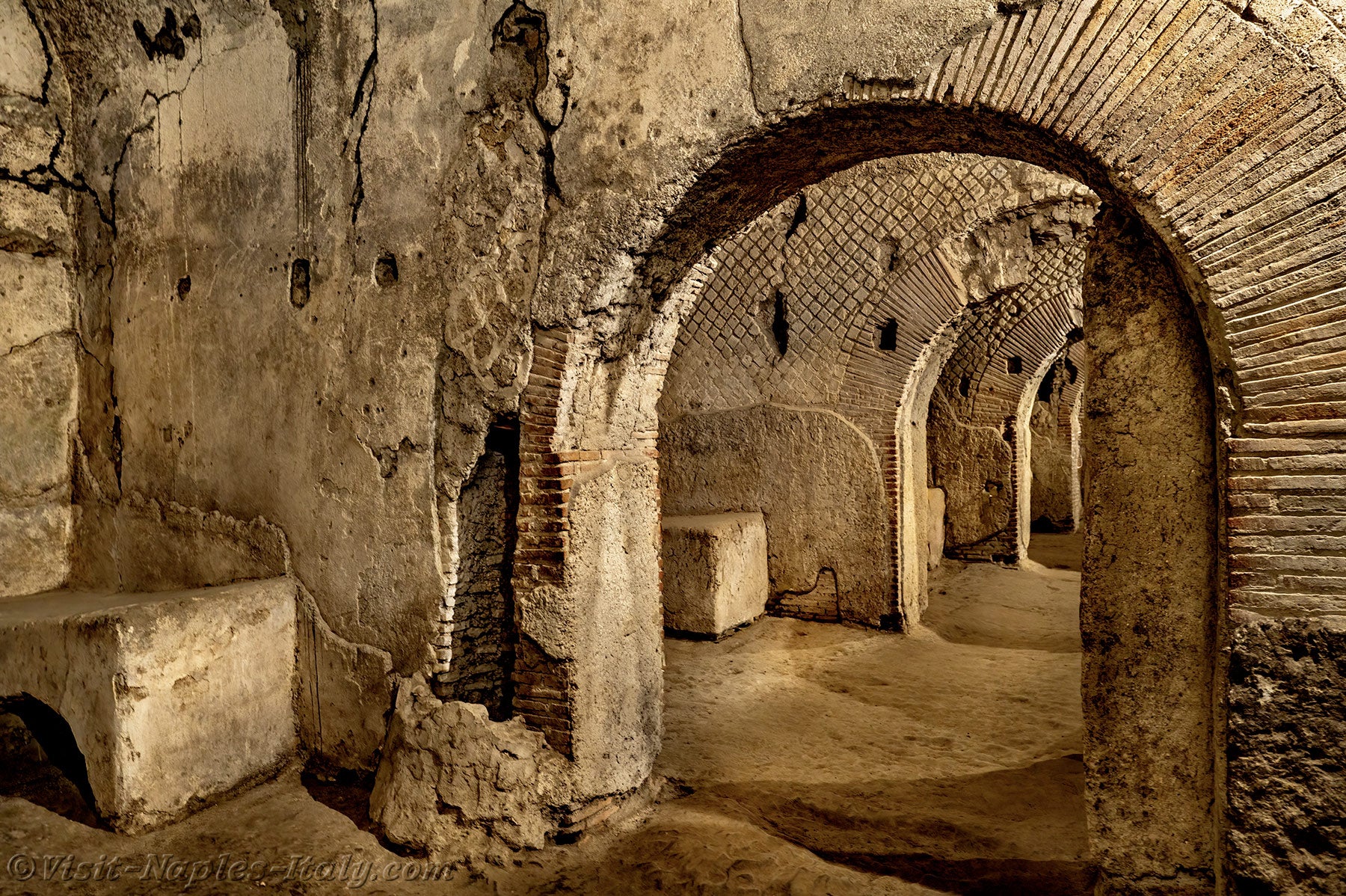
Cryptoporticus of the Underground Neapolis These long benches were in fact triclinium beds on which the Romans would recline to eat.
In Roman antiquity, the dining room usually consisted of three beds arranged in a “U”-shape around the table.
The sloping benches of the cryptoporticus are arranged in almost the same way.
The five spaces are separated by an arcade, each furnished with two masonry beds sloping to one side and a third, or more, on the other.
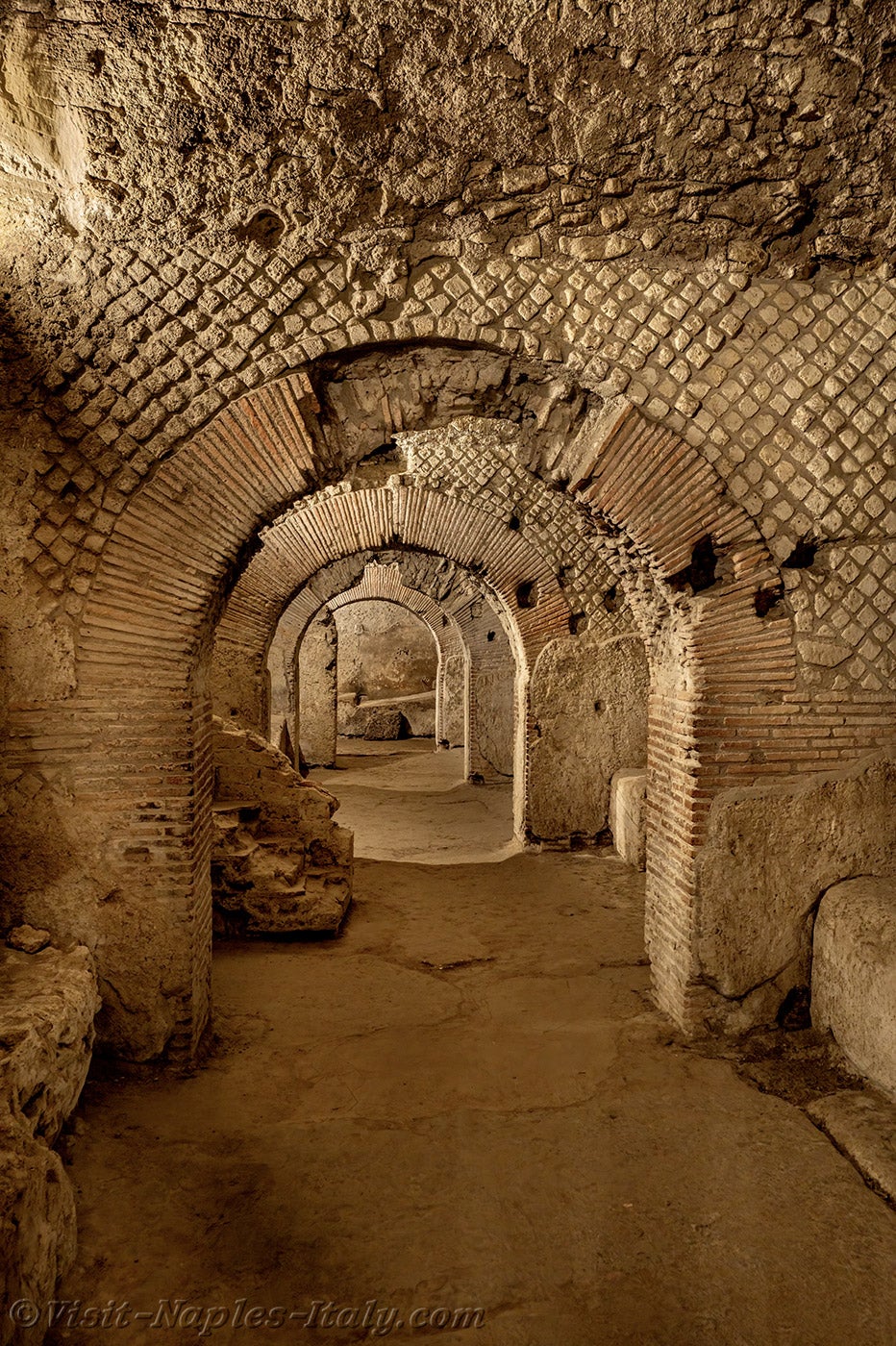
Neapolis Cryptoporticus This proves that this long cryptoporticus in the underground Neapolis was not a venue for the sale of goods.
It was in fact a large tavern, a Caupona, where people came to drink and eat the dishes served on tables set out in front of the diners.
People could thus rest and refresh themselves during their break, and discuss business, or quench their thirst with friends they met whilst shopping, comfortably seated on soft cushions that covered the stone beds.
The small bricks of these ancient walls have preserved the echo of the Latin voices of those lives now gone.
The latest archaeological discoveries made in Neapolis
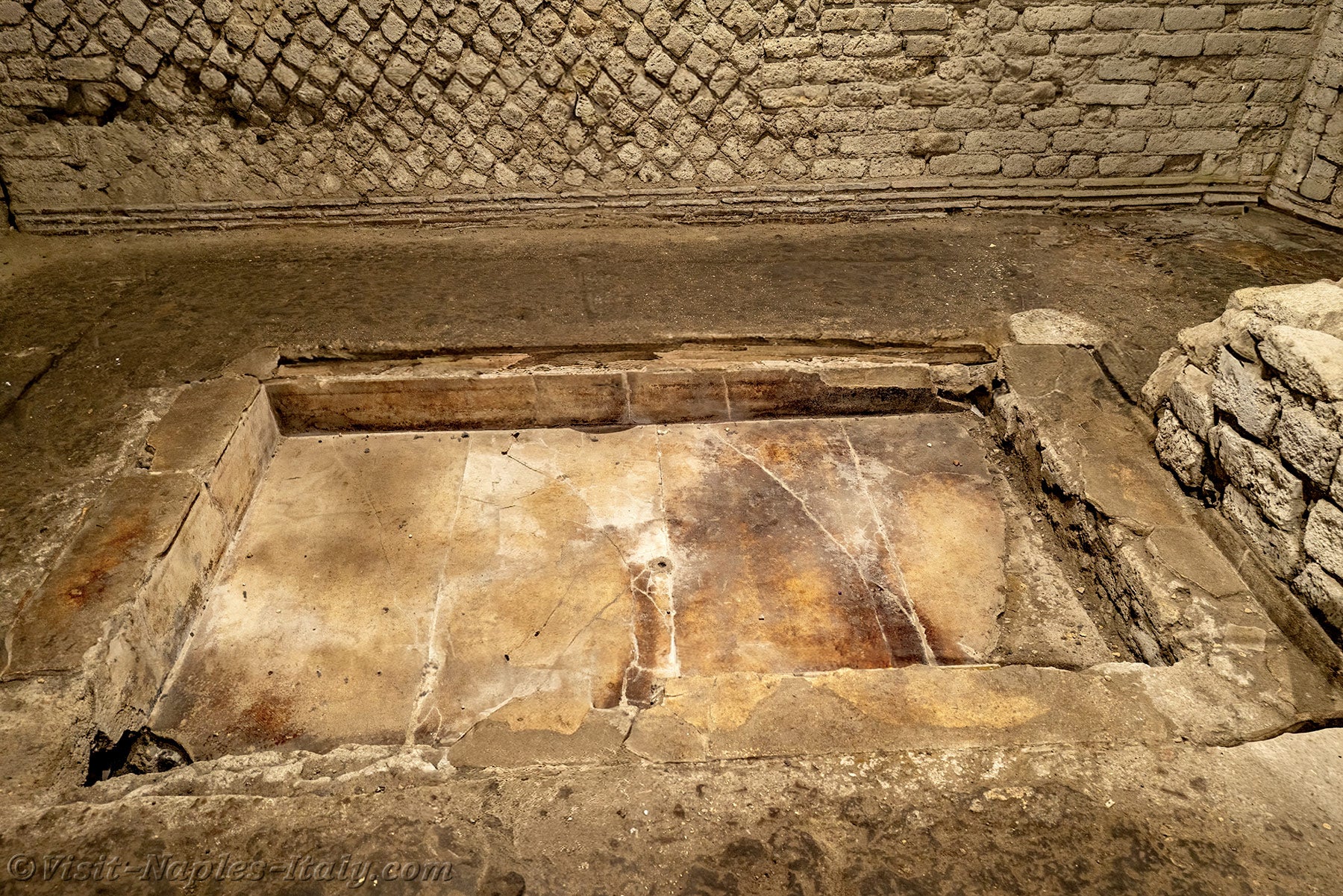
The Impluvium of Underground Neapolis Over the course of the last few years, a new area of considerable size has been discovered in the south-western sector.
Among other things, it contains a hydraulic structure dating from the Greek period as well as an impluvium, a basin used to collect rainwater.
This suggests that this part of Neapolis was intended for an elite group, probably linked to the Schola, which is situated close to this impluvium.
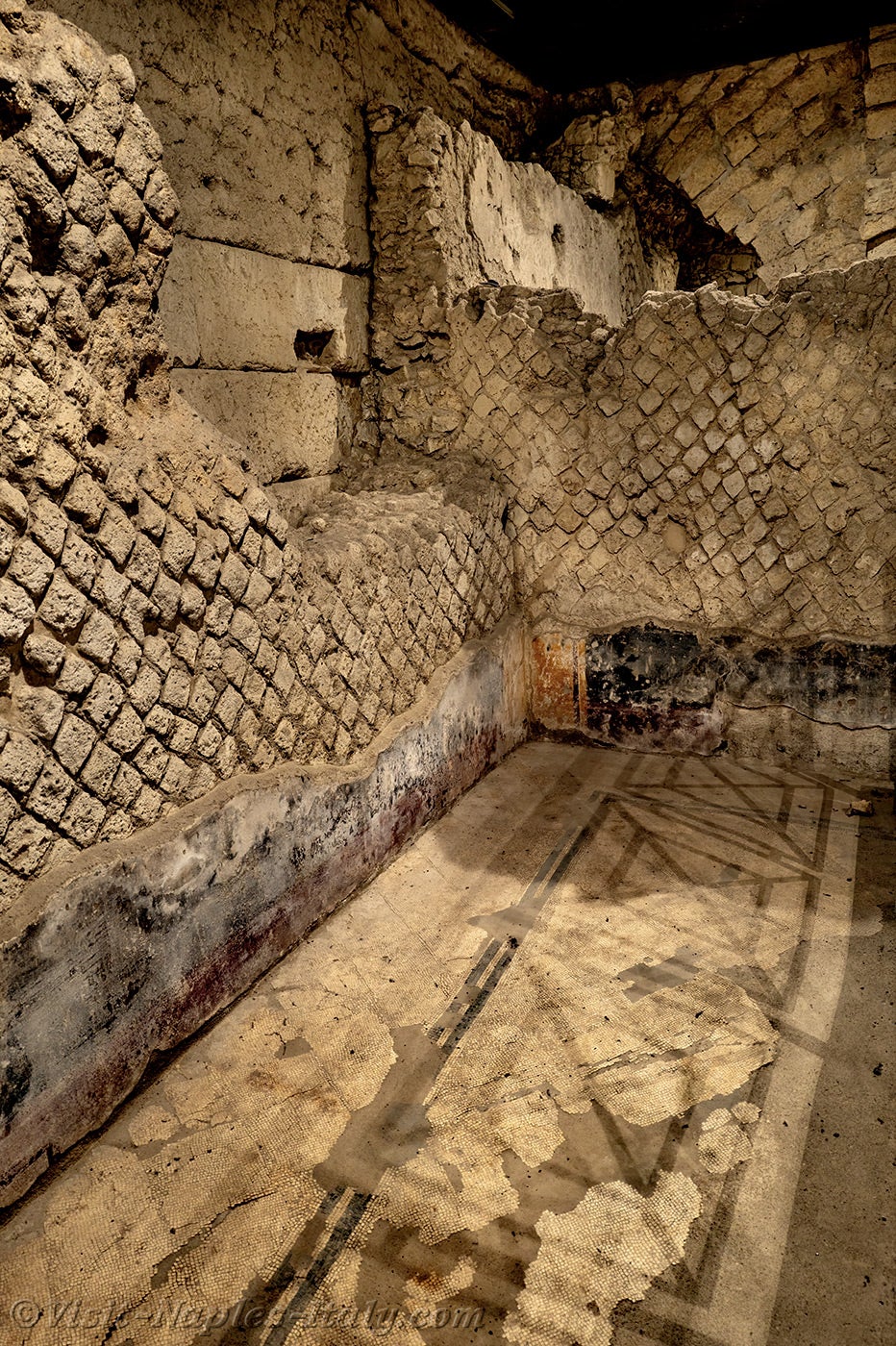
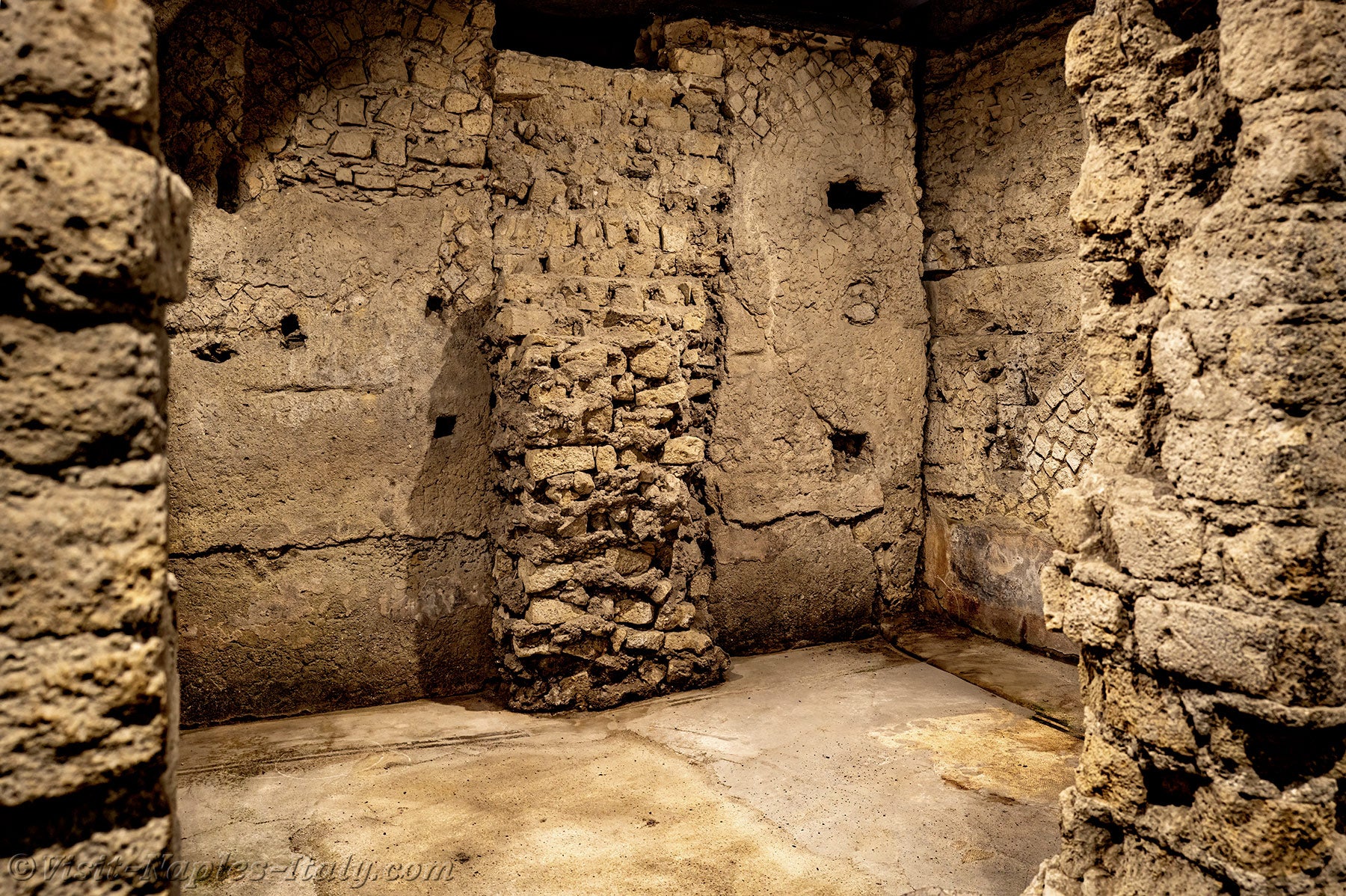
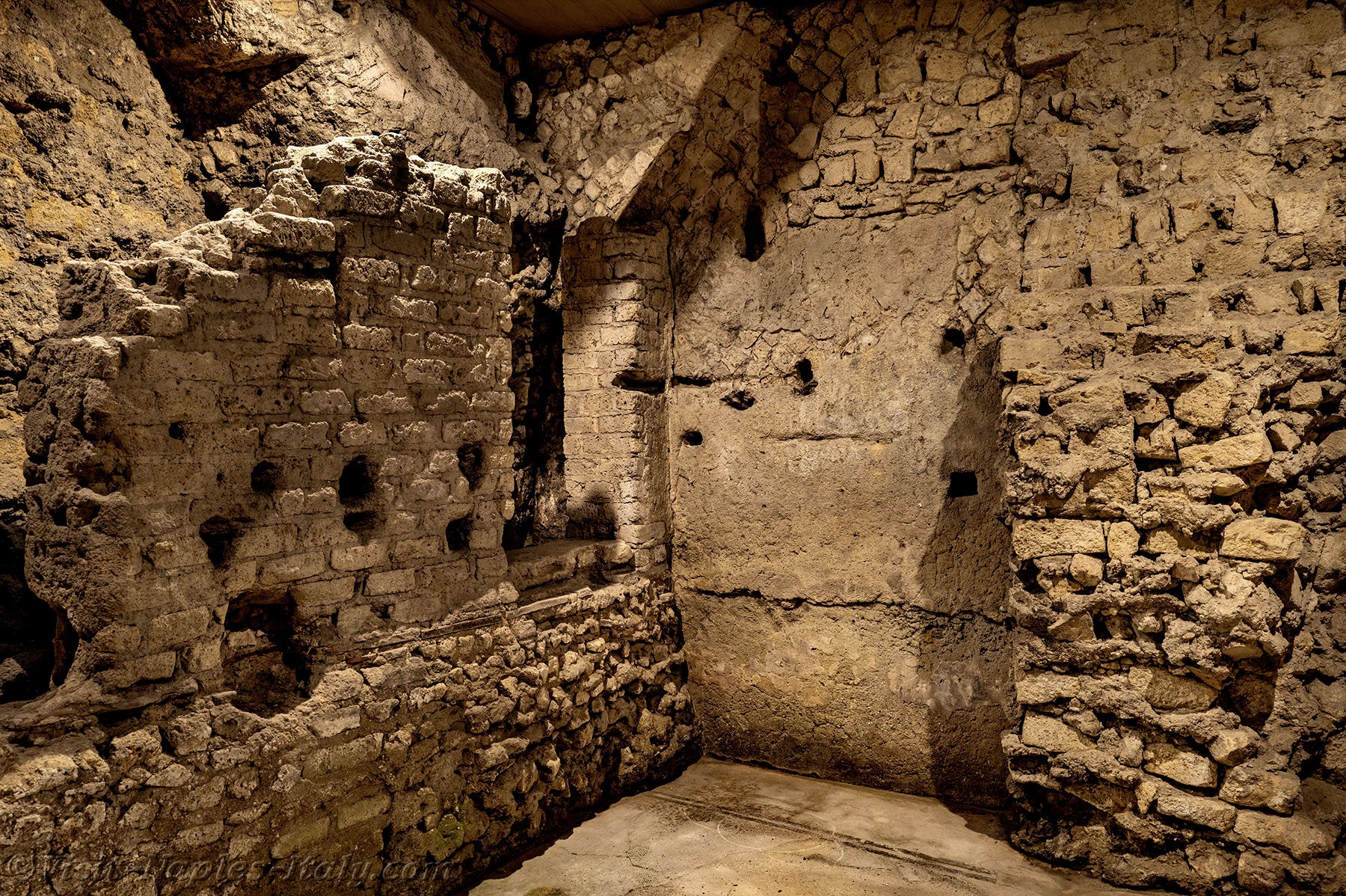
Salle de la Schola A Schola is indeed one of the artefacts discovered in this area of Neapolis.
In Roman antiquity, the Scholæ were the headquarters of craft or trade guilds.
They were places for professional gatherings, and sometimes political ones, which could also have a religious character.
The importance of the Scholæ in social life was such that they survived well after the fall of the Roman Empire.
Consequently, a very large number can be found in Venice, where they took the name ‘Scuole’ and became the headquarters of lay confraternities under the patronage of a patron saint.
Neapolis Roman Forum | Cardine and Macellum | The Shops | The Tavern
Neapolis Underground Neapolis Schedule Tickets Location | Authorizations
Back to Top of Page