

Jago The works Schedule Tickets Location | Authorizations
The works Narcissus | Ajax Cassandra | The Veiled Son | Pietà | Self-portrait | Venus | From Foetus to Ego
Jago’s Sculptures: Sphynx foetus, Airavata, Container, Ego Laurentius and Integration, at the Jago Museum in Naples
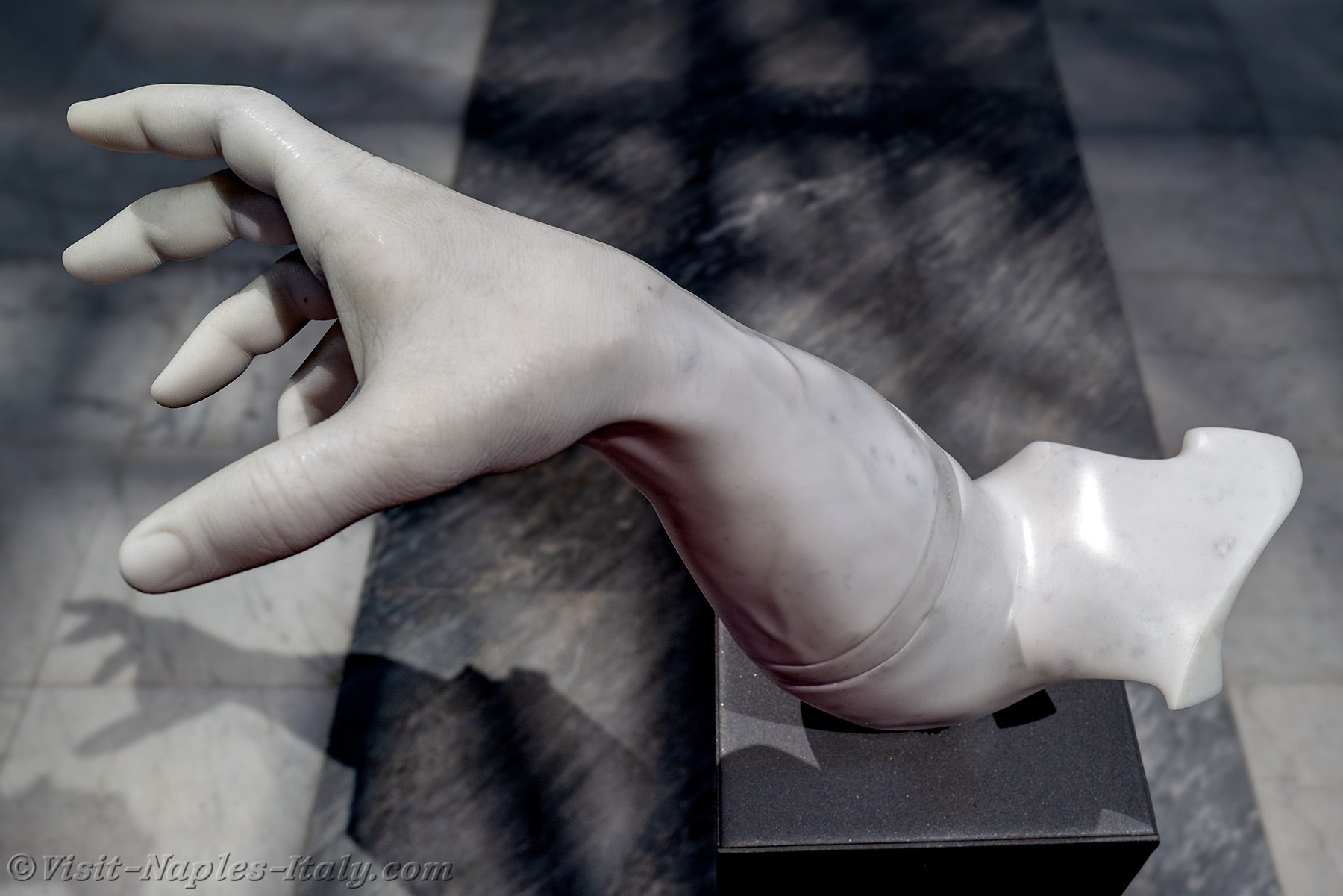
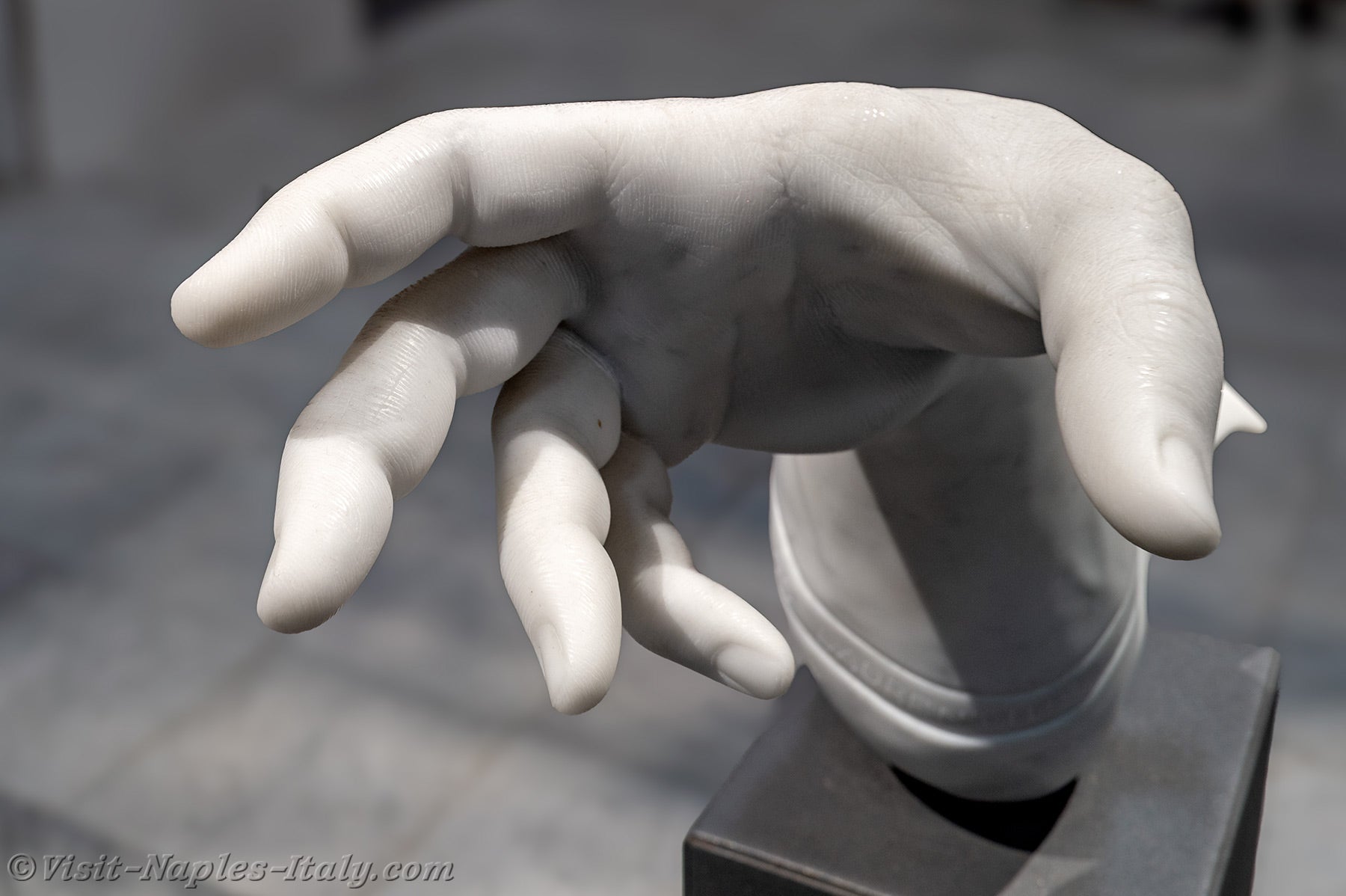
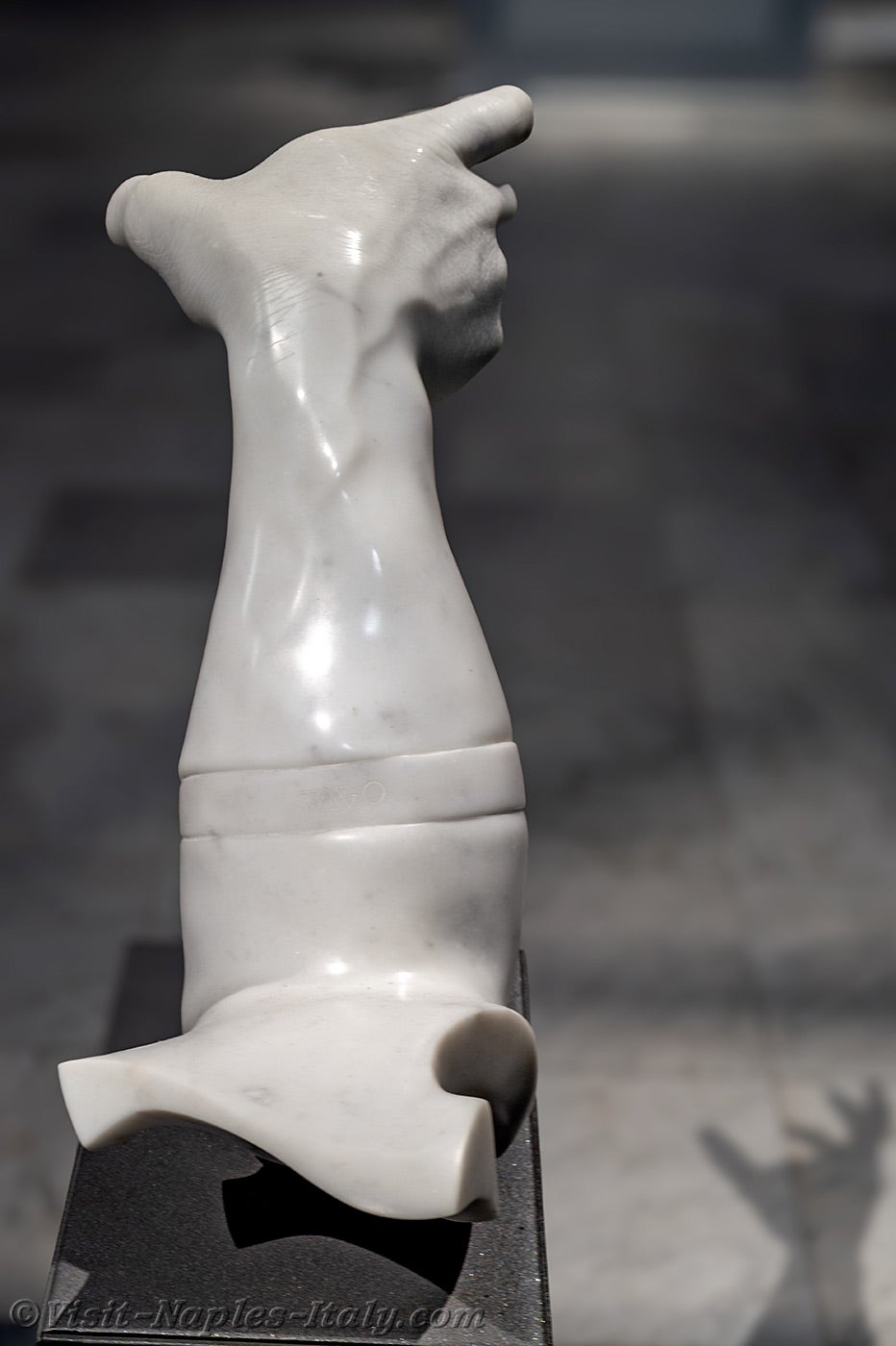
Jago - “Ego Laurentius”
Sculpture - Marble (39 x 55 x 15 cm) 2007-2022Ego Laurentius is one of Jago’s very first works.
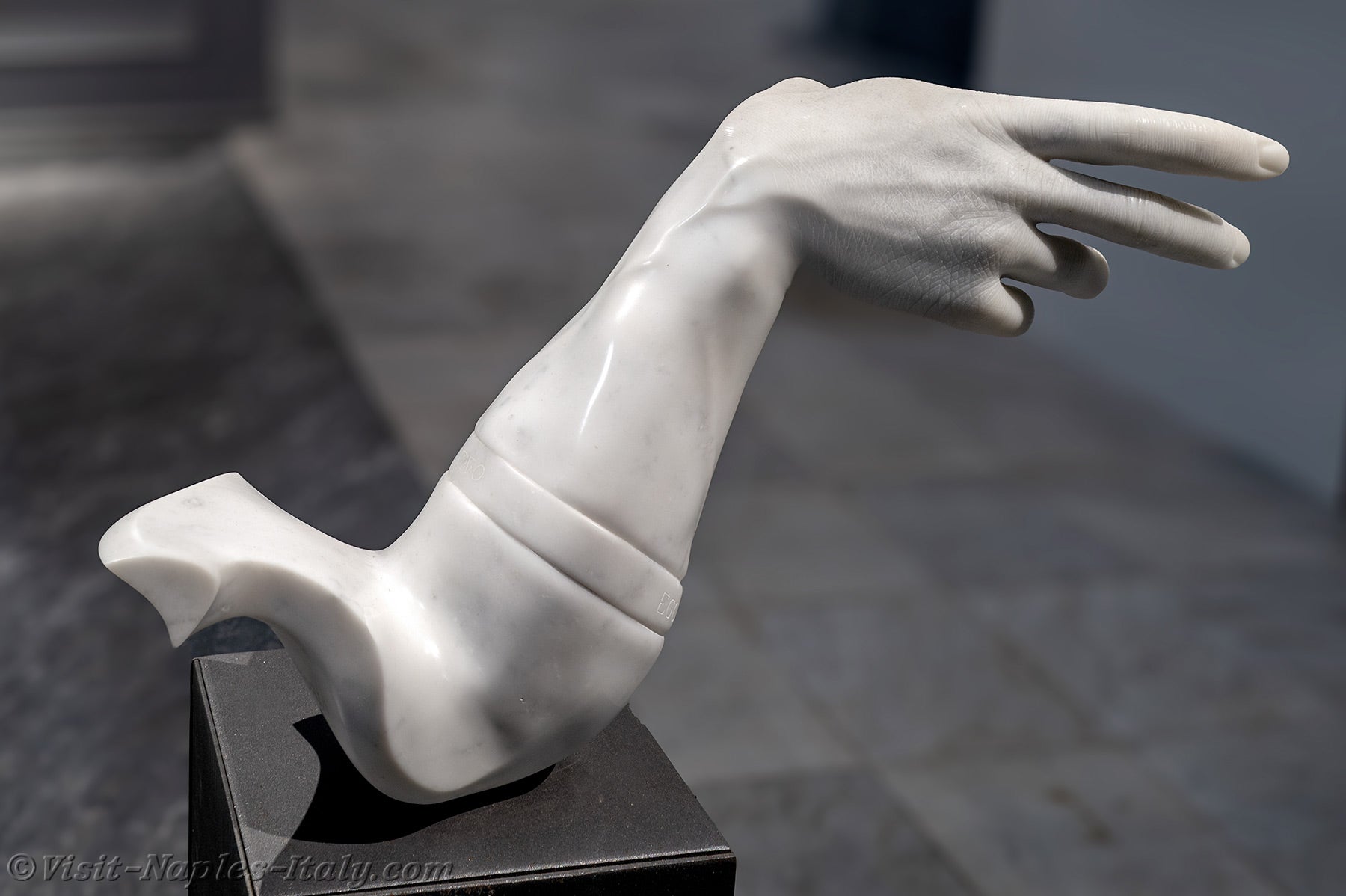
Jago, Ego Laurentius Here, Jago drew inspiration from Michelangelo’s fresco in the Sistine Chapel, where the hand of God is reaching out towards Adam’s.
This forearm and hand are those of Jago, who sculpted his own hand here: a work created before he was 20, which already foreshadowed his exceptional talent.
Given that hands are difficult to depict, for both sculptors and painters, one cannot help but admire this lifelike hand reaching out, and opening as it delicately unfolds its fingers.
Jago “Integration”
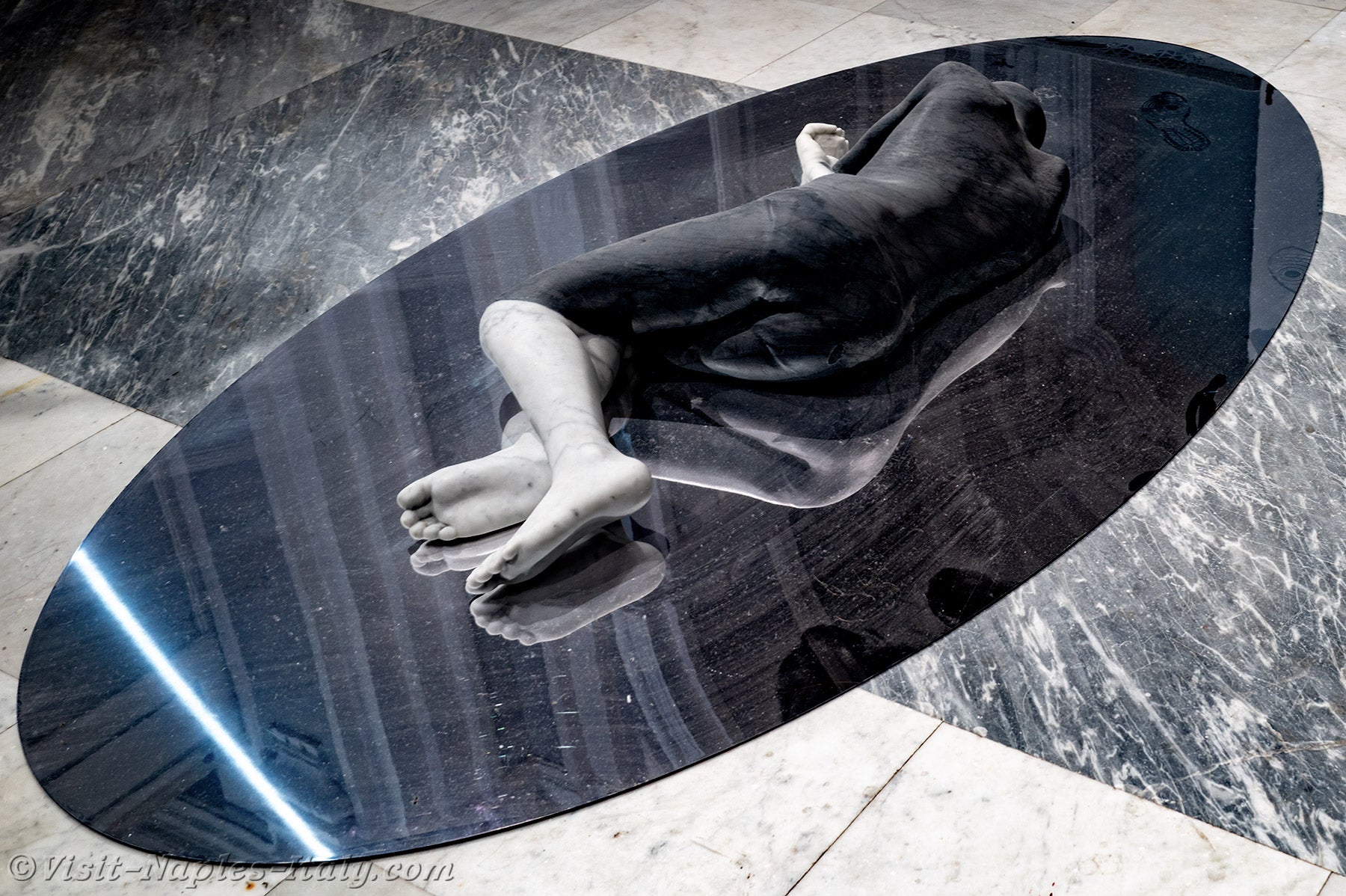
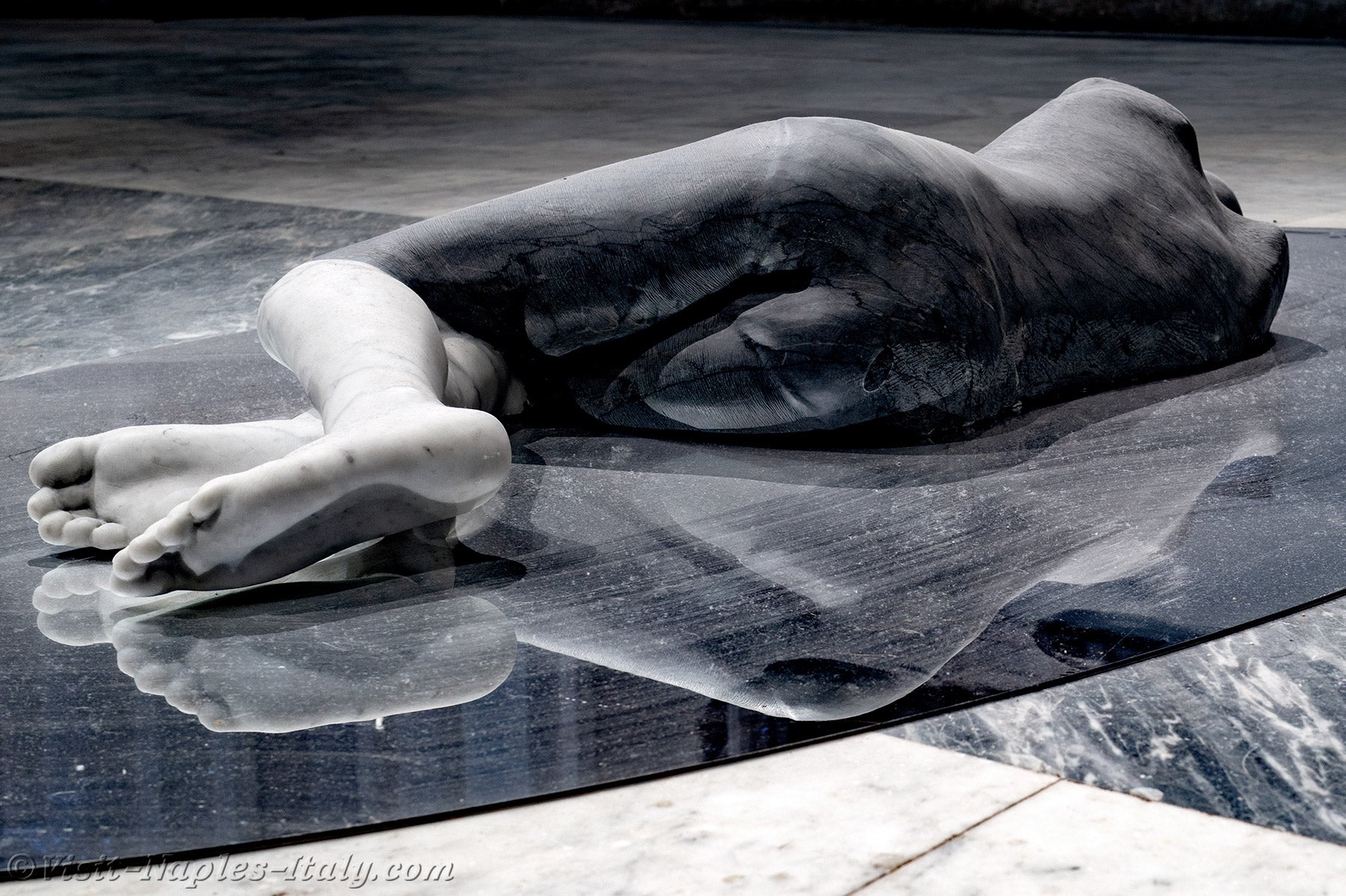
Sculpture - Cattani marble (24 x 50 x 135 cm) 2022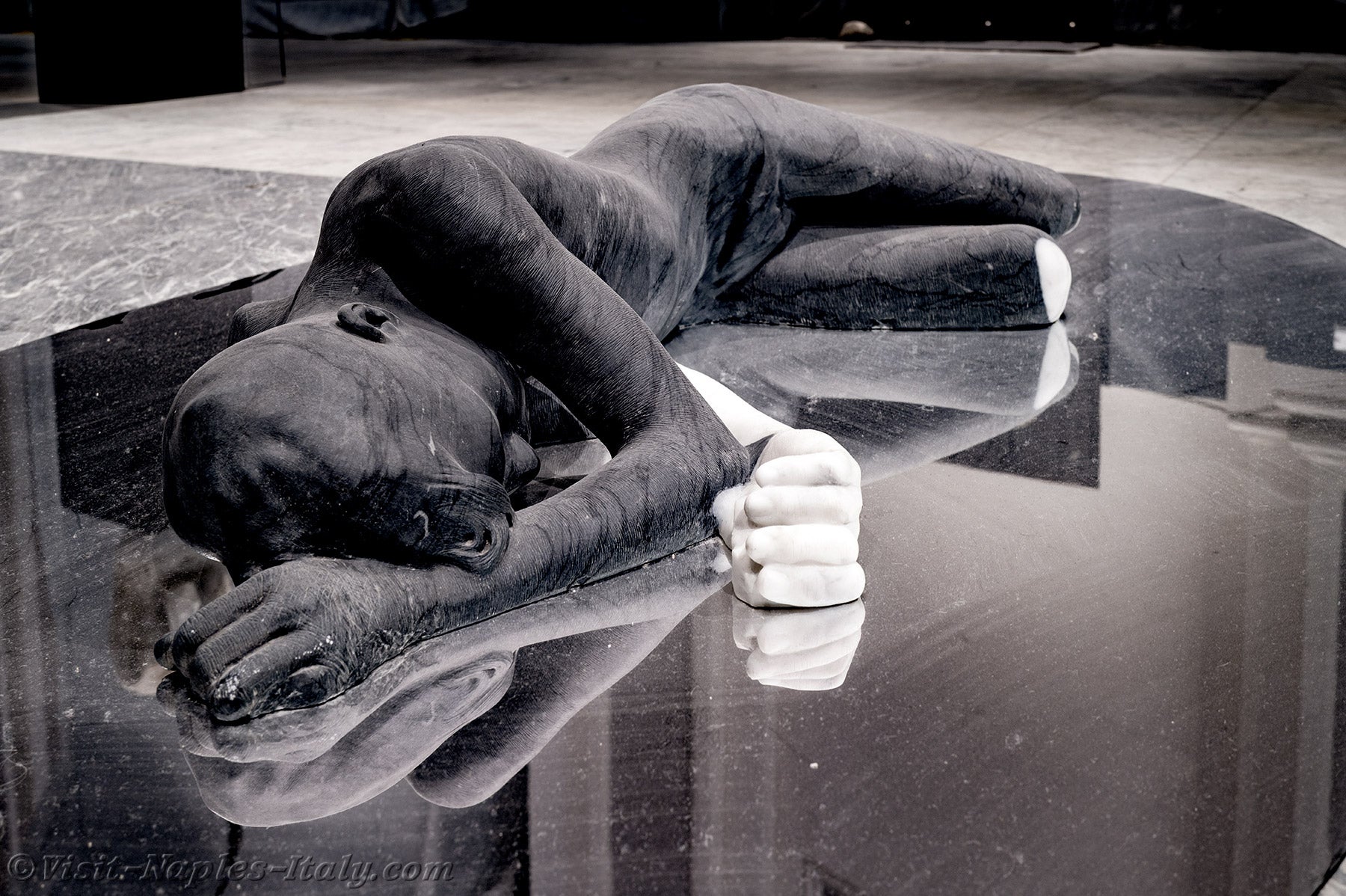
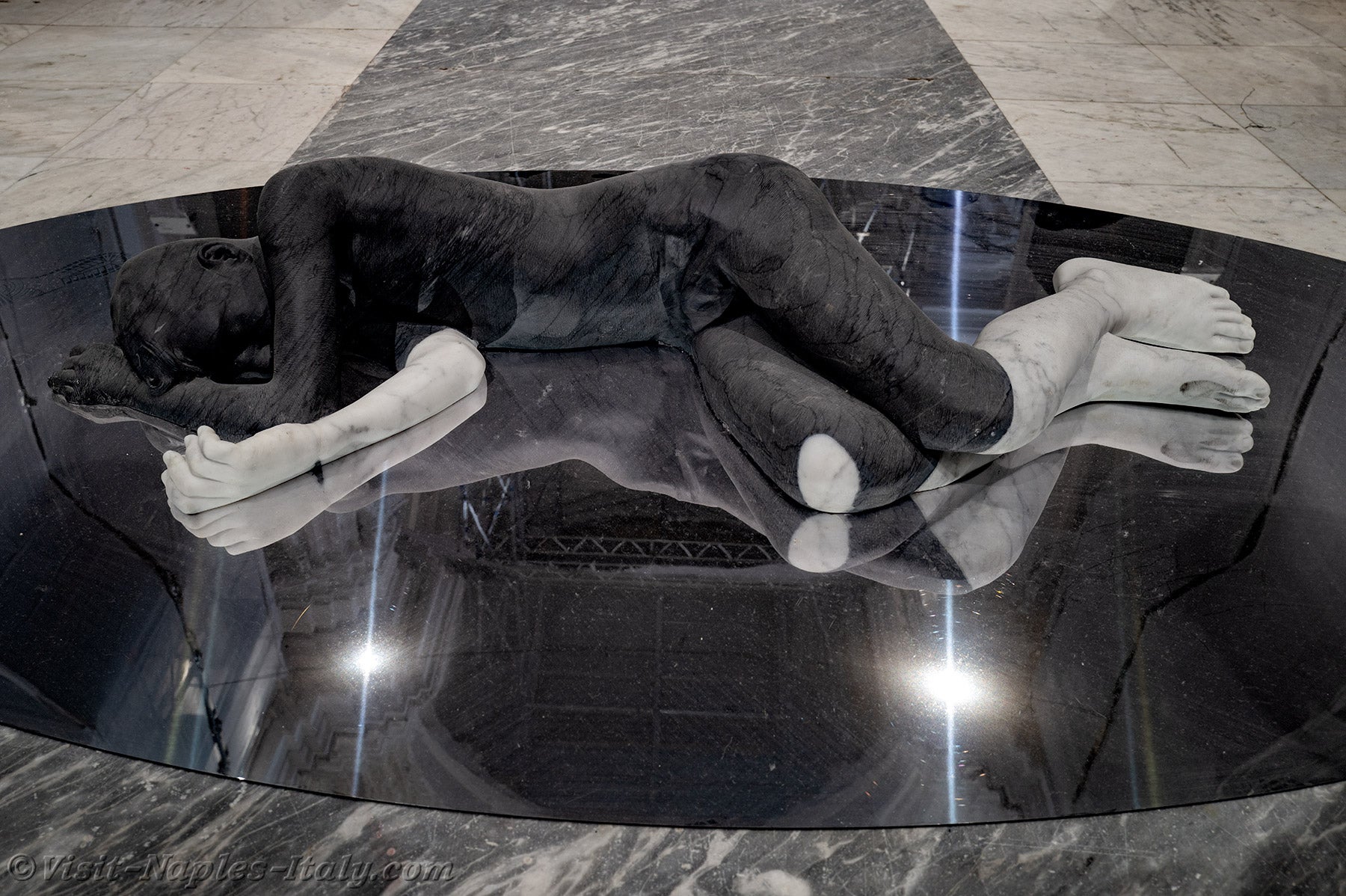
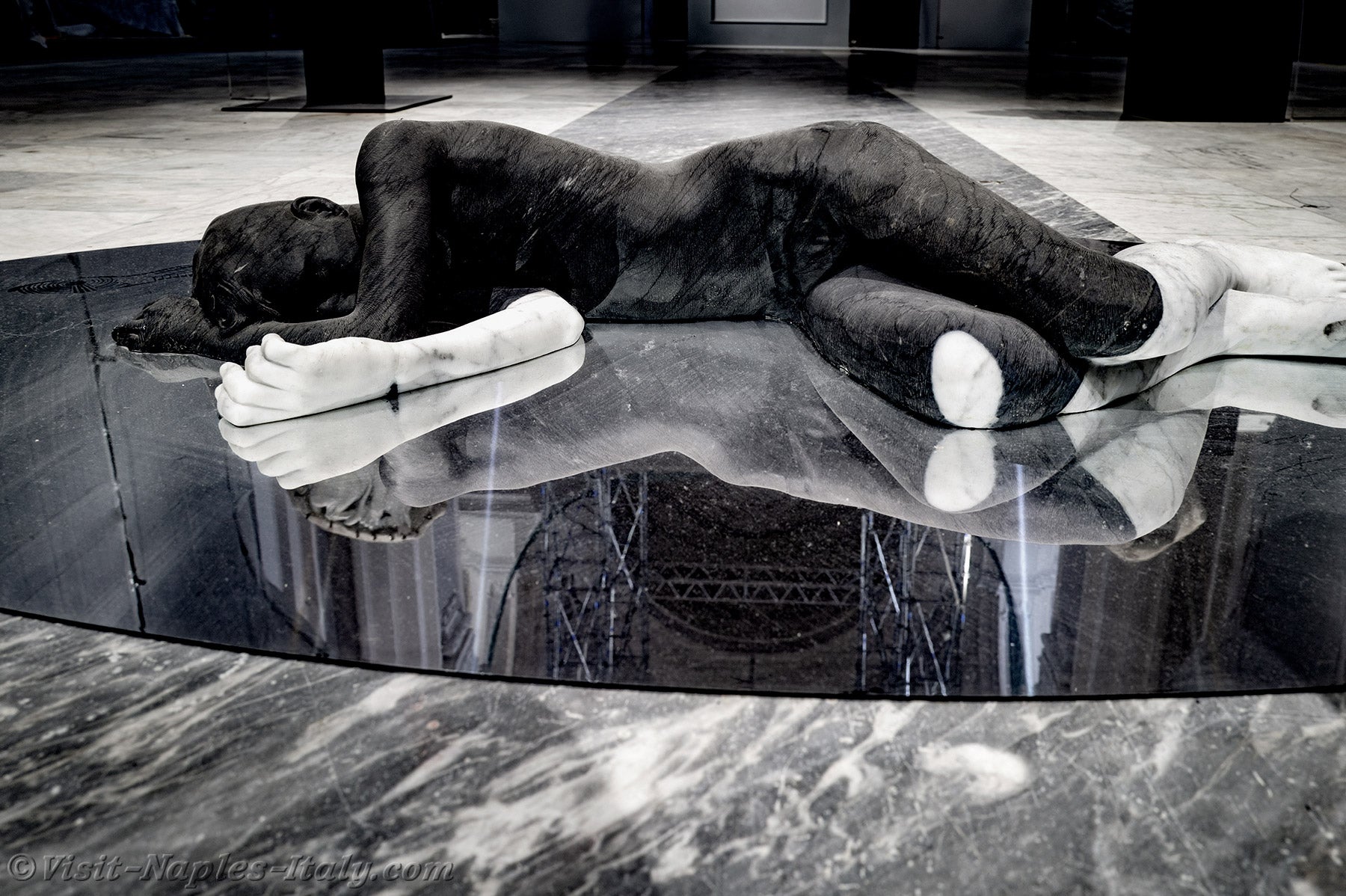
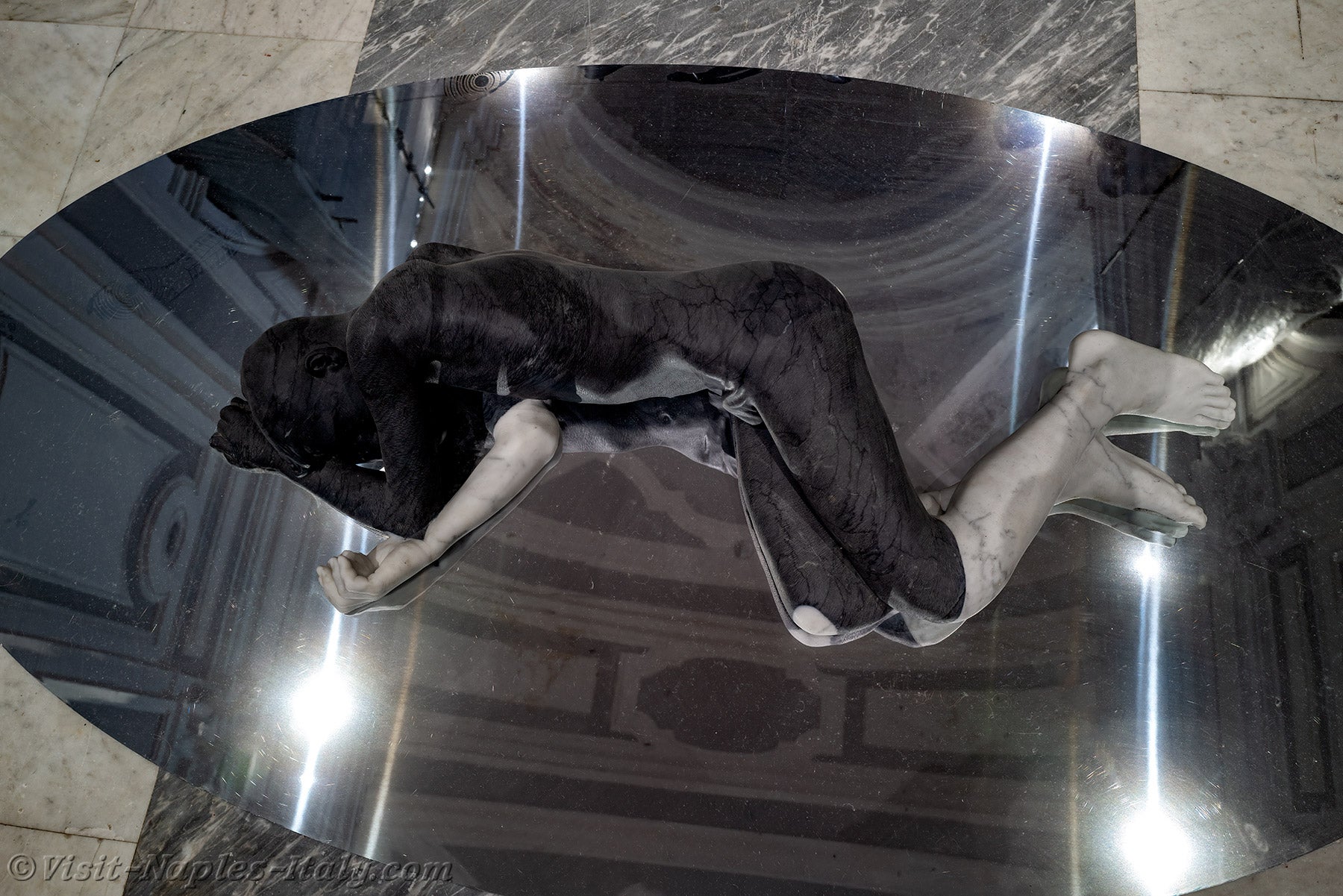
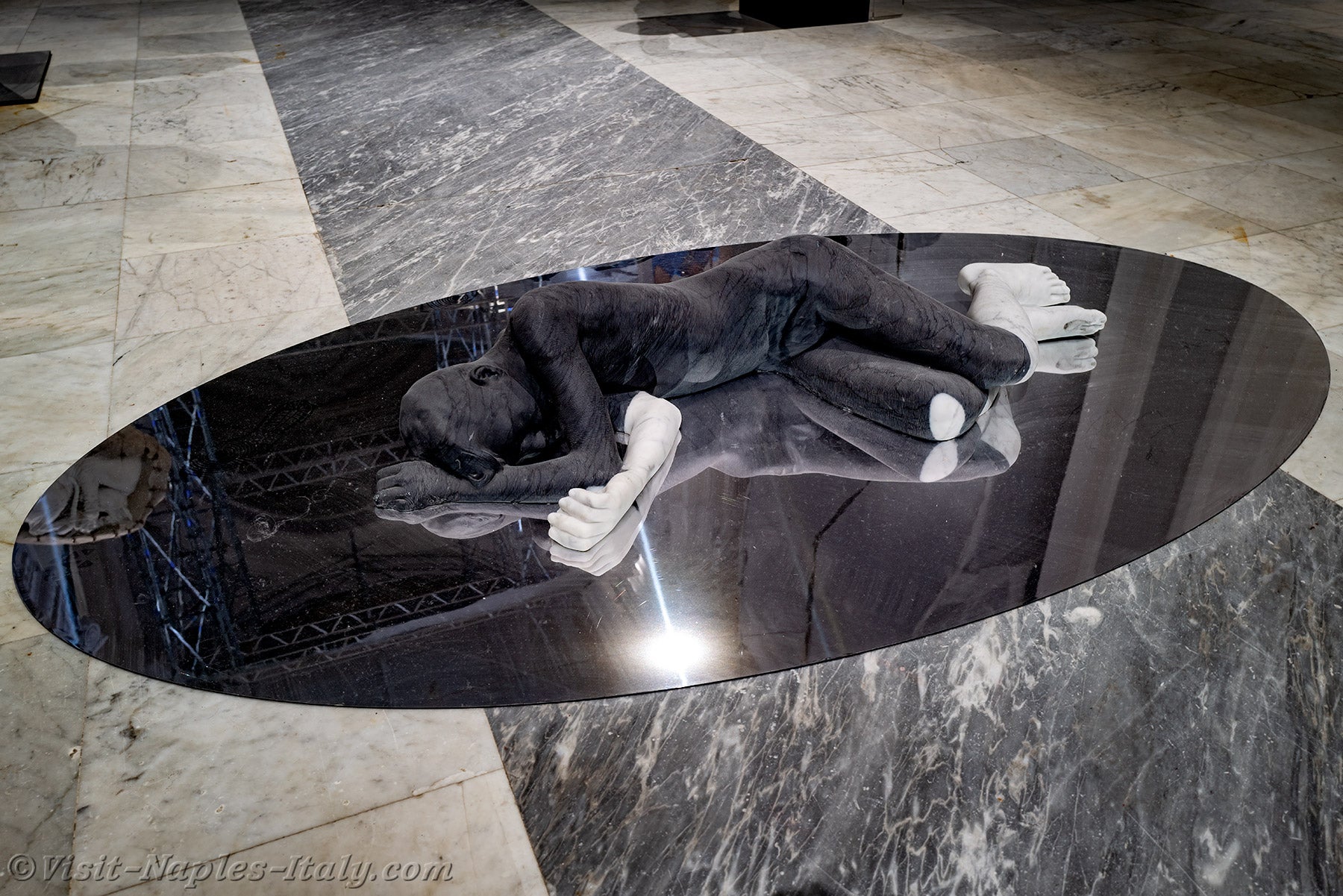
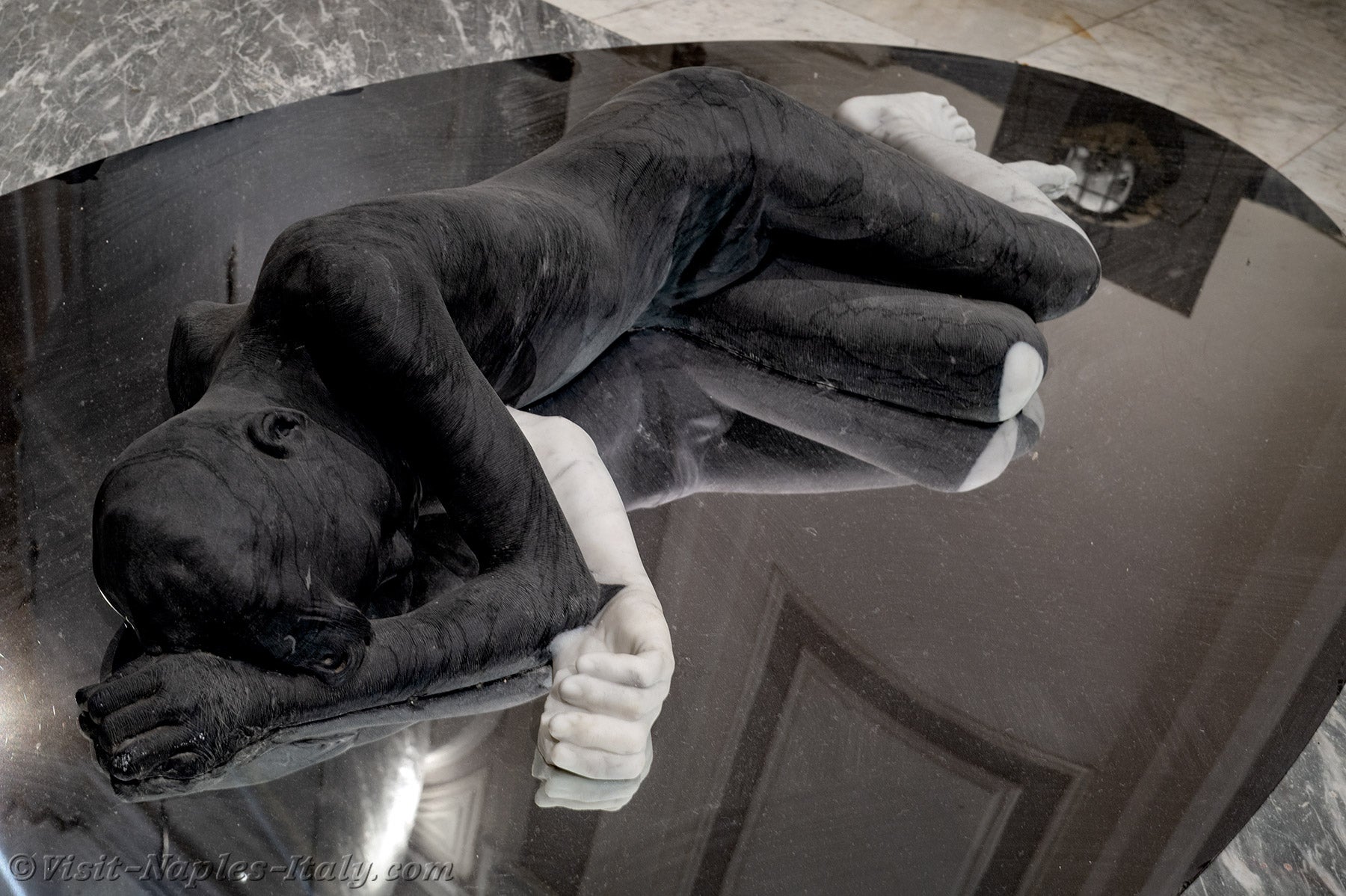
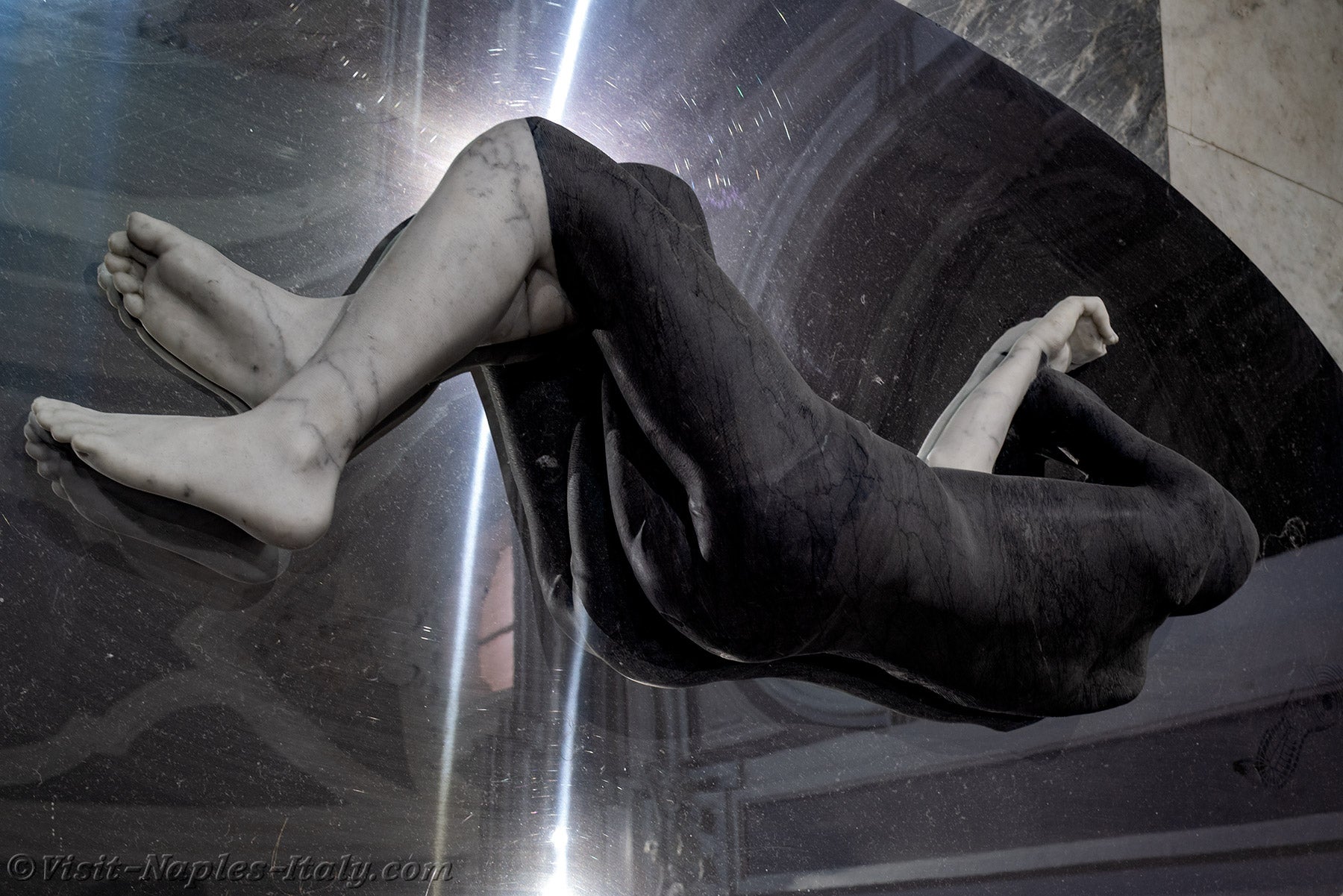
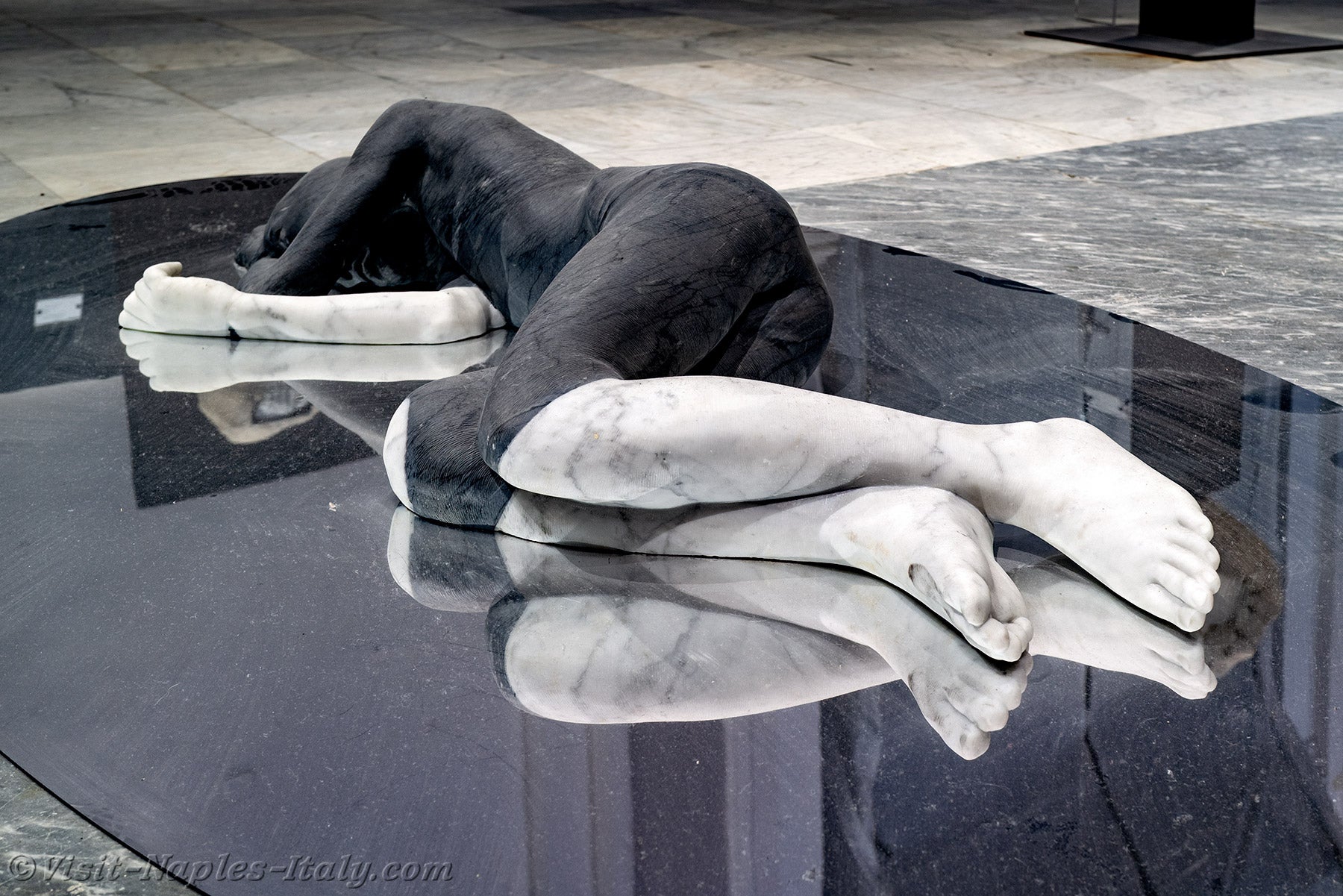
Jago, Integration This sculpture depicts a young man wearing nothing but a pair of briefs, lying on a smooth marble surface that reflects his body like the surface of the water on a sandy beach.
This man, carved from white and black marble, evokes the migrants who cross the sea to escape conflict and suffering.
One can sense that his long and perilous journey has exhausted him to the point of leaving him unconscious on the beach when he finally reached dry land.
Having no strength left to get up, he sleeps so deeply that he is oblivious to the seawater covering the sand on the beach.
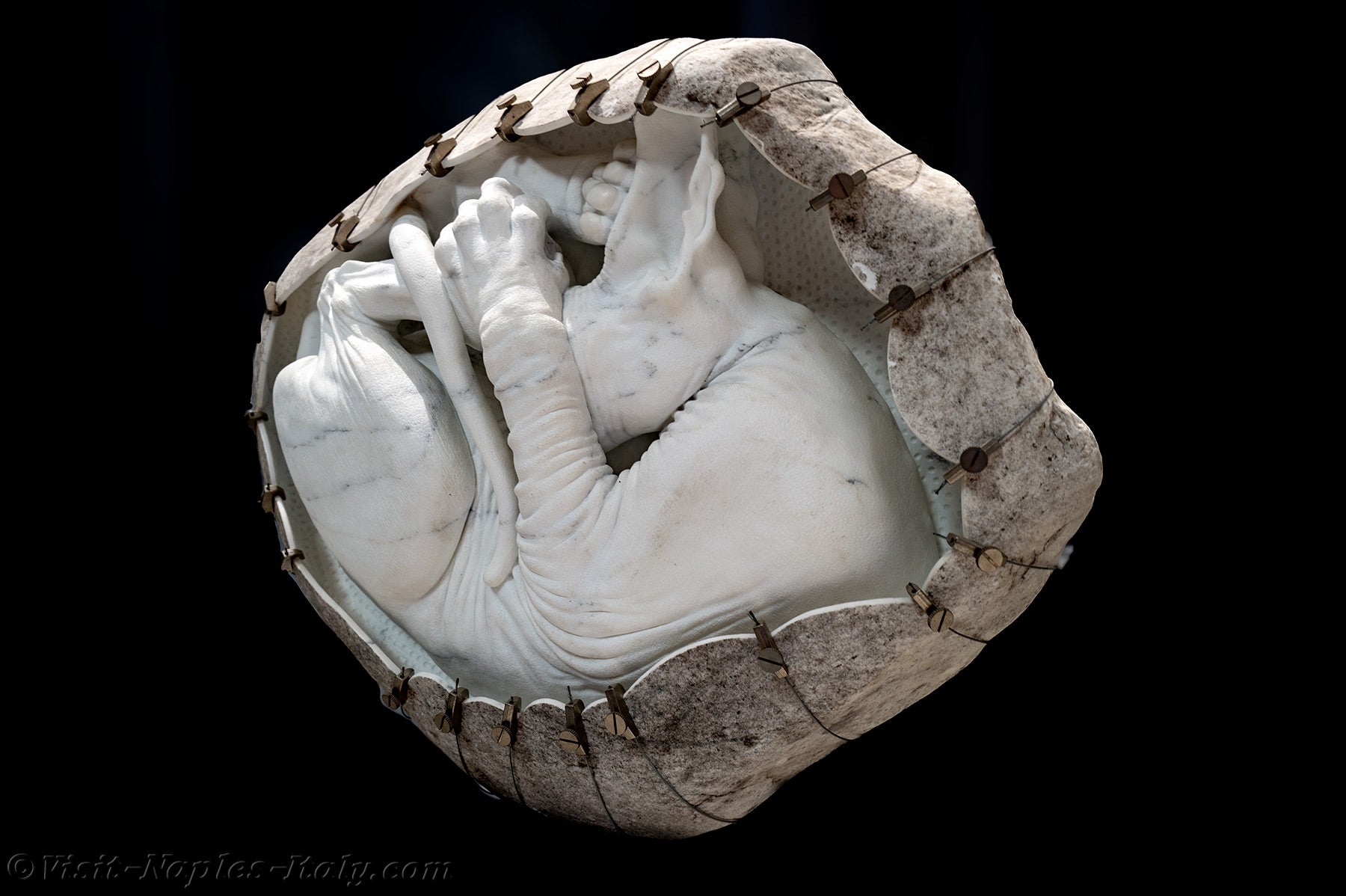
Jago “Sphynx”
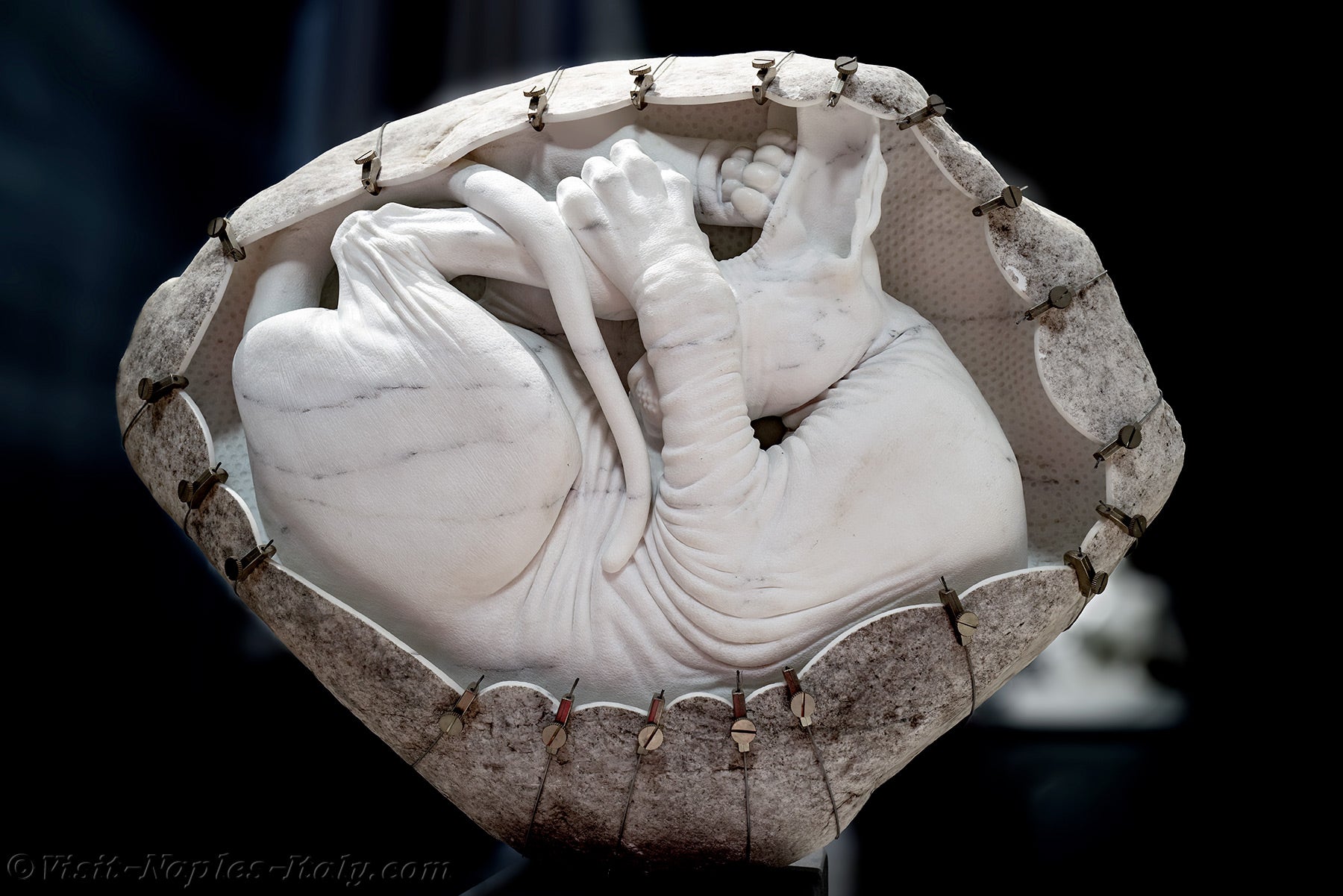
Jago, Sphynx Sculpture - Marble (65 x 50 x 30) 2015
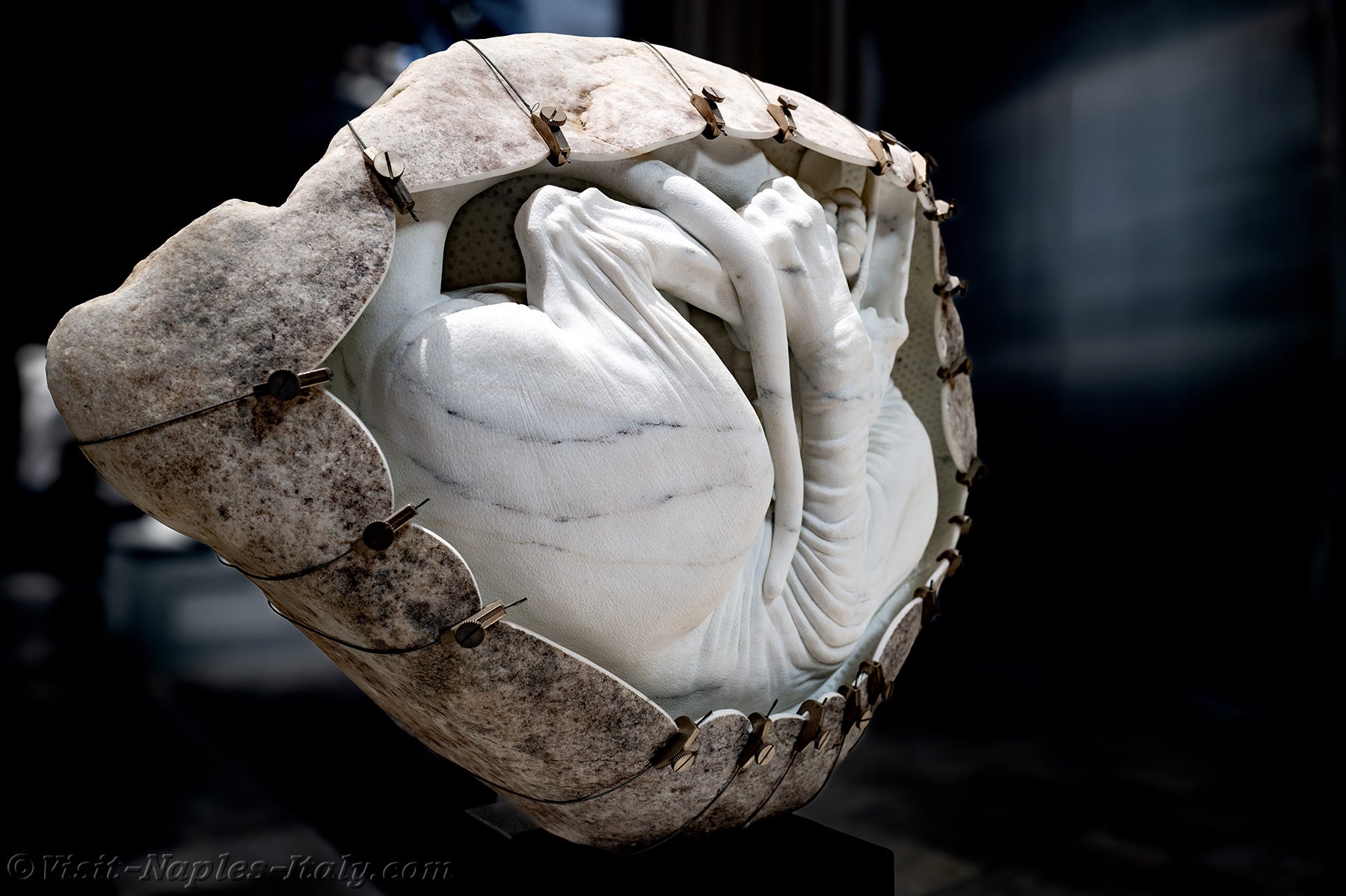
Sphinx is a sculpture depicting the foetus of a feline still in the womb within its mother’s uterus.
It shields its head with its paws, as if it did not want to see the light, as if it feared the outside world and preferred to remain in its mother’s womb.
A metaphor for some of our reactions to the contemporary world around us.
Jago “Airavata”
Sculpture - Marble (100 x 200 x 82 cm) 2015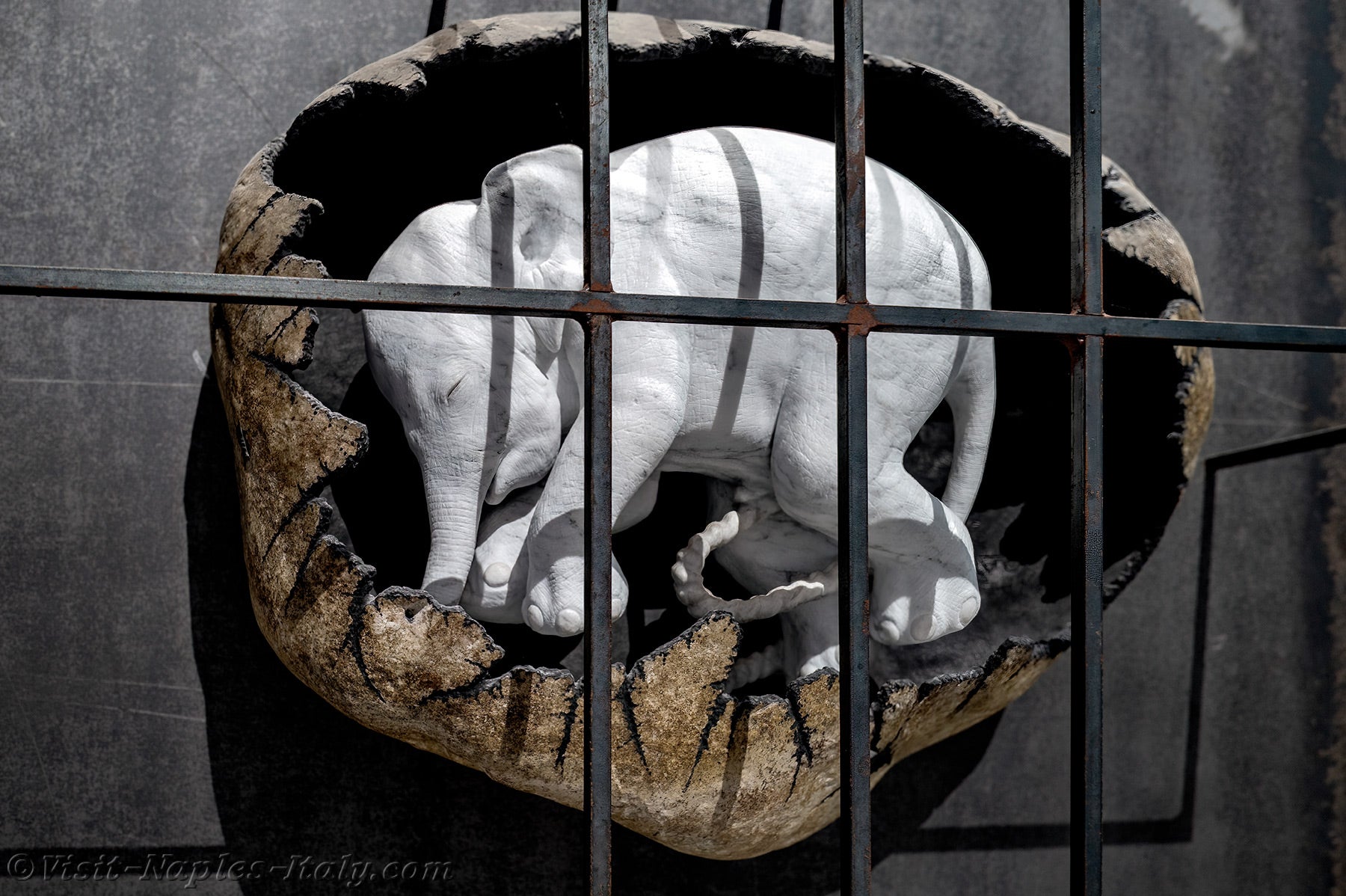
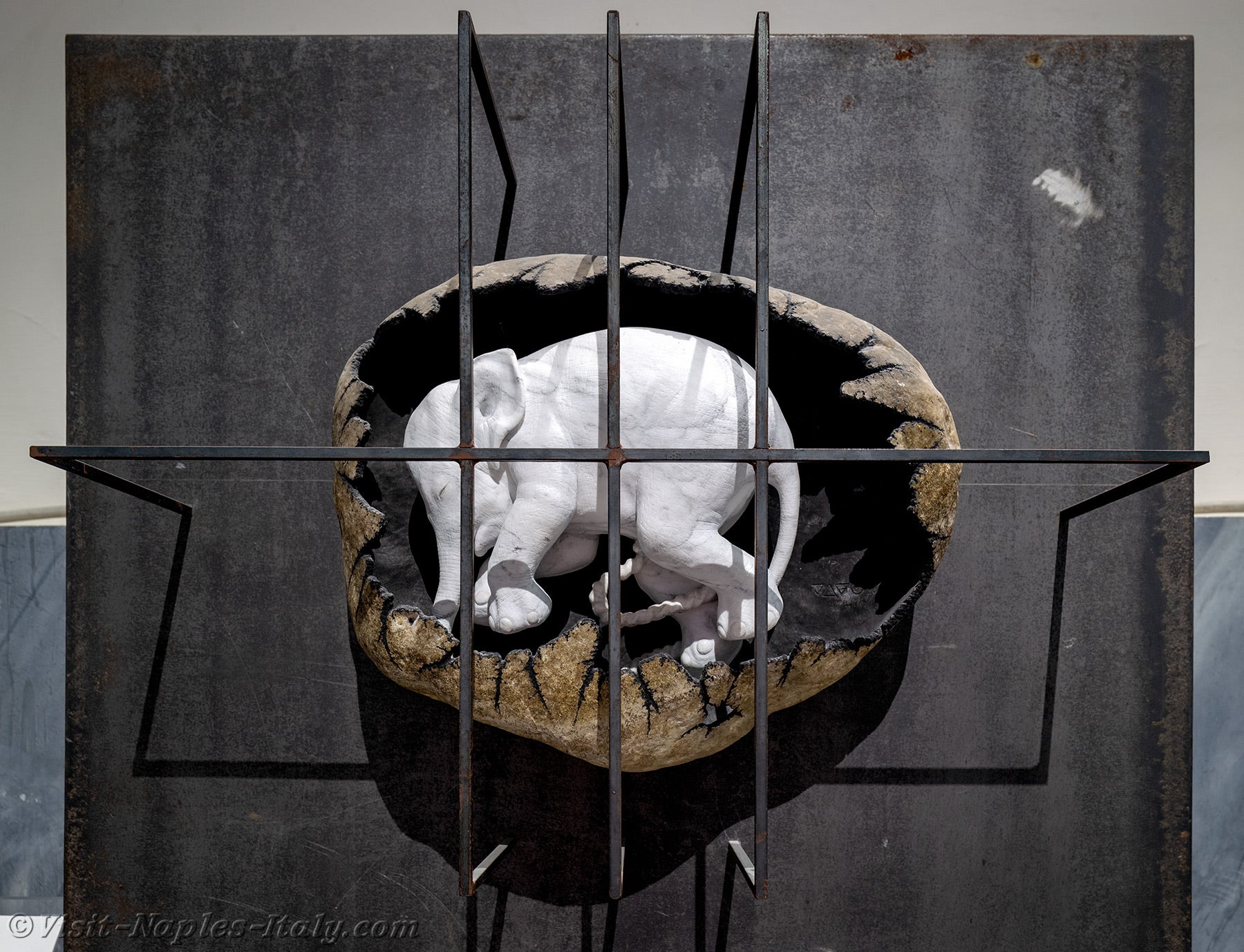
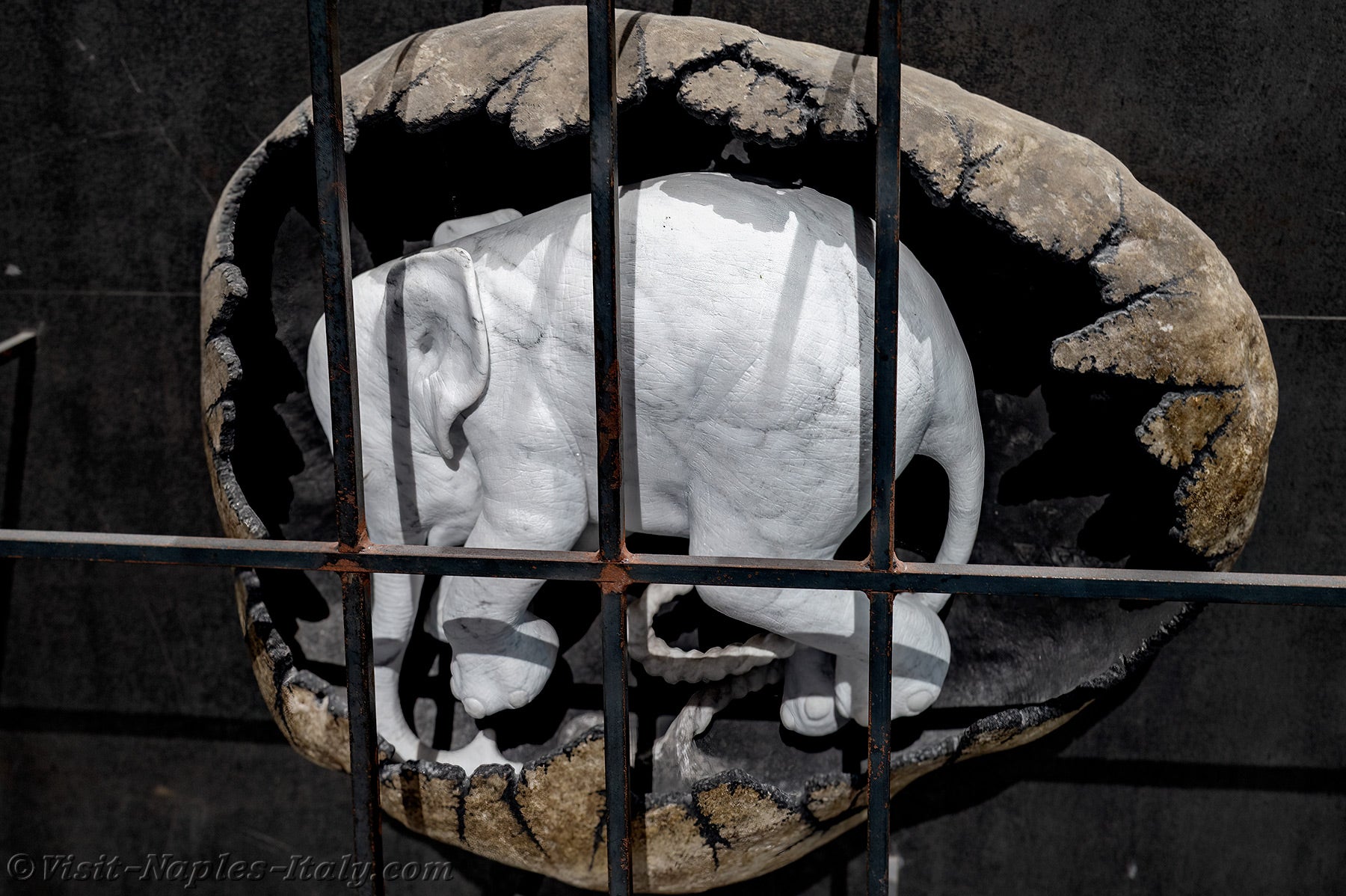
Jago, Airavata The white elephant Airavata was the king of the celestial elephants and the mount of the Hindu god Indra.
Jago’s sculpture depicts Airavata still in the womb of the heavens, his umbilical cord clearly visible between his legs.
Are the bars there to protect him or to imprison him?
Airavata has clearly lost his celestial status by becoming a poor, unborn creature in the womb of a female elephant confined behind the bars of a zoo.
As with the sculpture of the Sphinx, Jago leaves us to imagine the answer.
Jago “Container”
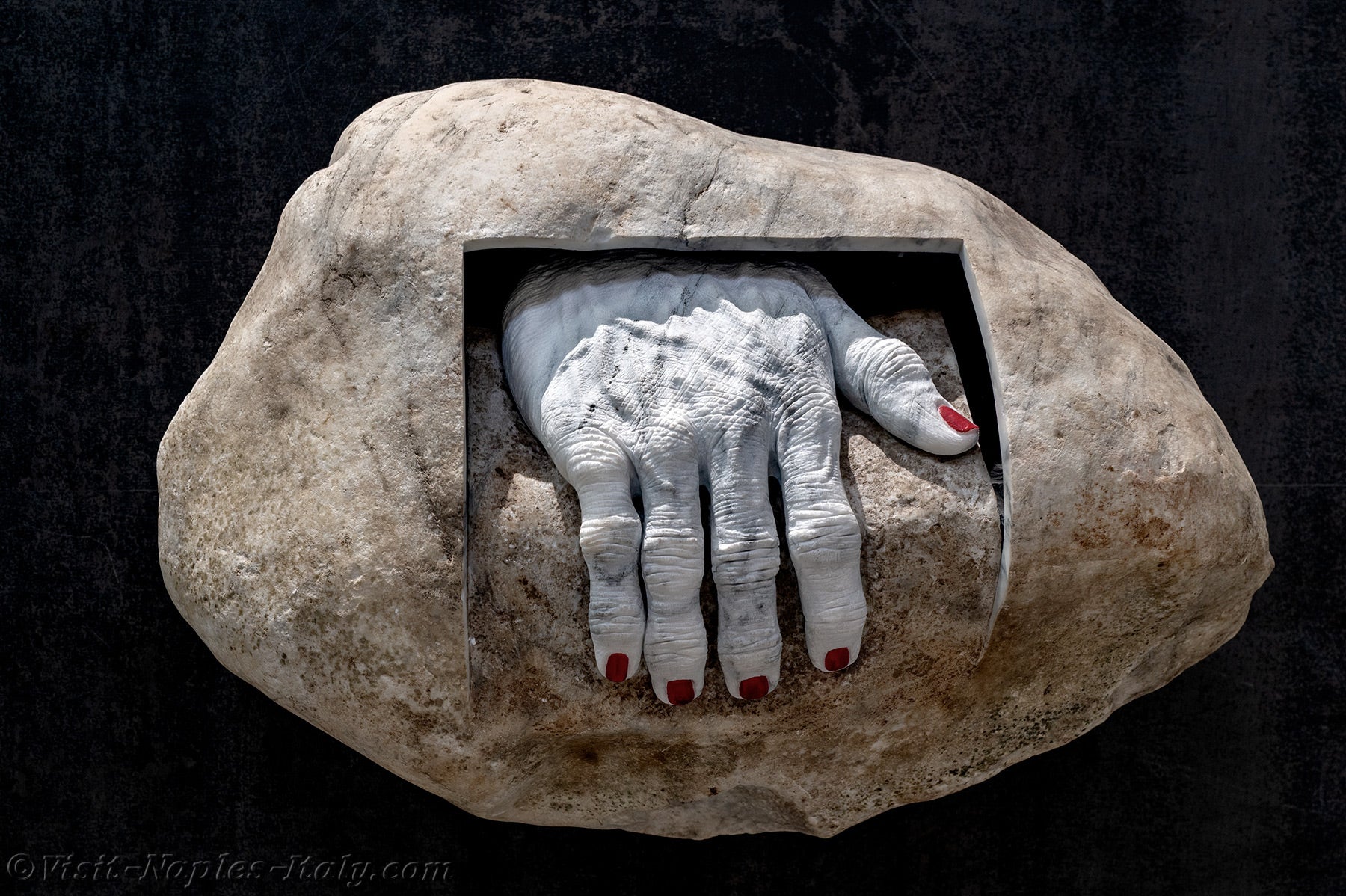
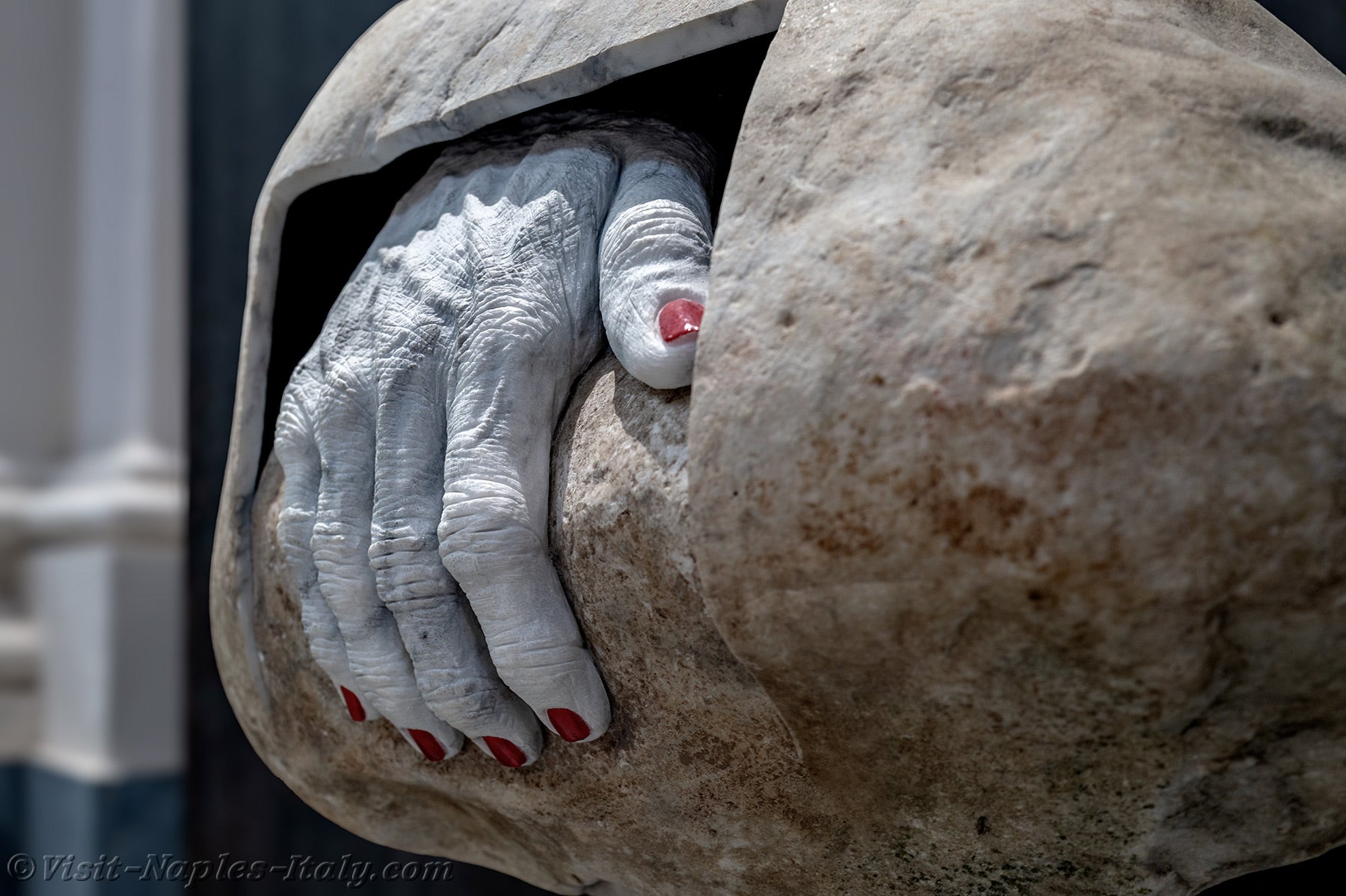
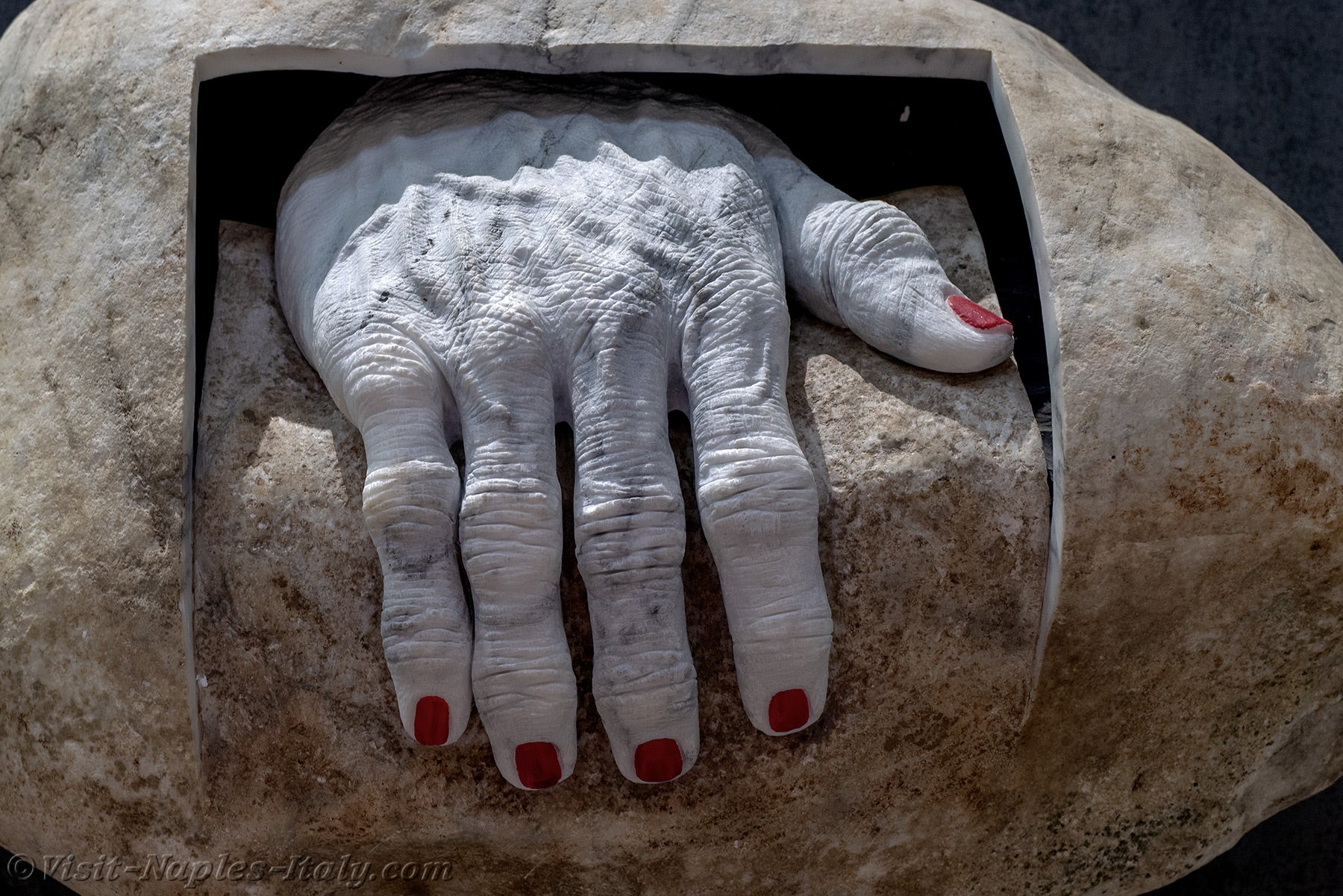
Jago, Container Sculpture - Marble, river stone (100 x 200 x 82 cm) 2014
From a symbolic point of view, “Container” is quite similar to the two previous sculptures.
It is unclear whether the person to whom this hand belongs chose to remain hidden, sheltered from view and from the world, or whether they were imprisoned, cloistered and exploited until their death.
It is clear that this hand belongs to an elderly person, more specifically to a woman whose nails are painted red.
Jago “Mineral Muscle”
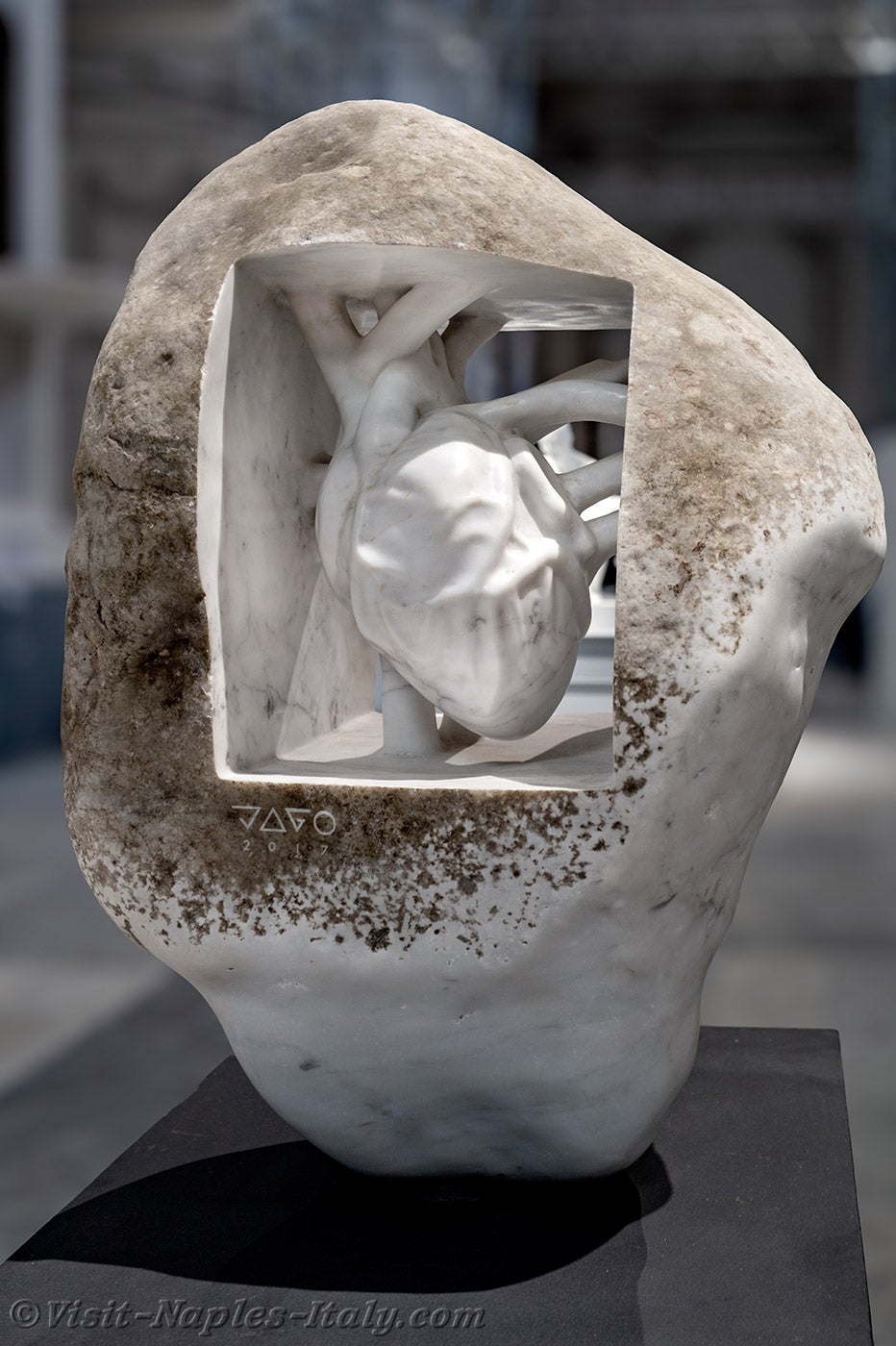
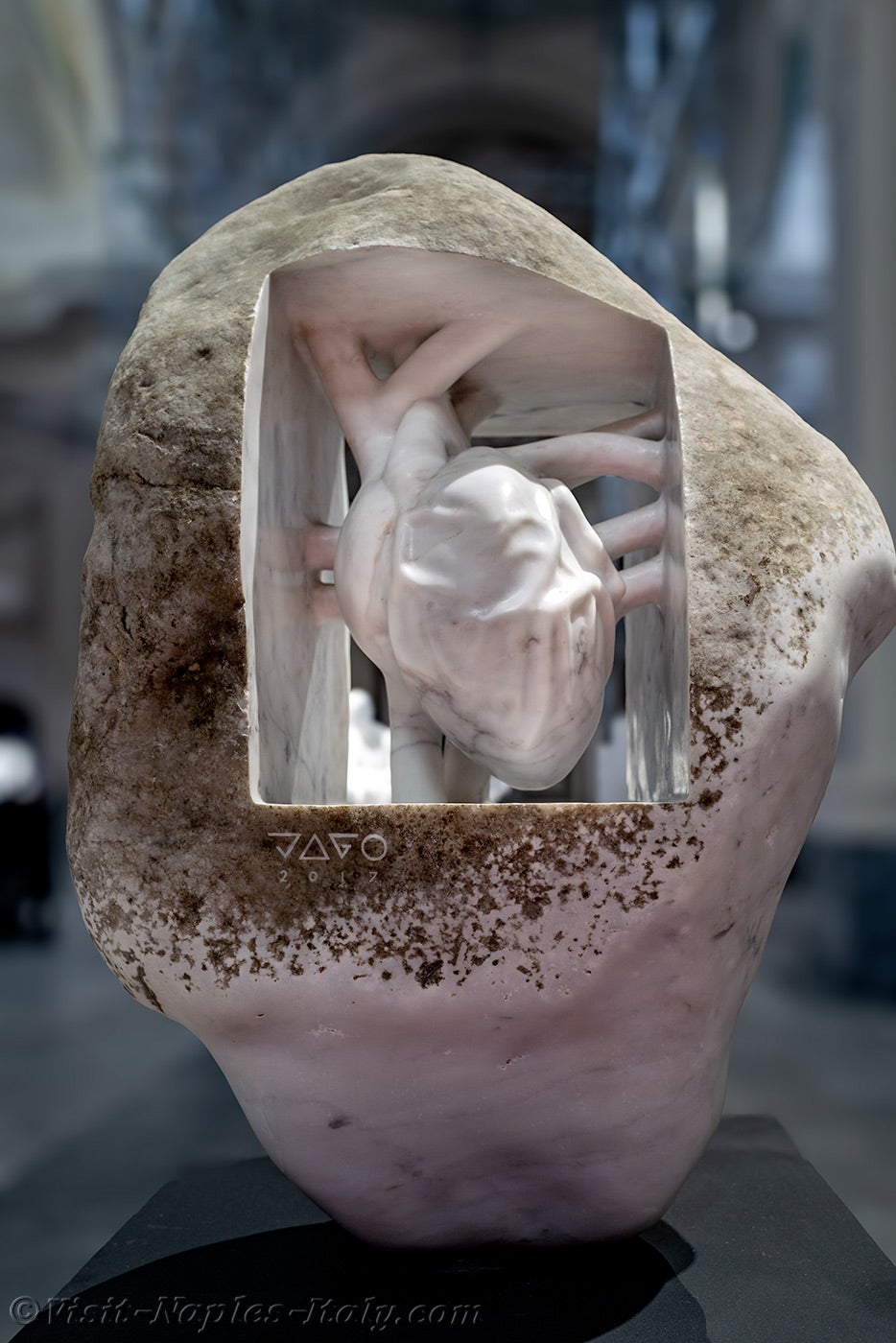
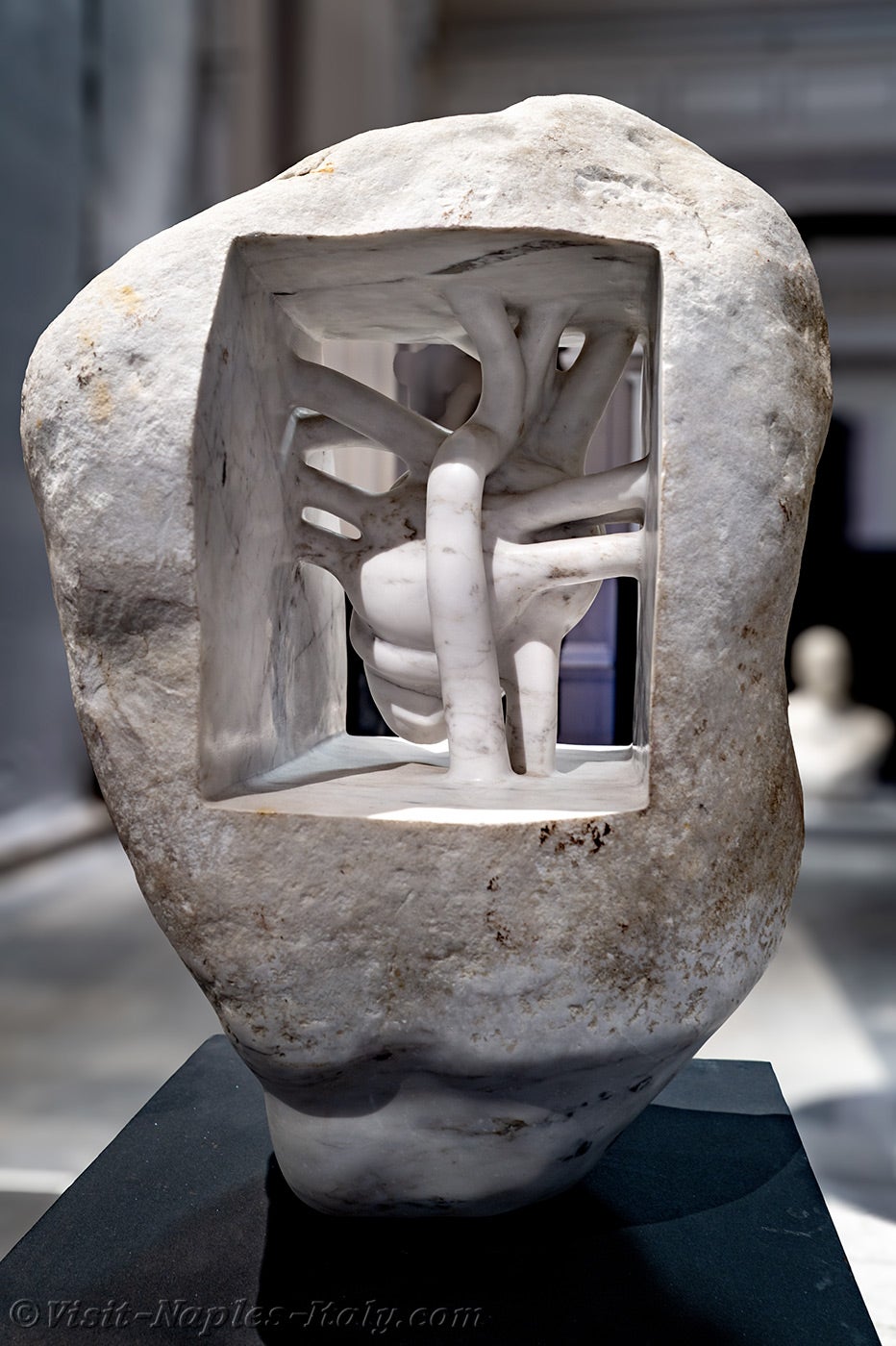
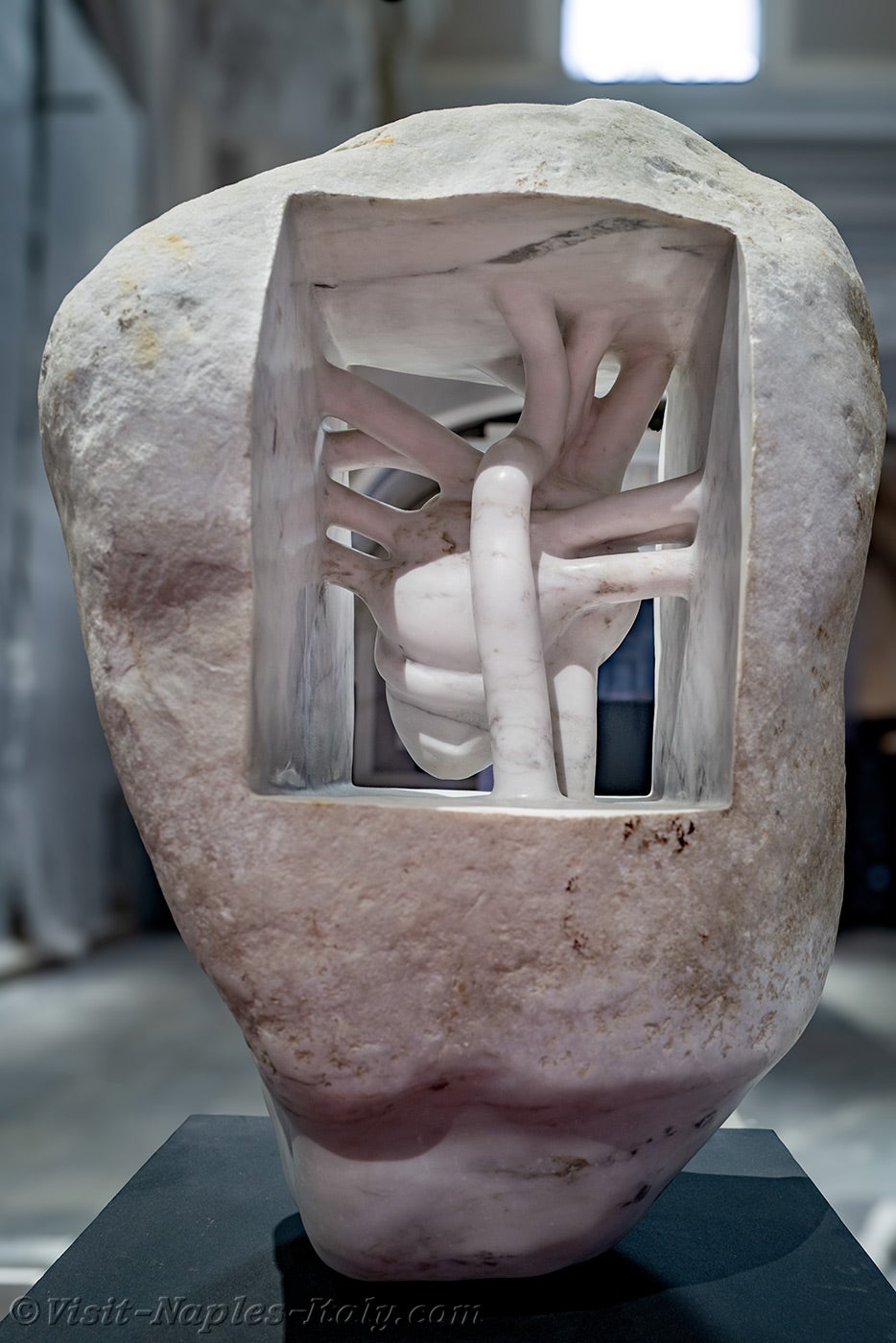
Sculpture - Marble, river stone (60 x 40 x 30 cm) 2017This ‘mineral muscle’, as Jago calls it, was carved from a piece of marble that had fallen from a quarry overlooking a river.
Over time, the pieces of marble tumbled down the mountain and were eventually rounded and polished by the water and friction at the riverbed.
Working from the shape created by natural erosion - albeit a random one - Jago hollowed out this block of marble whilst preserving its appearance and carving into it a living organ, which nourishes the stone through the vessels connected to it.
The works Narcissus | Ajax Cassandra | The Veiled Son | Pietà | Self-portrait | Venus | From Foetus to Ego
Jago The works Schedule Tickets Location | Authorizations
Back to Top of Page