

Jago The works Schedule Tickets Location | Authorizations
The works Narcissus | Ajax Cassandra | The Veiled Son | Pietà | Self-portrait | Venus | From Foetus to Ego
Jago’s sculpture of the male and female Narcissus, at the Jago Museum in Naples
Jago’s “Narcissus”
Sculpture - Marble (160 x 88 50 cm) 2023Everyone knows the story of Narcissus, who fell so deeply in love with his reflection in the water of a fountain that he lost his life.
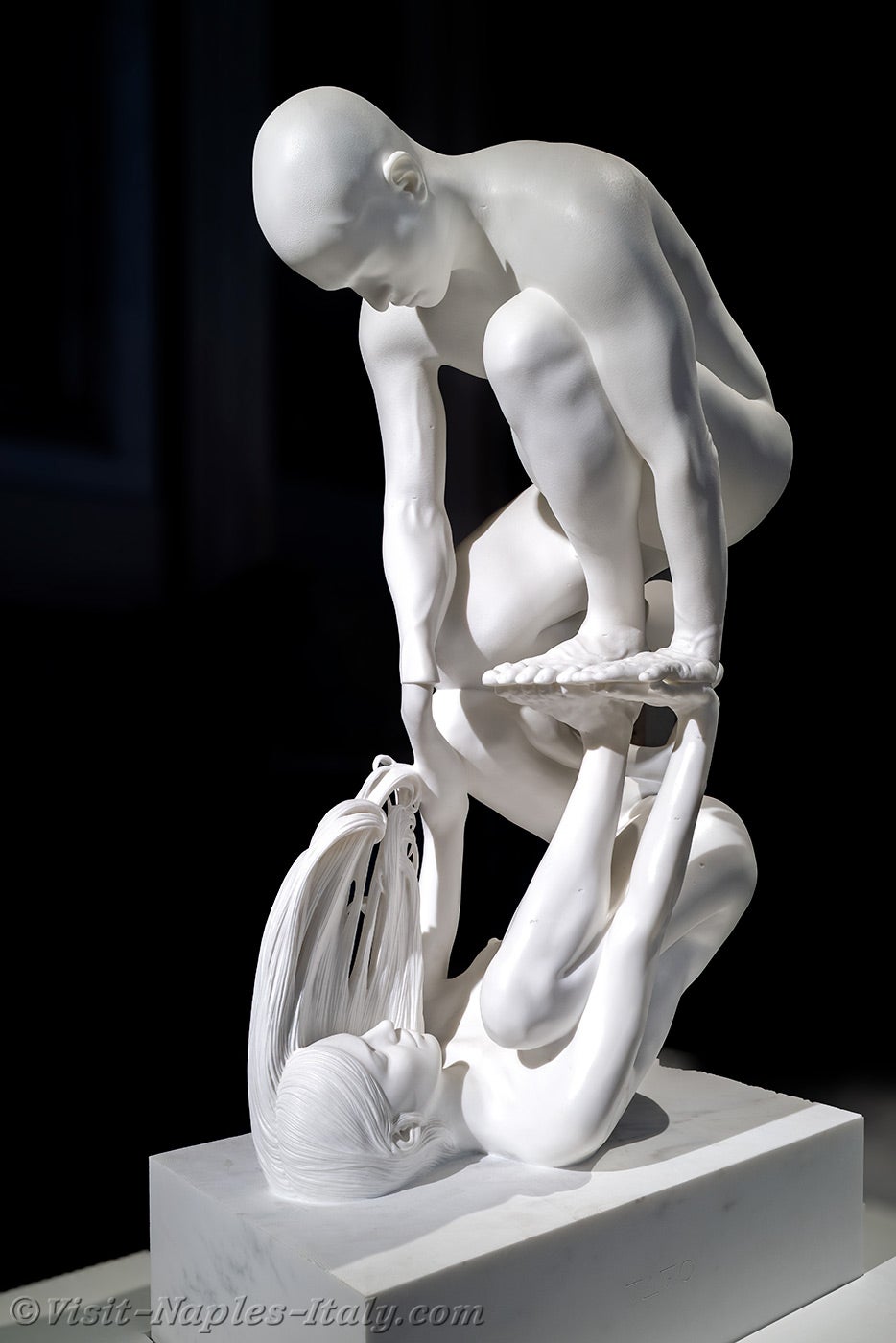
Jago, Narcissus But there is another version of this legend, cited by Pausanias between 160 and 180 AD, in which Narcissus does not fall in love with his own image, but with that of his twin sister who resembled him in every way, except for her female sex.
She was as beautiful as Narcissus, and he eventually fell in love with his own sister; unfortunately, she died in the prime of her youth and Narcissus was deeply affected by this.
However, whilst gazing at his reflection in the water of a fountain, he thought he saw his own sister and fell in love with the image of the one he had lost.
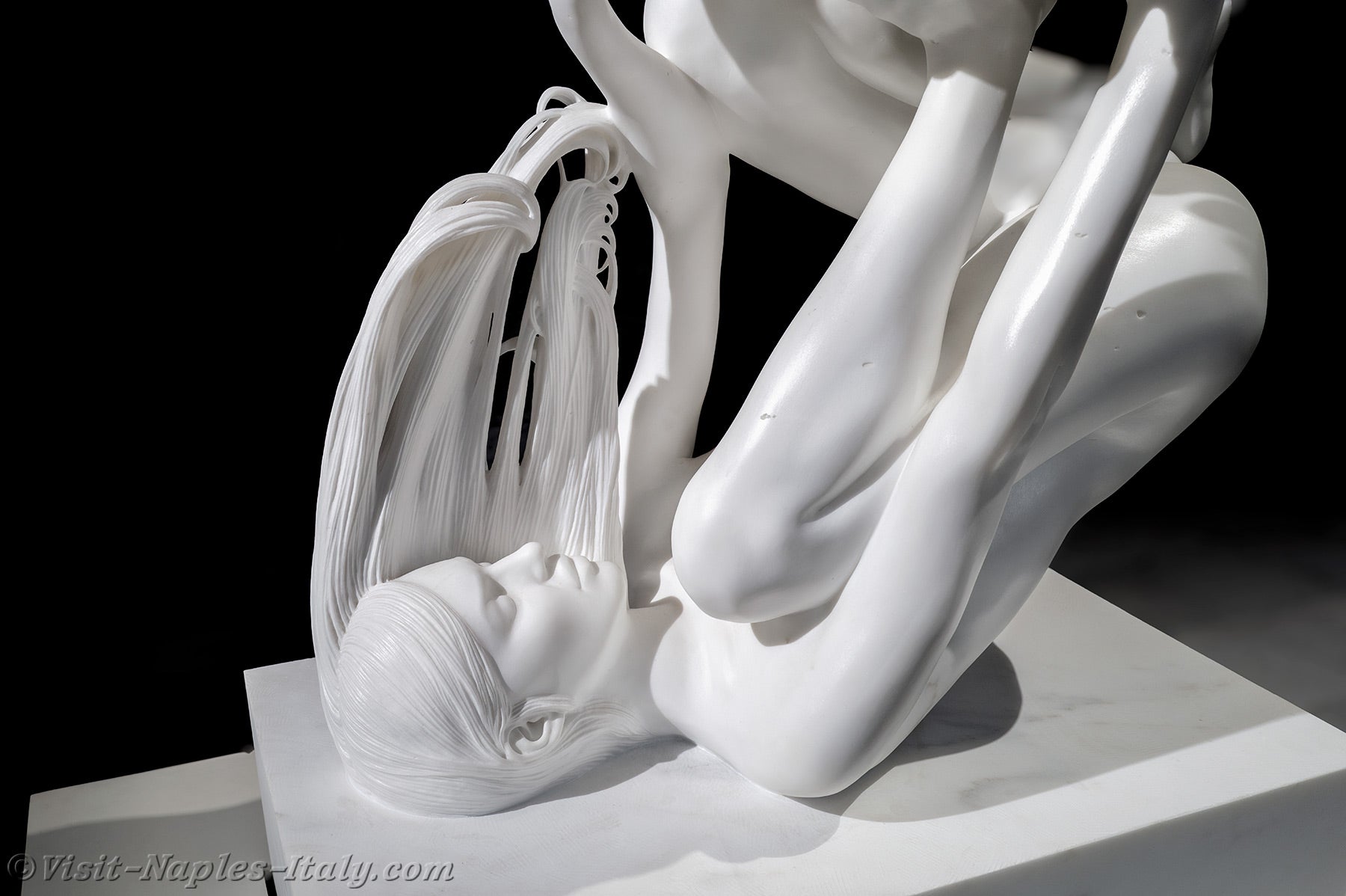
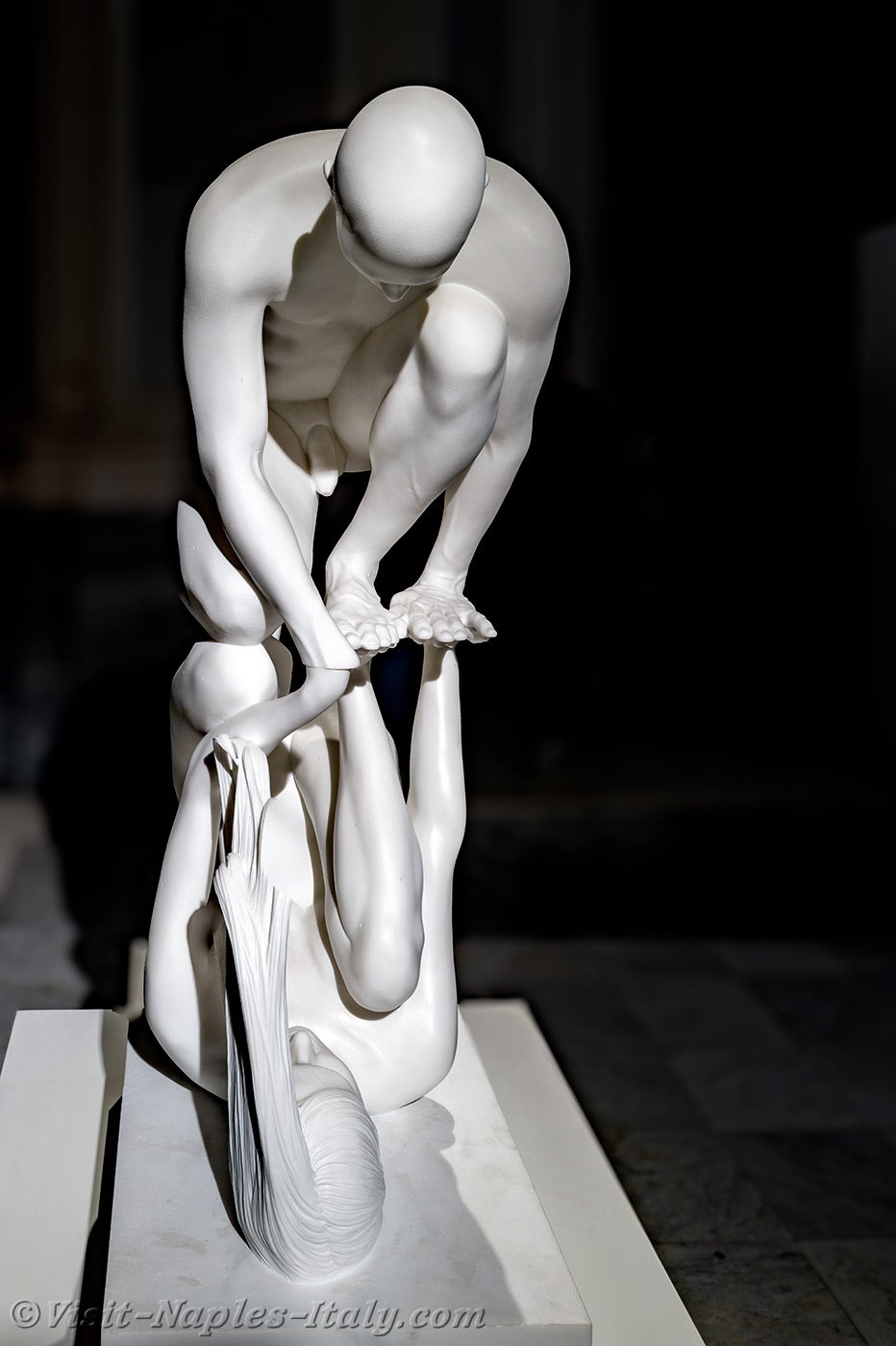
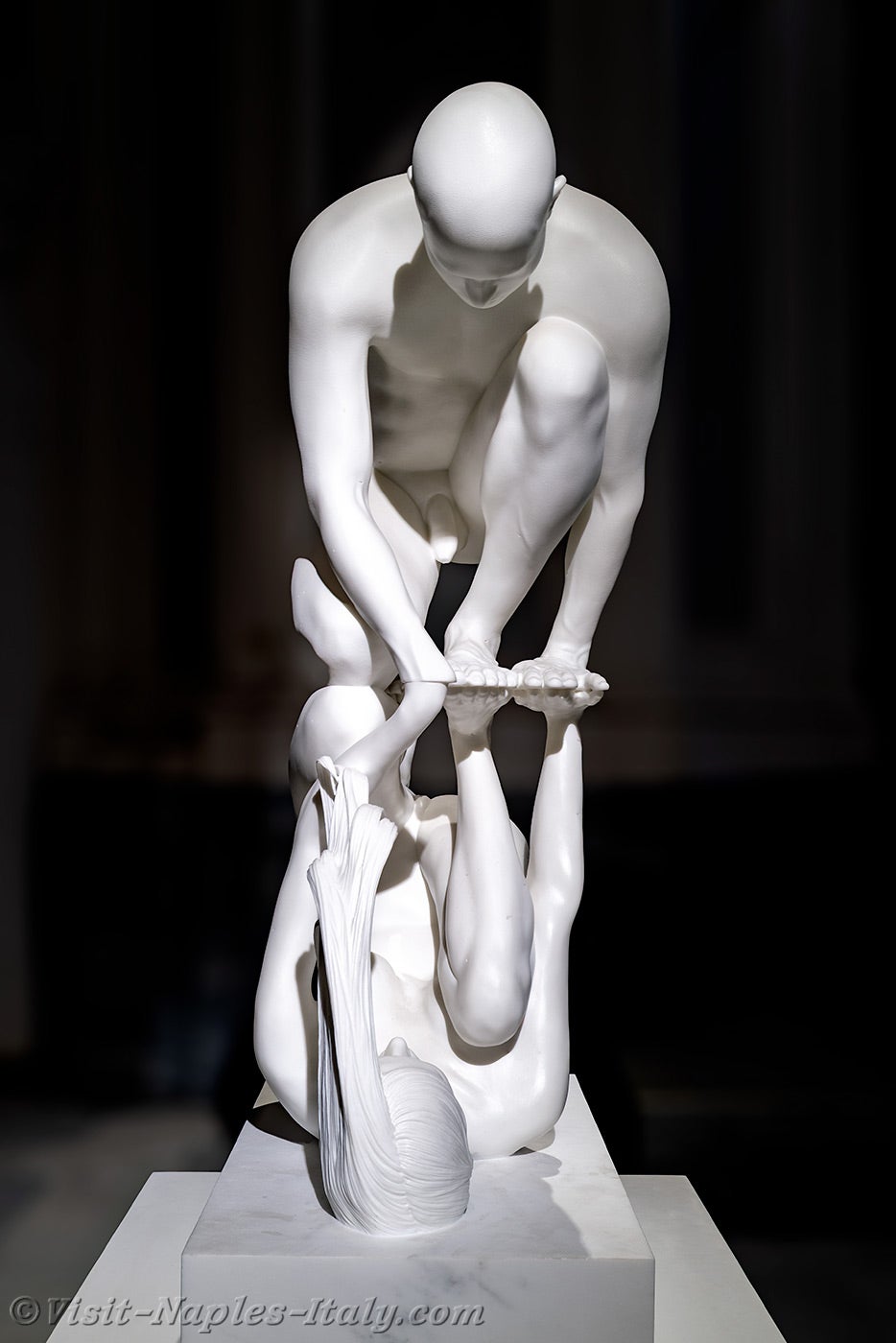
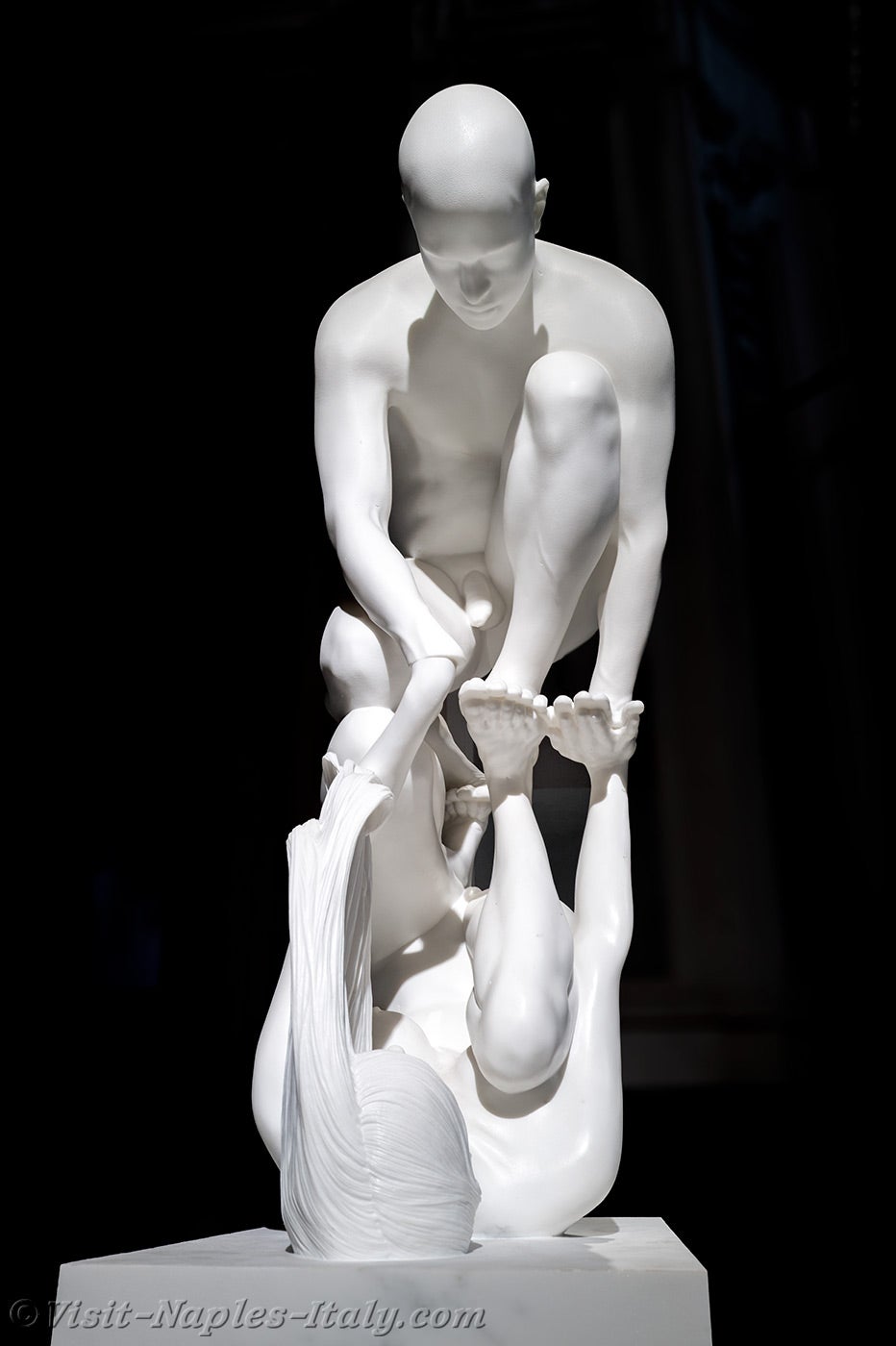
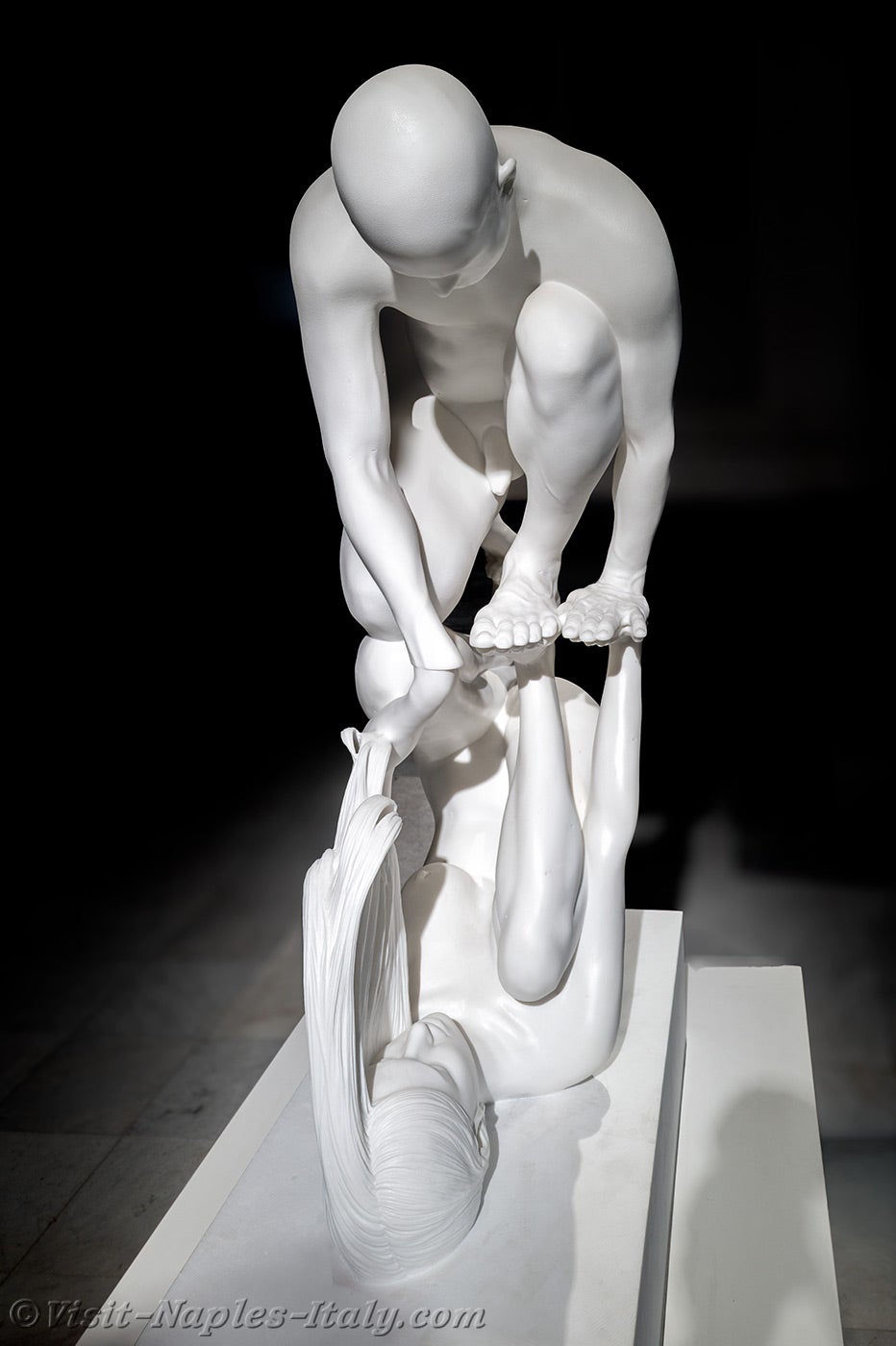
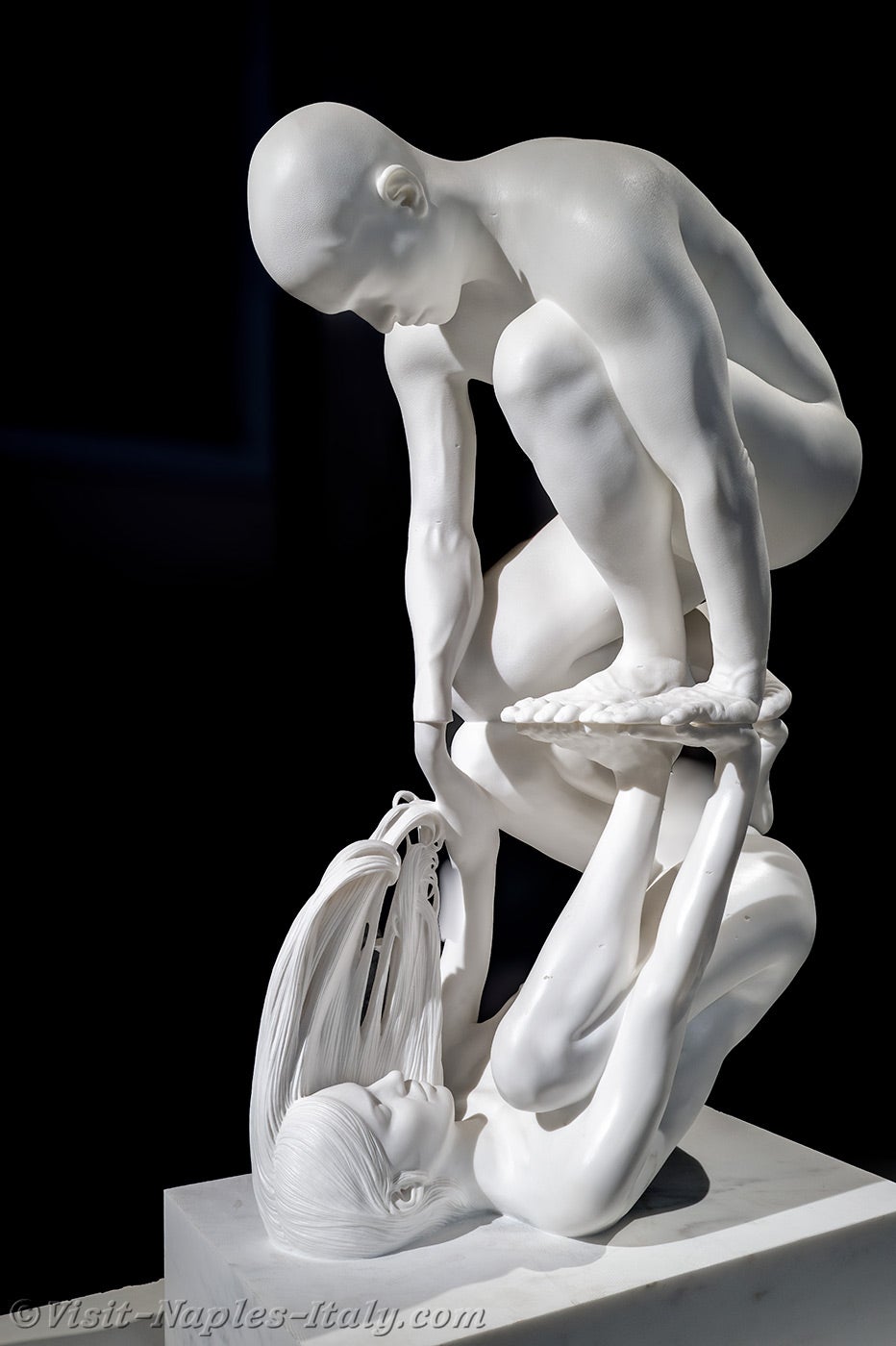
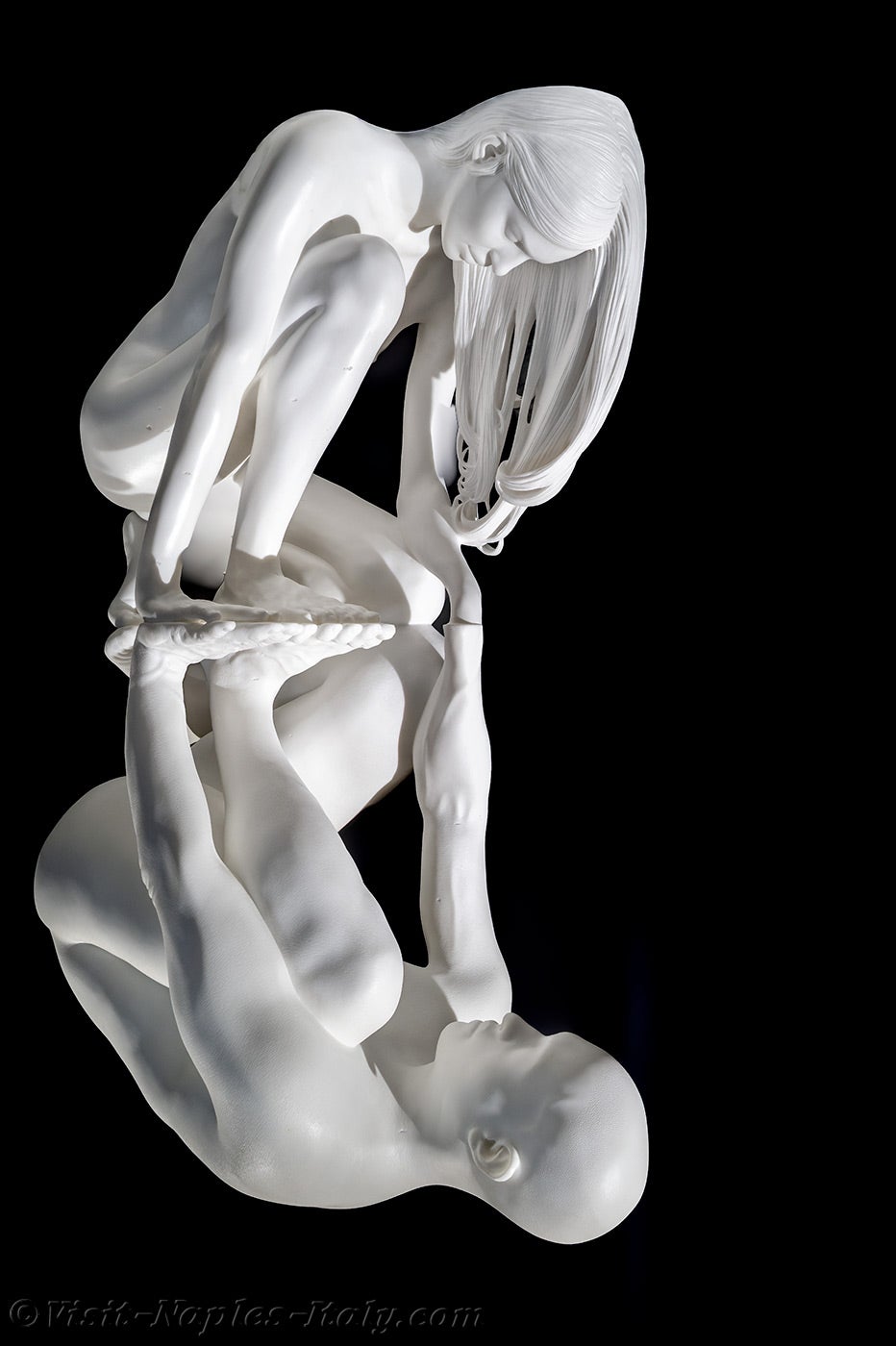
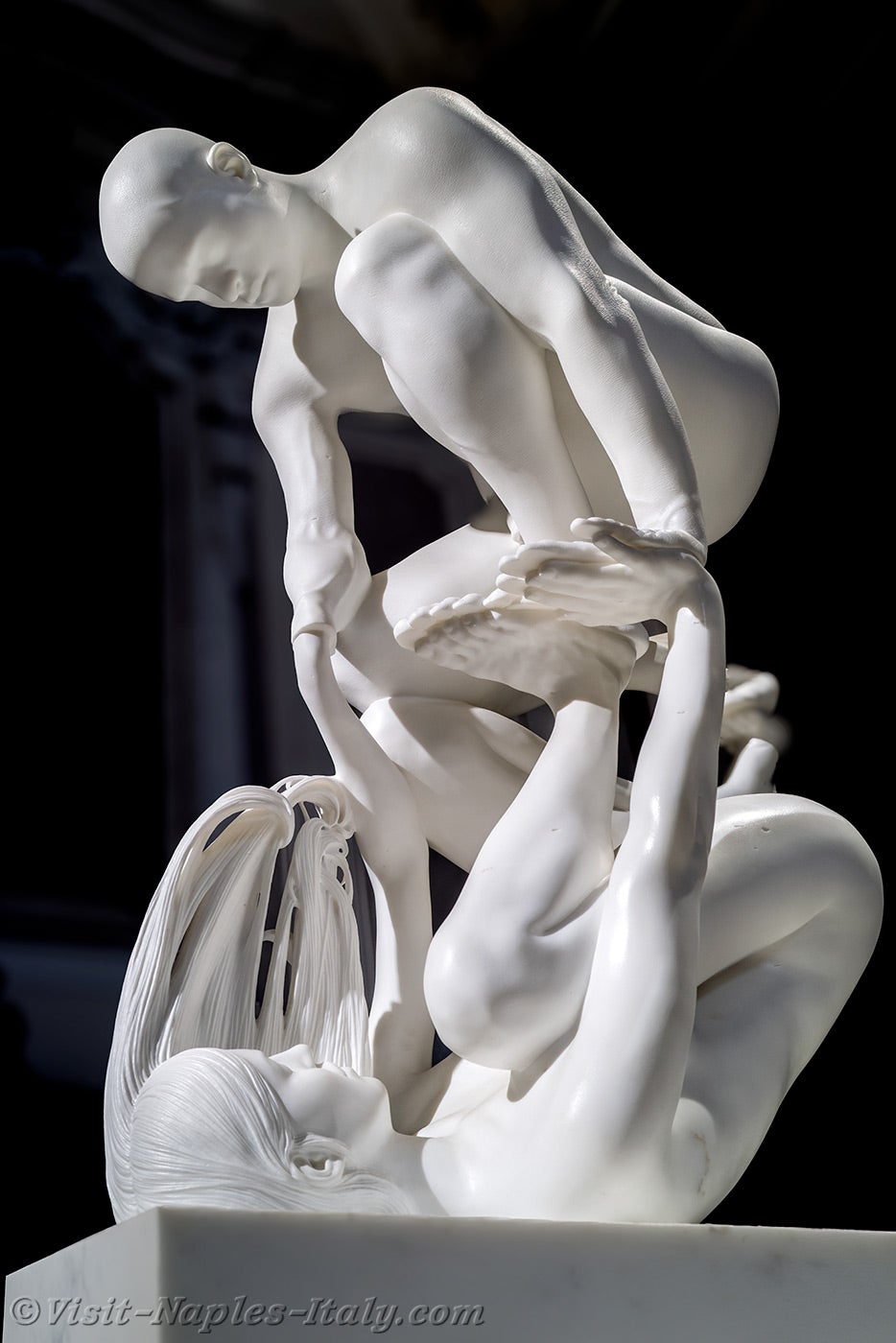
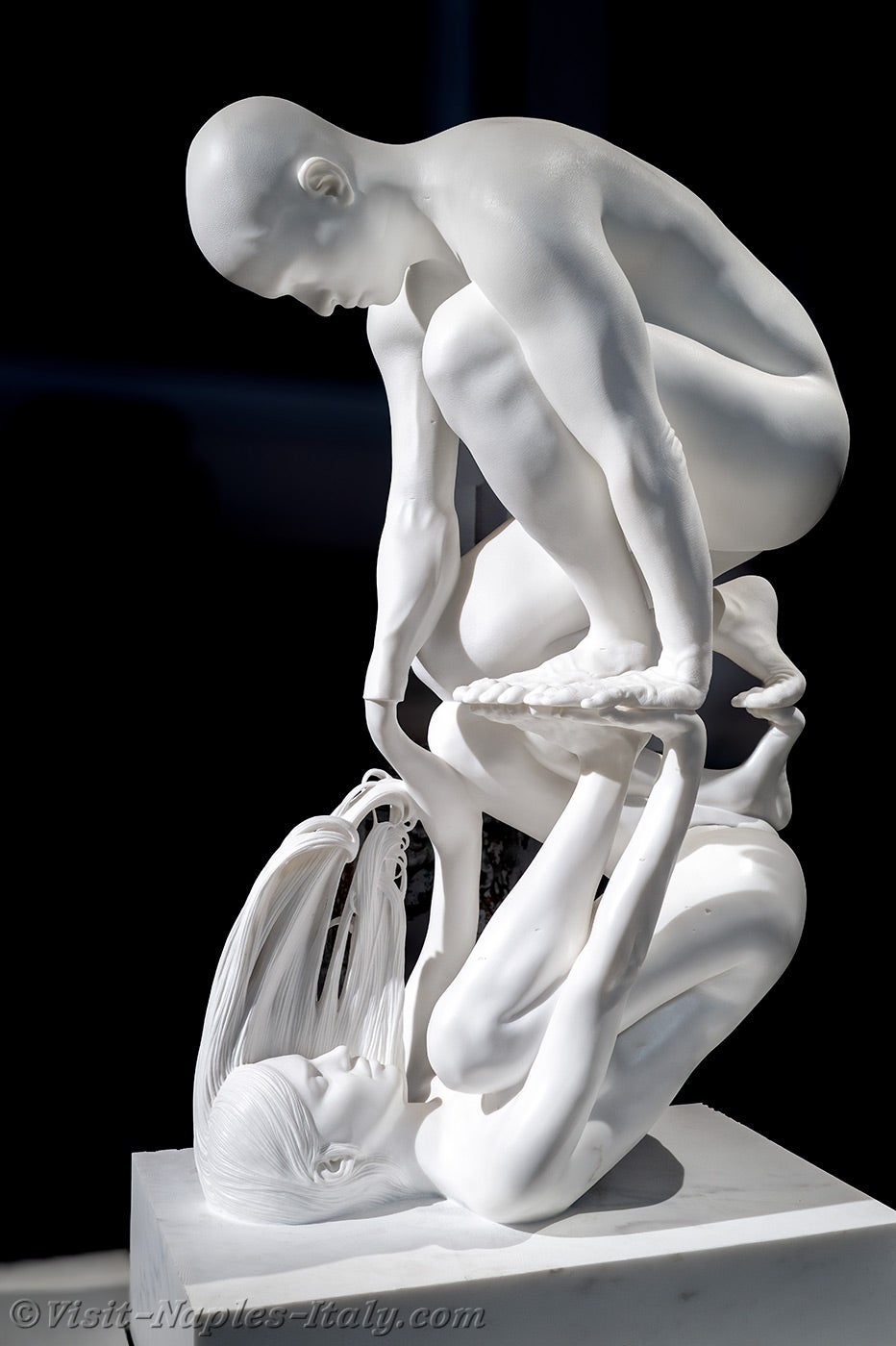
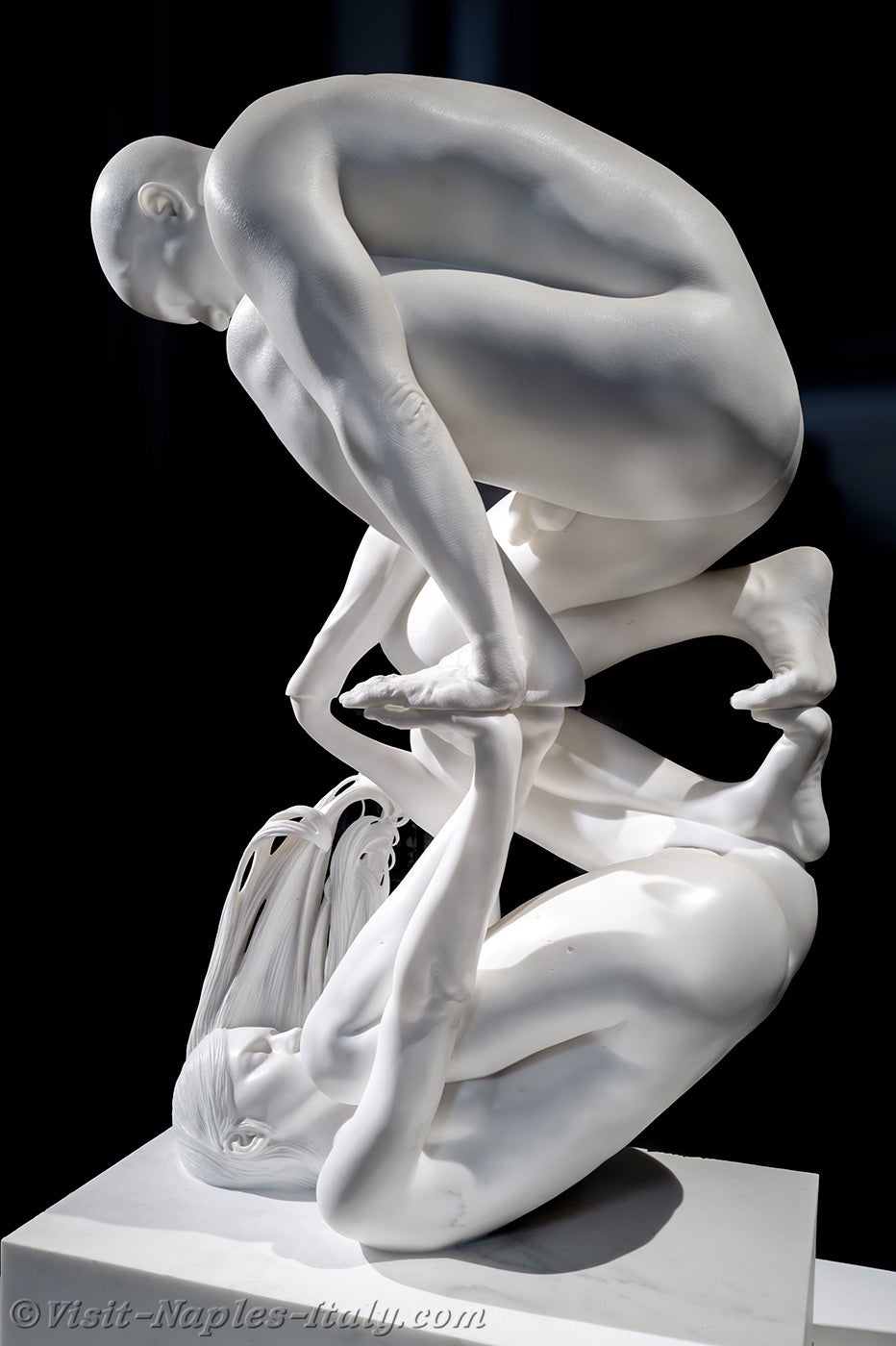
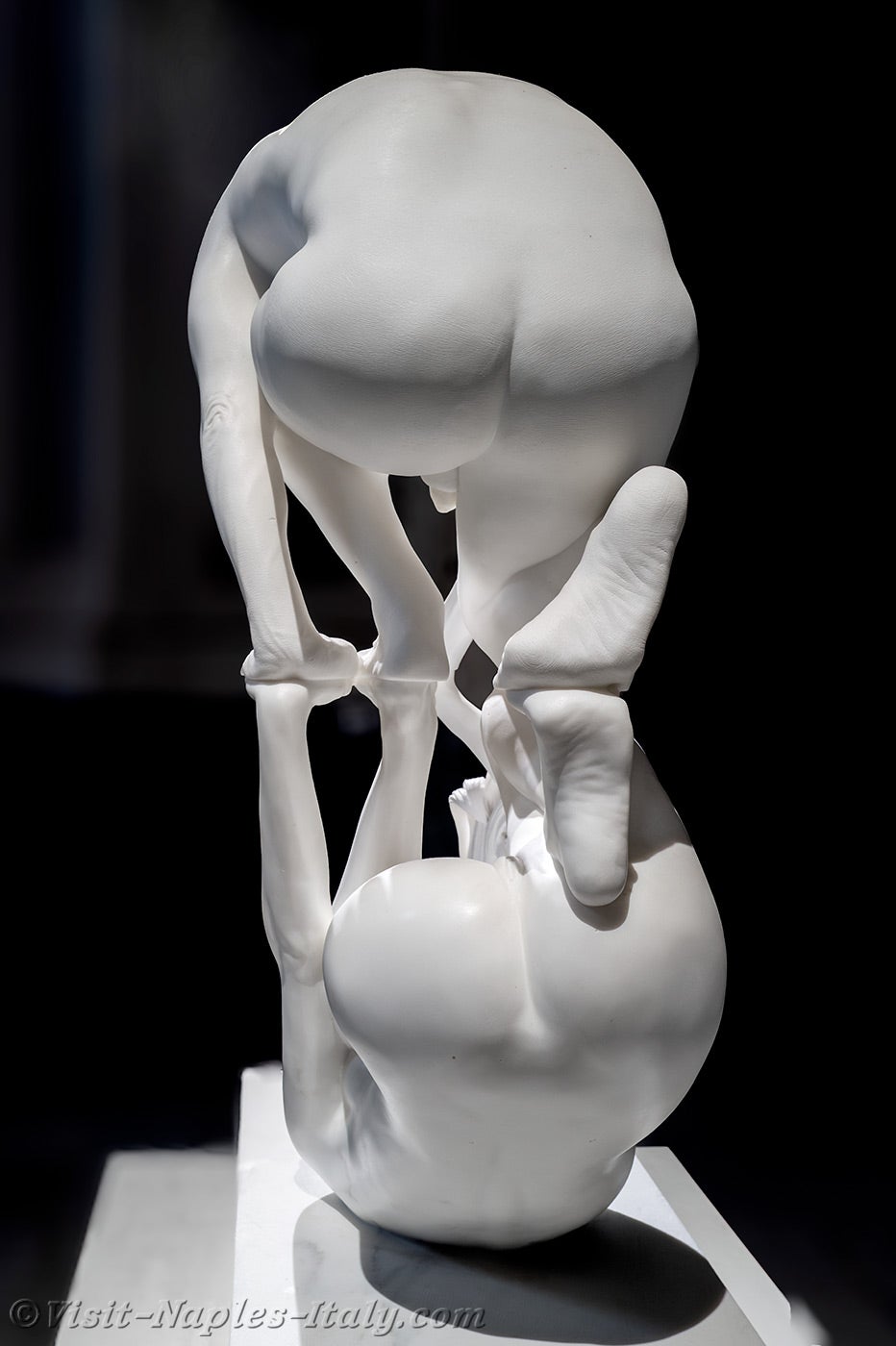
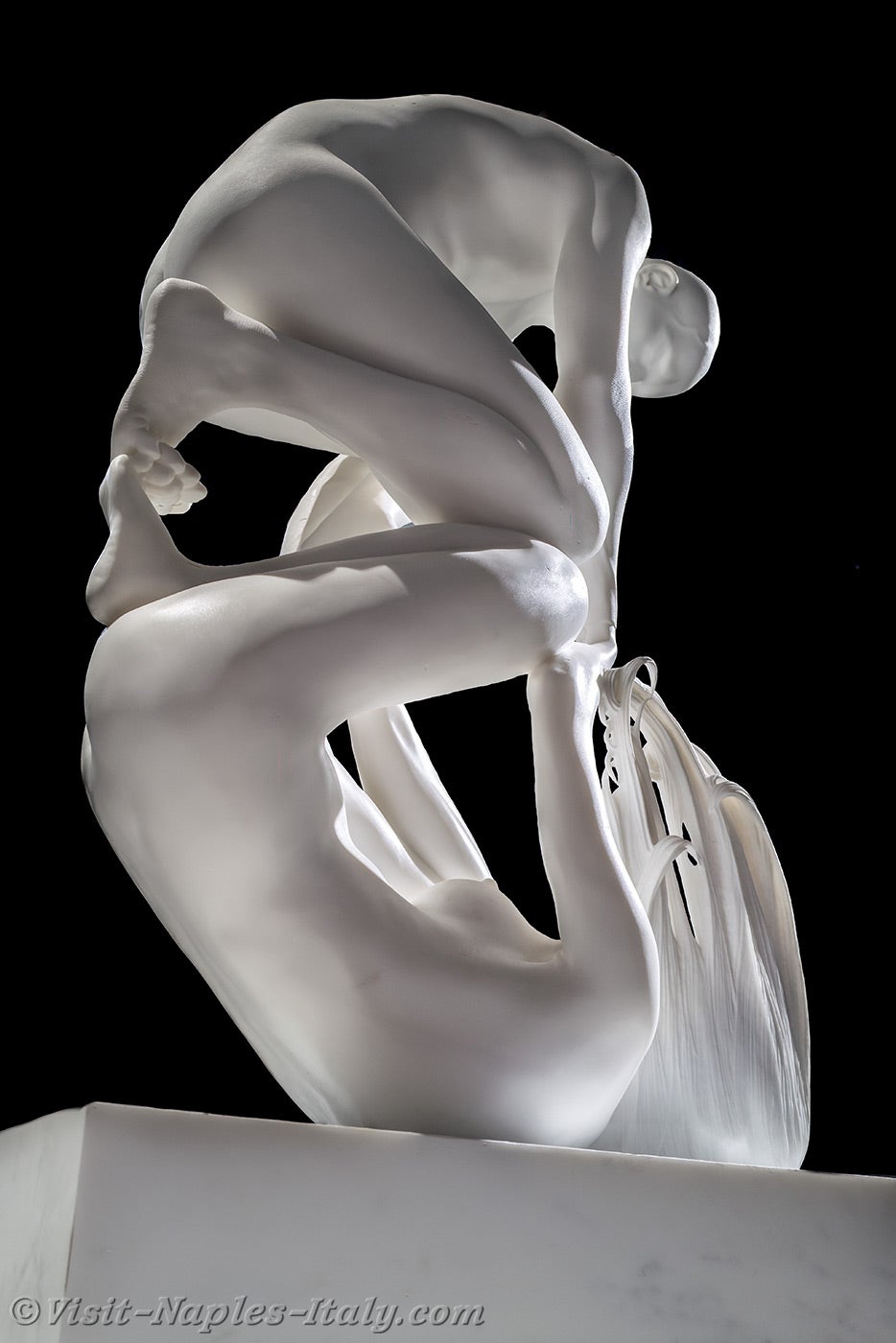
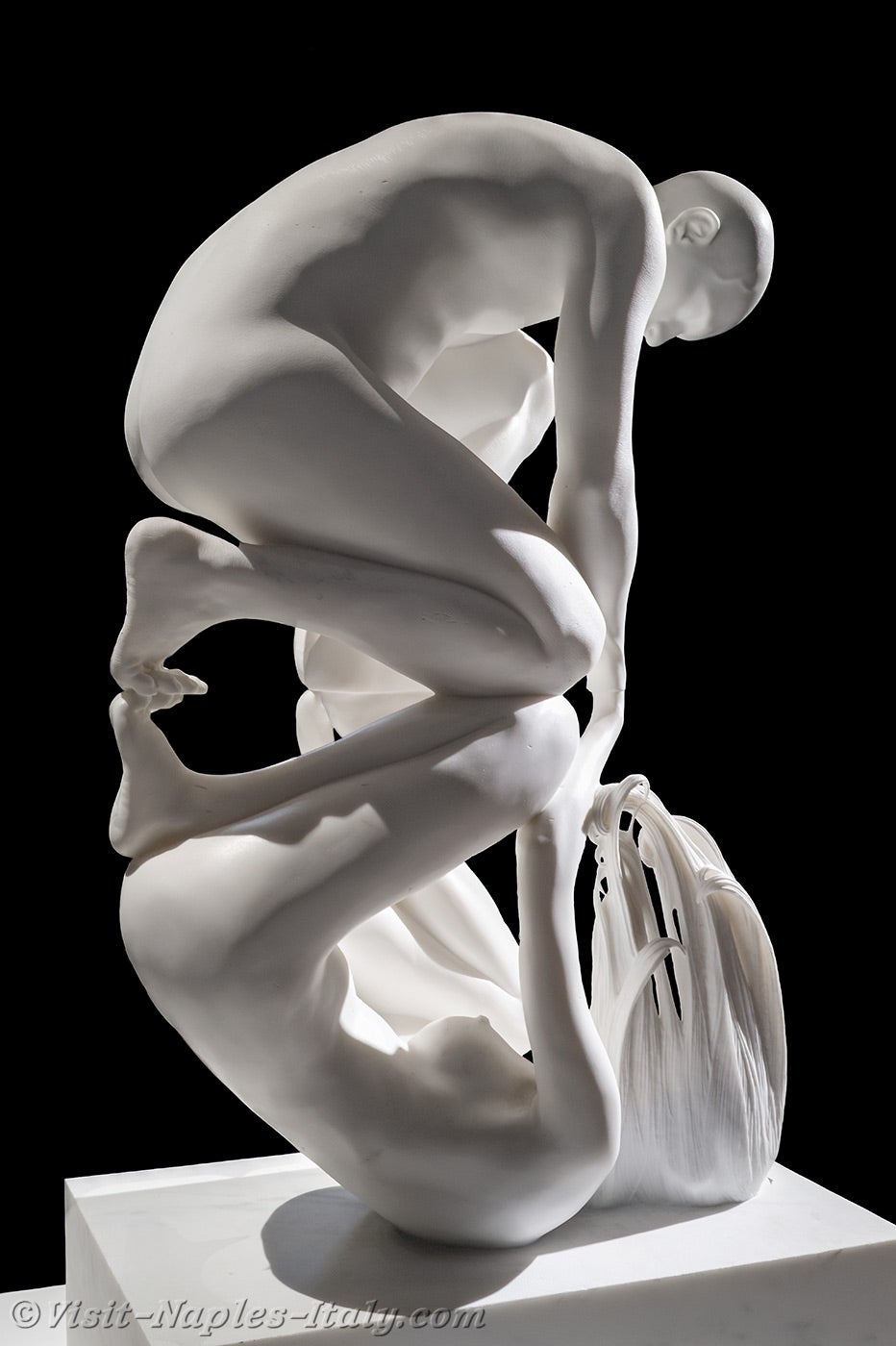
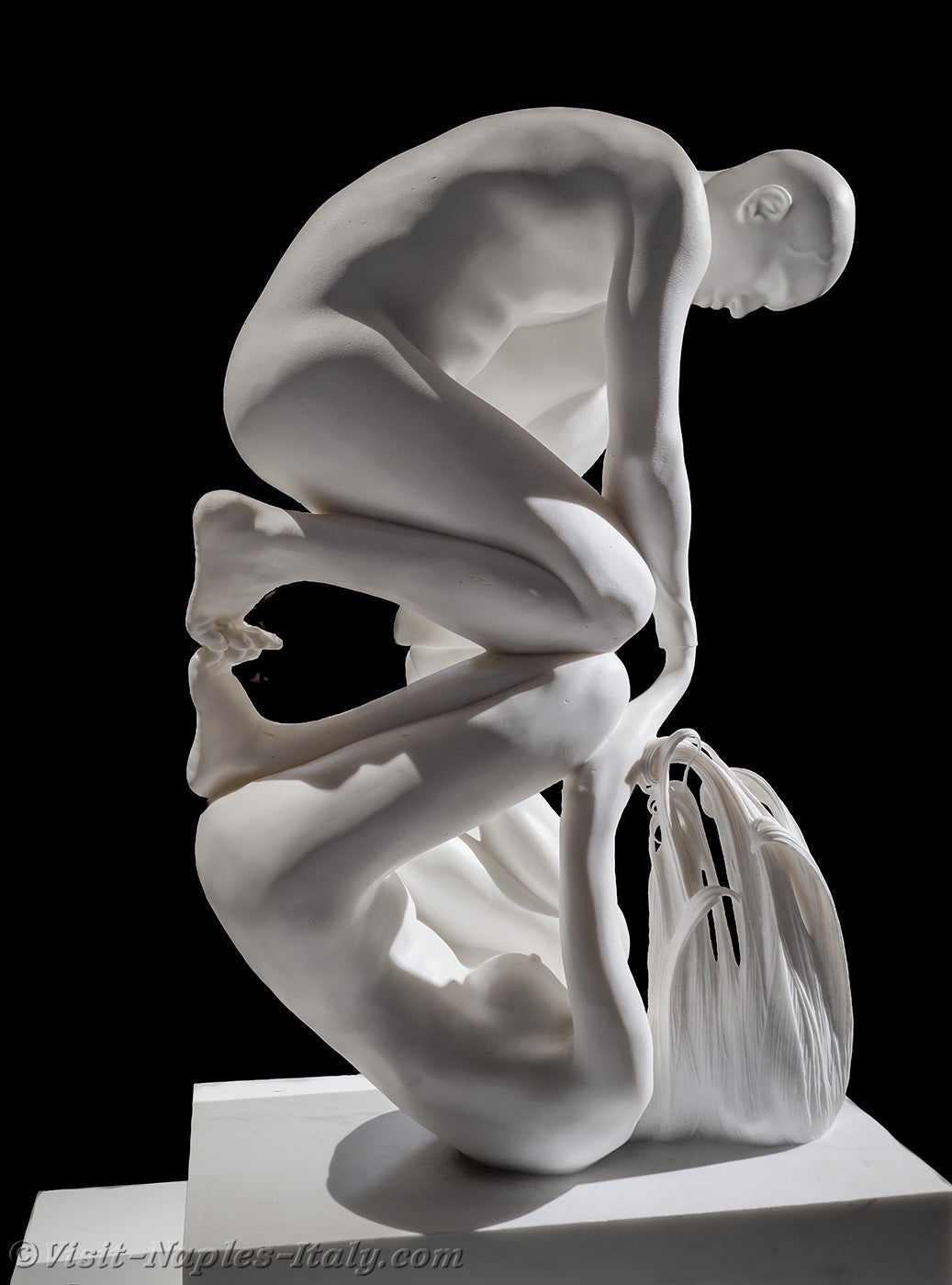
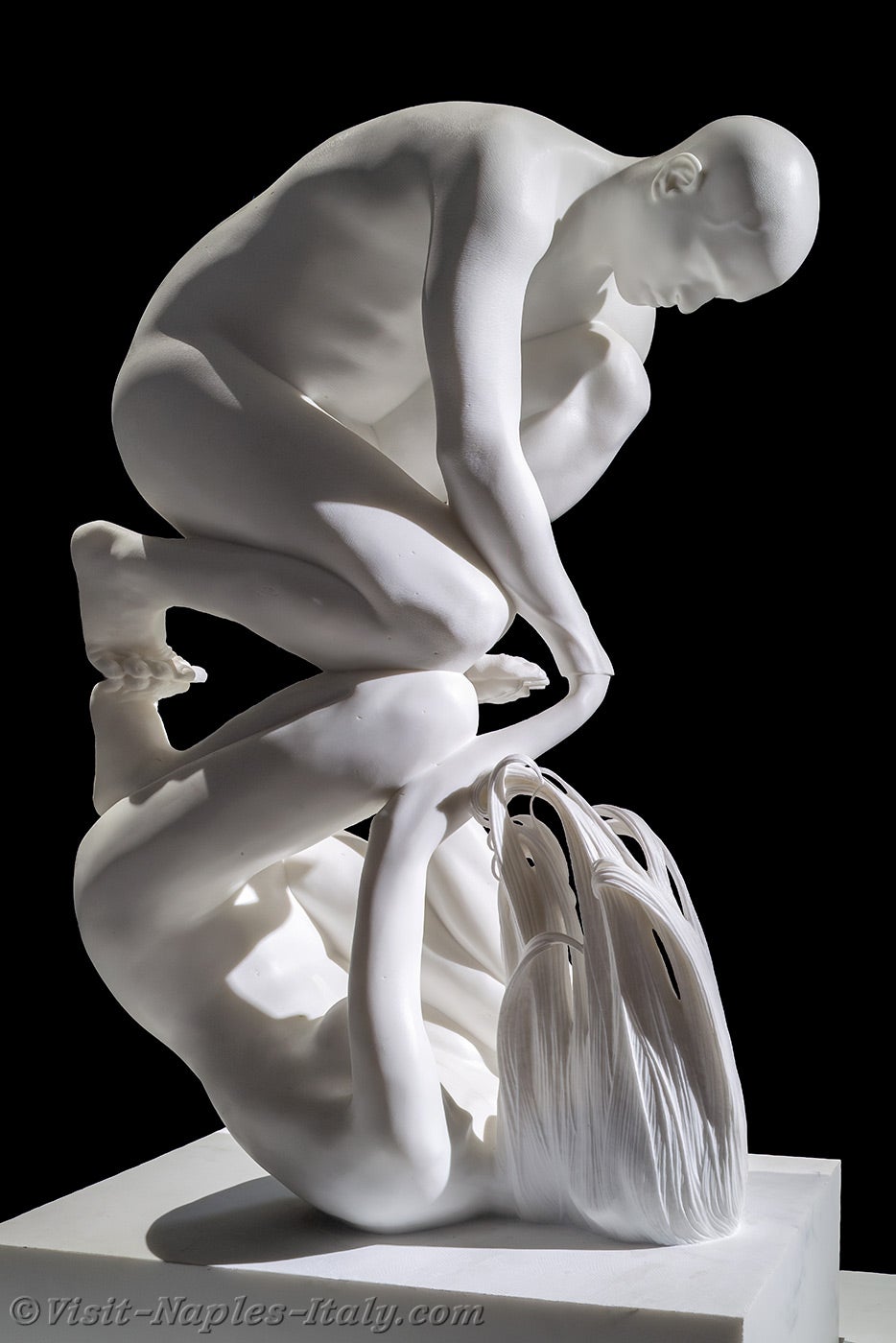
This superb sculpture by Jago illustrates the story of Narcissus according to Pausanias.
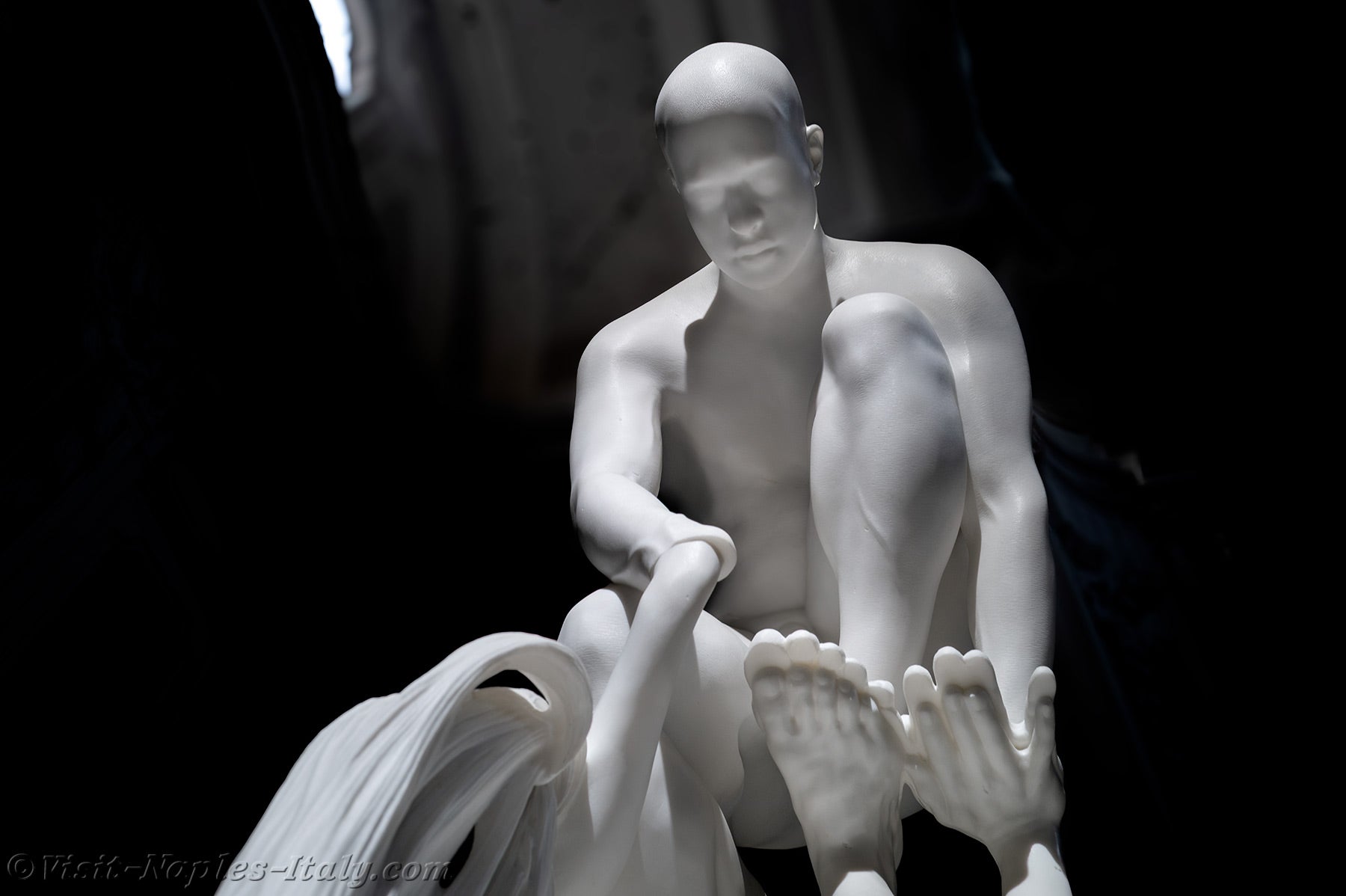
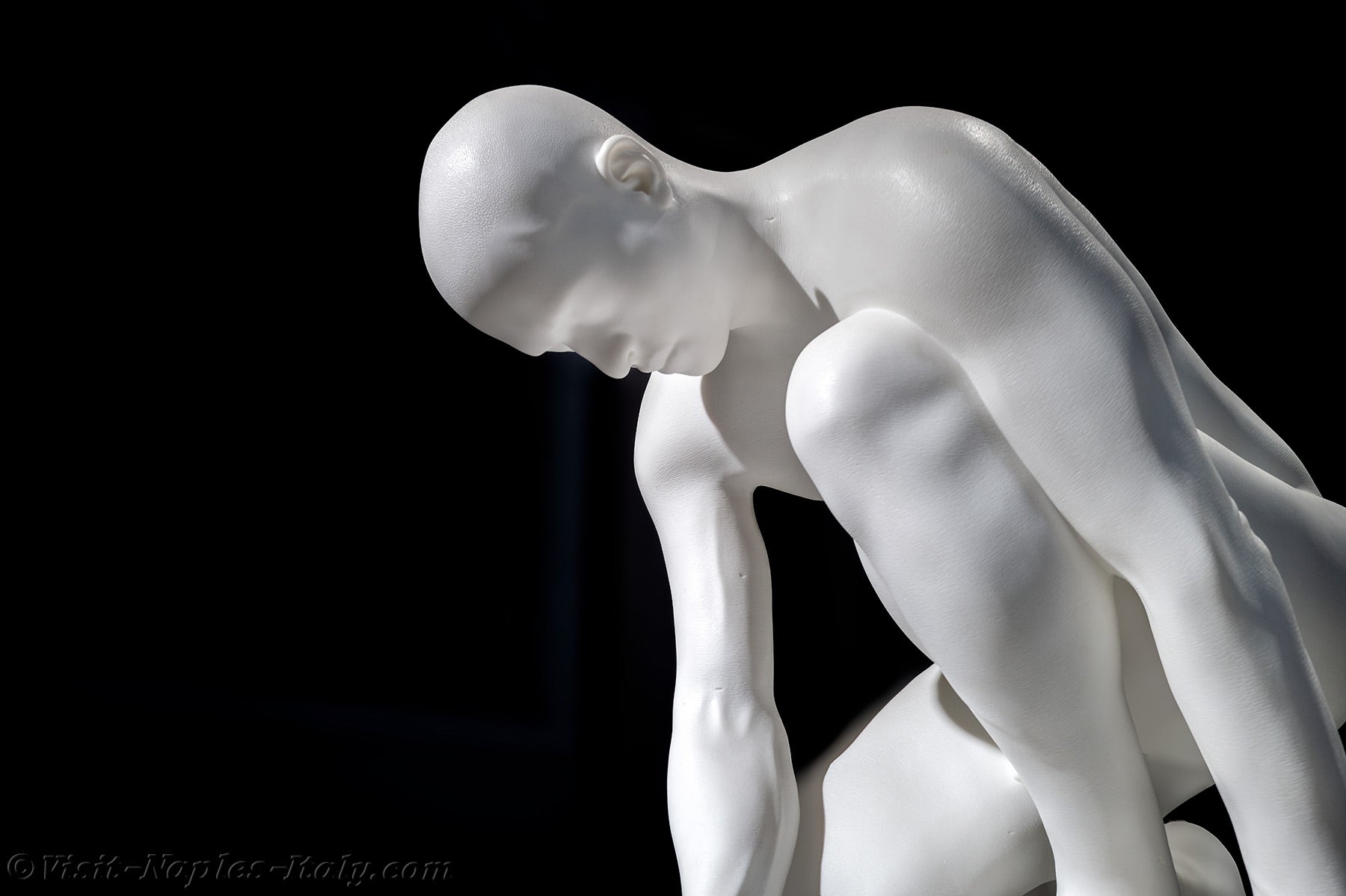
Narcissus is leaning over the water, fascinated by the image of his sister.
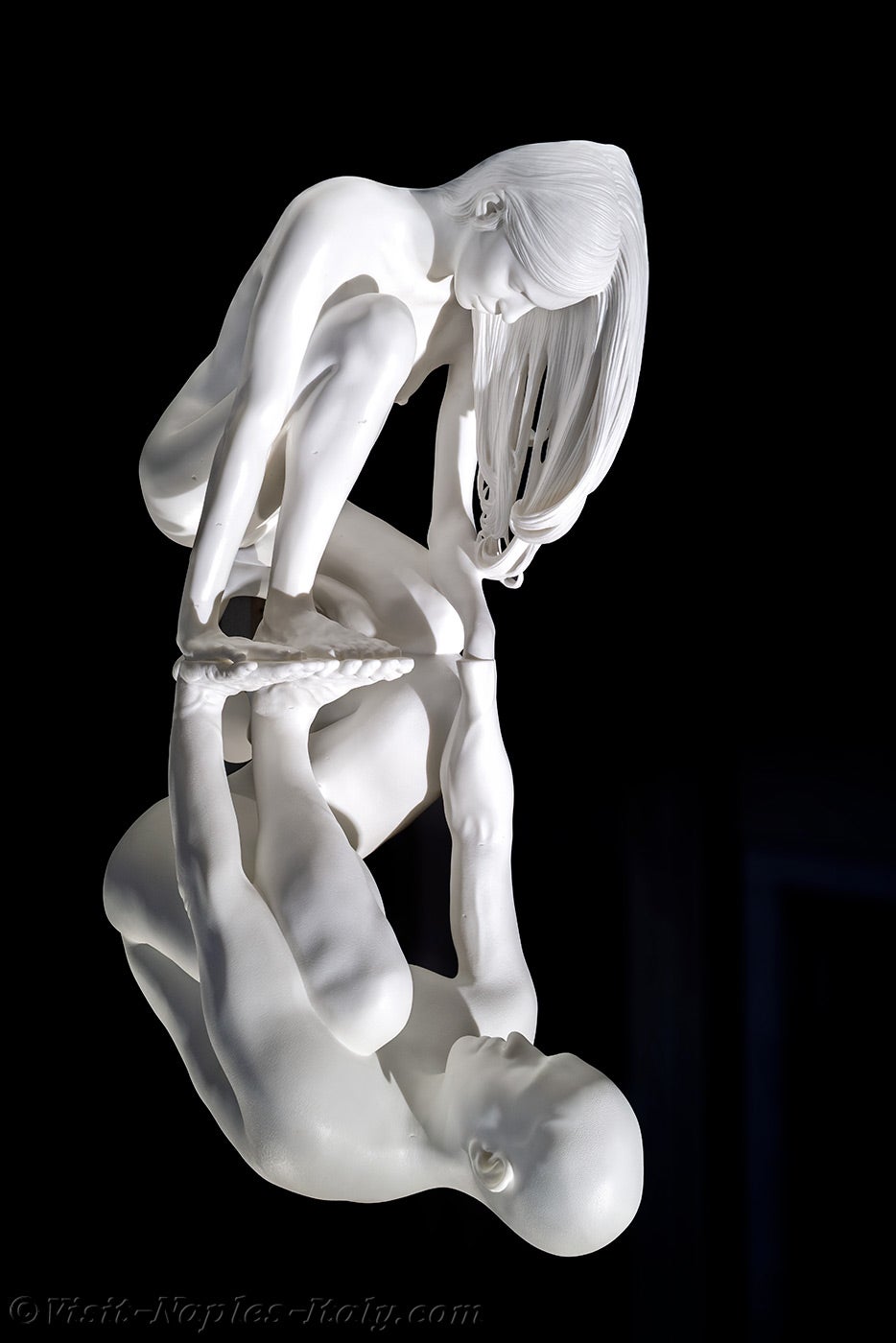
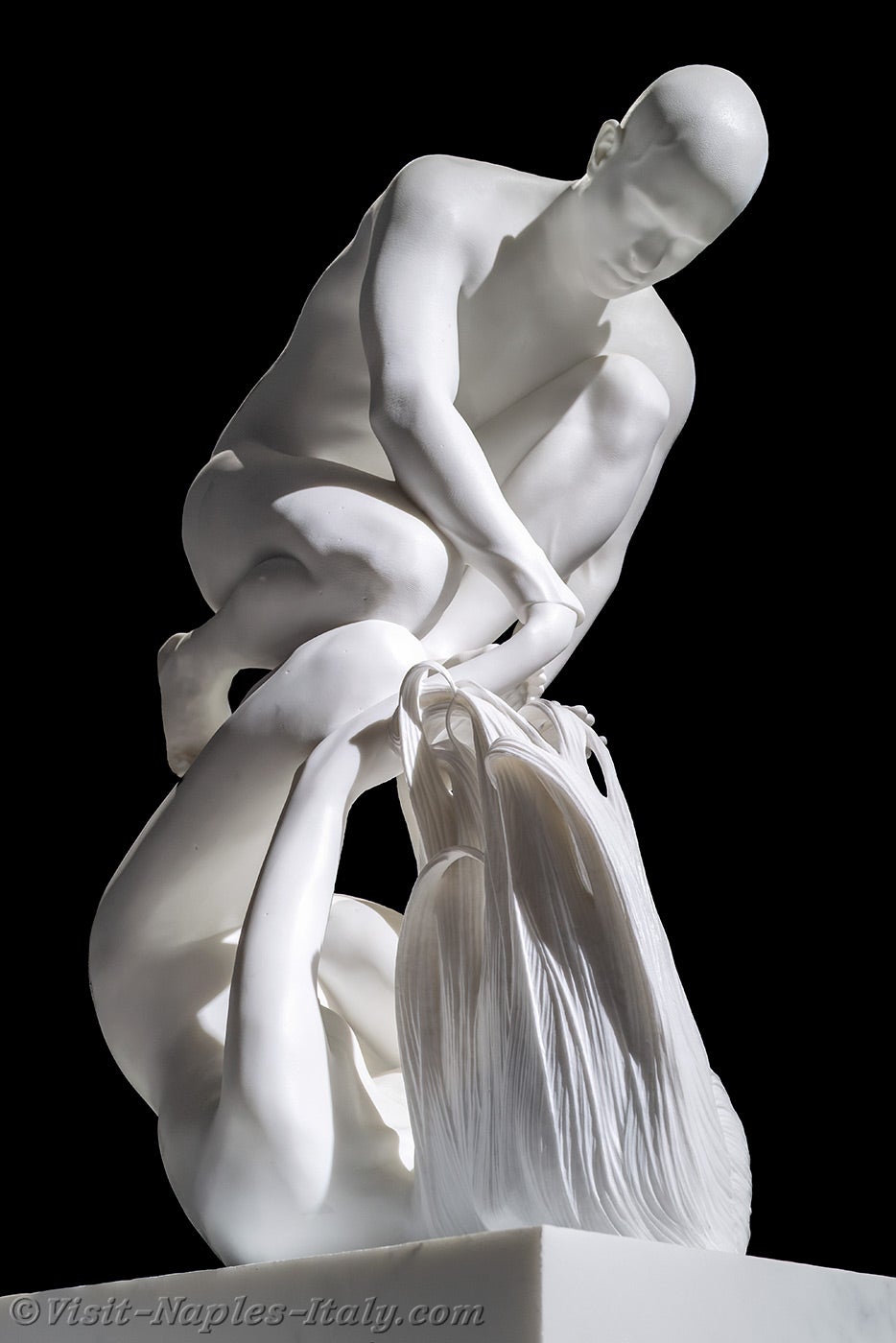
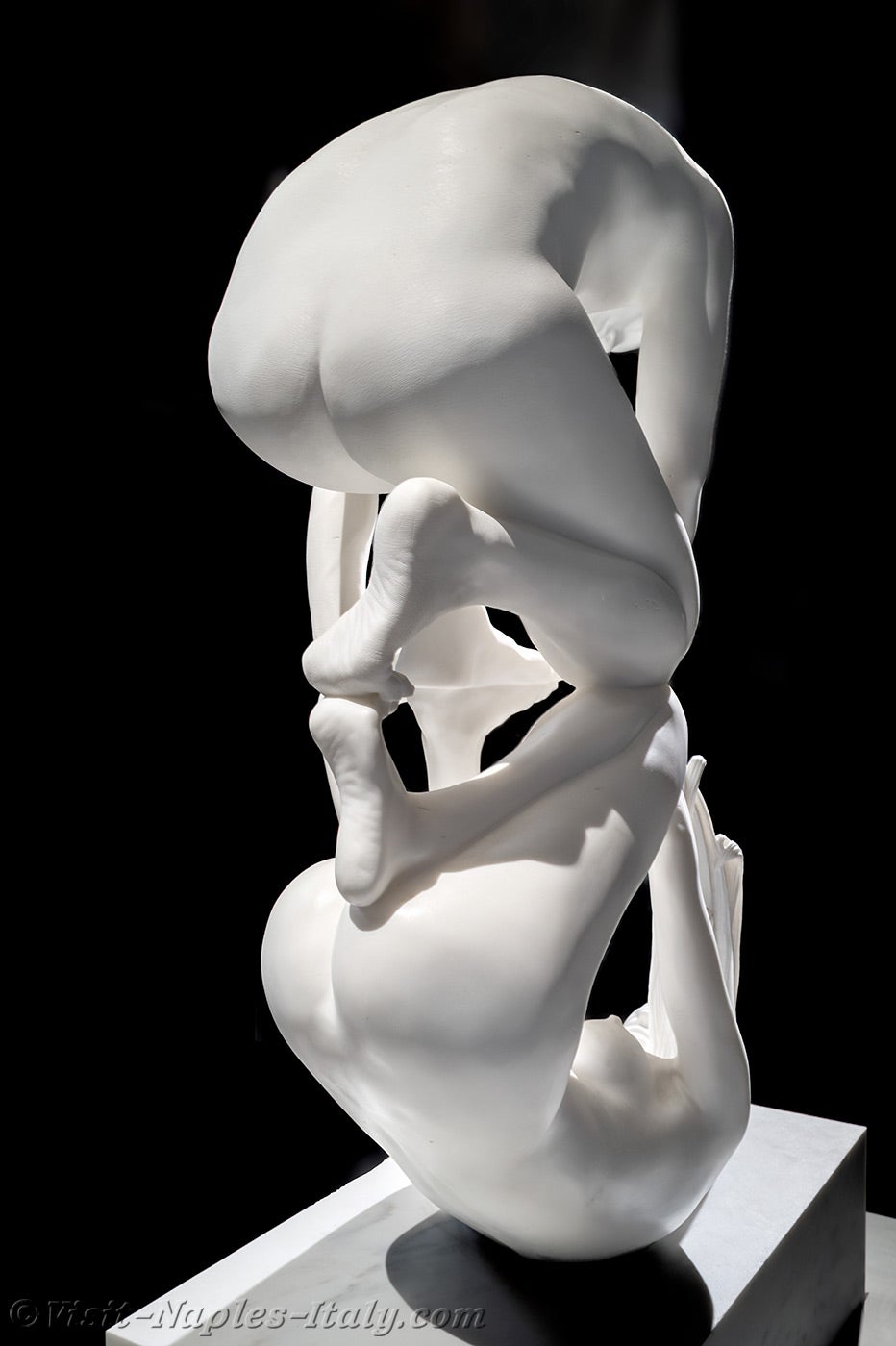
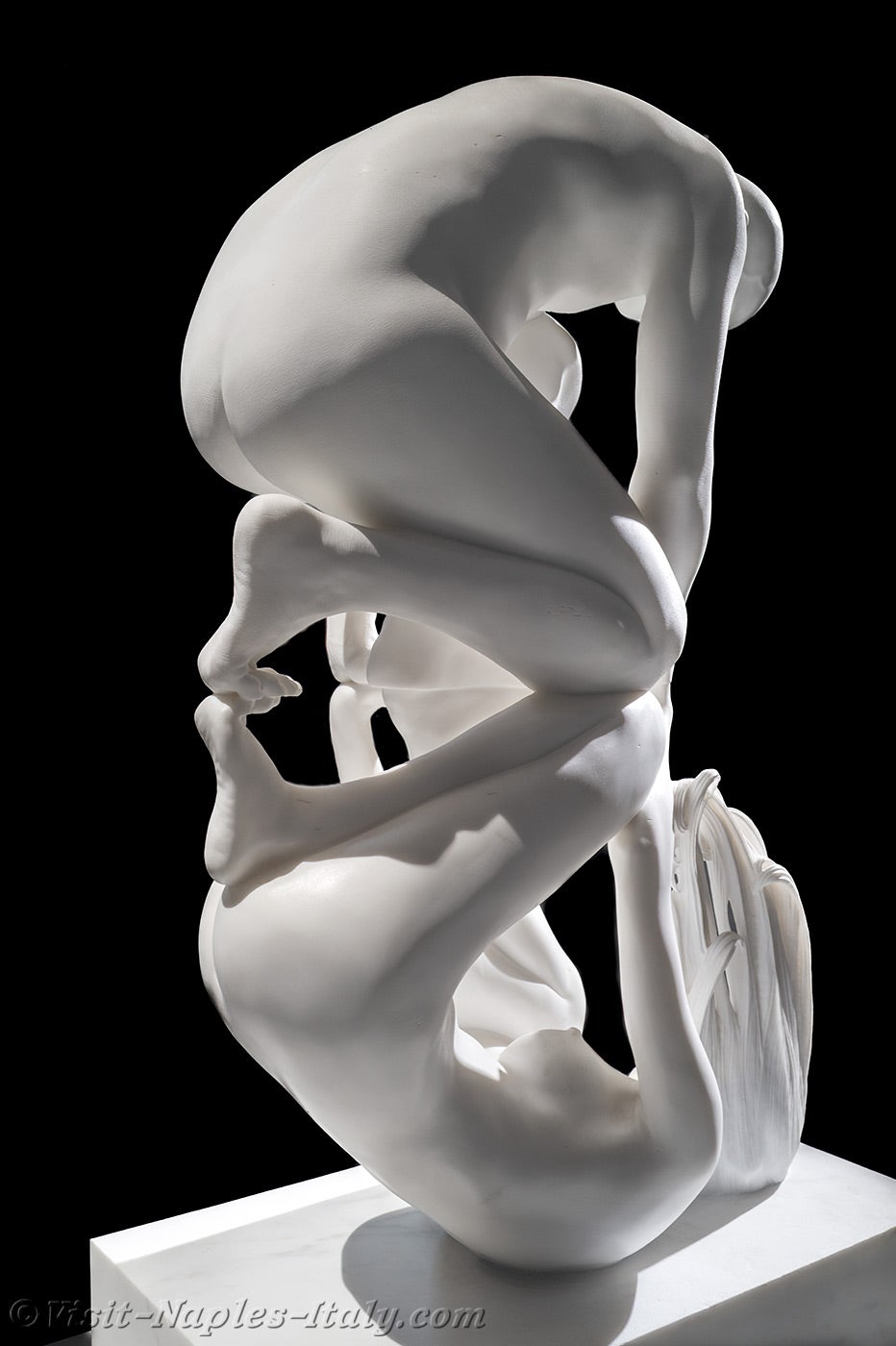
Jago, Narcissus Jago has magnificently depicted the meeting of these two bodies, the masculine strength on the one hand and the feminine grace on the other.
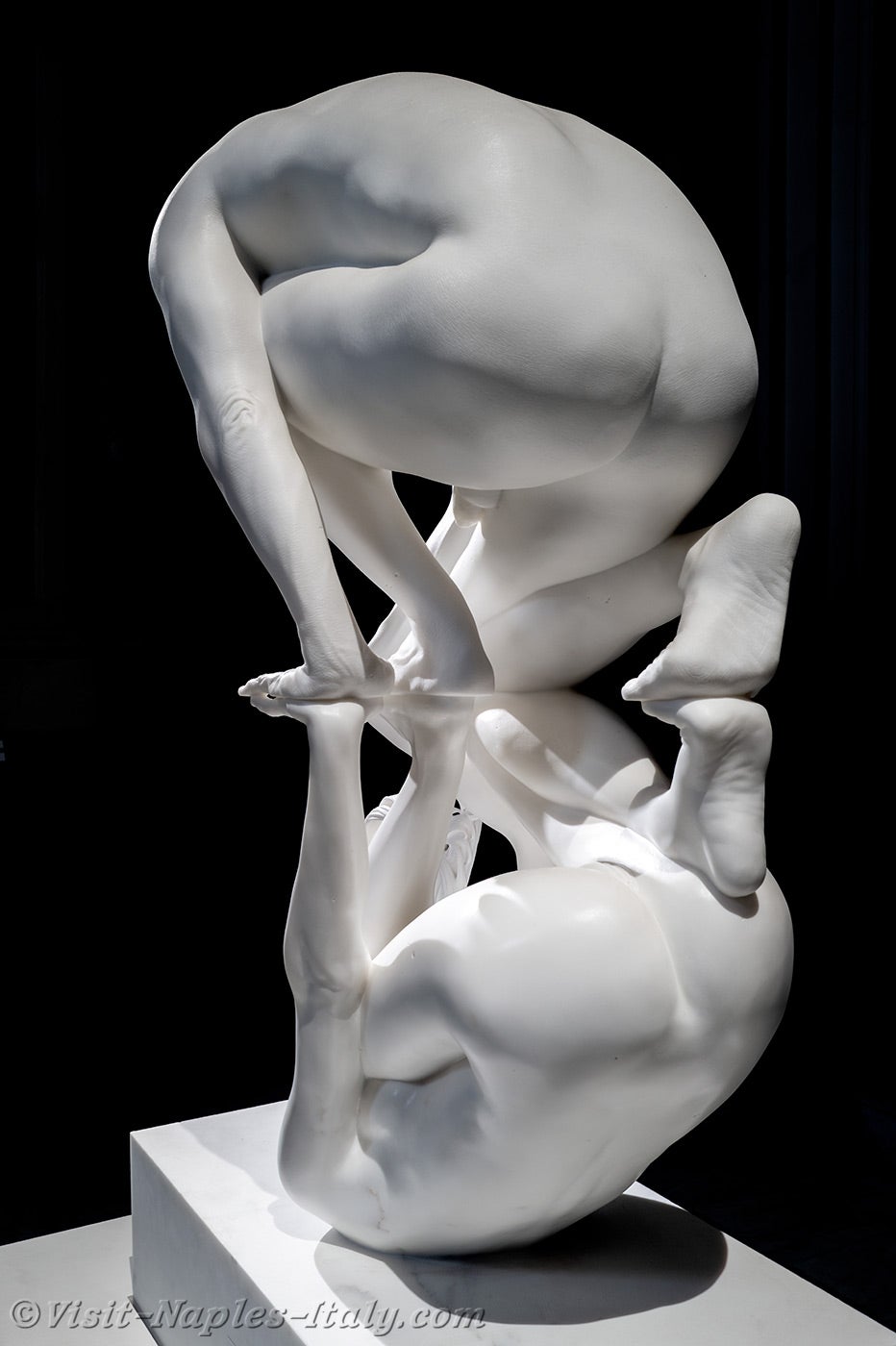
They are both completely motionless, mutually drawn to their reflections.
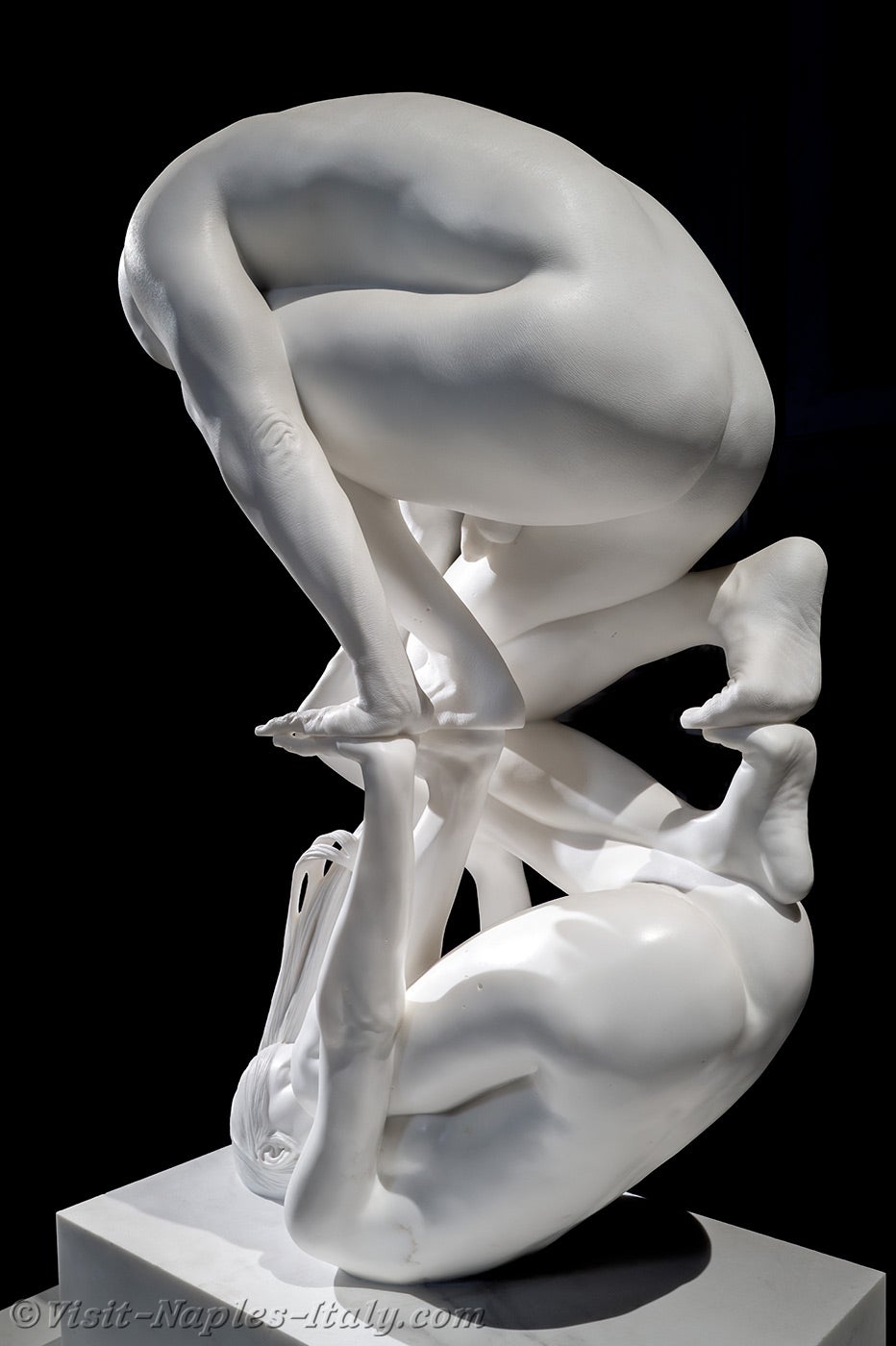
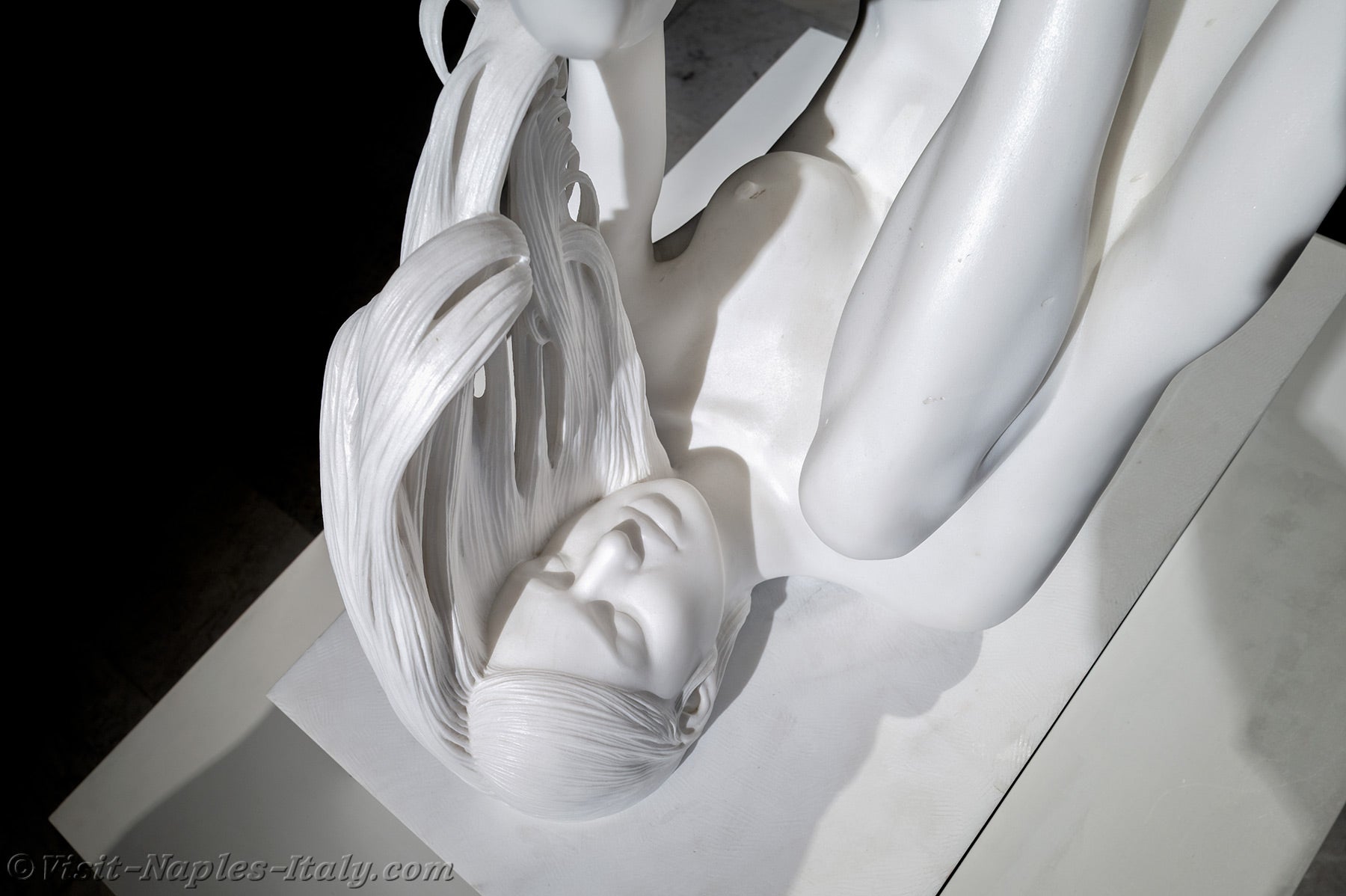
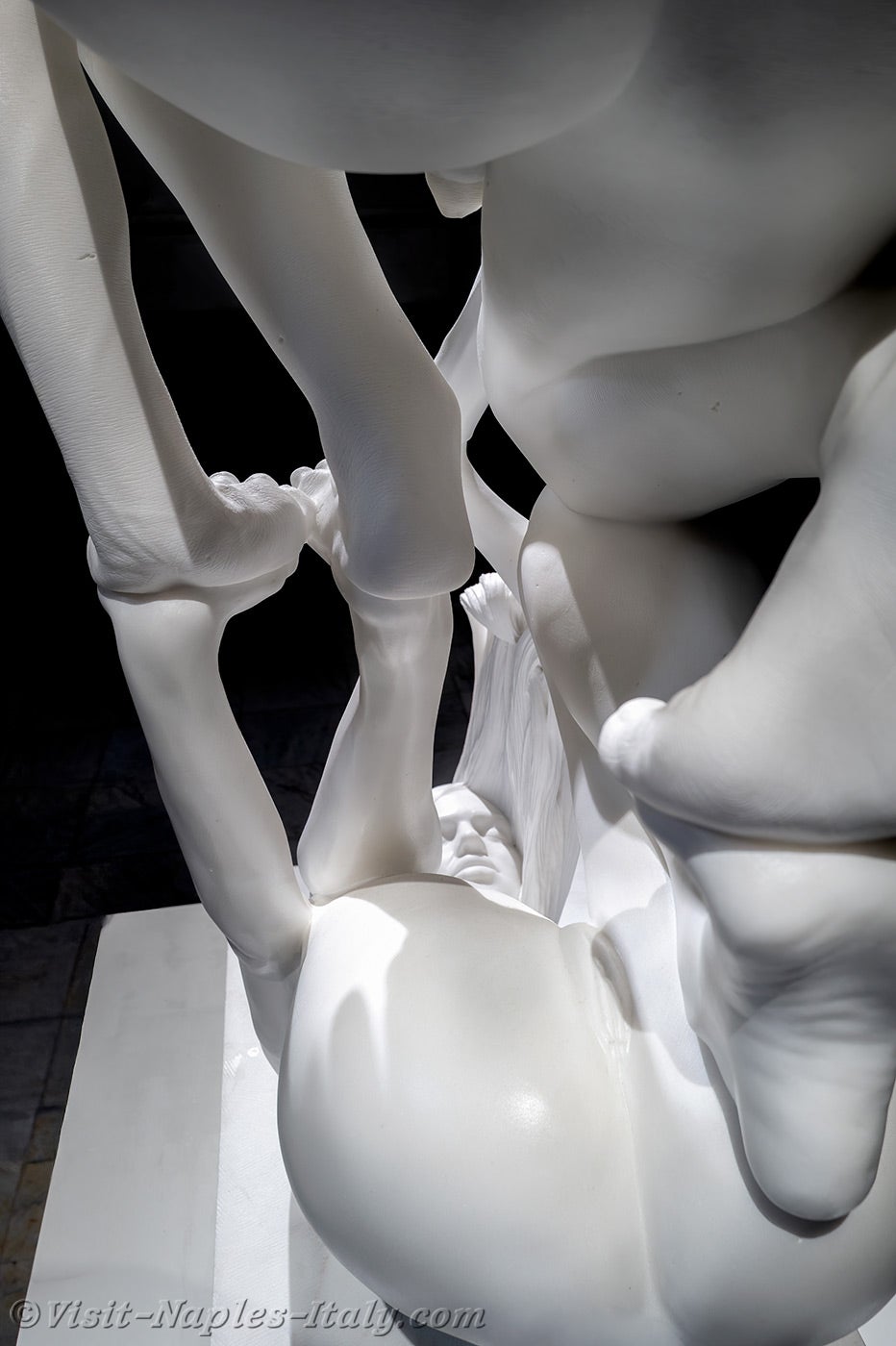
Jago has also remained faithful to the legend of Narcissus as recounted by Pausanias by depicting these two twins whose faces bear identical features: the same mouth, the same nose.
The difference between the two sexes is highlighted by the young woman’s long hair, whilst Narcissus, whose facial features are less delicate, is bald.
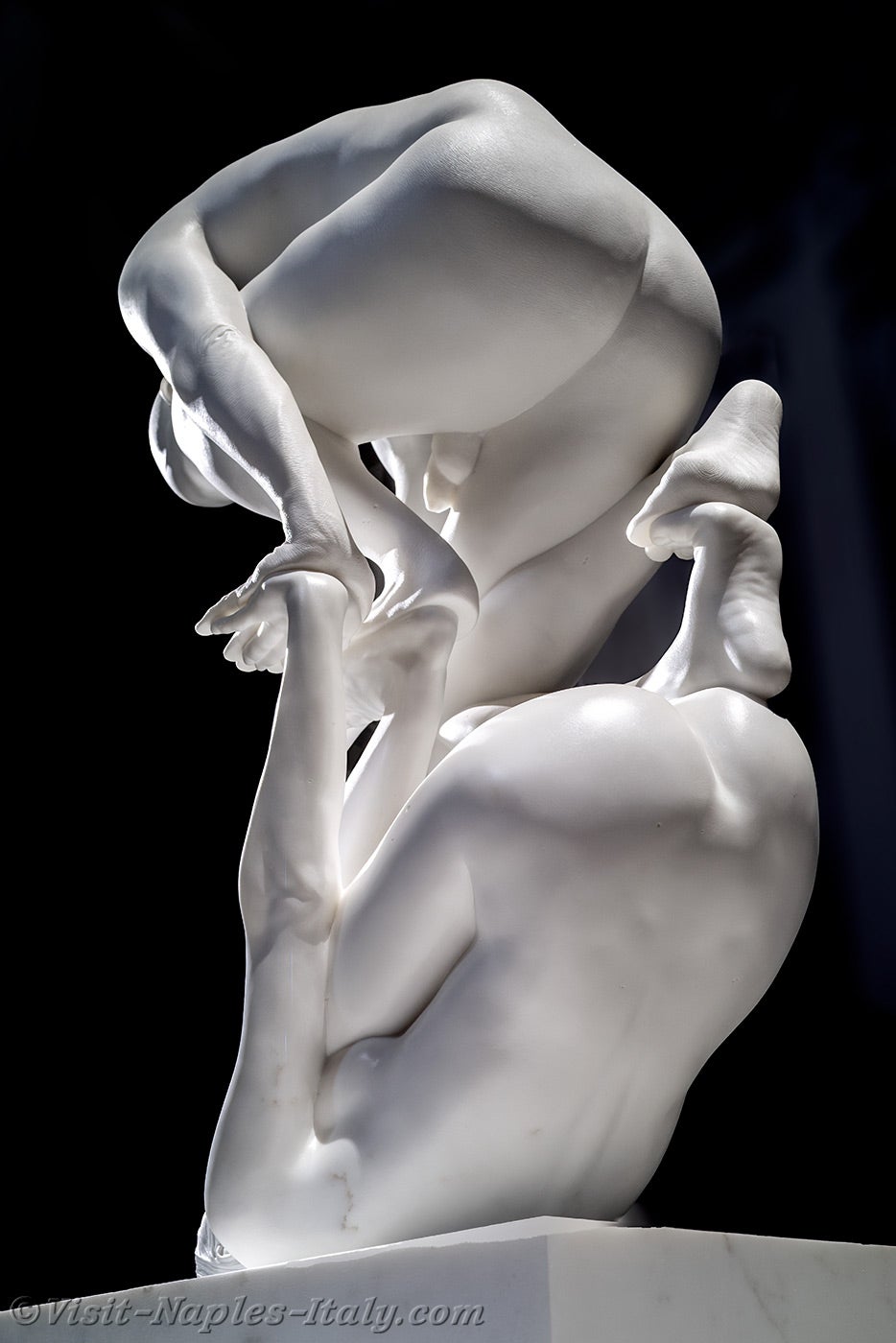
The surface of the water is beautifully suggested by the flat contact of Narcissus’s hands, knees and feet with those of his female reflection.
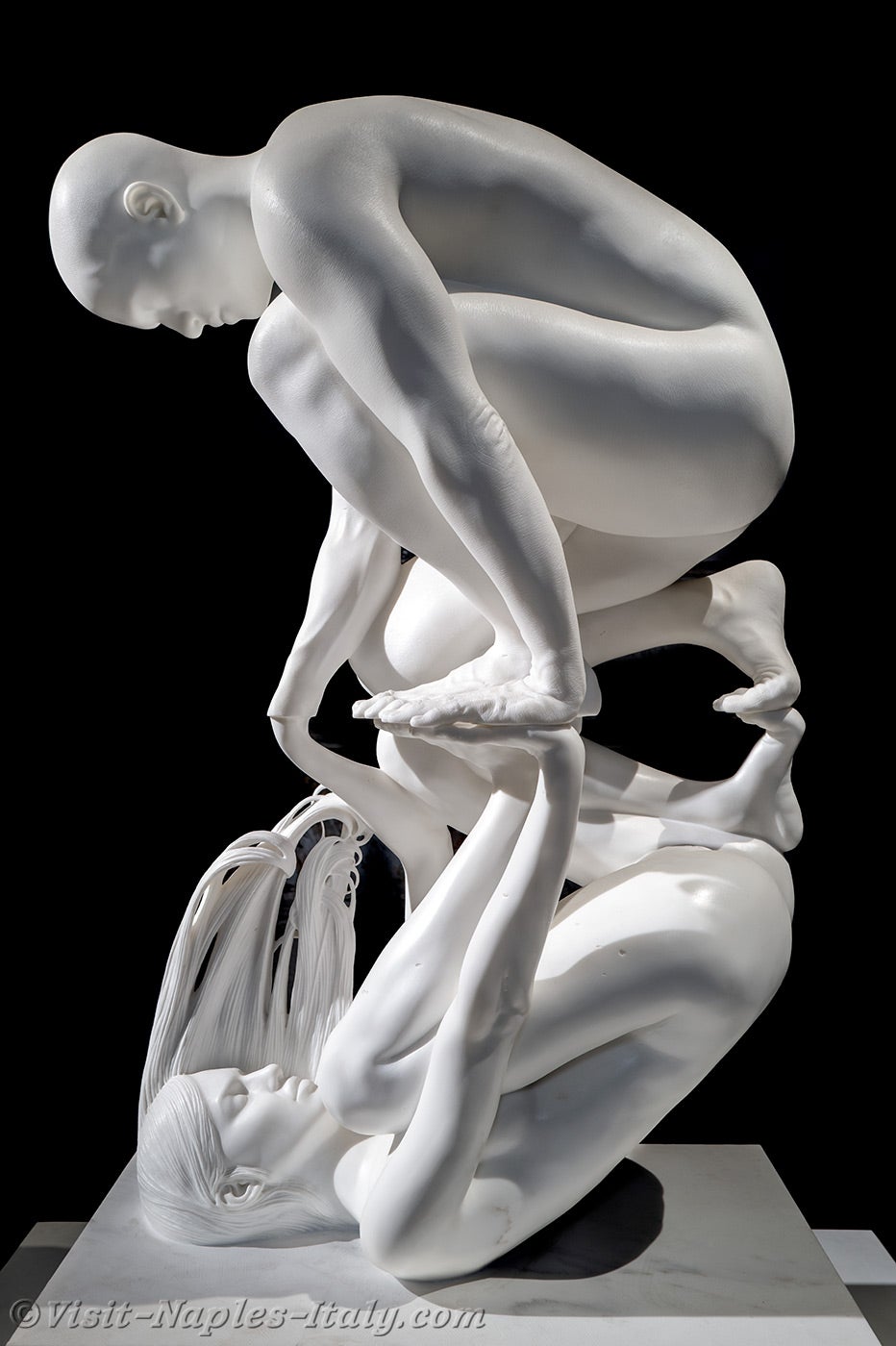
Jago, Narcissus This sculpture by Jago is a magnificent allegory of Narcissus, who becomes aware of the sensitivity and vulnerability of his being as he contemplates the feminine side of his personality.
Narcissus and his reflection each express the feminine side in men and the masculine side in women: this pair exists within each of us, and merges like the arms that connect the two statues.
Jago had the brilliant idea of sculpting bodies drawn towards one another by their image of the opposite sex —revealing the duality of the human soul—to invite us towards understanding and tolerance.
Let us now turn to Pausanias and quote an extract from his “Historical Journey through Greece”, in which he recounts a version of the story of Narcissus that differs from Ovid’s.
Jago, Narcissus
“On the summit of Helicon there is a small river called the Lamos.
Hedonacon is a place in the land of the Thespians where one can see the fountain of Narcissus.
It is said that Narcissus, gazing into this spring and not realising that it was his own face he was seeing, unwittingly fell in love with himself, and that he died of love on the banks of the spring.
It strikes me as utterly absurd to imagine that anyone, having reached an age advanced enough to fall in love, would be unable to distinguish between the image of a body and the actual body.
There is another tradition concerning him, less well-known than the previous one, which is recounted as follows.
Jago, Narcissus It is said that Narcissus had a twin sister who looked exactly like him in every way; moreover, they had the same hair, wore the same clothes and went hunting together.
Narcissus fell in love with his sister, and having had the misfortune of losing her, he would go to that fountain, knowing full well that it was his own image he saw there; but deluding himself, he imagined he was seeing his sister, and thus found some solace for his love.
As for the flower known as the narcissus, it existed, I believe, before this tale, as far as we can surmise from the verses of Pamphos, who flourished long before Narcissus of Thespiae; for he says that Demeter’s daughter was abducted whilst she was amusing herself by picking flowers, and that she was deceived, not by violets, but by daffodils.”
Pausanias, Historical Account of Greece
The works Narcissus | Ajax Cassandra | The Veiled Son | Pietà | Self-portrait | Venus | From Foetus to Ego
Jago The works Schedule Tickets Location | Authorizations
Back to Top of Page