

MANN Artworks Schedule Tickets Location | Authorizations
Artworks Sculptures | Frescoes | Eroticism
Sculptures Mythology | Persons | Animals | Bas-relief
Persons Athletes | Men | Women | Children
Sculptures of athletes, gladiators and warriors from the Archaeological Museum of Naples in Italy
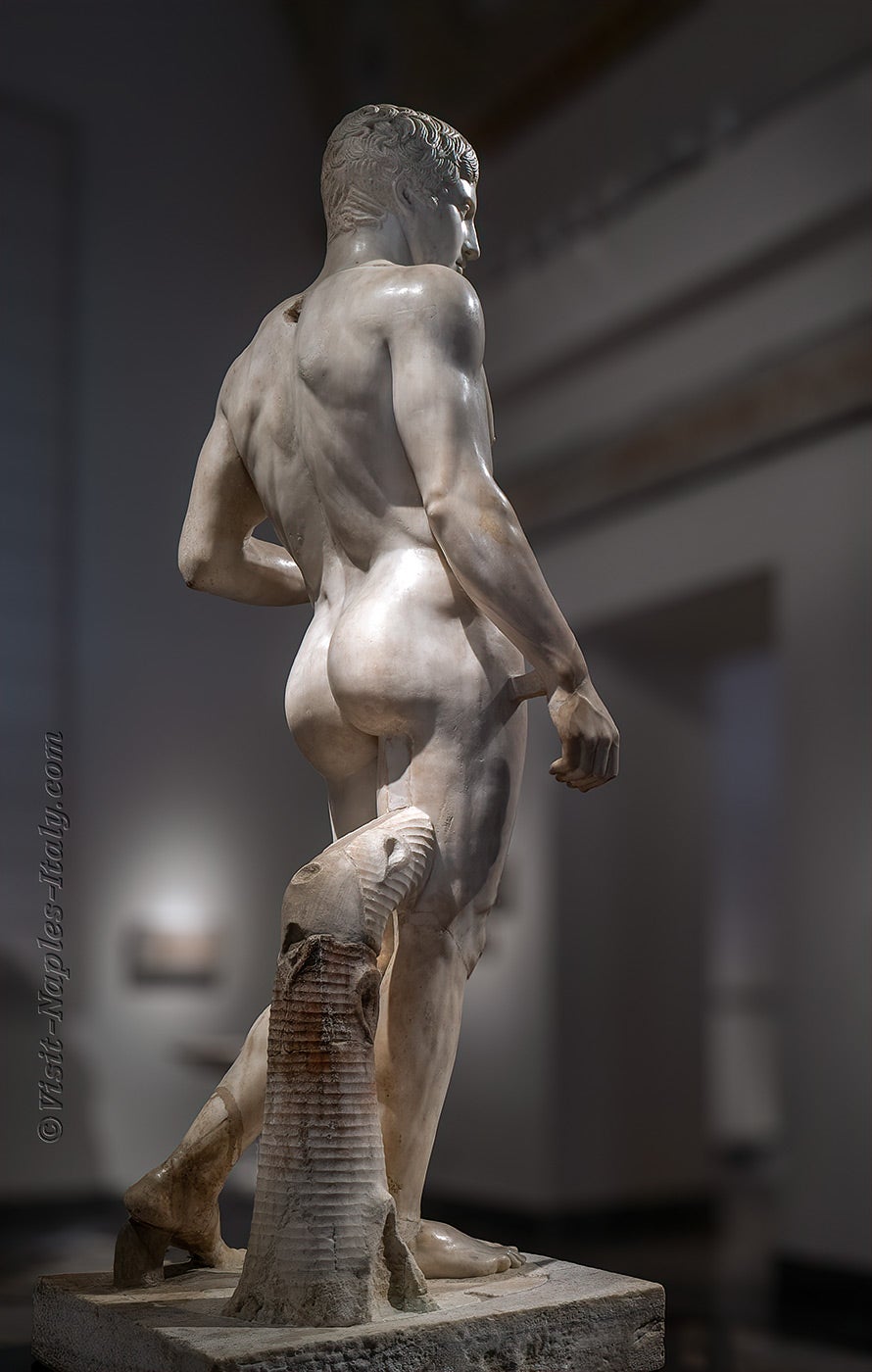
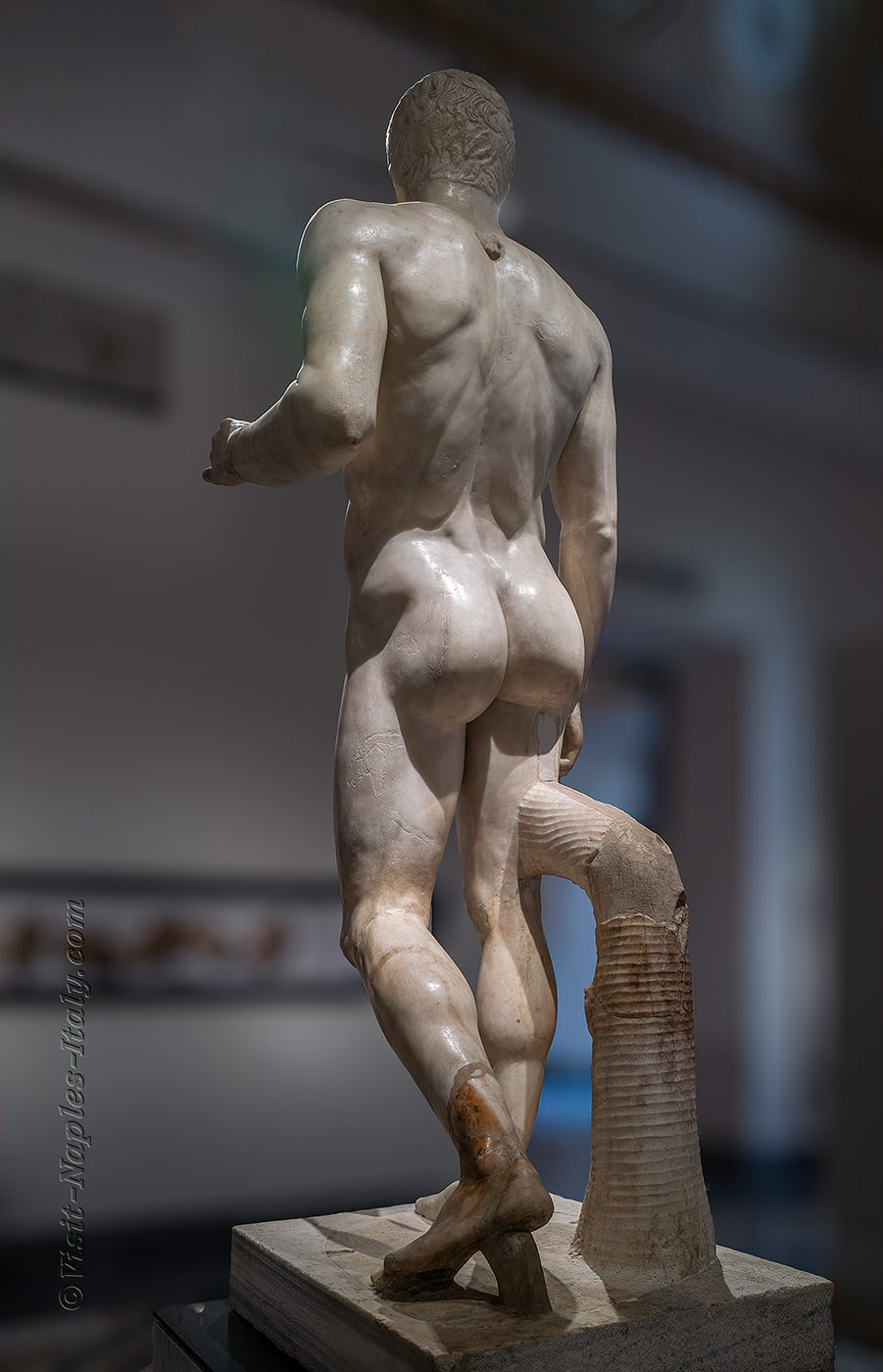
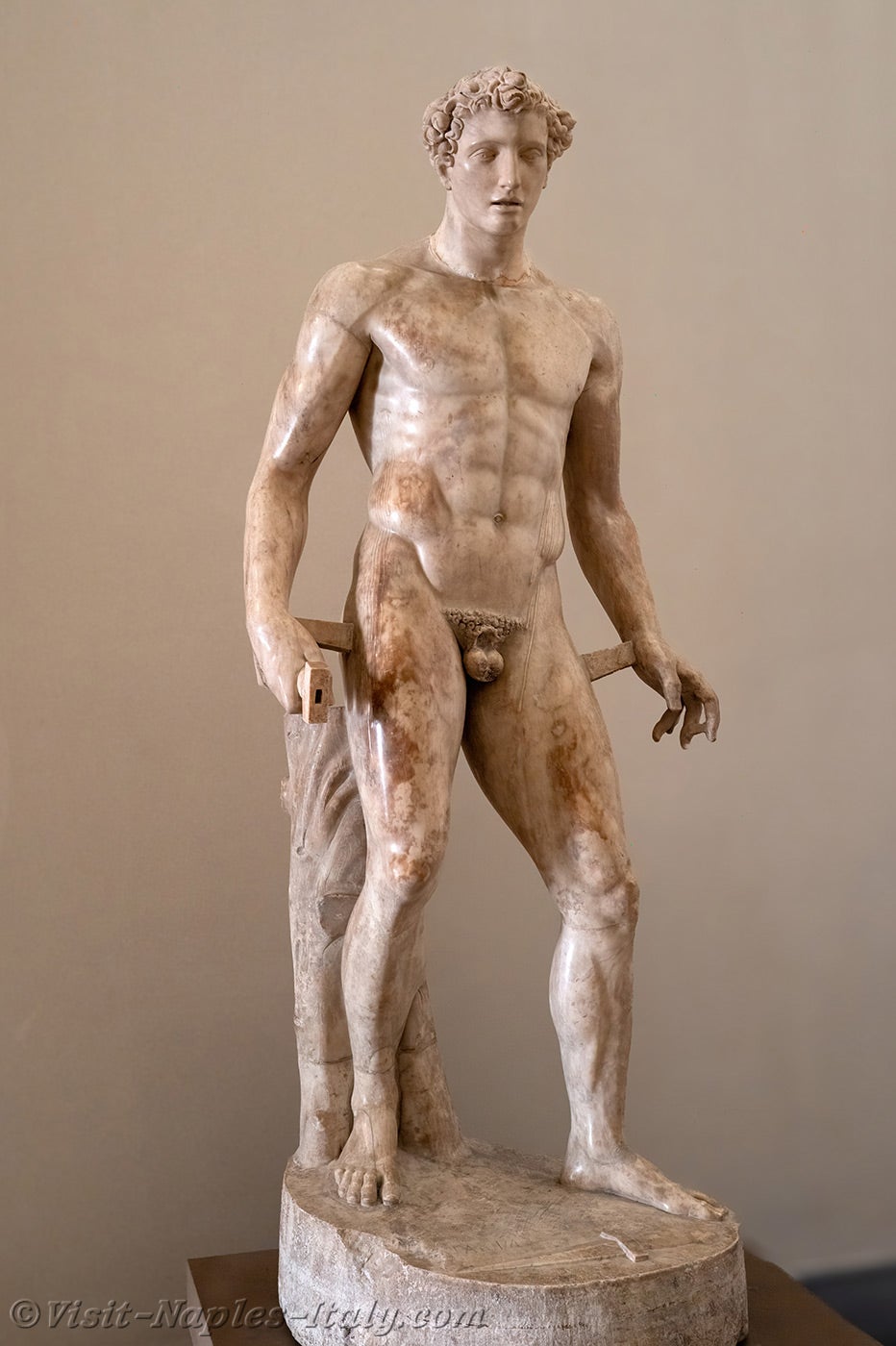
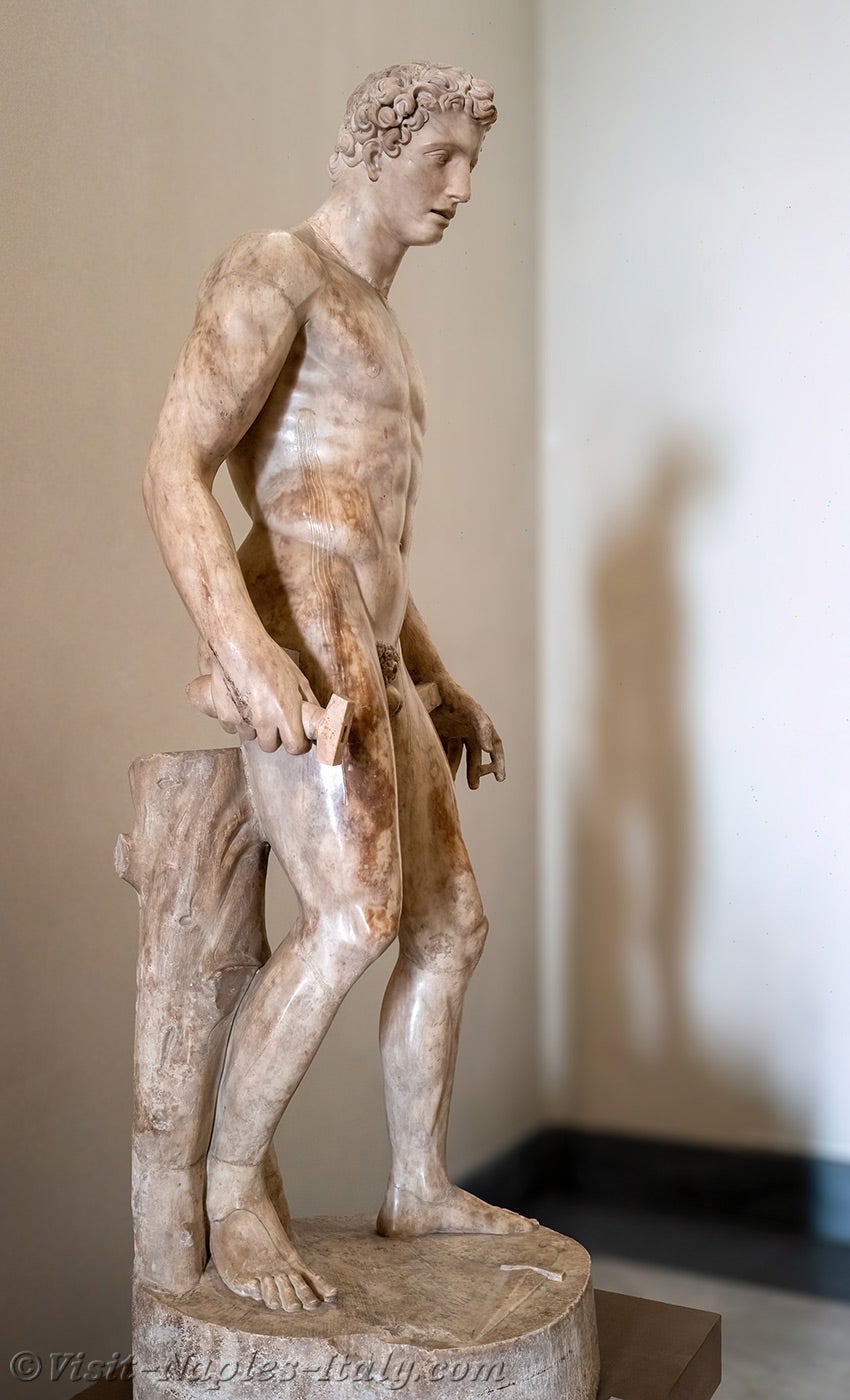
Doryphoros, Samnite Gymnasium, Pompeii
Sculpture - Marble (213 x 70 x 75 cm) 27 BC - 68 AD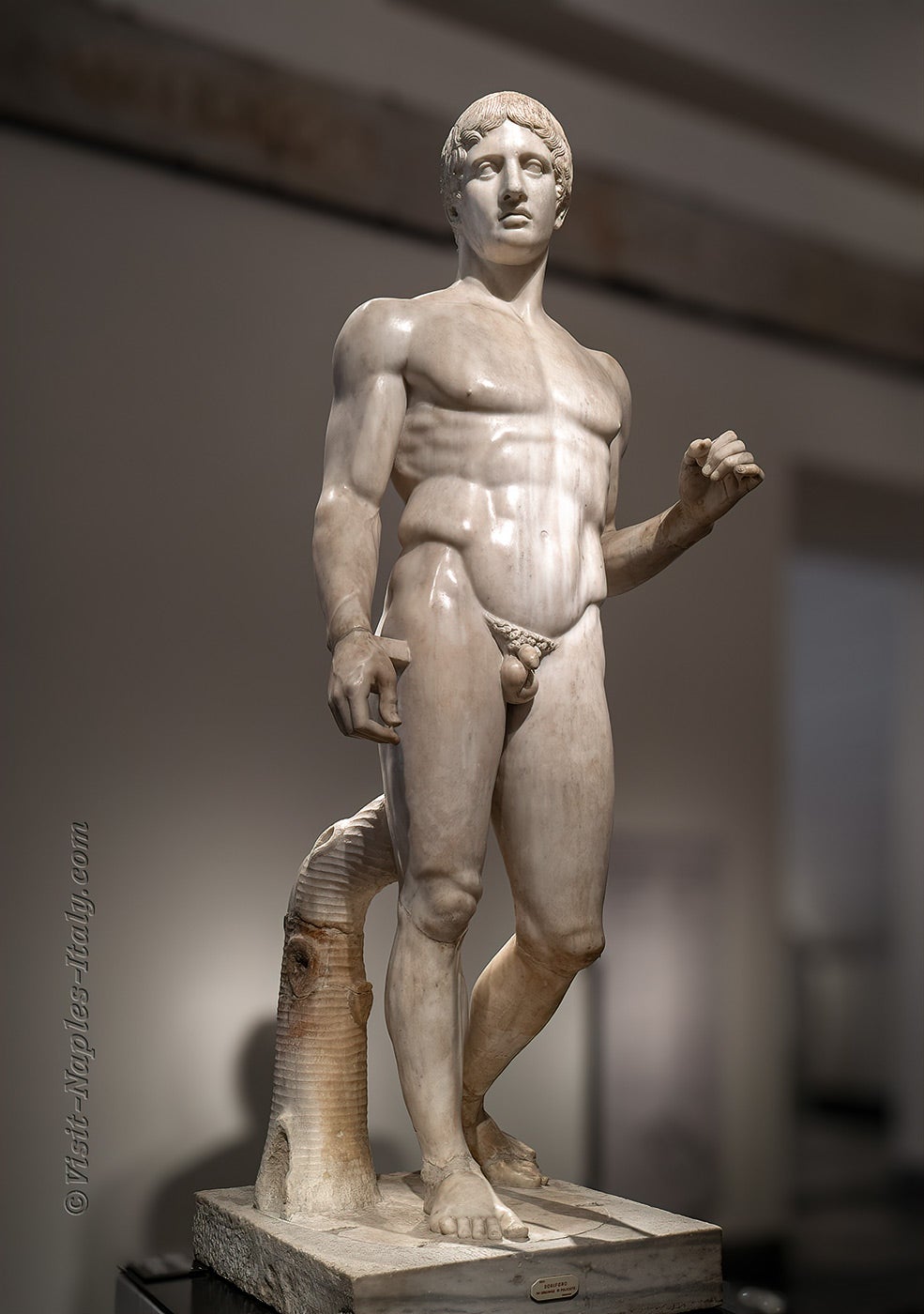
Doryphoros, Pompeii This statue of a Doryphoros comes from the Samnite Gymnasium in Pompeii.
The original, a bronze sculpture known as “the Spear-Bearer” was created in 440 BC by the Greek sculptor Polyklet.
This spear-bearer probably represented Achilles and was called the “canon” because it conformed to the rules of construction by observing the various ratios between the different parts of the body.
According to Cicero, Lysippos himself said that he had learnt sculpture by studying Polyklet’s Doryphoros and the ancients regarded Polyklet as superior to Phidias.
This Doryphoros, discovered in Pompeii and on display at the Archaeological Museum of Naples , is the finest copy that has survived to the present day.
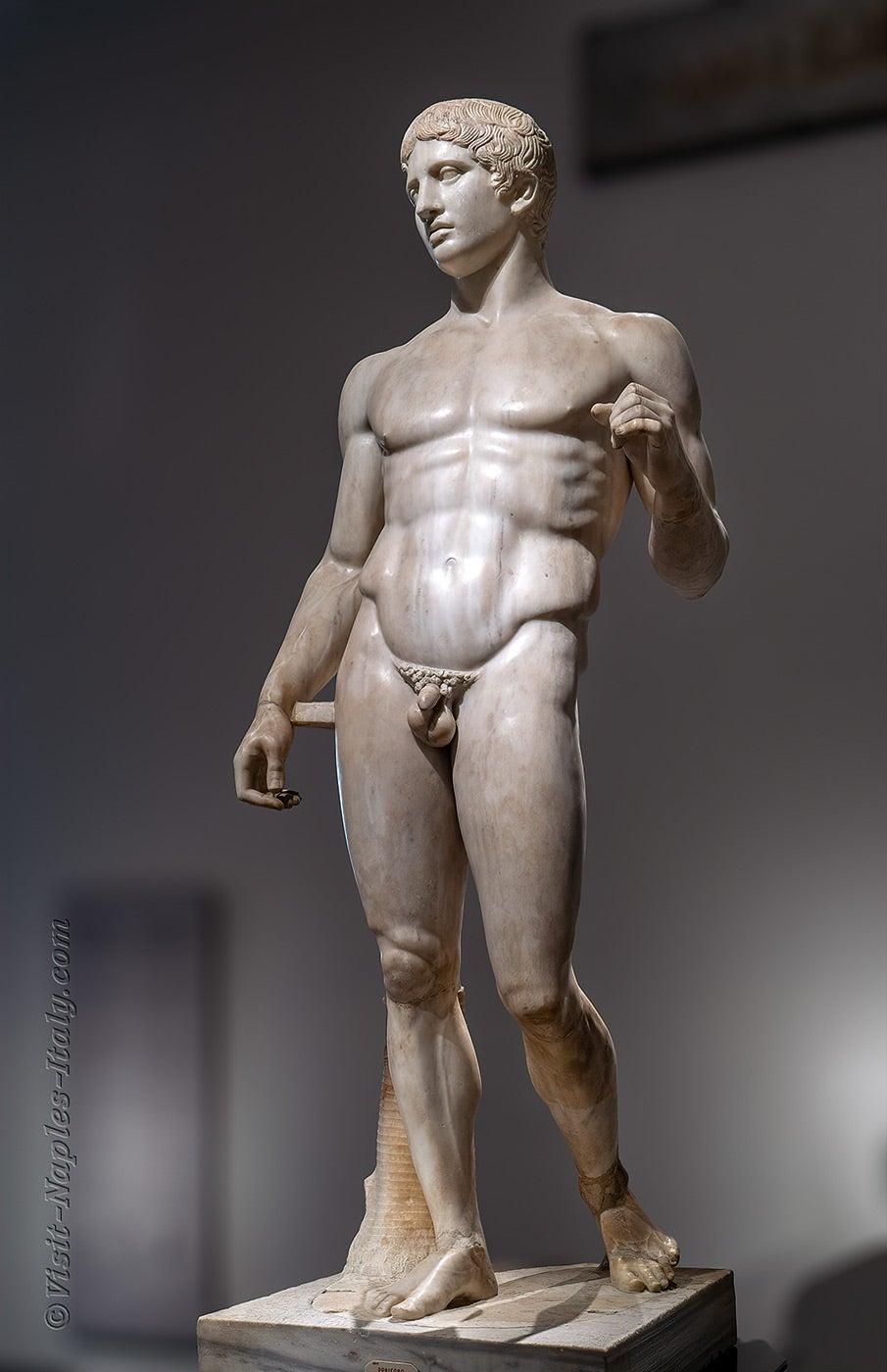
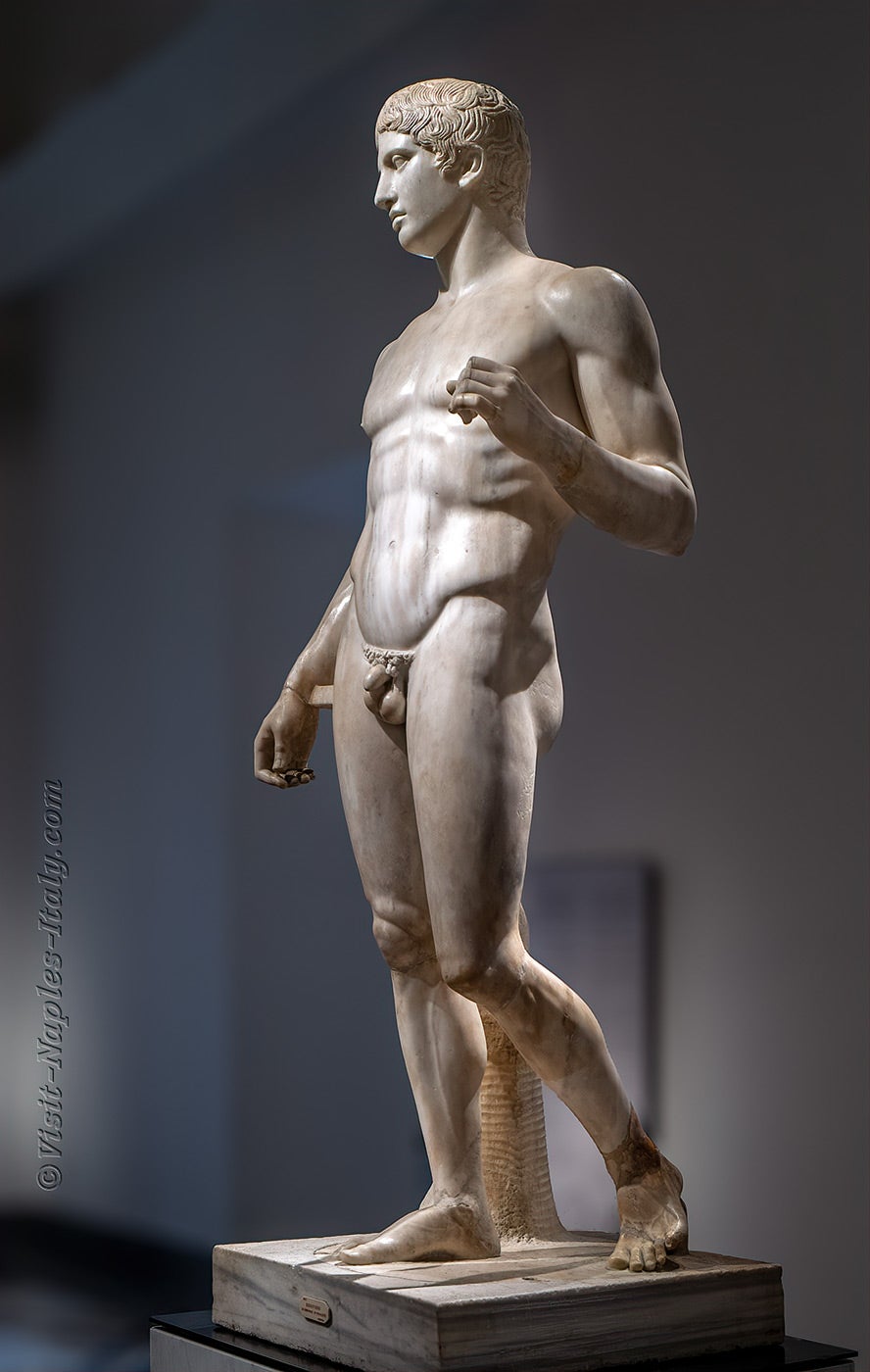
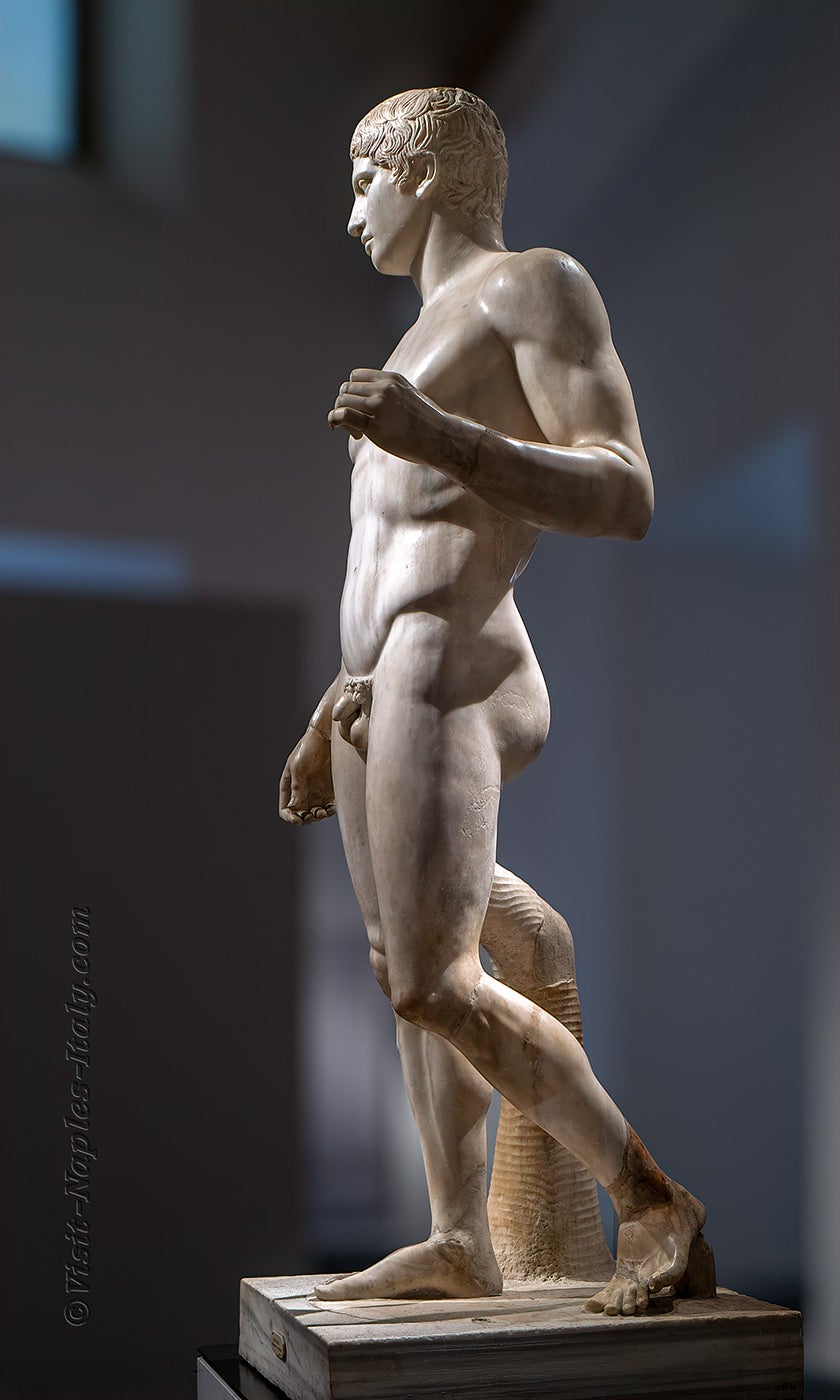
Doryphoros, Pompeii The statue displays a “contraposto”; meaning that the tilt of the hips corresponds to that of the shoulders, with the head turned away from the free leg, which is slightly bent, whilst the right arm is outstretched.
The other leg is straight, whilst the left arm is bent to hold the spear.
With this statue, Polyklet sought to represent the ideal harmony of the Greek man, possessing both a beautiful body and a noble soul.
The presence of this statue in the gymnasium at Pompeii was intended to remind the city’s young aristocrats that they were part of the classical world and had a duty to share the ideals of Hellenic culture, of which the Romans considered themselves the heirs.
Runners, Villa dei Papiri, Herculaneum
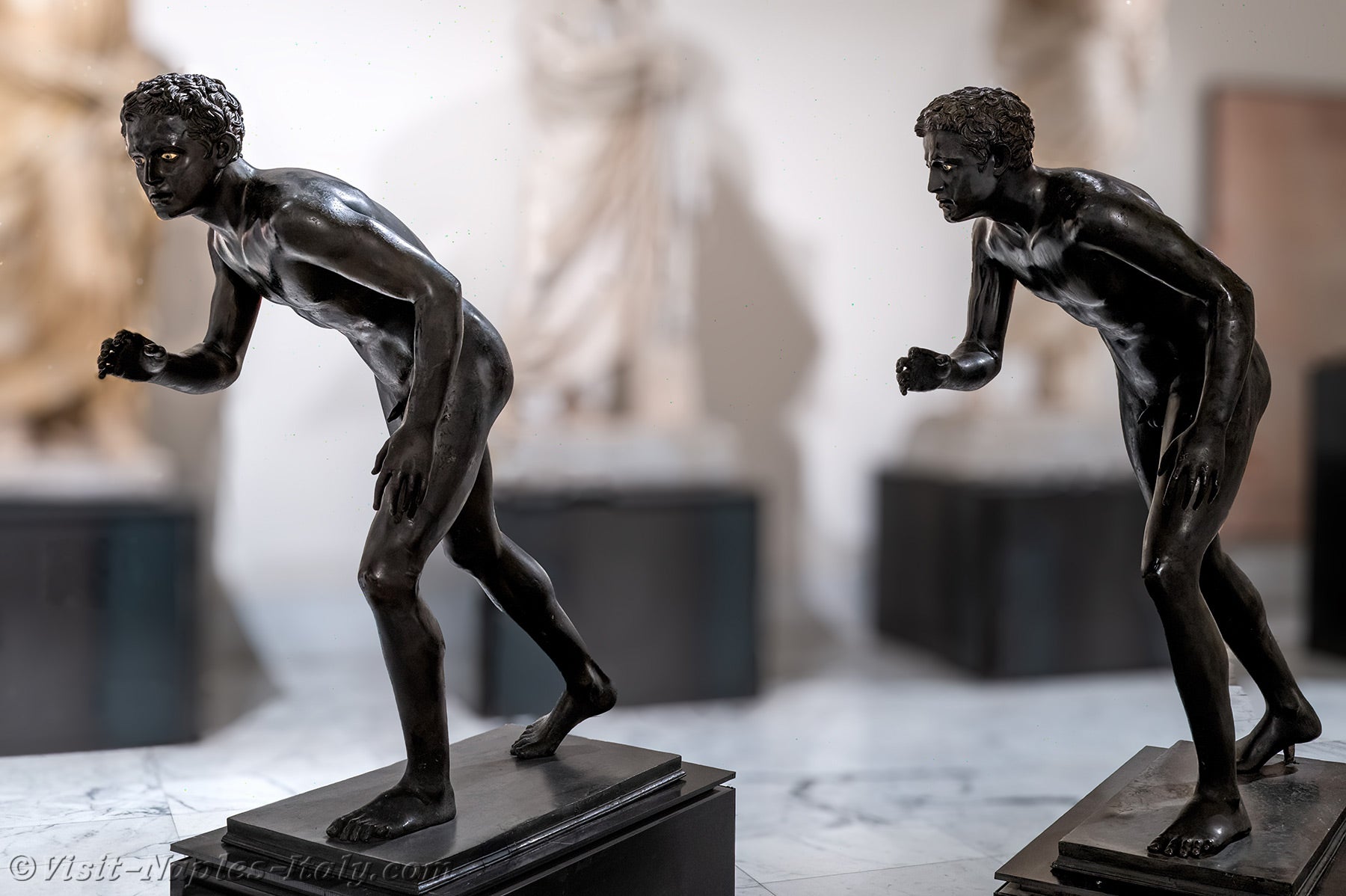
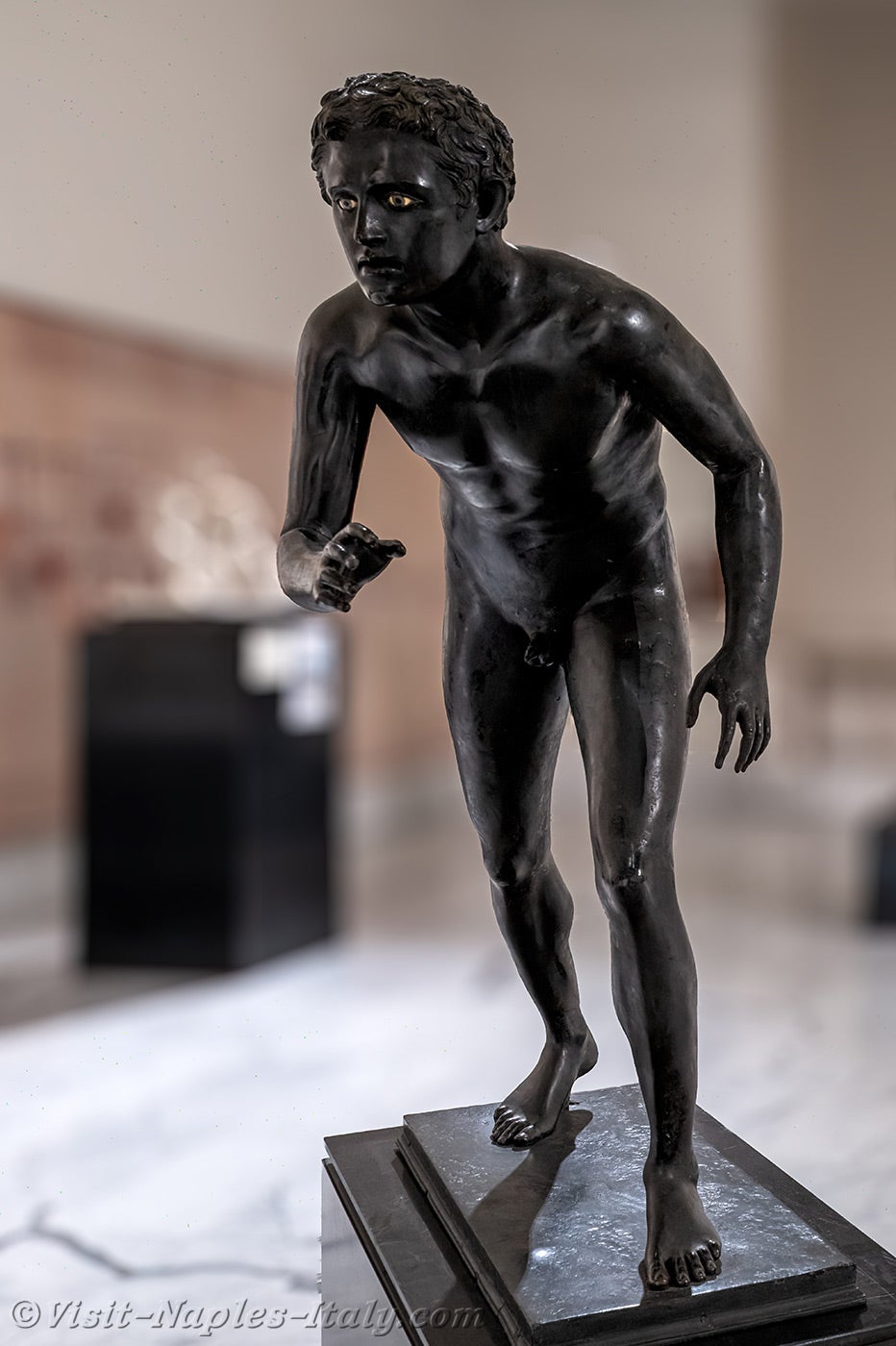
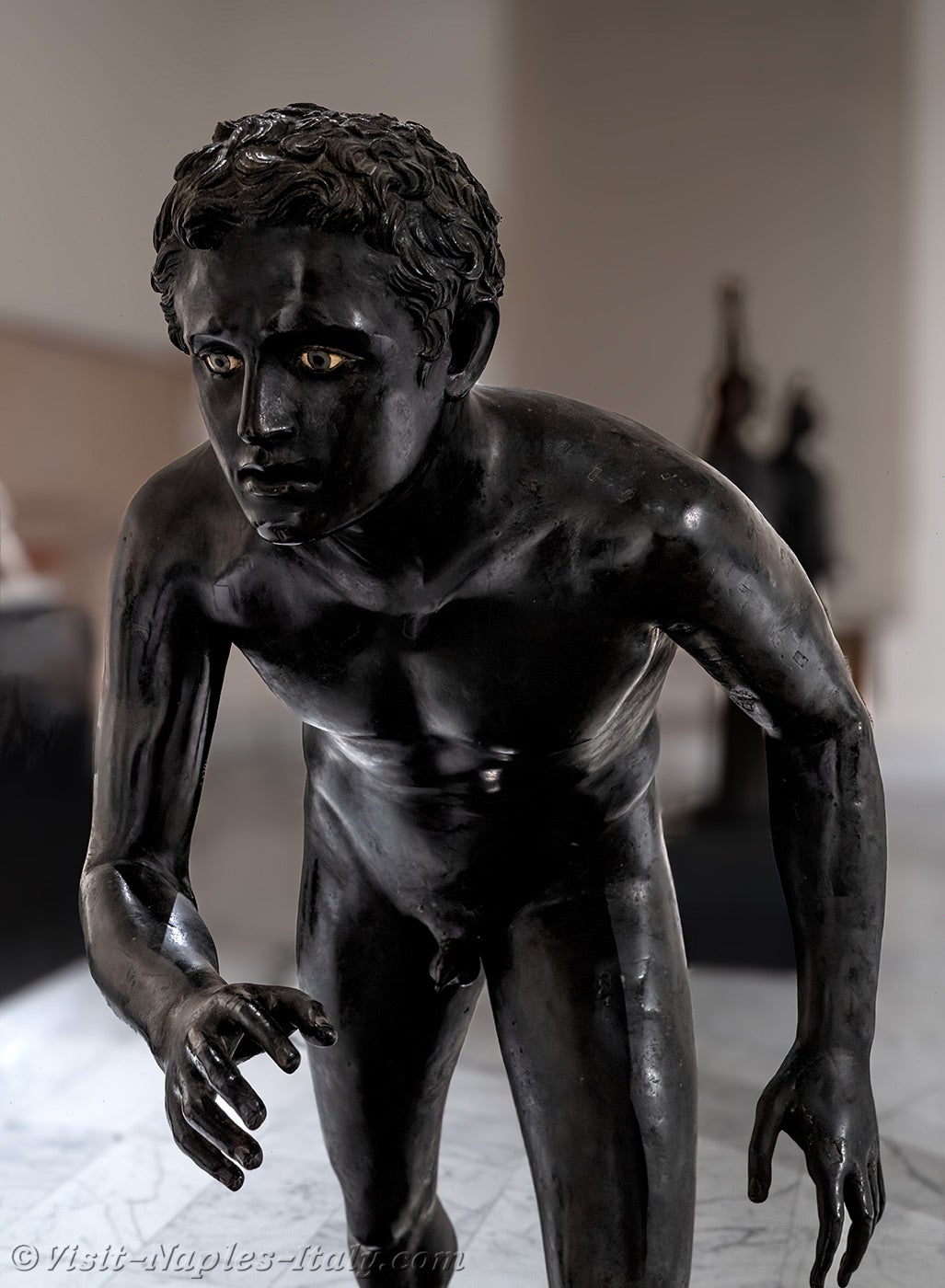
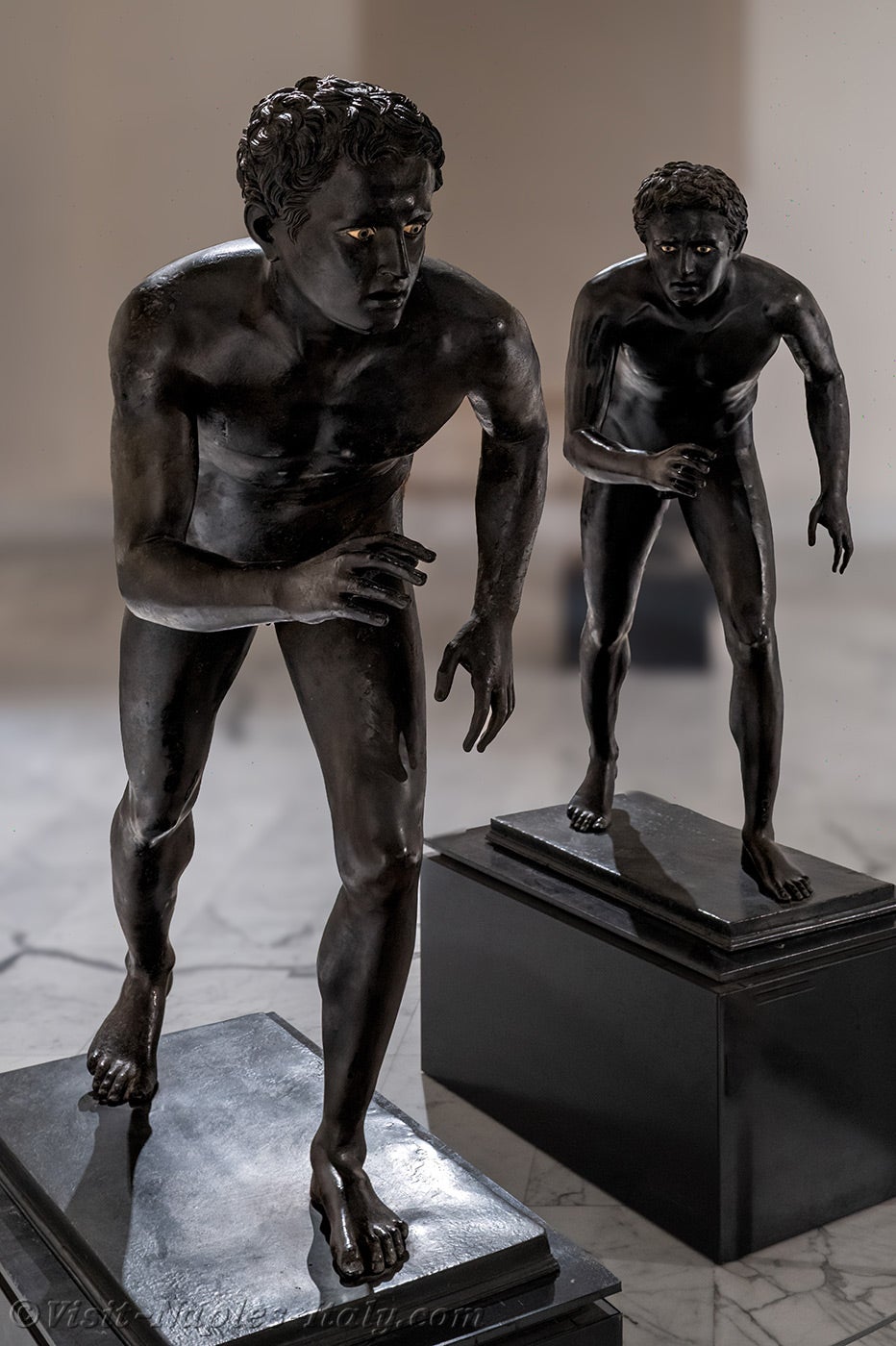
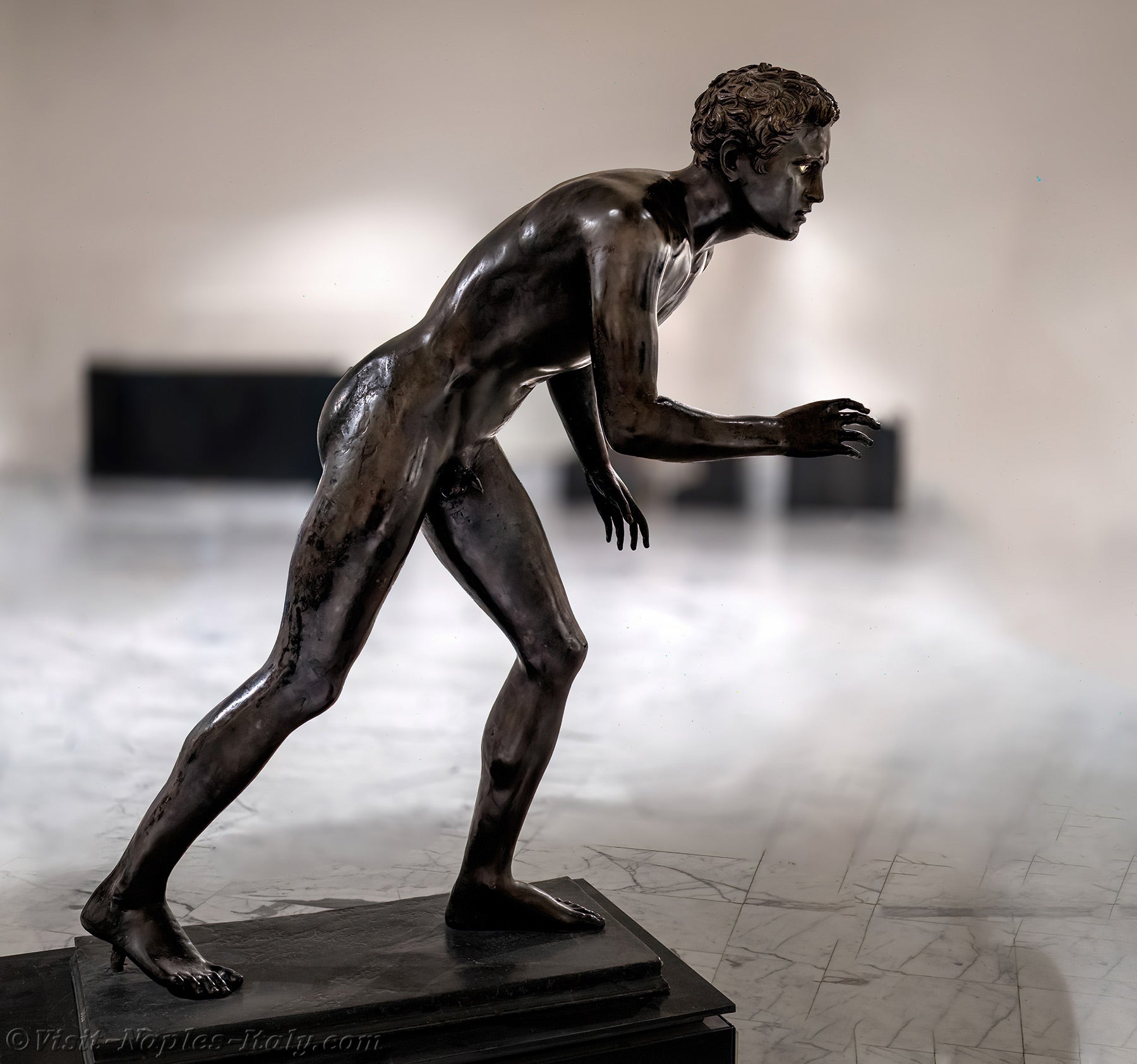
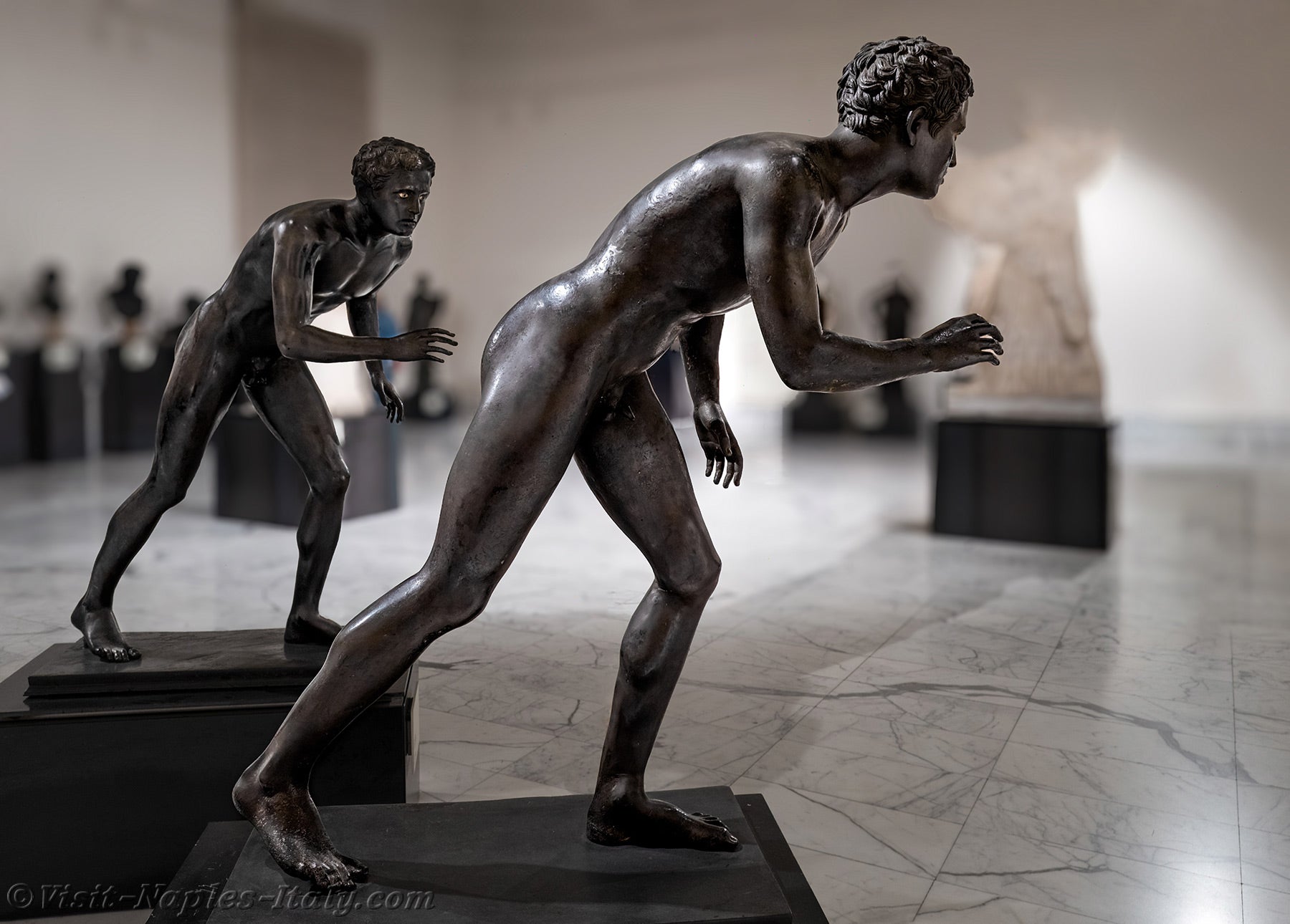
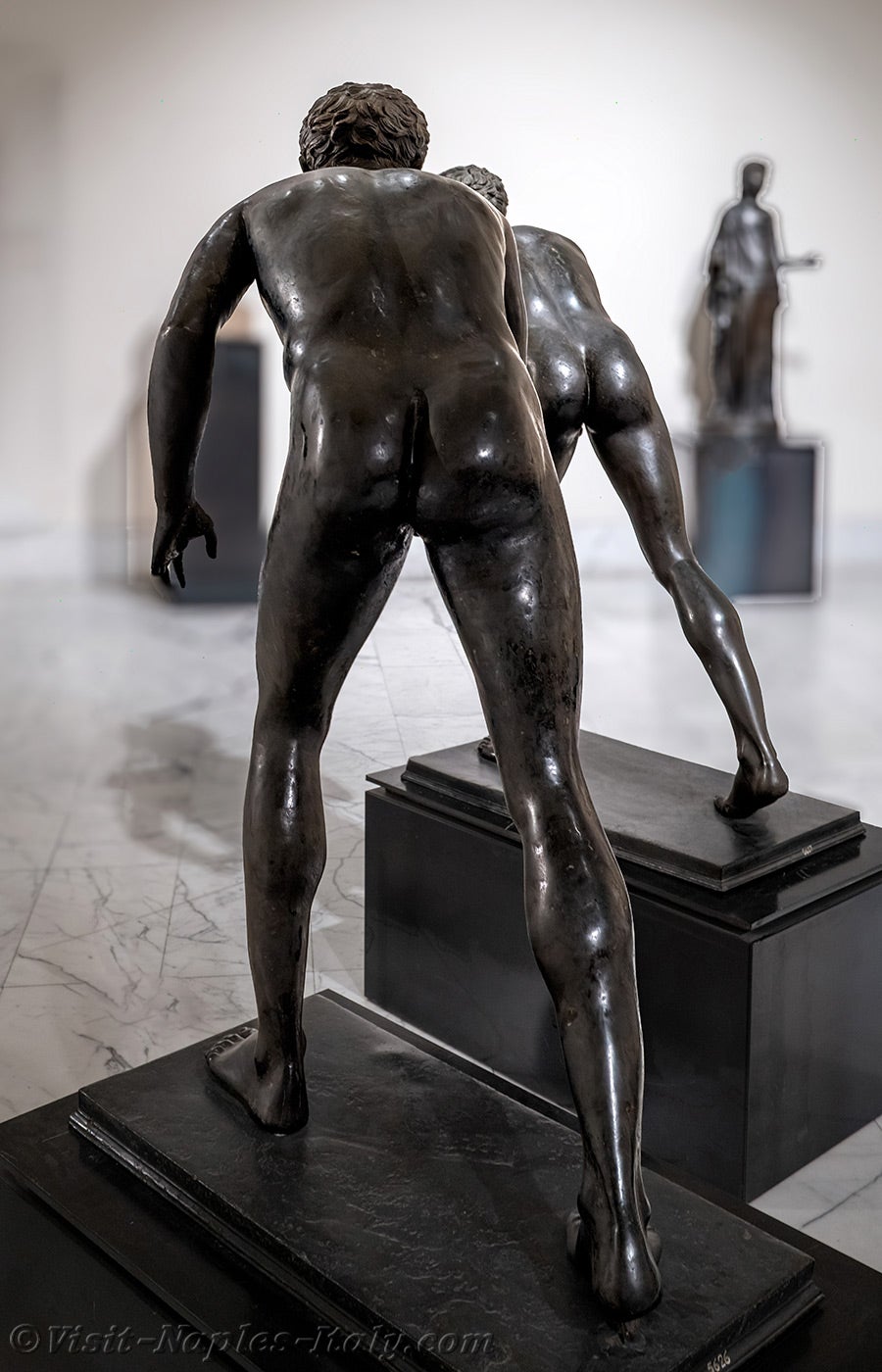
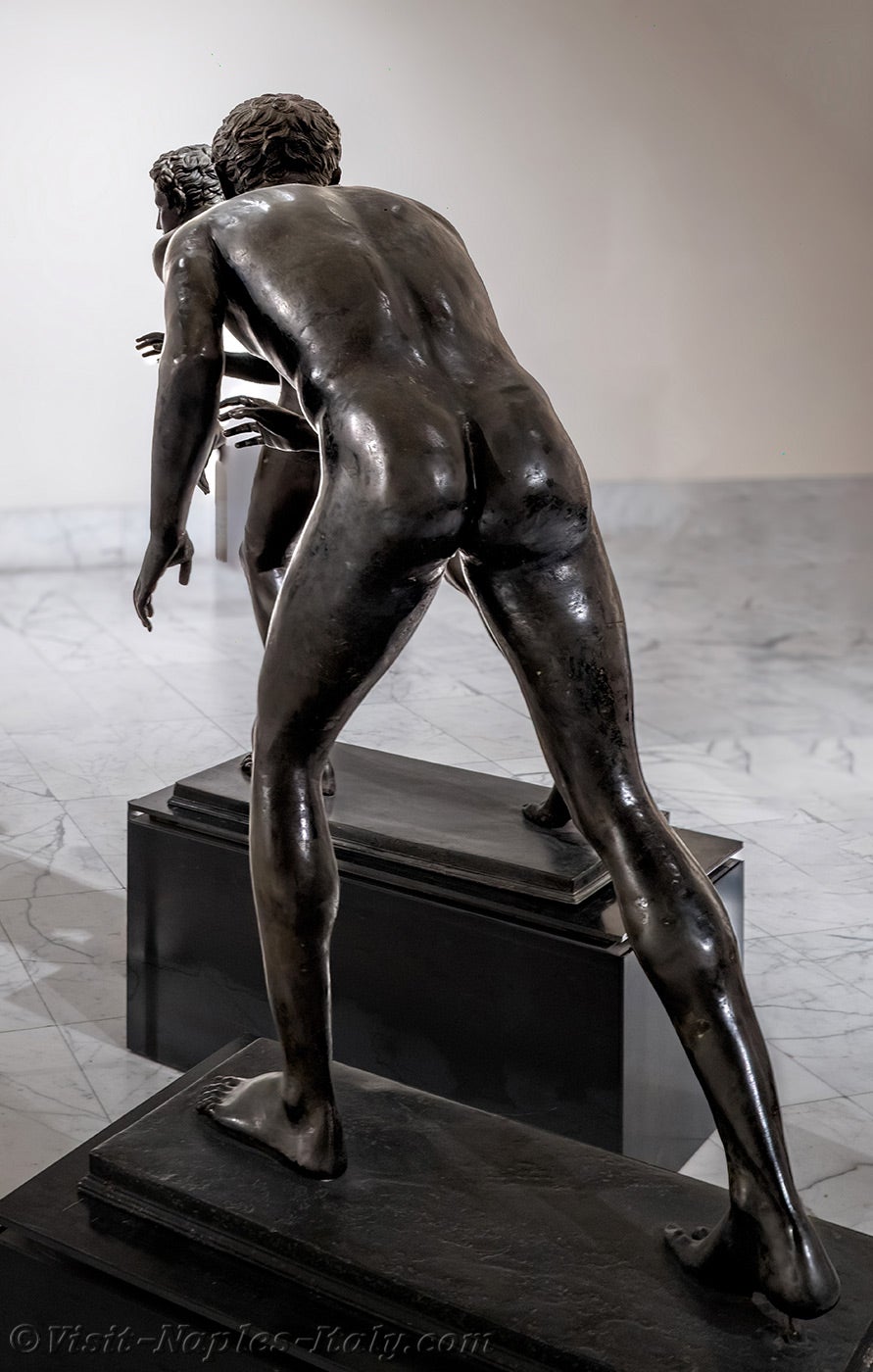
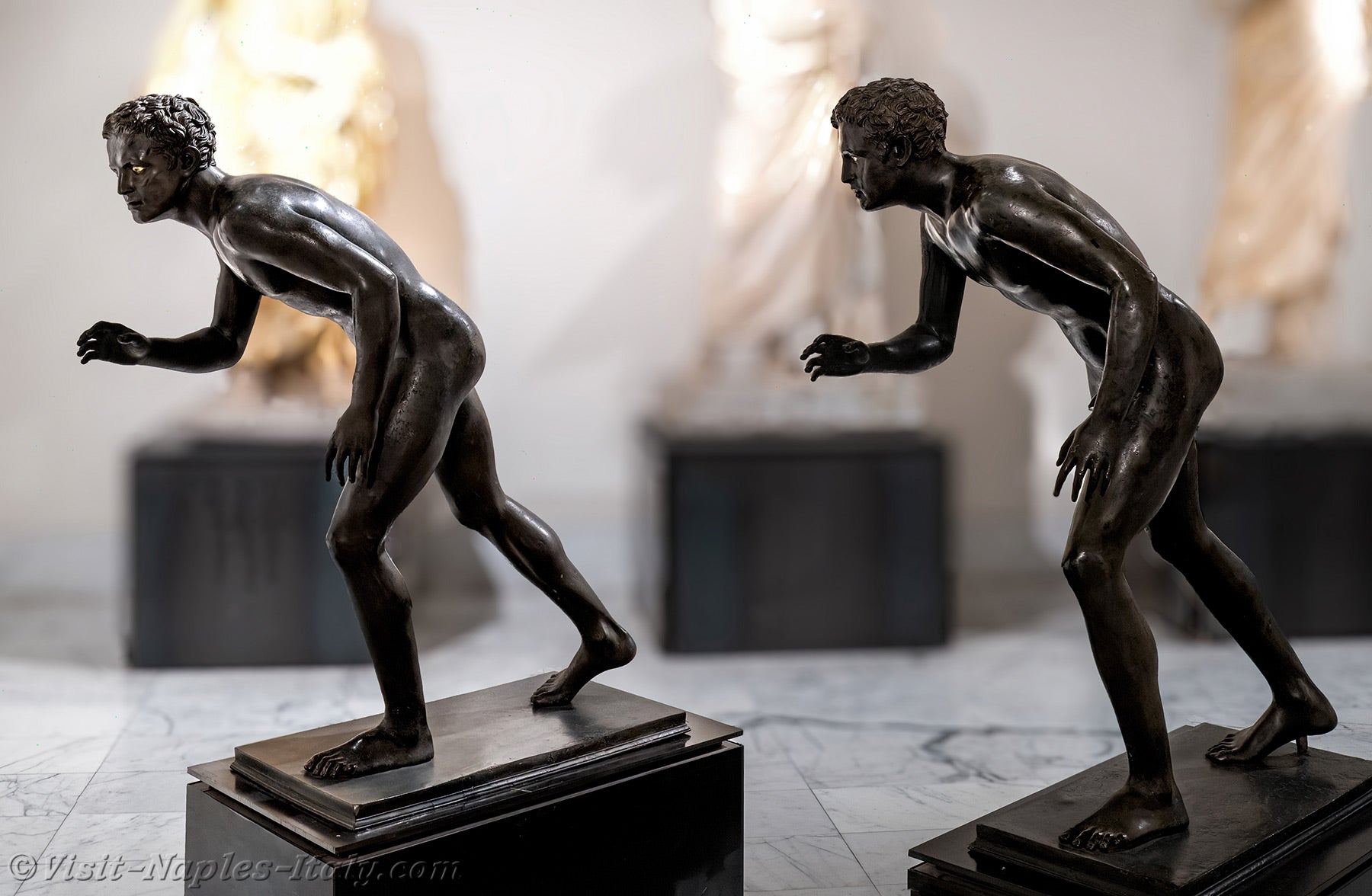
Runners, Herculaneum Sculpture - Bronze, ivory, bone (Height 118 cm) 1st century BC
The statues of these two superb young runners were found in the Villa of the Papyri in Herculaneum.
Judging by their posture, we can see that they are ready to spring into action; this is the crucial moment of the start of the race in which they are about to compete.
Their gazes confirm this moment.
They are watching each other; one turns his head slightly to keep an eye on his opponent, whilst the other has his body turned towards him.
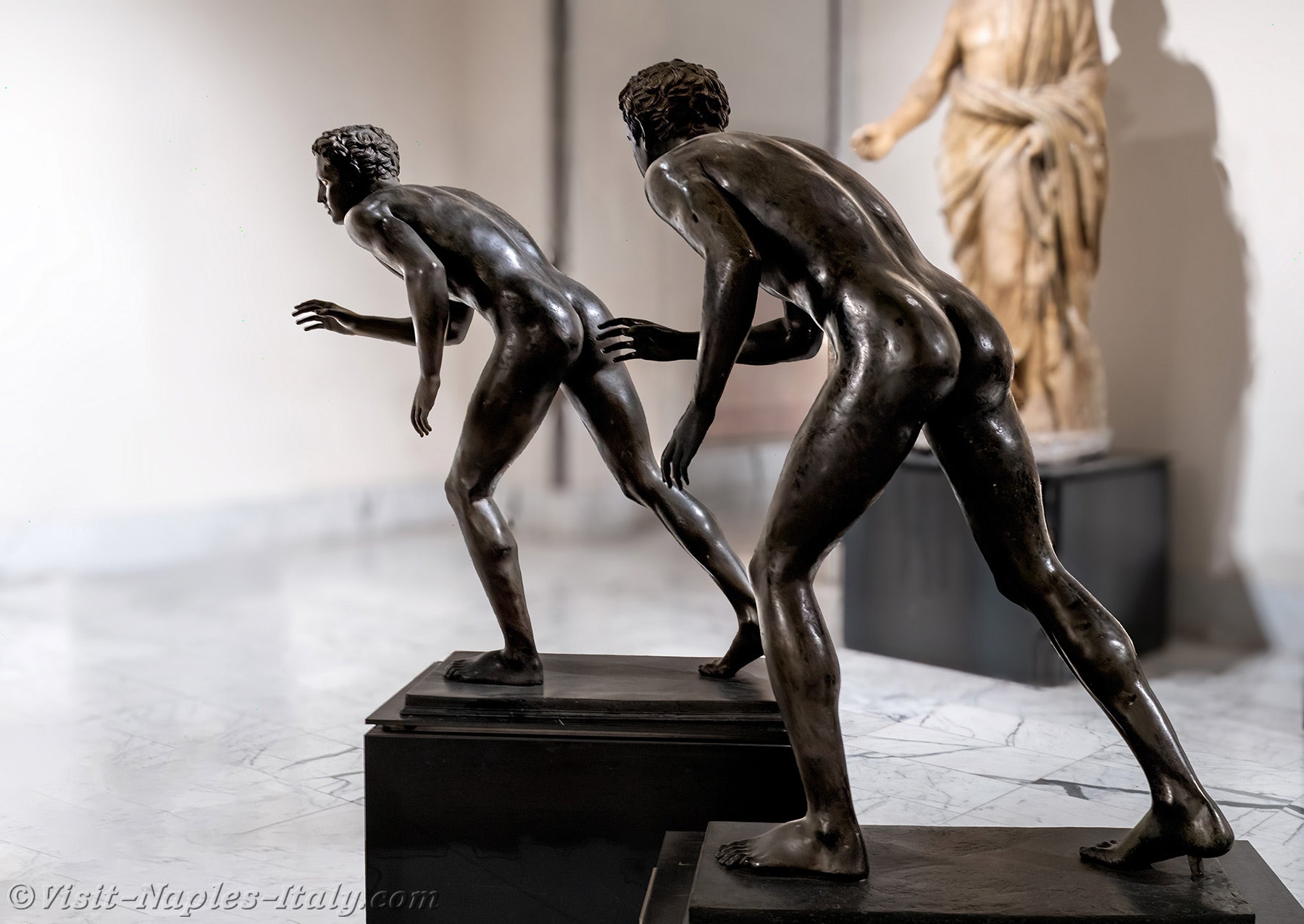
Runners, Herculaneum Le positionnement des deux statues au musée archéologique de Naples respecte cette hypothèse.
Nous allons assister au départ, leur tension est perceptible, la concentration des deux athlètes est totale et se sent autant dans leurs regards que dans leurs muscles tendus pour la course qui va démarrer.
Leurs torses sont penchés en avant, les talons de leurs jambes arrière sont levés, la position de leurs bras est celle des coureurs : ils sont prêts à partir au signe du départ.
Dying Gladiator, Farnese Collection
Sculpture - Marble (Height 191 cm) 2nd centuryThis young and handsome gladiator has been mortally wounded. His nakedness reveals a muscular and perfect body.
Dying Gladiator Two deep wounds are visible on his upper chest.
The blood flowing from each of them runs freely down his chest and all the way to his thighs.
He appears to be at the end of his strength, barely able to stand on his legs and no longer even capable of raising his sword.
It seems as though his left hand, from which his shield must have slipped, appears to be trembling, his fingers splayed and strangely bent.
His half-open mouth reveals the difficulty he now has breathing.
His gaze is lost in the distance; he is desperate, this is the moment before his death and he already knows he cannot escape it.
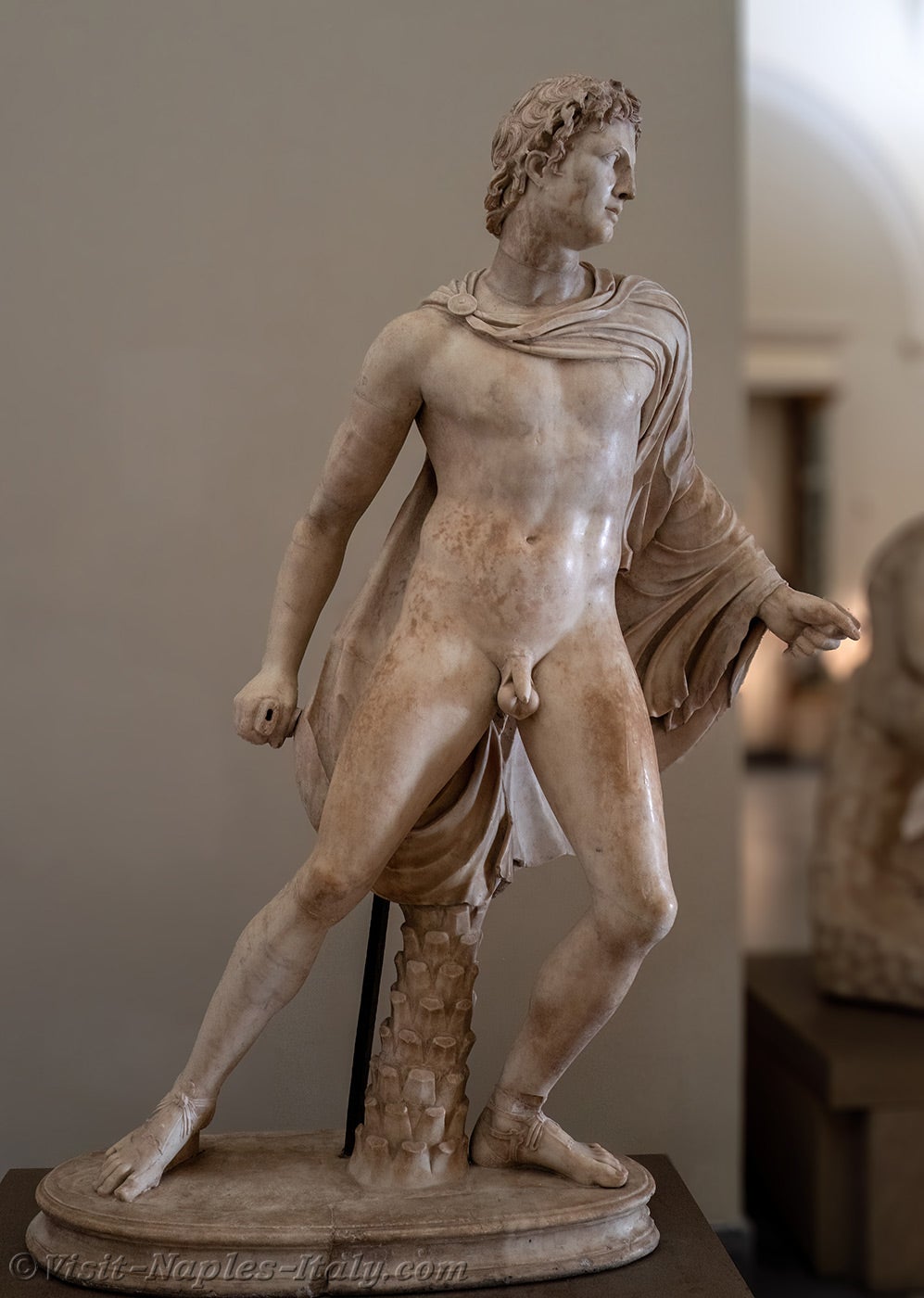
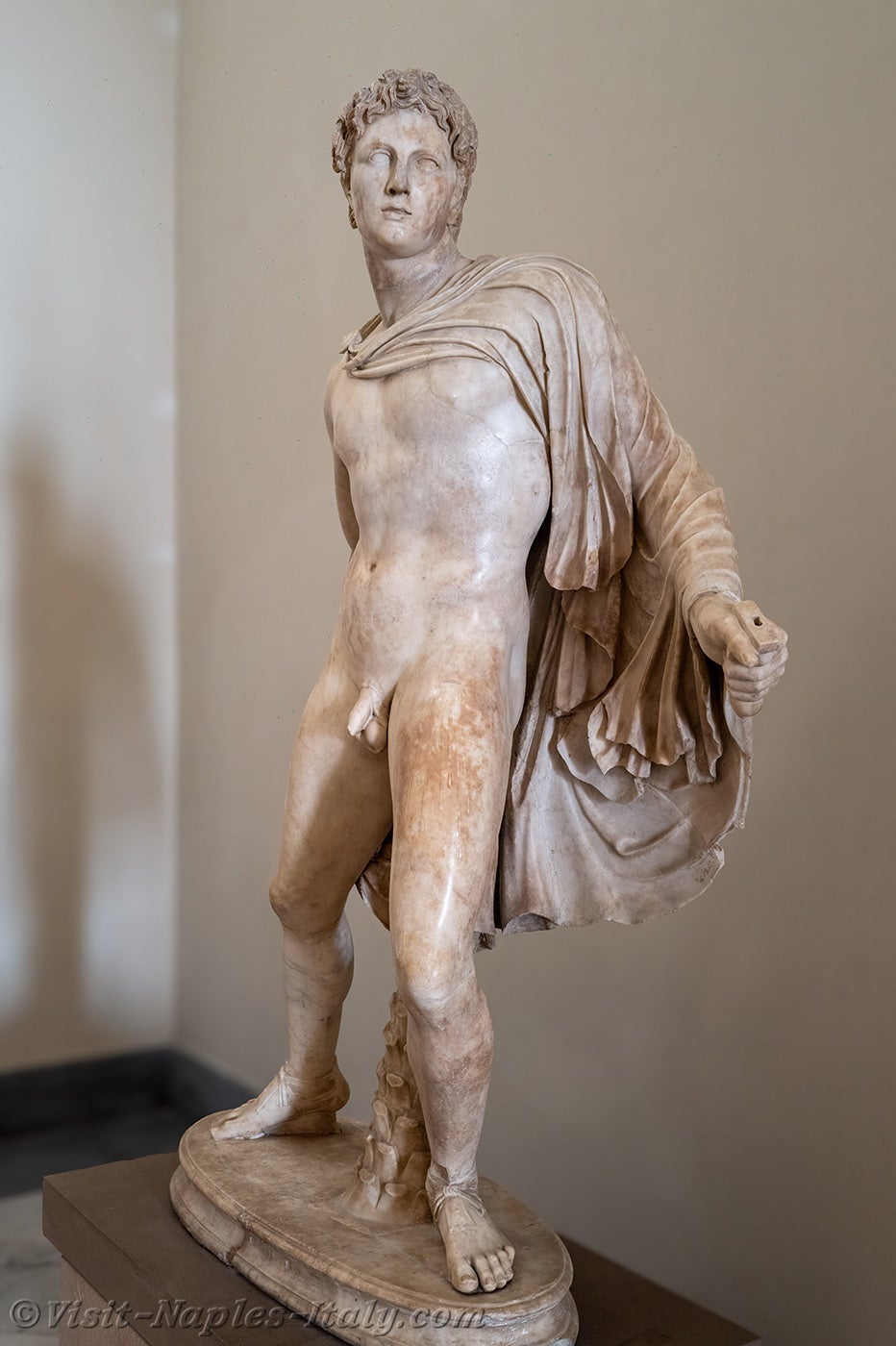
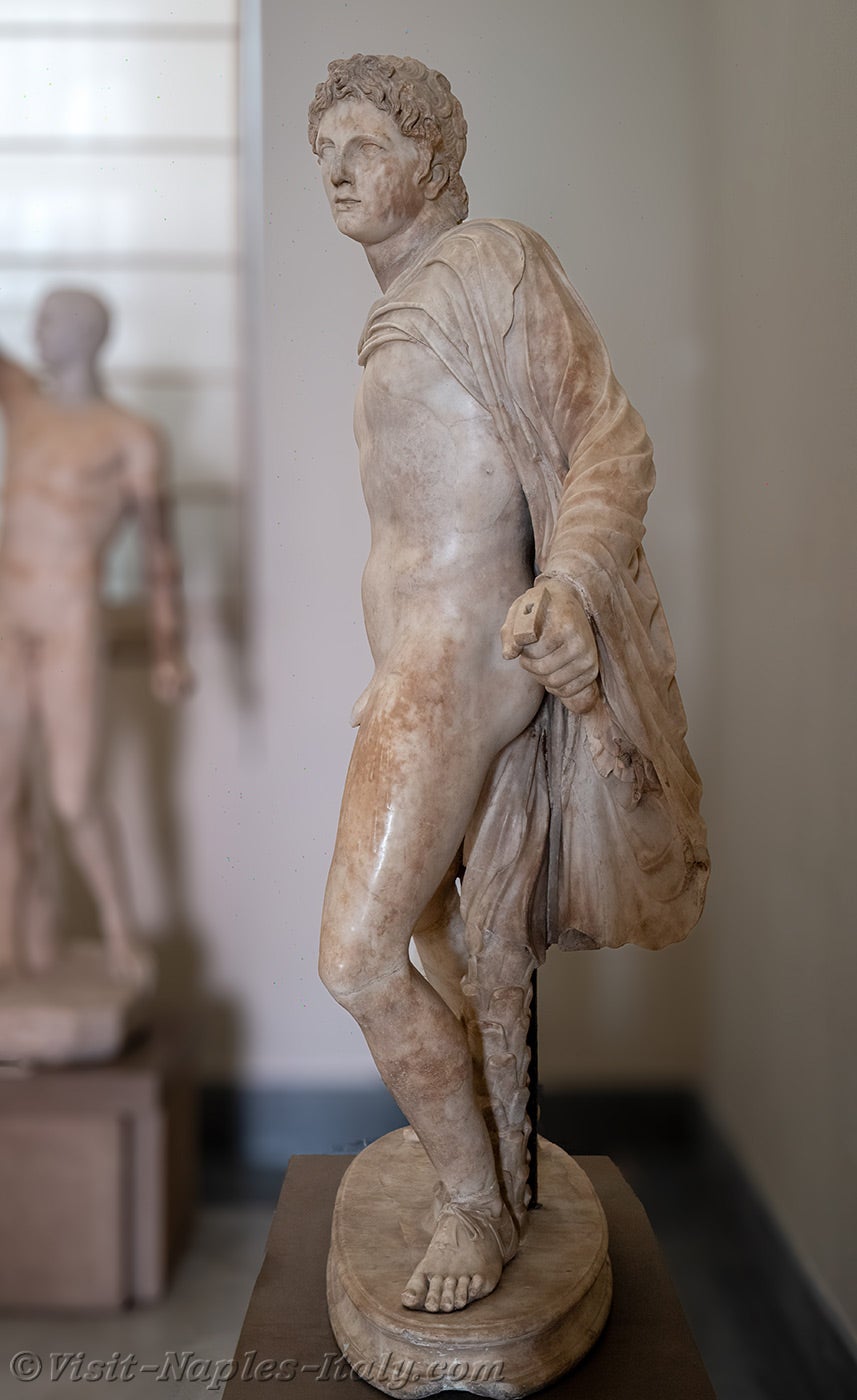
Warrior wounded in the thigh, Farnese Collection
Sculpture - Marble (Height 195 cm) 2nd centuryThis young and handsome warrior, naked except for his chlamys tied around his neck, has been wounded in the left thigh, from which blood is flowing.
It is difficult to know what he is doing. Two hypotheses are at odds.
Either he is in the midst of battle and bravely facing his enemy by pointing his sword at him, or the enemy is behind him and he is trying to escape from him.
Persons Athletes | Men | Women | Children
Sculptures Mythology | Persons | Animals | Bas-relief
Artworks Sculptures | Frescoes | Eroticism
MANN Artworks Schedule Tickets Location | Authorizations
Back to Top of Page