

MANN Artworks Schedule Tickets Location | Authorizations
Artworks Sculptures | Frescoes | Eroticism
Sculptures Mythology | Persons | Animals | Bas-relief
Persons Athletes | Men | Women | Children
Sculptures of women from Pompeii and Herculaneum at the Archaeological Museum of Naples
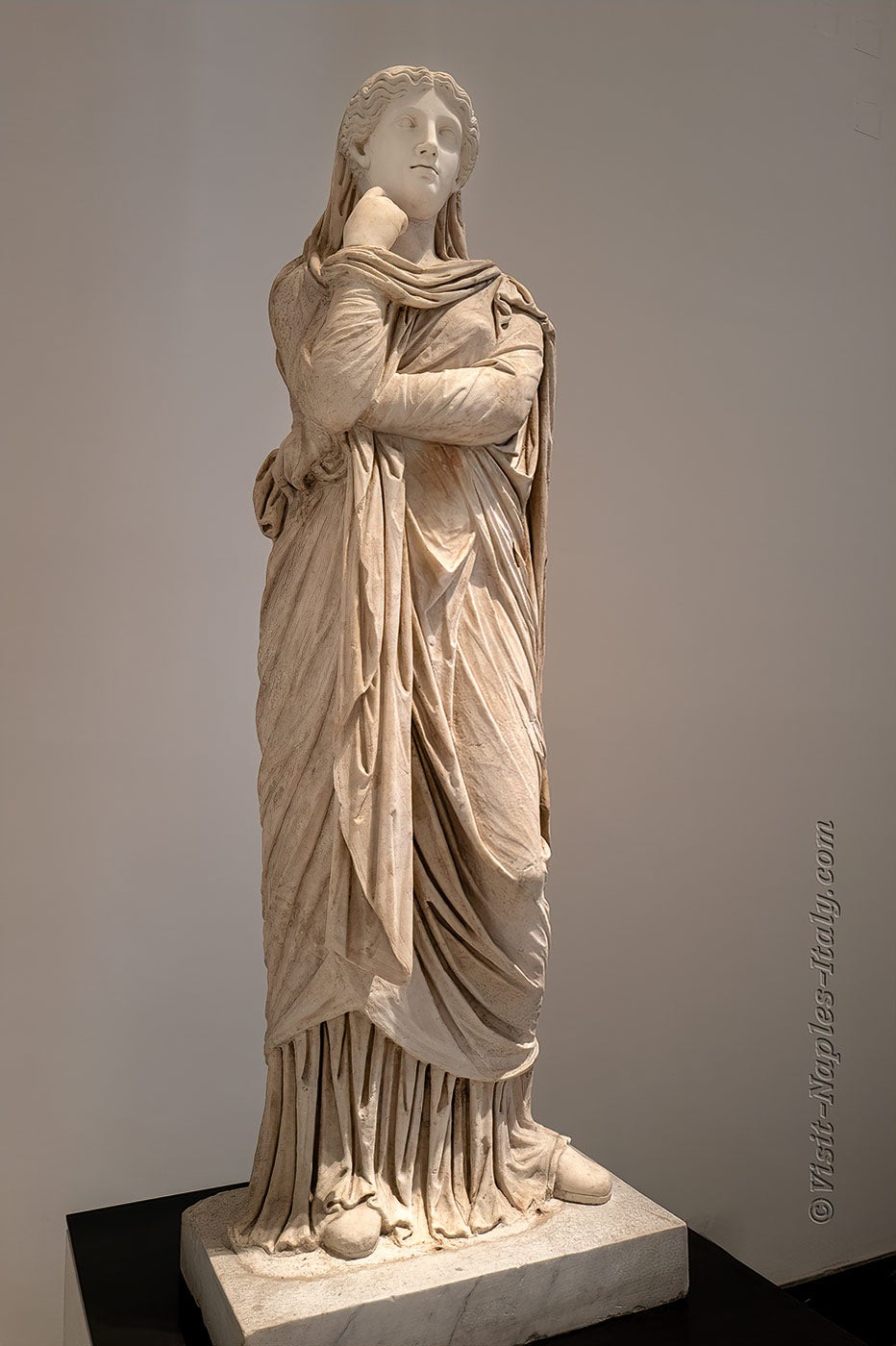
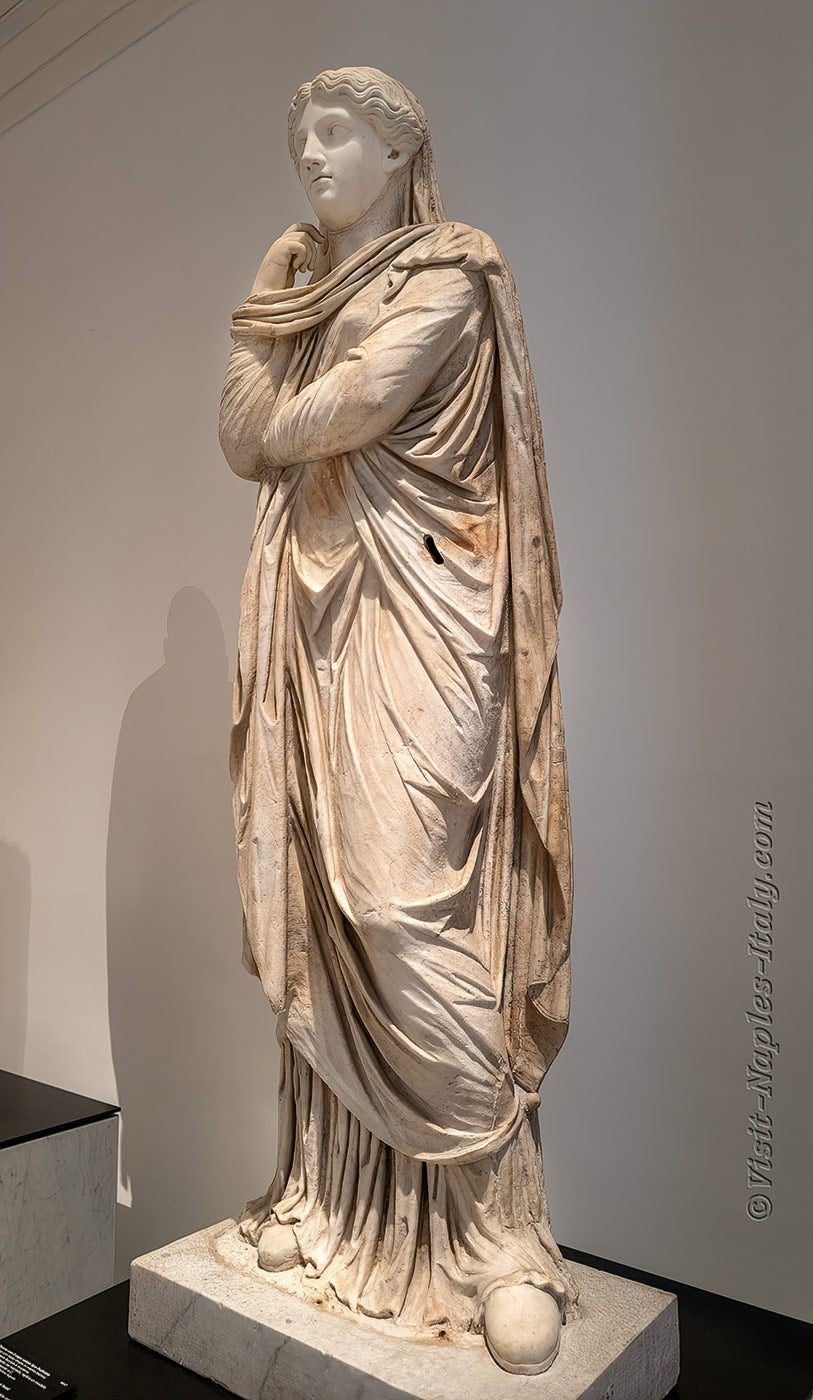
Woman known as “Pudicitia”, Temple of Fortuna Augusta, Pompeii
Sculpture - Marble (Height 197 cm) Early 1st centuryThis beautiful statue depicting a priestess adorned the Temple of Fortuna in Pompeii.
Her body is entirely covered by the magnificent drapery of a chiton and a himation made of fine fabric, her right arm bent as she brings her clenched hand close to her face reveals the calm and reserved nature of this young woman.
Her left hand beneath her bent arm presses against her body to hide in the folds of her himation, a gesture full of restraint and modesty.
As her face has been lost, the one we see is a modern reconstruction.
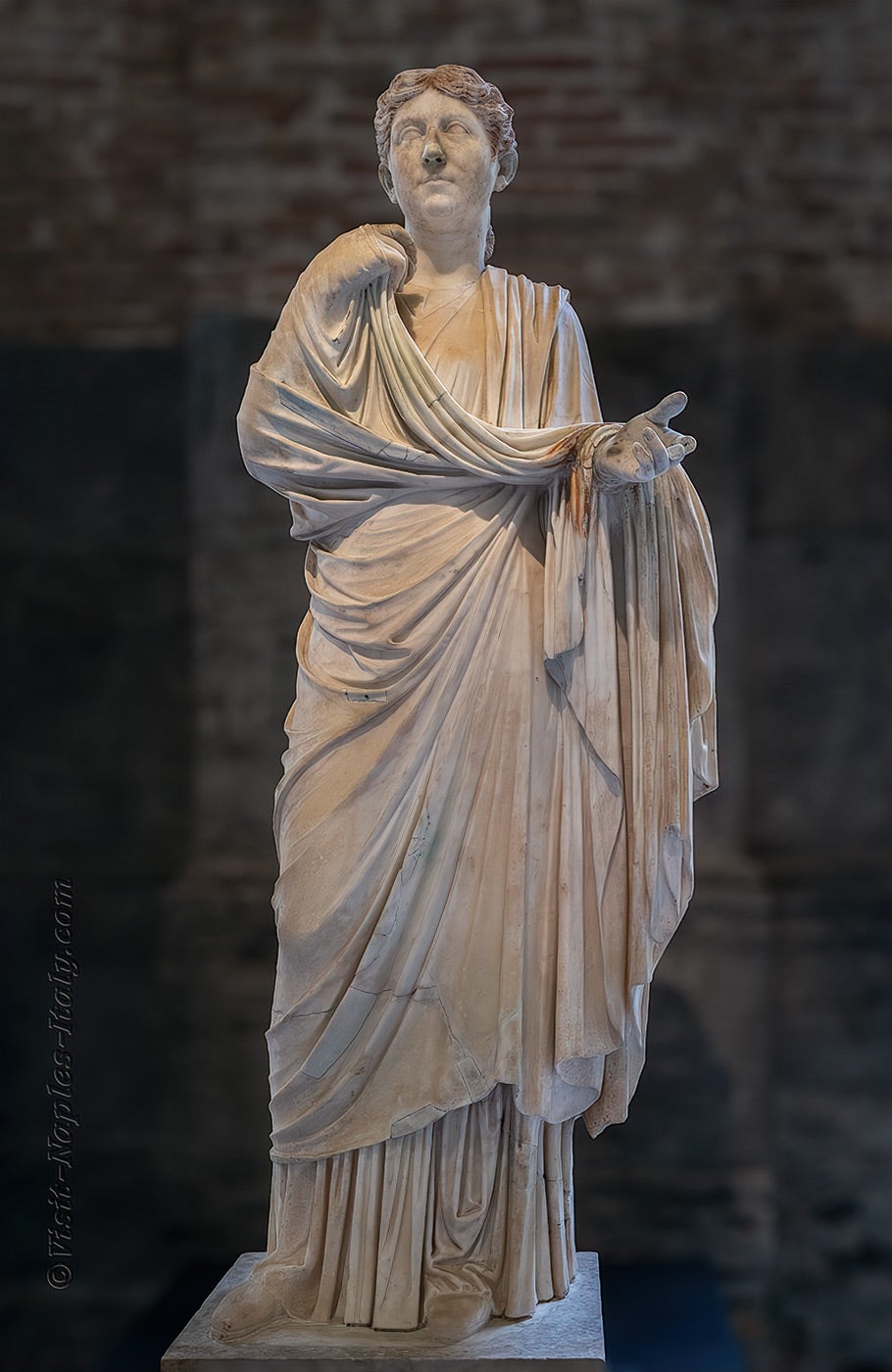
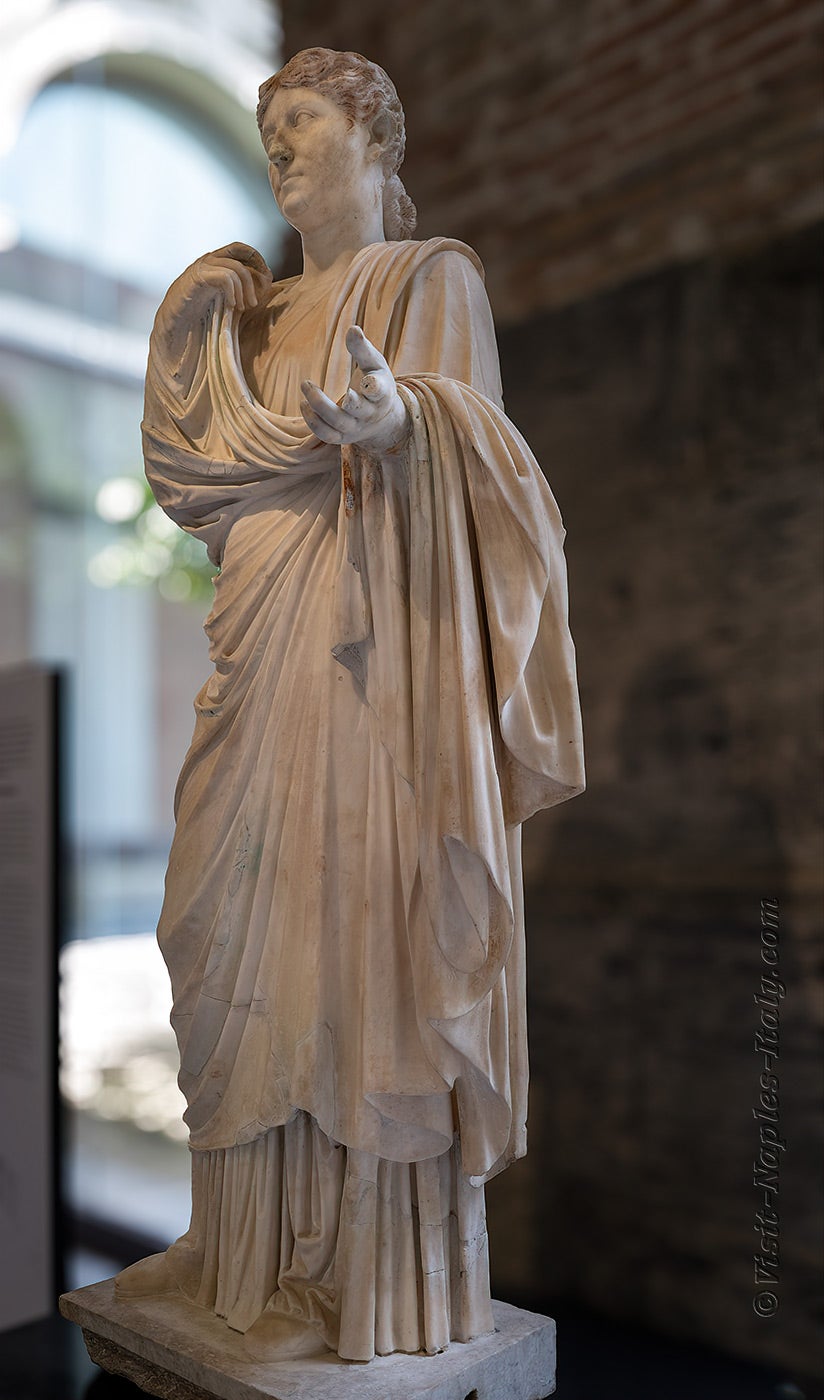
Daughter of Nonius Balbus, Herculaneum
Sculpture - Marble (Height 171 cm) First quarter of the 1st century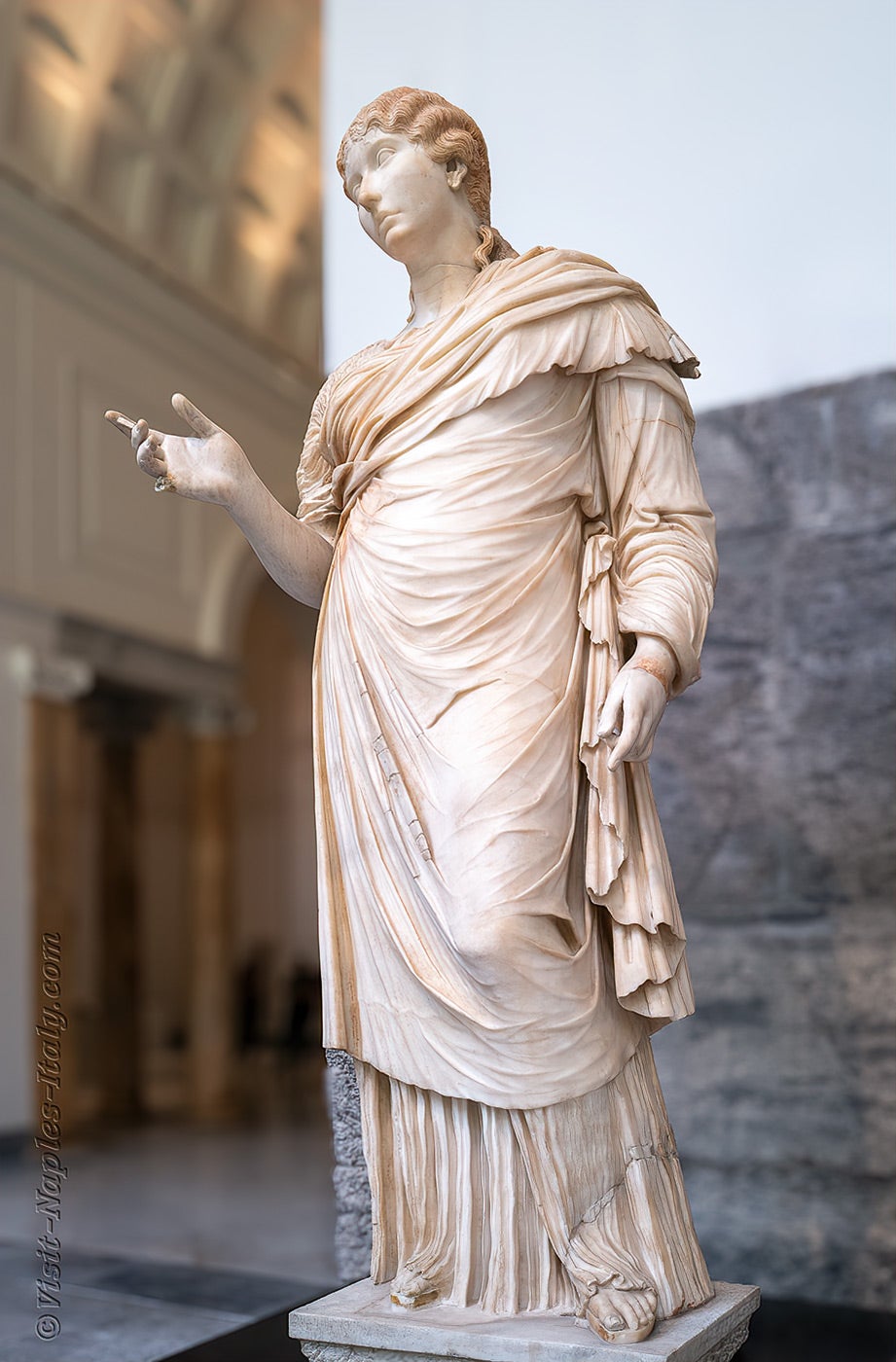
Daughter of Nonius Balbus Marcus Nonius Balbus was a Roman senator who, like many prominent figures of the time, funded numerous buildings in Herculaneum out of his own pocket, notably the restoration of the basilica and the fortifications.
This statue is that of one of his daughters.
All the statues of his daughters featured on this page had golden hair, which is now covered in a remnant of red colour.
The young woman leans on her right leg, raising her arm to make an elegant hand gesture as if addressing someone.
This young patrician woman, dressed in a himation draped over her shoulder and a fine crepe chiton, is styled in the fashion of her time.
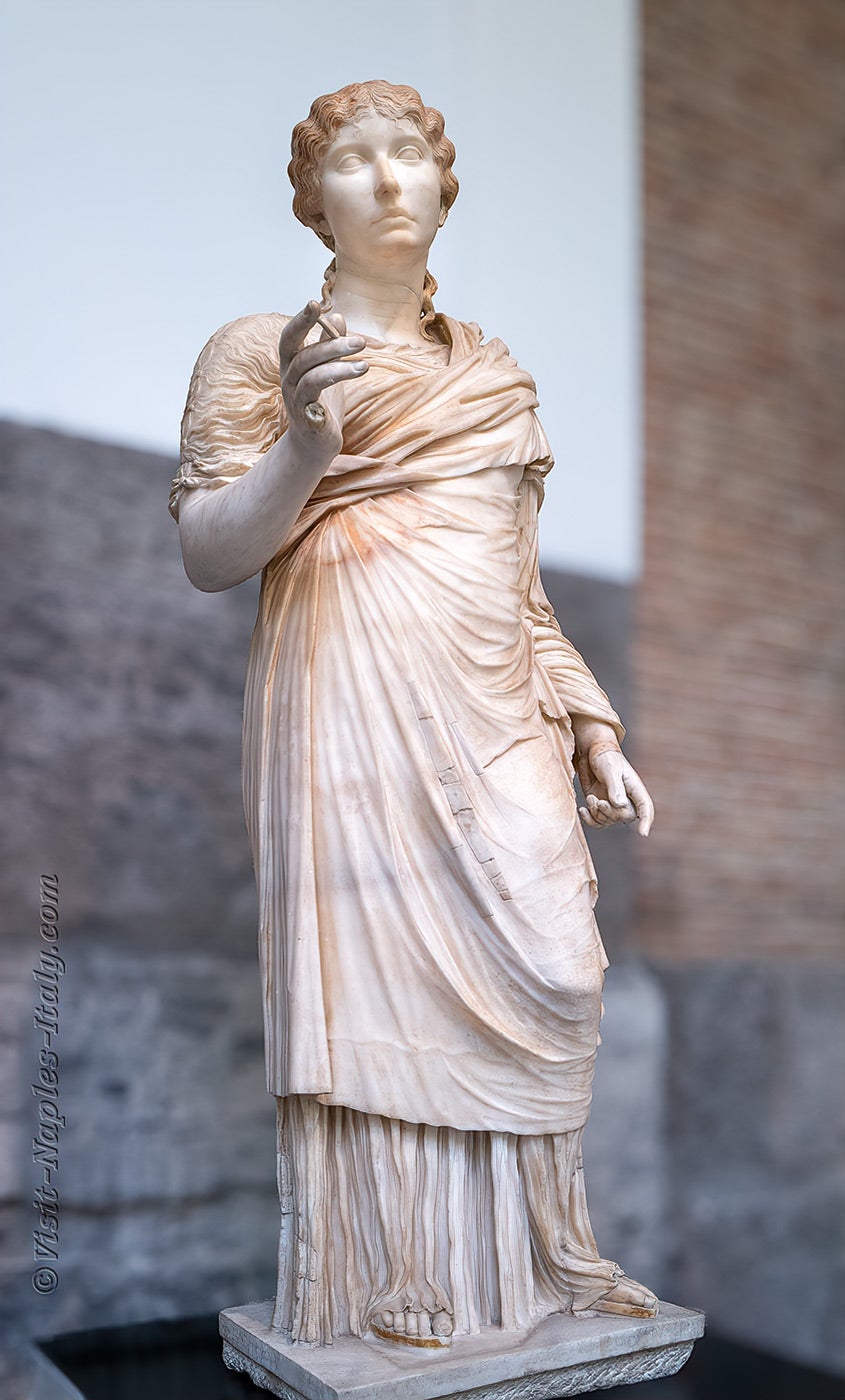
The Piccola Ercolanese, daughter of Nonius Balbus, Herculaneum
Sculpture - Marble (Height 180 cm) First quarter of the 1st centuryThis statue depicts another daughter of Marcus Nonius Balbus and we can see that she has the same hairstyle as the statue of her sister which we discussed above, as well as the slightly reddish hair that was originally golden.
Her name, ‘Piccola Ercolanese’, stems from the fact that her posture and clothing were inspired by those of a work by Praxiteles which served as a model for numerous statues.
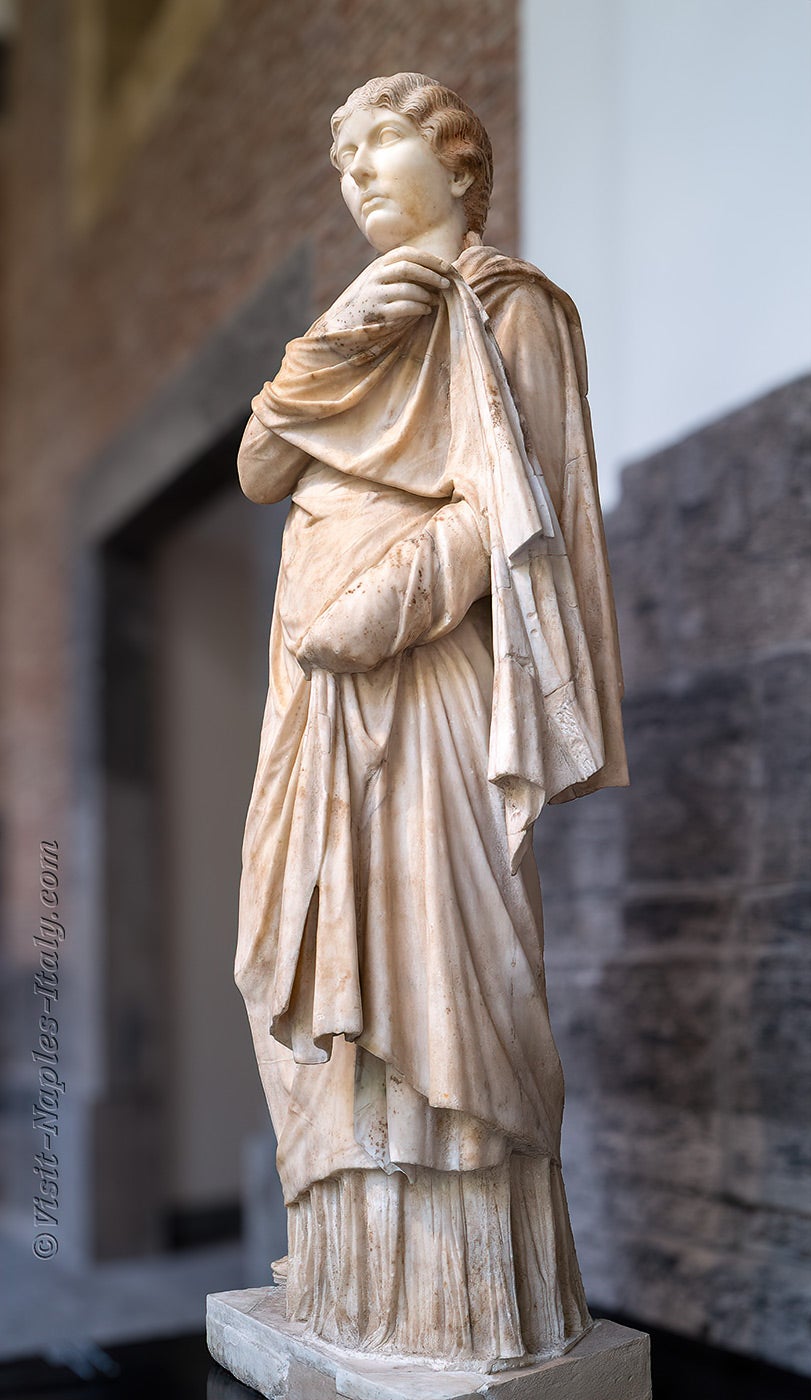
Daughter of Marcus Nonius Balbus, Herculaneum
Sculpture - Marble (Height 176 cm) First quarter of the 1st centuryThis other daughter of Marcus Nonius Balbus is dressed in a stola, the long robe worn by Roman matrons, and a palla, which she lifts with one hand whilst the other end rests on her left arm.
Her hair is styled like that of her two sisters, with that slight reddish tinge caused by the gilding that originally covered it.
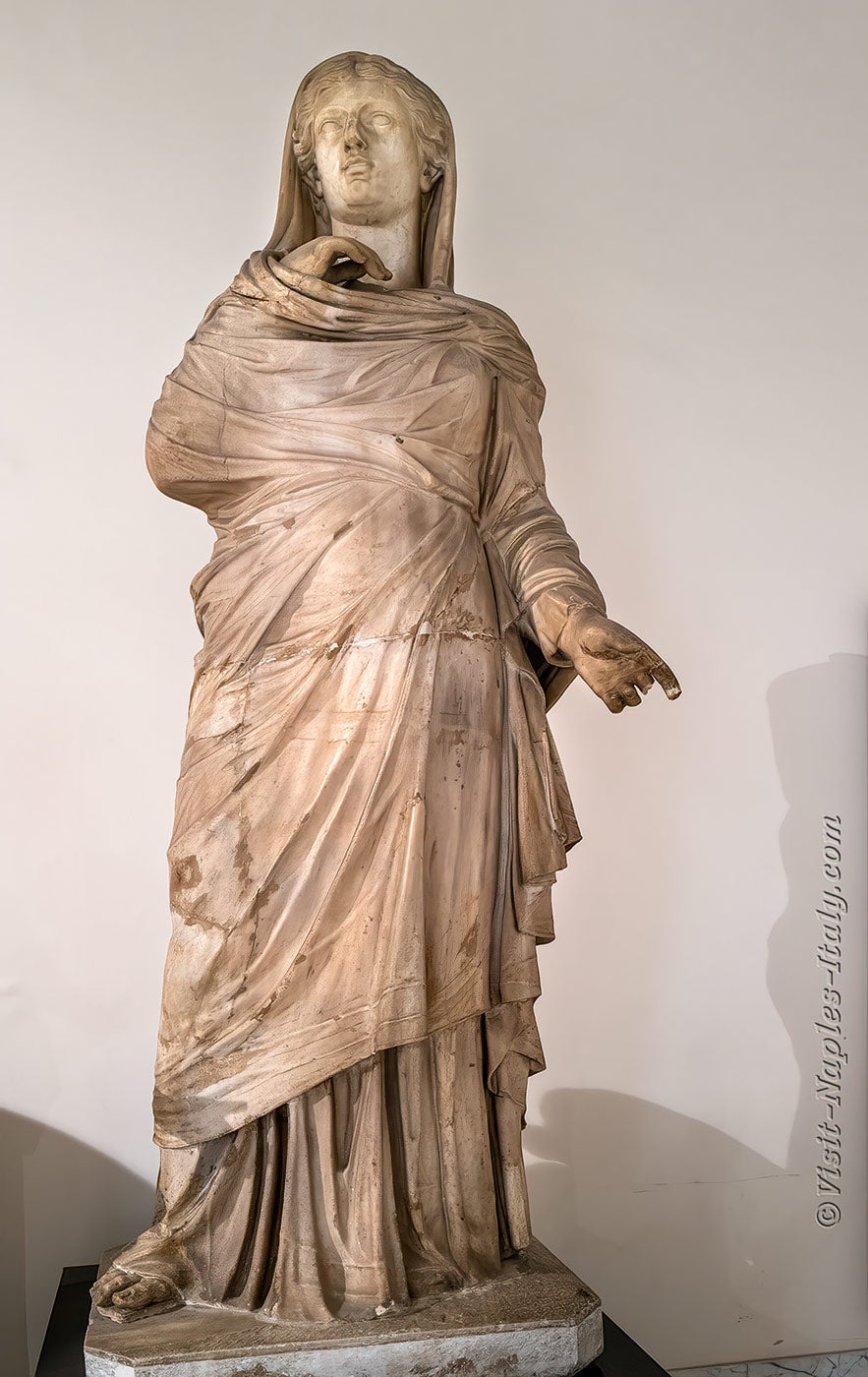
Modesty, Tablinum of the Villa of the Papyri, Herculaneum
Sculpture - Marble (Height 224 cm) 1st century BCThis young woman, her body entirely covered, with her bust and right arm encased in the drapery worn over her dress, and her head covered with a veil, has been named for this reason: “Modesty”.
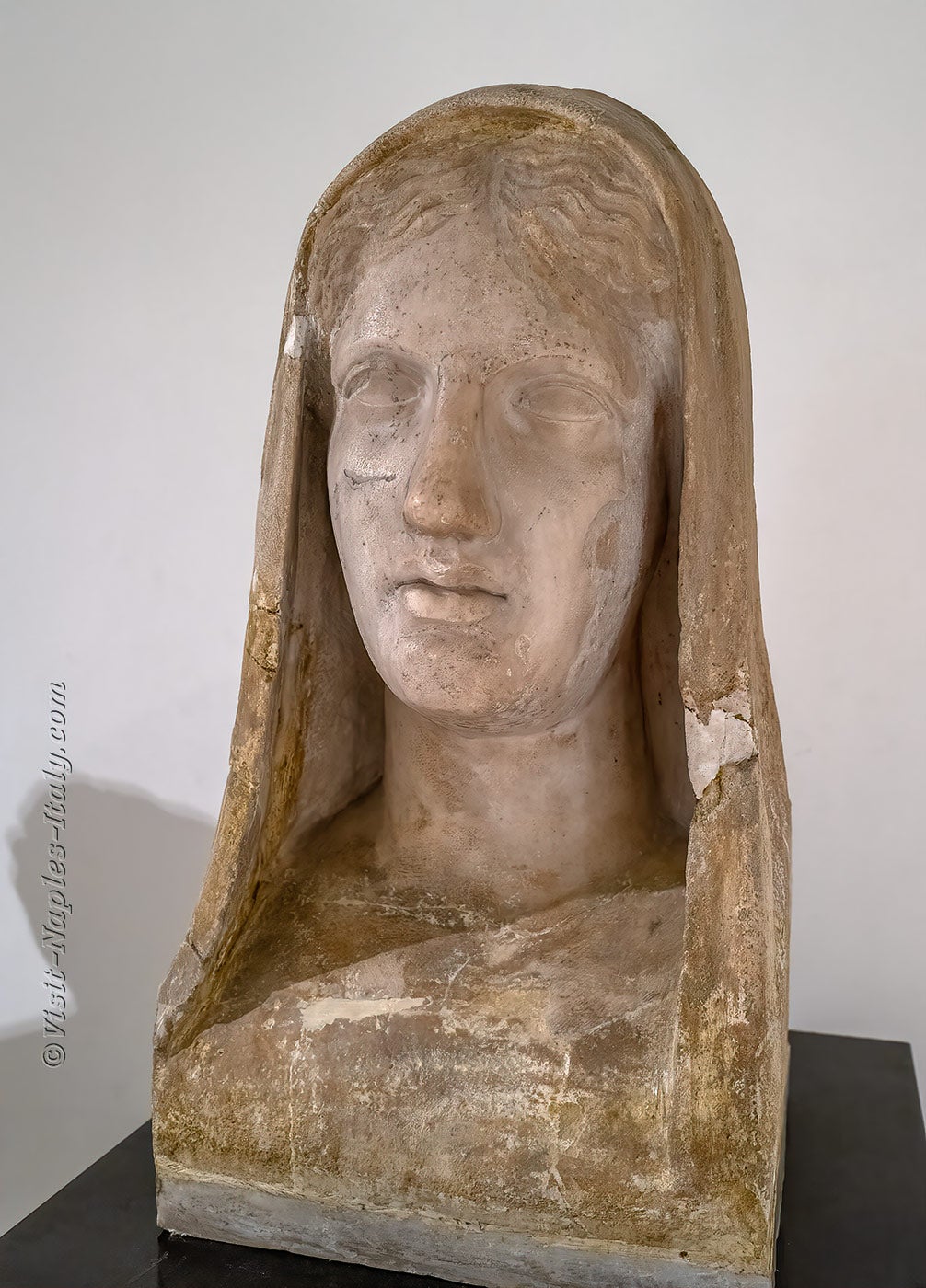
Bust of a Vestal Virgin, Rectangular Peristyle, Villa of the Papyri, Herculaneum
Sculpture - Marble - 1st century BCThe head of this young Vestal Virgin, covered with a long veil, indicates her sacred priestly status.
The Vestal Virgins were responsible for tending the sacred fire in the Temple of Vesta and were required to remain virgins for the entire duration of their priesthood; if they failed in these duties, they were condemned to be walled up alive.
Persons Athletes | Men | Women | Children
Sculptures Mythology | Persons | Animals | Bas-relief
Artworks Sculptures | Frescoes | Eroticism
MANN Artworks Schedule Tickets Location | Authorizations
Back to Top of Page