

Gallery Italy Artists Schedule Tickets Location | Authorizations
Artists Caravaggio | Gemito | Vanvitelli | Gentileschi | Aphrodite | Antique Vases | Esposito | Marble inlay
Caravaggio’s “The Martyrdom of Saint Ursula” at the Galleria d’Italia Zevallos in Naples, Italy
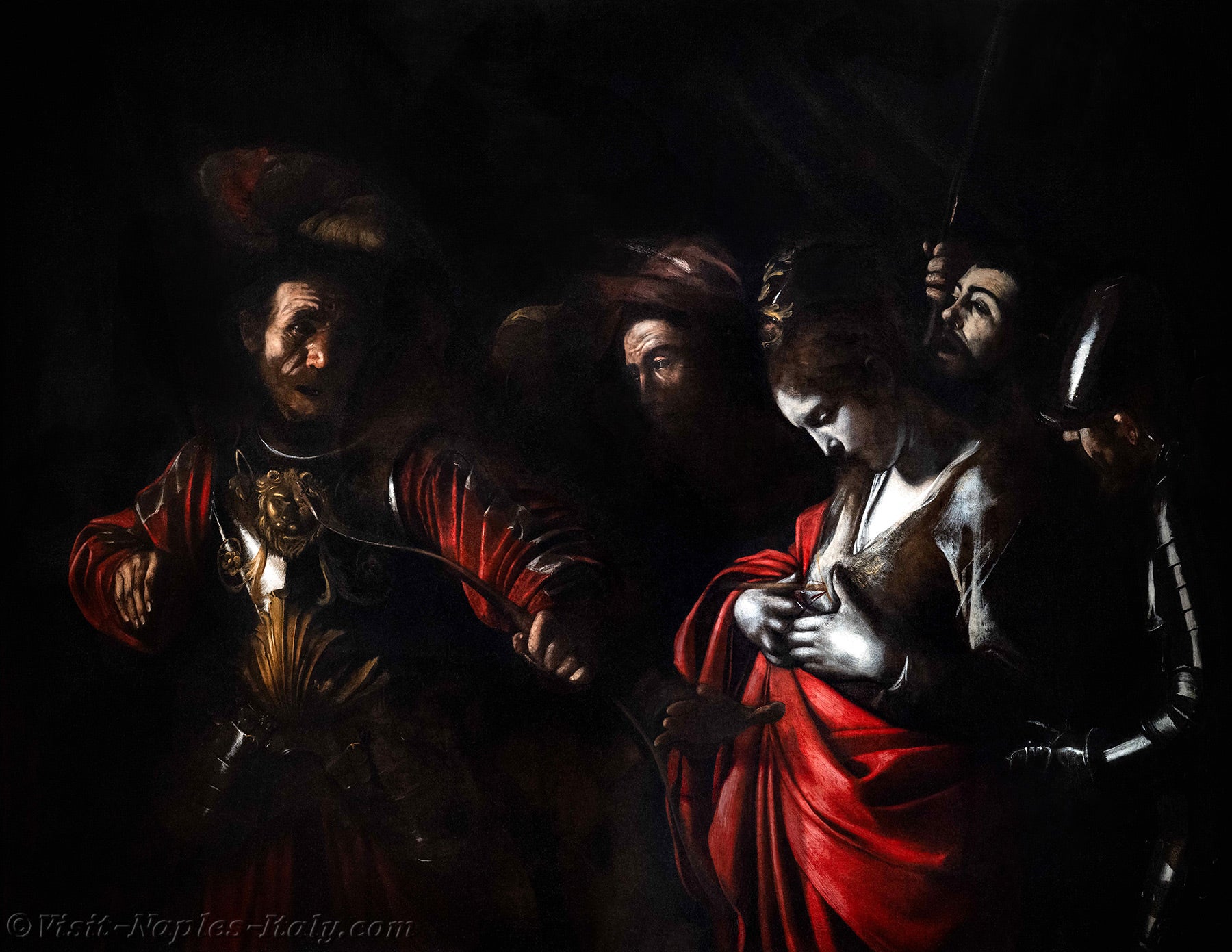
Martyrdom of Saint Ursula
Caravaggio (1571-1610) “The Martyrdom of Saint Ursula”
Painting - Oil on canvas (142 x 180 cm) 1610The “Golden Legend” by Jacques de Voragine states that Saint Ursula found the city of Cologne under attack by the Huns as she was returning from her pilgrimage with the virgins who had accompanied her.
“And these barbarians, with loud cries, pounced upon the pious virgins, whom they slaughtered all, like wolves pouncing on a flock of lambs.
Only Ursula remained alive.
And the prince of the Huns, captivated by her beauty, offered to marry her to console her for the death of her companions.
But when the saint rejected his proposal with horror, furious at being spurned, he pierced her with an arrow and completed her martyrdom.”
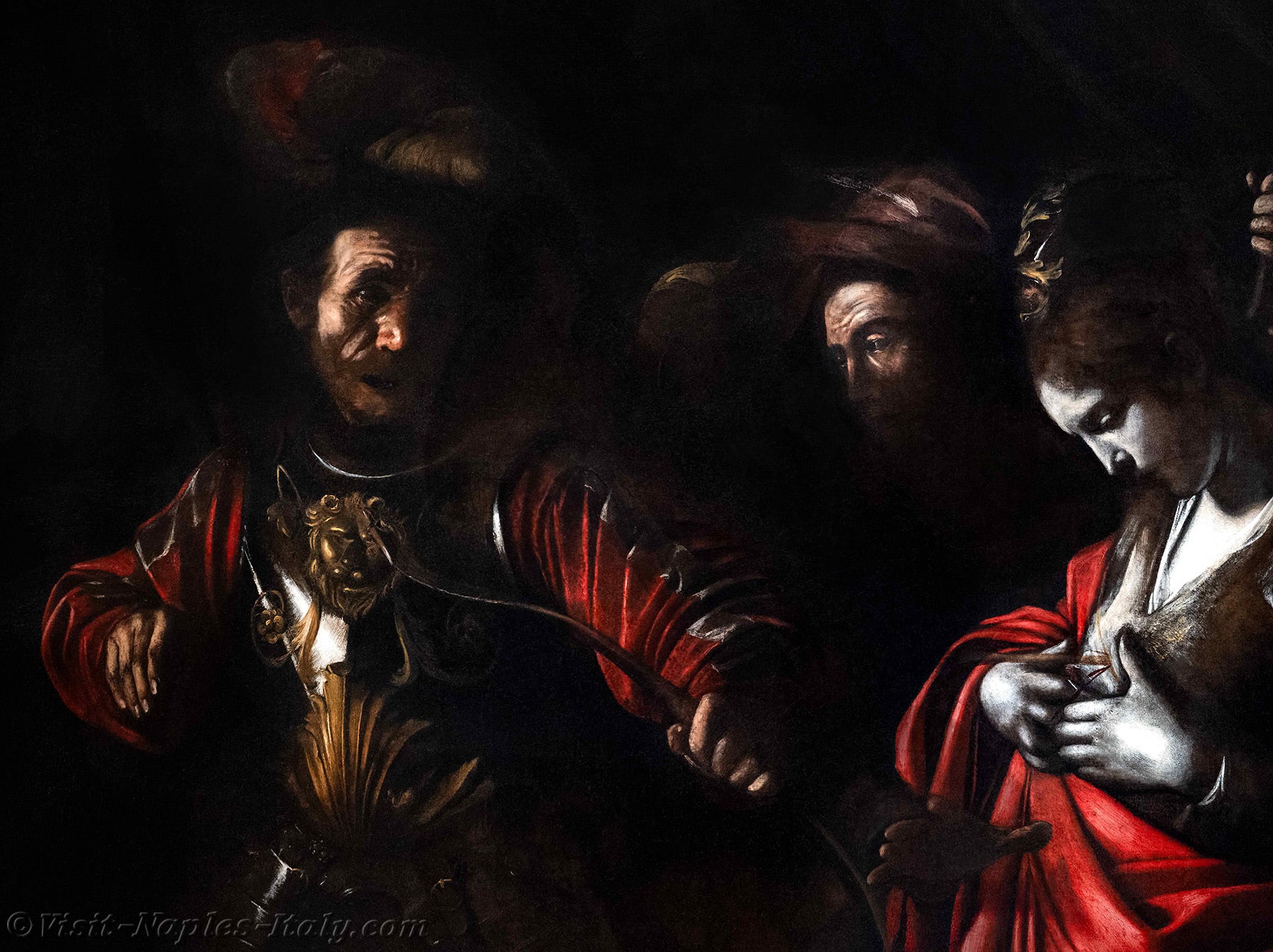
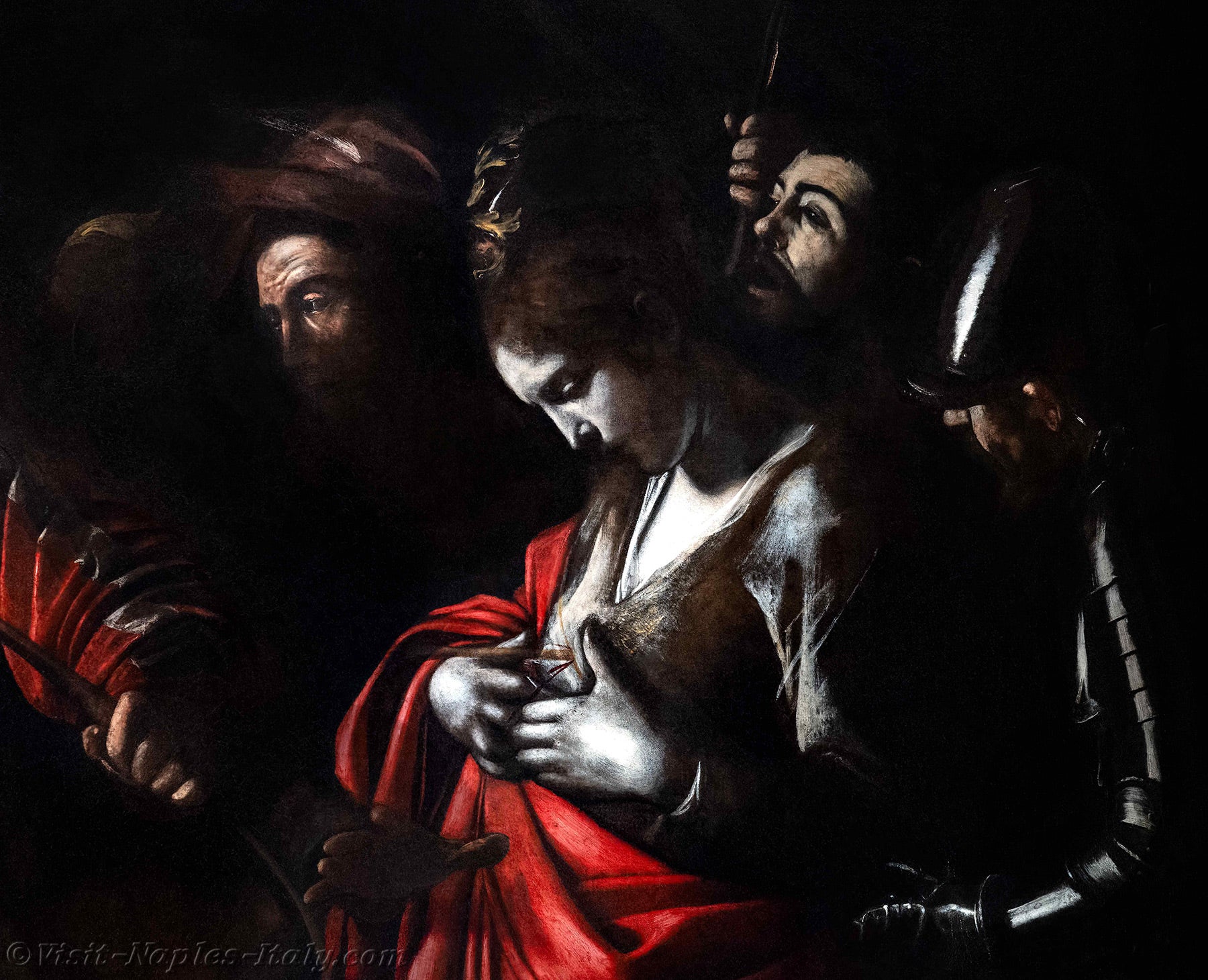
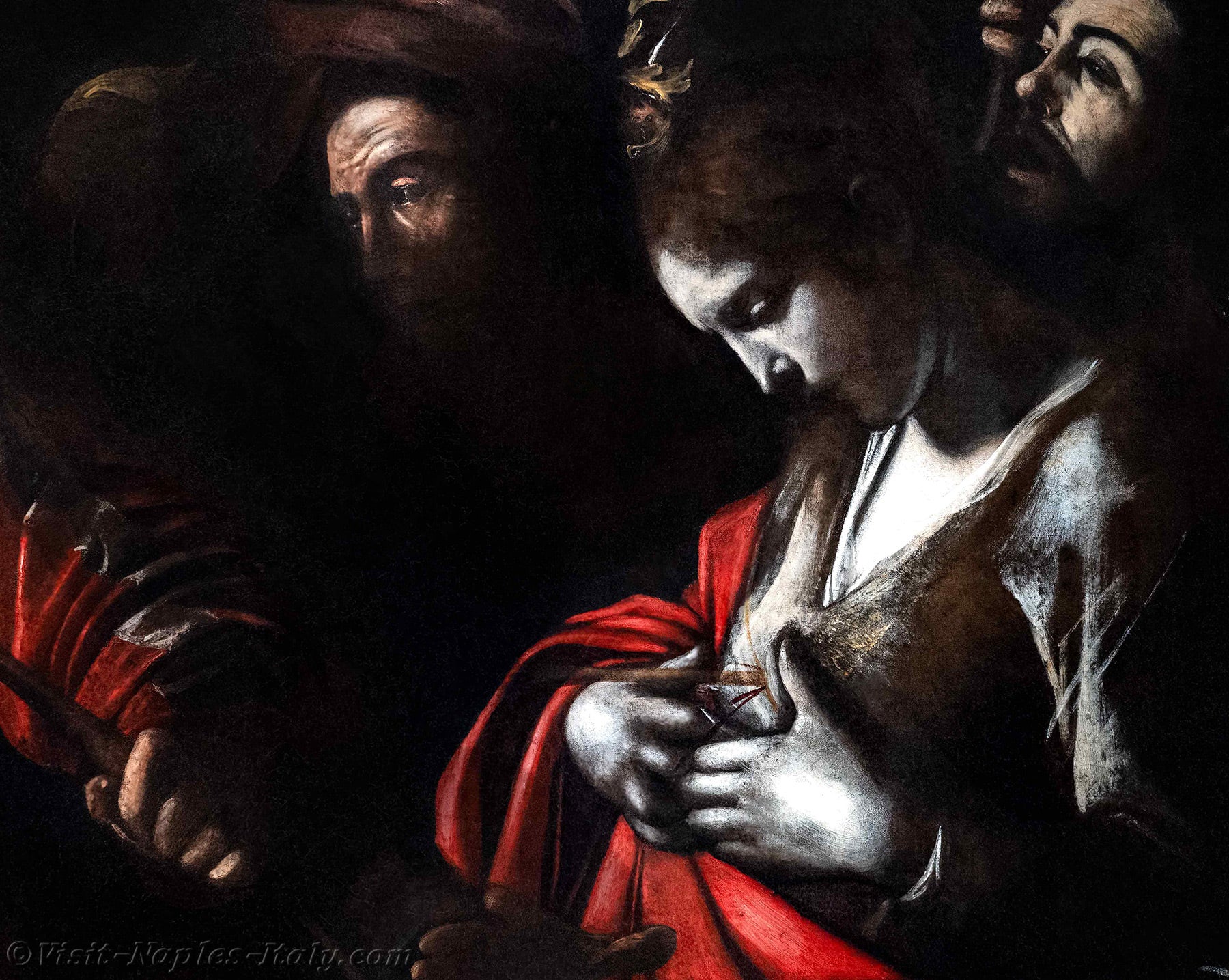
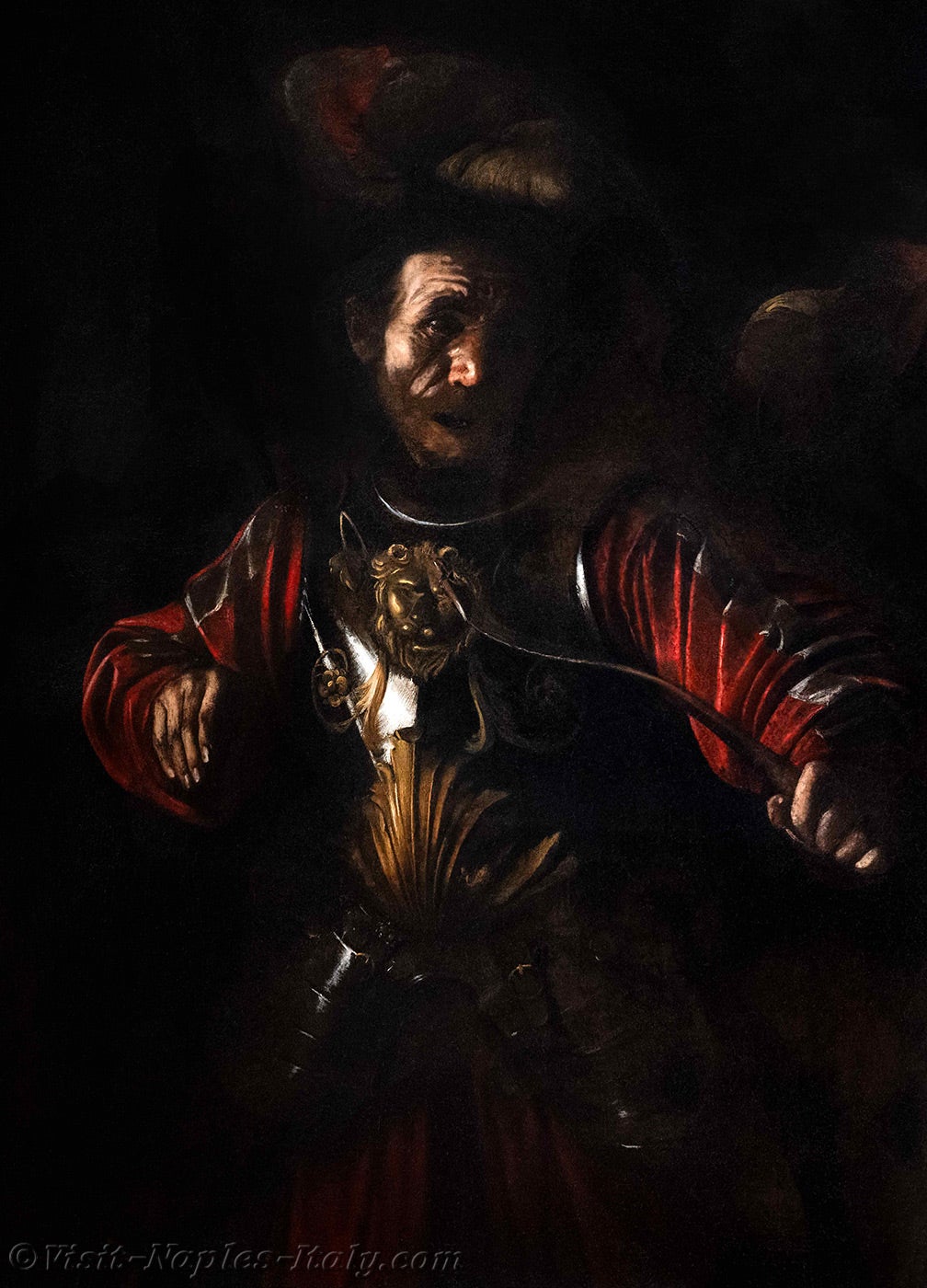
Martyrdom of Saint Ursula Caravaggio depicted this dramatic moment from the ‘Martyrdom of Saint Ursula’ in his painting, in which the Prince of the Huns fired his arrow at point-blank range.
He is still holding his bow in his left hand, whilst the fingers of his right hand have just released the string.
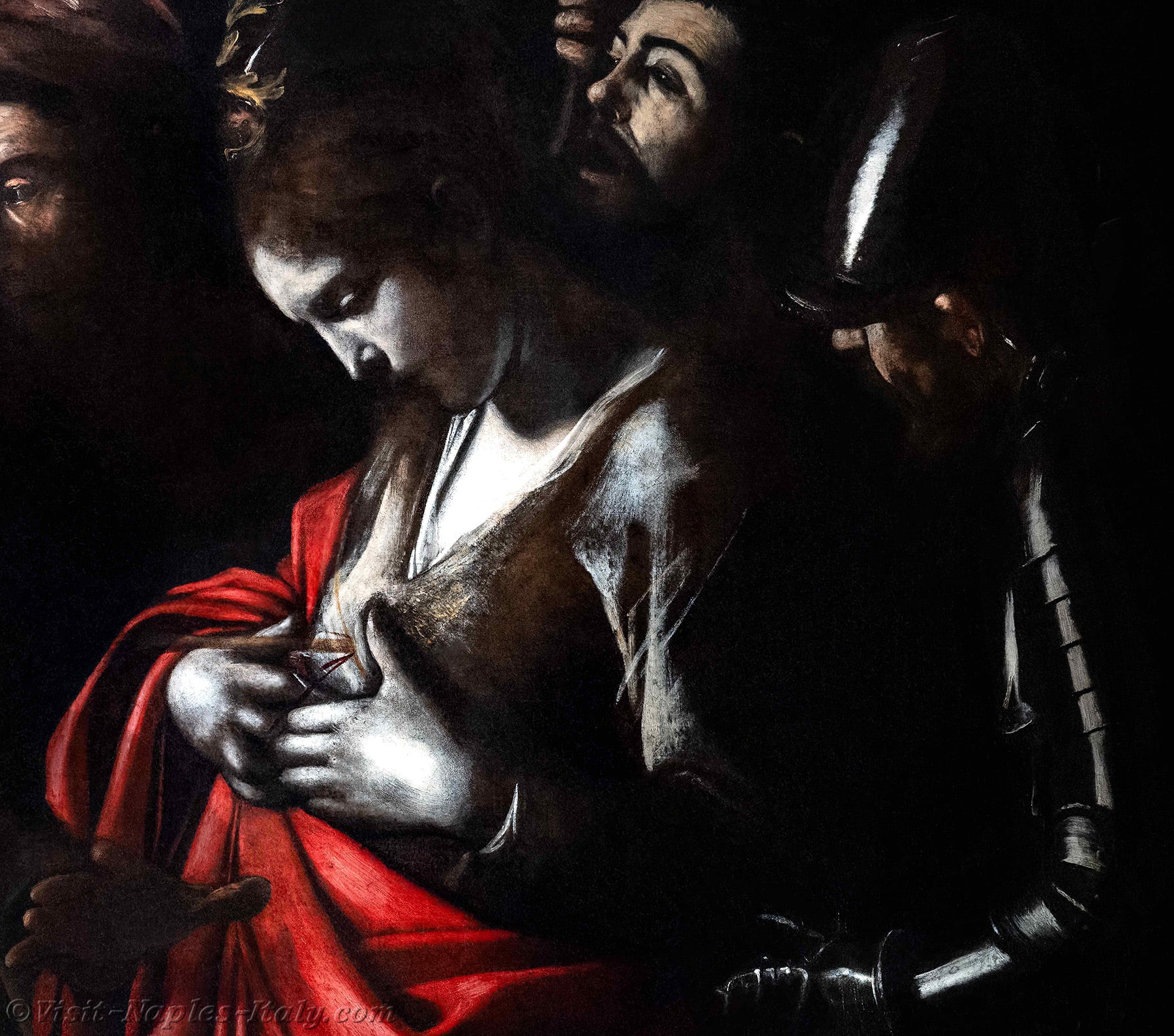
A thin trickle of blood immediately gushes from the wound around the arrow that has just pierced Saint Ursula’s chest.
Ursula looks at her wound and does not seem surprised by what is happening to her; she calmly accepts her fate as a martyr whilst recalling the prophetic words of the angel.
“An angel appeared to Ursula to tell her that she and her companions would return to Cologne and there receive the crown of martyrdom.”
Jacques de Voragine, “The Golden Legend”
The Moment of Saint Ursula’s Death
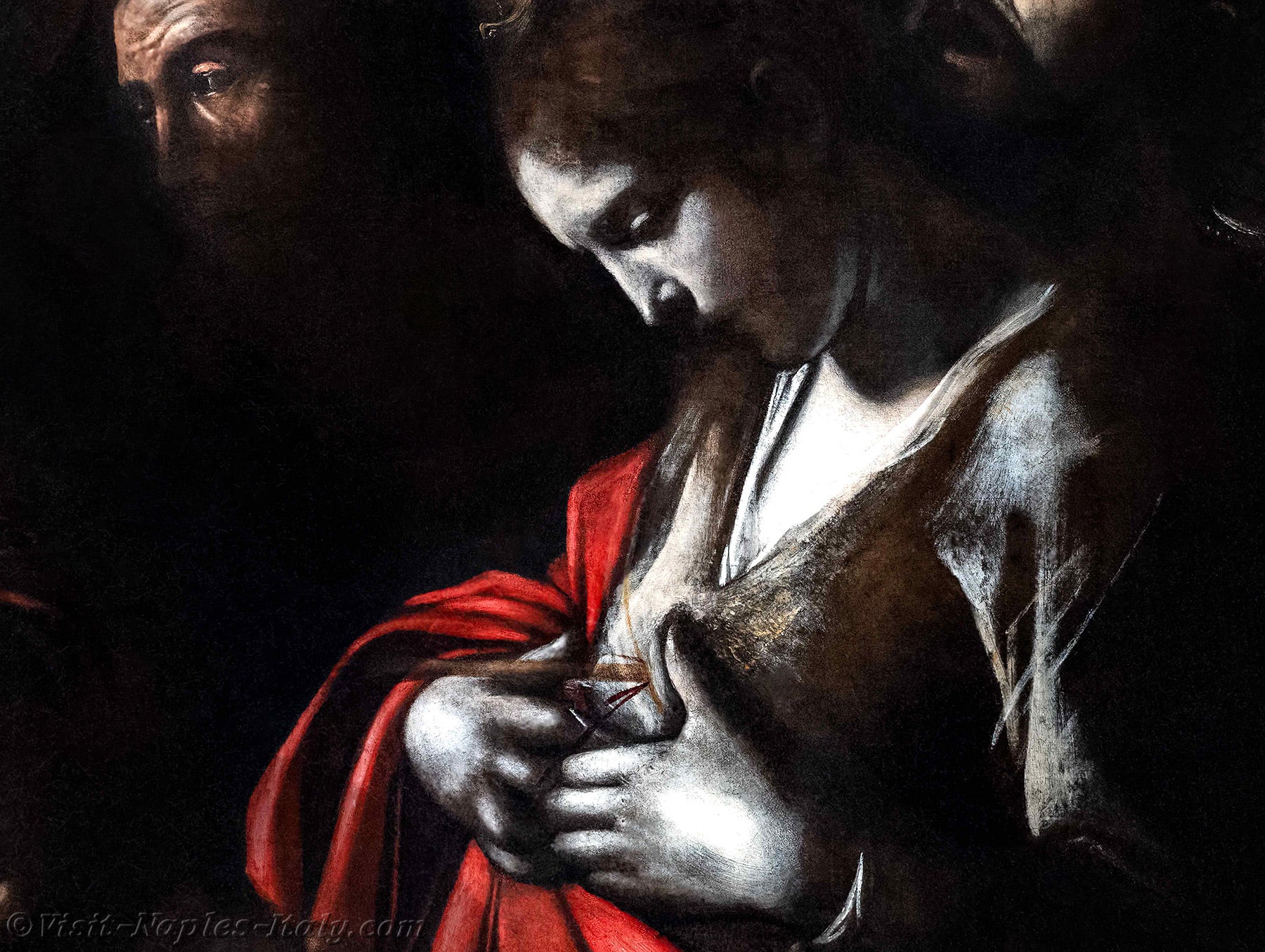
Martyrdom of Saint Ursula It all seems to have happened so quickly, from Ursule’s refusal to marry the Prince of the Huns to the furious reaction of this barbarian who, without even thinking about what he was doing, grabbed his bow and shot that fatal arrow at her point-blank range.
The barbarian prince himself seems surprised and unsettled by the outcome of his action; he watches the saint as she lies dying as if he regretted having foolishly allowed himself to be overcome by anger.
Saint Ursula lowers her head and looks calmly and serenely at the arrow that has pierced her, realising that this is how her foretold martyrdom is to be fulfilled.
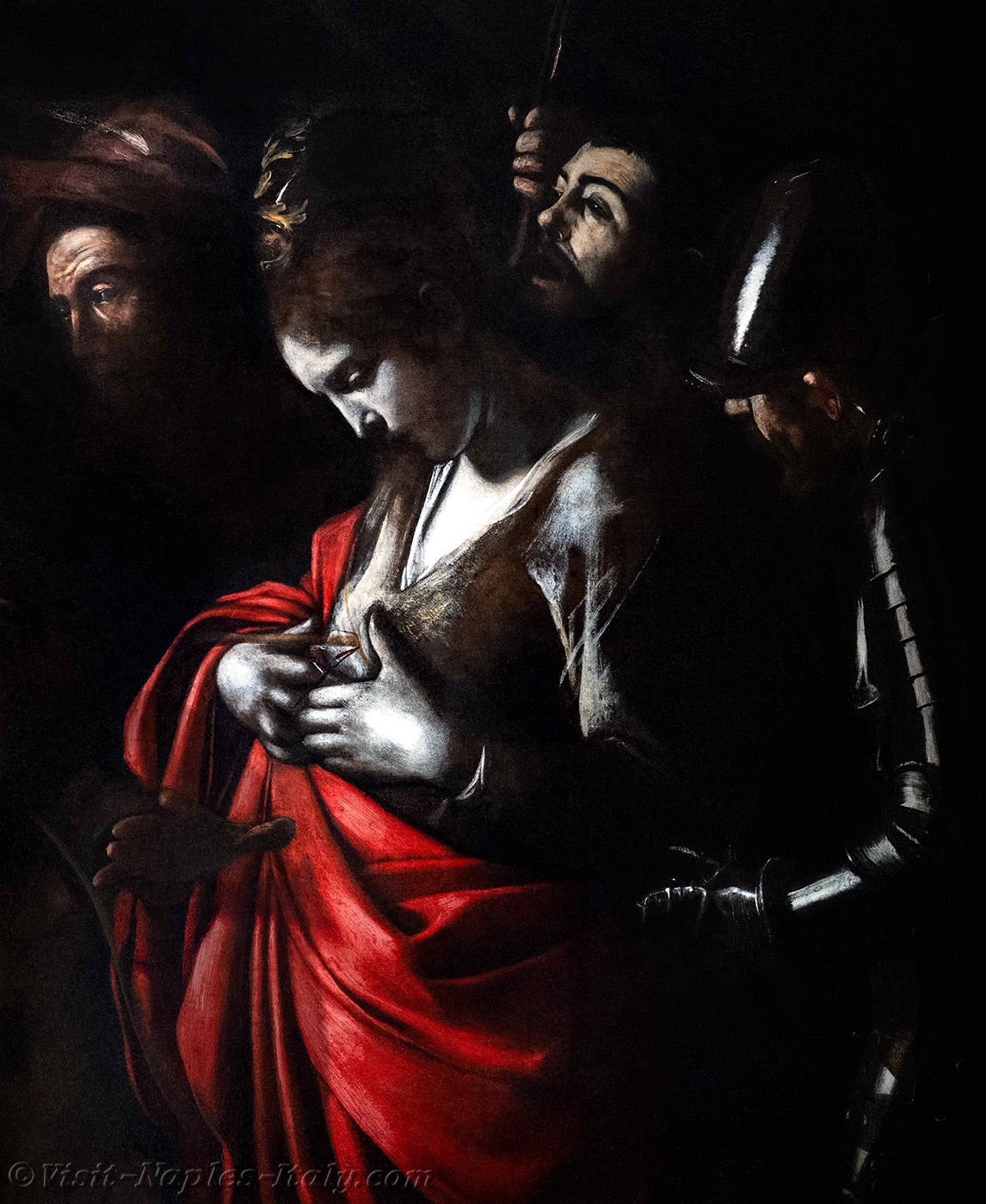
Martyrdom Ursula By depicting the Virgin Ursula as if she were pregnant, Caravaggio wanted to metaphorically show her dying in order to be spiritually reborn and attain sainthood.
He chose not to paint her in the throes of death; she appears already dead: her face, hands and chest are pallid, completely white.
Ursule’s deathly pallor is emphasised by the intense red of her tunic and by the fact that she is the only figure in the painting not to be in shadow.
Her death is magnified by the immaculate whiteness of her skin, which stands out against the darkness of the scene: Saint Ursula has become light.
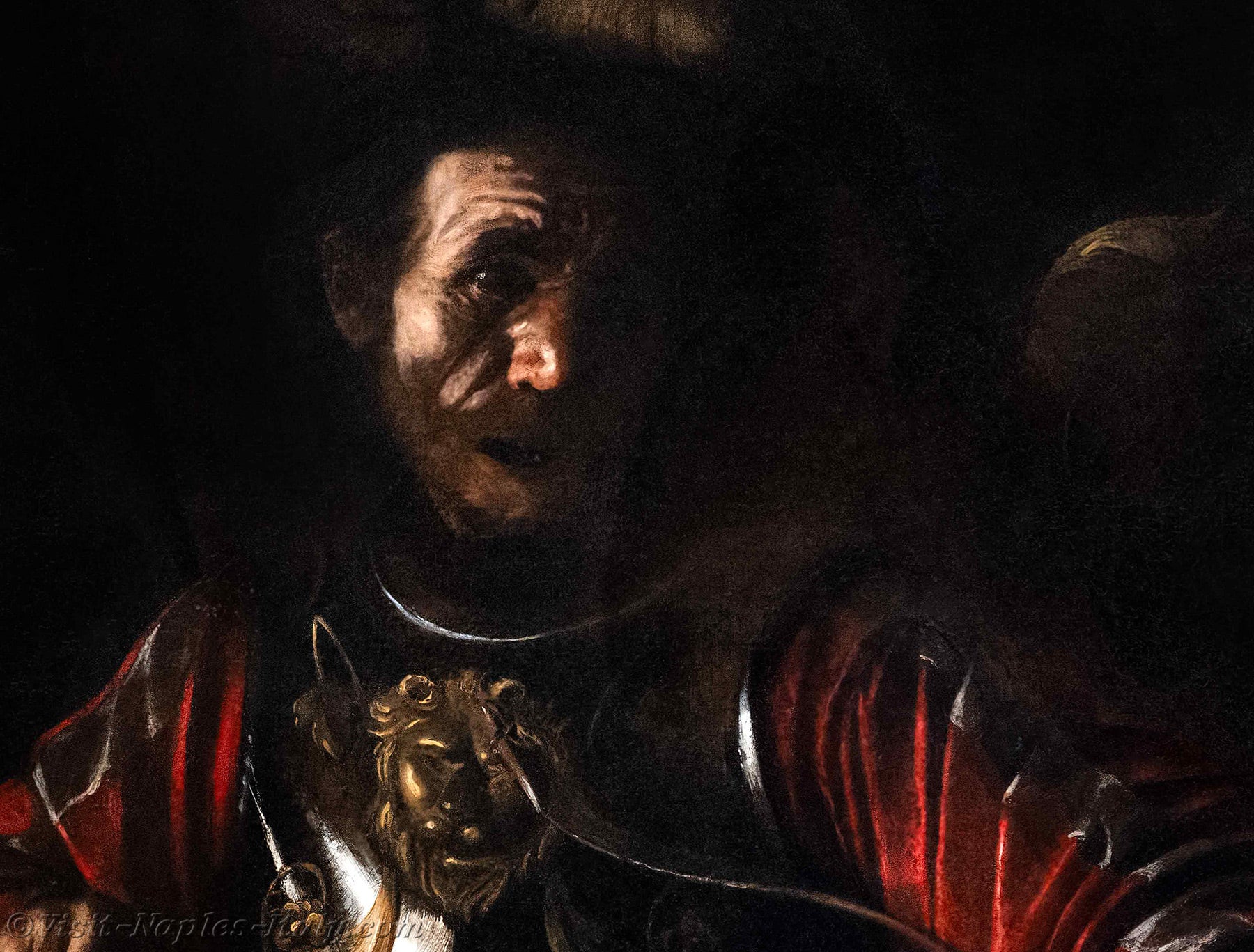
Martyrdom of Saint Ursula This dazzling light is reflected on the soldier’s armour as he looks at the wound, surprised and fascinated, and seems to be making a gesture of compassion.
To the peaceful demeanour of Ursula, who accepts her death as a martyr, Caravaggio contrasts the reaction of her maid, depicted in the background between the archer and the saint.
She has tried in vain to intercept the arrow by throwing her right arm forward to protect her mistress, and holds the banner of their Christian pilgrimage in her other hand.
Caravaggio’s Martyrdom
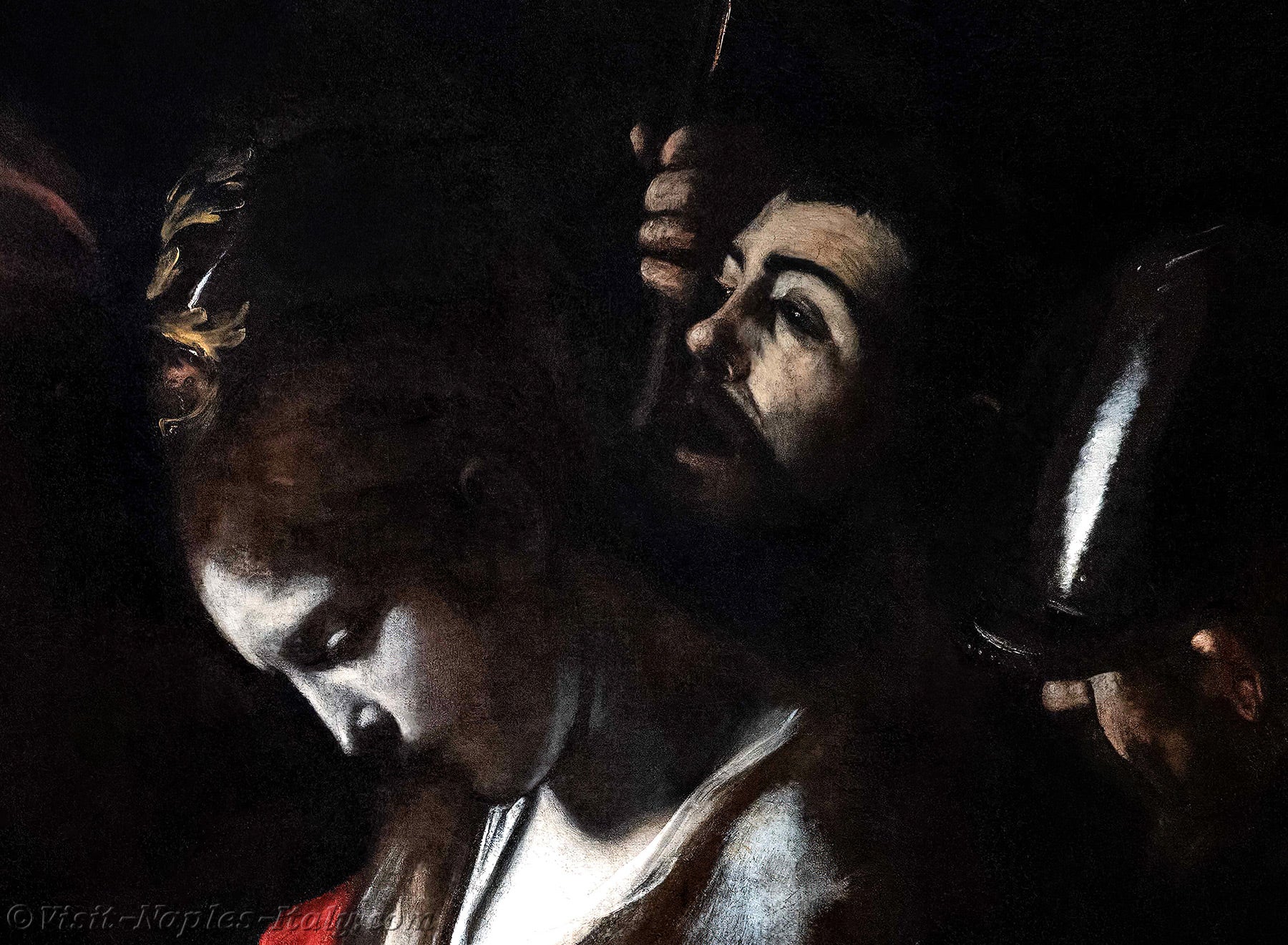
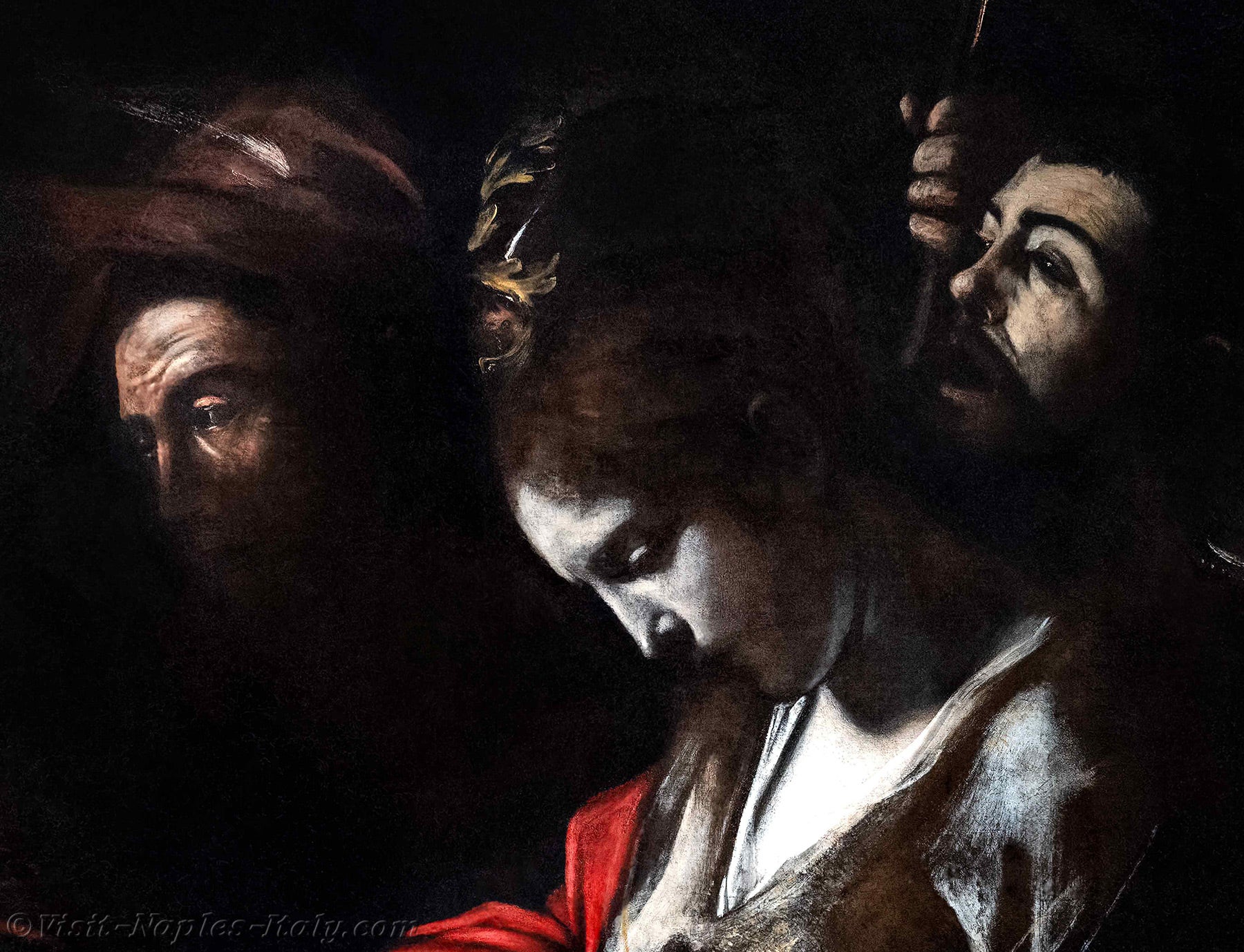
Caravaggio’s Self-Portrait with Saint Ursula Caravaggio depicted himself in this painting; his face appears behind the bowed head of Saint Ursula.
His mouth slightly open, and his sad eyes lost in the distance present him as the helpless witness to a crime committed by a despot, a witness who dies, having himself been struck by the arrow of martyrdom.
Caravaggio’s face has lost the colours of life; it is the face of a resigned dying man, whilst that of Saint Ursula is calm and radiant.
The Martyrdom of Saint Ursula is the artist’s last great painting, painted barely a month before his death.
Martyrdom of Saint Ursula At the time Caravaggio painted this canvas, he had already agreed to return to Rome in the hope of receiving confirmation of the papal pardon that had been promised, which was to overturn his death sentence for the murder committed during a duel several years earlier, hence his exile to escape the death penalty.
Caravaggio was therefore hoping for this pardon, yet he knew that it might also be a trap; this risk, which he had agreed to take, must have caused a sense of dread that explains the way in which he depicted himself facing death alongside Saint Ursula.
A self-portrait with a premonitory quality, given the mystery surrounding the exact circumstances of his death, which occurred shortly after he had left the ship that had carried him from Naples to the port near Rome.
Caravaggio’s final style
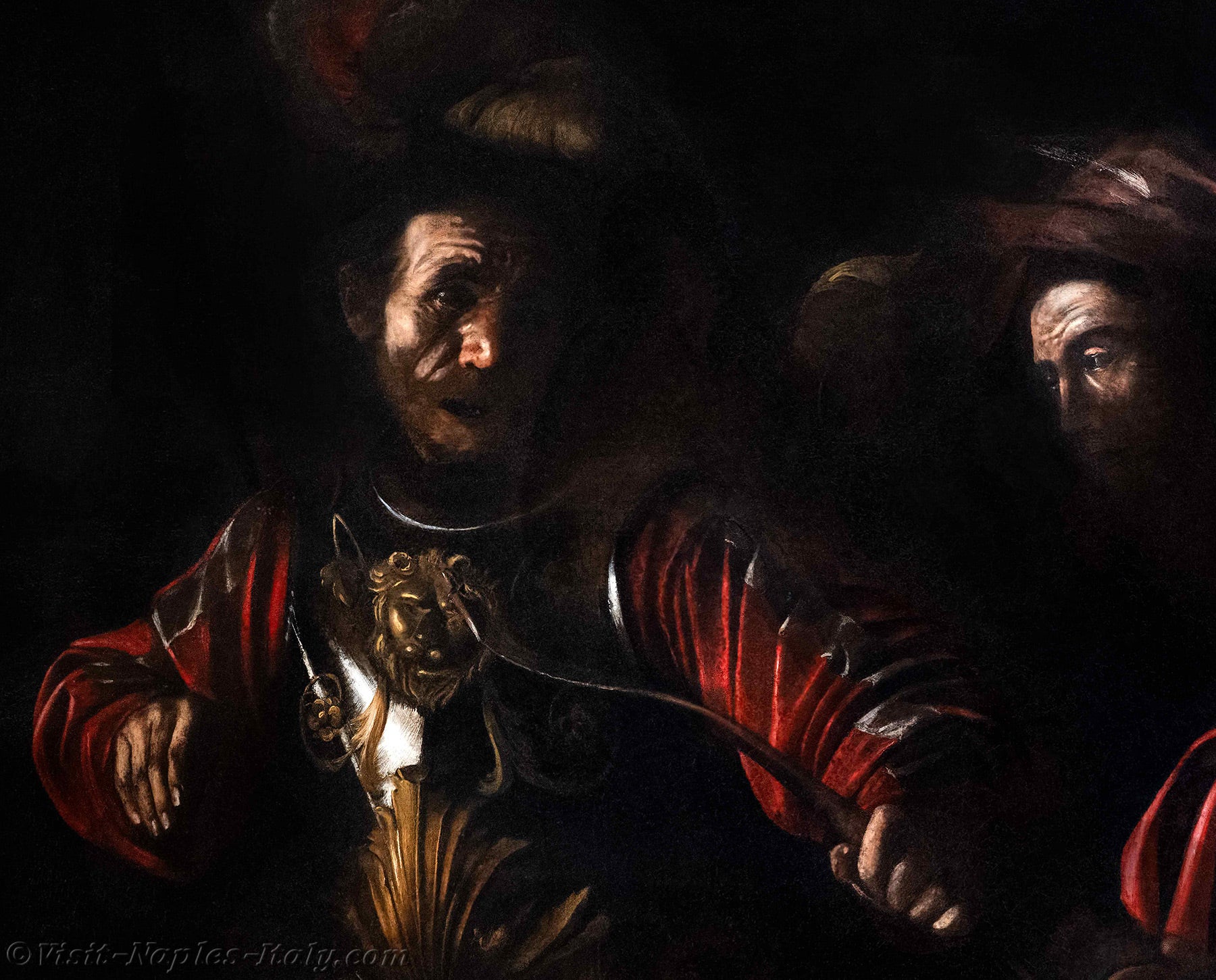
Martyrdom of Saint Ursula This painting by Caravaggio, which represents the latest development in his style, is characterised by the darkness in which the figures are depicted, some of whom are barely visible.
Another remarkable feature is the particularly limited colour palette used.
It is as though simplicity, in order to better represent death, had become the essential element of the painter’s pictorial discourse.
Commissioned by Prince Marcantonio Doria
Martyrdom of Saint Ursula The painting in question had been commissioned by the Prince of Genoa, Marcantonio Doria, who had probably given shelter to the impetuous Caravaggio when the latter was forced to flee Rome, where he was actively sought after having assaulted a notary.
Marcantonio Doria’s daughter, Anna, had taken the veil with the Augustinian Sisters of Sant’Andrea delle Dame in Naples, where she had taken the religious name of Ursula, hence Marcantonio Doria’s commission to Caravaggio to paint her a picture depicting the martyrdom of Saint Ursula.
Artists Caravaggio | Gemito | Vanvitelli | Gentileschi | Aphrodite | Antique Vases | Esposito | Marble inlay
Gallery Italy Artists Schedule Tickets Location | Authorizations
Back to Top of Page