

Gallery Italy Artists Schedule Tickets Location | Authorizations
Artists Caravaggio | Gemito | Vanvitelli | Gentileschi | Aphrodite | Antique Vases | Esposito | Marble inlay
Vincenzo Gemito (1852–1929): his Sculptures and Paintings at the Galleria d’Italia in Naples
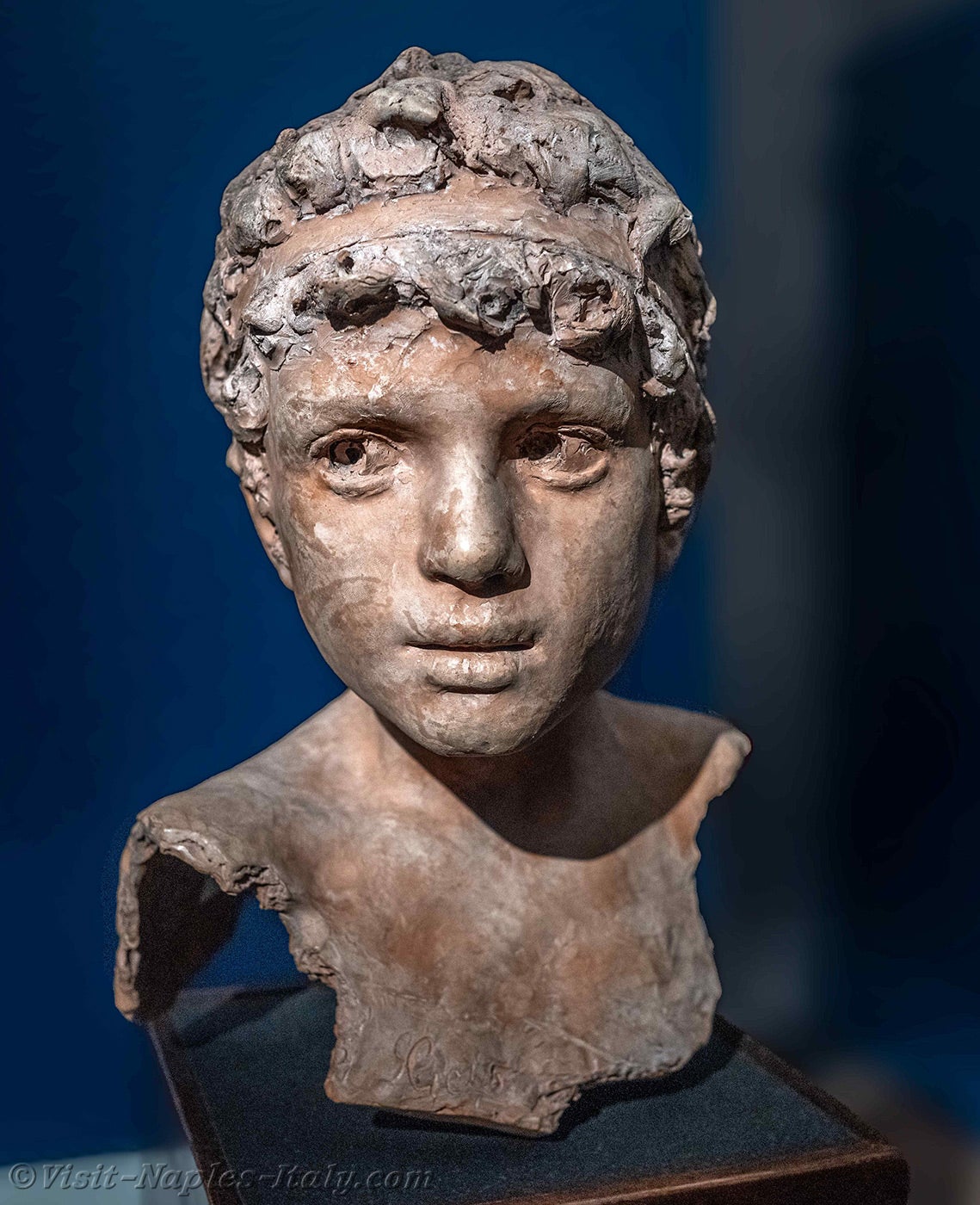
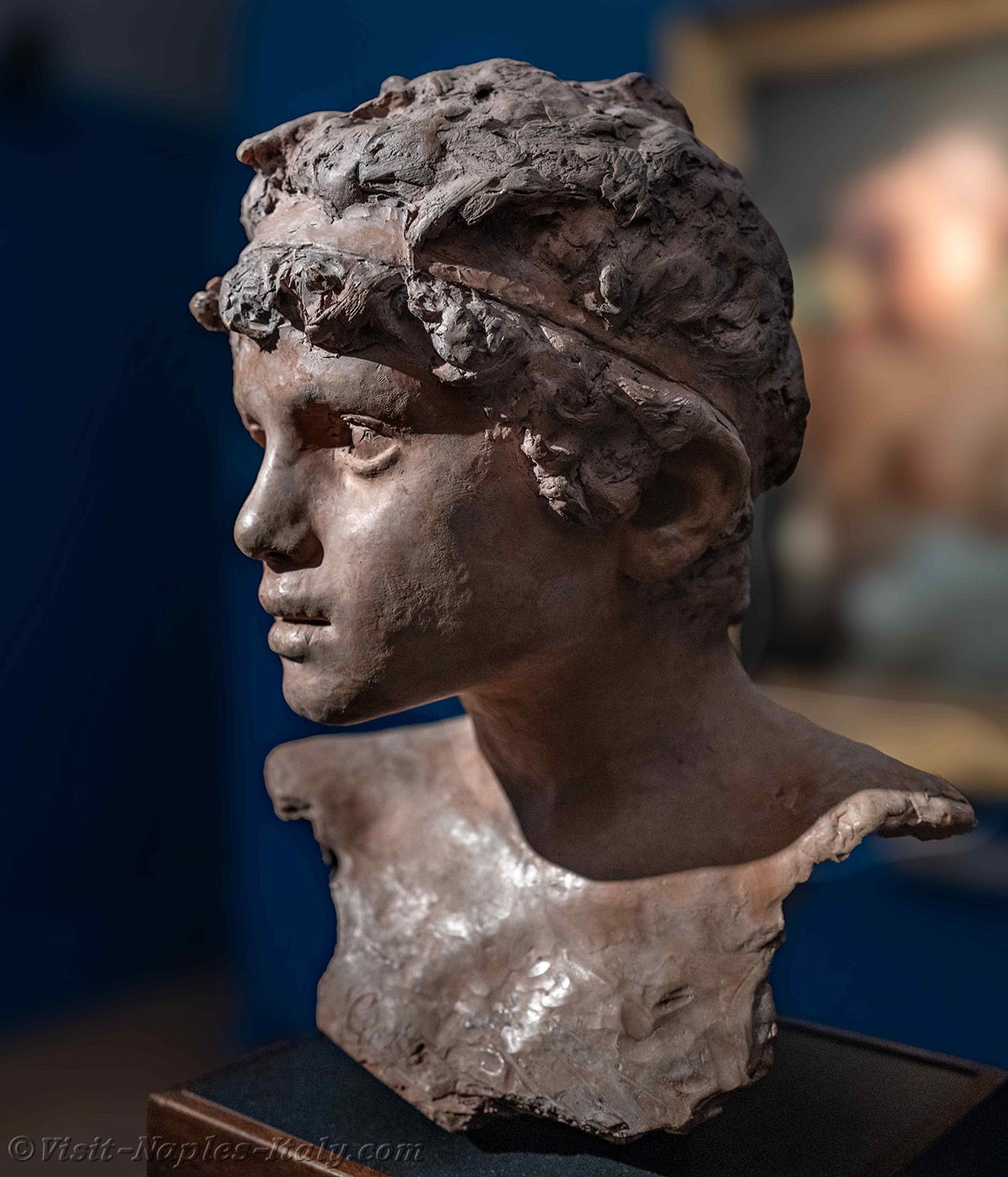
Vincenzo Gemito “The Harpooner”
Sculpture – Terracotta (34 x 26 x 24 cm) 1872This magnificent portrait of a young fisherman is one of the “Three studies from life” created in terracotta by the artist when he was barely twenty years old.
This boy with beautiful hair held back by a headband resembles a child from Roman antiquity.
He tilt his head slightly as he looks to one side with his large eyes accustomed to following the fish’s every movement; he breathes gently, his lips slightly parted, deeply focused, as if he were ready to cast his harpoon swiftly.
One is moved by the realistic expression on this face with its childlike features, already busy earning a living.
Vincenzo Gemito – “Scugnizzo, Street urchin”
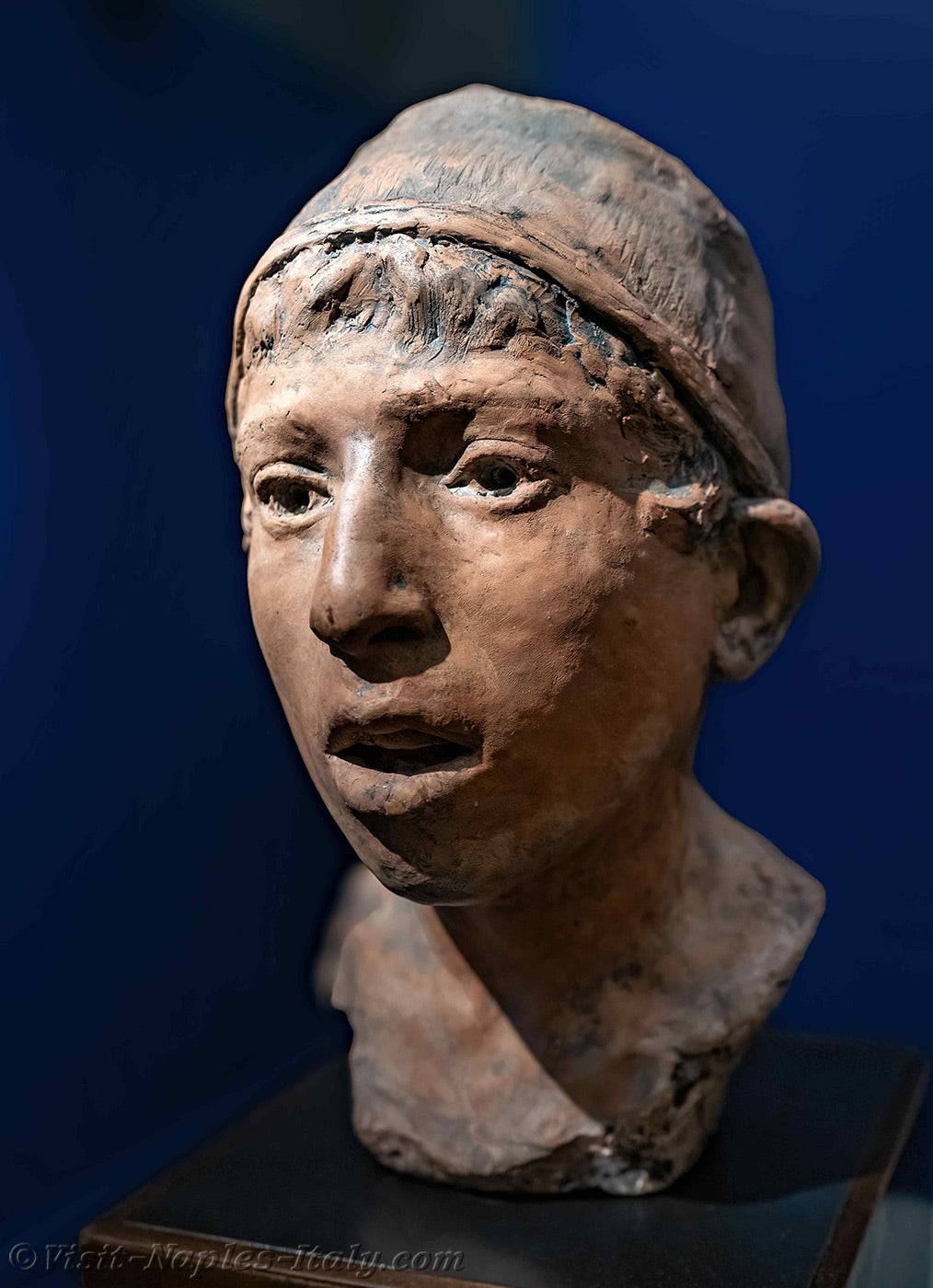
Gemito, Scugnizzo Sculpture – Terracotta (33 x 20 x 25 cm) 1872
This portrait of a street urchin was created at the same time as “The Harpooner”.
His youthful face already bears the seriousness of an adult; he looks straight ahead, his mouth open as if addressing someone he must convince at all costs.
Gemito had been an abandoned child and left on 17 July 1852 at the Ruota dell’Annunziata, then adopted by a poor family, so that he had grown up on the streets of Naples amongst those young boys forced to earn a living by doing various odd jobs.
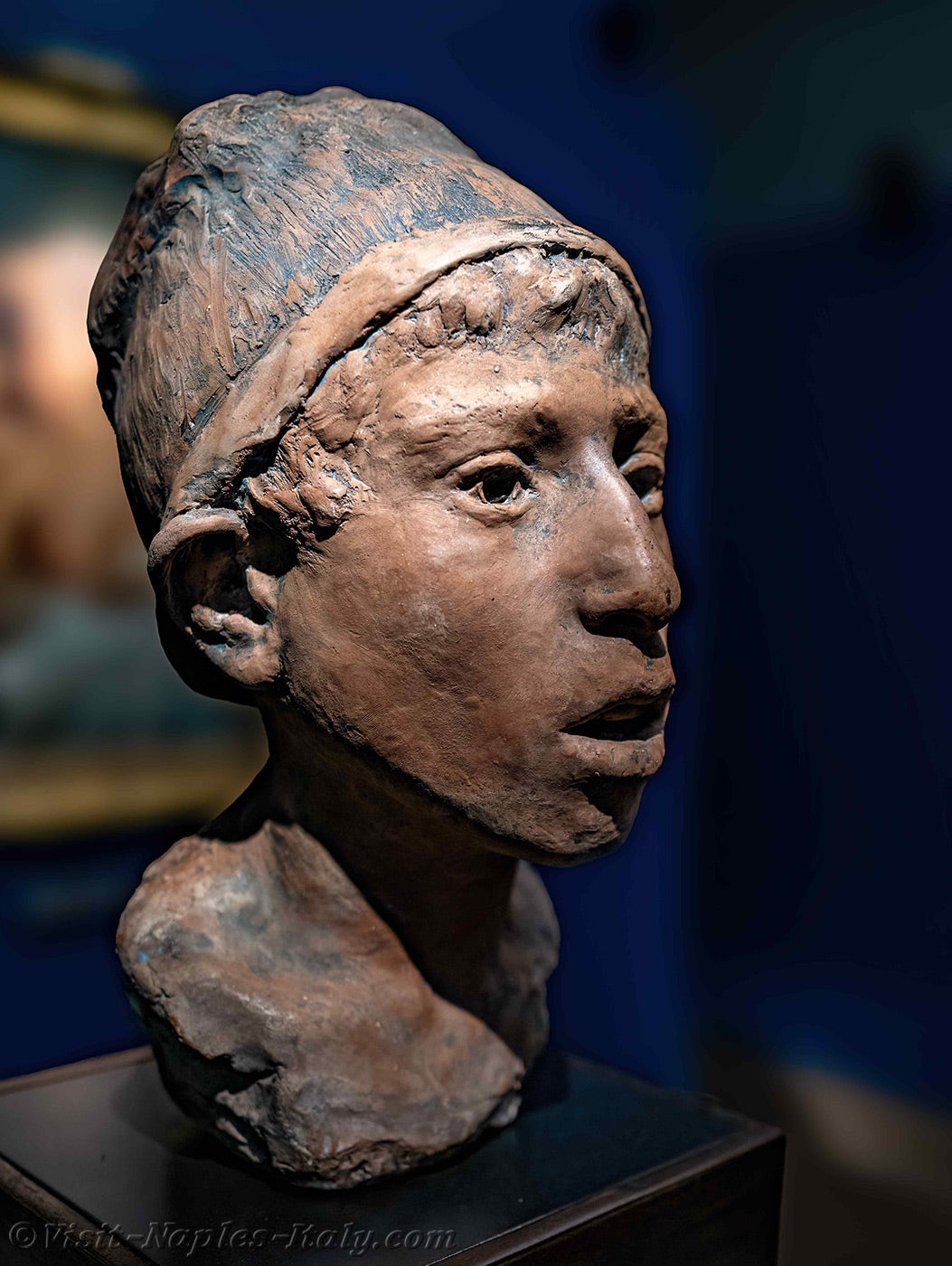
Gemito, Scugnizzo He must have had to fend for himself just as they did at their age, whilst learning sculpture from Professor Morelli, because he was fascinated by the bronze sculptures discovered at Pompeii and Herculaneum.
He was also interested in the traditional art of crafting figures depicting people in all sorts of trades that feature in the magnificent Neapolitan nativity scenes.
Hence the unvarnished realism of his portraits of ‘scunizzi’, those poor children who roamed the streets of Naples, and his reputation as a sculptor of the Neapolitan soul.
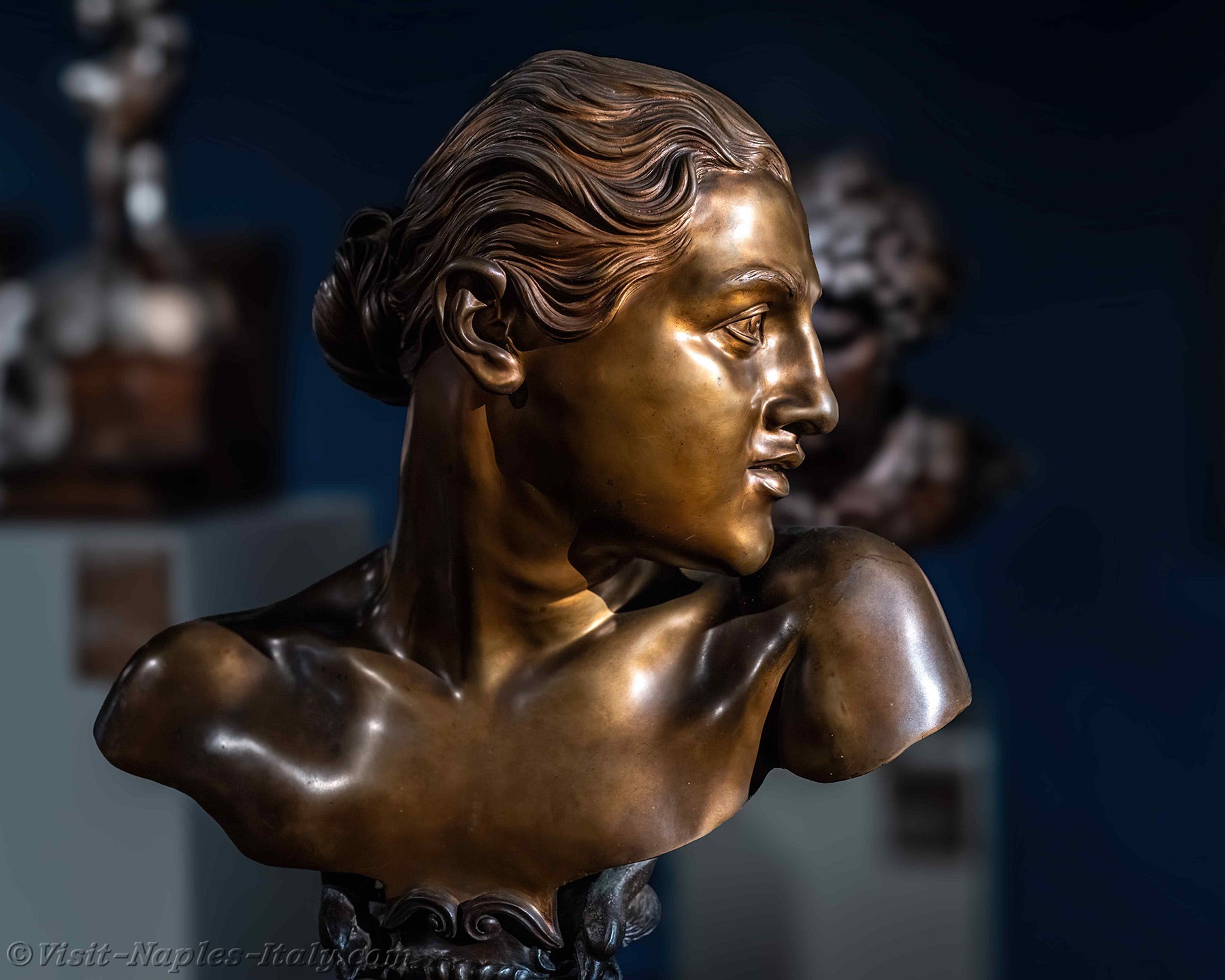
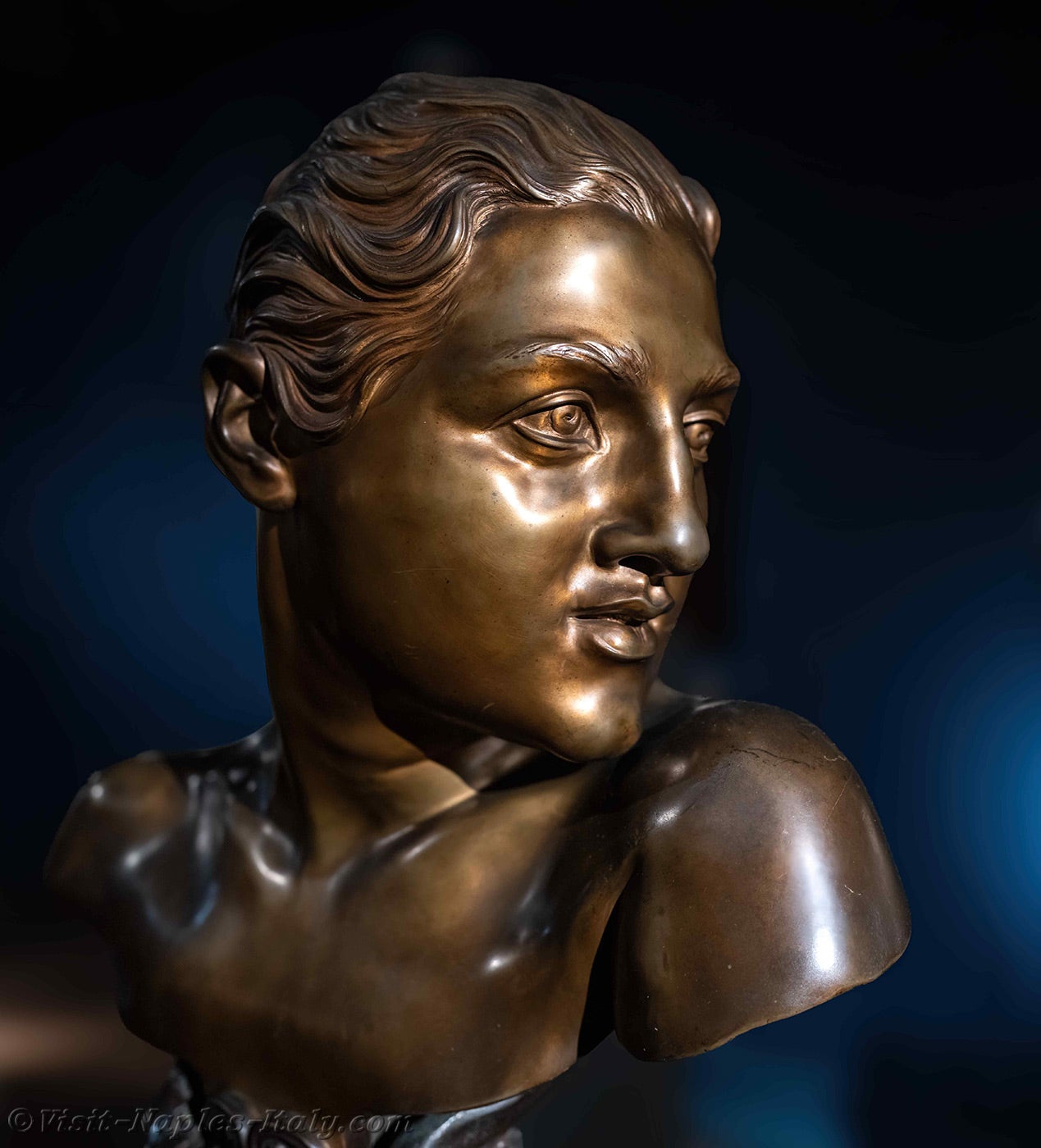
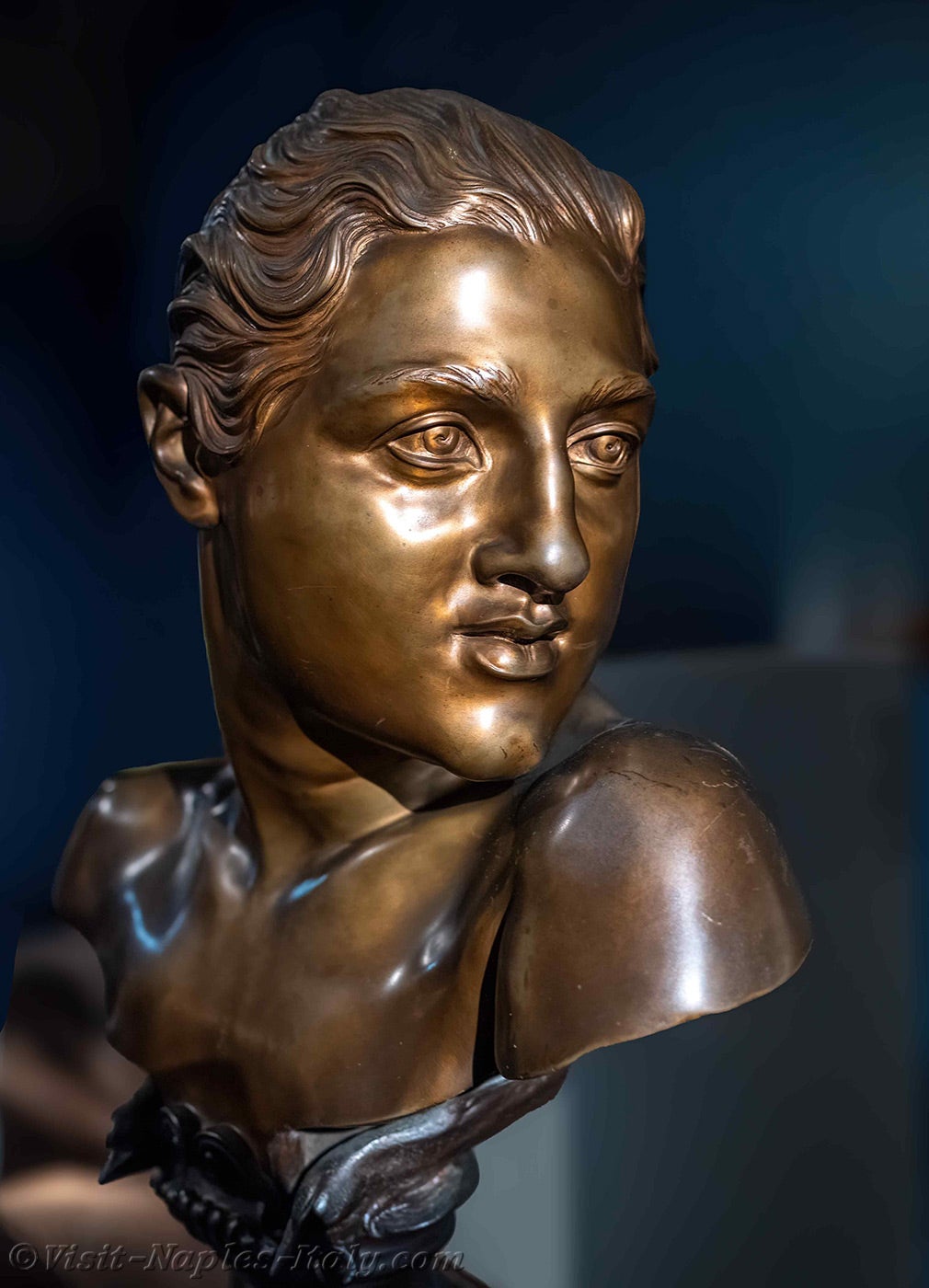
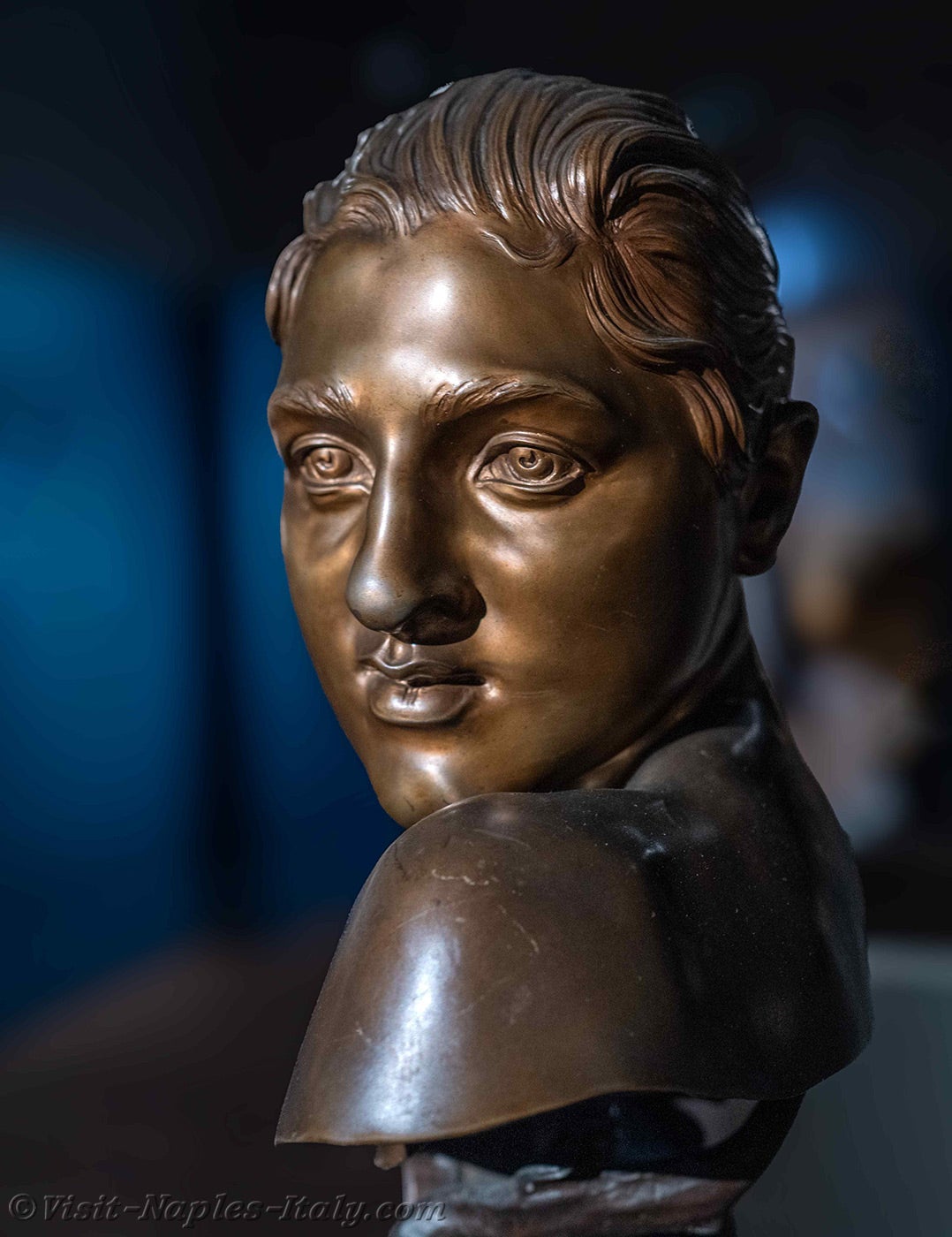
Vincenzo Gemito “Bust of a Young Neapolitan Woman”
Sculpture – Gilded bronze (47 x 38 x 18 cm) 1919This is a young woman of the people whose wavy hair is simply gathered into a bun at the back of her beautiful head, turned to one side, above her bare shoulder.
The regular features of a face worthy of an ancient statue, combined with the natural modelling of the skin and shoulders of this woman, who proudly turns her head to look at someone, form a vivid portrait of a beautiful, strong and energetic Neapolitan woman.
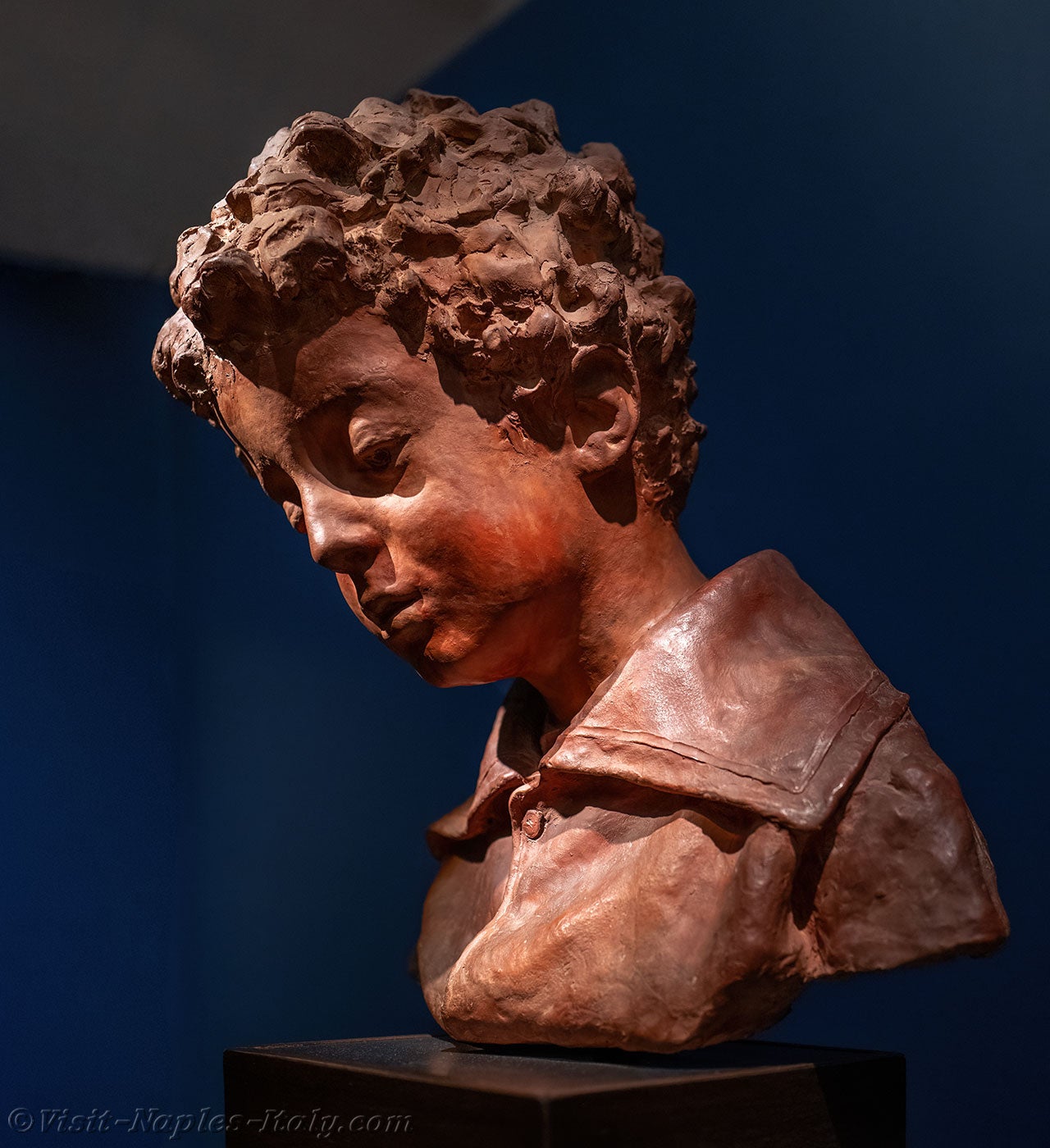
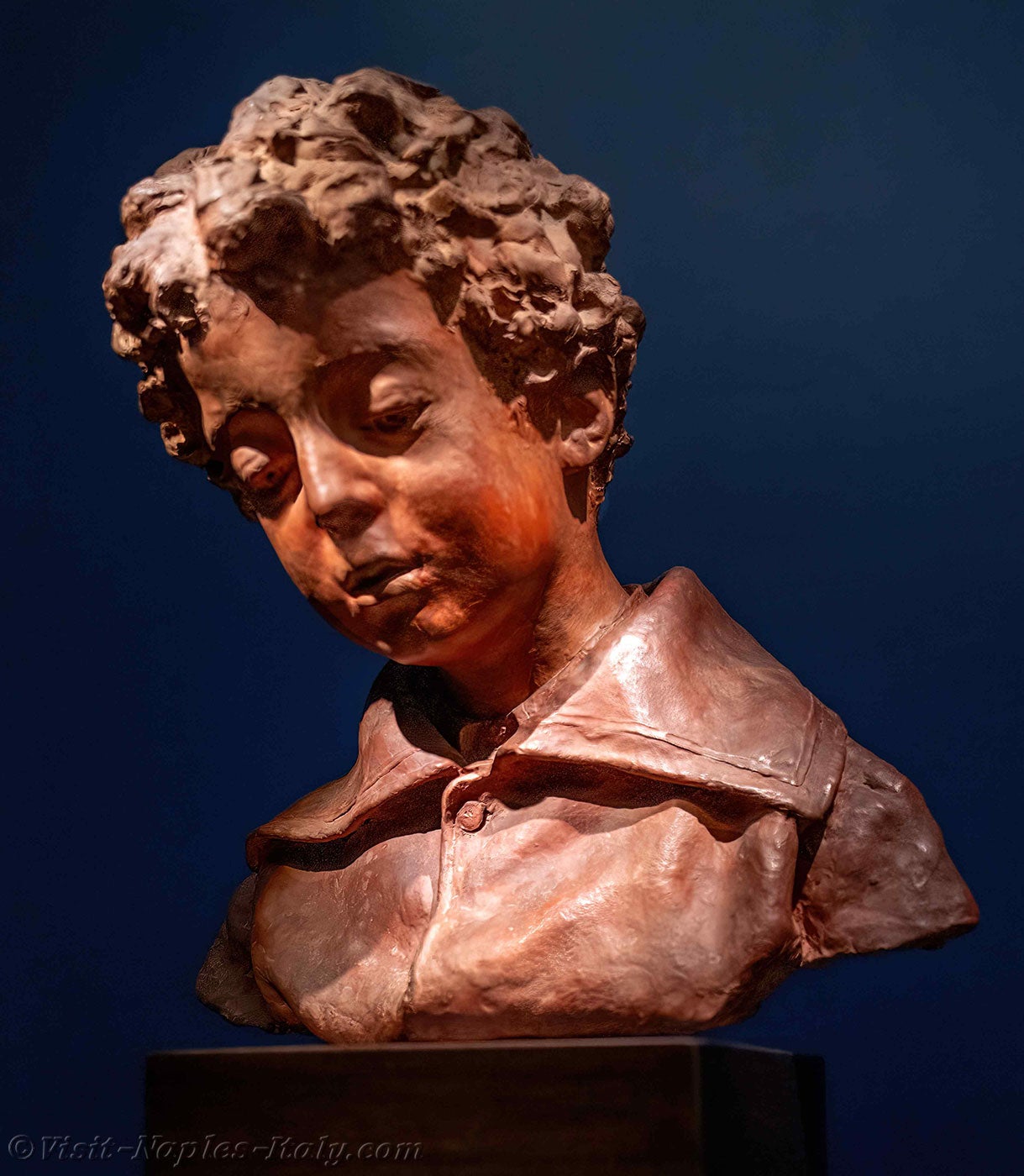
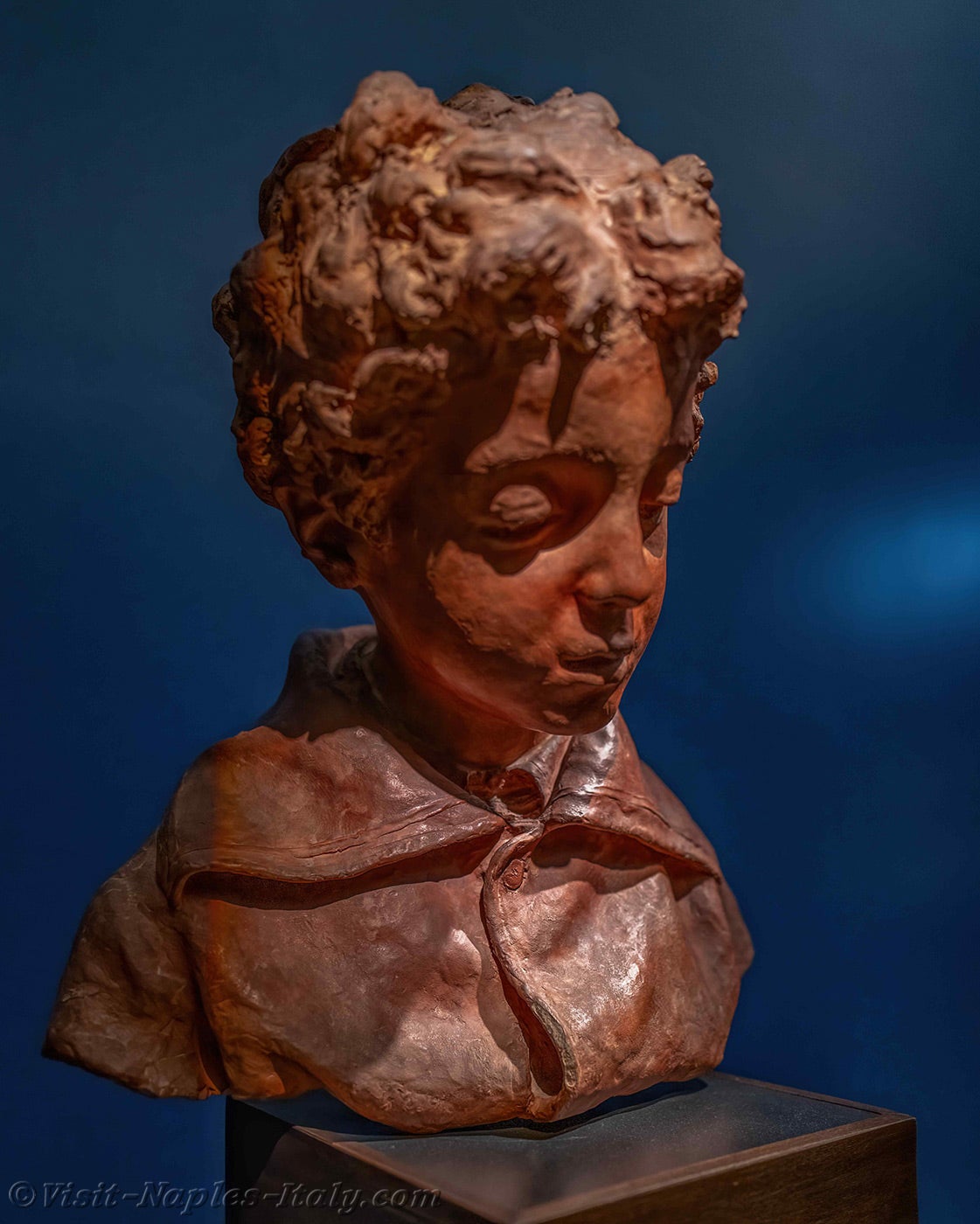
Vincenzo Gemito “Portrait of Guido Marvasi”
Sculpture – Terracotta (42 x 38.5 x 32 cm) 1874This child with beautiful curly hair tilts his head and lowers his eyes as if he were reading and thinking; he is calm and attentive, well-dressed, unlike the street children who are half-naked.
Guido Marvasi was the son of Prefect Diomède Marvasi.
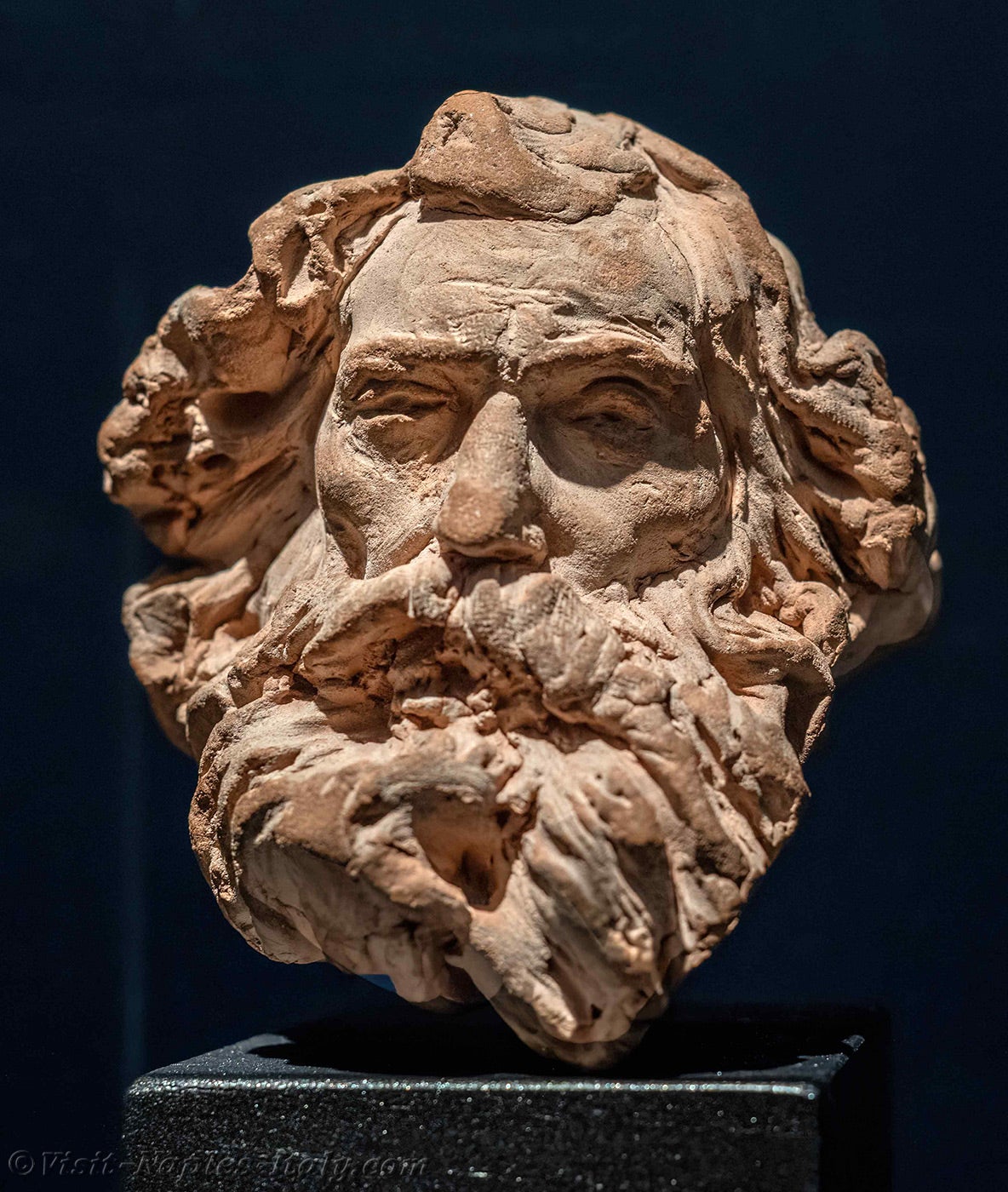
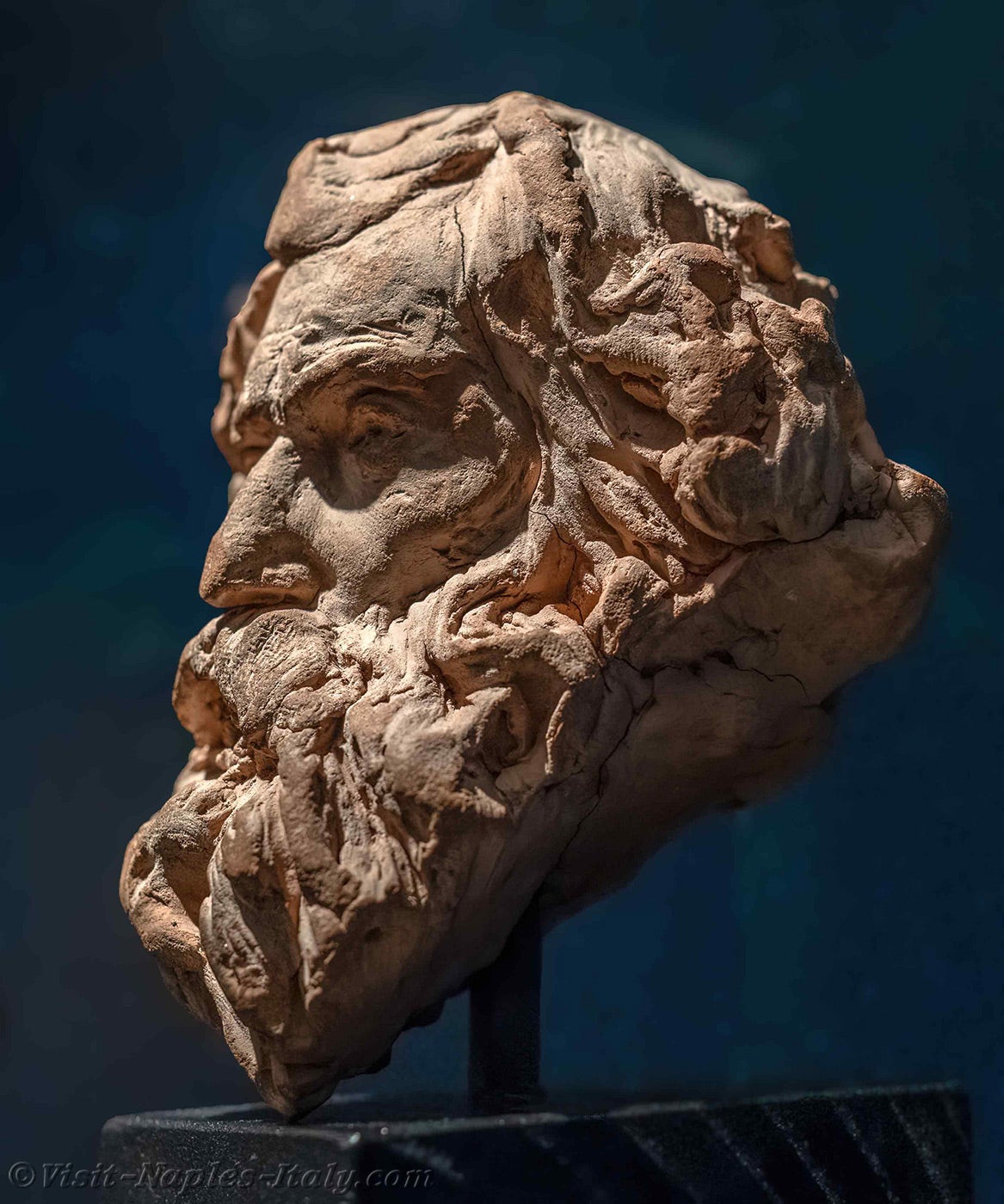
Vincenzo Gemito “Self-Portrait”
Sculpture – Terracotta (10.5 × 9 × 8 cm) 1915This portrait, in which half the face is obscured by a thick beard and a moustache covering his mouth, is that of a tormented man, worn down from within, as shown by his hollow cheeks and his eyes marked by fatigue.
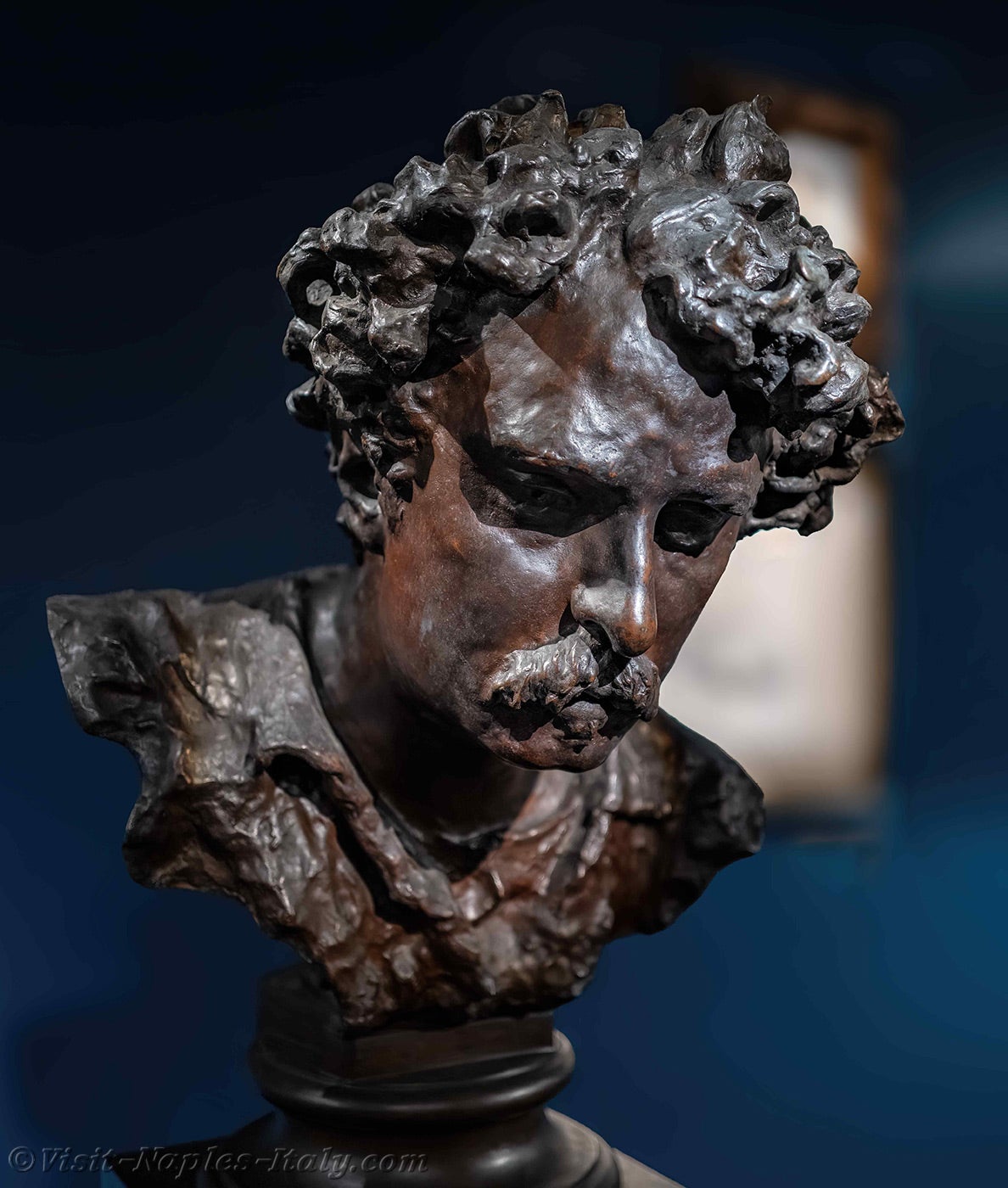
Vincenzo Gemito “Portrait of the painter Mariano Fortuny y Marsal”
Sculpture – Bronze (70 x 54 x 52 cm) 1874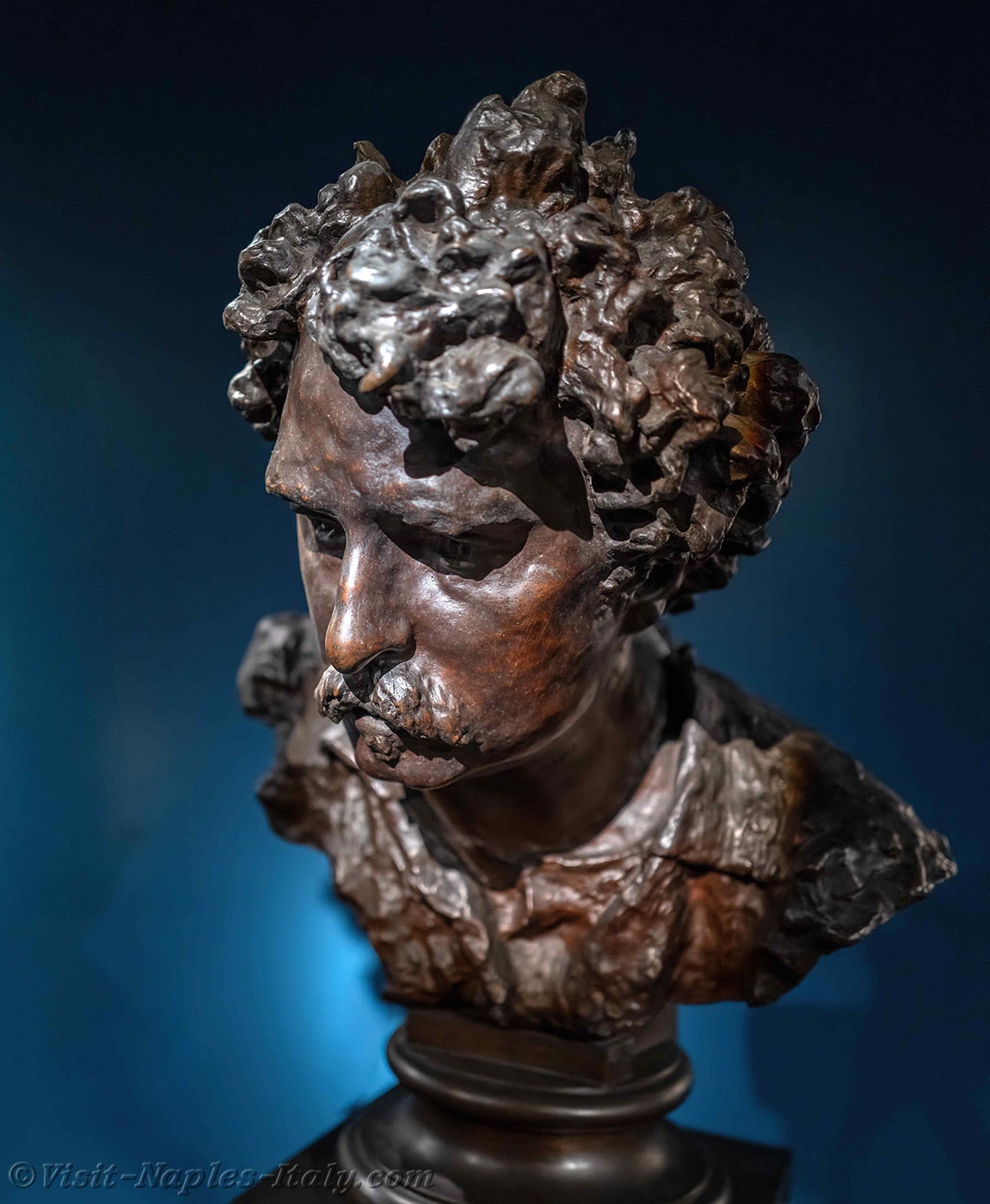
Gemito, Mariano Fortuny In 1869, Gemito was only 17 years old when he created his first bronze statue, “The Card Player”, which was acquired the following year by the royal household to be displayed at the Capodimonte Palace.
The famous Spanish painter Mariano Fortuny y Marsal (1838–1874) moved in the circles of the great Parisian artists.
He was the father of Mariano Fortuny y Madrazo (1871–1949), a painter, photographer and designer, known for his fabrics and dresses in Venice and around the world.
He stayed in Portici, near Herculaneum, in 1873, and died of malaria a year later.
It was thus that his family commissioned his bust from Gemito, the young sculptor who created the statue depicting the natural pose of a young Neapolitan sitting on the ground playing cards.
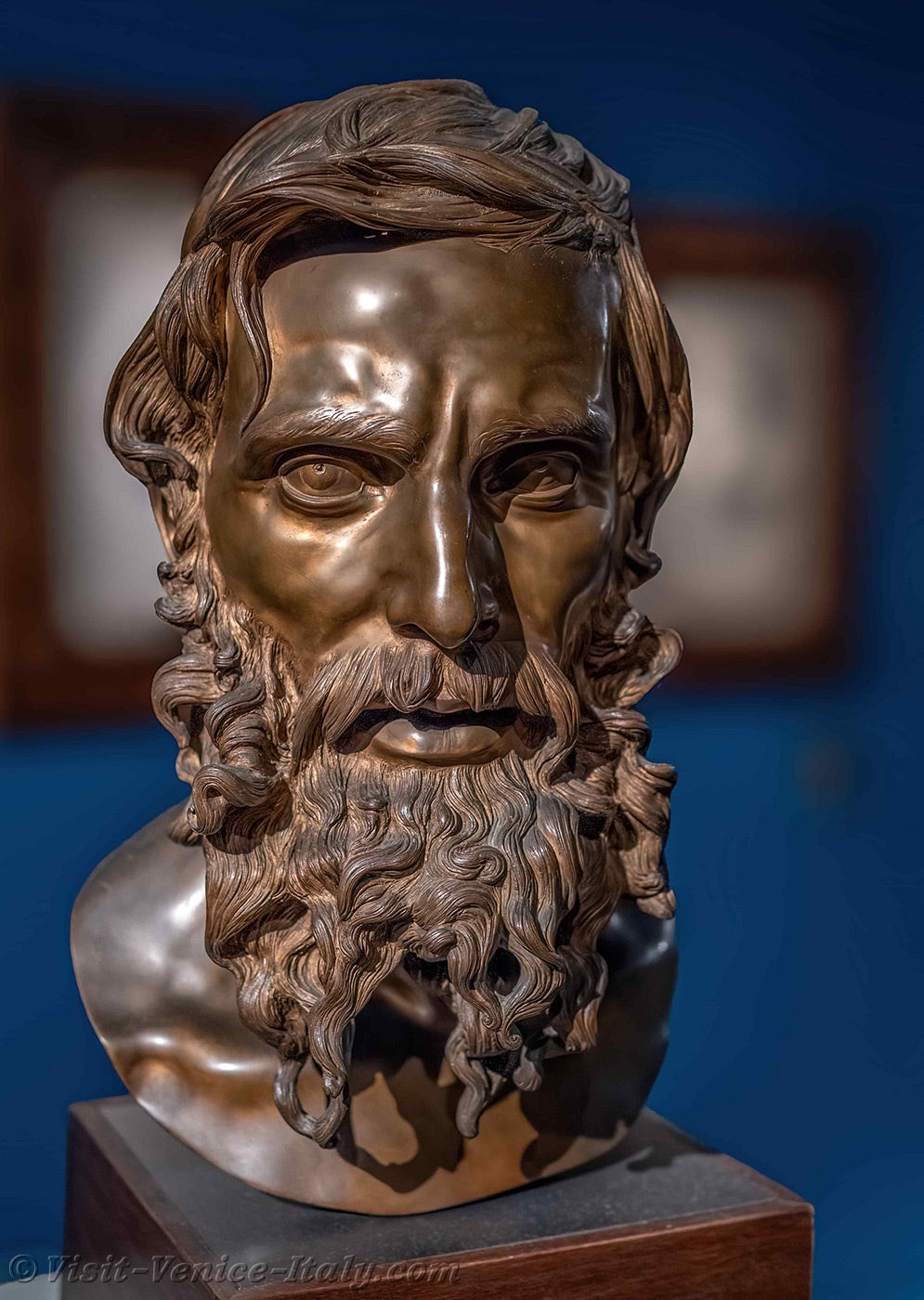
Vincenzo Gemito “Head of a Philosopher”
Sculpture – Bronze (51 x 26 x 26 cm) 1883This head of a philosopher, whose beard and beautiful hair emphasise the intensity of his gaze, is the result of a highly sophisticated aesthetic exploration by the artist to depict an ideal rivalling the busts of antiquity on display at the archaeological museum.
Ten years earlier, in 1873, Gemito had produced a magnificent bust of Verdi thanks to a commission secured through Professor Morelli.
Gemito, Philosopher His portrait of Verdi made him famous and earned him an invitation to Paris in 1877, where he rubbed shoulders with the greatest artists of the time, who praised the “revolutionary realism” of his *Pescatore* (The Fisherman), which was much appreciated by the public, unlike the critics, who cried scandal.
After the 1878 World’s Fair, Gemito returned to Naples in 1880 to build his own foundry in Mergellina, thanks to his Belgian patron, Baron du Mesnil.
This philosopher’s head is inspired by an ancient bust of the philosopher Seneca and the portrait of Francesco Jadiccio, the husband of Gemito’s adoptive mother, who worked with him in his foundry.
A synthesis designed to achieve a living ideal of masculine beauty rather than a portrait frozen in immortality.
Vincenzo Gemito “Self-Portrait”
Painting – Watercolours on paper, graphite, charcoal, white tempera (44 x 32.6 cm) 1886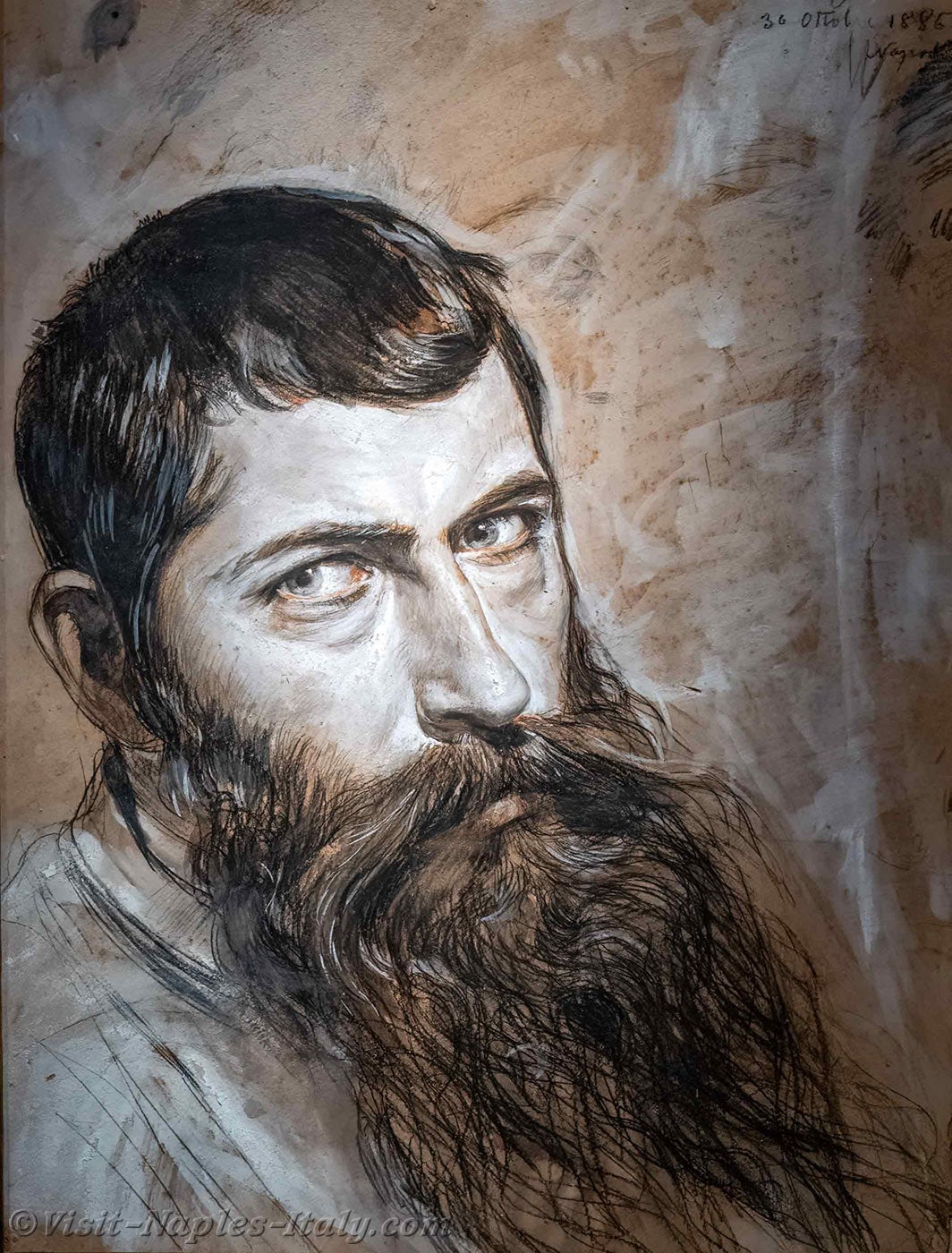
Gemito, Self-Portrait Gemito was 34 years old when he painted this extremely realistic self-portrait, in which the artist’s clear eyes scrutinised every minute detail of his face, his hair and his long beard, which slightly conceals his pursed lips.
He had been deeply affected by the death of his partner, Mathilde Duffaud, in 1881, and his mental health had begun to deteriorate from 1885 onwards due to the stress associated with a commission from the King of Italy for a statue of Charles V.
After a brief spell in hospital, he returned to his favourite subjects: fishermen, peasants, street urchins and the Neapolitan people, alongside portraits and coloured drawings.
His gaze and mouth reveal a sense of unease that reaches its peak in the 1915 self-portrait, painted when he was 63 years old.
Vincenzo Gemito “Portrait of Anna Gemito”
Painting – Charcoal, chalk, white tempera on unprimed cardboard (43.7 x 56.7 cm) 1909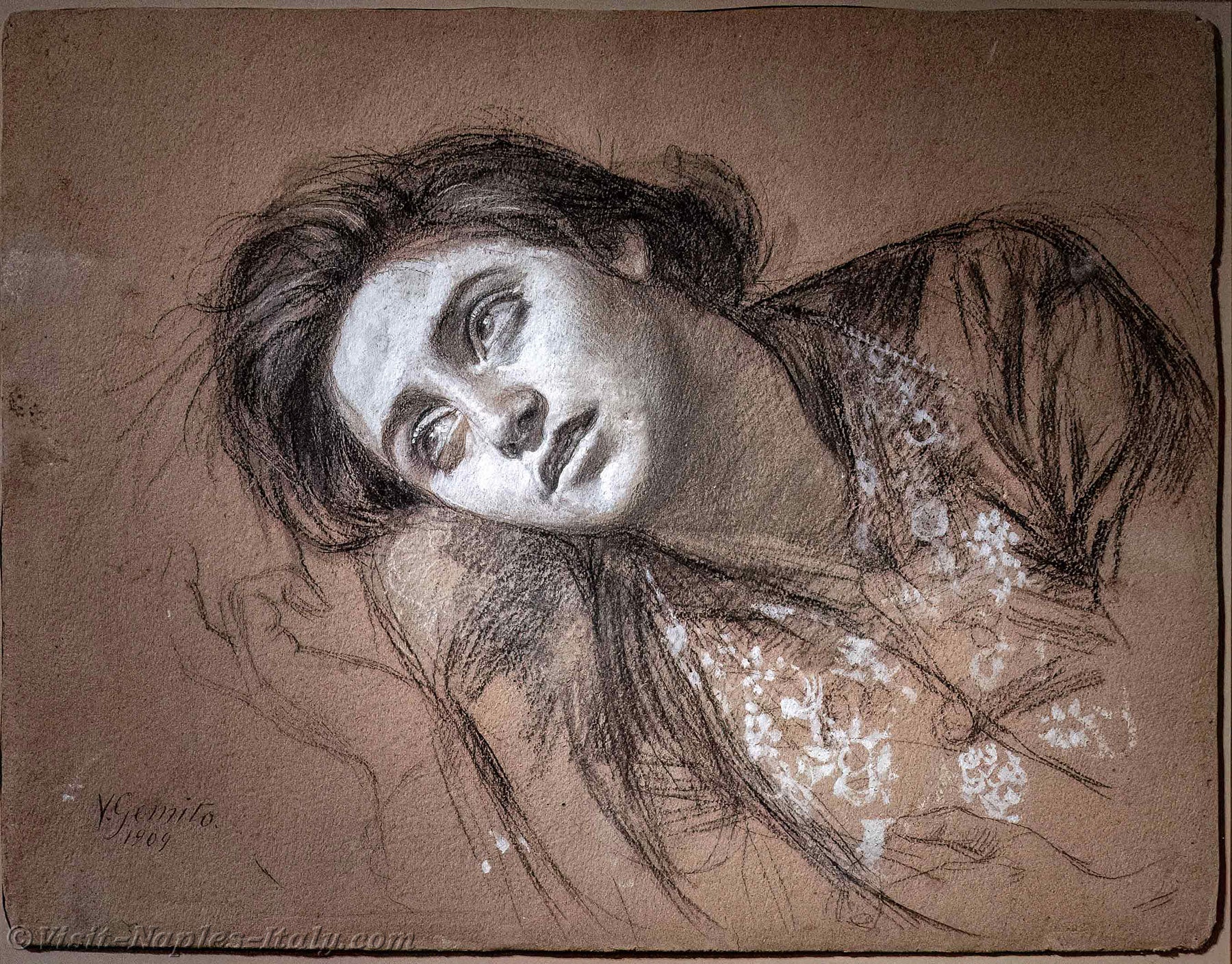
Gemito, Anna Gemito In 1882, Gemito met Anna Cutolo, who modelled for painters.
She became his new muse, and his wife.
A quarter of a century later, he drew Anna reclining, nestled in the corner of an armchair with her head tilted back and her cheek resting on the curve at the top of the backrest, as she looks up without gazing directly at the viewer.
She is dressed simply, her arms clasped against her chest, and her loose hair gives her the air of a nostalgic woman who is escaping the present by looking away.
Artists Caravaggio | Gemito | Vanvitelli | Gentileschi | Aphrodite | Antique Vases | Esposito | Marble inlay
Gallery Italy Artists Schedule Tickets Location | Authorizations
Back to Top of Page