

MANN Artworks Schedule Tickets Location | Authorizations
Artworks Sculptures | Frescoes | Eroticism
Sculptures Mythology | Persons | Animals | Bas-relief
Animals Deer | Horse | Dog | Fawn | Lion | Panther | Piglet | Sphynx
Sculptures of Horses and Riders at the Archaeological Museum of Naples in Italy
The equestrian statues on display at the Archaeological Museum were discovered at the sites of Herculaneum and Pompeii.
They demonstrate the high artistic standard of the Romans in bronze sculpture two thousand years ago.
Horse’s head, Herculaneum
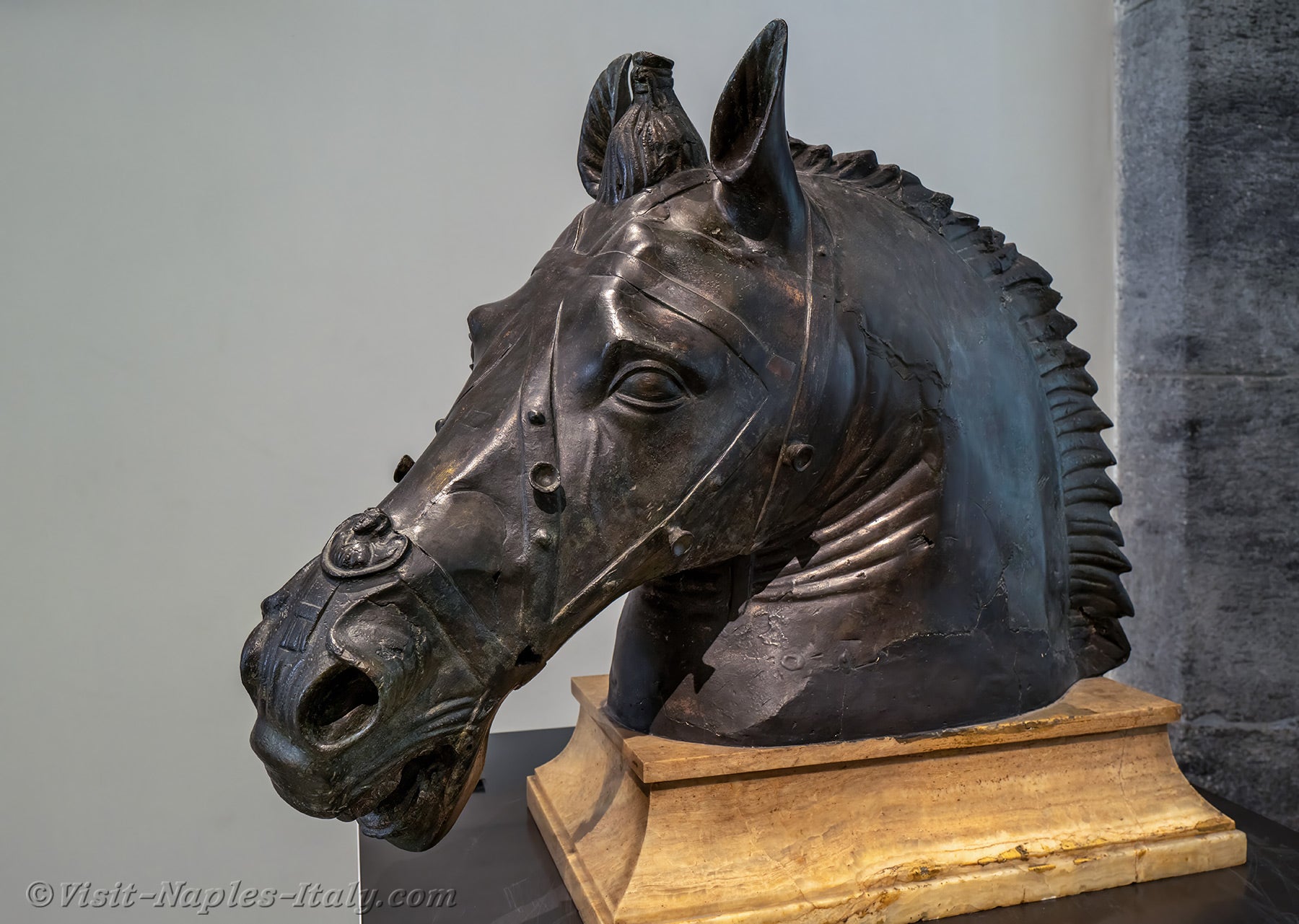
Horse's head Sculpture - Gilded bronze - First quarter of the 1st century
This bronze equestrian sculpture discovered at Herculaneum is truly remarkable.
From the folds of its neck to its mane, via its harness, everything is perfectly rendered and expressed.
One senses the power of this animal as it gazes ahead and snorts, eager to break into a gallop.
Dating back two thousand years, this horse displays its undiminished vigour.
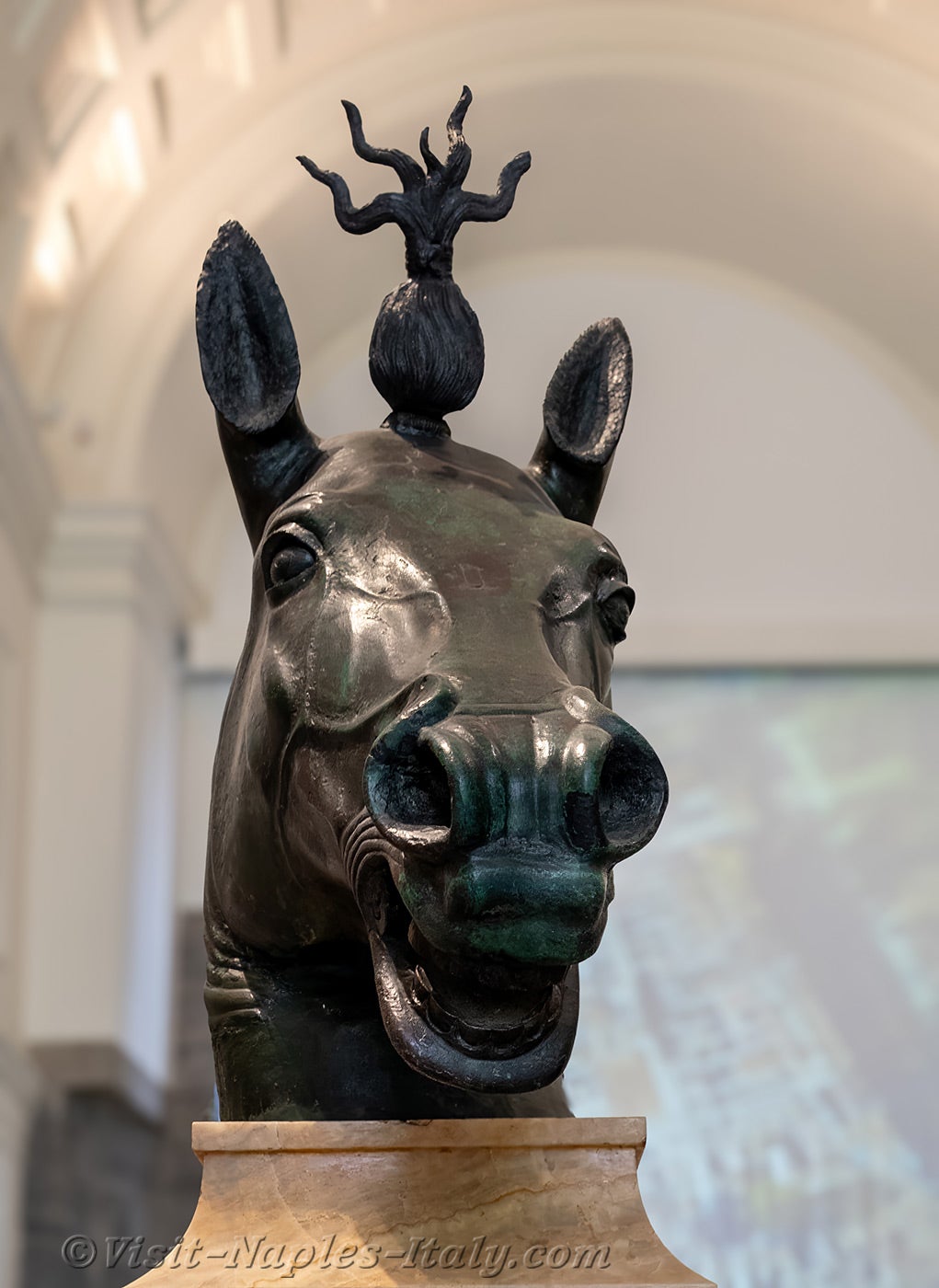
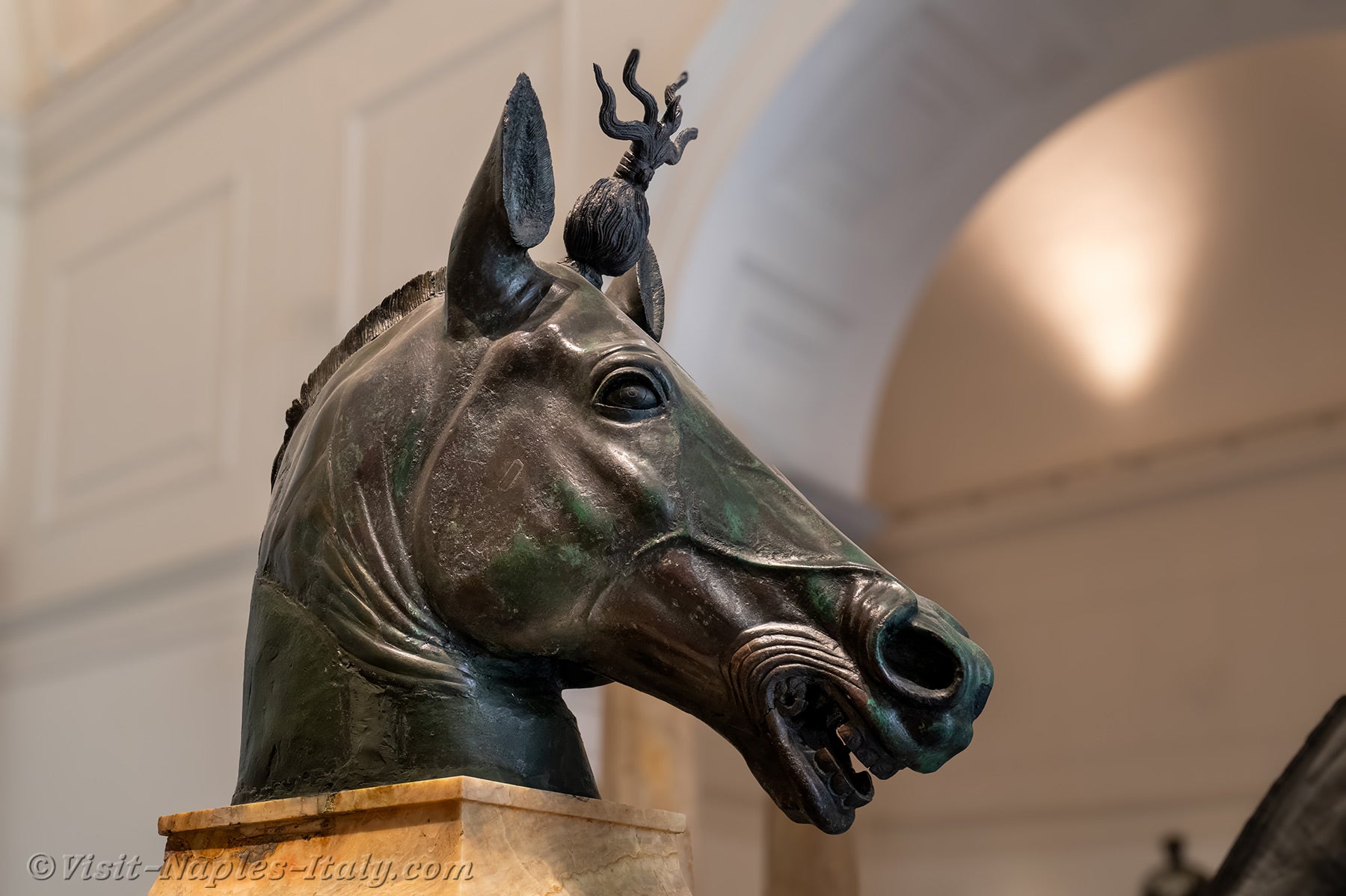
Horse’s head from Nero’s quadriga, Herculaneum
Sculpture - Gilded bronze - First quarter of the 1st century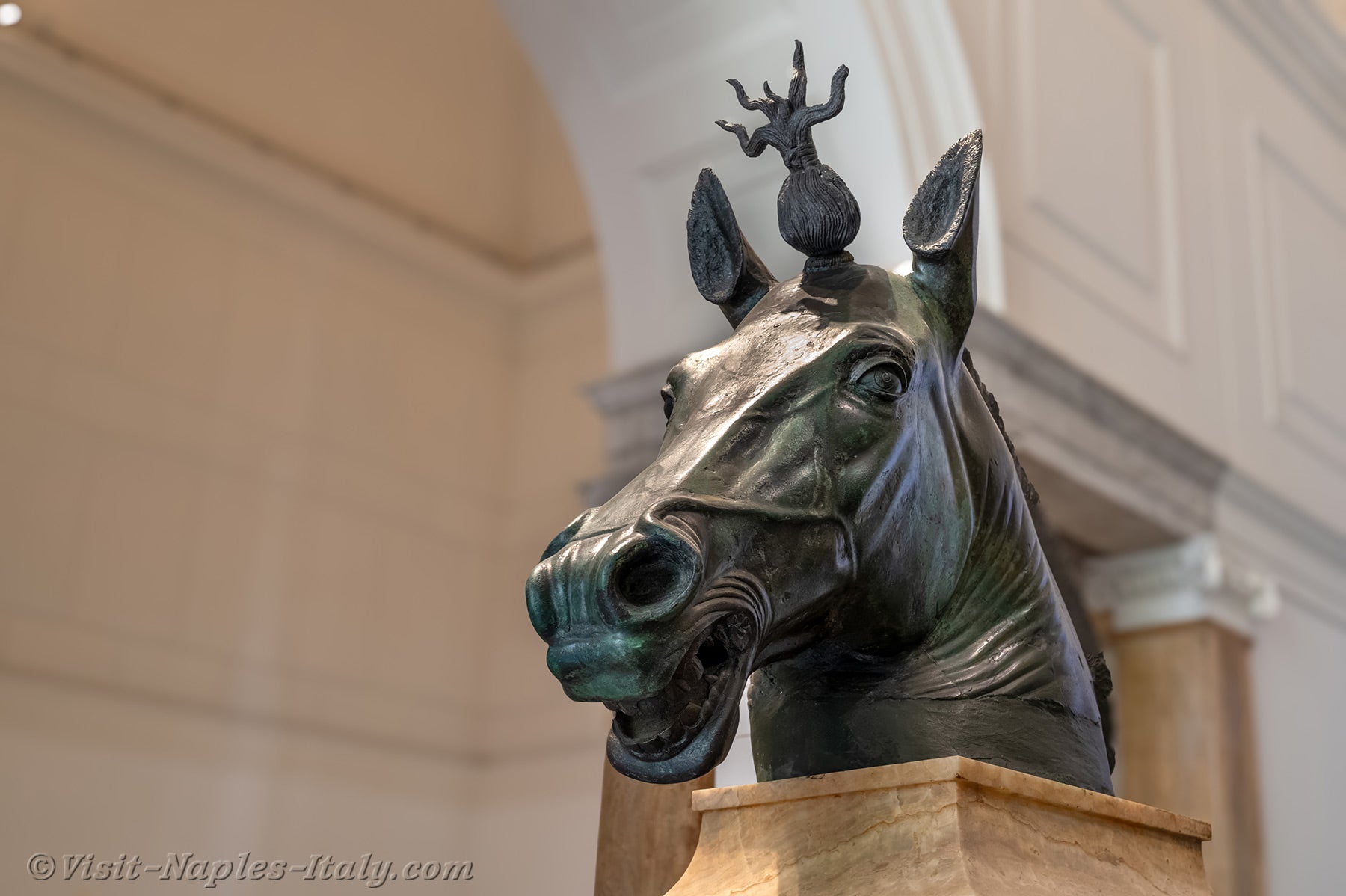
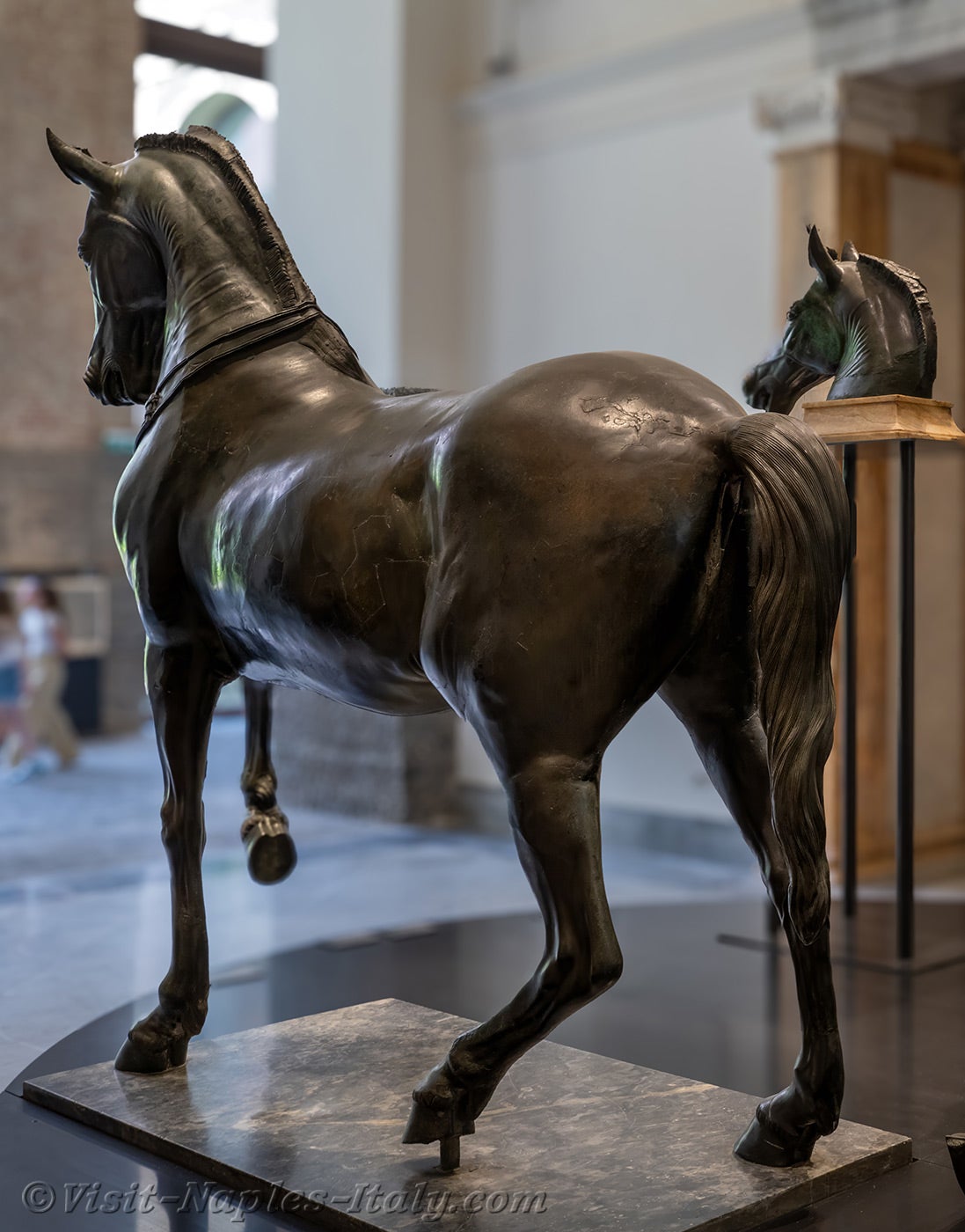
Horse head from Nero’s quadriga This horse’s head, dating from the second quarter of the 1st century AD , was part of a group of four horses in gilded bronze, Nero’s quadriga, discovered in 1739 near the theatre at Herculaneum.
The bodies of these horses no longer exist; they were in pieces when they were unearthed in the 28th century.
The head on display here was the only one to remain intact.
But once again, what a presence! What craftsmanship! One can picture it ready to neigh and gallop along the roads of Herculaneum.
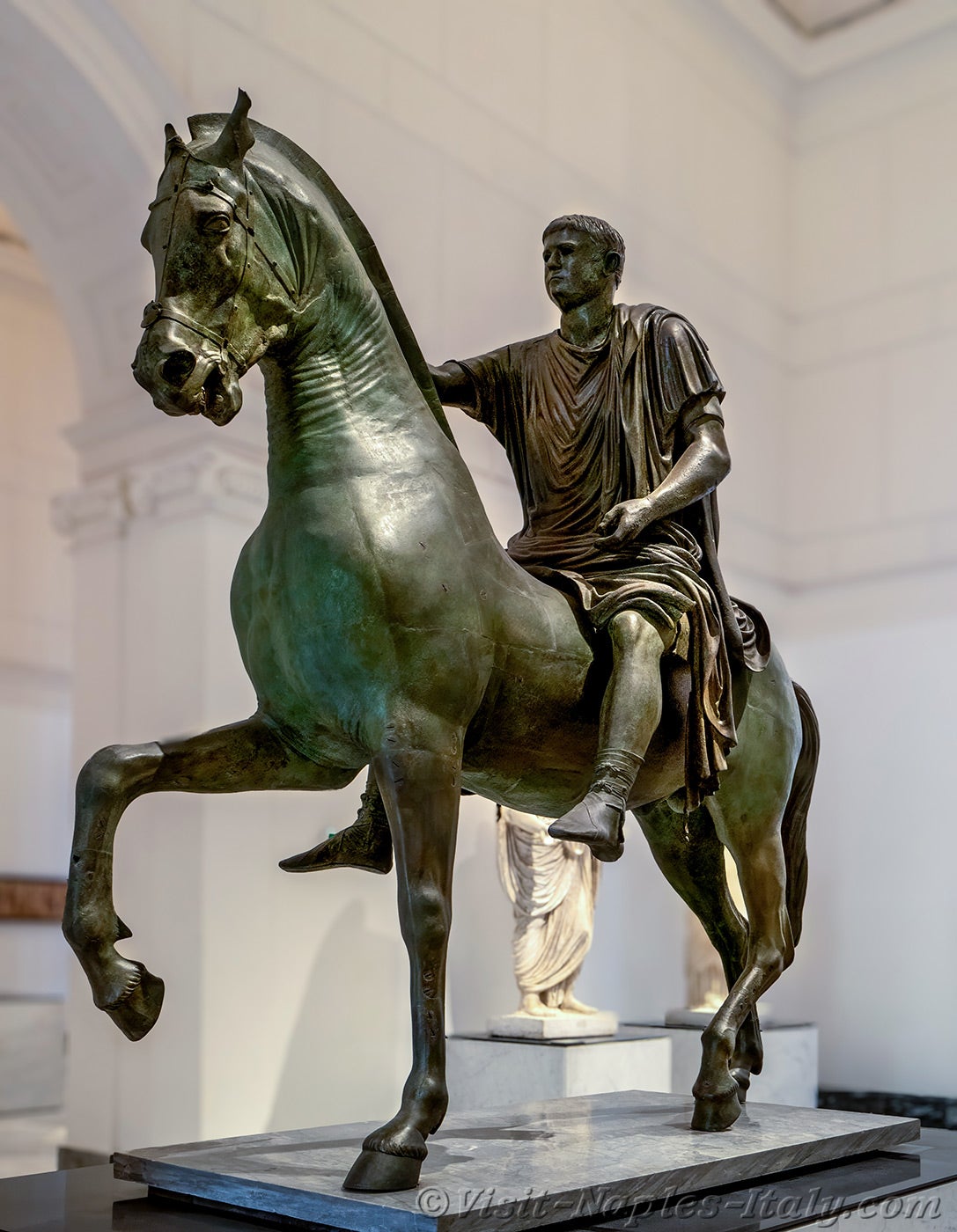
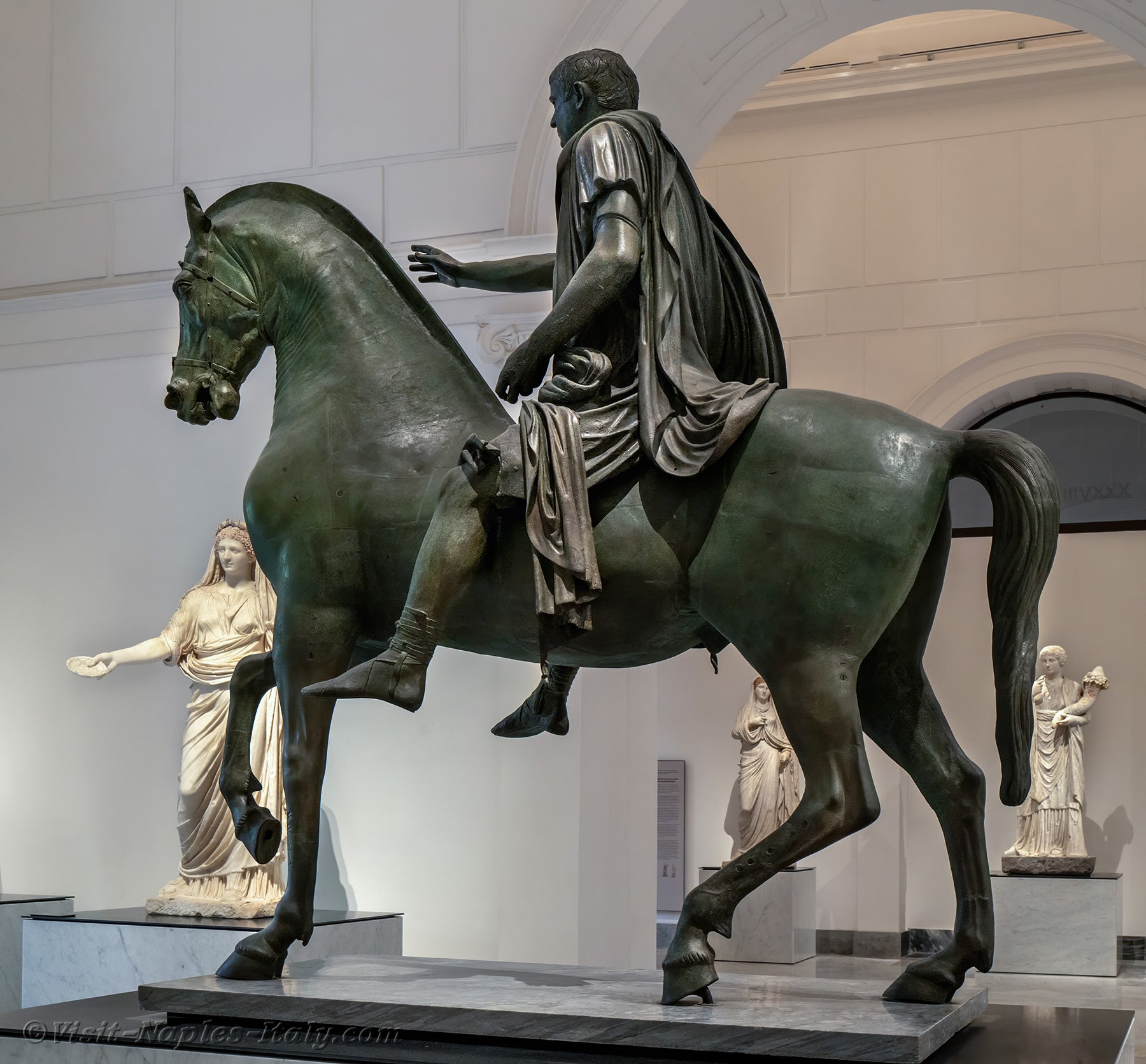
Presumed equestrian statue of Caligula, Temple of Fortuna Augusta, Pompeii
Sculpture - Bronze - First half of the 1st century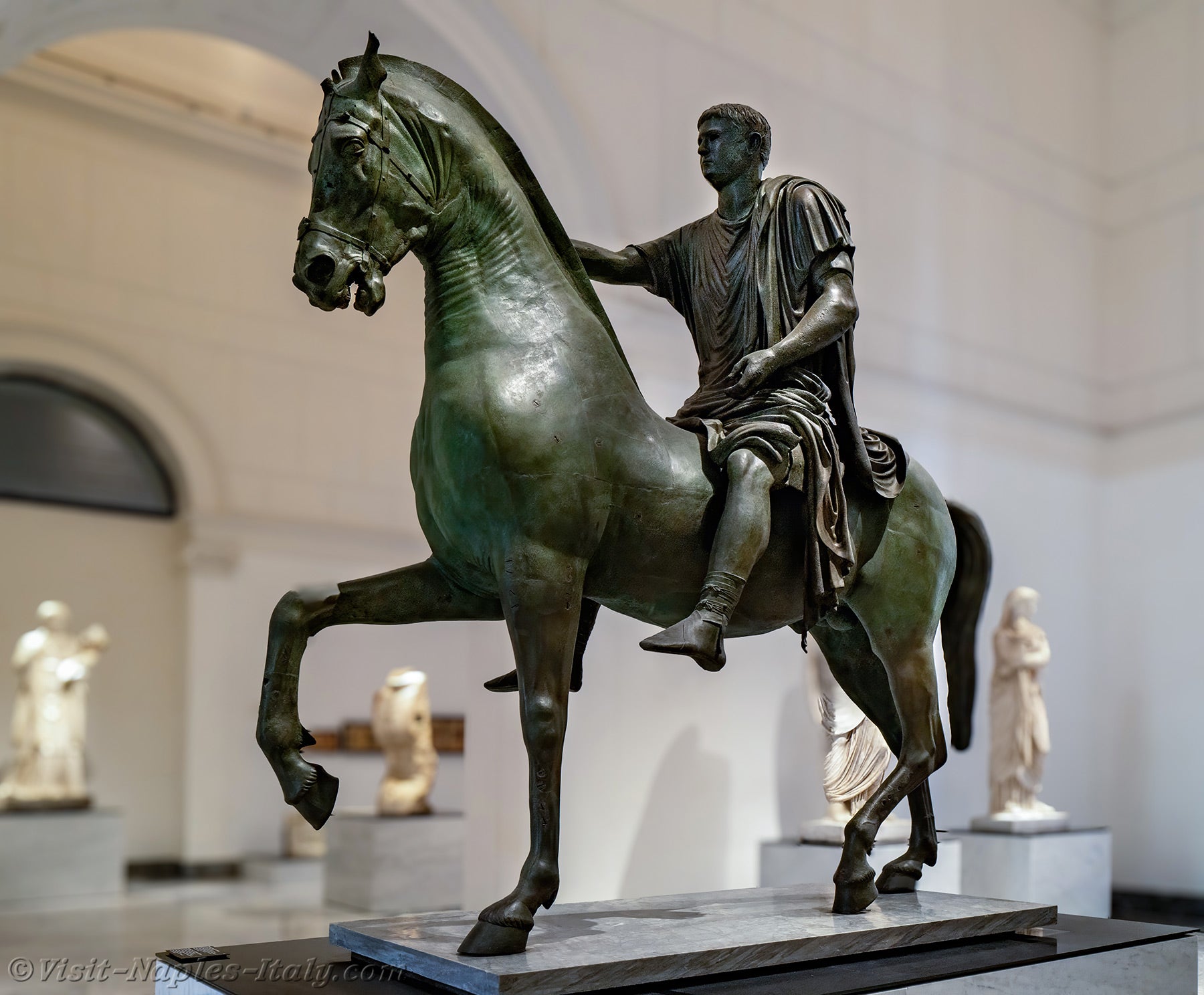
Equestrian statue This elegant horse walks at a walk, ridden by a man with a vigorous bearing who proudly displays his authority by standing tall, clad in a magnificent drape that flows over the horse’s hindquarters.
The rider’s seat is secure, in harmony with his perfectly trained mount.
Note the absence of stirrups, which were later introduced to the West by barbarian horsemen from Central Asia.
This horseman is certainly a high-ranking Roman dignitary, and some believe him to be Emperor Caligula.
Horse from Nero’s quadriga, Herculaneum
Sculpture - Bronze - First quarter of the 1st century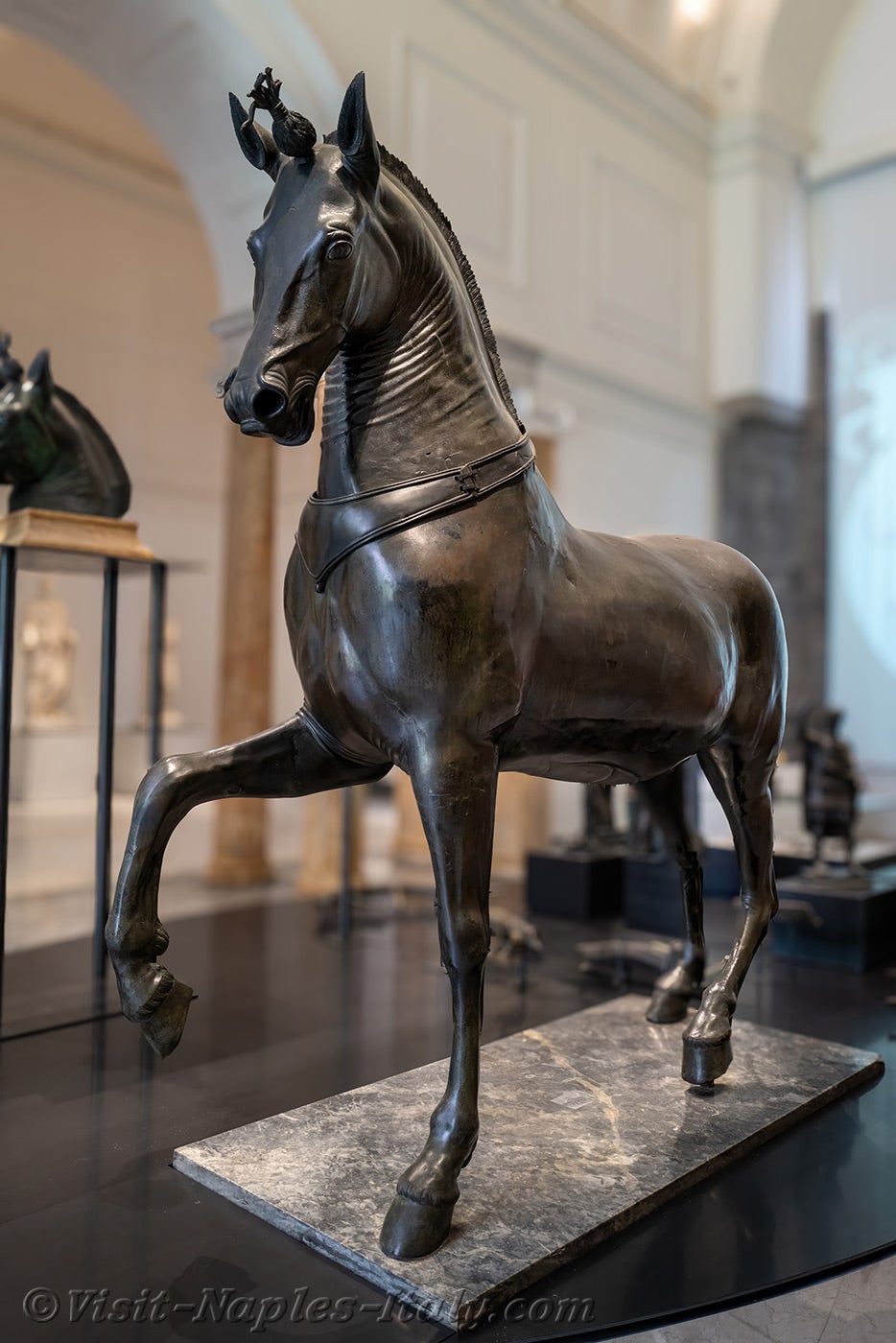
Animals Deer | Horse | Dog | Fawn | Lion | Panther | Piglet | Sphynx
Sculptures Mythology | Persons | Animals | Bas-relief
Artworks Sculptures | Frescoes | Eroticism
MANN Artworks Schedule Tickets Location | Authorizations
Back to Top of Page