

MANN Artworks Schedule Tickets Location | Authorizations
Artworks Sculptures | Frescoes | Eroticism
Frescoes Mythology | Portraits | Life Leisure | Animals | Religion | Landscapes | Decoration
Landscapes Boscoreale | Pompeii | Herculaneum
Architectural and Landscape Frescoes from Pompeii at the Archaeological Museum of Naples, Italy
Architecture with Dionysian motifs, Pompeii
Fresco - Water-based pigments on coating (98 × 114 cm) 25-45 AD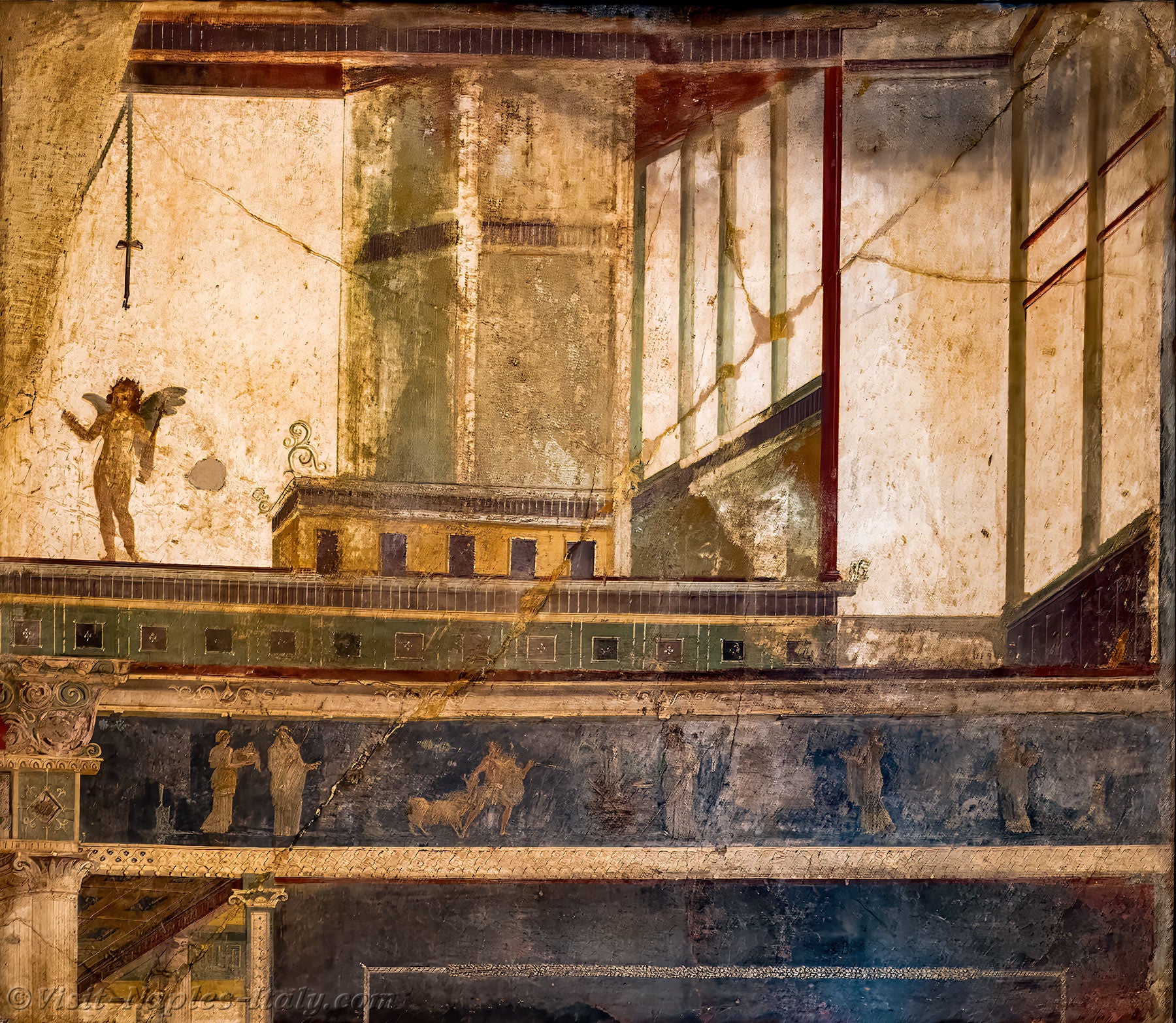
Architecture featuring Dionysian motifs This fresco discovered in Pompeii depicts an architectural structure beneath which is painted a frieze on a black background.
This frieze depicts religious elements of a Dionysian nature.
From left to right, we can see a servant carrying a basket for religious use, as was customary in antiquity.
She is carrying this basket, this cista, to a priestess.
To their right, one can see a satyr gripping a billy goat by the horns and pulling it towards him with intentions that are probably lewd.
The architecture above the frieze is fairly simple, with slender, simple columns.
A small winged cupid is on the left.
Seascape with sailing and rowing boats, Pompeii
Fresco - Water-based pigments on Coating (59 × 69 cm) 1-37 ADOn the shore one can see a large garden adjoining an imposing and probably luxurious villa.
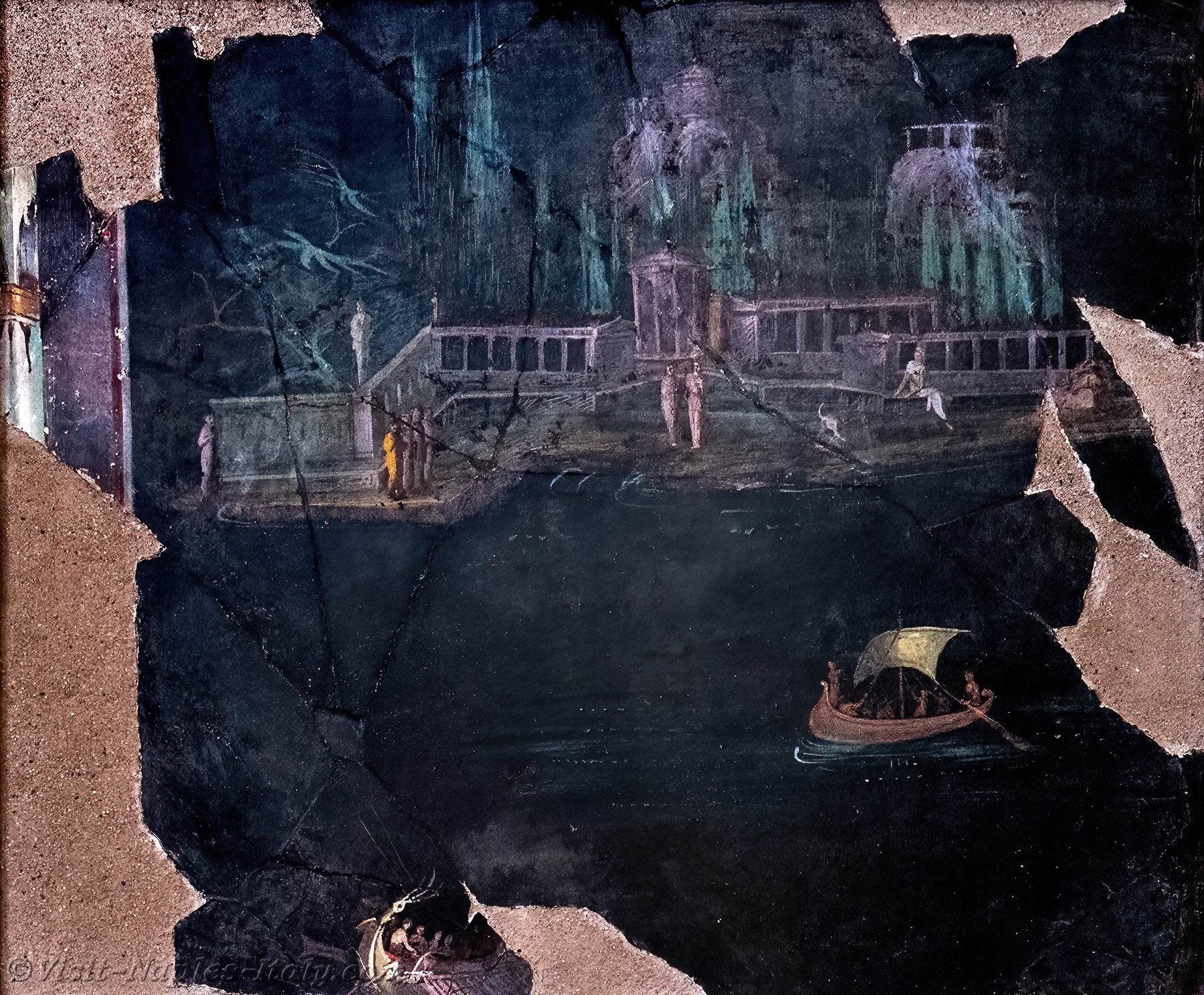
Seascape with boats Indeed, the colonnaded wall of the garden features statues at each of its corners.
A large tree stands on the left, and slender cypresses line the entire length of the garden.
Several figures watch the boats go by from the bank.
A woman is sitting with her dog playing at her feet.
A rowboat with a large sail is on the right.
It is worth noting that this boat has no rudder.
The sailor at the stern holds a long oar to steer it.
The boat depicted at the bottom and on the left, however, is rowed; the rowers seated in a row one behind the other are clearly visible.
Architectural and maritime landscape, Pompeii
Fresco - Water-based pigments on coating (27 × 38 cm) 45-79 AD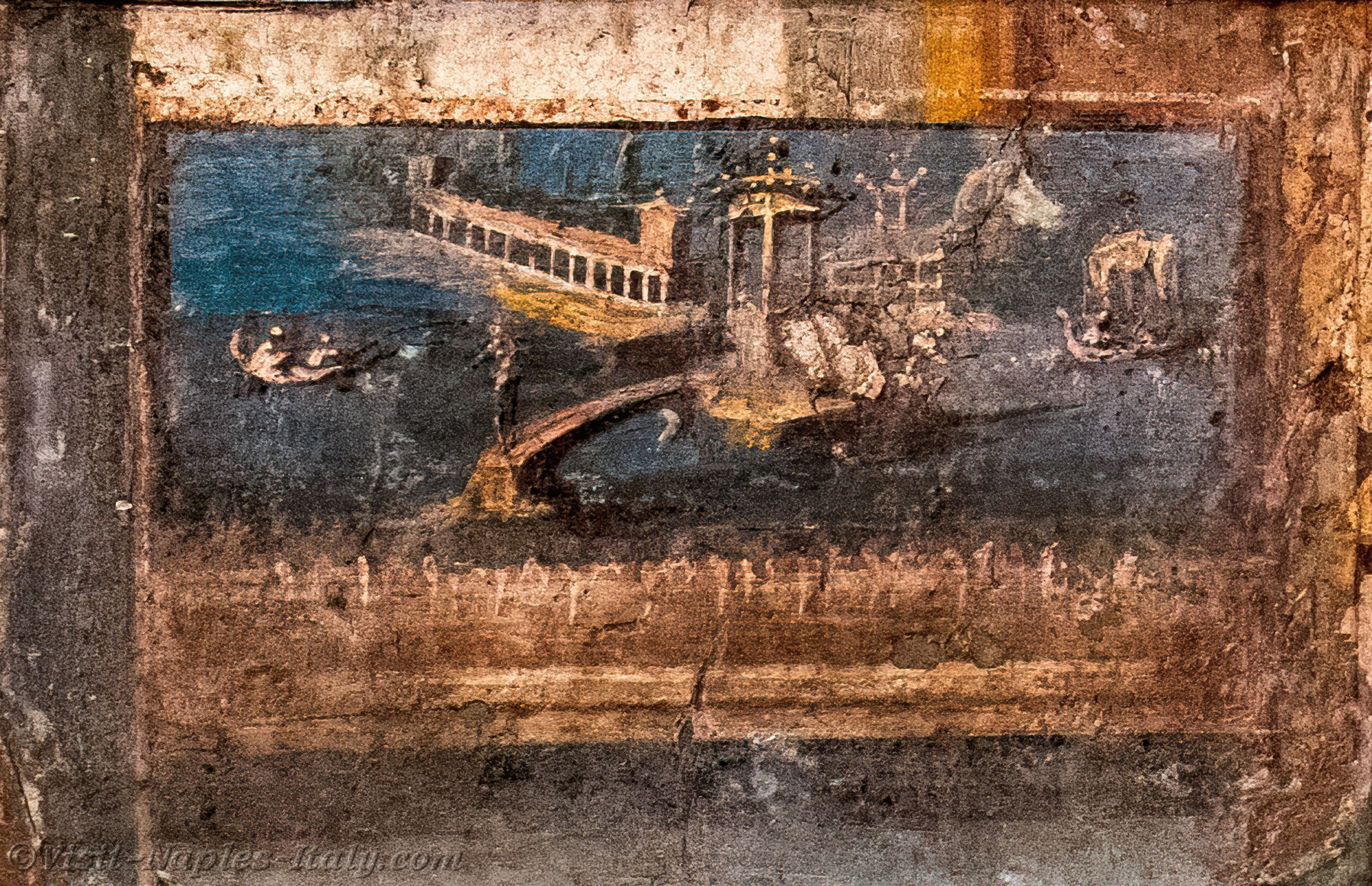
Architectural and maritime landscape In this fresco from Pompeii, depicting a seascape, we can see a few small boats.
These boats are small, as these boats can only carry two people at a time.
Looking at the boat on the left, we can deduce that they are fishermen, as we can see fishing rods in their hands.
A jetty leads to a circular structure built on a small island.
A fisherman stands at the end of the jetty leading to it.
In the background, one can see a long building with columns.
Porticoes, Gardens and Villas, Pompeii
Fresco - Water-based pigments on Coating (22 × 52 cm) 40-45 ADThese two frescoes, which come from Pompeii, have been combined onto a single canvas.
The fresco on the left shows a large villa with its garden.
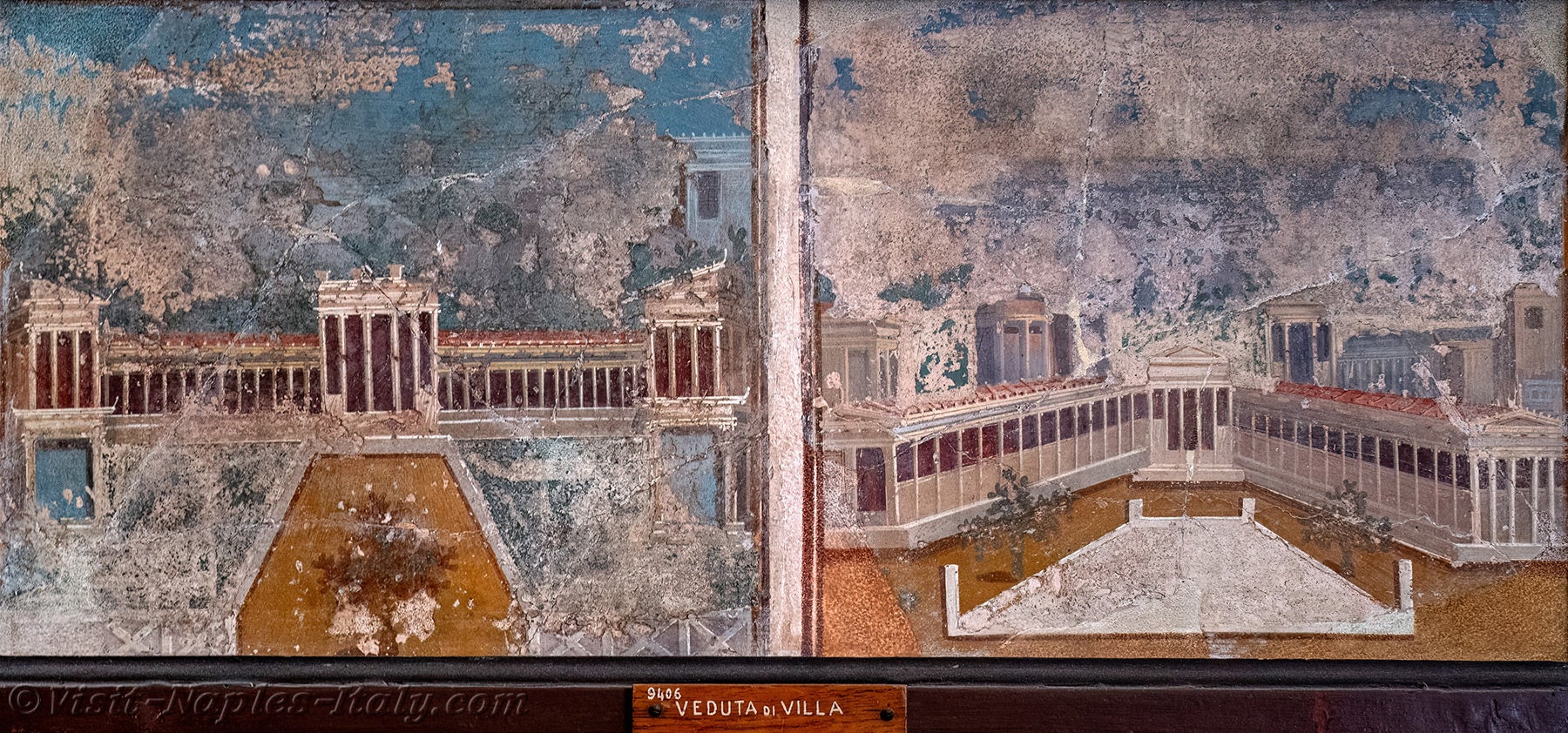
Porticos, Gardens and Villas At the centre of the portico with its columns stands a tall hexastyle hall, which has six columns.
On either side of the portico, one can see the entrances to other large halls, which also feature tall columns.
The fresco on the right depicts another vast villa built according to the same design as the previous one, with two large V-shaped porticoes and a hexastyle hall in the centre.
In the background, on the left, stands a tholos, a circular temple.
These frescoes are remarkable for their meticulous finish and their skilful use of perspective.
Rural and Sacred Landscape, Pompeii
Fresco - Water-based pigments on Coating (28 × 38 cm) 50-79 ADThis painting, brought to life by vibrant colours, depicts a peaceful rural landscape, where cows and goats graze.
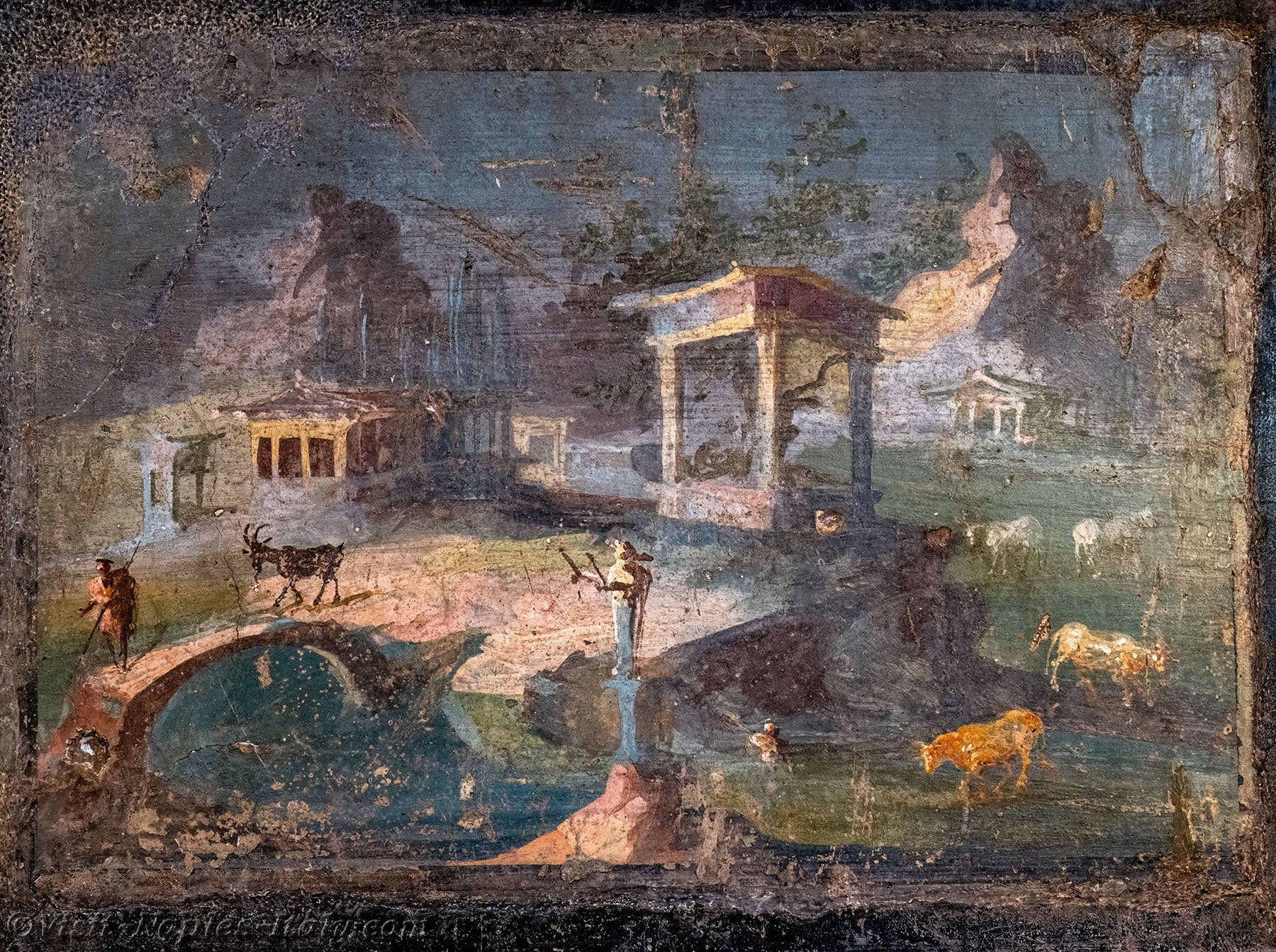
Rural and sacred landscape In the foreground, a river flows beneath a small bridge, on which stand a shepherd and a goat.
A rock near the water supports a column adorned with a divine statue.
The bridge leads to a rocky platform, on which stand religious buildings, surrounded by trees.
A tetrastyle temple, that is, one with four columns, can be seen on the left, as well as another, further away, on the right-hand side of the fresco.
A square pavilion, intended for religious purposes, is also depicted, with a majestic tree growing in its centre.
Sacred Gate and Velum, Pompeii, Temple of Isis
Fresco - Water-based pigments on Coating - 45-79 AD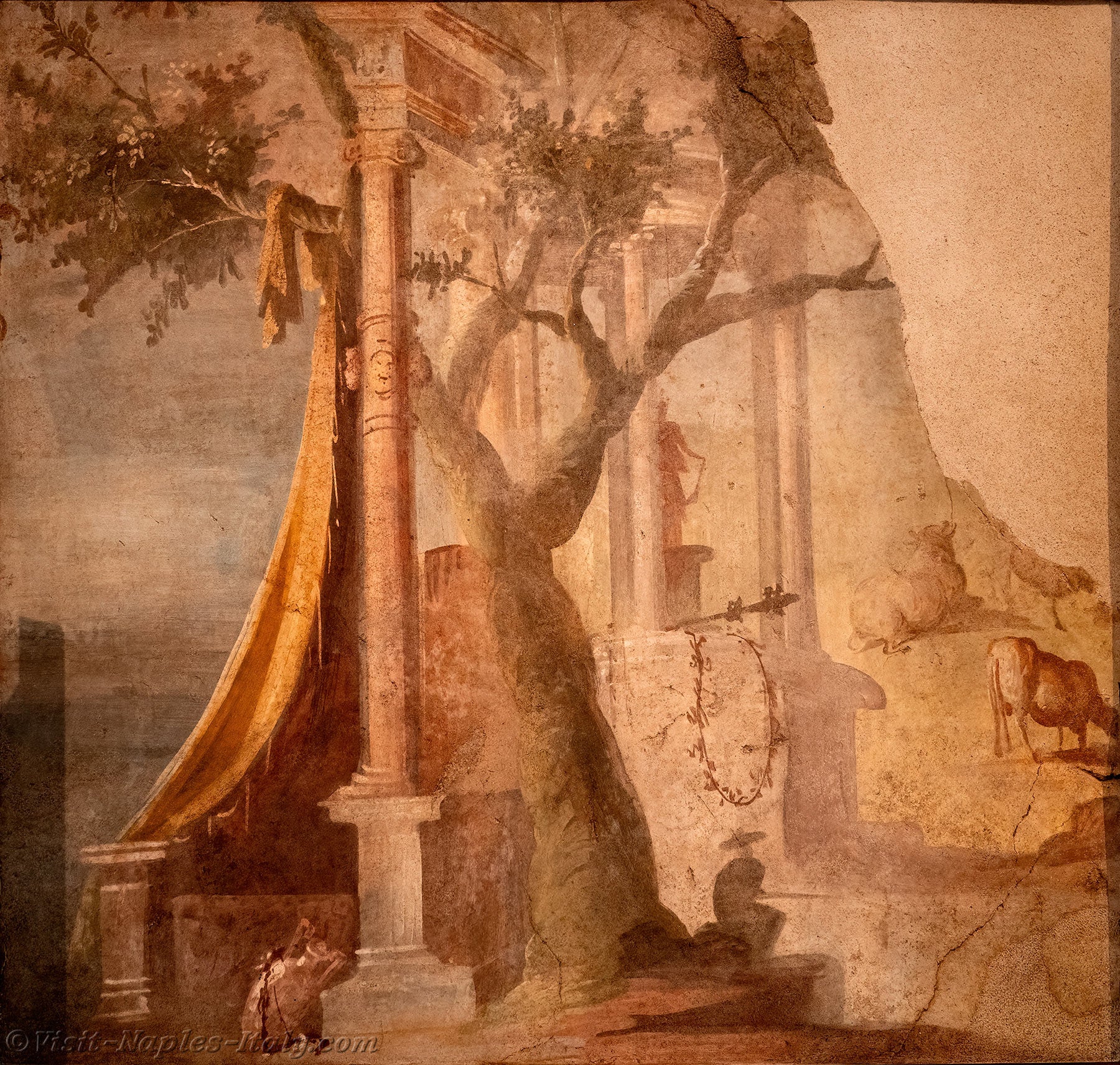
Sacred Gate and Velum This fresco was located on the west wall of the Ekklesiasterion of the temple of the goddess Isis in Pompeii.
It depicts a landscape featuring a sacred gate and a velum hanging from one of the branches of the tree that has grown between its columns.
An amphora lies near the sacred gate.
In the background, one can see the circular temple of Isis, surrounded by columns with the statue of the goddess at its centre.
A man is sitting at the foot of the tree by the sacred gate and fishing in the river that flows between the Temple of Isis and the islet.
Cows are grazing behind the Temple of Isis.
Sacred Gate, Temples and Ibis, Pompeii, Temple of Isis
Fresco - Water-based pigments on Coating - 45-79 ADThis fresco was found in the sanctuary dedicated to the goddess Isis, in Pompeii.
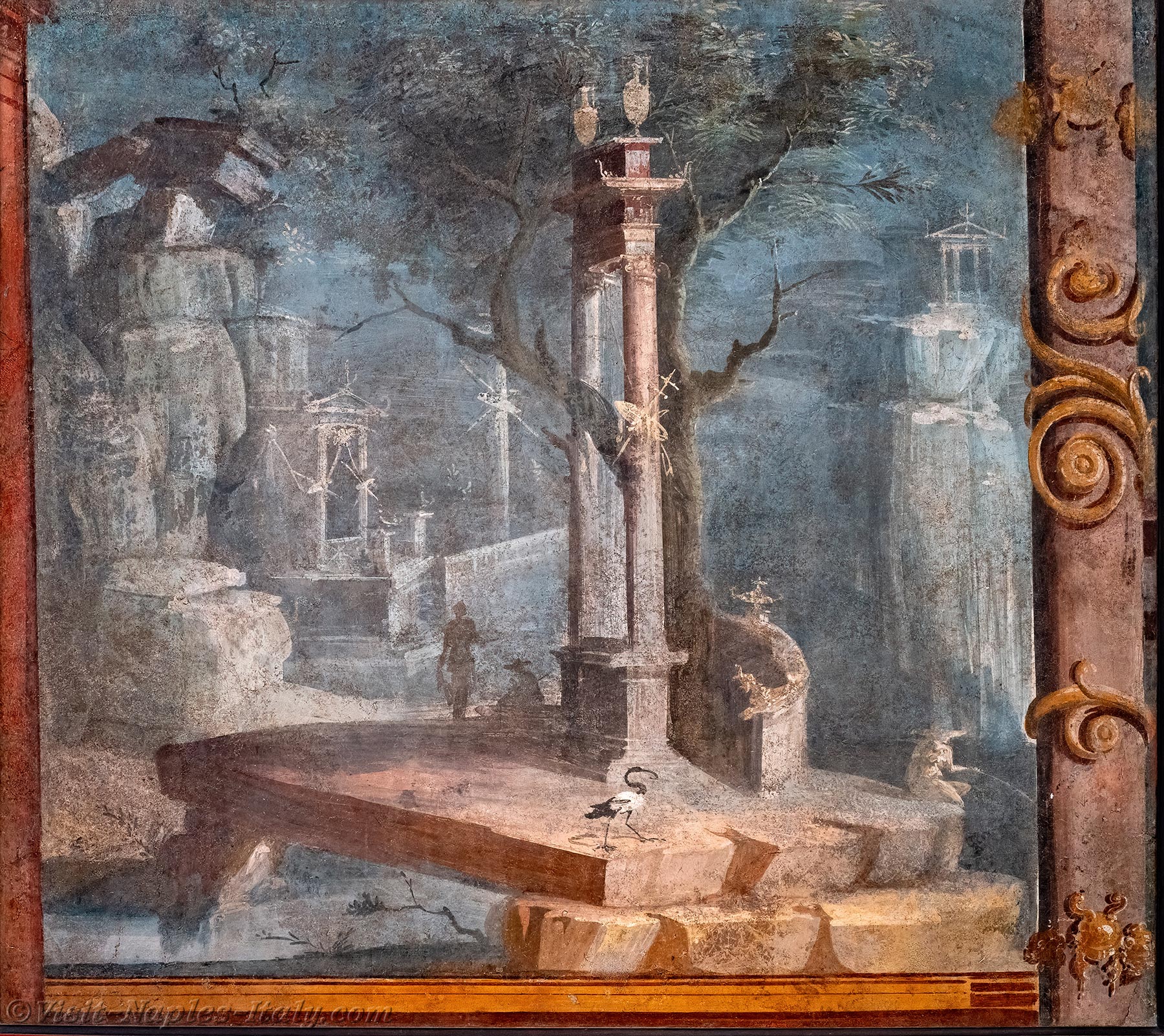
Sacred Gate, Temples and Ibis It depicts a sacred gate standing on a rocky outcrop beneath which a river flows.
This gate is topped by tall vases and decorated with shields.
A tree stands at the foot of the sacred gate, and its branches pass through it.
On this same rocky outcrop, we see a seated fisherman on the right and, behind him, calmly, an ibis.
On the other side of this rocky platform stands a woman who appears to be carrying an offering. Another fisherman is seated behind her.
To the left, one can glimpse a temple nestled in the mountain that overlooks it.
Finally, on the right, the artist has painted a temple perched atop a high, sheer cliff.
Sacred gate, temple and kingfisher, Pompeii, Temple of Isis
Fresco - Water-based pigments on coating - 45-79 ADThis fresco adorned the north wall of the Ekklesiasterion of the temple of the goddess Isis, in Pompeii.
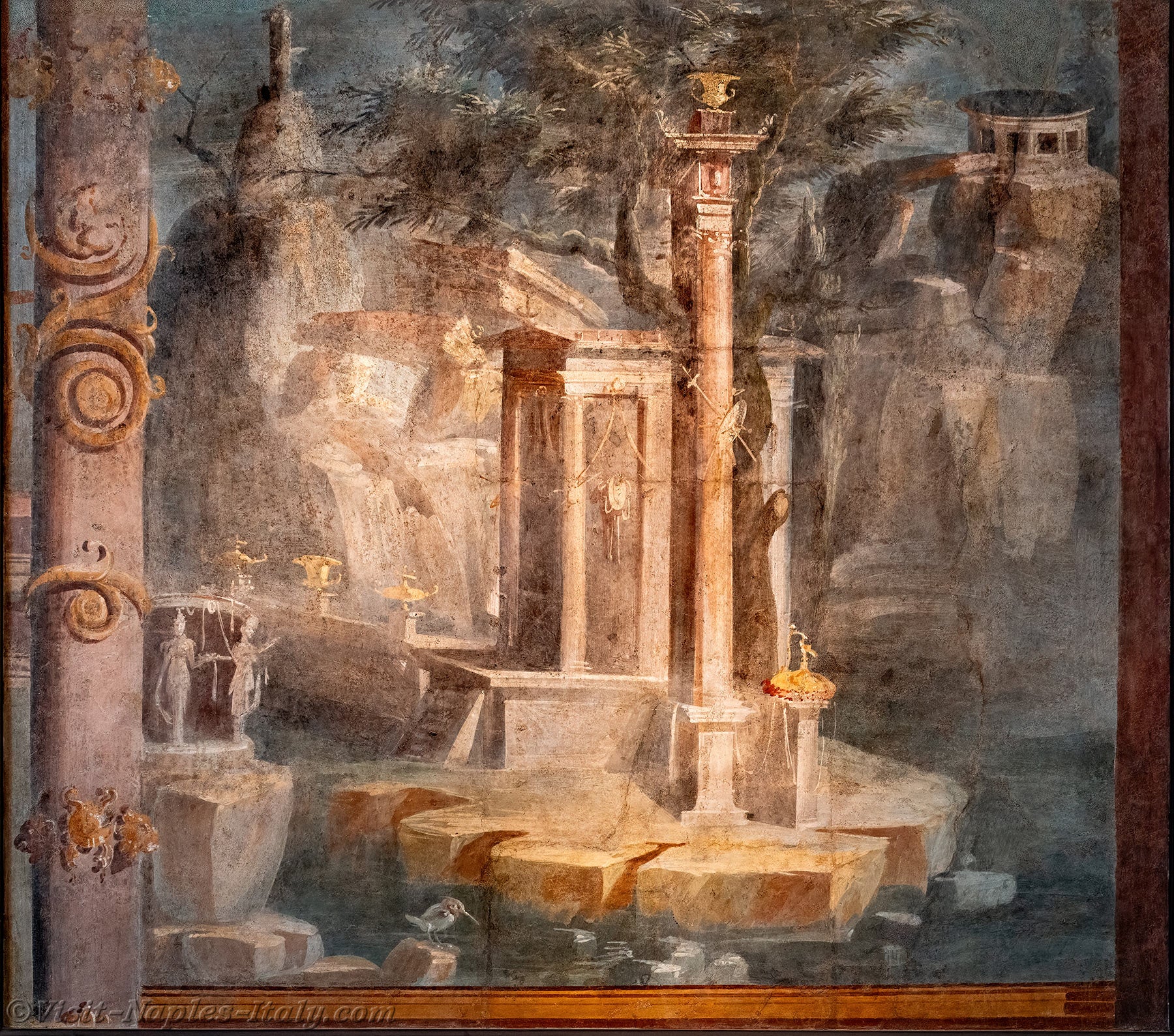
Sacred Gate, Temple and Kingfisher A small temple, accessible via a flight of eight steps, stands on a small island surrounded by water.
It is decorated with shields and spears.
In front of it stands a sacred gate, through which the branches of a tree planted at its base pass.
Several gold vases can be seen in this scene.
One is situated above the sacred gate, whilst others rest on decorative small pillars placed on the wall bordering the river, which ends in a small bridge.
In the background on the right, a circular temple stands atop a steep cliff.
Finally, beautifully painted, a kingfisher stands in the foreground.
Egyptian landscape, Pompeii, Temple of Isis, Porticus
Fresco - Water-based pigments on Coating - 45-79 AD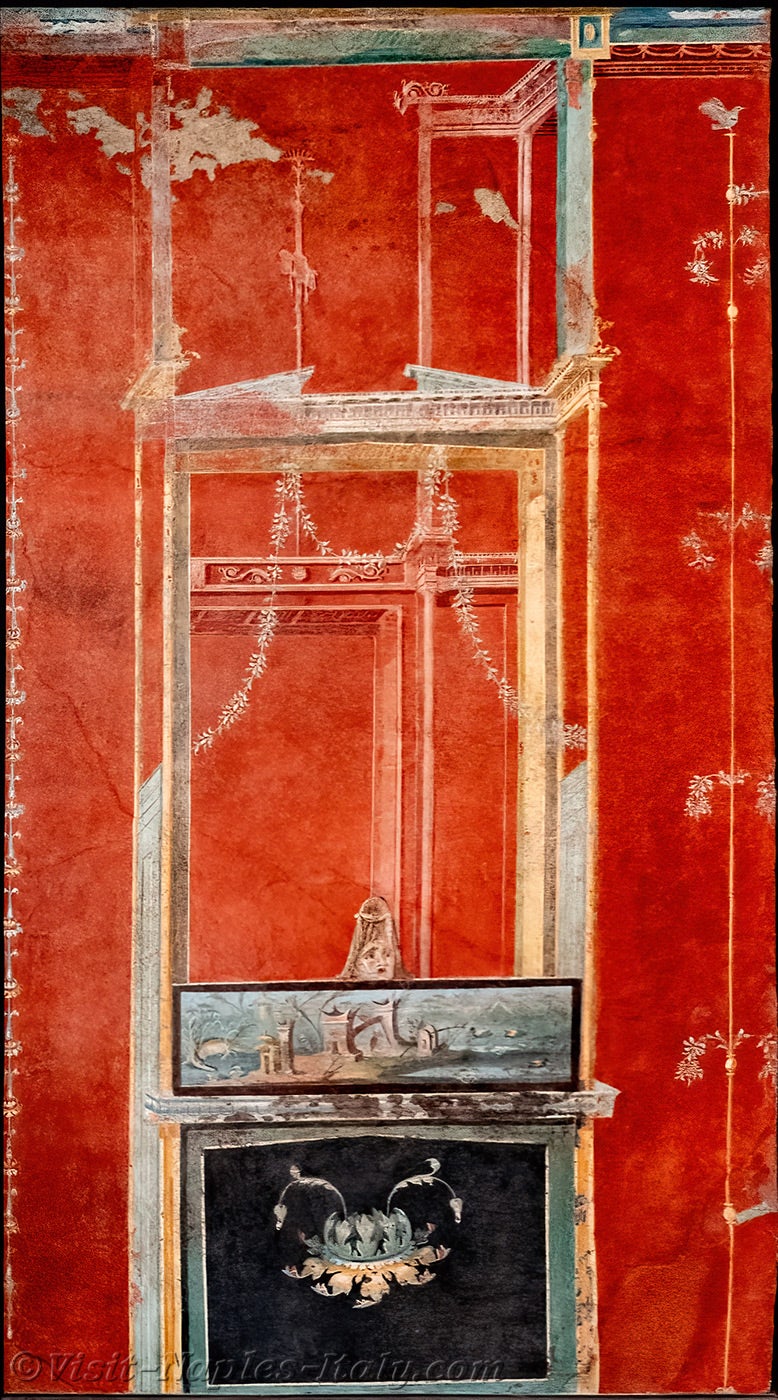
Egyptian landscape This fresco adorned the wall of the Porticus in the temple of the goddess Isis in Pompeii.
It features garlands of leaves and friezes with an architectural style painted on a red background.
A relatively elaborate floral decoration is painted on a black background at the bottom of this fresco.
Just above, an Egyptian landscape is depicted, topped by a theatrical mask.
It depicts a small peninsula on the banks of the Nile, where there is an Egyptian temple consisting of two towers, each topped by a roof with four pointed and slender corners.
The two towers are connected by a long arch.
A large bird stands under the arch, whilst another is perched on top of it.
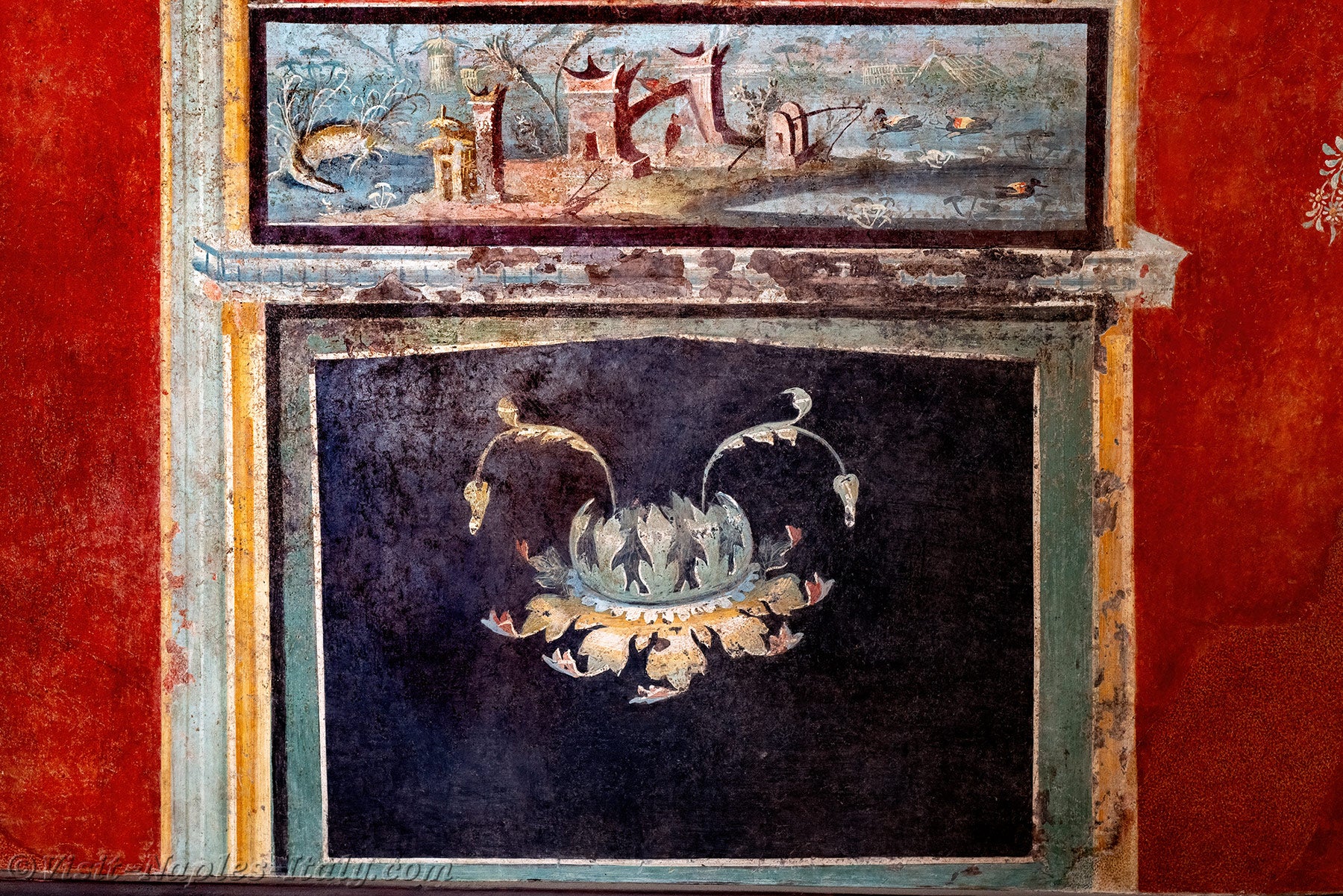
Egyptian landscape In the background, you can also see palm trees growing behind the temple.
Closer to us, we can see a sacred column whose roof resembles that of the towers.
Next to it is a hut built from plant materials, such as straw or reeds, and painted yellow.
On the right, a few ducks are swimming peacefully near the temple.
On the other hand, to our left, apparently on the lookout and hidden in the reeds, we can see a Nile crocodile with a long, pointed snout.
Nile Landscape, Pompeii, Temple of Isis, Porticus
Fresco - Water-based pigments on Coating - 45-79 ADLike the previous one, this fresco adorned the wall of the Portico in the temple of the goddess Isis at Pompeii.
This time, the upper frieze has been preserved and remains in perfect condition.
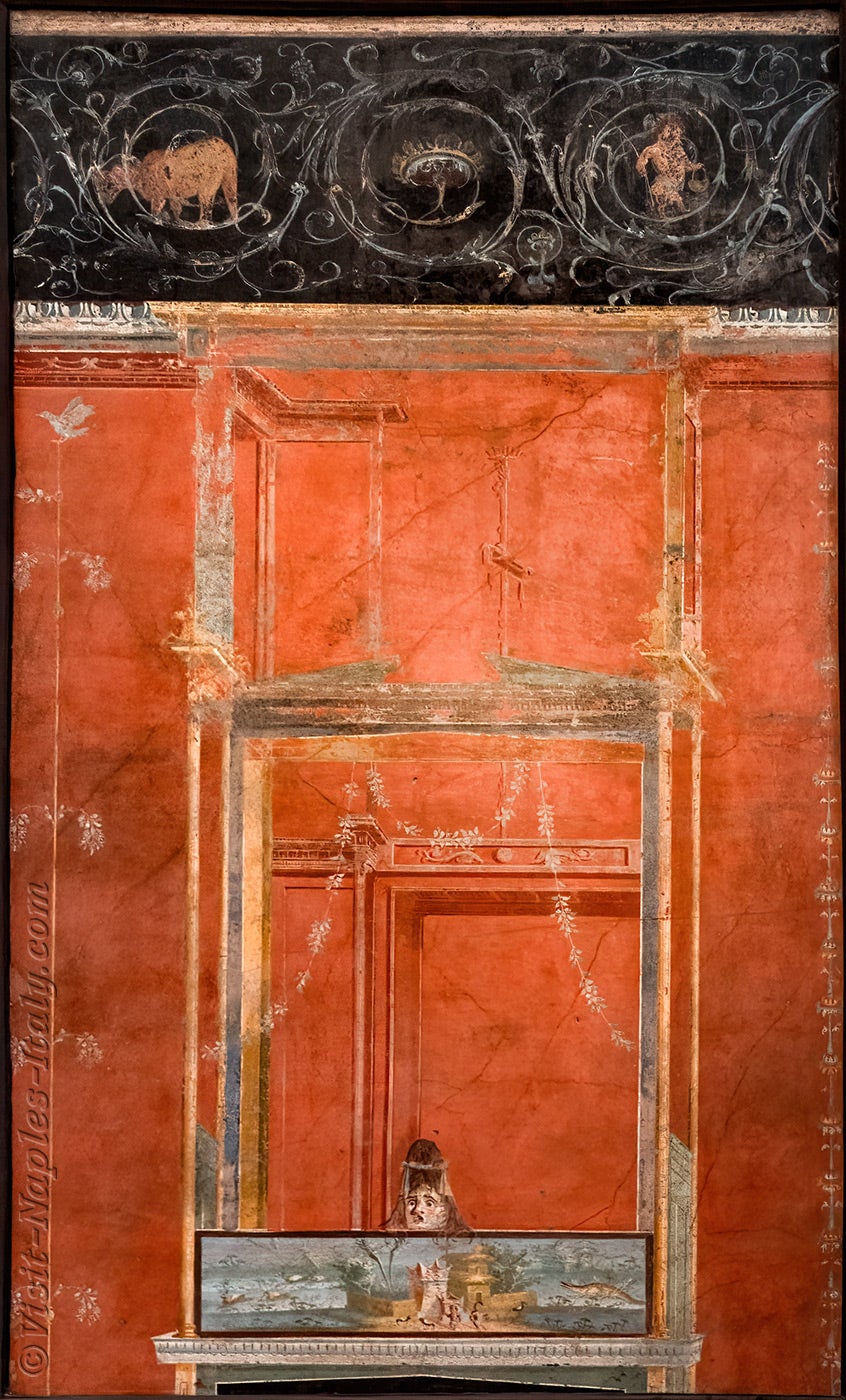
Nile landscape This frieze, adorned with delicate plant garlands, was painted on a black background with remarkable finesse, lightness and elegance.
At the centre of the circles formed by the plant garlands, we can see, on the left, a cow, in the centre, a decoration similar to that at the bottom of the previous fresco, and, on the right, a figure. The latter is a dwarf holding a fishing rod in his right hand and a small basket in the other.
Here we find the architectural decoration, painted on a red background.
The lower part of the fresco is particularly interesting and is in excellent condition.
Above a Nile landscape, the artist has painted a theatrical mask with its mouth wide open and eyes wide open.
He has paid close attention to detail by having the character’s long hair fall over the edge of the frame of the landscape, thereby creating a sense of depth in his work.
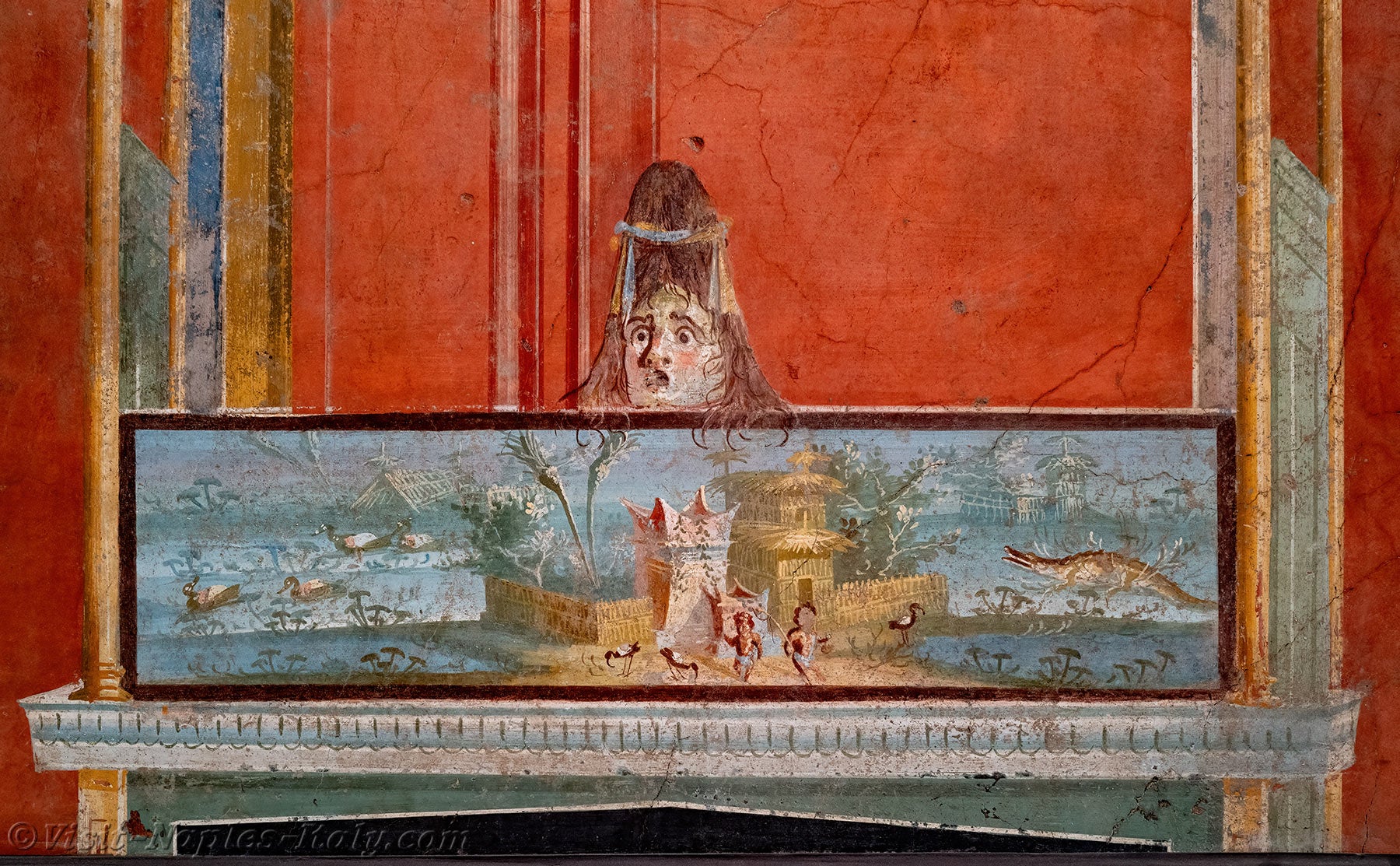
Nile landscape In this Egyptian scene, we see two dwarves clad in nothing but a simple loincloth.
The one on the right has the same features as the one depicted against the black background of the upper fresco: a fishing rod and a small basket.
The one on the left seems to be playing with the sacred Nile ibises at his feet.
Behind them, one can make out a small temple as well as a wooden structure.
A garden adorned with trees and palm trees is surrounded by a wooden fence.
To the left of the scene, four ducks are paddling, whilst, hidden in the reeds, stands a large Nile crocodile, its jaws wide open.
Fountain in a garden with a bird, Pompeii
Fresco - Water-based pigments on Coating - 45-79 ADThis beautiful fresco depicts a garden in Pompeii.
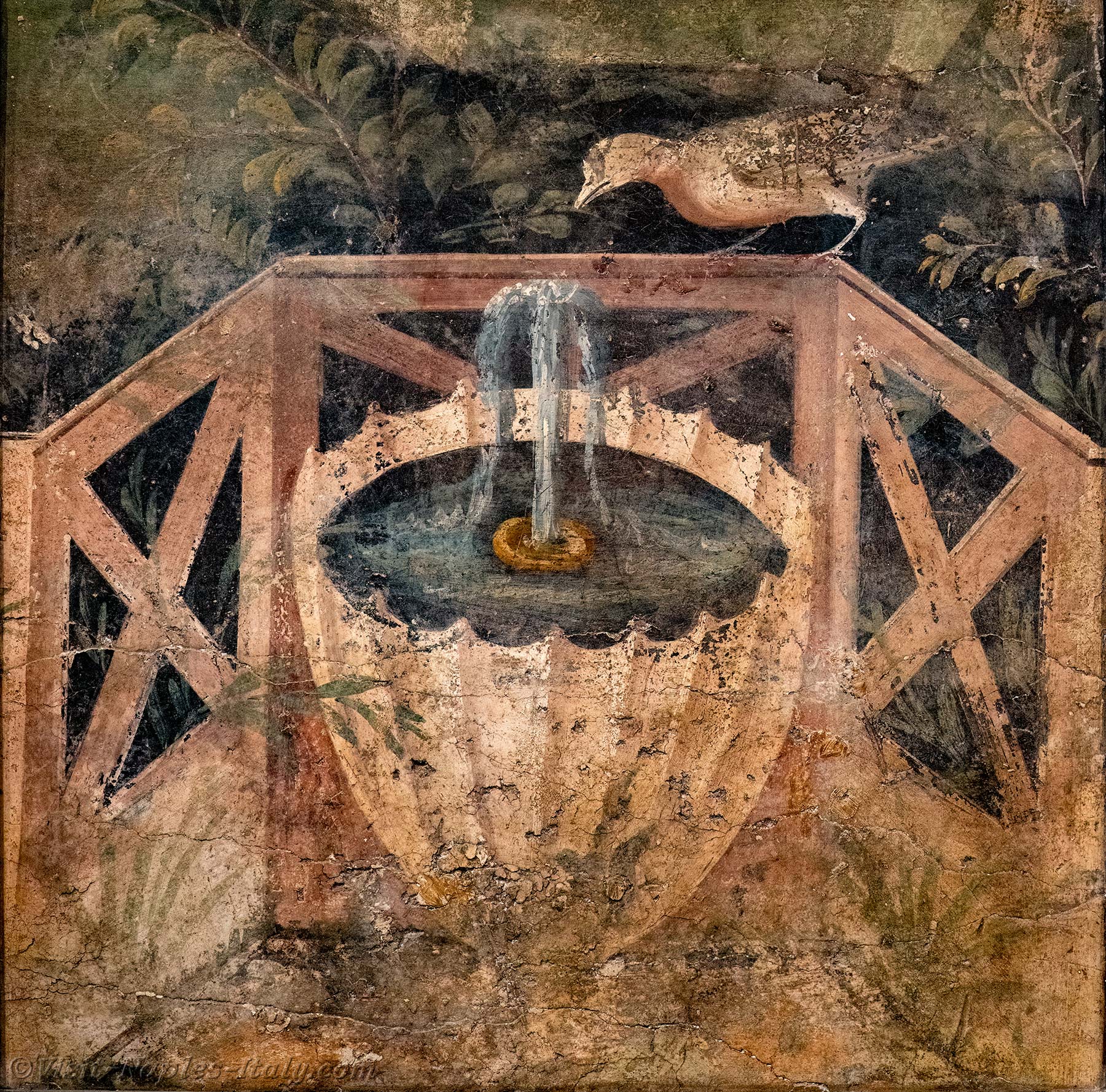
Fountain in a garden with a bird In the foreground stands an elegant marble fountain, adorned with fluting and surrounded by a wooden latticework fence.
A bird, perched on the fence, approaches the fountain to drink from its spout.
Not only can one admire the beauty of the basin of this fountain, but also the technical prowess it represents.
At the time, there were no pumps yet to supply water to the fountains.
What you see here is therefore the result of the Romans’ ingenuity, who were capable, as they demonstrated in their thermal baths, of controlling the water networks of the city and its dwellings.
This feat is all the more remarkable given that it was achieved in Pompeii, in a particularly dry climate.
Architectural landscape, Pompeii
Fresco - Water-based pigments on coating (24 × 38 cm) 50-79 ADThis mural, discovered in Pompeii, shows two small temples on the left-hand side of the scene.
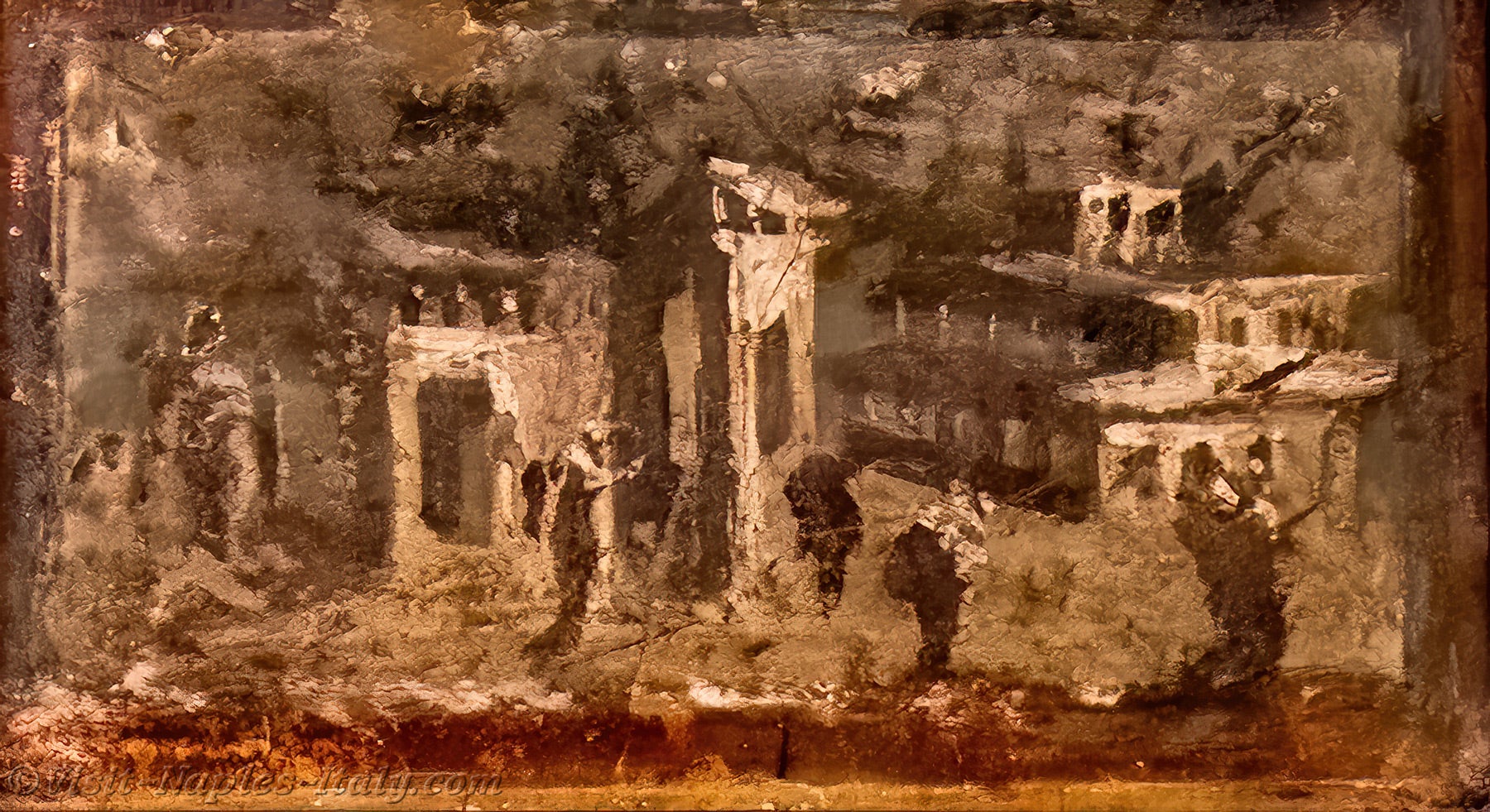
Architectural landscape They are small temples when compared to the size of the figures depicted around them.
On the right, you can see a Pompeian villa built on a basilica-style plan, surrounded by columns on the ground floor and first floor.
A second floor, smaller in size, opens onto a large terrace covering the first floor.
Note the play of light and shadow and the perspective, which bear witness to the high standard achieved by the artists of the time, over 2,000 years ago.
Architectural and river landscape
Fresco - Water-based pigments on plaster (15 × 44 cm) 1-37 ADThis small fresco, discovered in Pompeii on the same wall as the next one, depicts an architectural and river landscape.
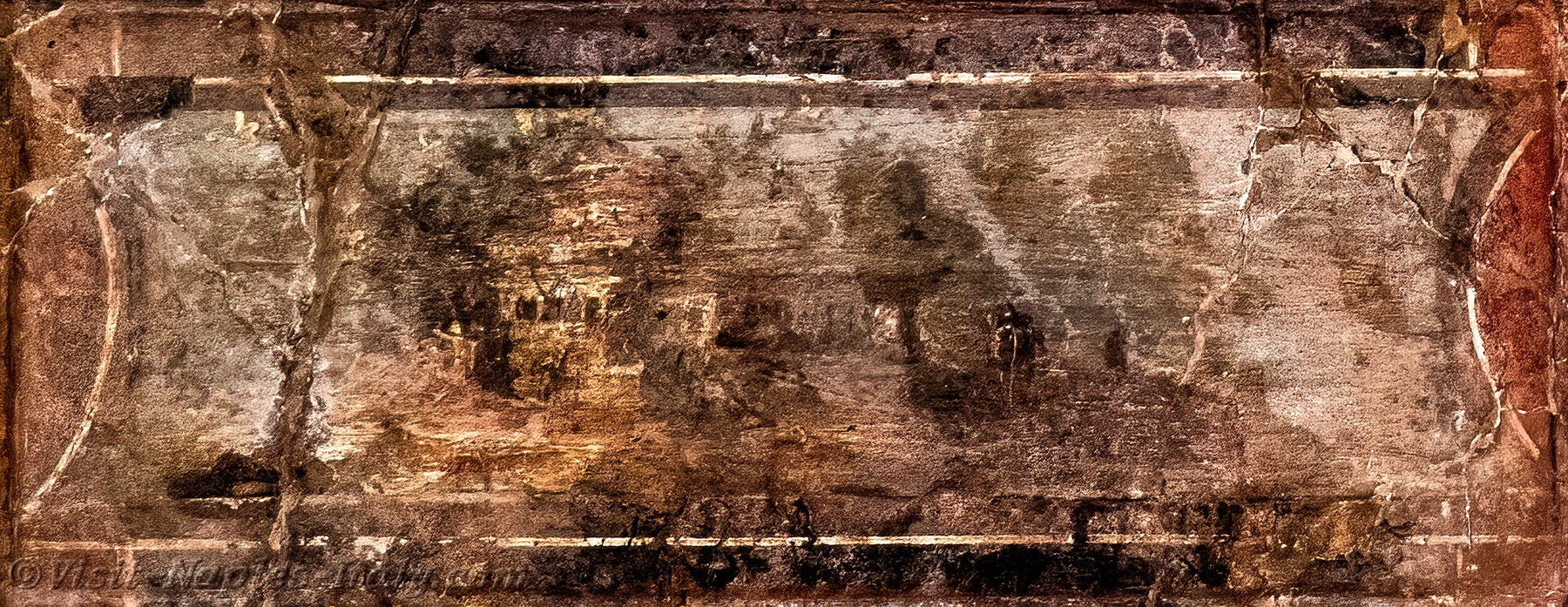
Architectural and river landscape The fresco is quite damaged, but it still allows for an analysis of the scene.
On the left, surrounded by trees, stands a villa rising several storeys high, apparently at least three.
An other building of similar size is visible.
On the right, two figures stand side by side, looking out at the river.
Architectural and river landscape, Pompeii
Fresco - Water-based pigments on coating (17 × 42 cm) 45-79 ADThis fresco, discovered in Pompeii, adorned the same wall as the previous one.
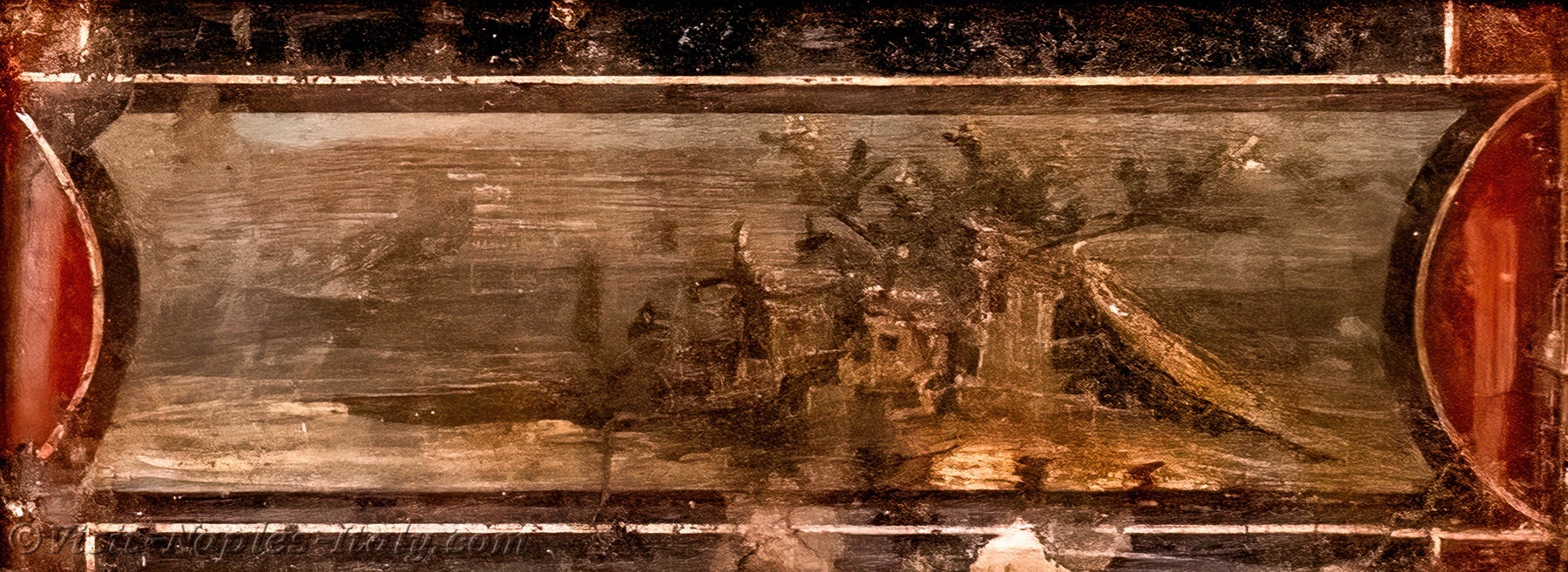
Architectural and river landscape It depicts an architectural and river landscape.
Fortunately, this fresco is in much better condition.
In the centre, surrounded by trees, we can see three small temples built side by side on a slight rise.
Further away, we can make out buildings, probably villas, looming on the horizon.
Architectural landscape with a fisherman, Pompeii
Fresco - Water-based pigments on Coating (15 × 26 cm) 45-79 AD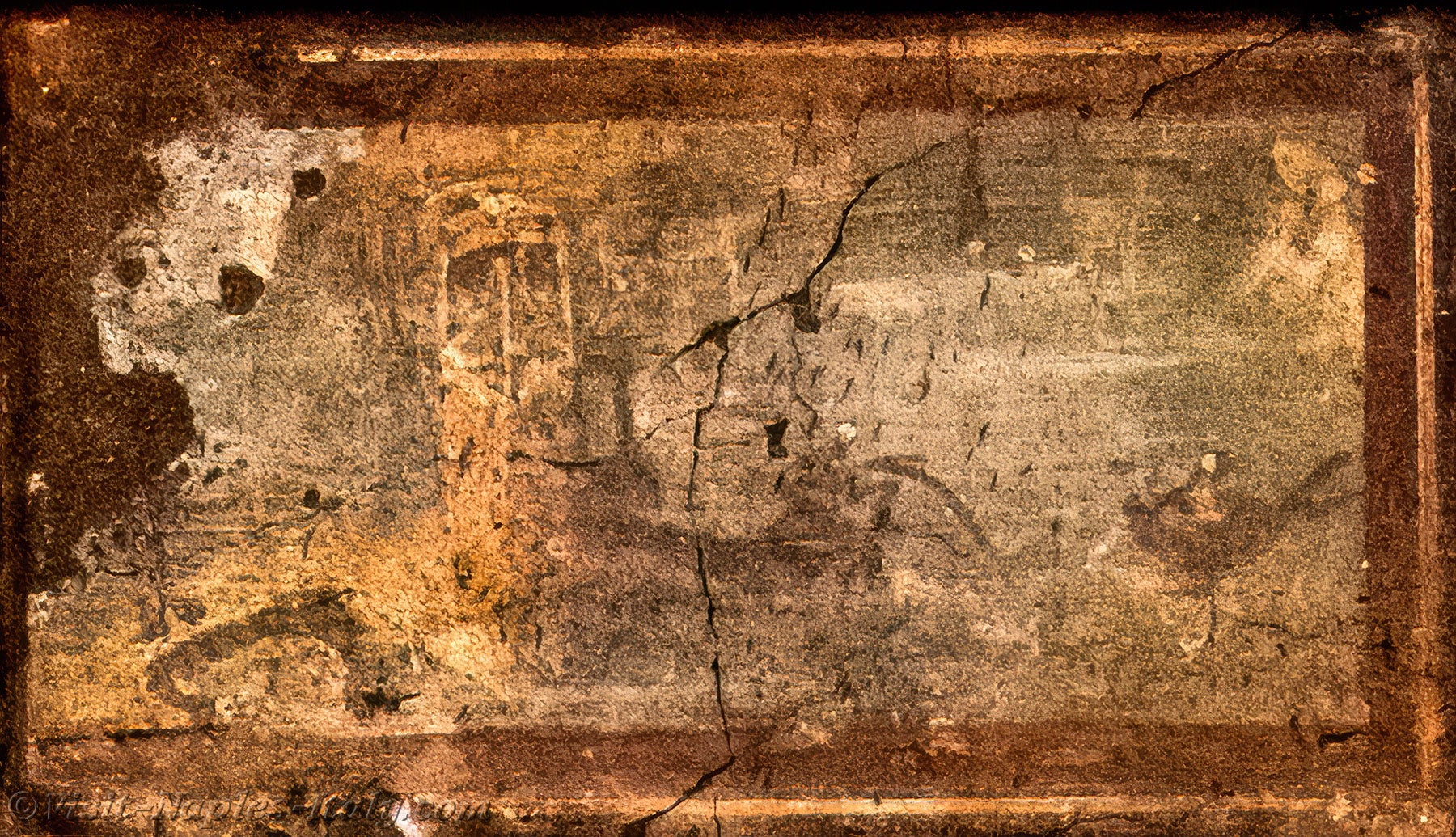
Architectural landscape with a fisherman In the centre of this small painting discovered in Pompeii, we can see a circular temple adorned with columns.
Although the fresco is of average quality, we can make out that this temple is situated on a small island.
Indeed, to the right of the temple, one can see a man sitting and fishing.
In front of him, one can make out a small boat from which it appears that its occupant is also fishing.
Egyptian-inspired architectural landscape, Pompeii
Fresco - Water-based pigments on coating (24 × 35 cm) 50-79 AD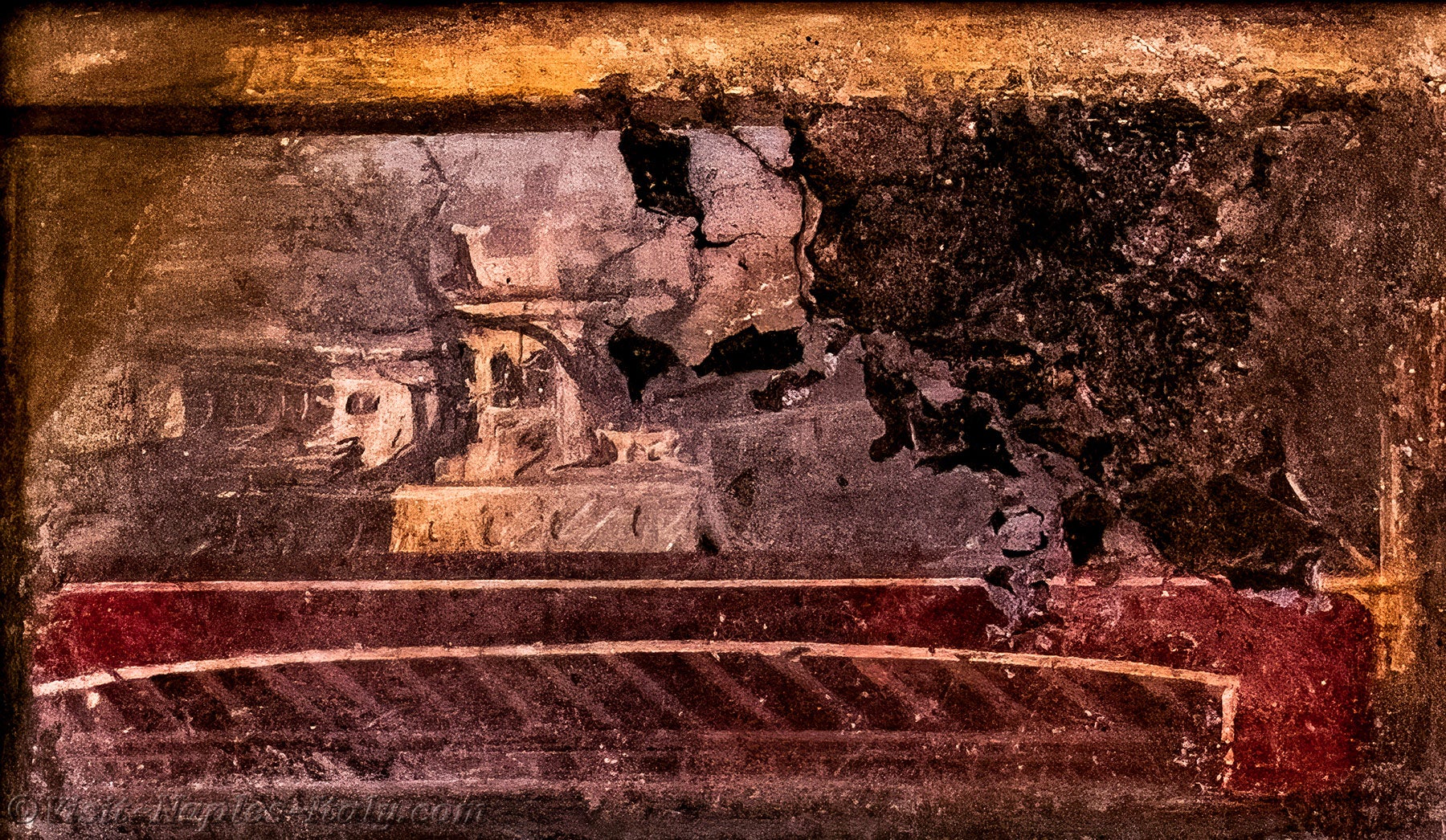
Egyptian-inspired architectural landscape This fresco, discovered in Pompeii, depicts a landscape that differs from others, characterised by a style that was popular at the time.
Indeed, the architecture of the buildings depicted is inspired by Egypt.
It is interesting to note that a temple dedicated to Isis, an Egyptian deity, existed in Pompeii.
Here we see a small temple followed by a single-storey building. All these buildings are surrounded by trees.
Landscapes Boscoreale | Pompeii | Herculaneum
Frescoes Mythology | Portraits | Life Leisure | Animals | Religion | Landscapes | Decoration
Artworks Sculptures | Frescoes | Eroticism
MANN Artworks Schedule Tickets Location | Authorizations
Back to Top of Page