

Royal Artworks Schedule Tickets Location | Authorizations
Art History | Staircase | Ambassadors | Captain | Anterooms | Bedrooms | Flemish | Throne | Halls | Murat | Chapel | Theatre | Nativity
The Palatine Chapel at the Royal Palace of Naples in Italy
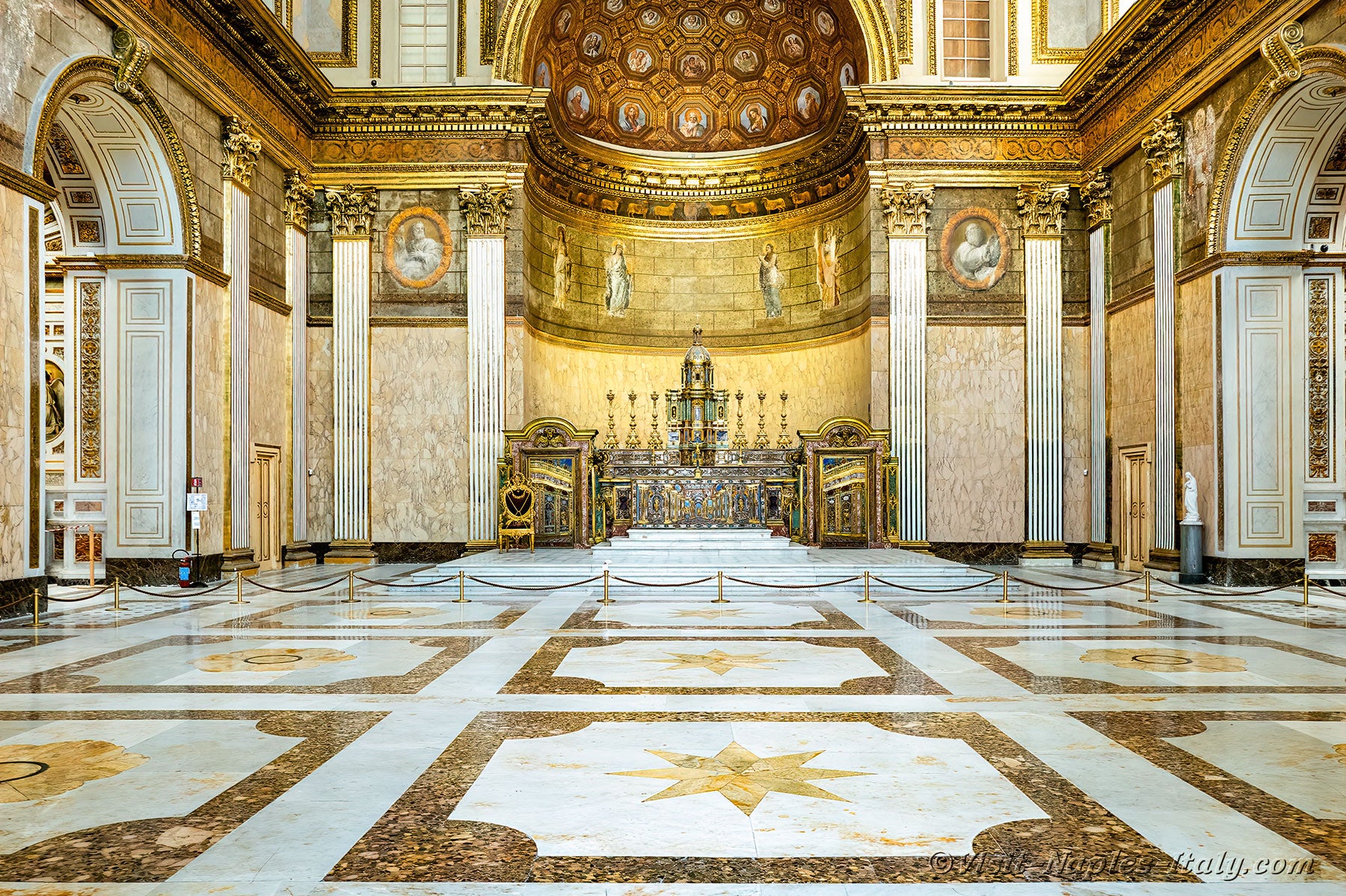
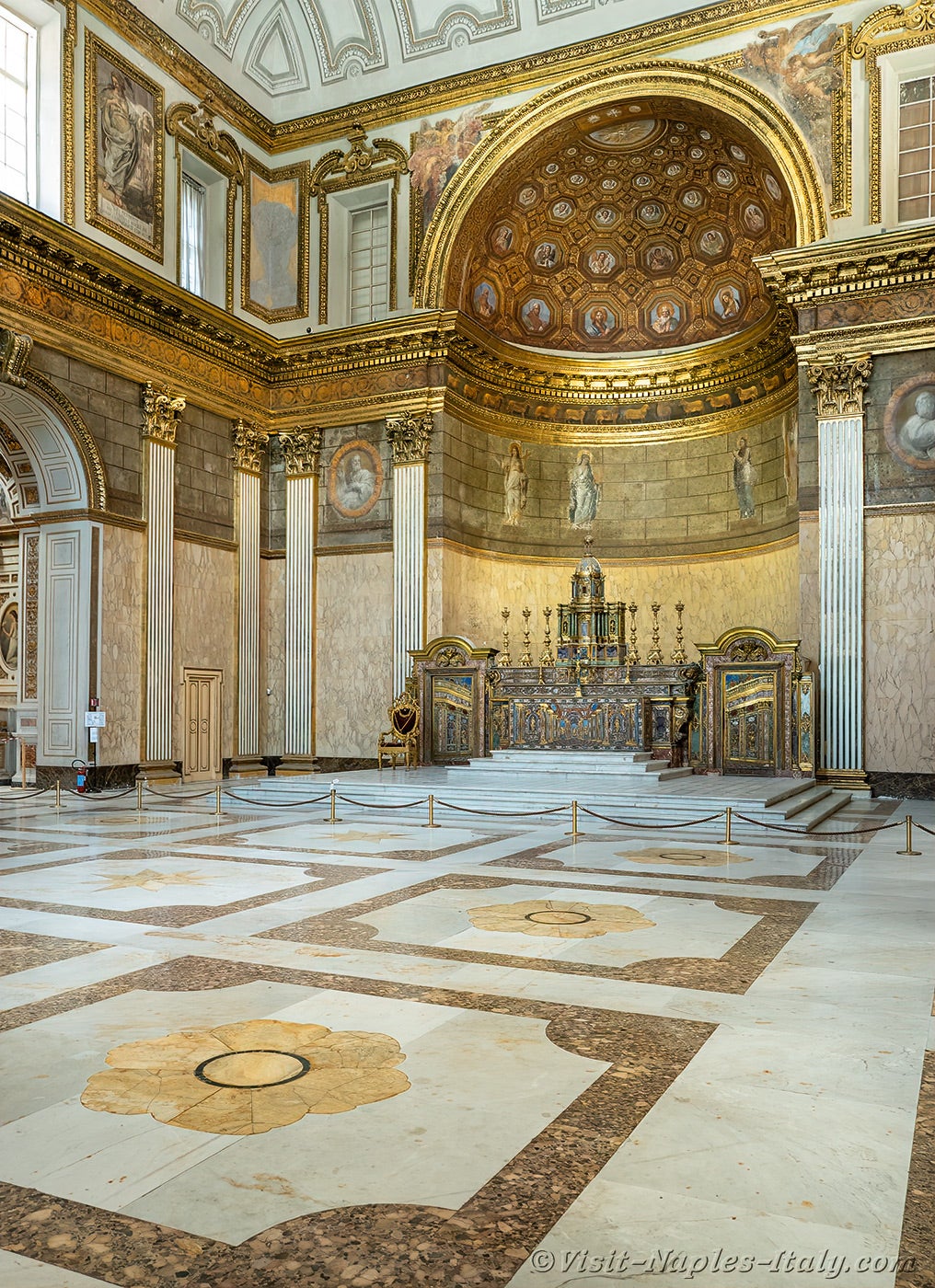
The Palatine Chapel The construction of a royal Chapel was included in Domenico Fontana’s original palace design of 1600.
However, it was not until 1644 that the architect Francesco Picchiatti, who designed the palace’s grand staircase, was commissioned to embellish it.
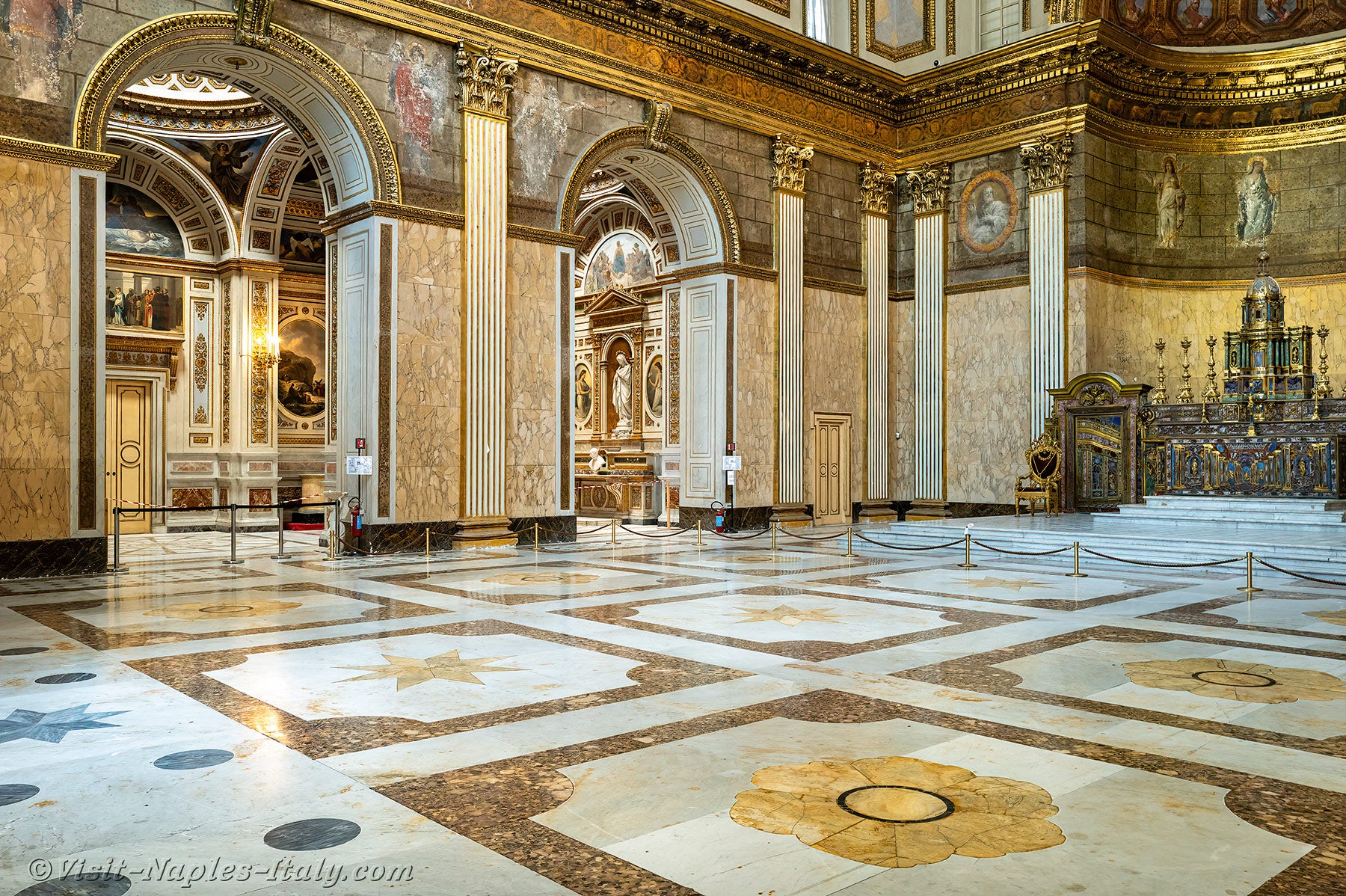
The royal chapel, comprising a central nave and six side chapels, was inaugurated in 1646.
The frescoes in the apse conch were painted by Giovanni Lanfranco.
The frescoes by Giacomo del Po in the central nave
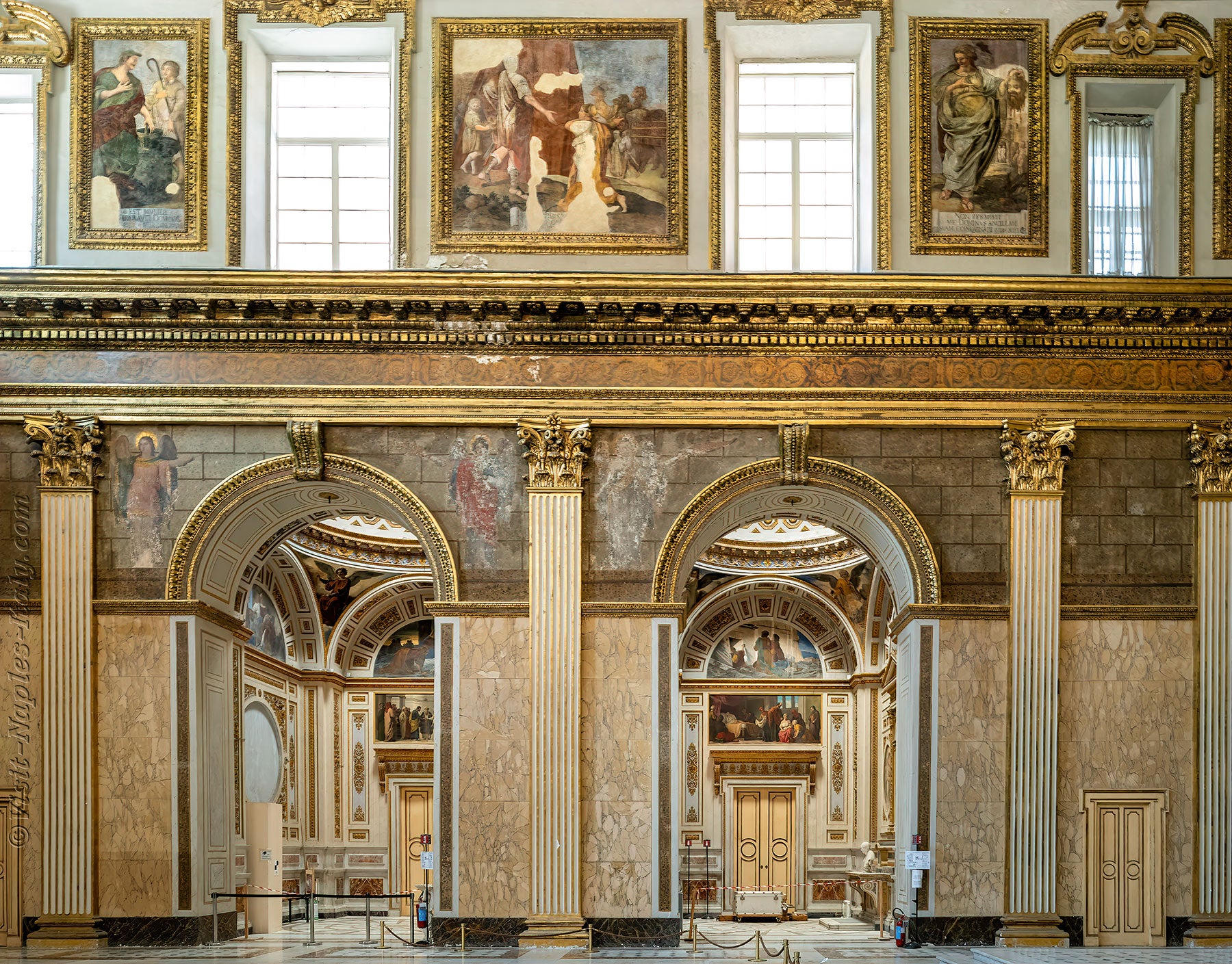
Frescoes by Giacomo del Po The frescoes located between the windows of the central nave depict scenes from the Old Testament:
“Isaac and Jacob”,
“The Sacrifice of Isaac”,
“Judith and the Head of Holofernes”,
“Adam and Eve Expelled from the Garden of Eden”
or also :
“Adam and King David”.
These frescoes were painted by Giacomo del Po in 1707, at the beginning of the 18th century.
The semi-precious stone inlaid altar in the Royal Chapel of Naples
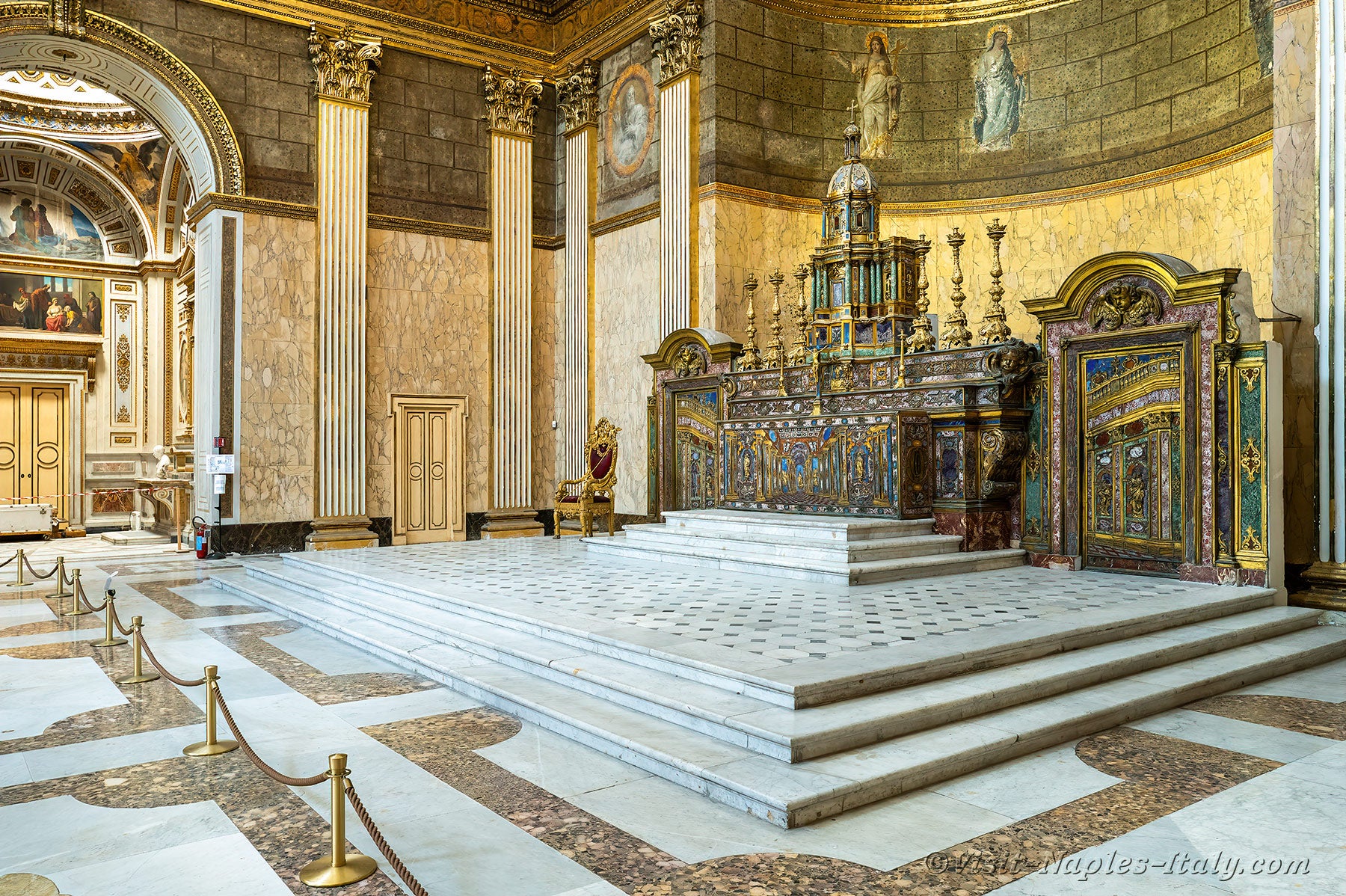
Altar of the Palatine Chapel During the Napoleonic Regency, when the Royal Palace was redecorated in the Neoclassical style, an altar created in 1674 by Dioniso Lazzari was moved to the Royal Chapel.
This was the altar of the central nave of the church of Santa Teresa degli Studi in Naples.
This transfer was directly linked to the suppression of religious orders decreed in 1806 by Joseph Bonaparte, King of Naples.
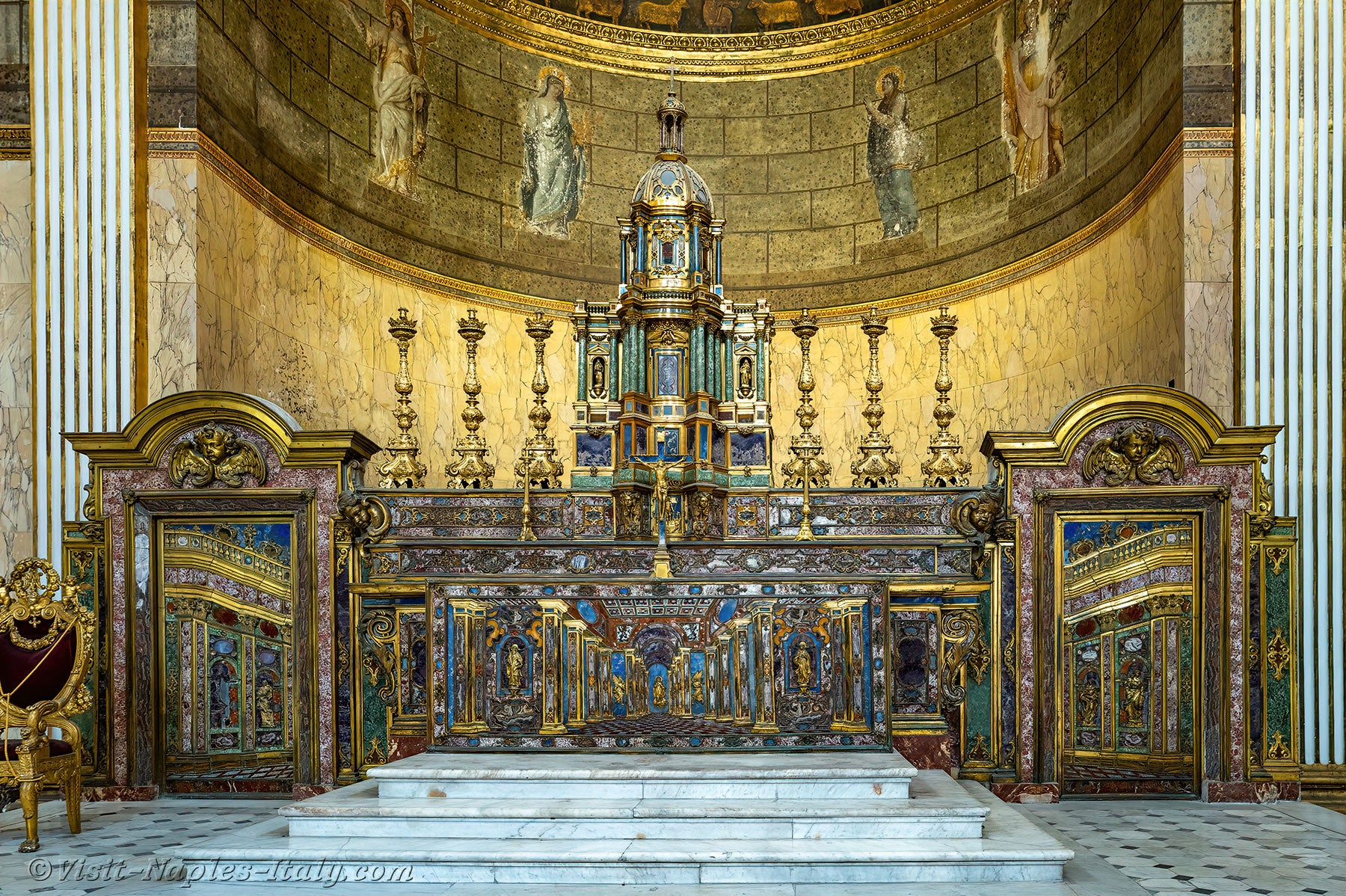
Altar of the Palatine Chapel This altar is exceptionally beautiful; the inlay work was created using various semi-precious stones, including onyx, lapis lazuli, agates, jasper and amethysts.
The whole is highlighted by gilded copper mountings on the pall and the side doors, which depict a temple with its columns, niches and balustrades, with two angels flanking Saint Teresa at the back of the temple.
The ciborium contains a panel of semi-precious stones inlaid by the Opificio delle Pietre Dure in Florence; it was a gift from Cosimo III to the Order of Saint Teresa.
Art History | Staircase | Ambassadors | Captain | Anterooms | Bedrooms | Flemish | Throne | Halls | Murat | Chapel | Theatre | Nativity
Royal Artworks Schedule Tickets Location | Authorizations
Back to Top of Page