

Capodimonte Artists Schedule Tickets Location | Authorizations
Artists Palace Gardens | Bellini | Botticelli | Bronzino | Brueghel | Canova | Caravaggio | Gentileschi | Giambologna | Giordano | Greco | Lotto | Luini | Mantegna | Masaccio | Masolino | Michelangelo | Palma | Parmigianino | Porta | Raphael | Reni | Titian | Van Dyck | Warhol
Caravaggio (1571-1610), The Flagellation of Christ, at the Capodimonte Museum in Naples
Caravaggio “The Flagellation of Christ”
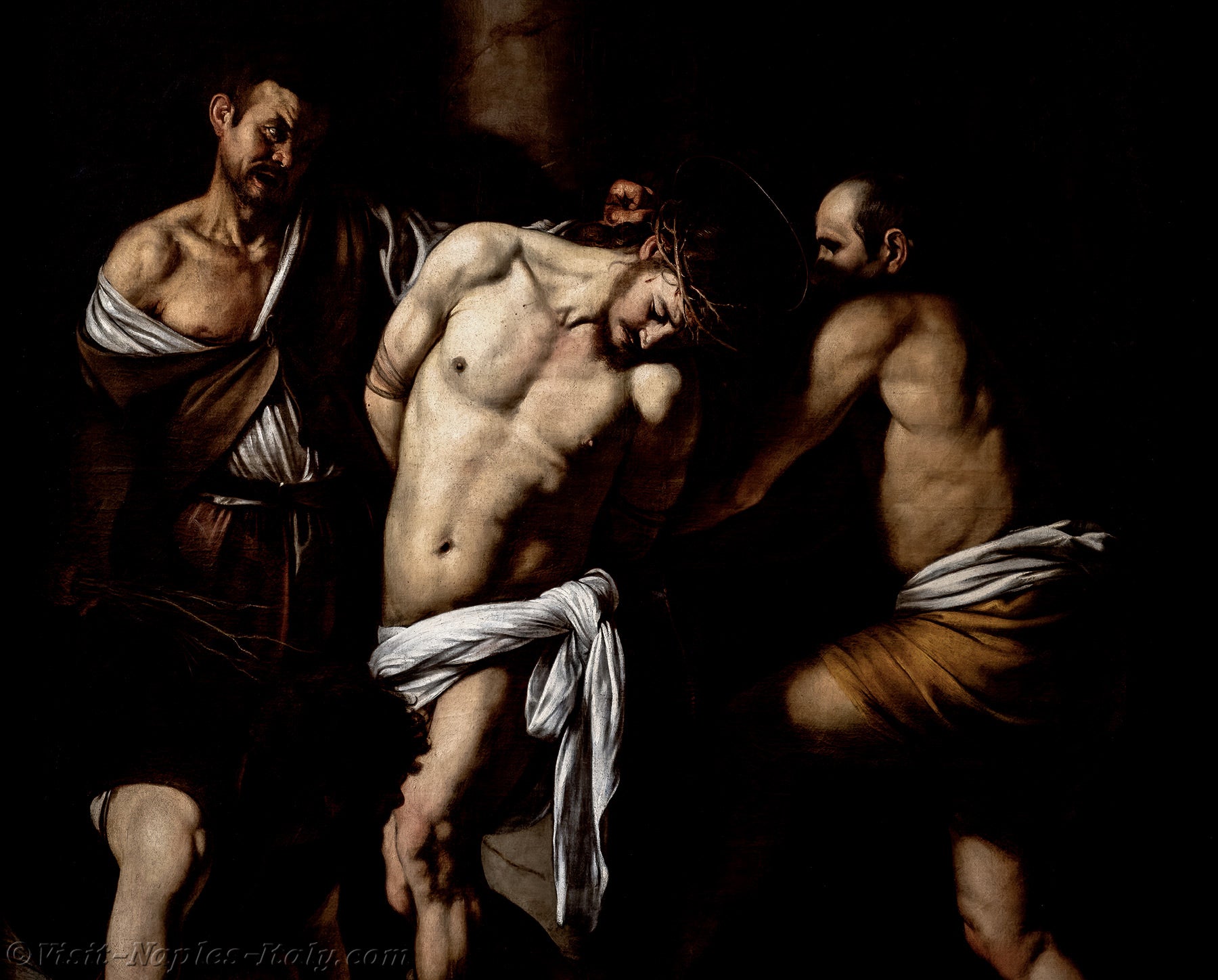
The Flagellation of Christ Painting - Oil on canvas (286 x 213 cm) 1607
Christ is depicted bound to a marble column to be scourged.
His body is naked, apart from the white cloth tied around his waist.
Cruelty and brutality are evident on the face of the executioner who clutches a tuft of Christ’s hair in his left fist, to force him to lower his head and lean forward whilst he is being tied to the column.
In his right hand, he is already clutching the branches with which he is about to flagellate Christ.
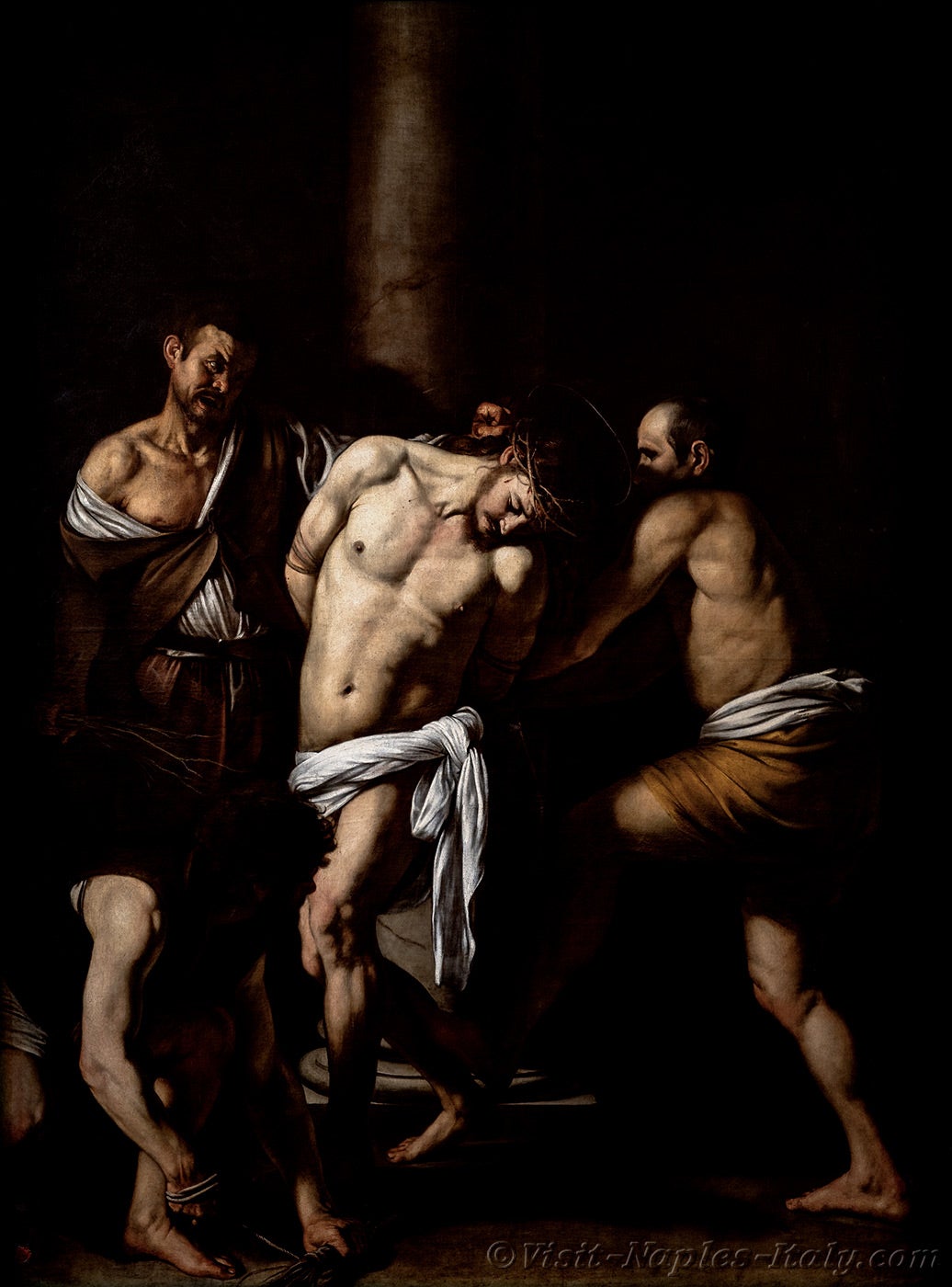
The Flagellation of Christ The executioner on the right of the painting is leaning on one foot to tighten the ropes binding Christ to the marble column.
At Christ’s feet, the third executioner is tying together another handful of twigs to make a whip.
The executioners and Christ are barefoot.
Christ, though roughly handled and shaken, offers no resistance; his eyes are downcast, he submits to his fate, he seems indifferent to what is happening, ready to face his destiny.
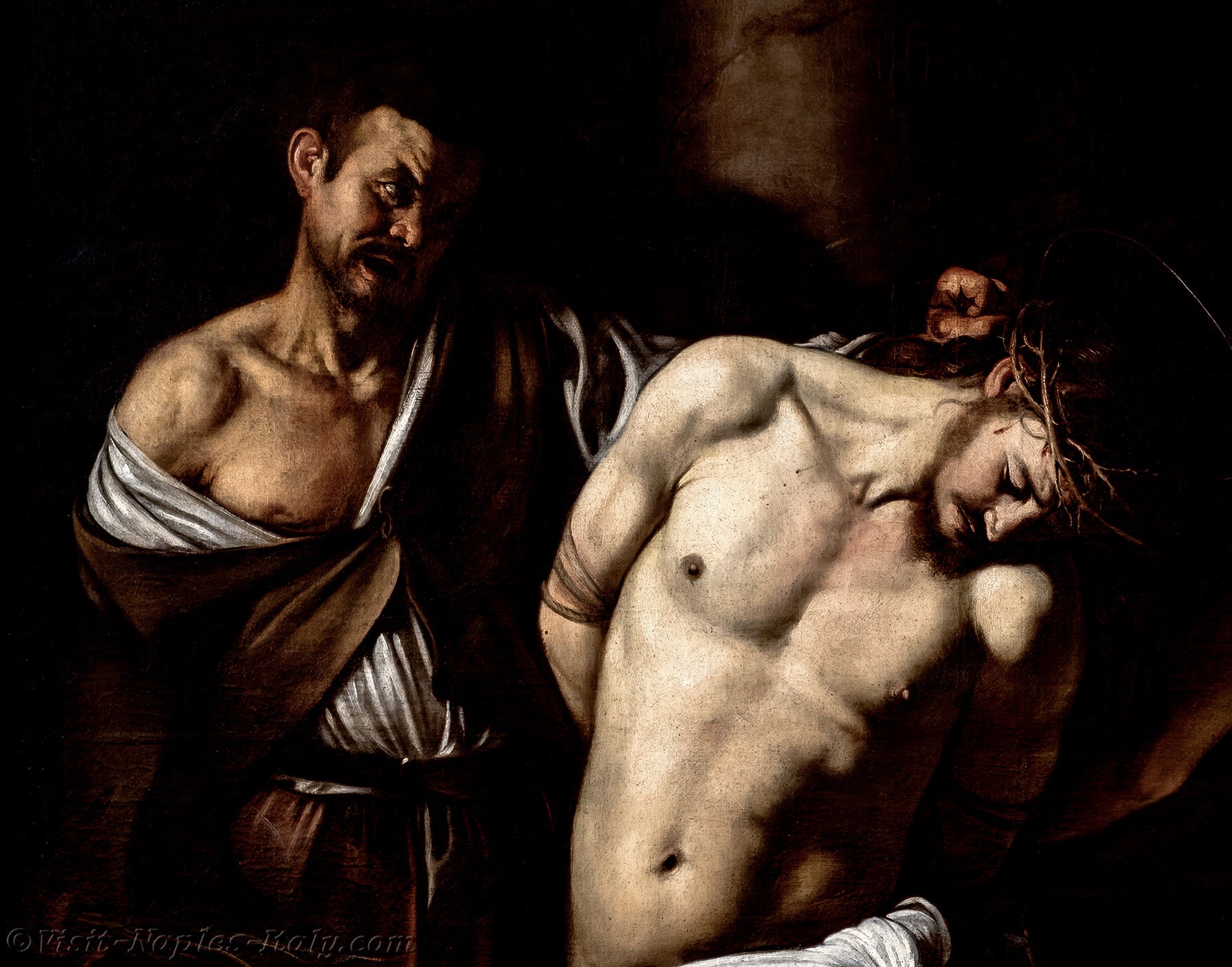
The Flagellation of Christ His lack of reaction is evident even in the way his upper body leans to one side, whilst his slightly bent legs are turned in the opposite direction, as if he were letting himself fall held back only by the ropes tying him to the marble column.
A few drops of blood are already beading on his forehead, beneath the crown of thorns.
Christ and his executioners are depicted in semi-darkness which highlights the paleness of the flesh and particularly that of Christ, whose muscular body appears luminous in comparison to those of his executioners.
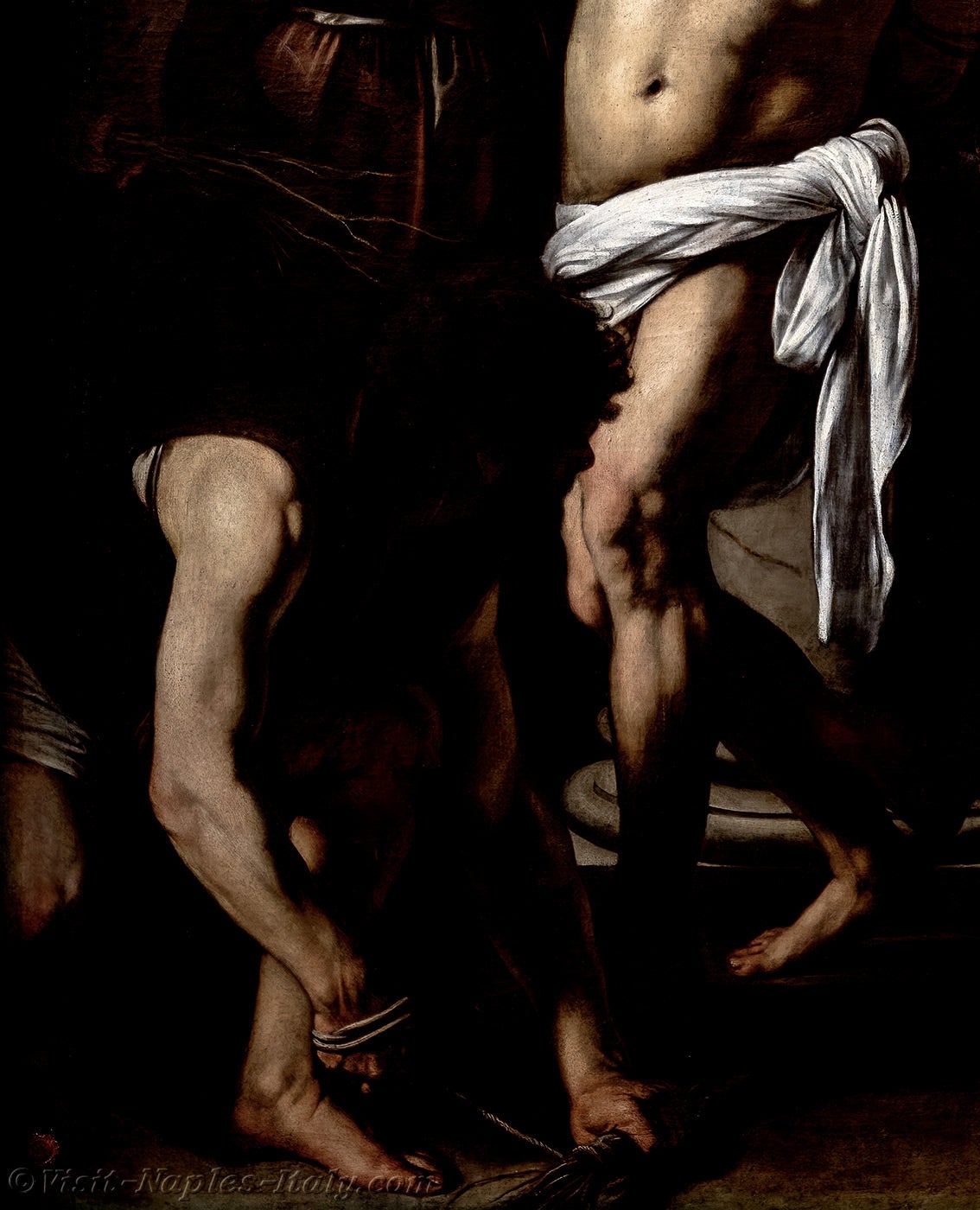
The Flagellation of Christ Caravaggio presents this flagellation of Christ in the simplest and most realistic manner possible: the loneliness and helplessness of a victim surrounded by his tormentors as they prepare his torture.
We hear no cries, there are only the executioners and the condemned man; it is the near-intimacy of the torture that preceded his death by crucifixion.
This simplicity, this austerity in chiaroscuro painted by Caravaggio reveals the horror and the power of evil at the root of the drama unfolding before us.
Artists Palace Gardens | Bellini | Botticelli | Bronzino | Brueghel | Canova | Caravaggio | Gentileschi | Giambologna | Giordano | Greco | Lotto | Luini | Mantegna | Masaccio | Masolino | Michelangelo | Palma | Parmigianino | Porta | Raphael | Reni | Titian | Van Dyck | Warhol
Capodimonte Artists Schedule Tickets Location | Authorizations
Back to Top of Page