

MANN Artworks Schedule Tickets Location | Authorizations
Artworks Sculptures | Frescoes | Eroticism
Sculptures Mythology | Persons | Animals | Bas-relief
Mythology Achilles | Aesculapius | Amazons | Aphrodite Venus | Apollo | Artemis | Athena Minerva | Atlas | Concordia | Danaids | Diomedes | Dionysus | Dirce | Flora | Ganymede | Hera Juno | Hercules | Hermes | Nike | Orestes | Psyche | River | Satyrs | Zeus
Sculptures of the goddess Concordia and the priestess Eumachia at the Archaeological Museum of Naples
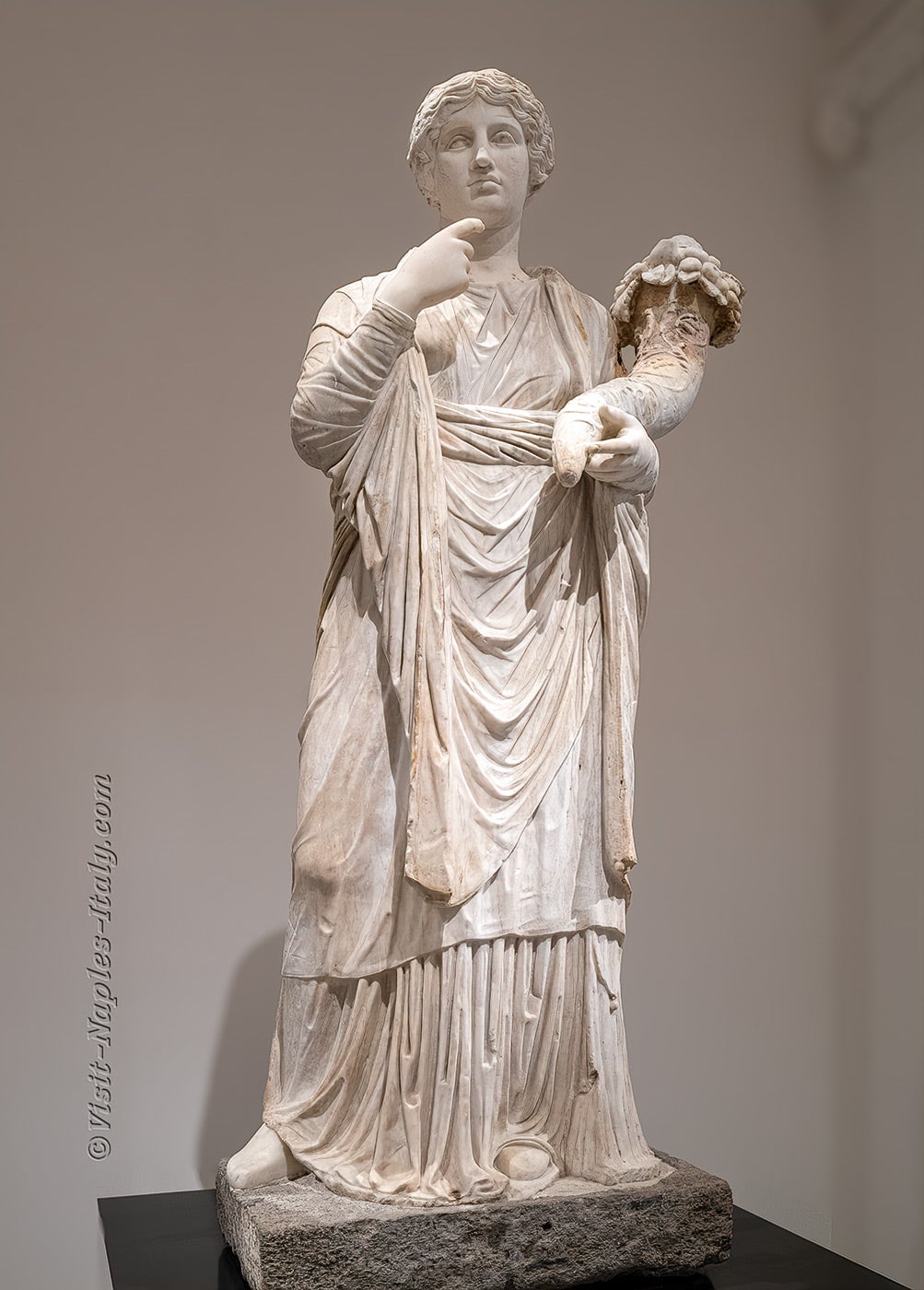
Concordia, building of Eumachia, Pompeii
Sculpture - Marble (Height 216 cm) First half of the 1st centuryDaughter of Jupiter and Themis (goddess of justice), Concordia is the goddess of peace and harmony, of harmony within households and human society.
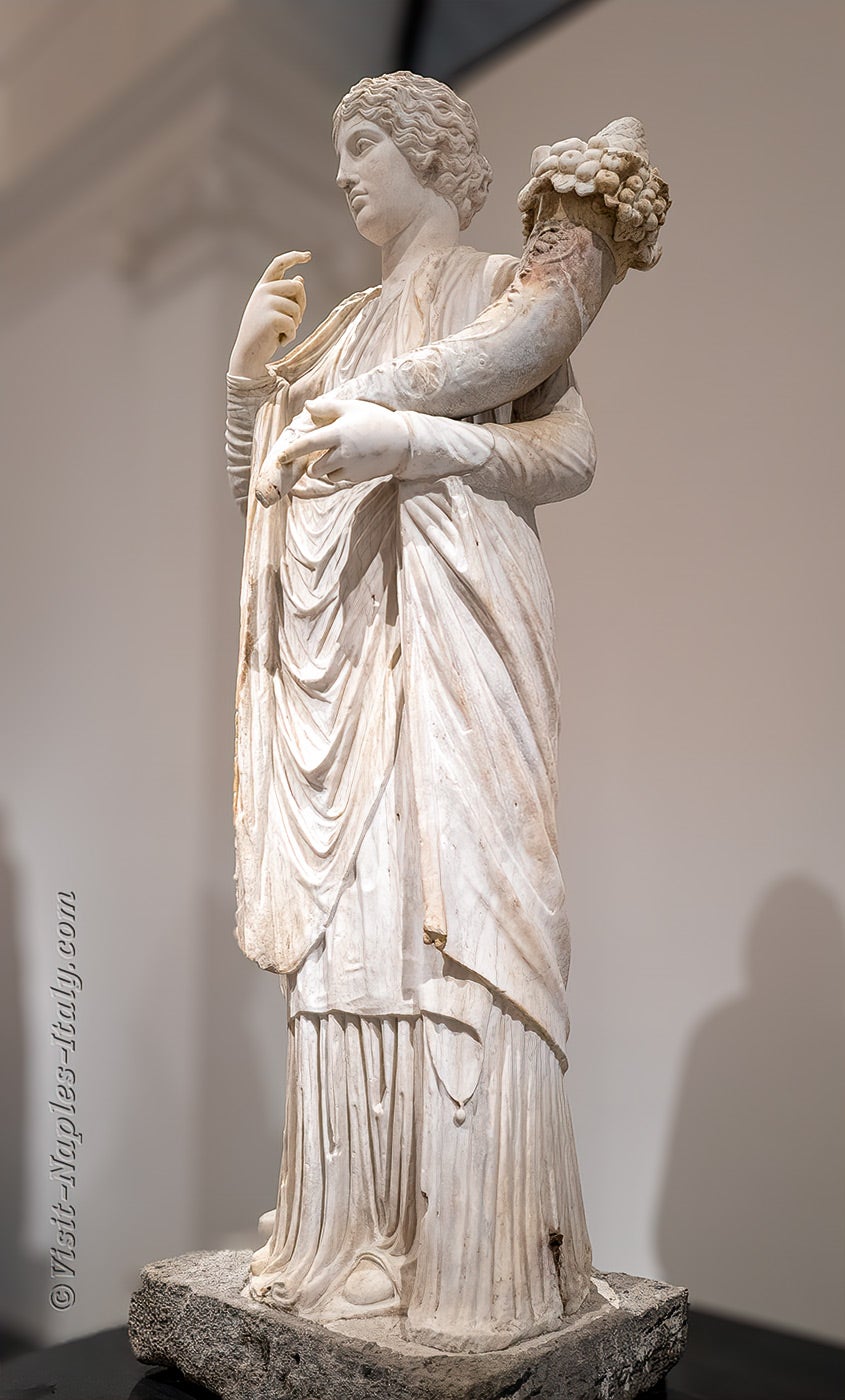
Concordia Here she is holding a cornucopia, a symbol of prosperity.
This sculpture was discovered in the building of Eumachia, a priestess from Pompeii.
Eumachia had a portico built in honour of Concordia and the piety of Augustus.
Concordia was given the name Augustia when the wife of Emperor Augustus had a new Temple of Concordia built in Rome to symbolise peace and harmony within the imperial family, as well as the alliance between the two cities.
A side named “Concordia” appeared on Roman coins, with a handshake on the reverse side.
The goddess Concordia thus served as a reminder that justice and harmony among the citizens of the empire ensured their peace and prosperity.
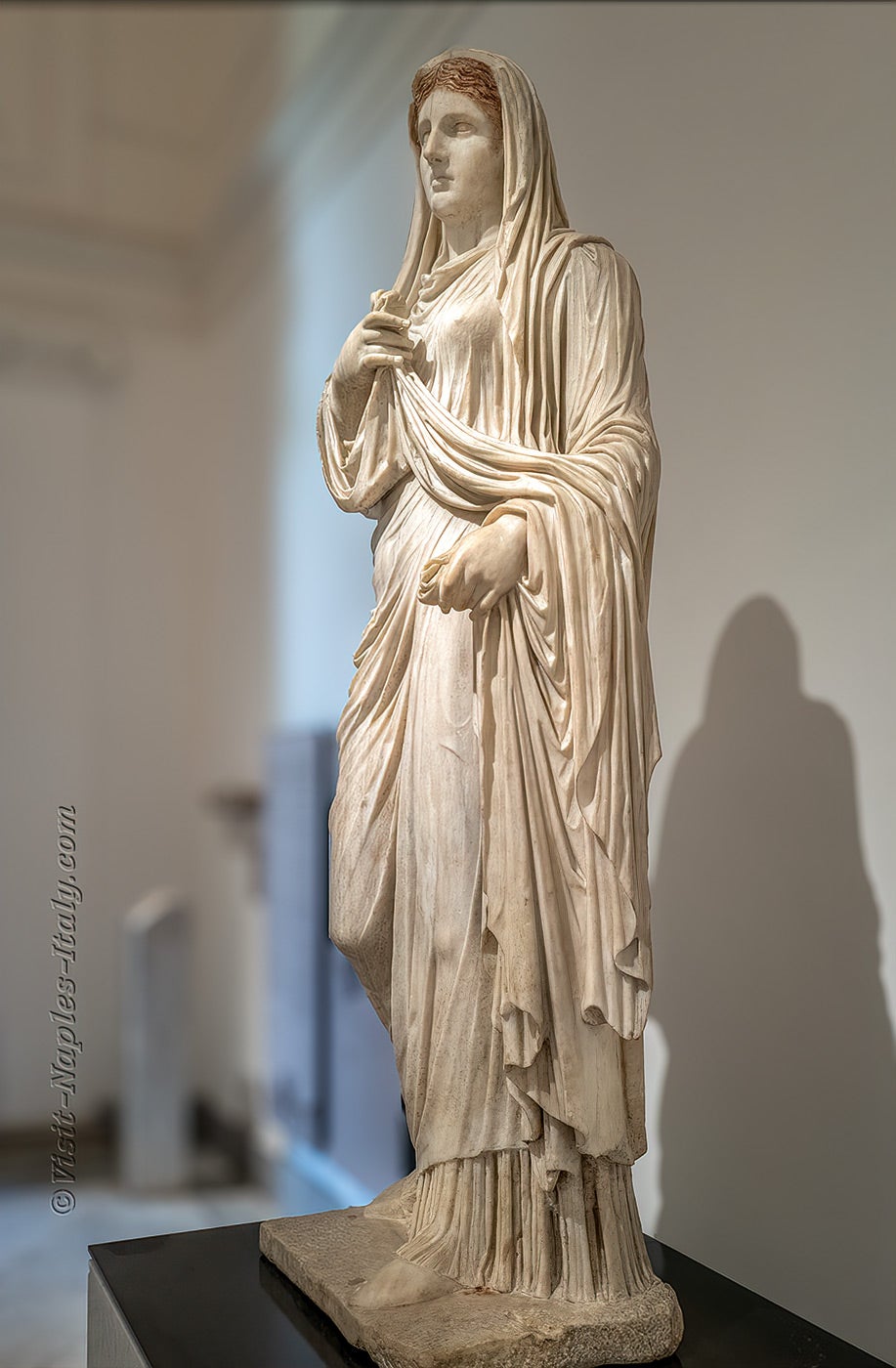
The Priestess Eumachia, Temple of Eumachia, Pompeii
Sculpture - Marble (Height 194 cm) First half of the 1st centuryTheBuilding of Eumachia is situated on the eastern side of the Forum, at the intersection with the Via dell'Abbondanza.
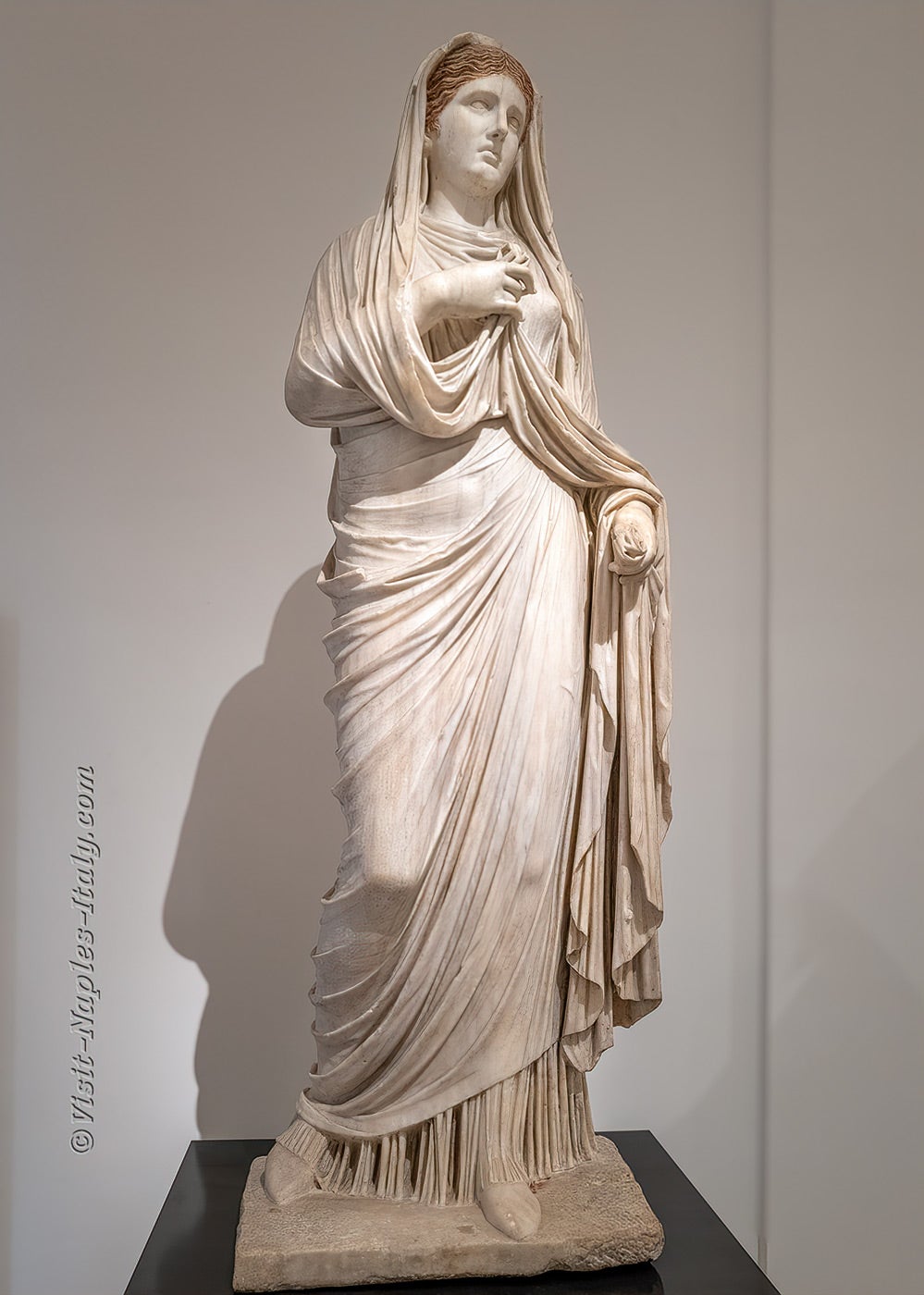
The priestess Eumachia Eumachia married a descendant of the noble Numistrii family, originally from Lucania, and, on her husband’s death, became the heiress to a major commercial enterprise focused on the wool industry.
It was as a member of a noble and wealthy family that she was able to become the high priestess of the most important cult in Roman Pompeii, that of Venus.
Thanks to her wealth, she undertook the construction of an imposing temple fifty metres long, known as the Temple of Eumachia.
She dedicated this temple to Concordia and Piety, in her own name and that of her son Marcus Numistrius Fronto.
On the statue of Eumachia there is an inscription indicating that it was erected in her honour by the toga bleachers of Pompeii, the fullones, in recognition of her role as priestess of Venus.
The statue depicts Eumachia with her head covered by her cloak, which was the custom for priestesses.
The hair of the statue was painted red. Her face is beautiful and serene.
Mythology Achilles | Aesculapius | Amazons | Aphrodite Venus | Apollo | Artemis | Athena Minerva | Atlas | Concordia | Danaids | Diomedes | Dionysus | Dirce | Flora | Ganymede | Hera Juno | Hercules | Hermes | Nike | Orestes | Psyche | River | Satyrs | Zeus
Sculptures Mythology | Persons | Animals | Bas-relief
Artworks Sculptures | Frescoes | Eroticism
MANN Artworks Schedule Tickets Location | Authorizations
Back to Top of Page