

MANN Artworks Schedule Tickets Location | Authorizations
Artworks Sculptures | Frescoes | Eroticism
Sculptures Mythology | Persons | Animals | Bas-relief
Mythology Achilles | Aesculapius | Amazons | Aphrodite Venus | Apollo | Artemis | Athena Minerva | Atlas | Concordia | Danaids | Diomedes | Dionysus | Dirce | Flora | Ganymede | Hera Juno | Hercules | Hermes | Nike | Orestes | Psyche | River | Satyrs | Zeus
The Satyrs at the Archaeological Museum of Naples, Italy
The Satyrs, also known as Silenus, were nature spirits who formed part of Dionysus’s retinue.At first, they were depicted with the torso of a man whilst the lower half of their body was that of a horse or a goat.
They danced and drank with Dionysus, whilst chasing the Bacchantes and the nymphs.
Later, they were depicted in a more human form, with legs and feet instead of goat’s hooves, but retaining their tails and horns to recall their animal nature, as with most of the satyrs shown below.
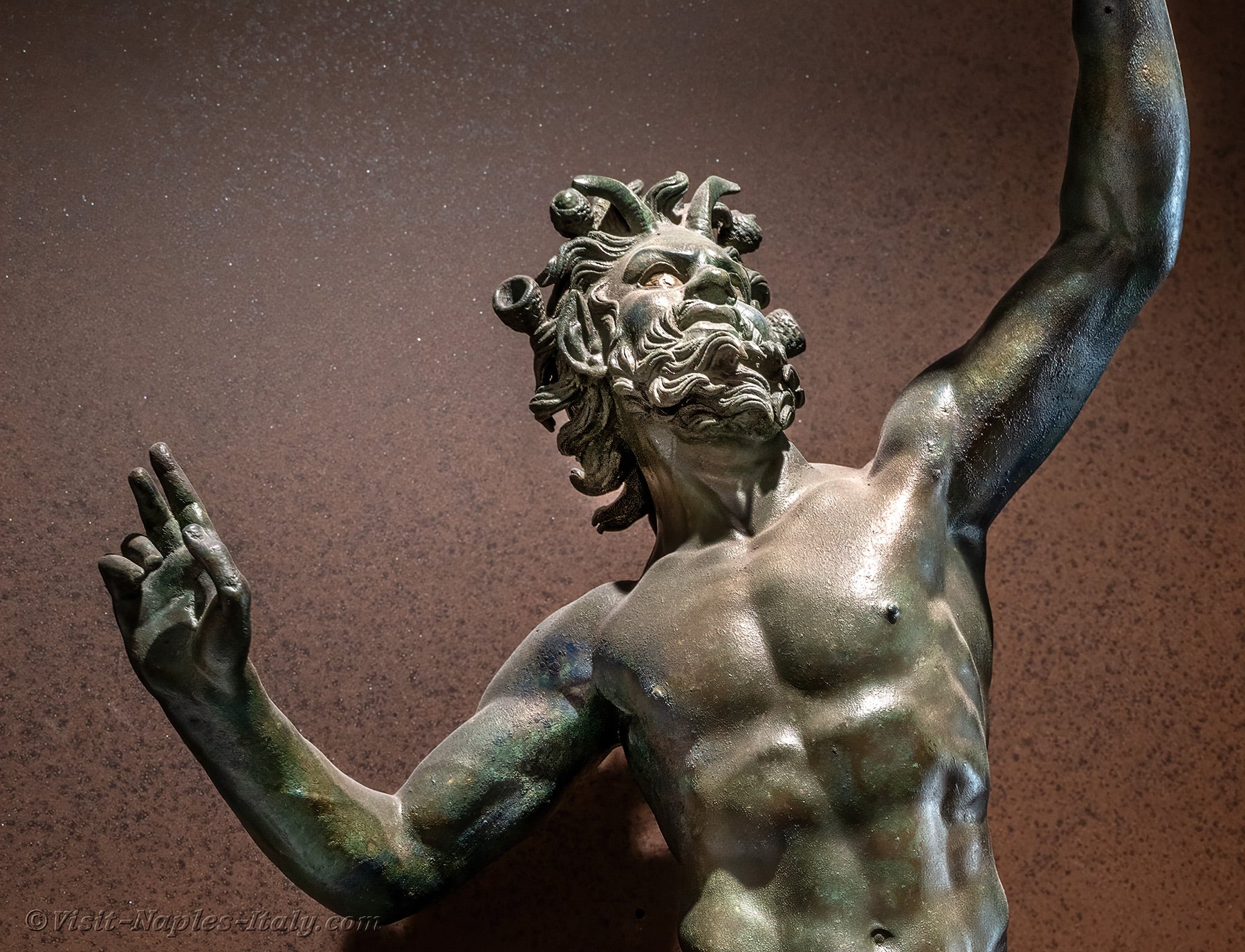
Dancing satyr, Casa del Fauno, Pompeii
Sculpture - Bronze (Height 71 cm) 3rd-2nd century BCThis bronze statuette, dating from the 3rd-2nd century BC, is truly beautiful.
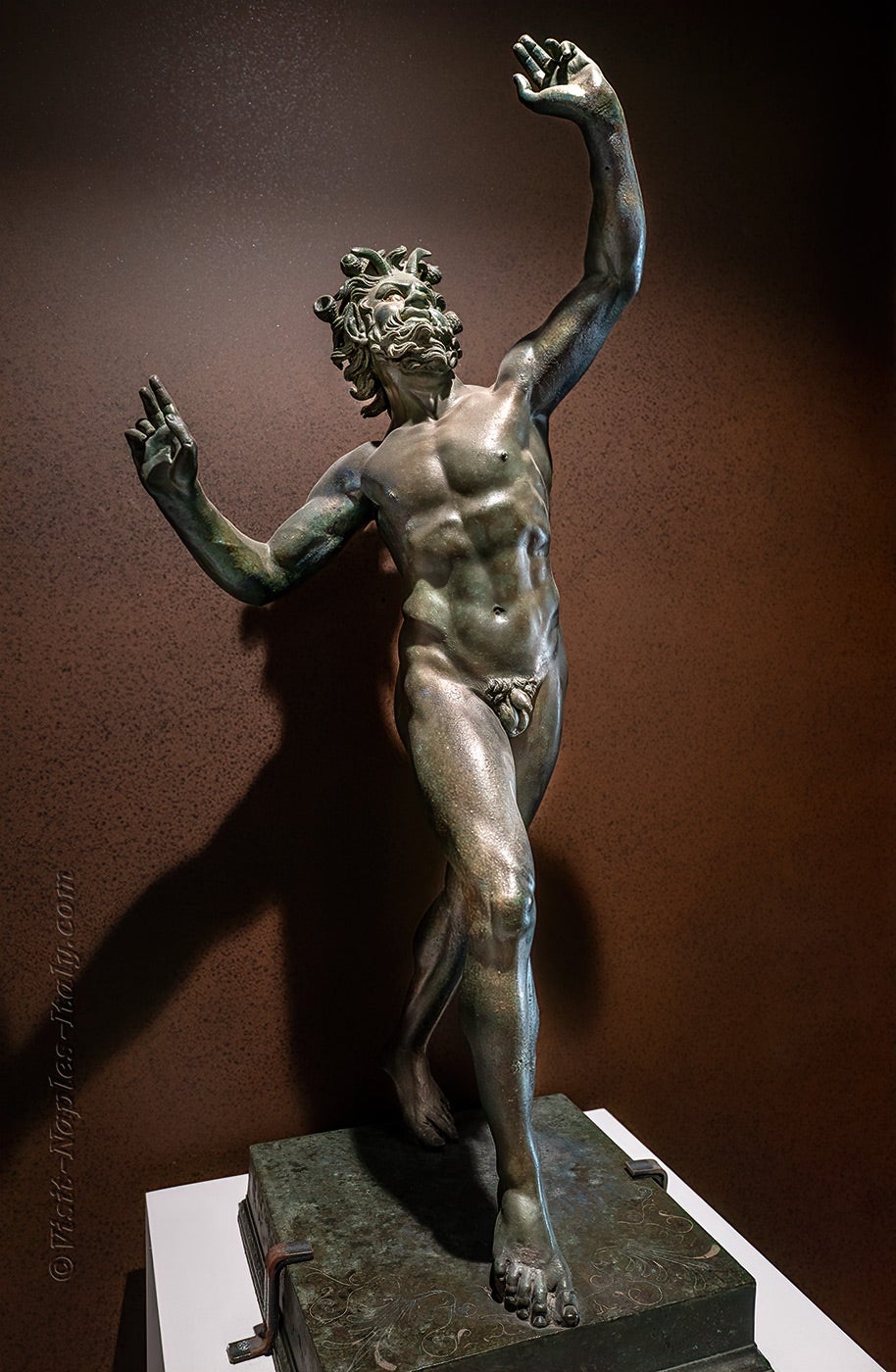
Dancing Satyr It was discovered in a large villa in Pompeii to which it gave its name: the Casa del Fauno, the House of the Faun.
The slender, elegant body of the satyr shows that he is in motion. His musculature is perfect.
The satyr dances on tiptoe, lightly tracing figures to the rhythm of the accompanying music, his head held high and his face turned towards the sky, in harmony with the supple and graceful movement of his torso and his arm raised above his head.
His tousled hair, from which his two horns emerge, is crowned with oak leaves and acorns.
The artistic quality of this statuette ranks it among the masterpieces of Pompeii.
It is believed that it was imported directly from Greece before being placed in this house.
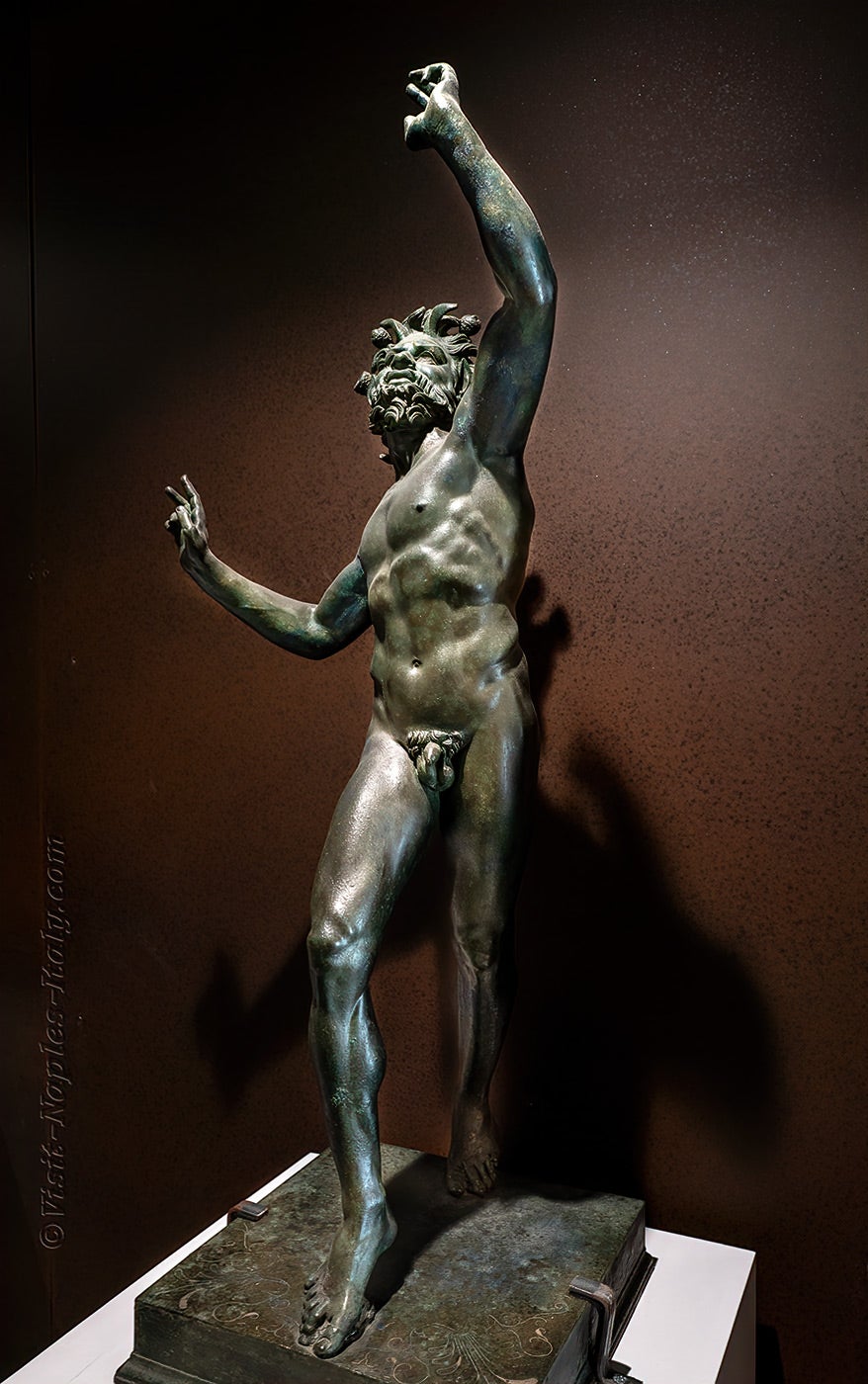
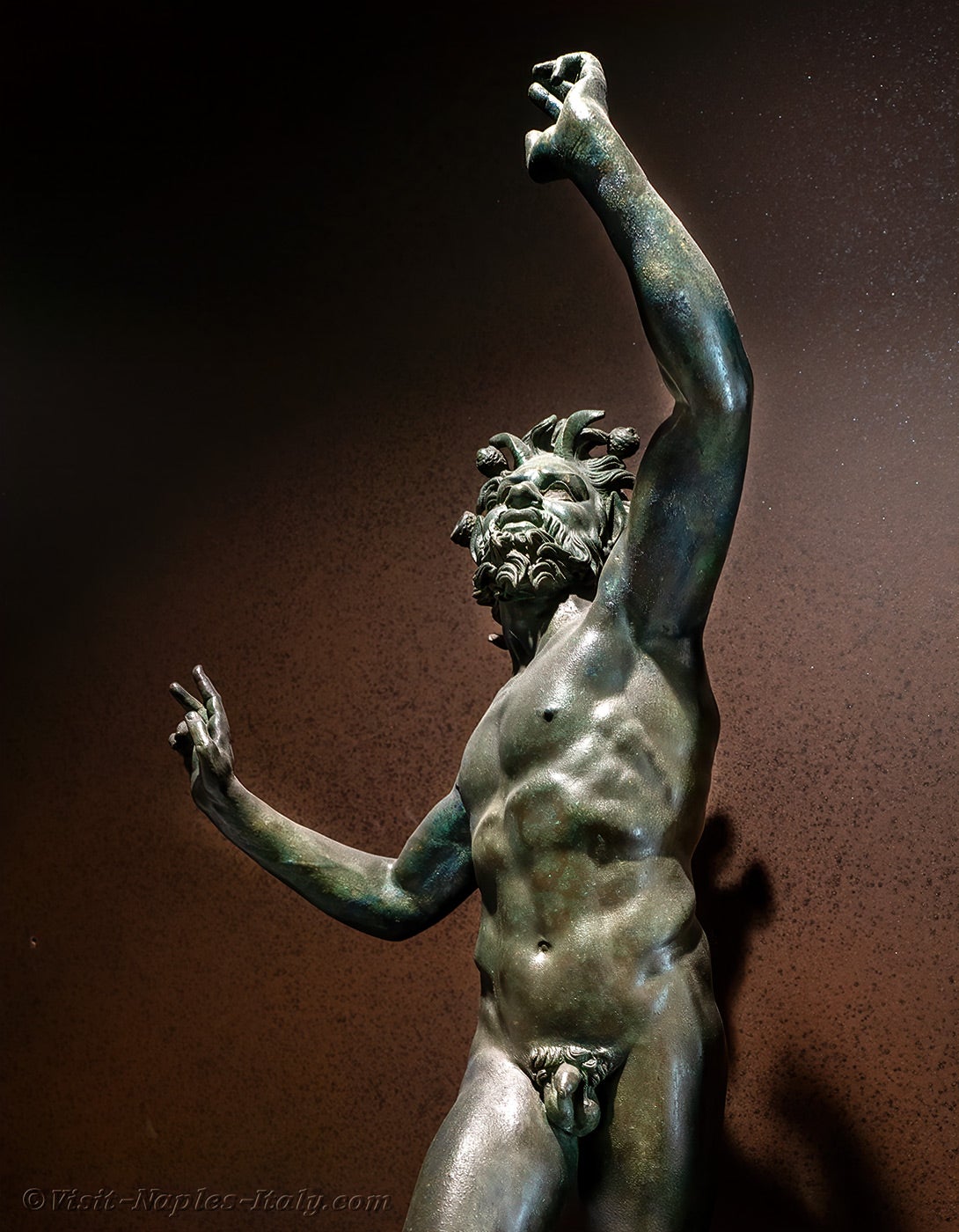
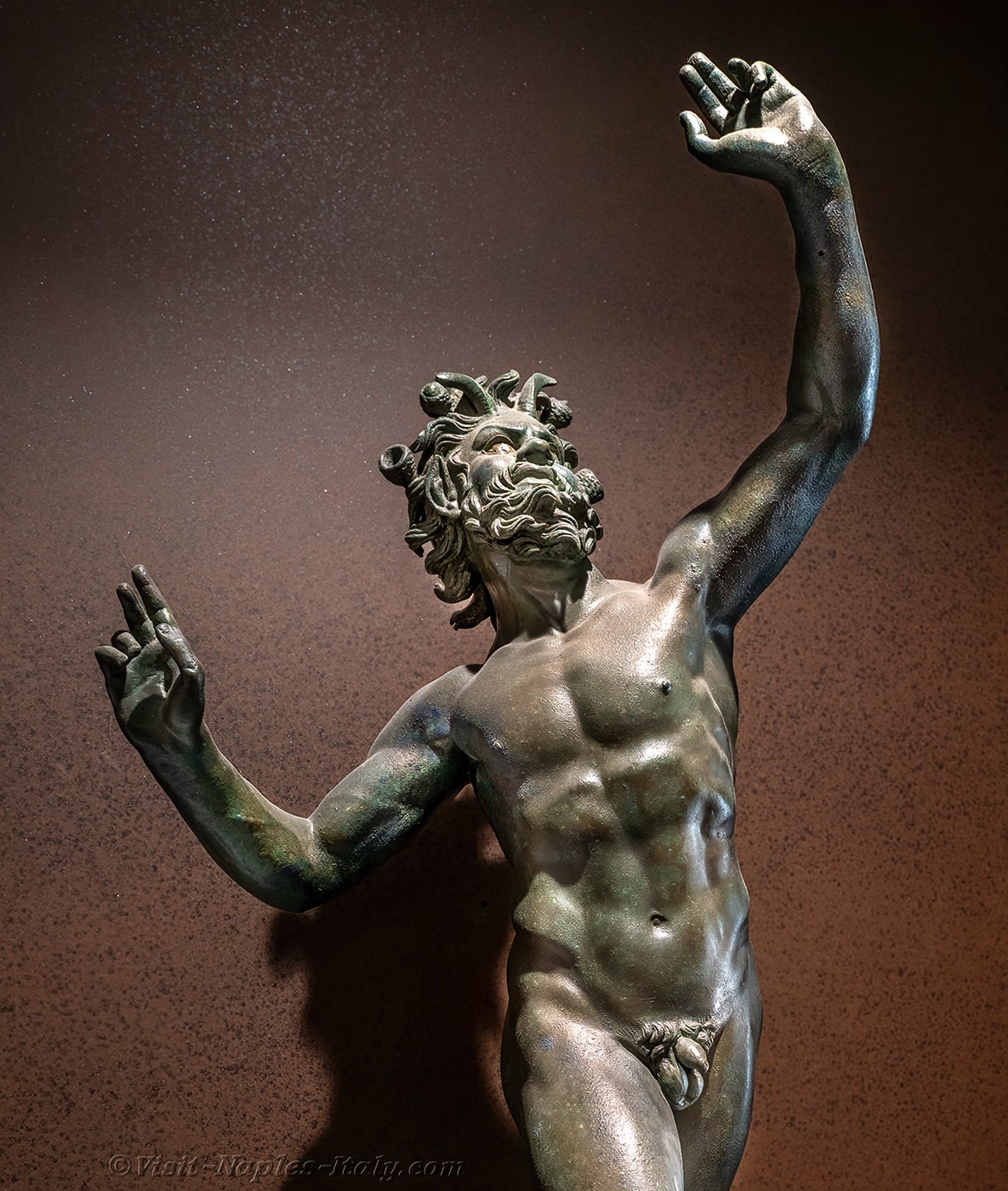
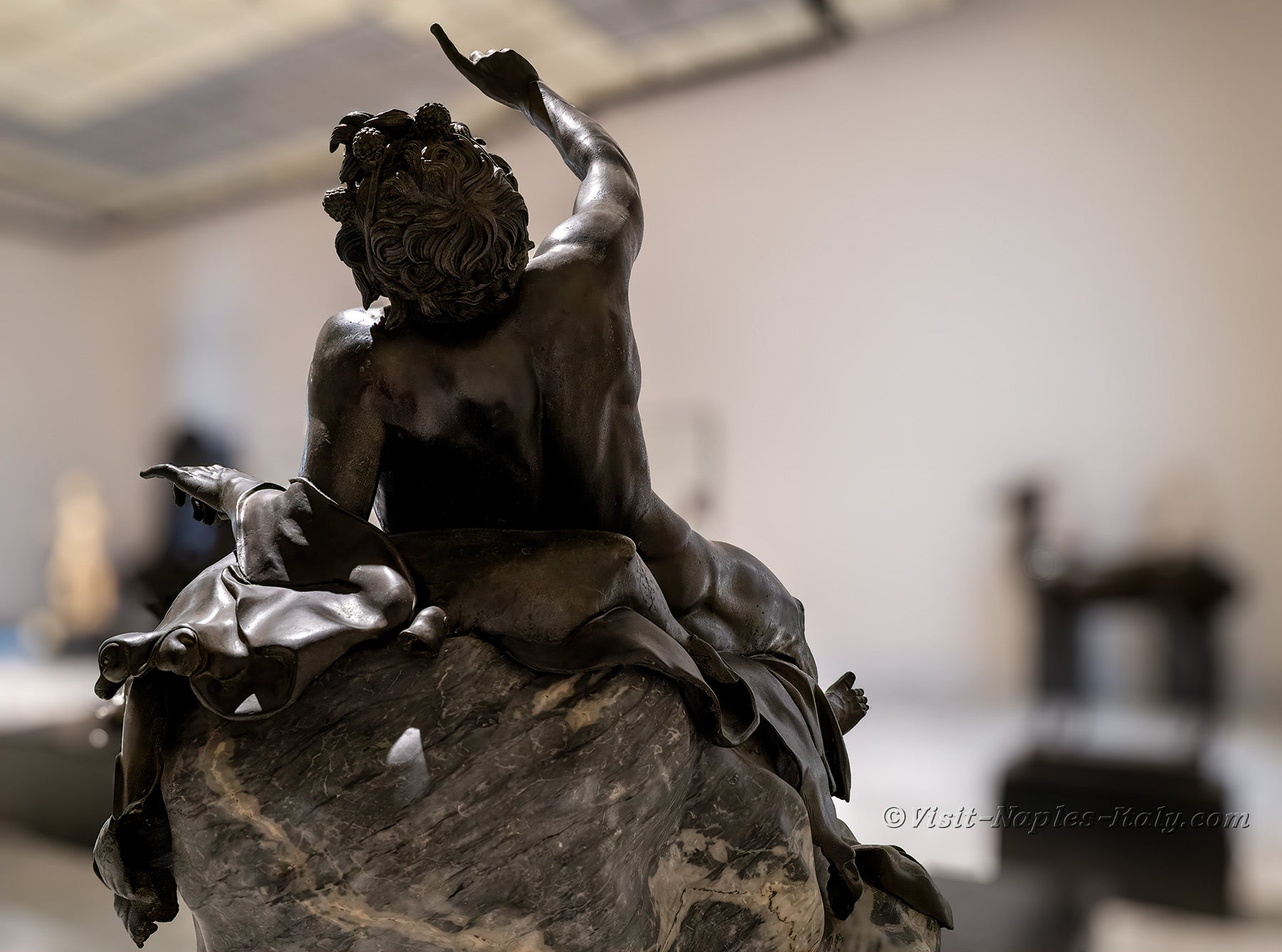
Drunken satyr, Villa dei Papiri, Herculaneum
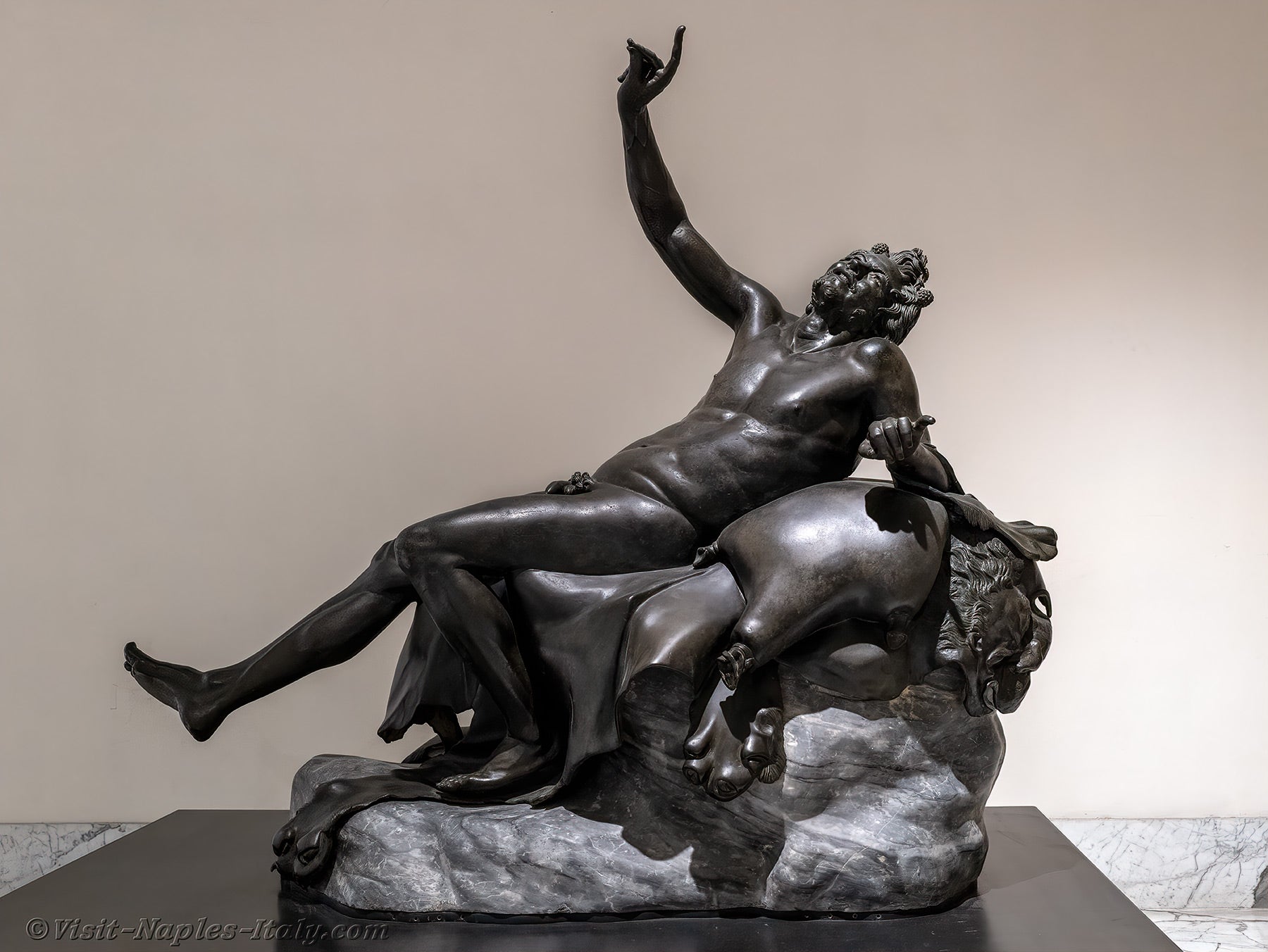
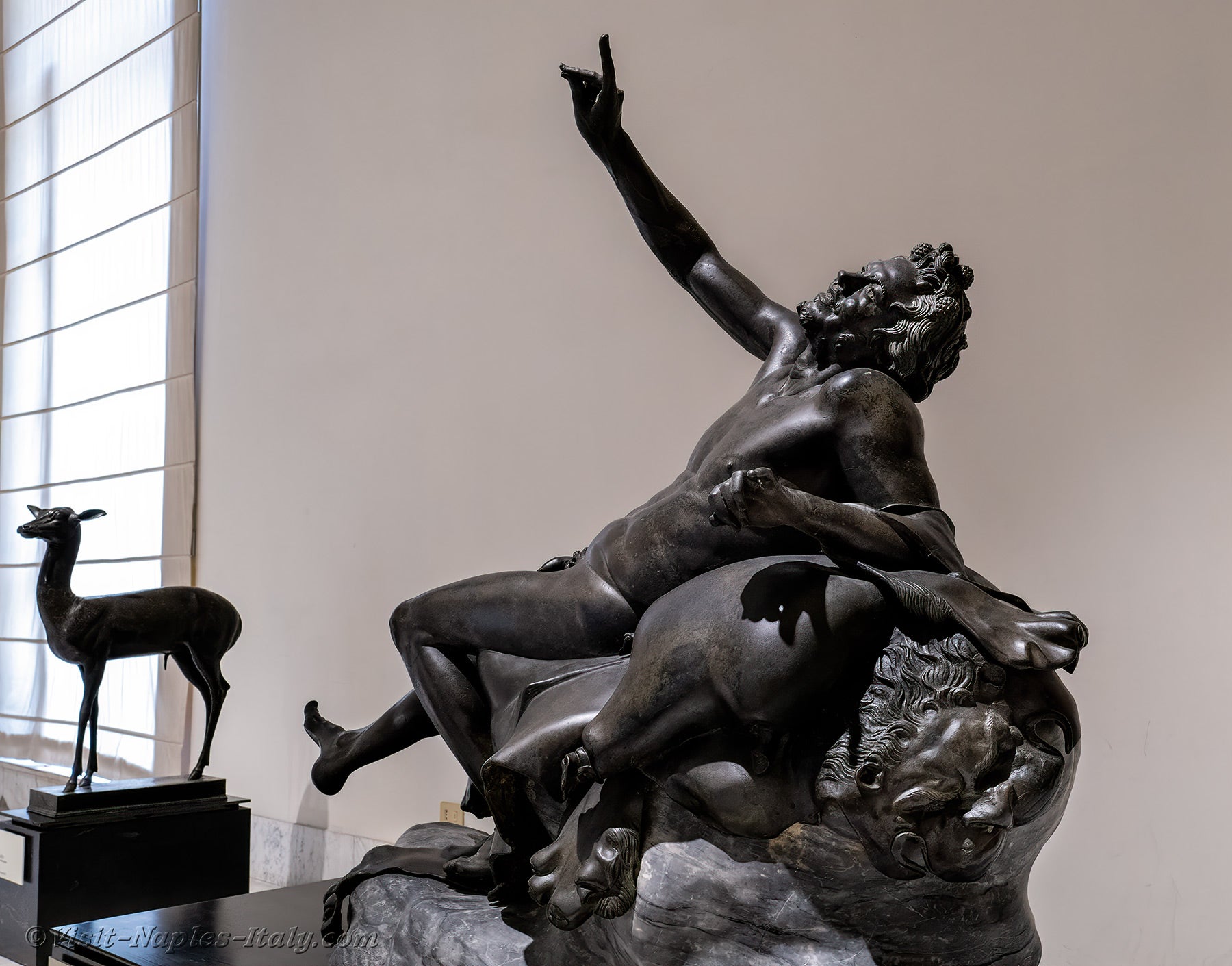
Sculpture - Bronze (No. 137) 1st century BCThis satyr, completely drunk, is clearly in high spirits.
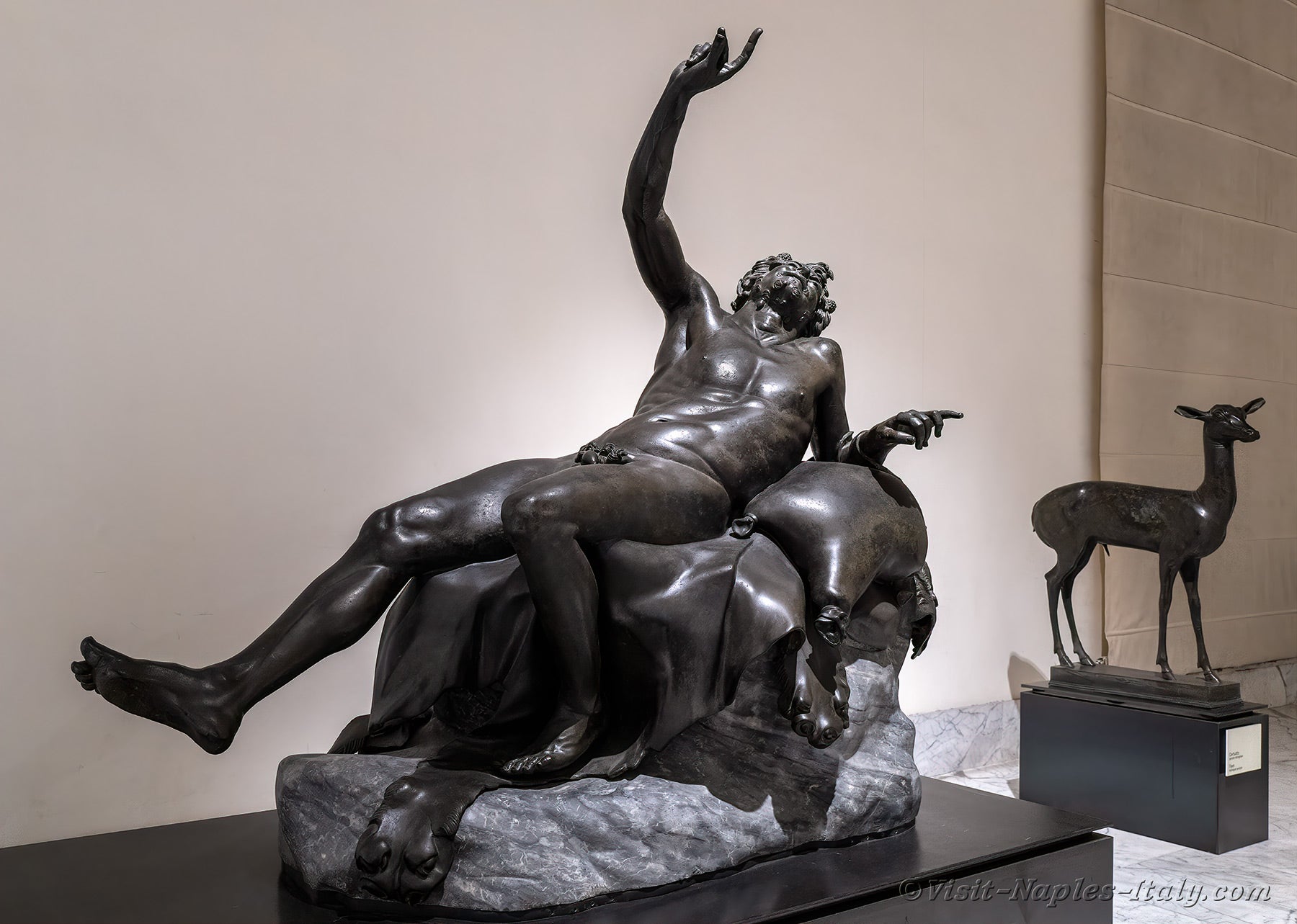
Drunken Satyr He snaps his fingers with his right hand, raised above his head to show his good humour, with the forced smile of a drunkard.
He has leaned back lifting his right leg straight up, whilst bracing himself on his bent left leg so as not to slip down the rock where he has lain down.
He is lying on a lion’s skin, his elbow resting on a wineskin half-empty of his wine, his arm raised pointing to the sky, to which he speaks cheerfully, unconcerned by his precarious balance.
The glands on either side of his neck, as well as his horns crowned with pine cones held in place by a ribbon, complete the picture by definitively classifying this drunkard among the satyrsthis drunkard among the satyrs whose attributes he possesses.
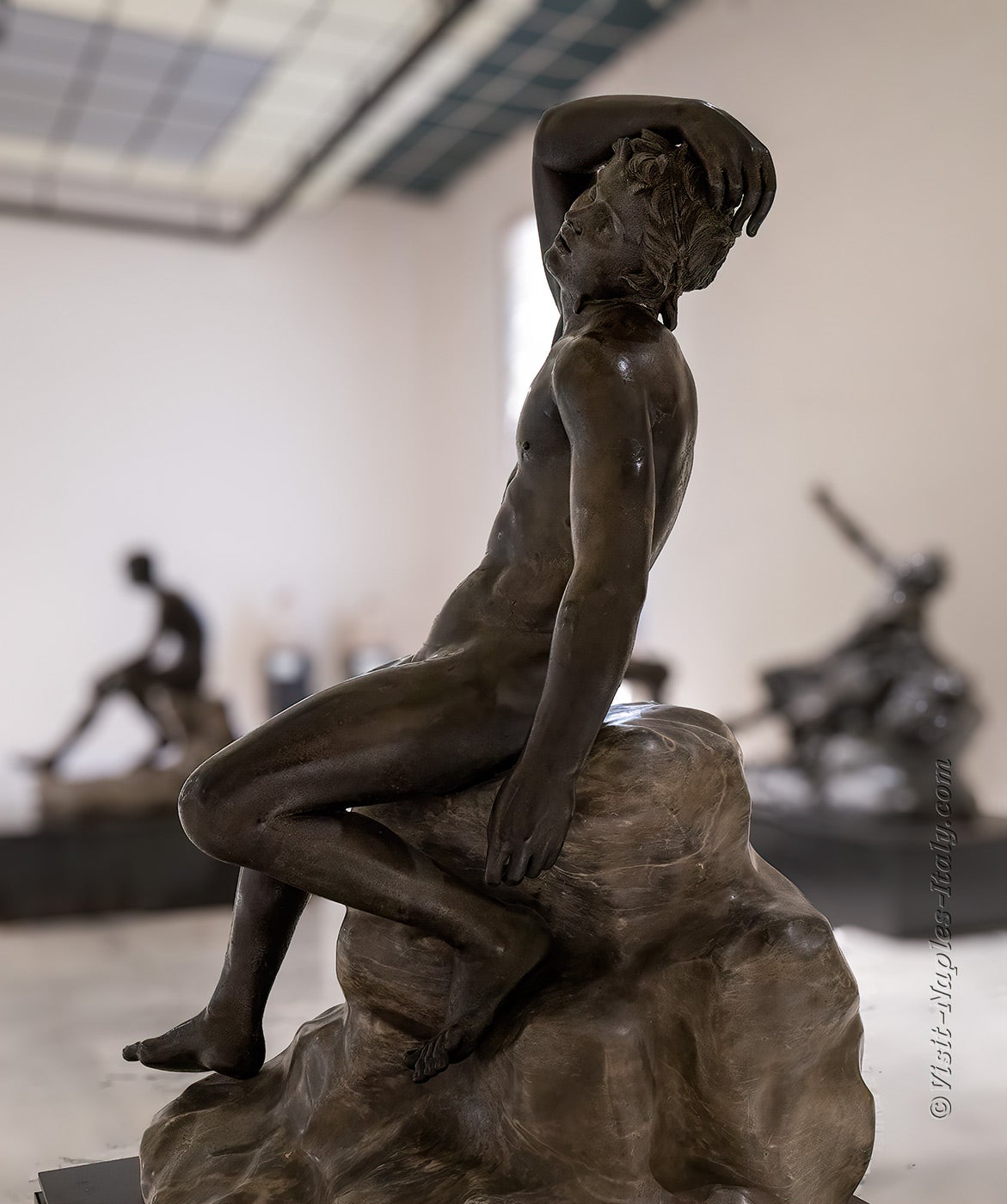
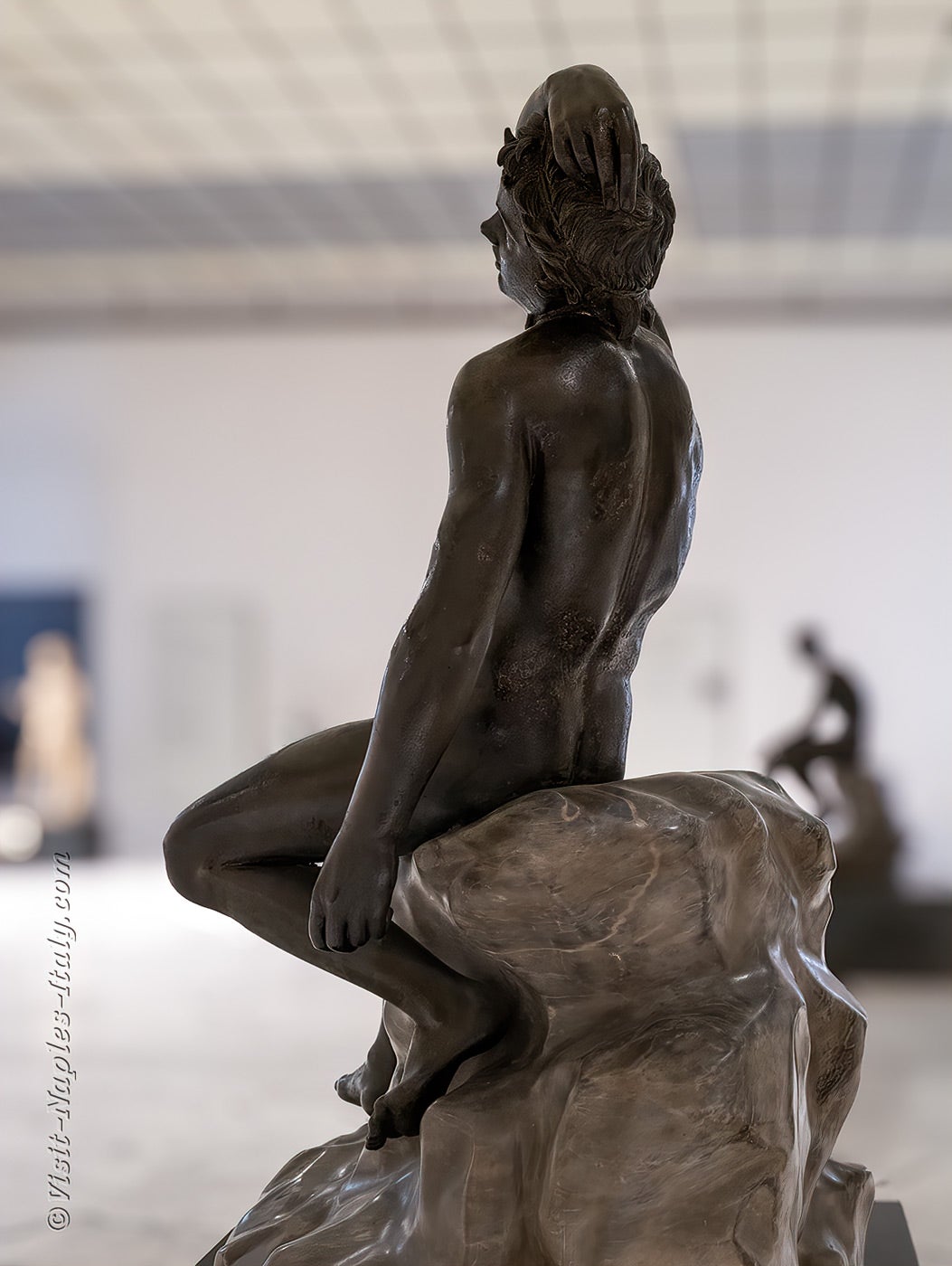
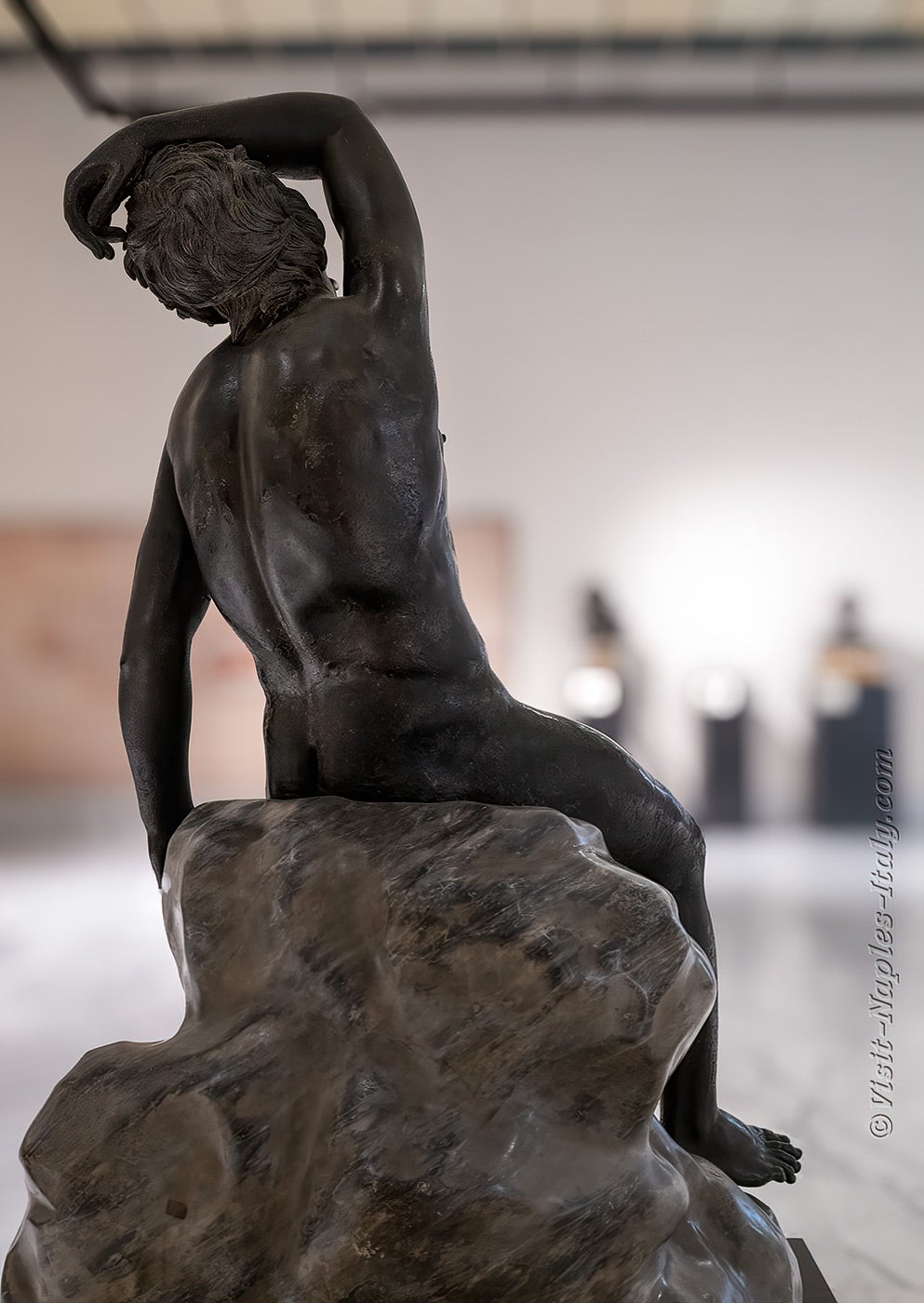
Sleeping Satyr, Villa dei Papiri, Herculaneum
Sculpture - Bronze (Height 142 cm) 1st century BC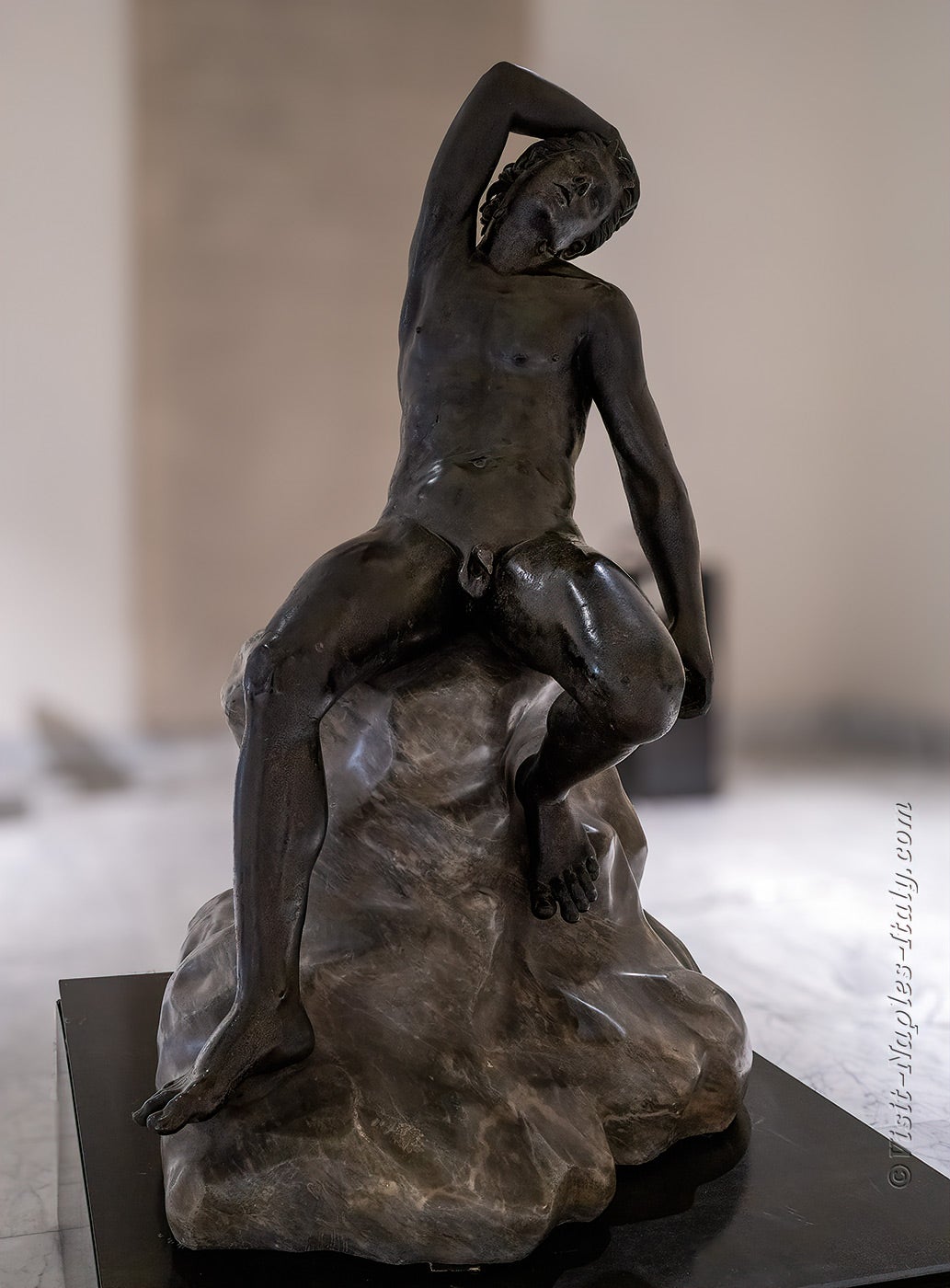
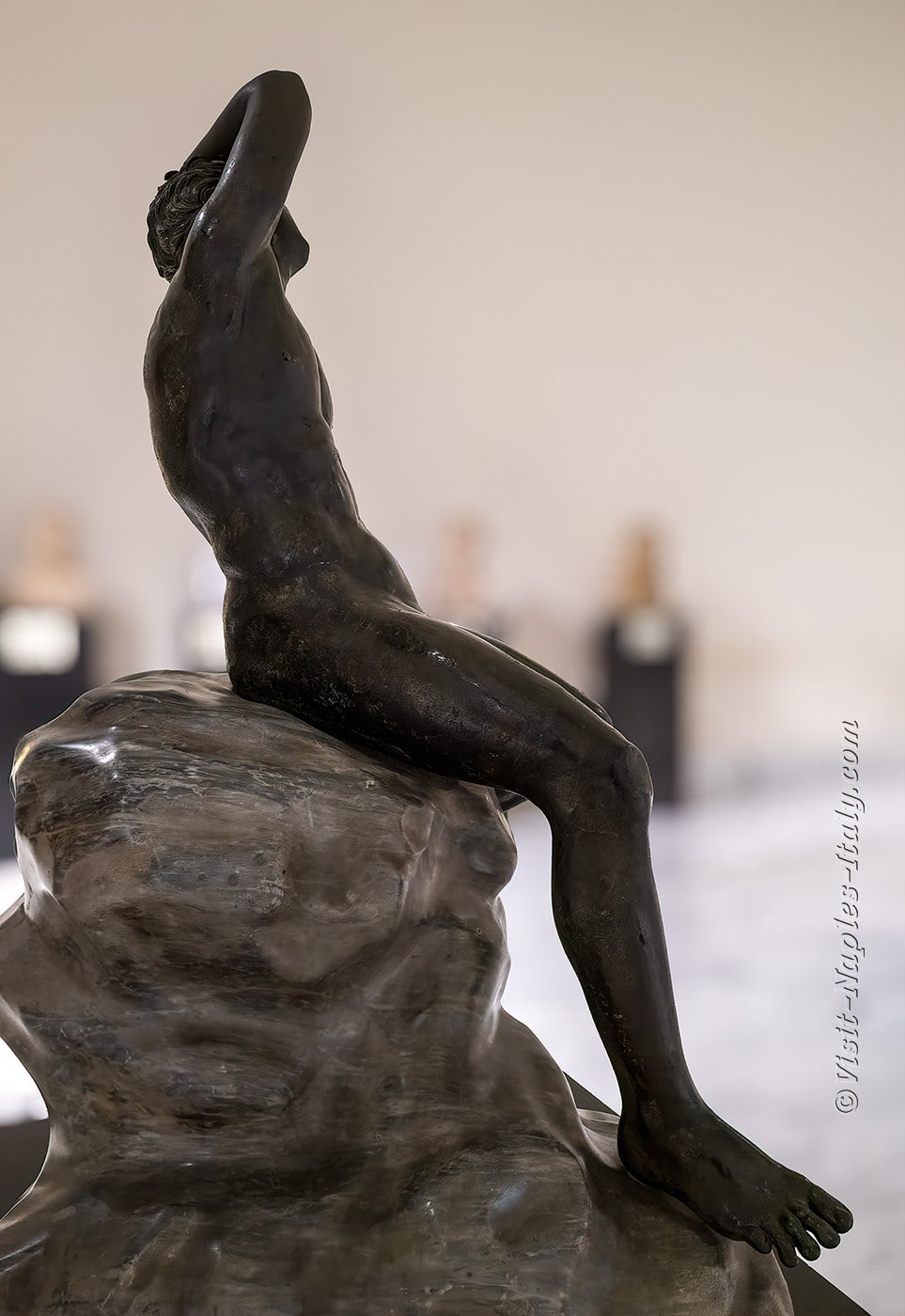
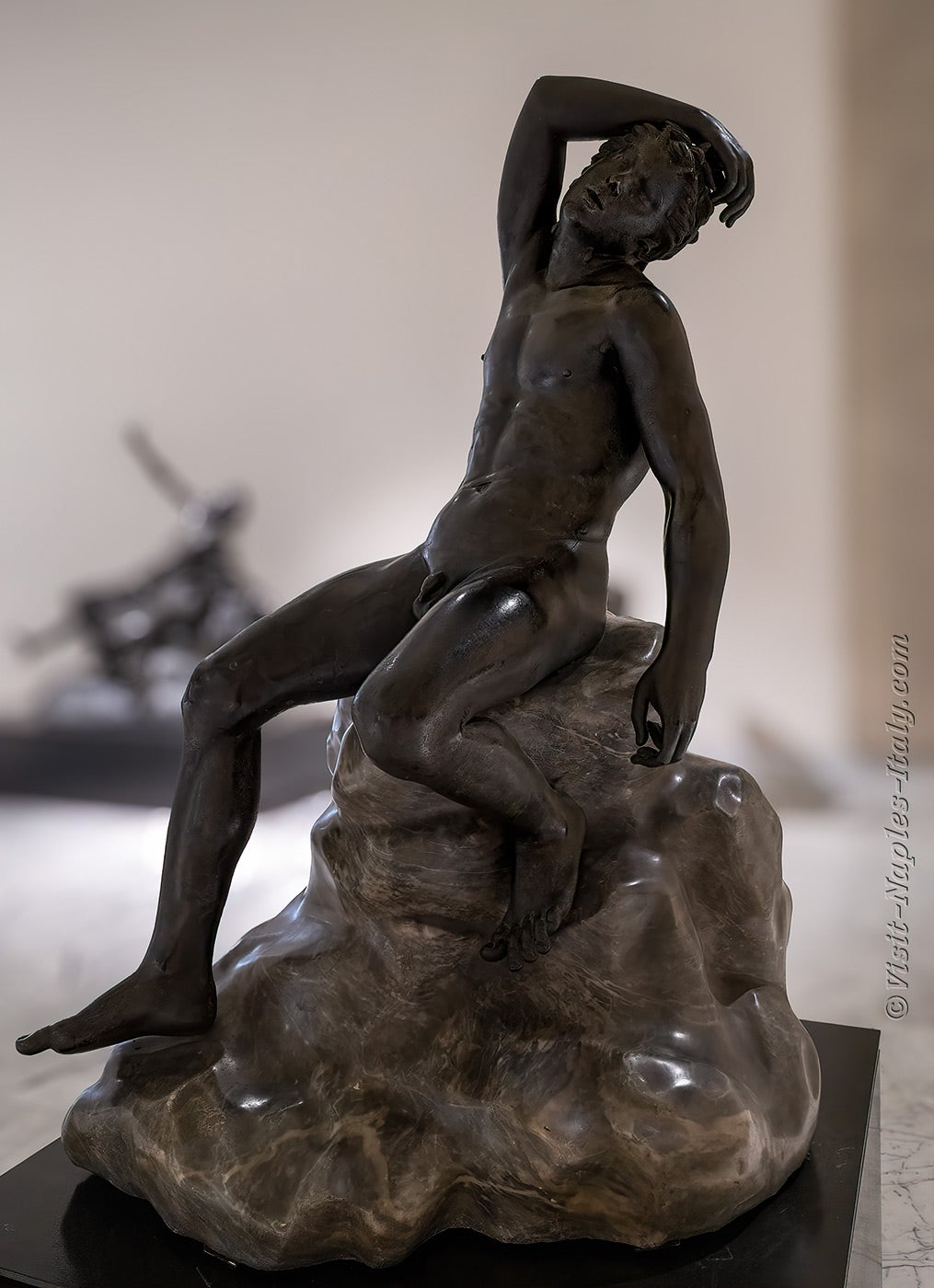
Sleeping Satyr The two small horns on his forehead and the goat-like glands under his cheeks tell us that this naked young man, with his eyes closed, is a satyr.
The upper back and head of the statue were probably resting against a support, now lost, which explains the upright position of the torso, which would otherwise be impossible for a sleeper.
His legs, with their relaxed muscles, are spread apart, his right arm rests limply on his head, whilst the other arm hangs limply by his side.
The relaxed features of his face and his half-open mouth show his total surrender to a peaceful sleep.
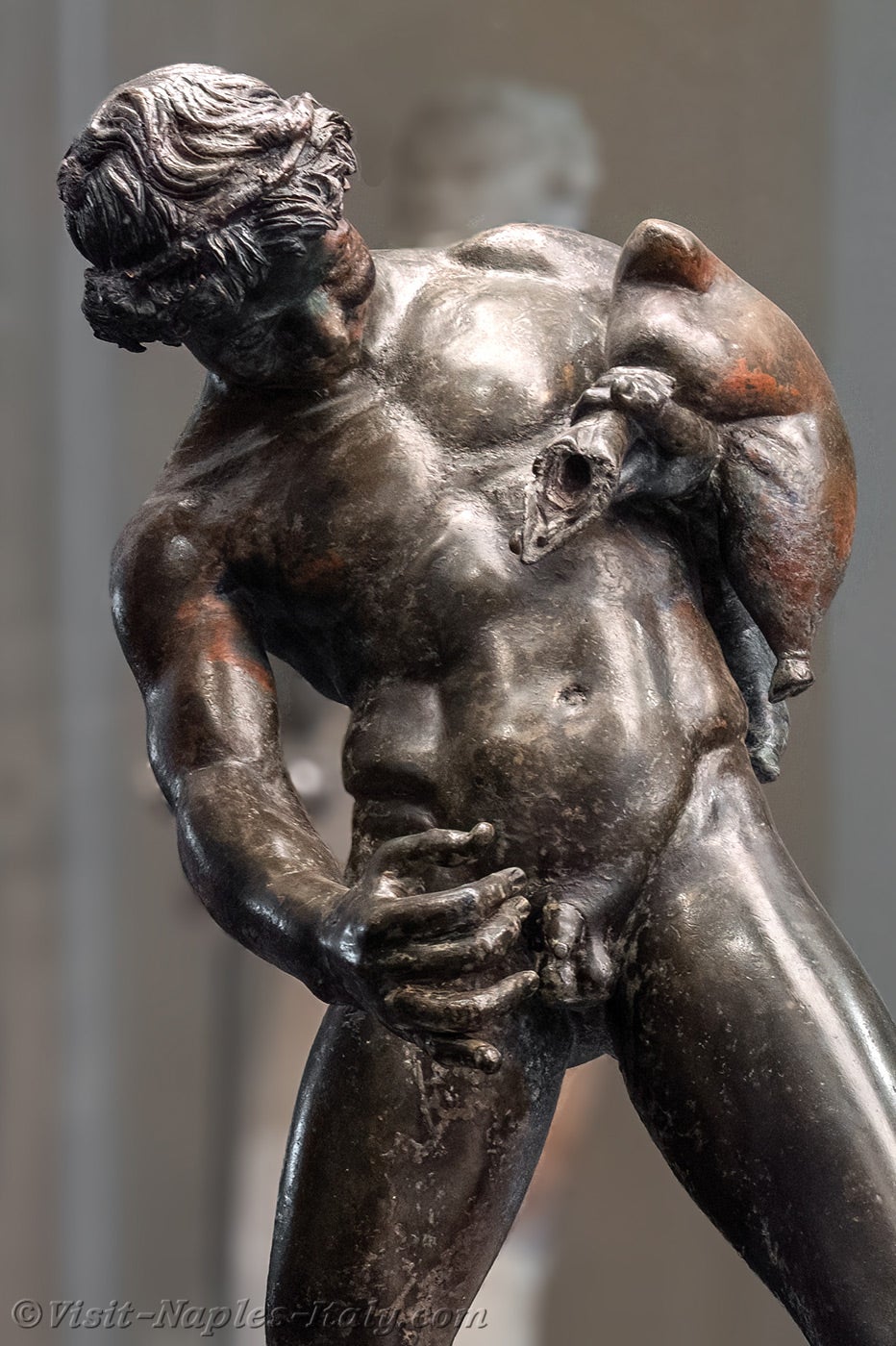
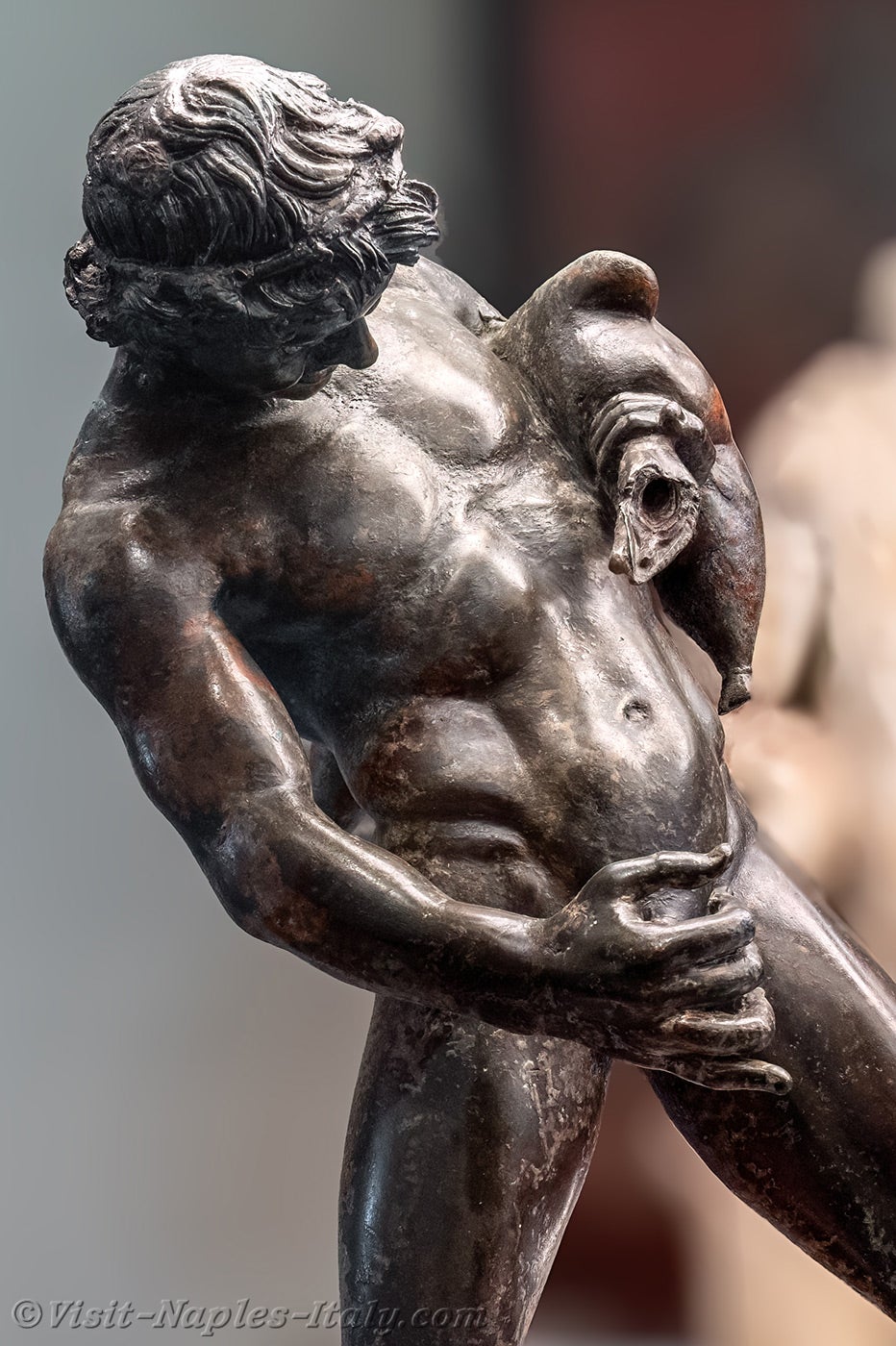
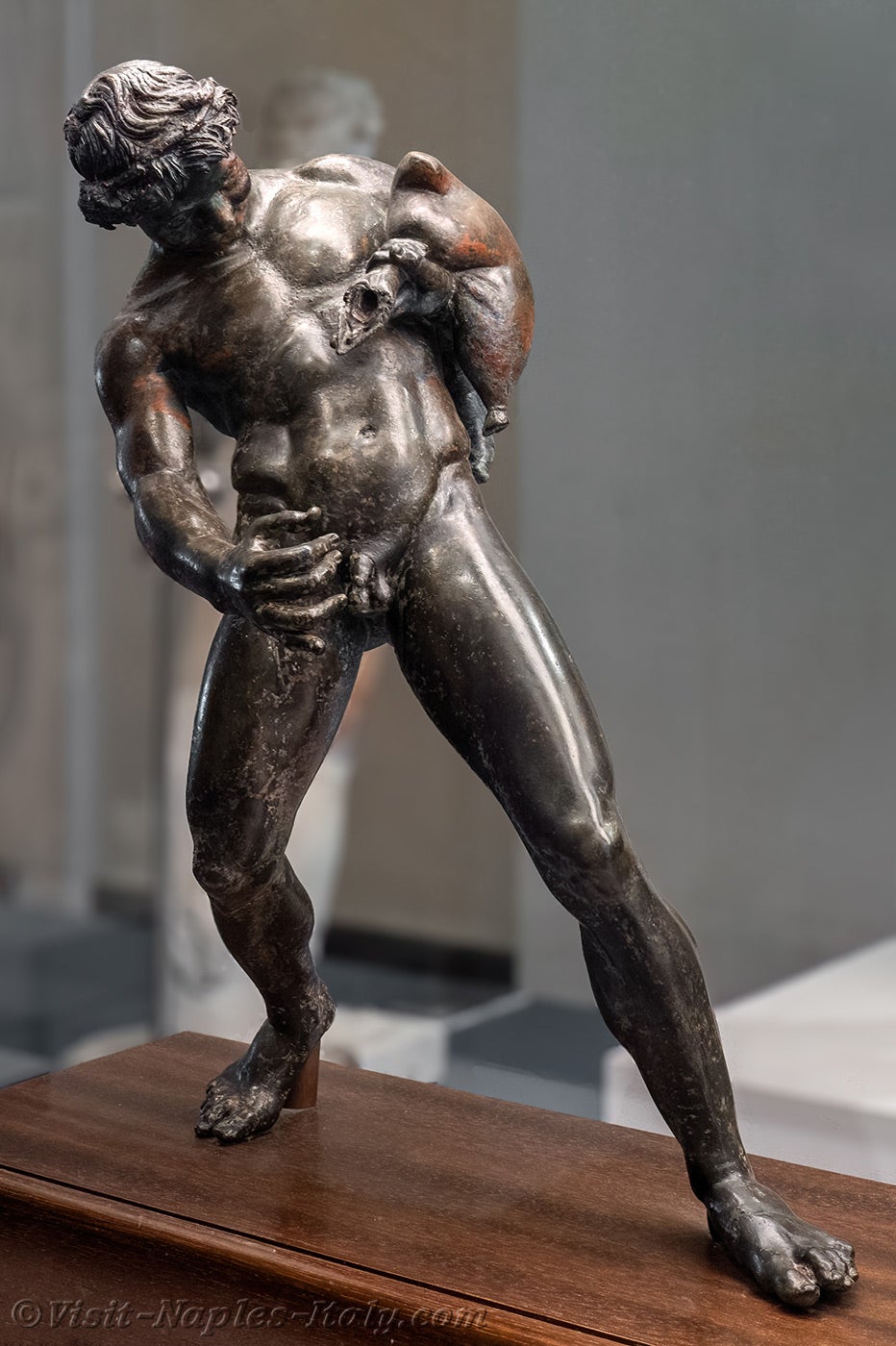
Drunken satyr with a wineskin, Casa del Centenario, Pompeii
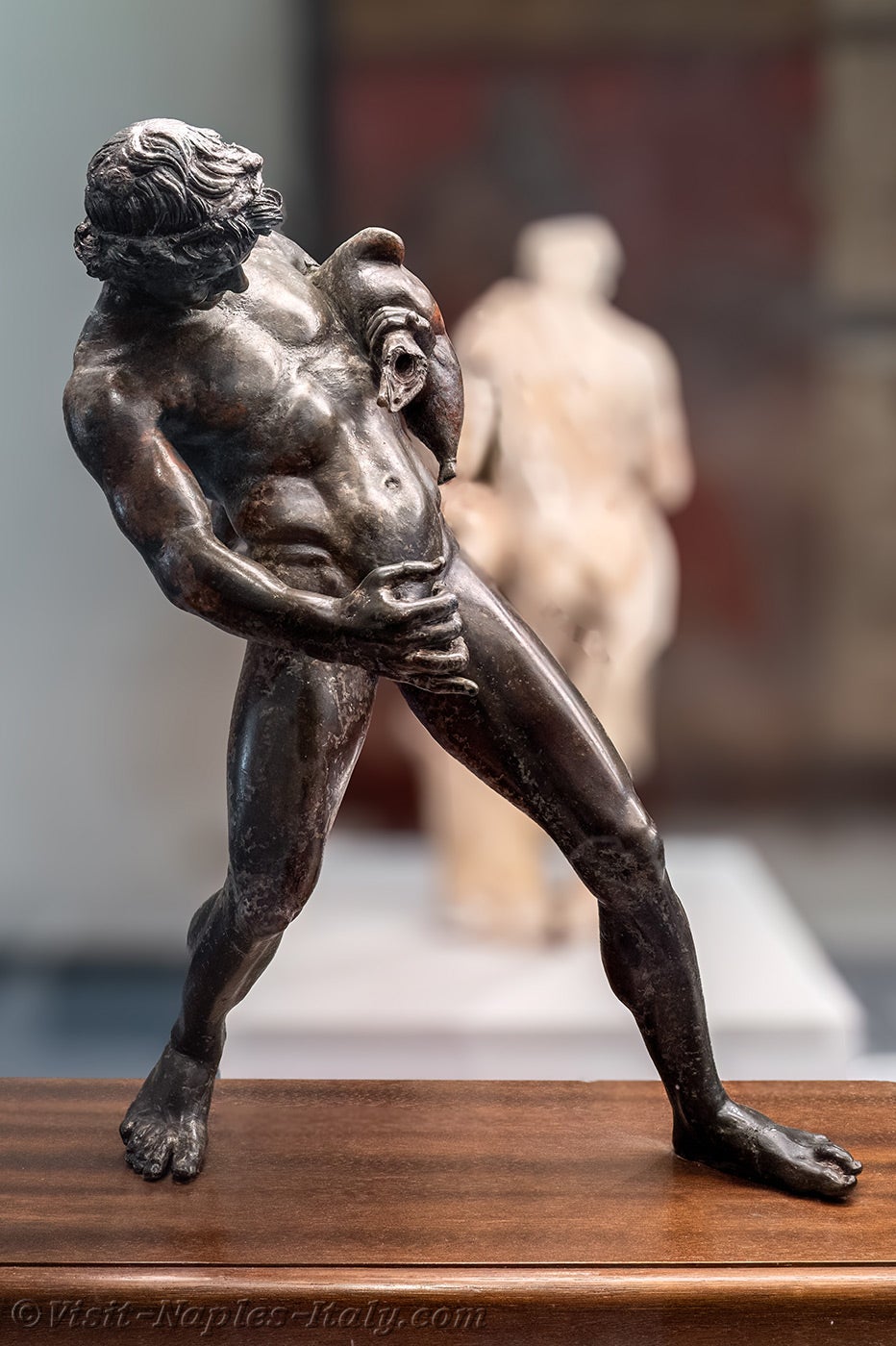
Satyr with a wineskin Sculpture - Bronze (Height 51 cm)
Late 2nd century BC - early 1st century AD
This amusing bronze statuette of a satyre, completely drunk and carrying a wineskin, adorned a fountain located in the Peristyle of the Casa del Centenario in Pompeii.
The satyr leans backwards resting on his right leg, and watches with a greedy smile as the stream of wine fills his cup, gushing from the wineskin he is squeezing under his left arm.
This statuette adorned a fountain and the water from it gushed from a lead pipe located at the back of the wineskin and the missing cup broke up the jet of water.
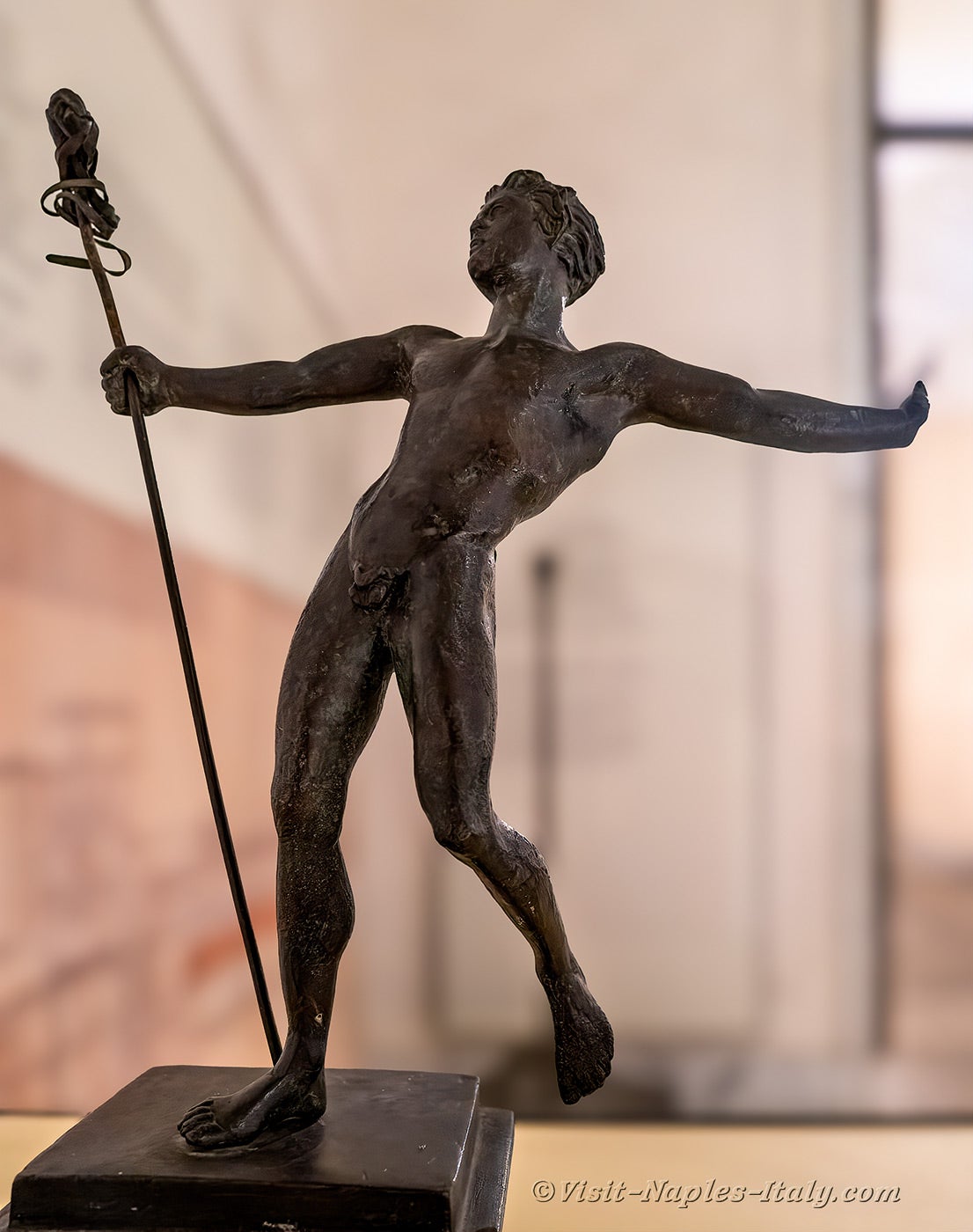
Dancing satyr with a thyrsus, Villa dei Papiri, Herculaneum
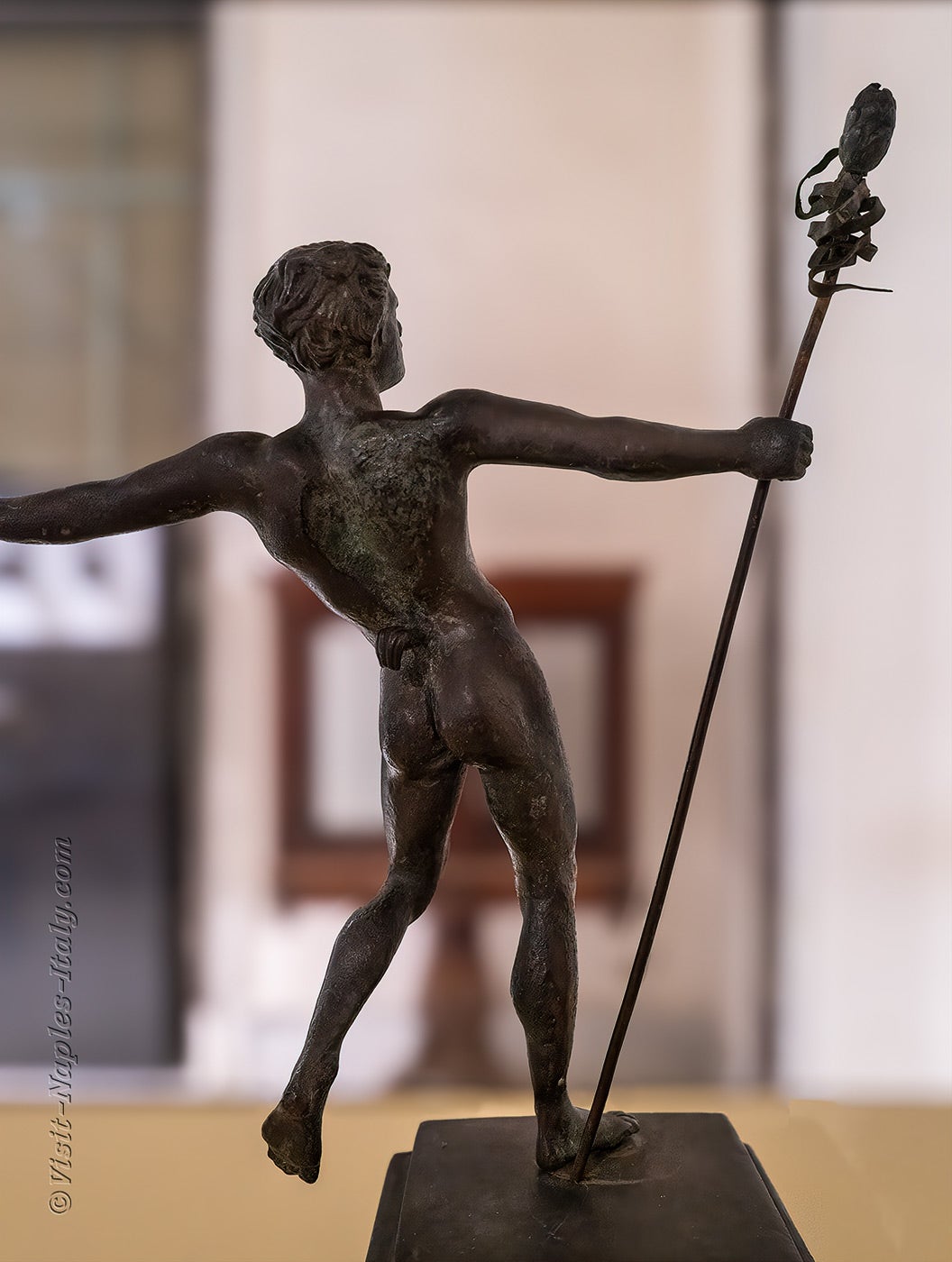
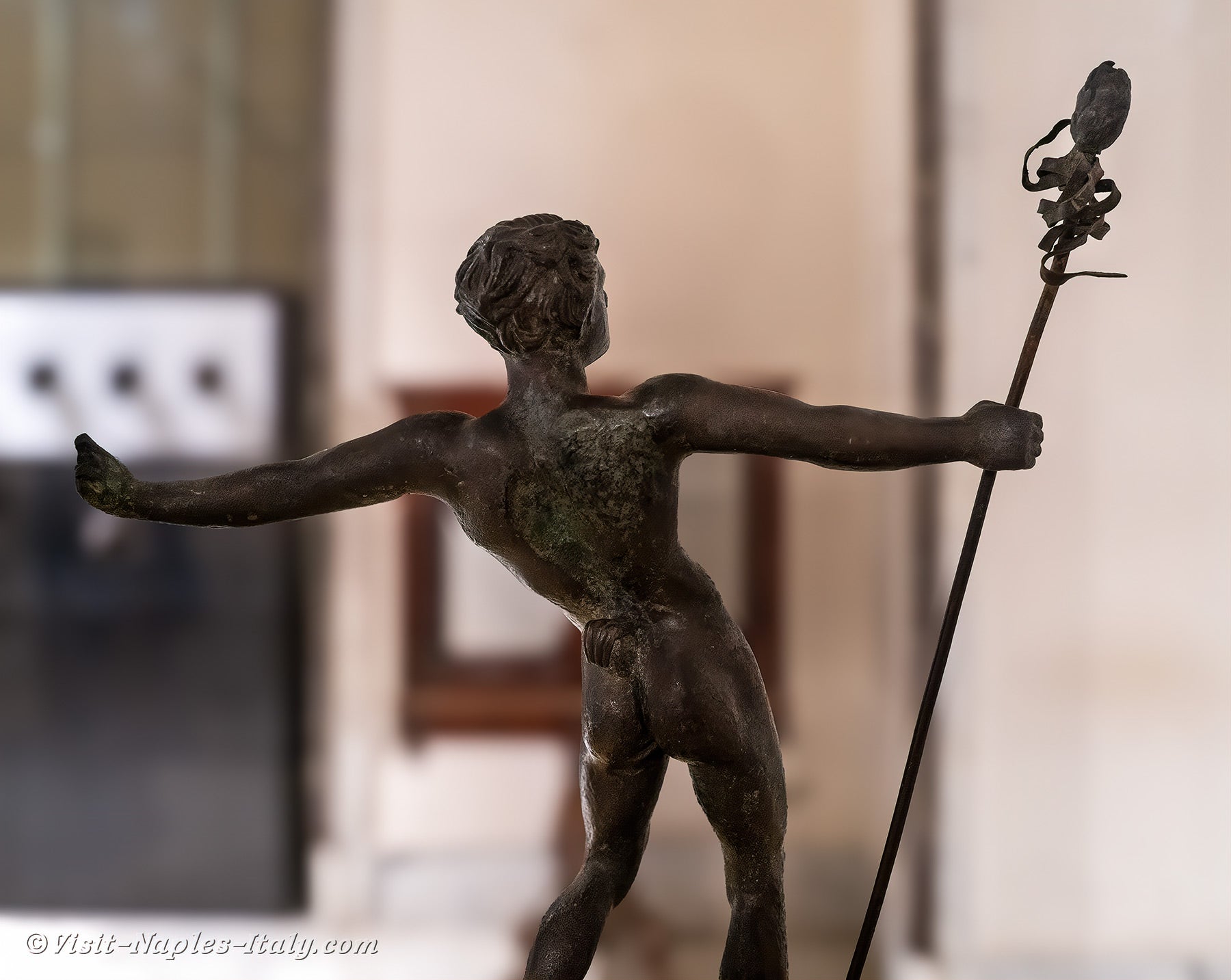
Sculpture - Bronze (Height 19.5 cm) 1st century BC - 1st century ADThis magnificent small bronze statuette depicts a young satyr dancing whilst leaning on the thyrsus he holds in his right hand.
With his arms outstretched and his back leg raised, the satyr’s ephebe-like body exudes great elegance and grace, characterised as such by the tail at the base of his back.
Satyr playing the double flute, Villa dei Papiri, Herculaneum
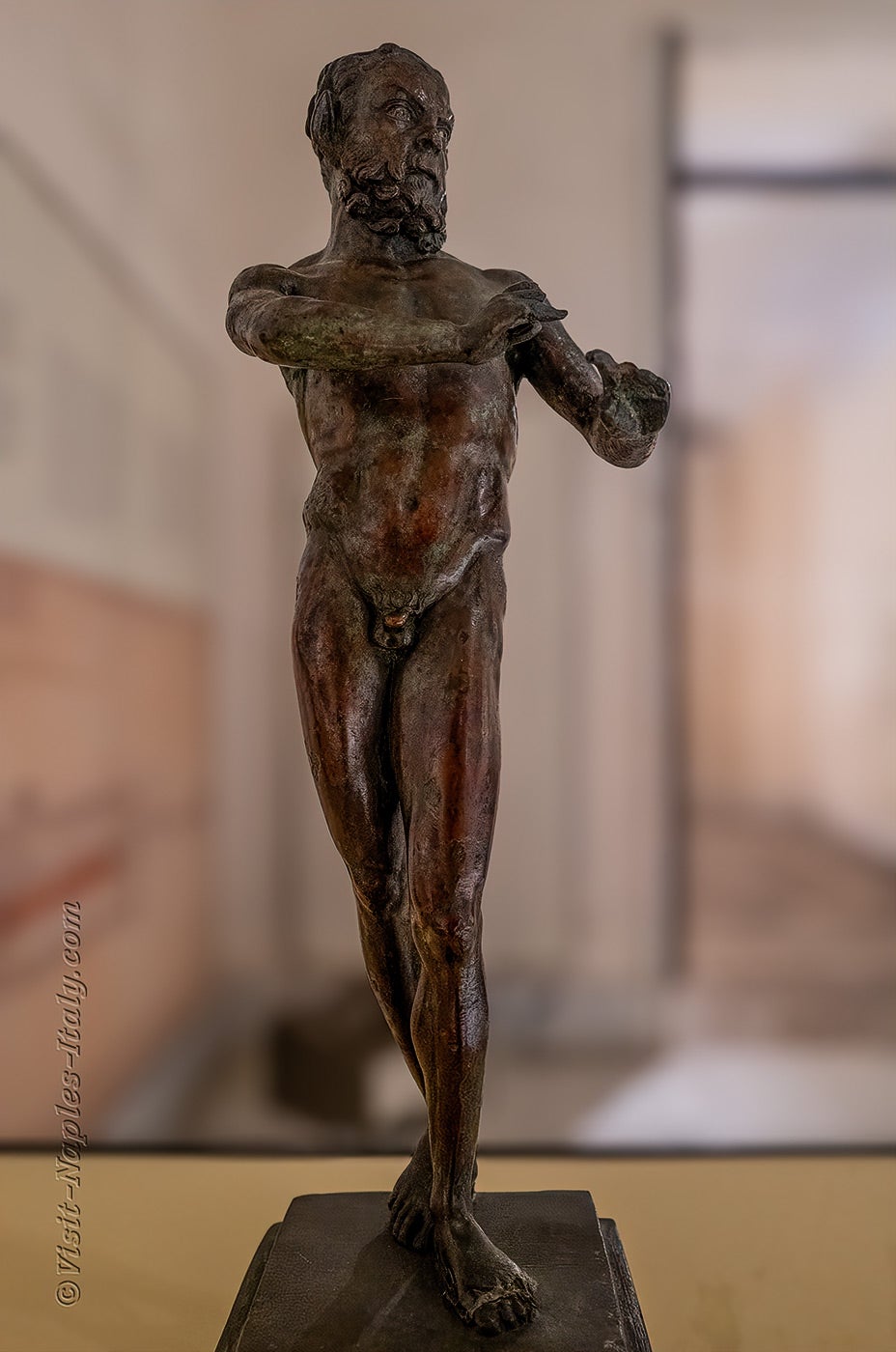
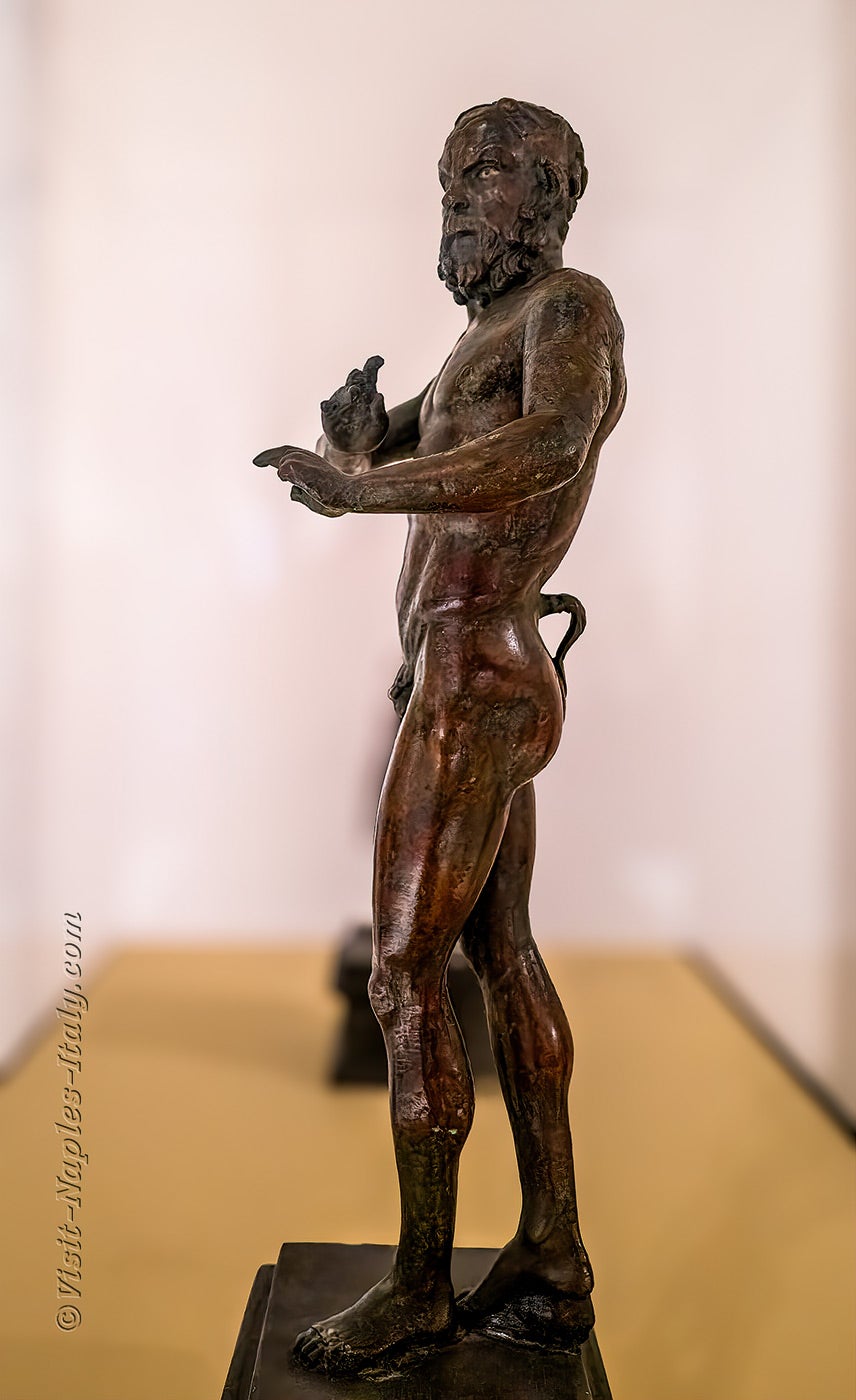
Sculpture - Bronze - 1st century BC - 1st century ADThis elderly satyr, with a surprisingly elegant and athletic physique, is playing the tibia, the double flute of ancient Rome. Unfortunately, the instrument is missing.
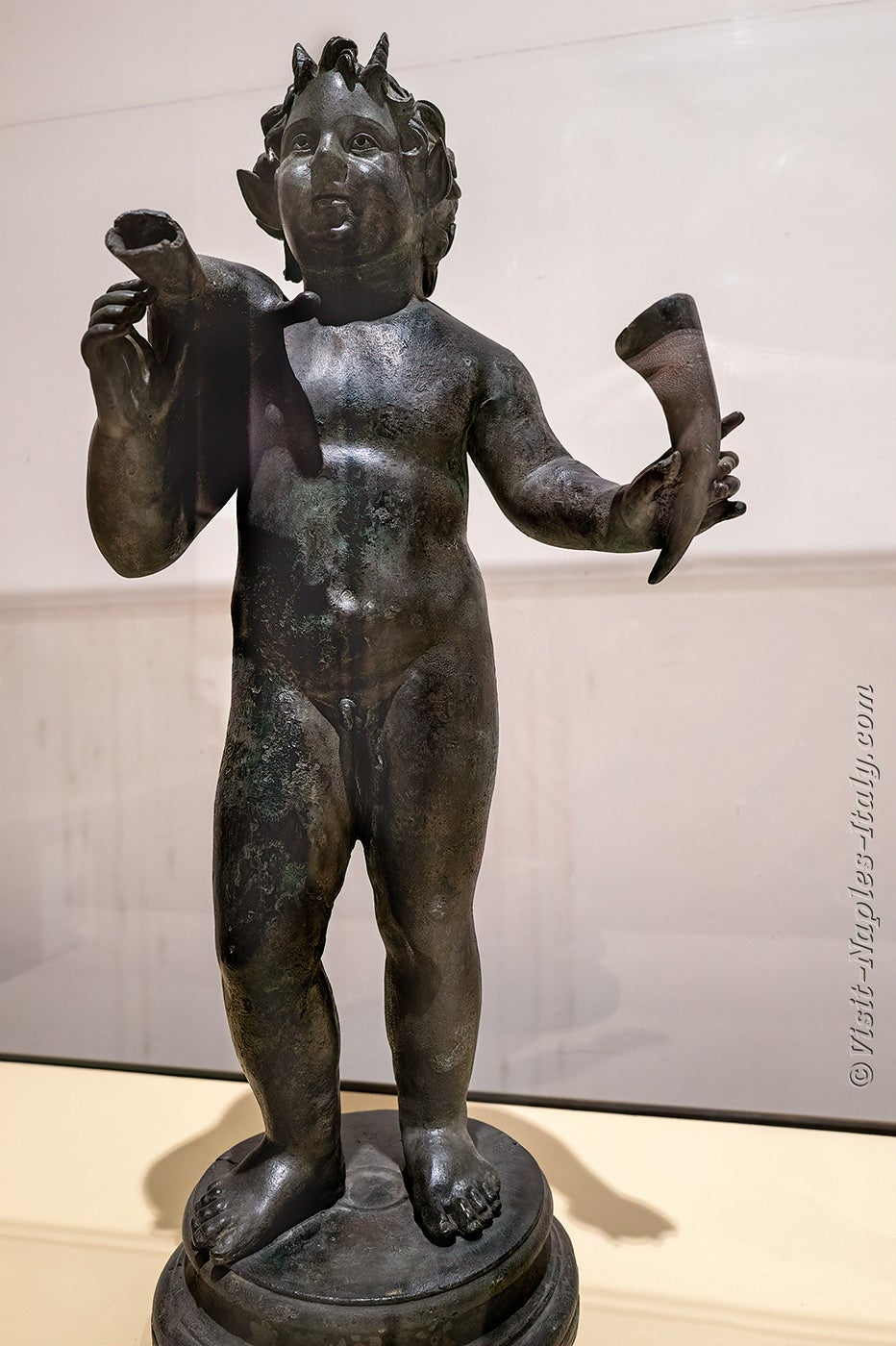
Small satyr with a wineskin and a drinking horn, Villa of the Papyri, Herculaneum
Sculpture - Bronze (Height 47 cm) 1st century BC - 1st century ADThis small satyr was found in the impluvium of the Villa of the Papyri in Herculaneum.
He is standing, chubby and cute with his two small horns on his forehead.
He is carrying a wine skin slung over his right shoulder, holding it by the neck to support it, whilst his left hand holds a drinking horn.
Ancient satyrs used as fountains, Villa dei Papiri, Herculaneum
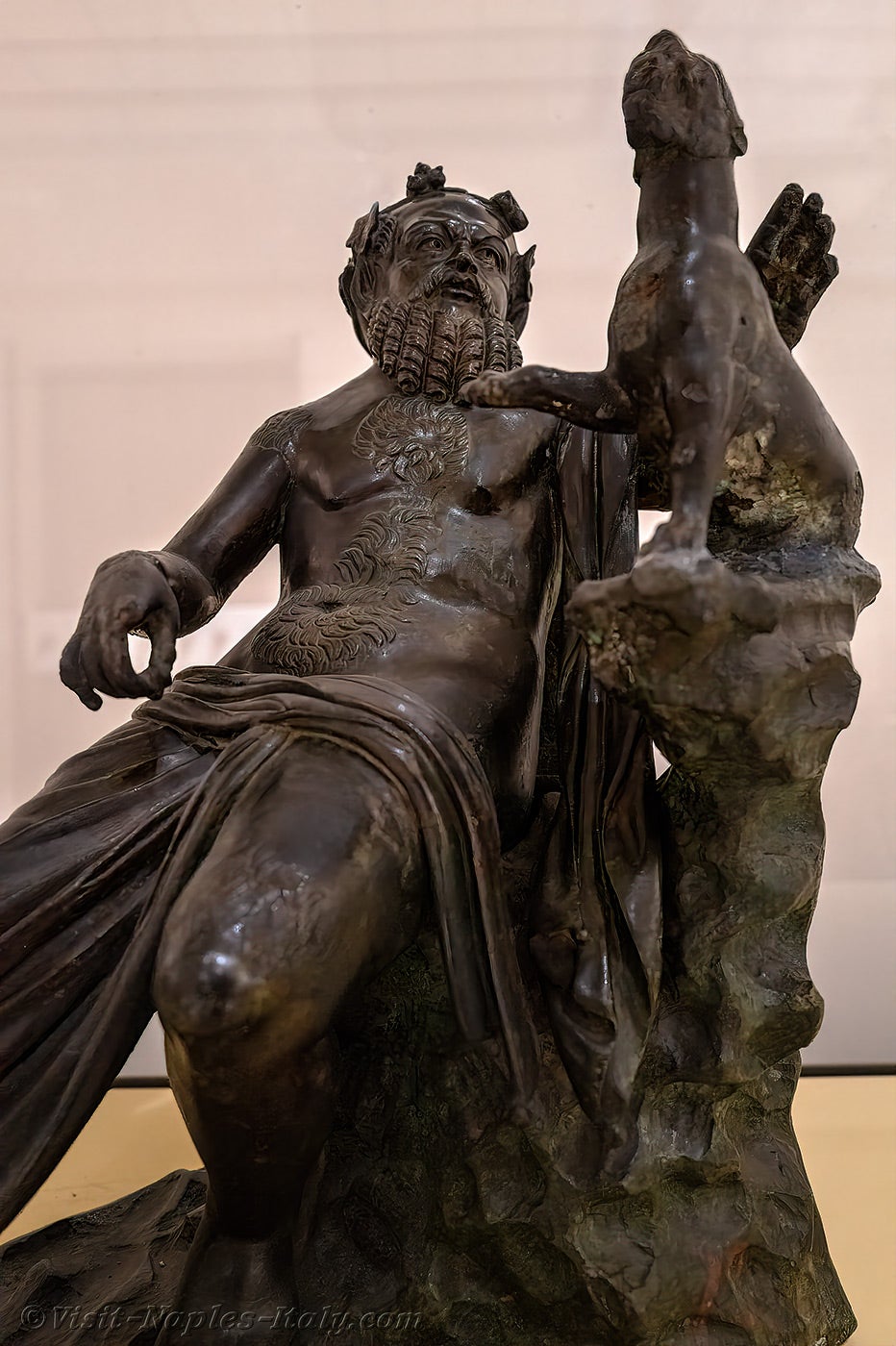
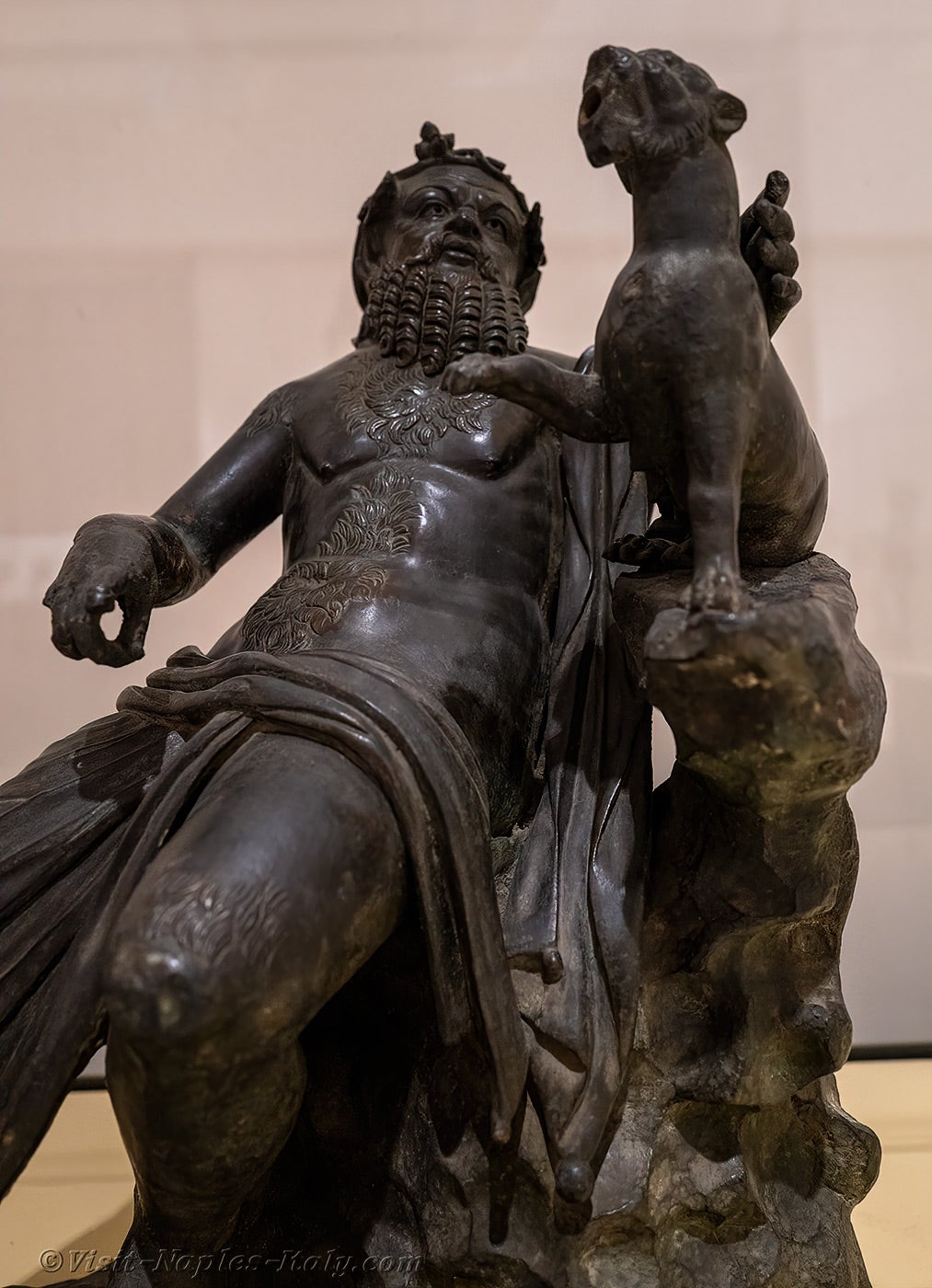
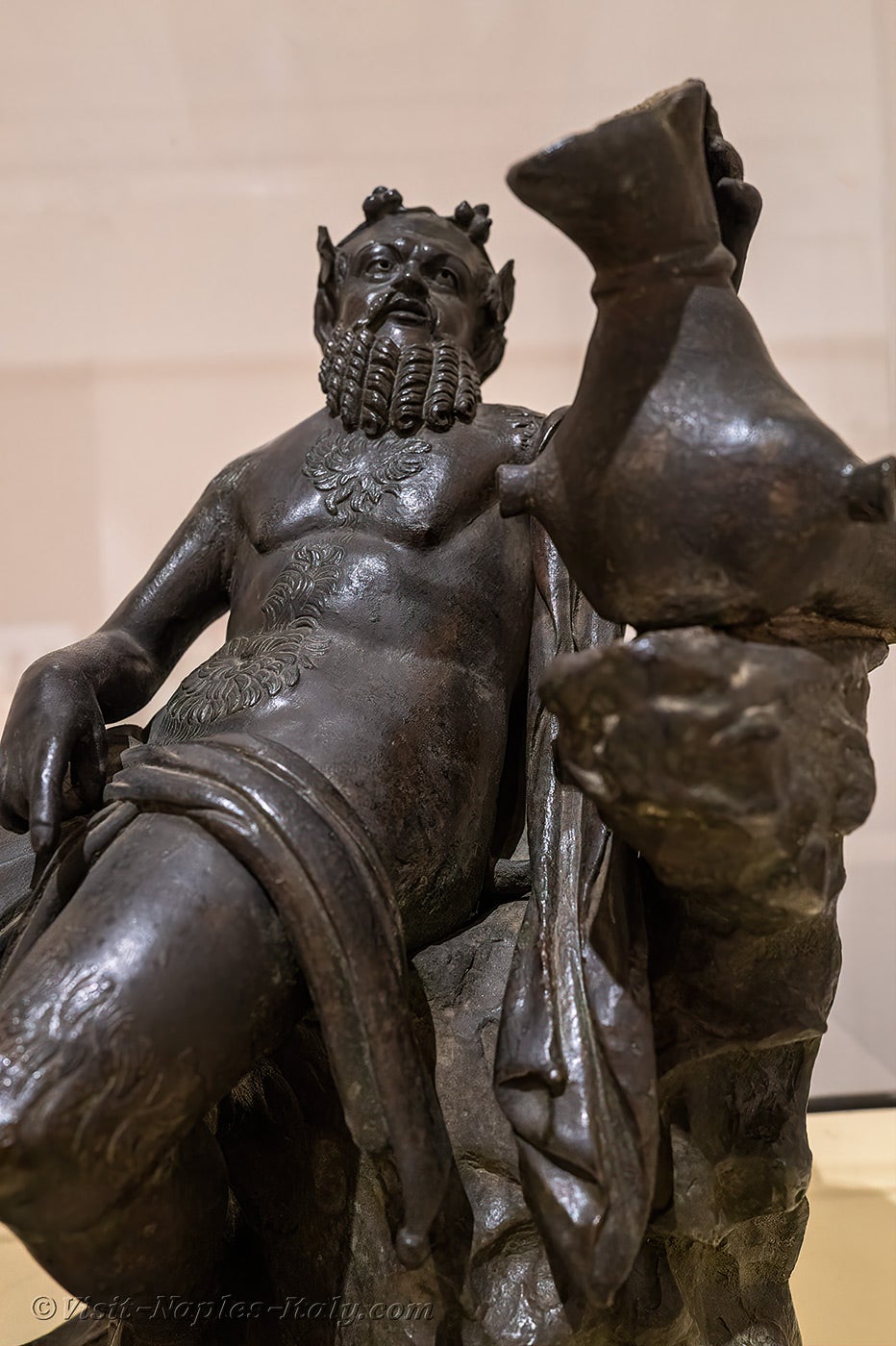
Sculpture - Bronze (Height 37 cm) 1st century BC - 1st century ADThese three statuettes, used as fountains, depict old, bearded satyrs wearing crowns, with hairy chests and bellies.
Two of them are accompanied by a panther from which the fountain water flowed, and the third is seated beside a wineskin serving the same purpose.
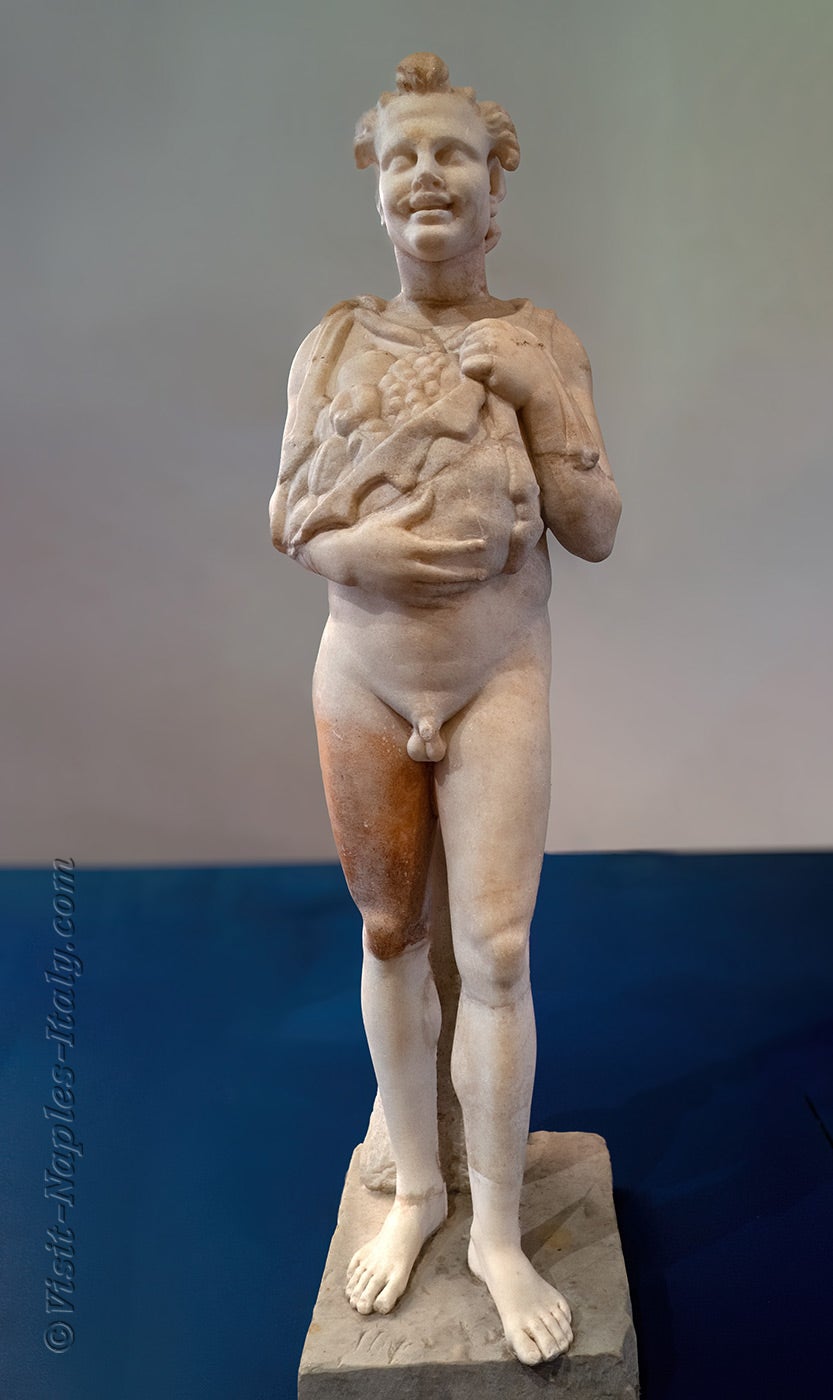
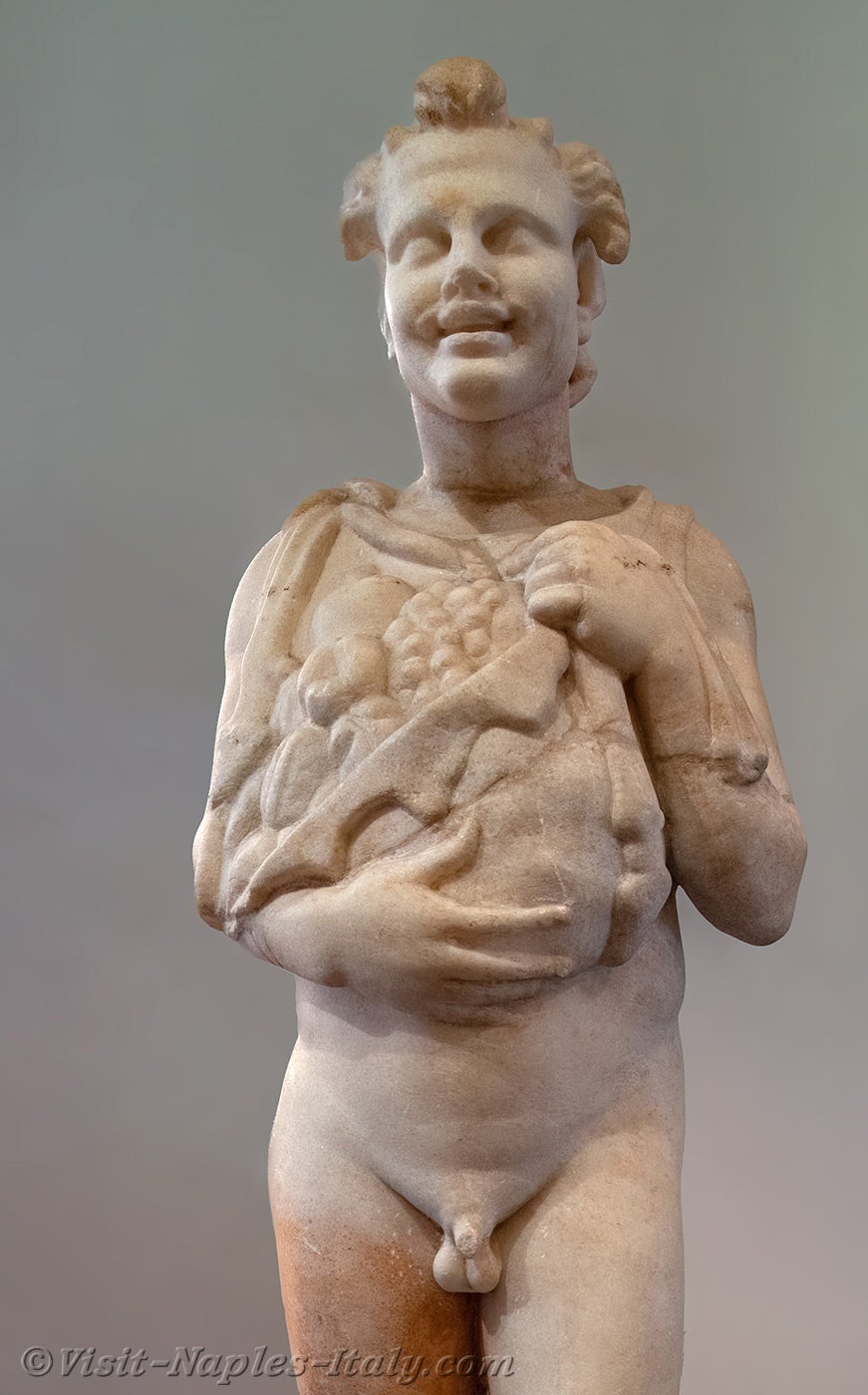
Young satyr holding fruit, Casa del Poeta Tragico, Pompeii
Sculpture - Marble (Height 90 cm) Late 1st century BCThis young satyr with a childlike face smiles delightedly as he carries his nebride filled with beautiful fruit.
Two small horn-like appendages are visible on the top of his forehead.
Oscillum with a satyr, Garden of House IX 1.7, Pompeii
Sculpture - Marble (35 x 35 cm) 50-79 AD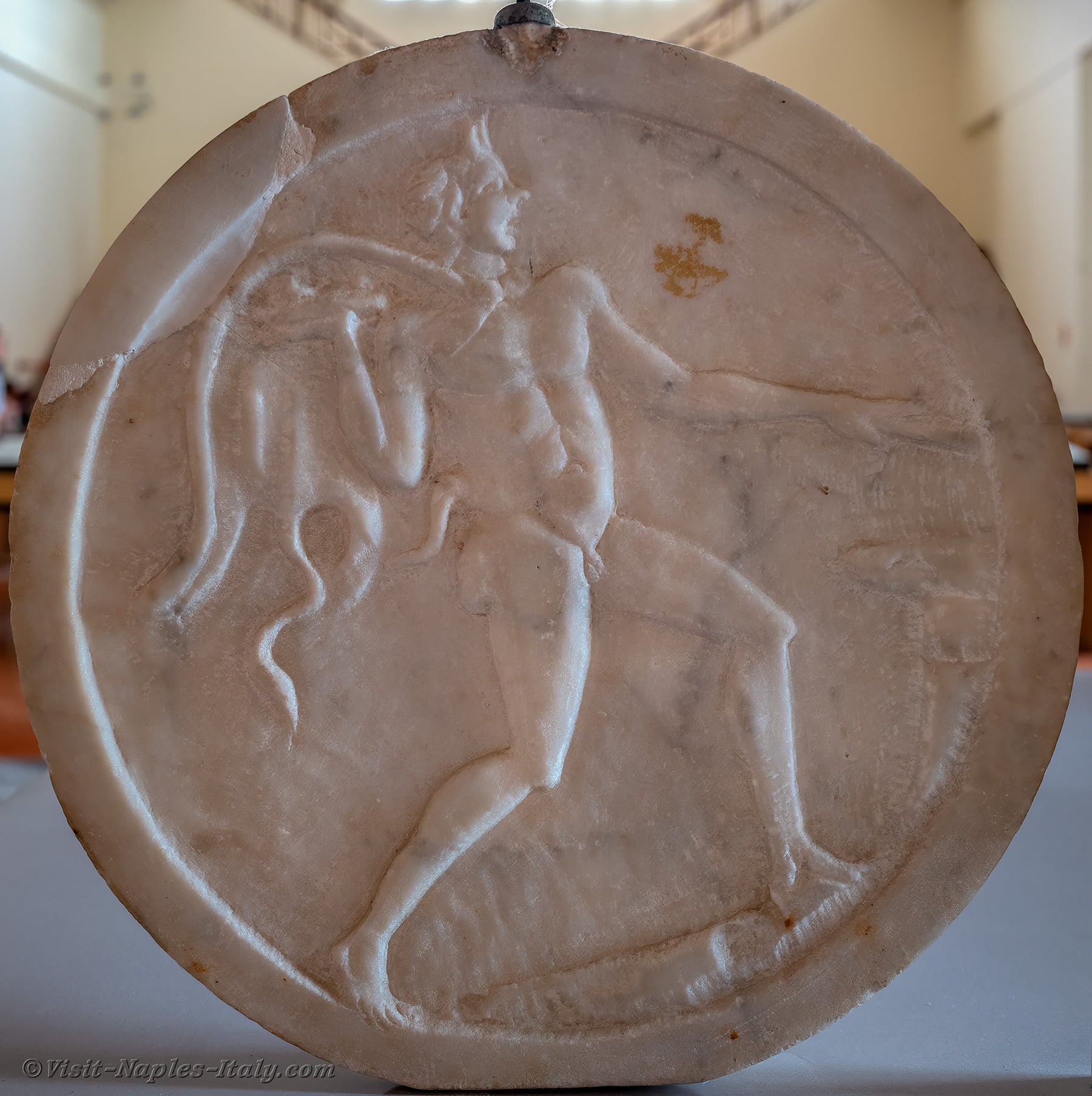
Oscillum with a satyr In Roman antiquity, decorative round bas-reliefs were offered to the gods.
These bas-reliefs were carved on both sides so that they could then be hung on cords or chains and displayed outdoors, often between columns, in windows or in the middle of arches.
The wind caused them to sway and spin round and round, and this oscillation gave them their name: Oscillum.
This Oscillum depicts on this side a satyr, and the face of Zeus Amun on the other side.
This side shows the satyr lighting a torch on an altar to which he is offering the gifts he carries on a tray.
Satyr carrying the infant Dionysus on his shoulders, Farnese Collection
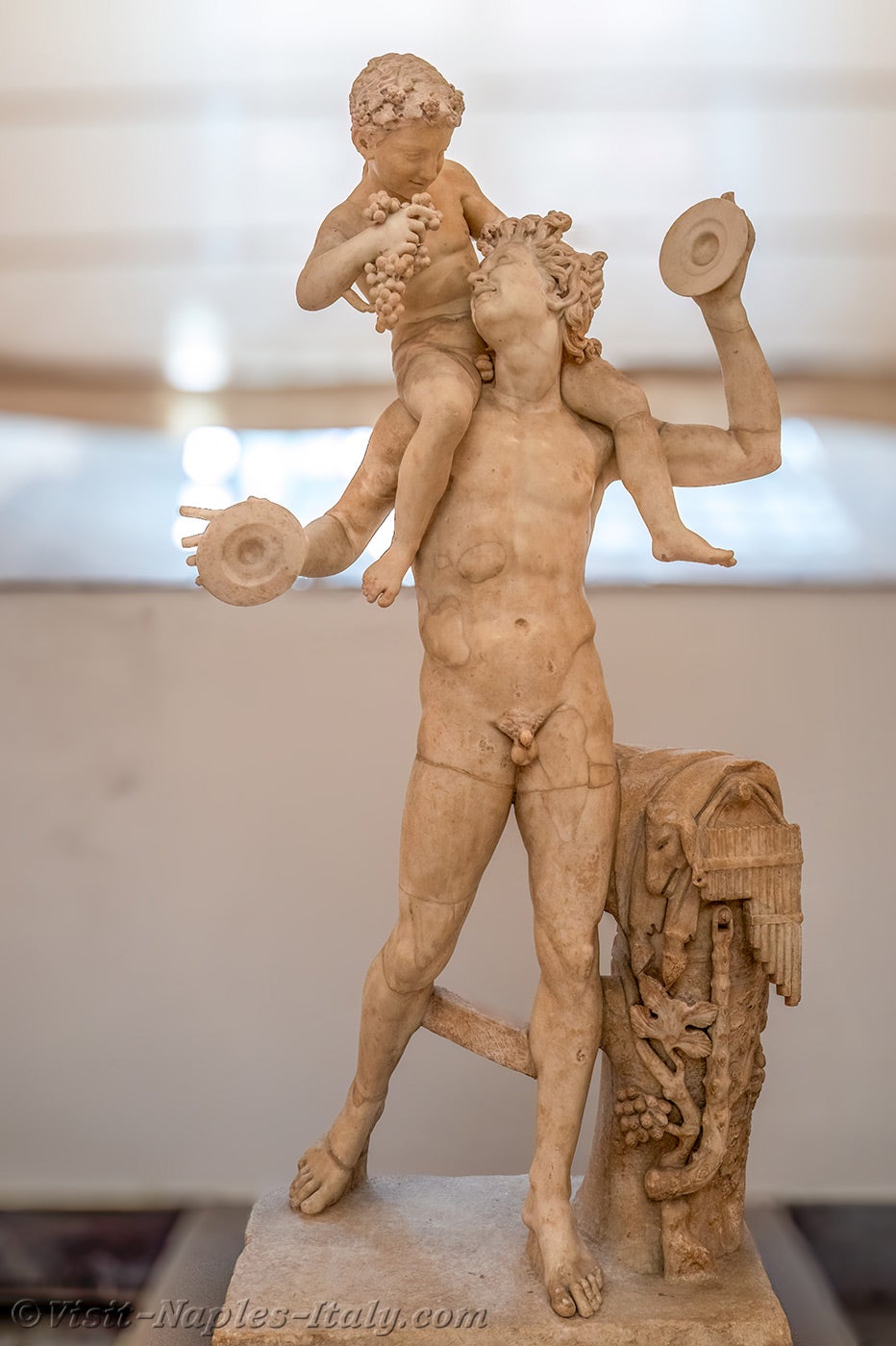
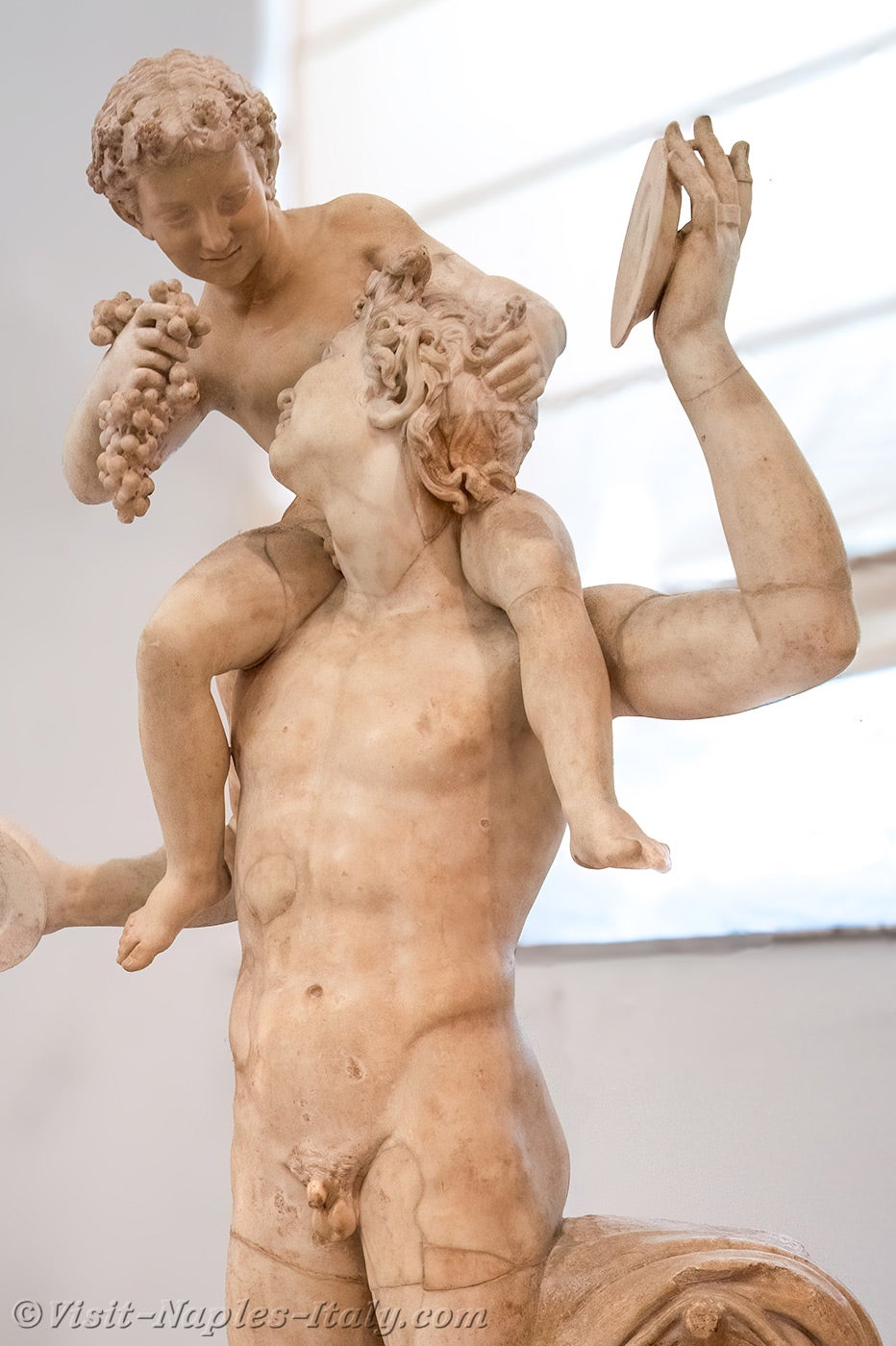
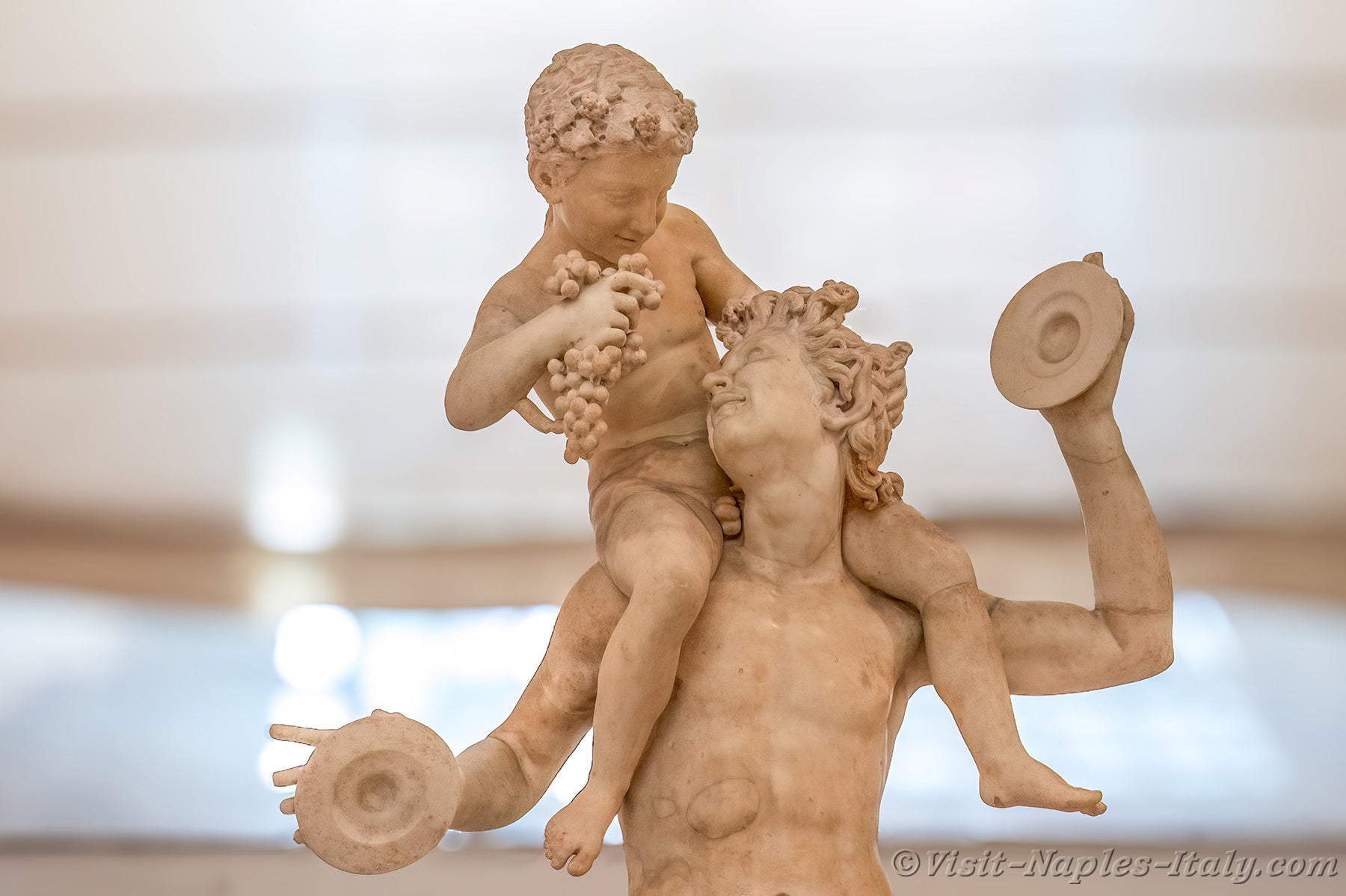
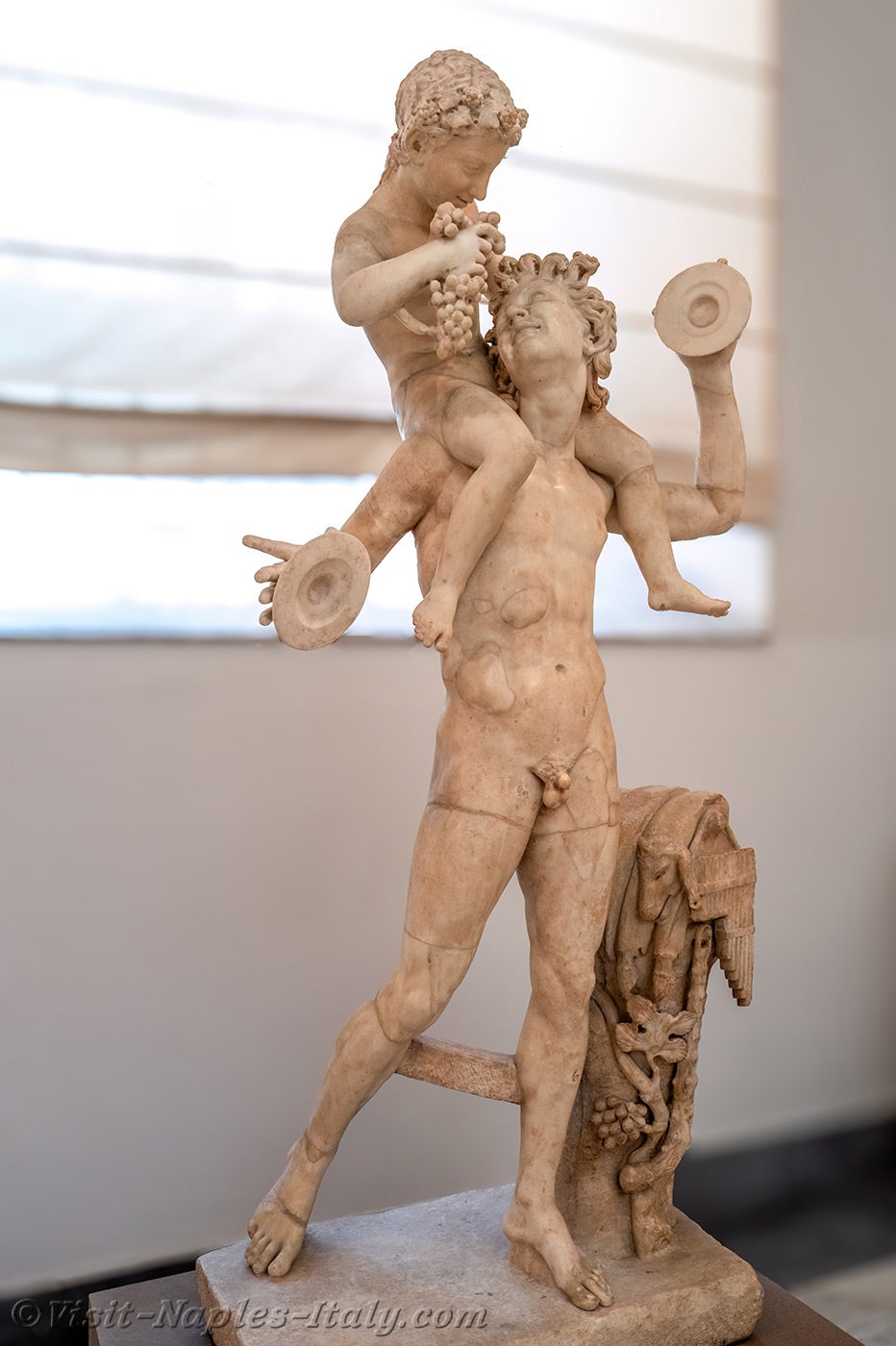
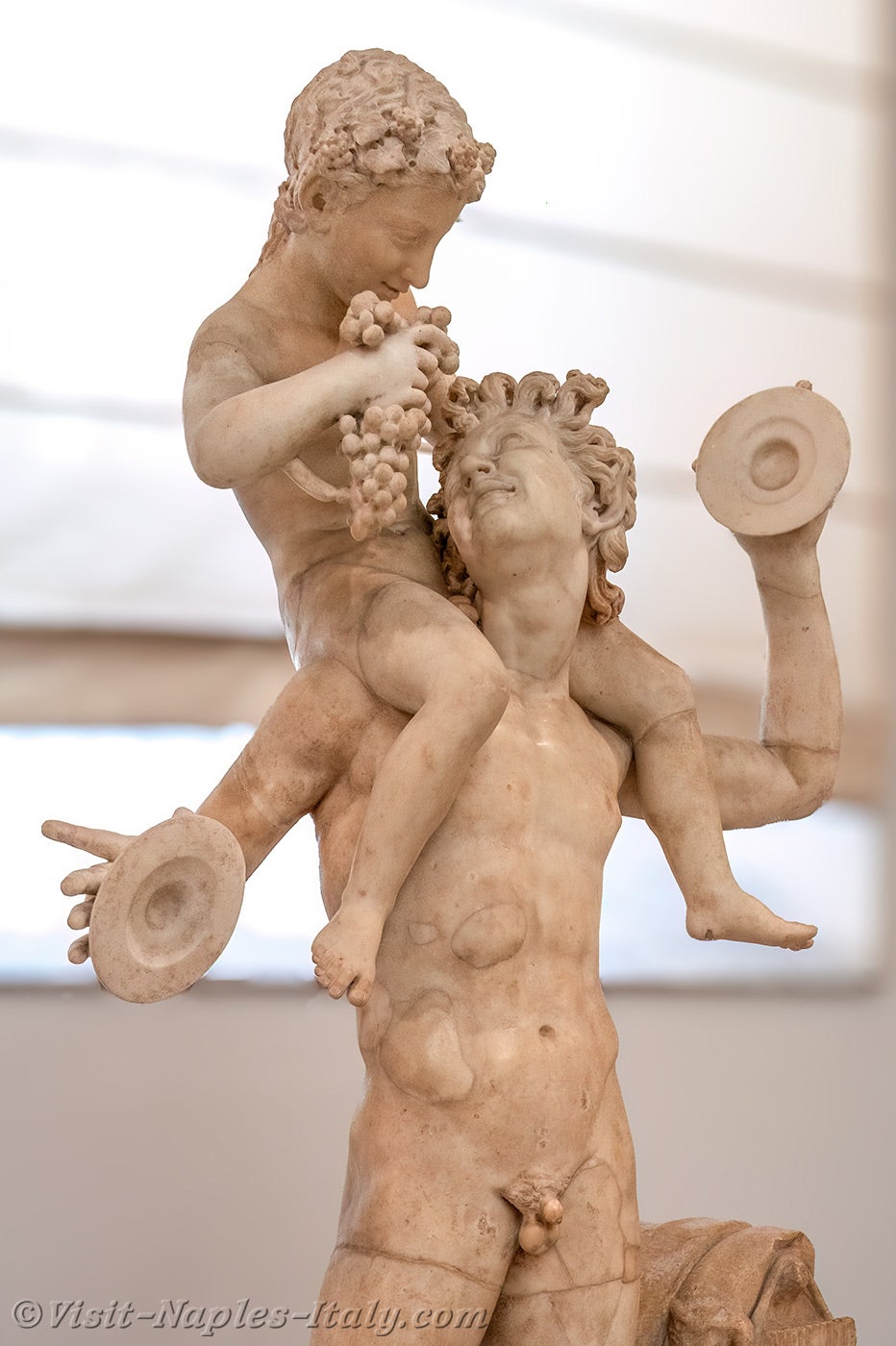
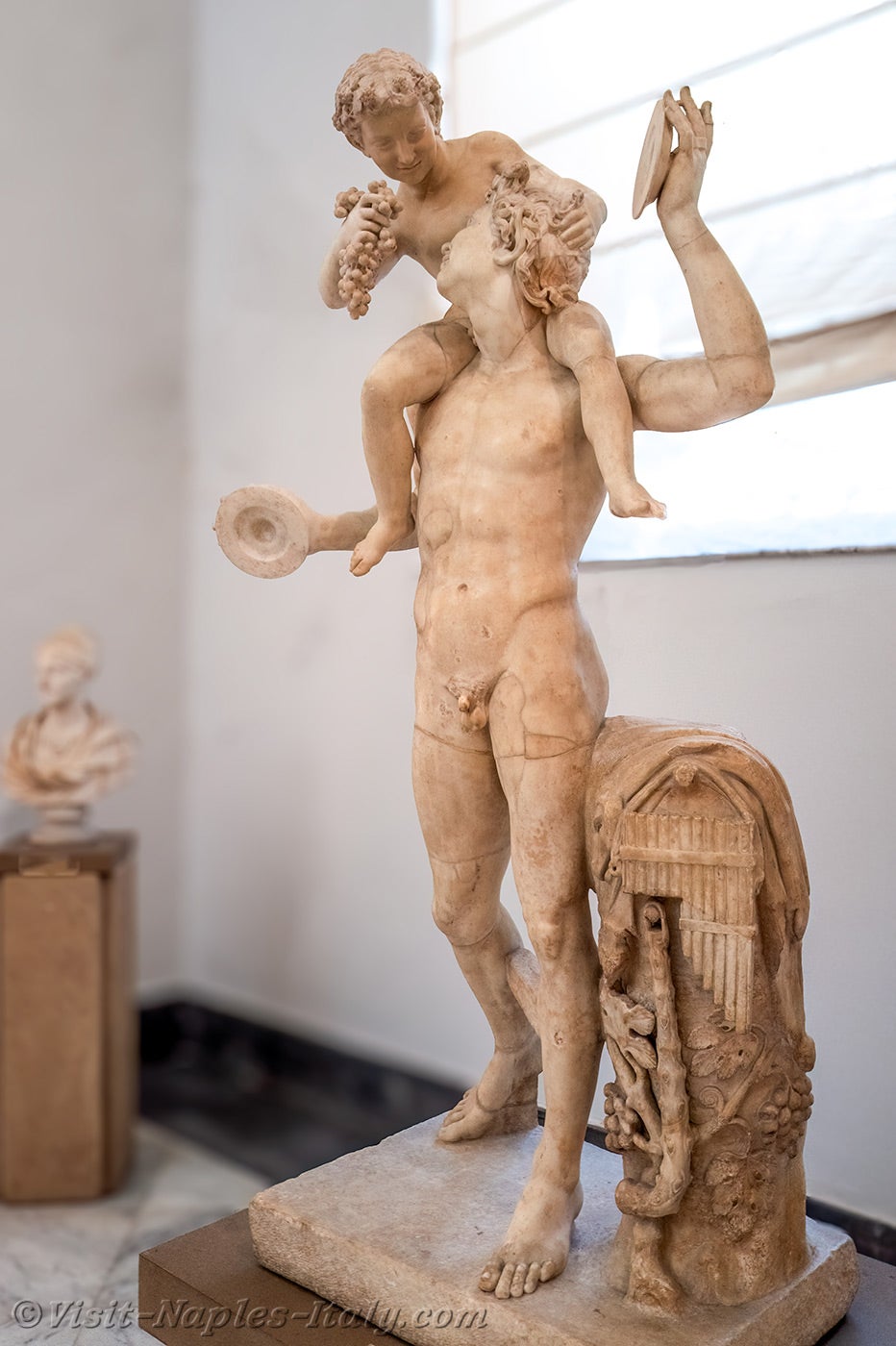
Satyr and Dionysus as a child Sculpture - Marble (Height 188 cm) 2nd century
This sculpture depicts the infant Dionysus being carried on the shoulders of a satyr; the scene is full of joy and spontaneity.
They are clearly very happy to be having fun together.
Little Dionysus, whose head is crowned with vine leaves, clings with one hand to the satyr’s hair and holds a beautiful bunch of grapes in the other.
The satyr looks at him with a smile and dances, striking cymbals.
At the satyr’s feet, the vine grows, clinging to a trunk where he has placed his Nereid and hung a pan flute.
Satyr playing the flute, Praedia di Giulia Felice, Pompeii
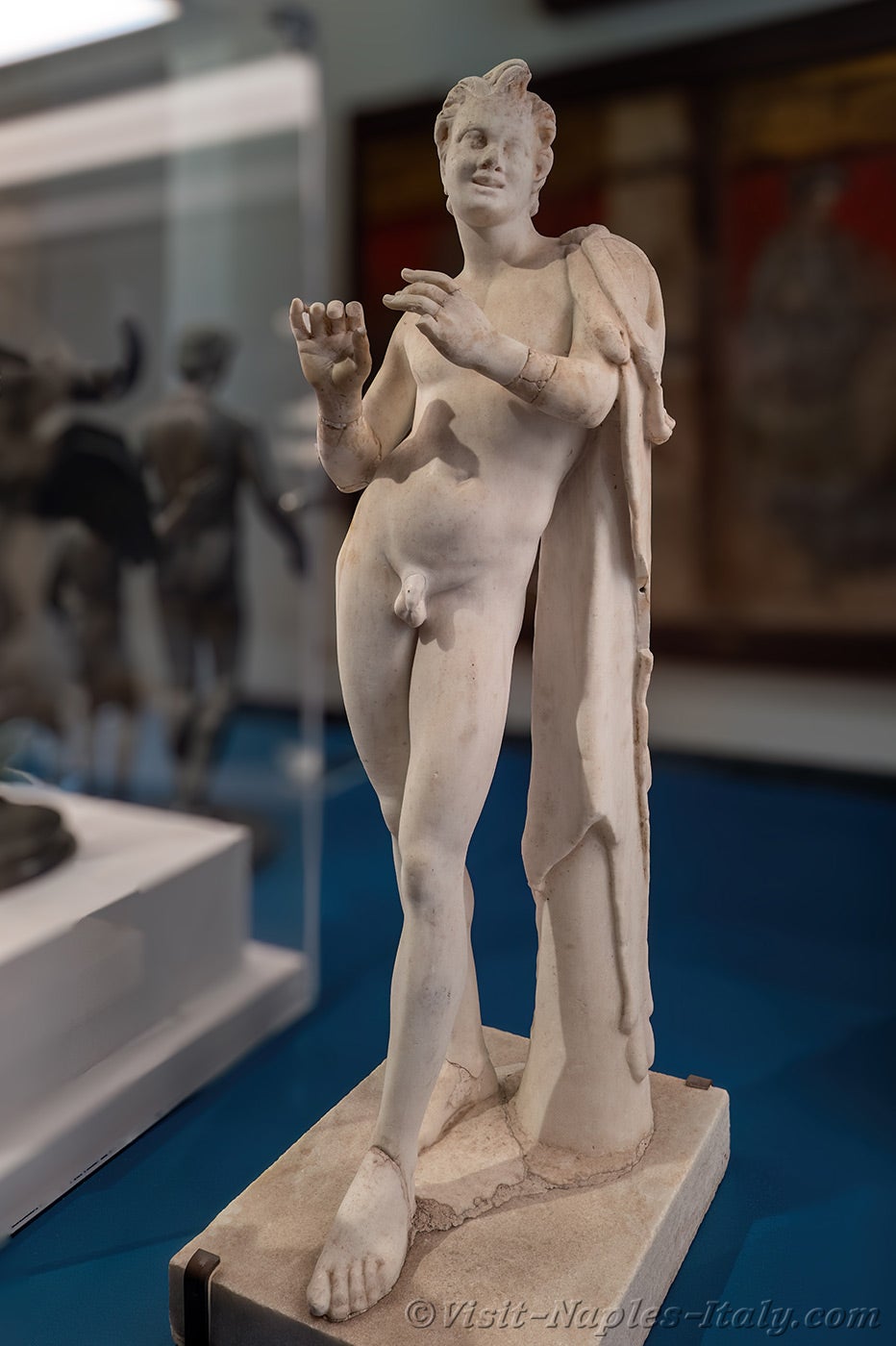
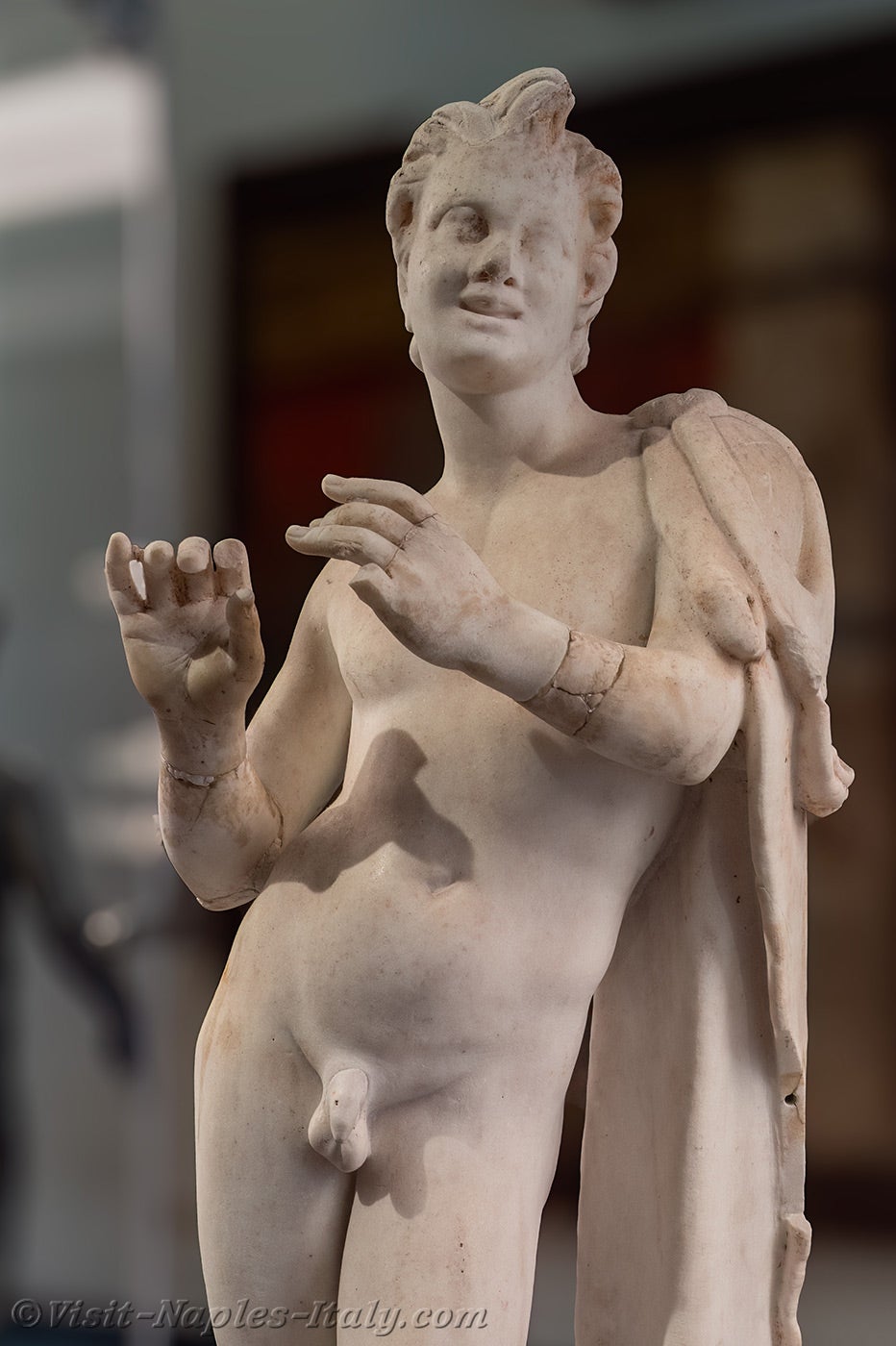
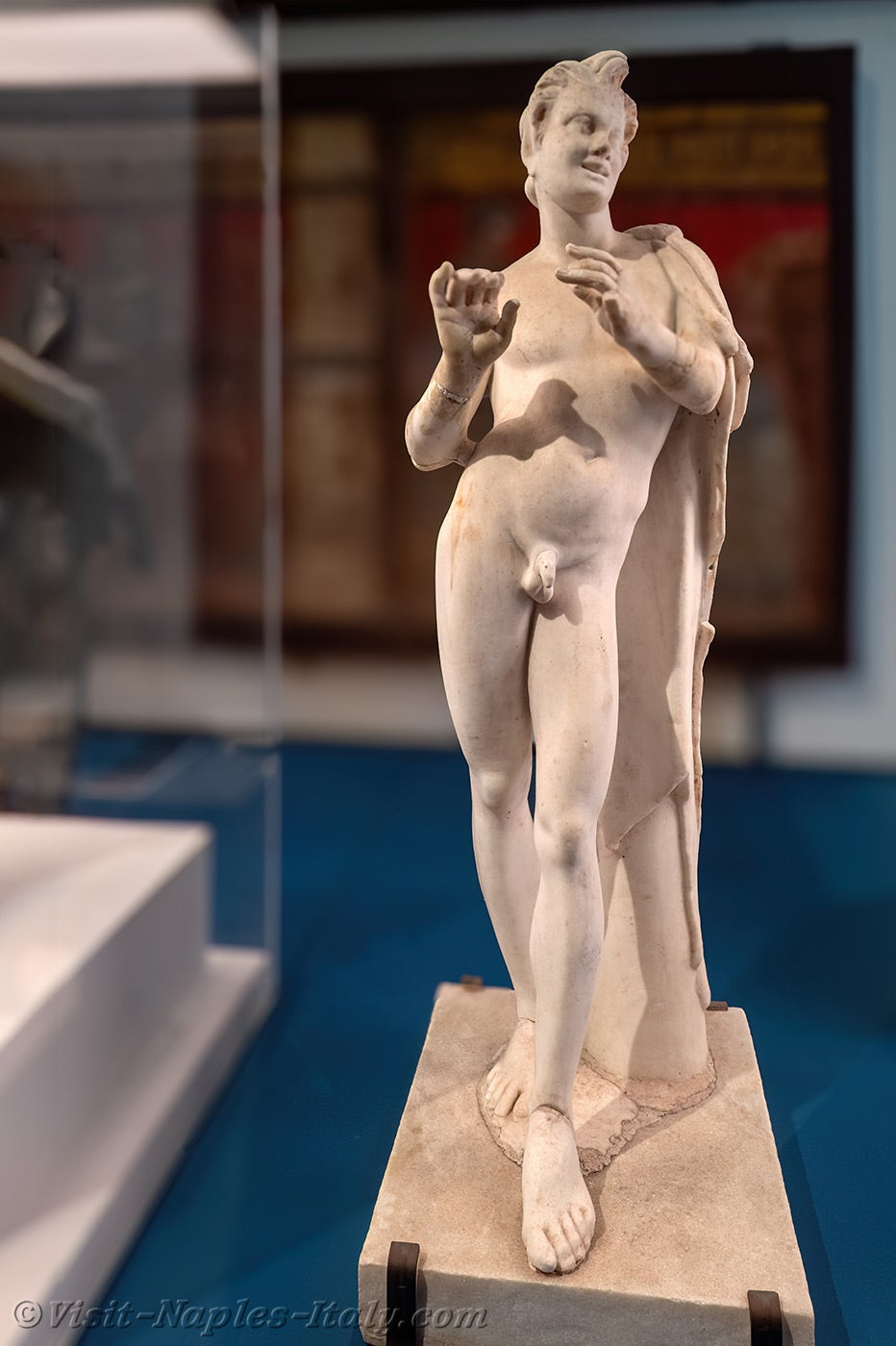
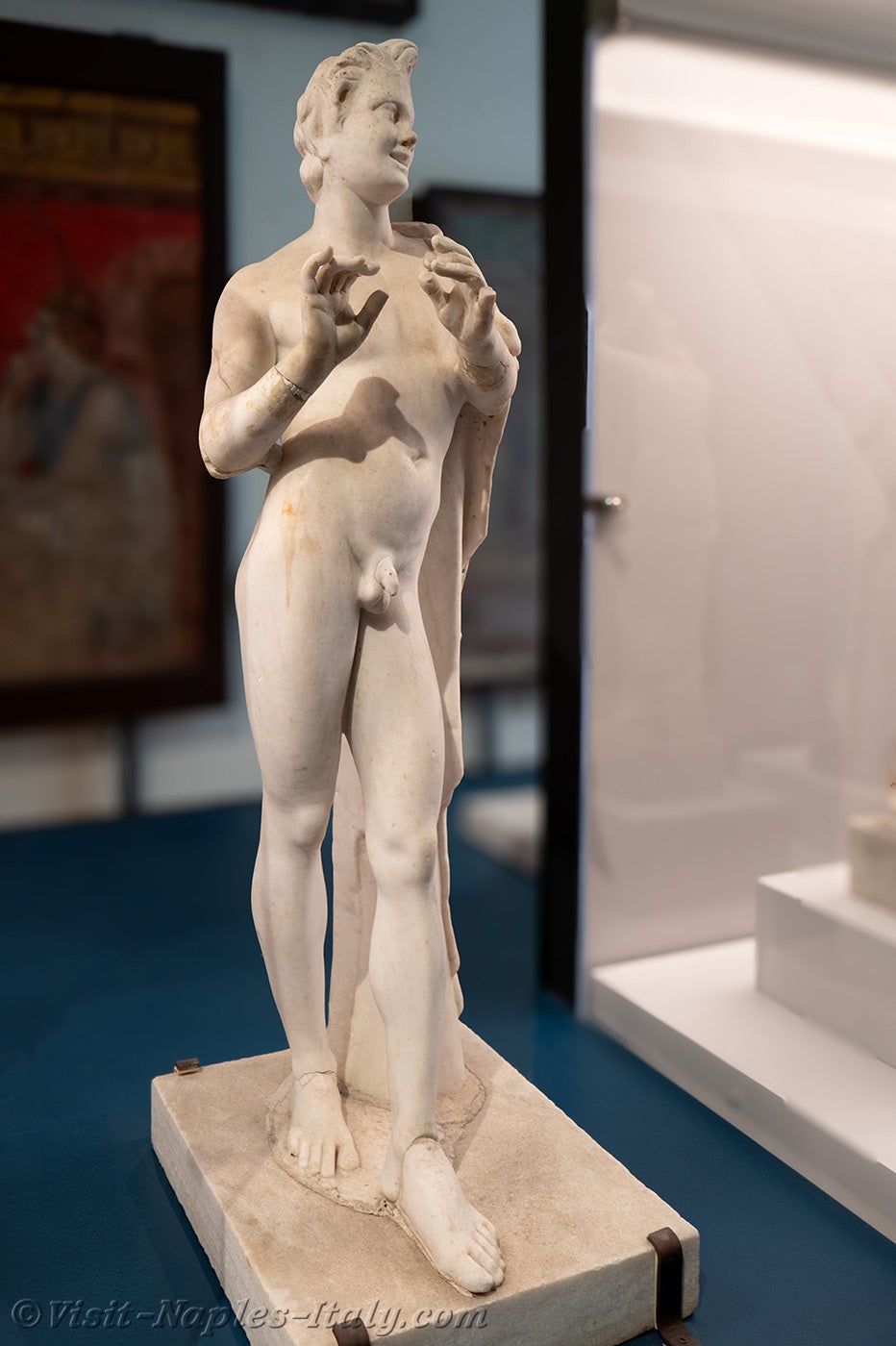
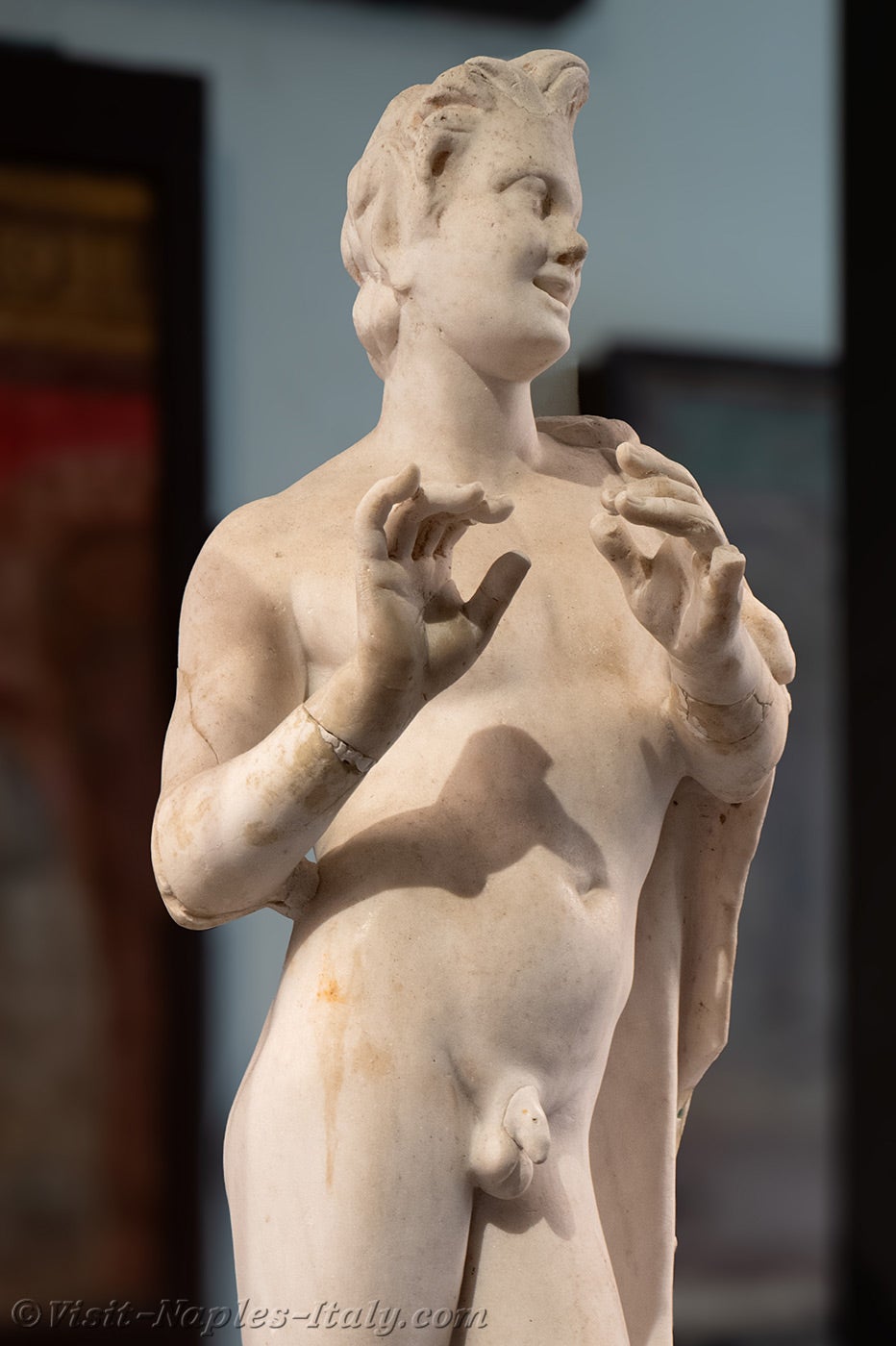
Sculpture - Marble (Height 97 cm) Second half of the 1st centuryThis young satyr, naked save for the Nereid he carries on his left shoulder, is playing the transverse flute.
His ecstatic smile expresses the festive joy combined with aesthetic pleasure.
Satyr in the guise of Bacchus
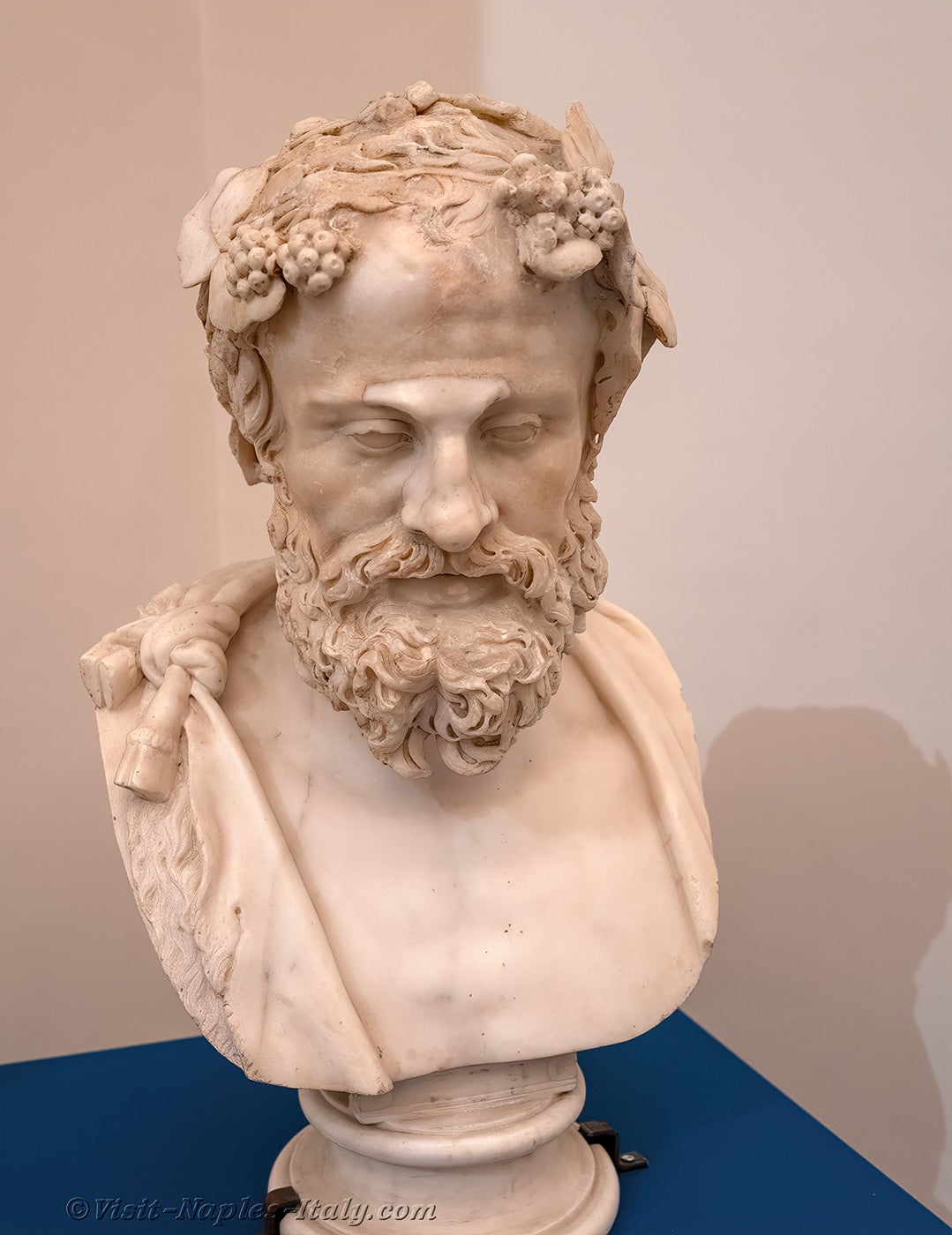
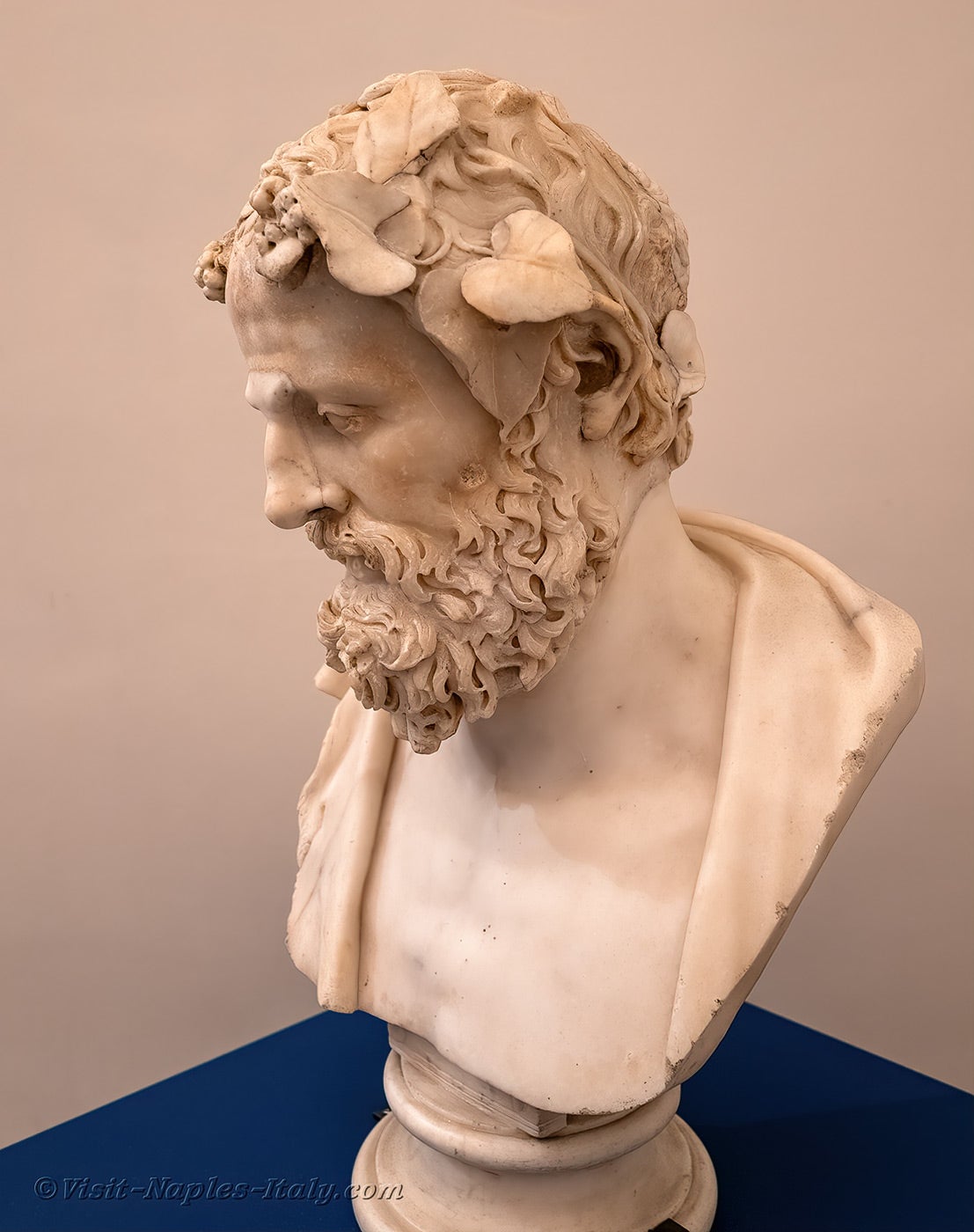
Sculpture - Marble (Height 46 cm) Second half of the 2nd centuryThis beautiful bust of a satyr, depicted in the guise of Dionysus, could almost be that of a philosopher, pensive and wise.
The serious face of this disciple of Dionysus, crowned with vine leaves , shows that the god of wine, celebrated by boisterous processions, was also the god of the authors of theatrical performances, whether satirical or tragic, which were staged during the festivals held in his honour.
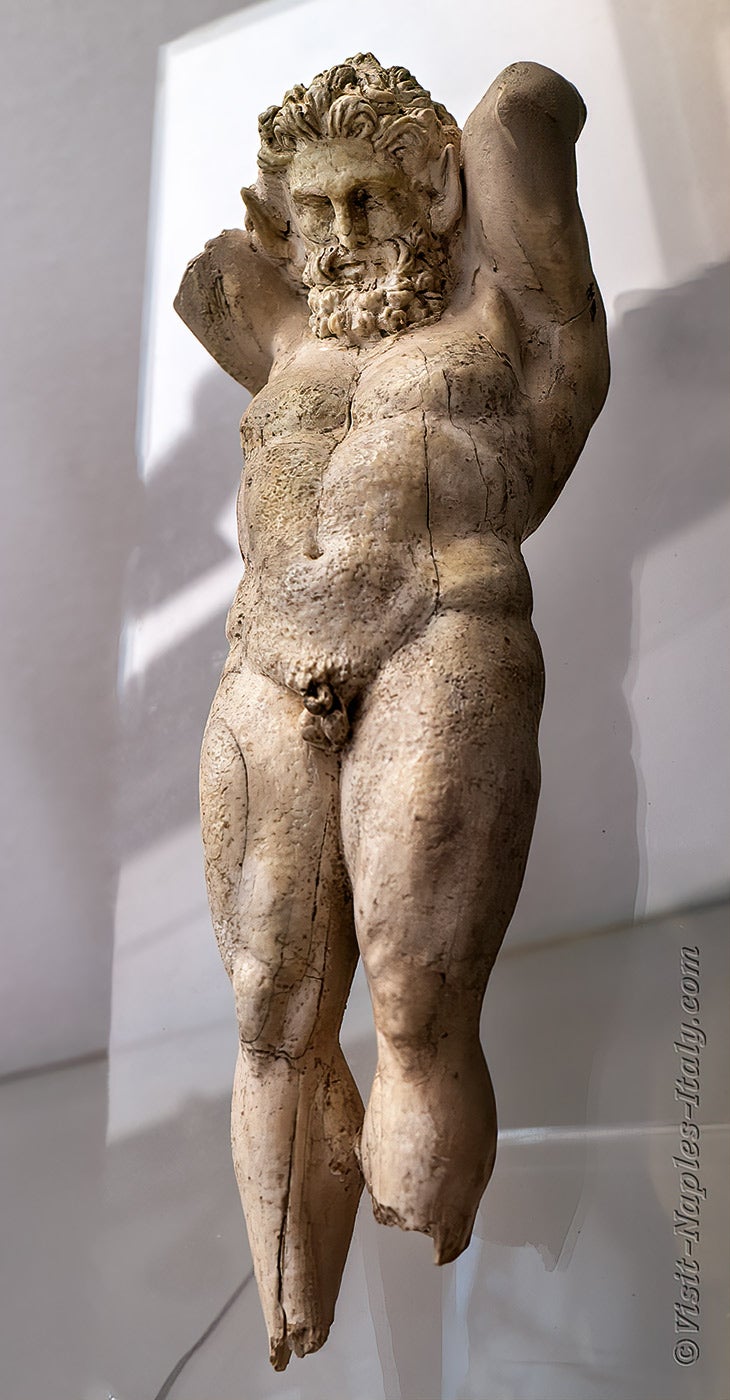
Satyr carrying an object, Vesuvius region
Sculpture - Ivory - Late 1st century BCThis ivory statuette depicts a satyr appearing to carry a heavy object; however, it is more likely a depiction of the torment of Marsyas, inflicted by Apollo after defeating him in a musical contest.
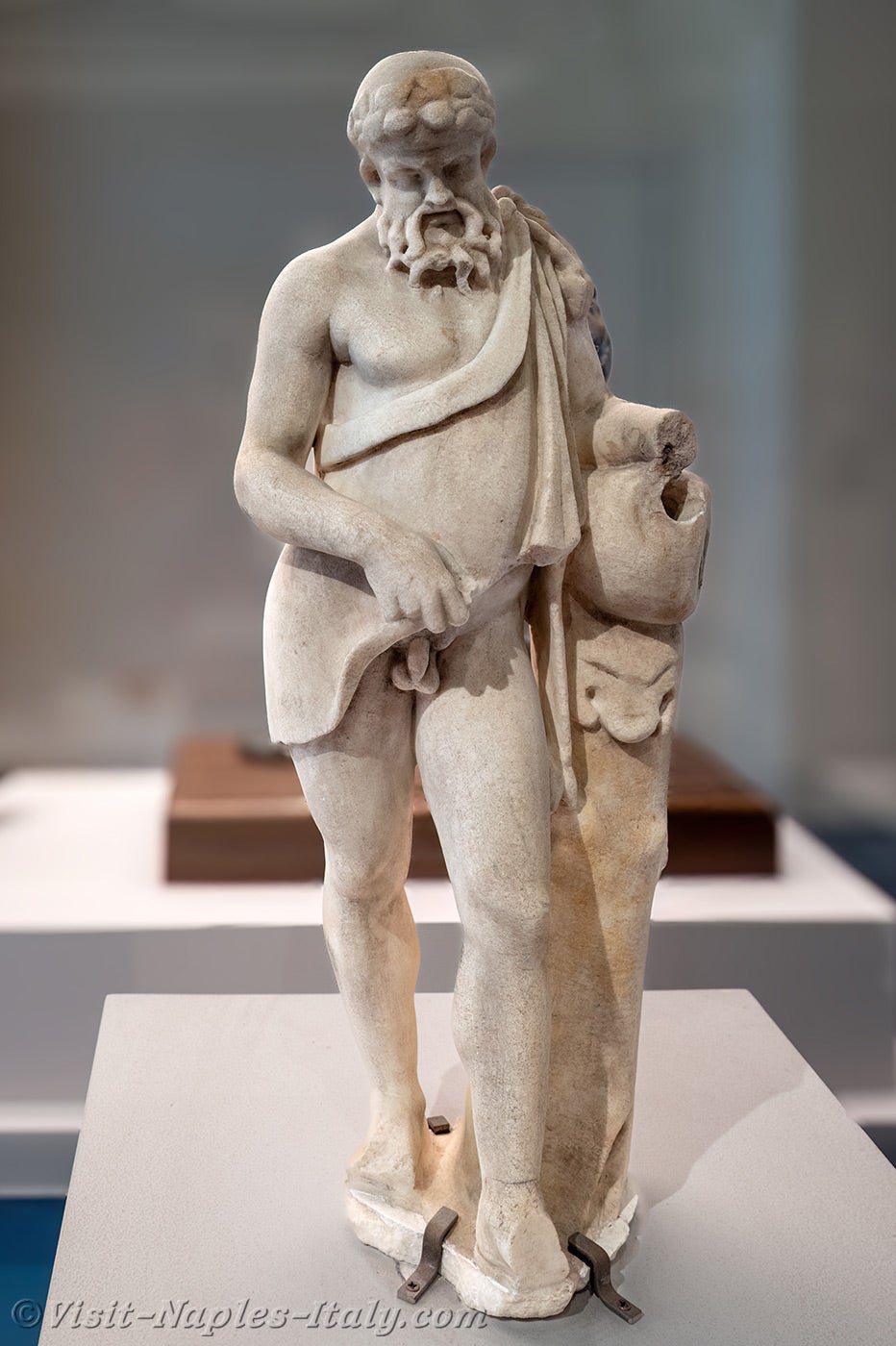
Satyr used as a fountain, Casa del Granduca, Pompeii
Sculpture - Marble - 40 ADThis bearded, elderly satyr, half-covered by his nebride, rests his left arm on a wineskin from which flowed the water of the fountain of which he formed part; in the Casa del Granduca in Pompeii.
Mythology Achilles | Aesculapius | Amazons | Aphrodite Venus | Apollo | Artemis | Athena Minerva | Atlas | Concordia | Danaids | Diomedes | Dionysus | Dirce | Flora | Ganymede | Hera Juno | Hercules | Hermes | Nike | Orestes | Psyche | River | Satyrs | Zeus
Sculptures Mythology | Persons | Animals | Bas-relief
Artworks Sculptures | Frescoes | Eroticism
MANN Artworks Schedule Tickets Location | Authorizations
Back to Top of Page