

MANN Artworks Schedule Tickets Location | Authorizations
Artworks Sculptures | Frescoes | Eroticism
Sculptures Mythology | Persons | Animals | Bas-relief
Mythology Achilles | Aesculapius | Amazons | Aphrodite Venus | Apollo | Artemis | Athena Minerva | Atlas | Concordia | Danaids | Diomedes | Dionysus | Dirce | Flora | Ganymede | Hera Juno | Hercules | Hermes | Nike | Orestes | Psyche | River | Satyrs | Zeus
Sculptures of Apollo at the Archaeological Museum of Naples, Italy
Seated Apollo with a lyre, Farnese Collection
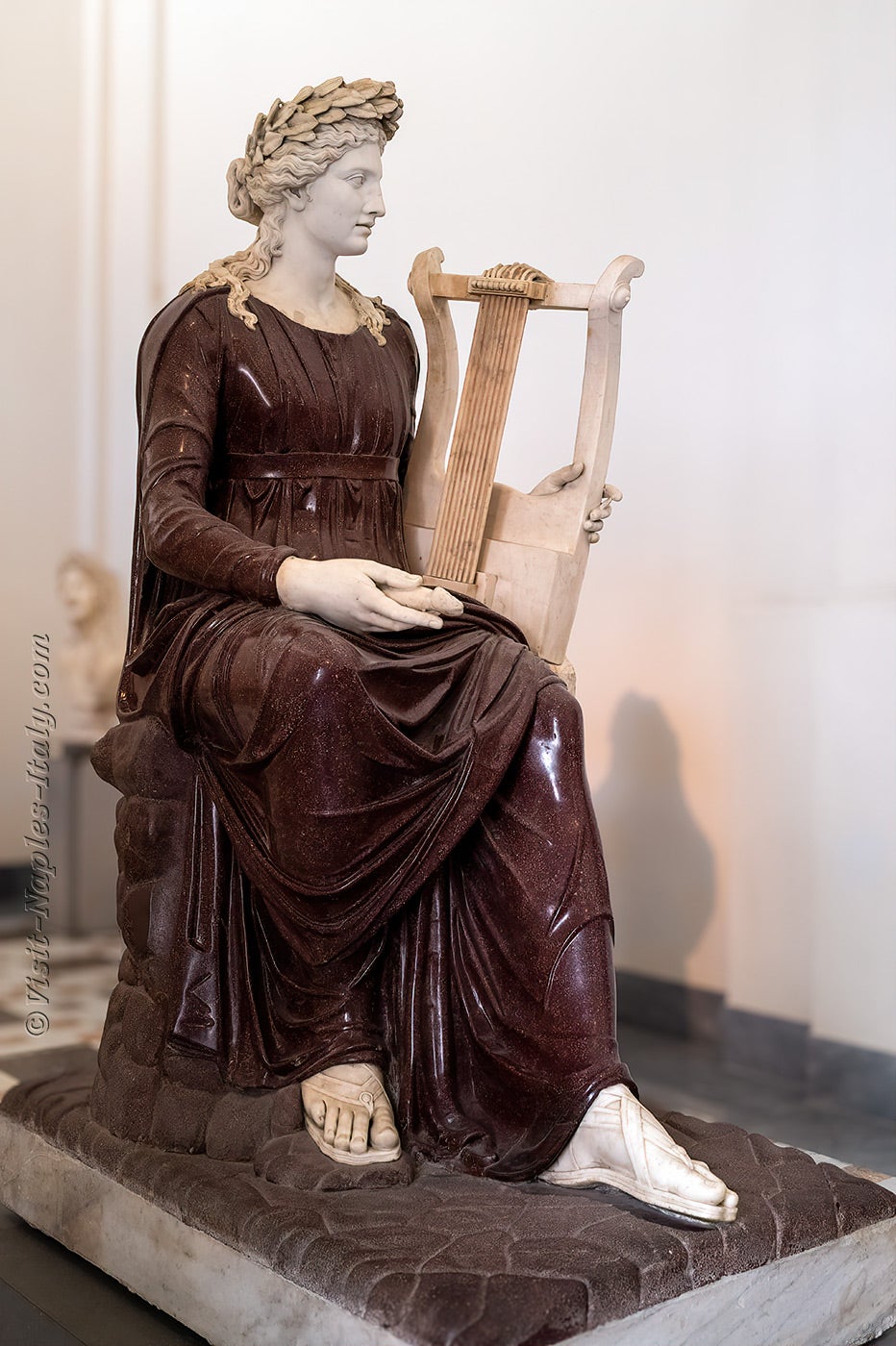
Apollo Seated Sculpture - Red porphyry, marble (Height 207 cm) 2nd century
This statue corresponds to the classical depiction of Apollo in the Temple of Delphi in the 4th century BC.
Apollo is depicted wearing a long, sleeved chiton fastened with a belt placed just below the chest and a himation (cloak) draped over his shoulders.
He is depicted seated on a rock, holding a lyre in his left hand and the plectrum in his right.
A wreath of laurel leaves rests upon his head.
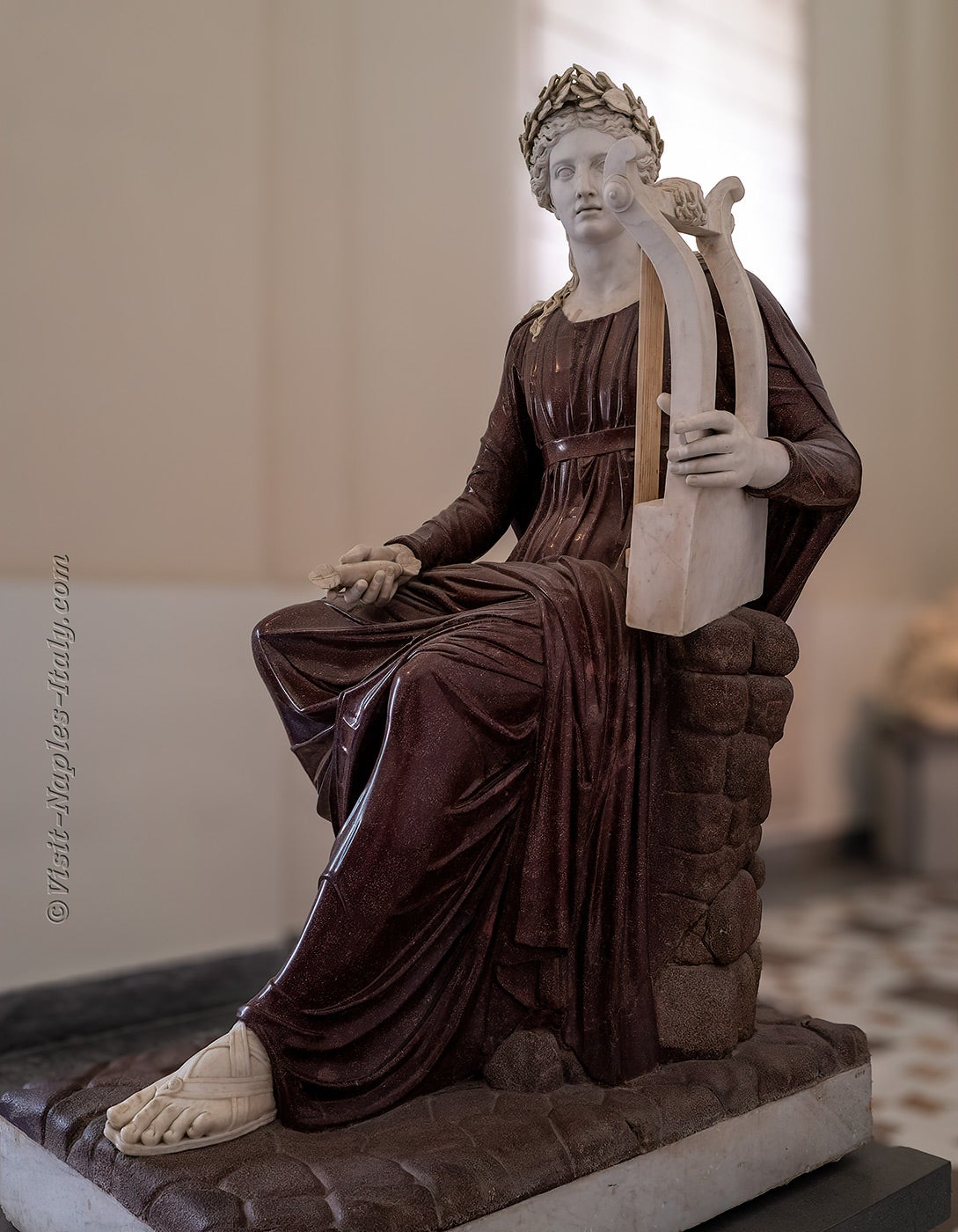
Apollo Seated The laurel wreath and the lyre were presented to Apollo by his brother Hermes.
The statue is made of Red porphyry and white marble and was named “Triumphant Rome” from the early 16th century.
The head, arms, feet and hands were originally made of bronze and metal; in 1790, the sculptor Carlo Albacini replaced the bronze parts with the current hands, arms, head and lyre, made of white marble from Luni.
This replacement was made necessary due to the poor condition of the statue’s metal and bronze parts.
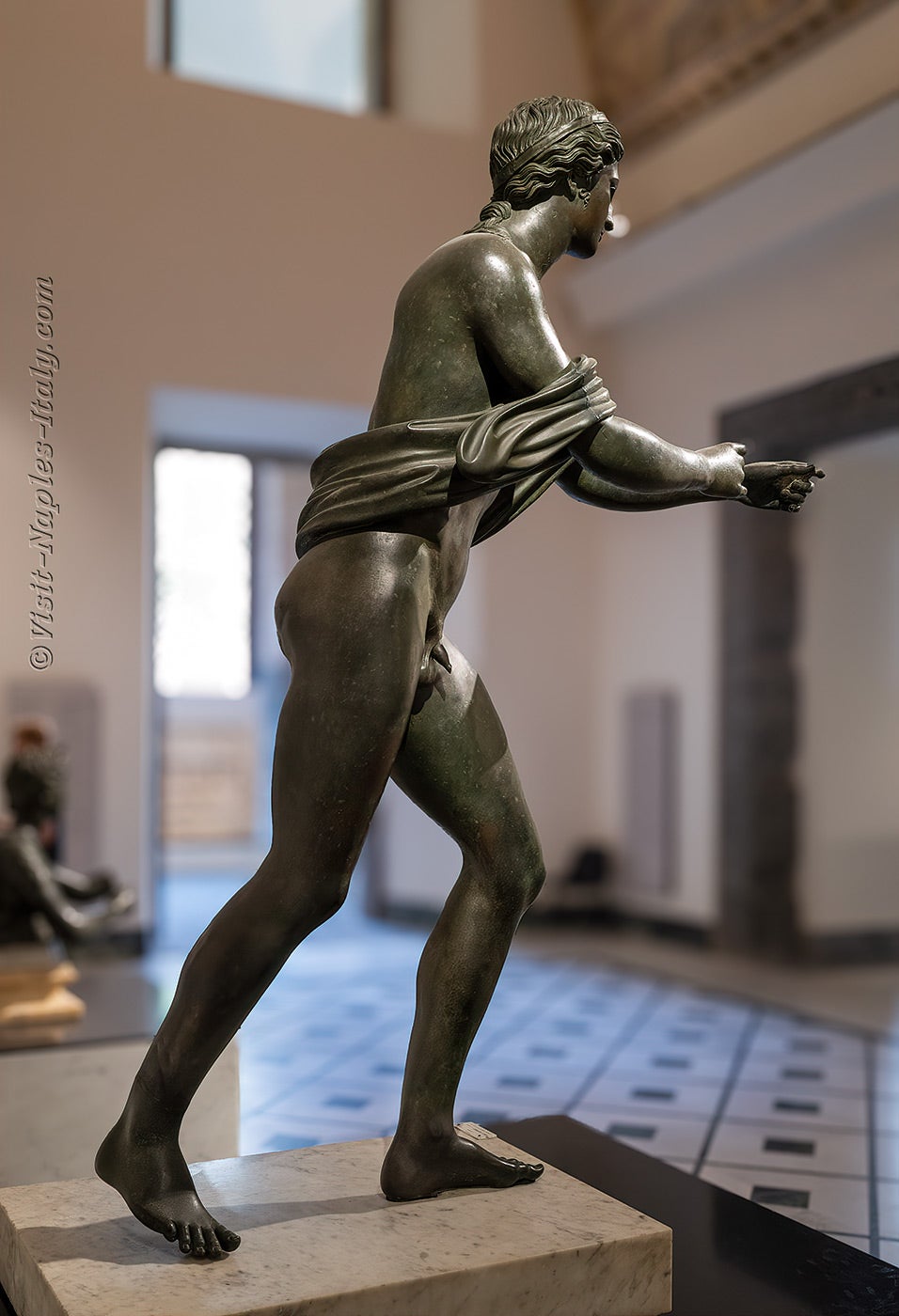
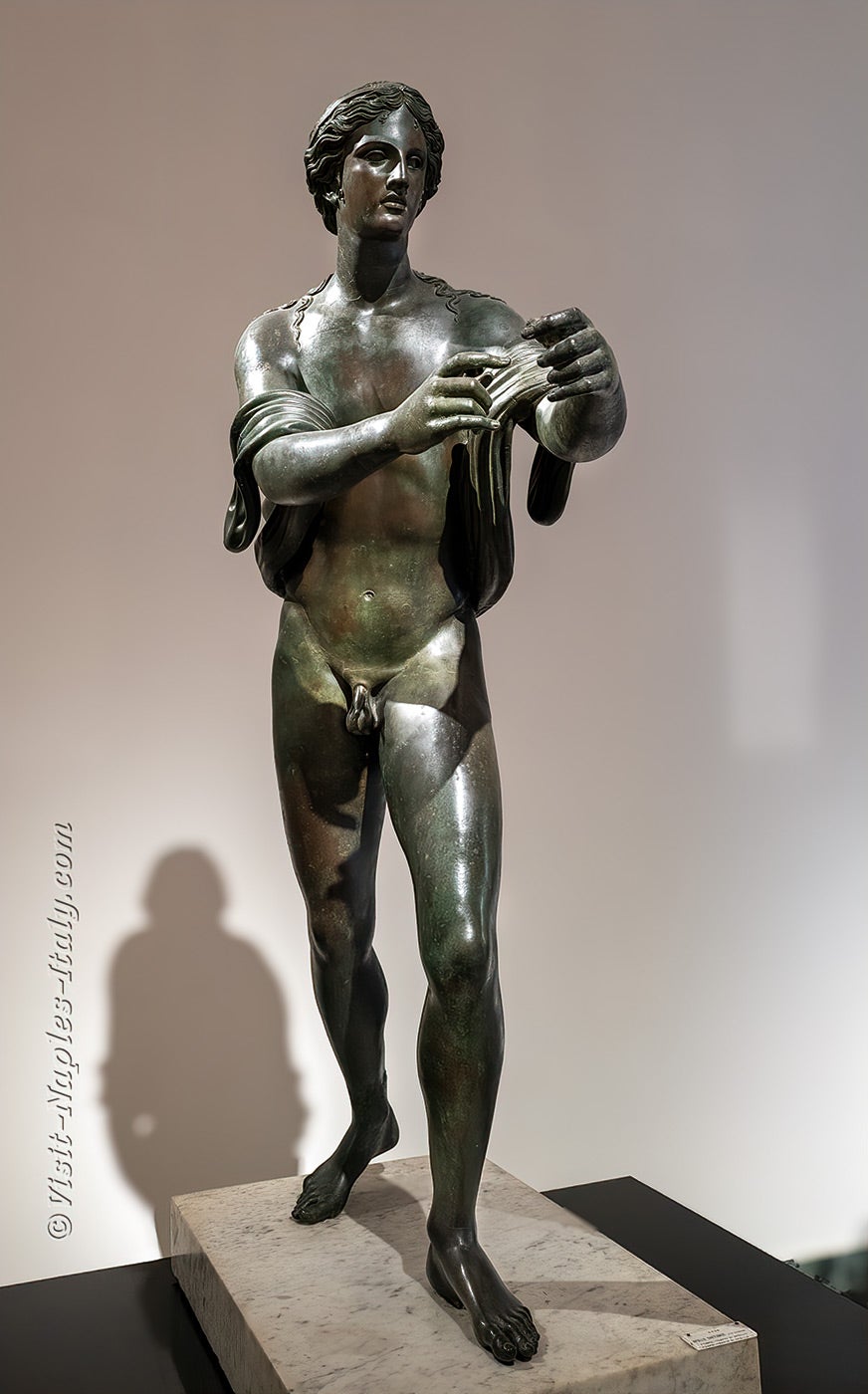
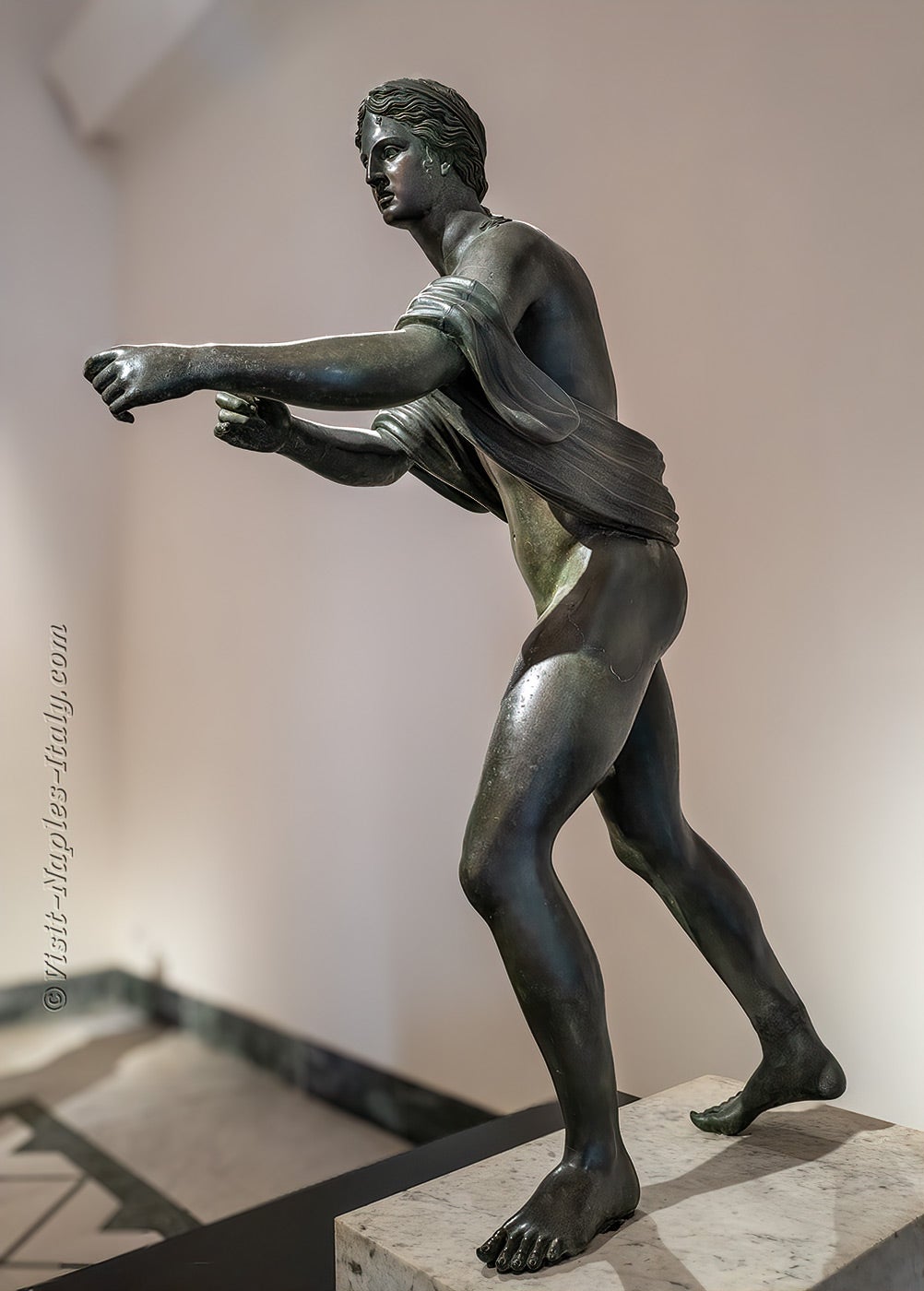
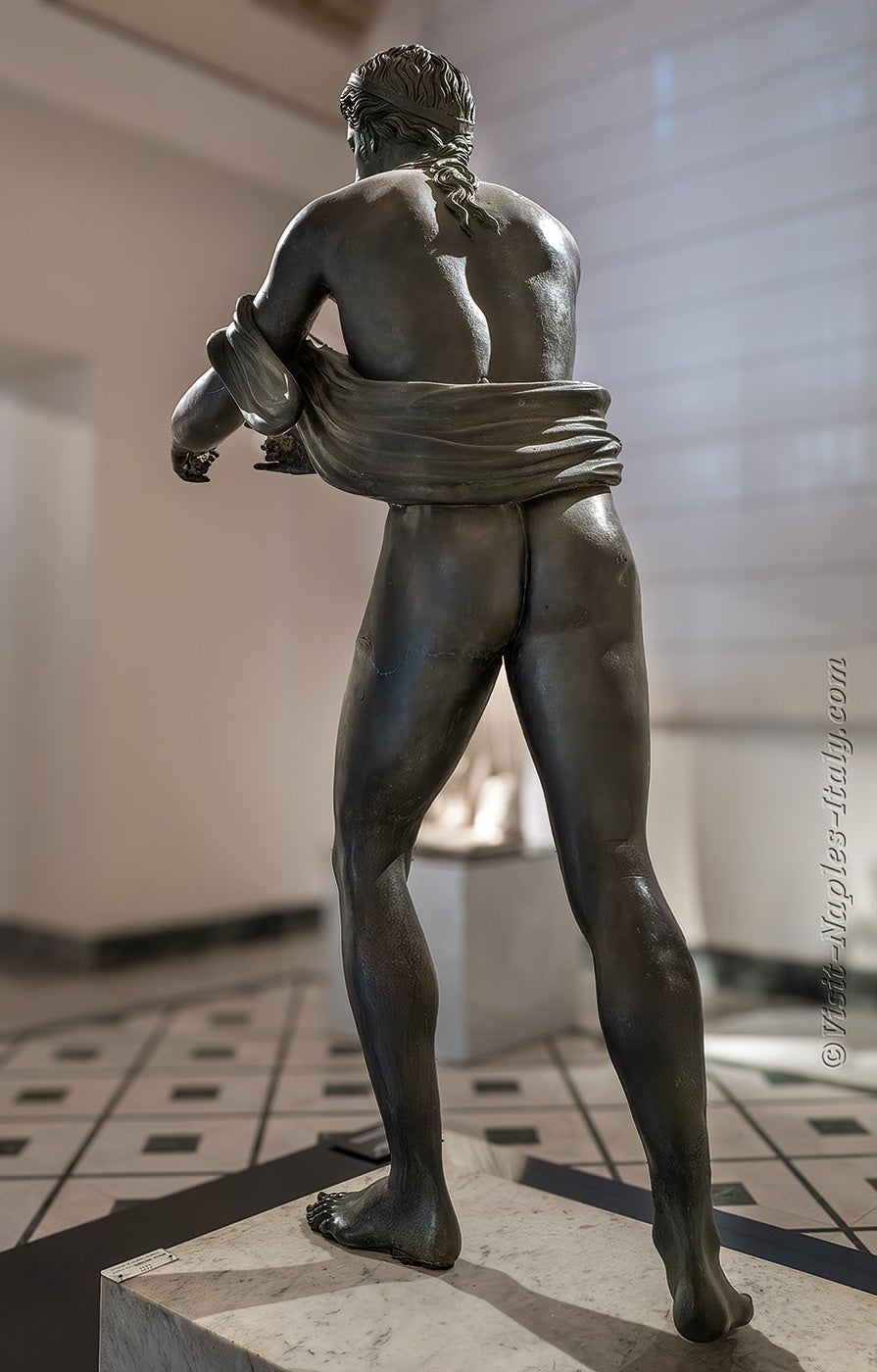
Apollo shooting an arrow, Temple of Apollo, Pompeii
Sculpture - Marble (Height 146 cm) 2nd century BC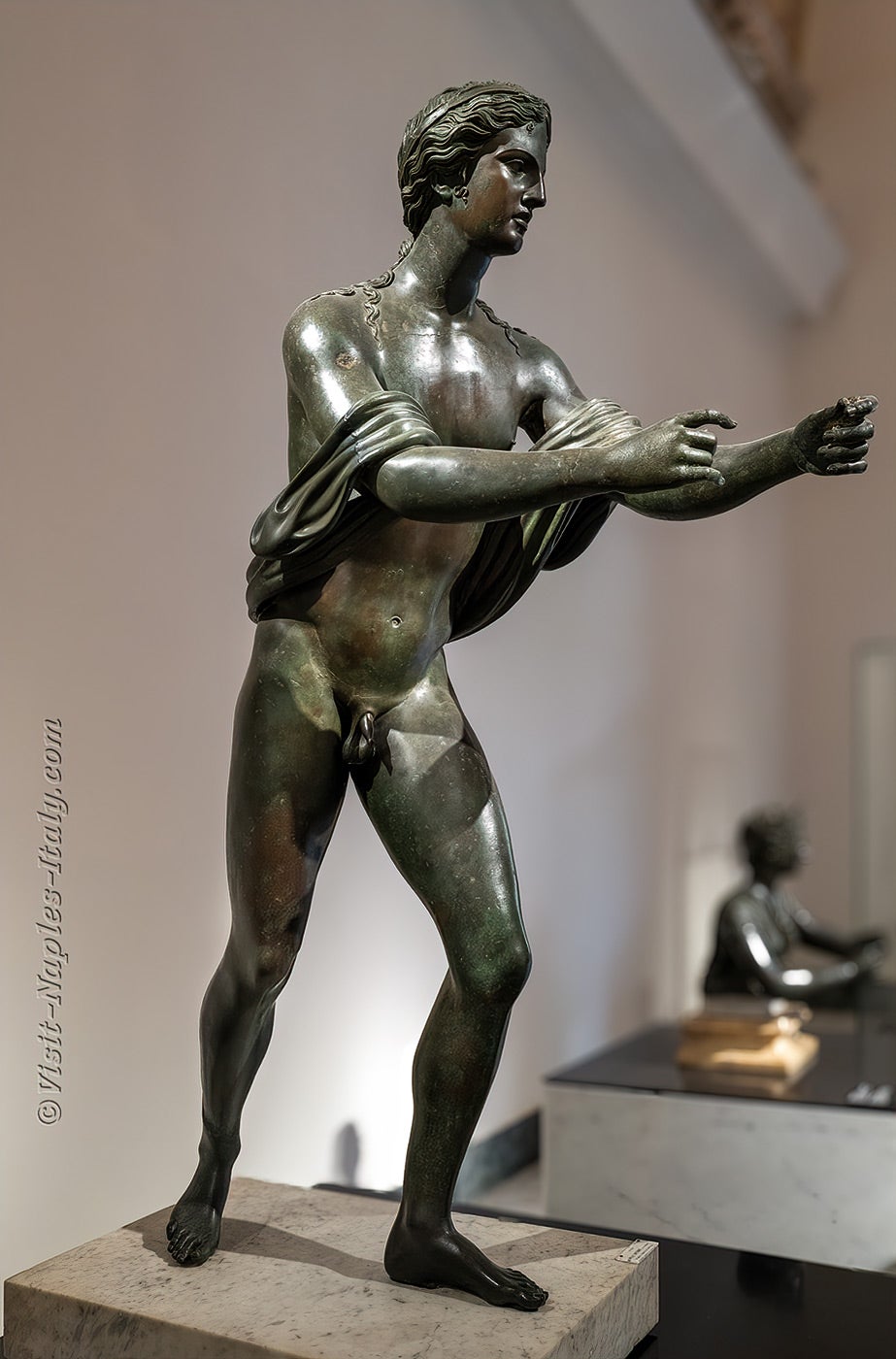
Apollo shooting an arrow This statue was found in several fragments and was considered to be part of the Temple of Apollo, where a similar statue of Artemis, also depicted shooting a bow, had been found.
The two sculptures also bore great similarities in terms of the curls in the hair, suggesting that they both came from the same artist’s workshop.
It is thought that these statues were based on a Greek model in which the two deities kill the Niobids with their bows.
The Niobids were the children of Amphion and Niobe, who had boasted of having had more children than Leto, the mother of Apollo and Artemis, who then decided to avenge their mother for this affront by killing the Niobids with their arrows.
At the base of the statue of Apollo, the inscription “Mumi” which would suggest that these two statues were part of the spoils taken during the capture of Corinth and its sacking by the consul Lucius Mummius Achaicus (146 BC) and that they were presented by him to Pompeii.
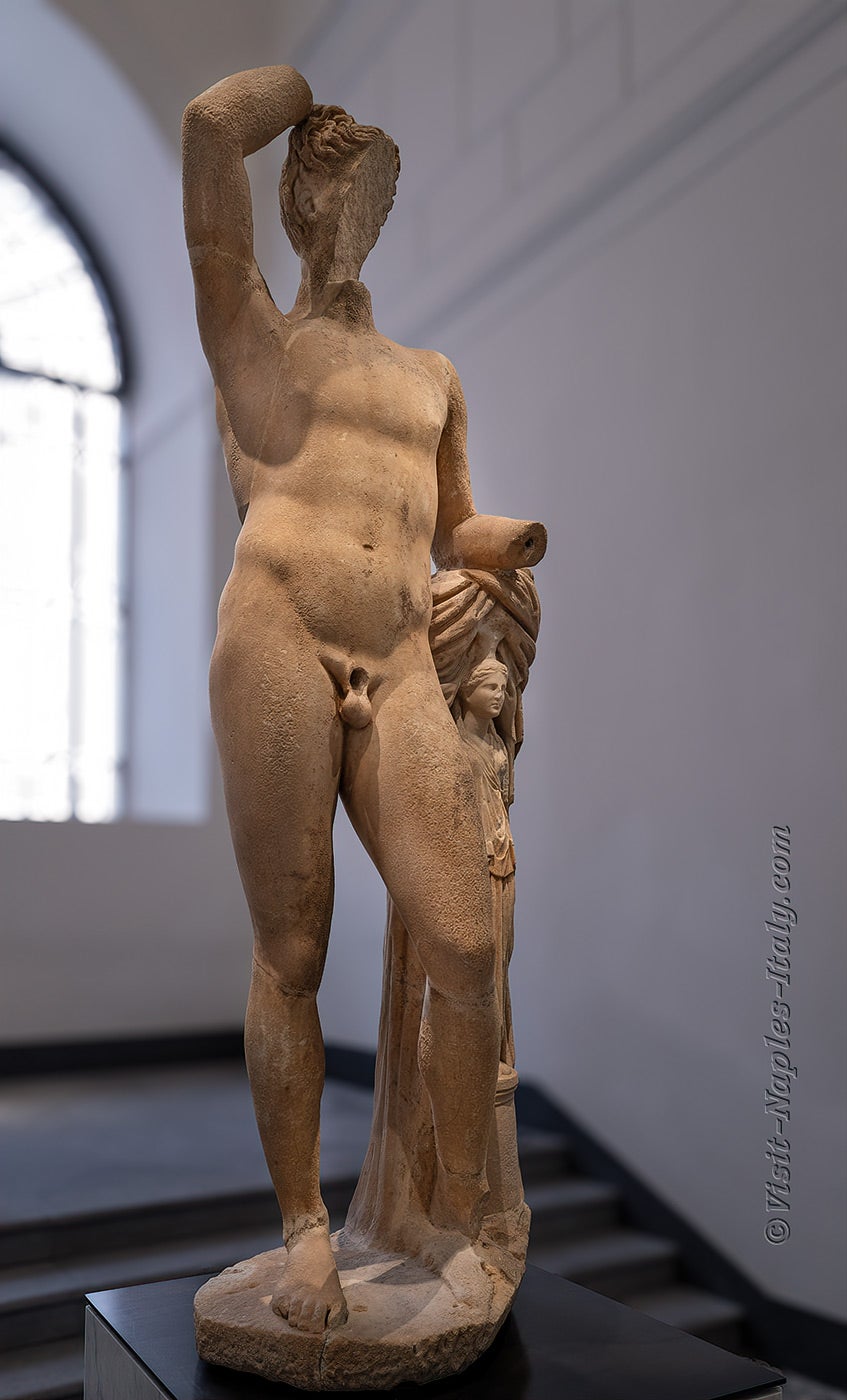
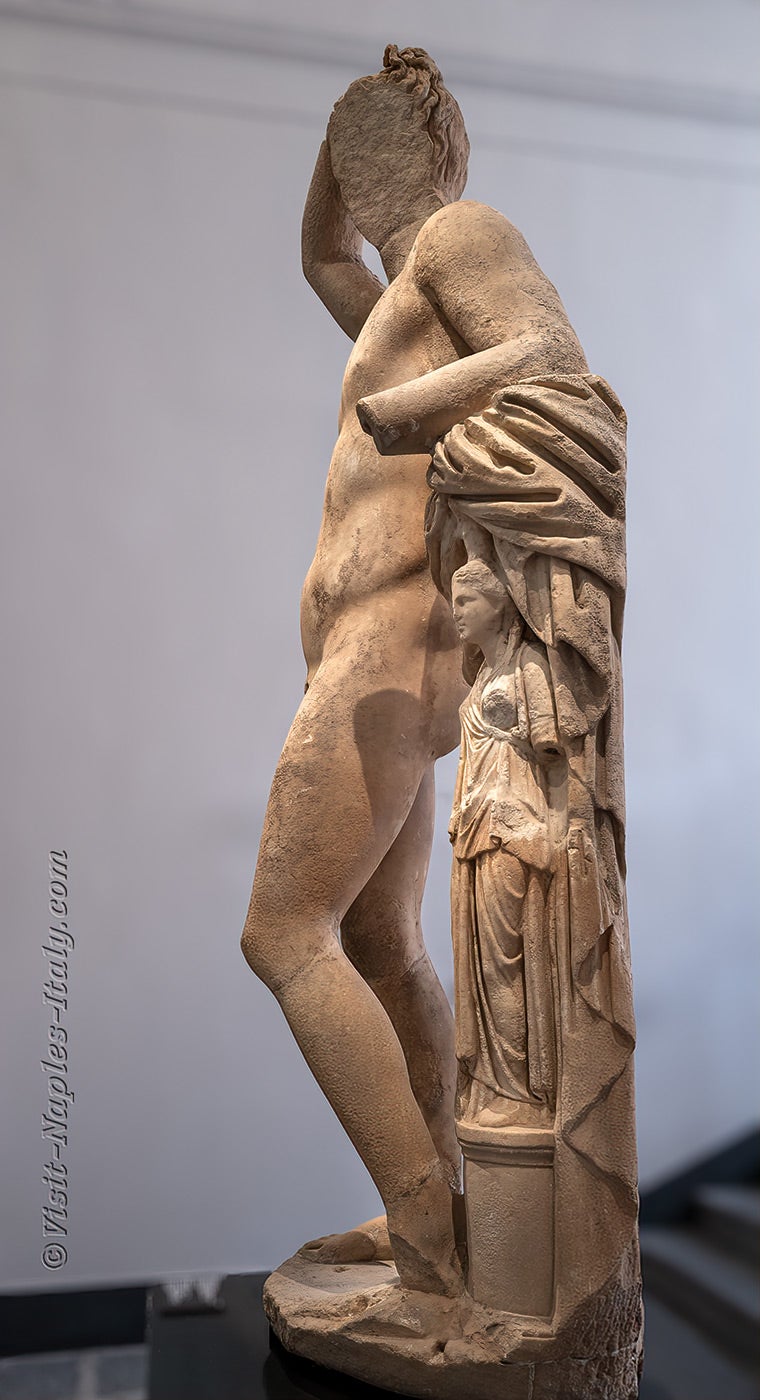
Apollo of Lycia, Formia
Sculpture - Thassos marble - Late 1st centuryThis statue in Thassos marble dating from the late 1st century is a Roman copy of a statue by Praxiteles known as “Apollo of Lycia” created in the mid-4th century BC.
It was located in Formia in the Natatio (swimming pool) and was donated by Nerva in the year 90, a few years before he became emperor.
Apollo is naked with his right arm resting on his head, whilst his left arm is resting on a small column containing a female idol.
Apollo of the Omphalos, Temple of Mercury, Baia
Sculpture - Marble - First half of the 2nd century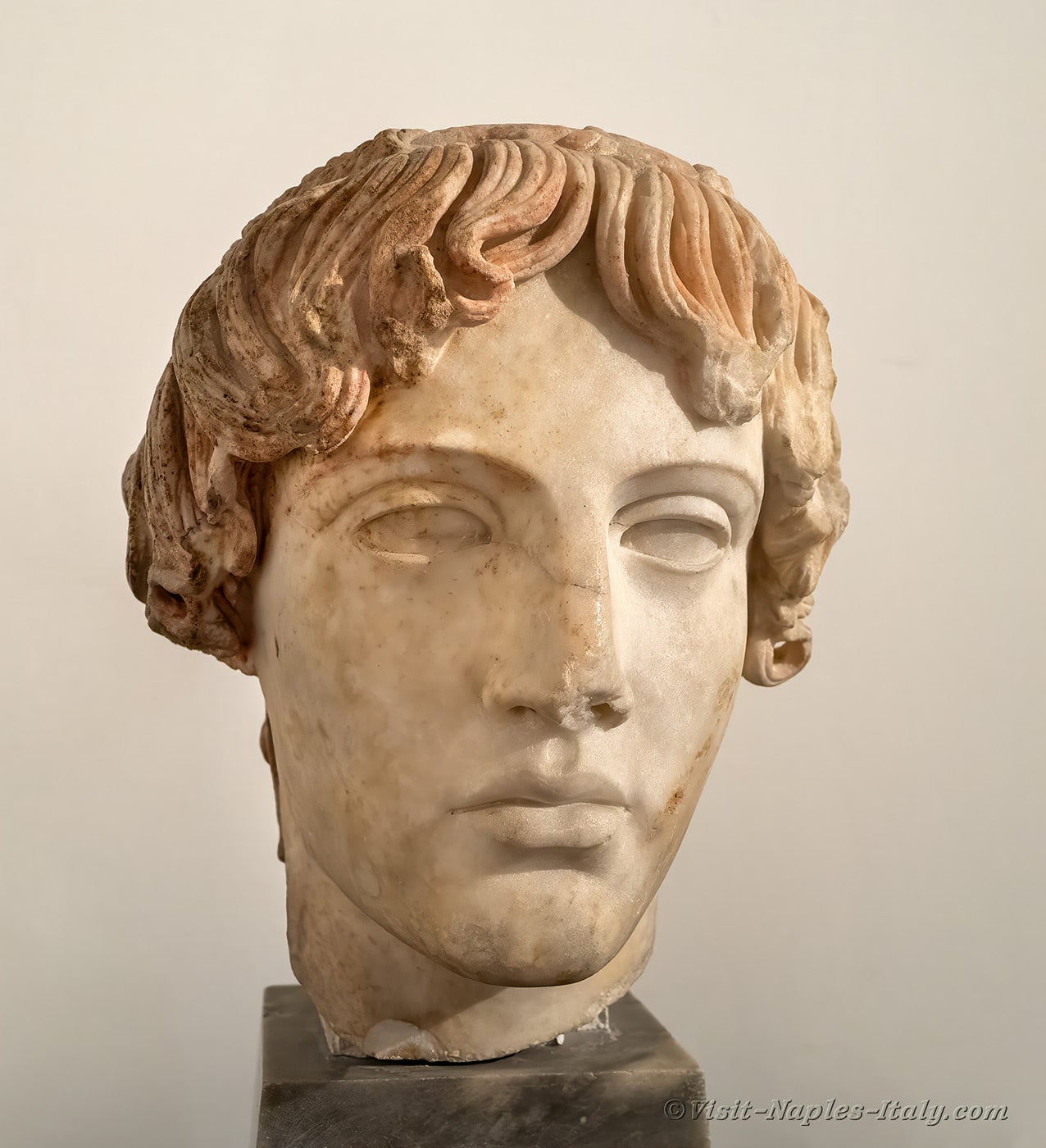
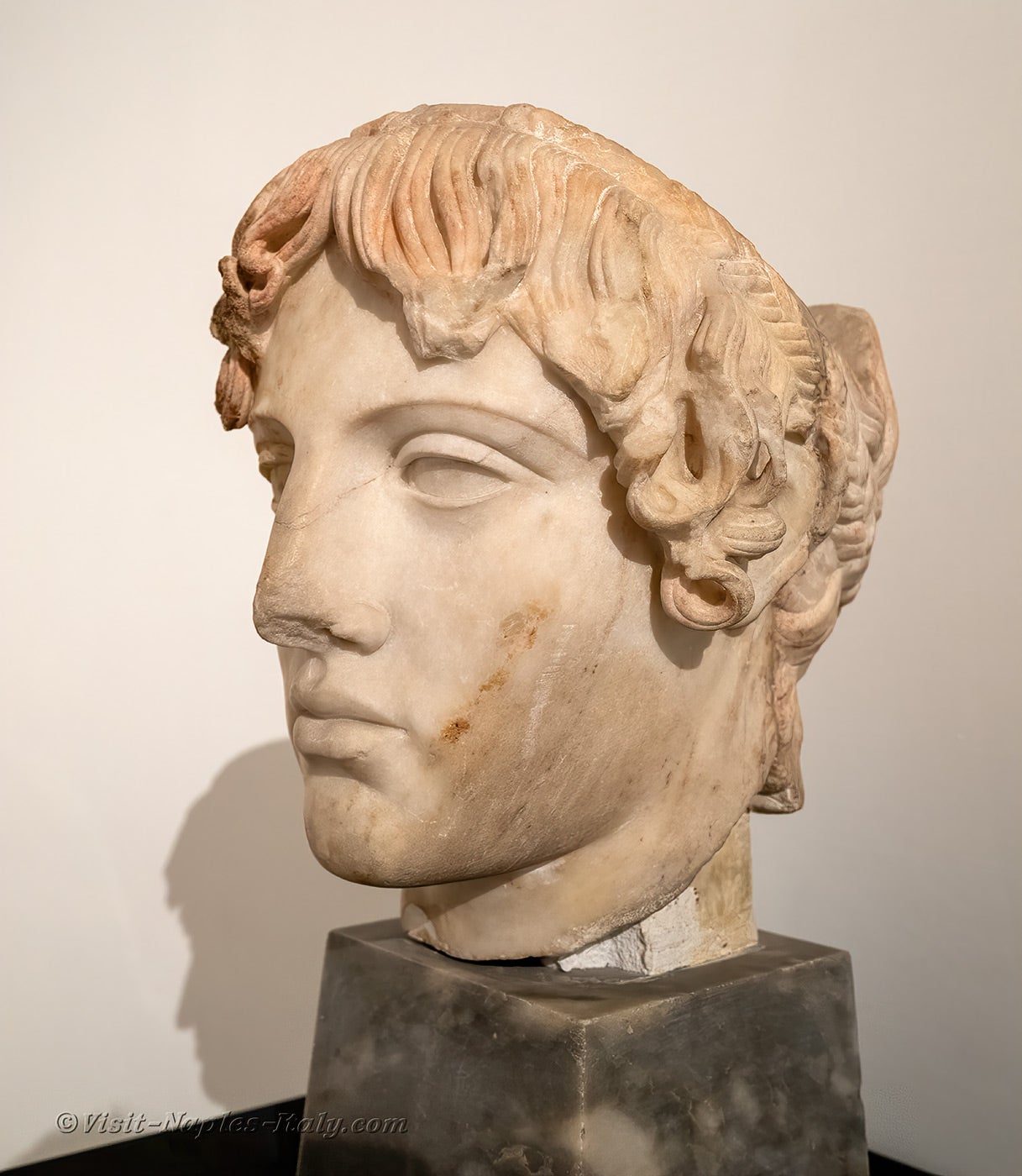
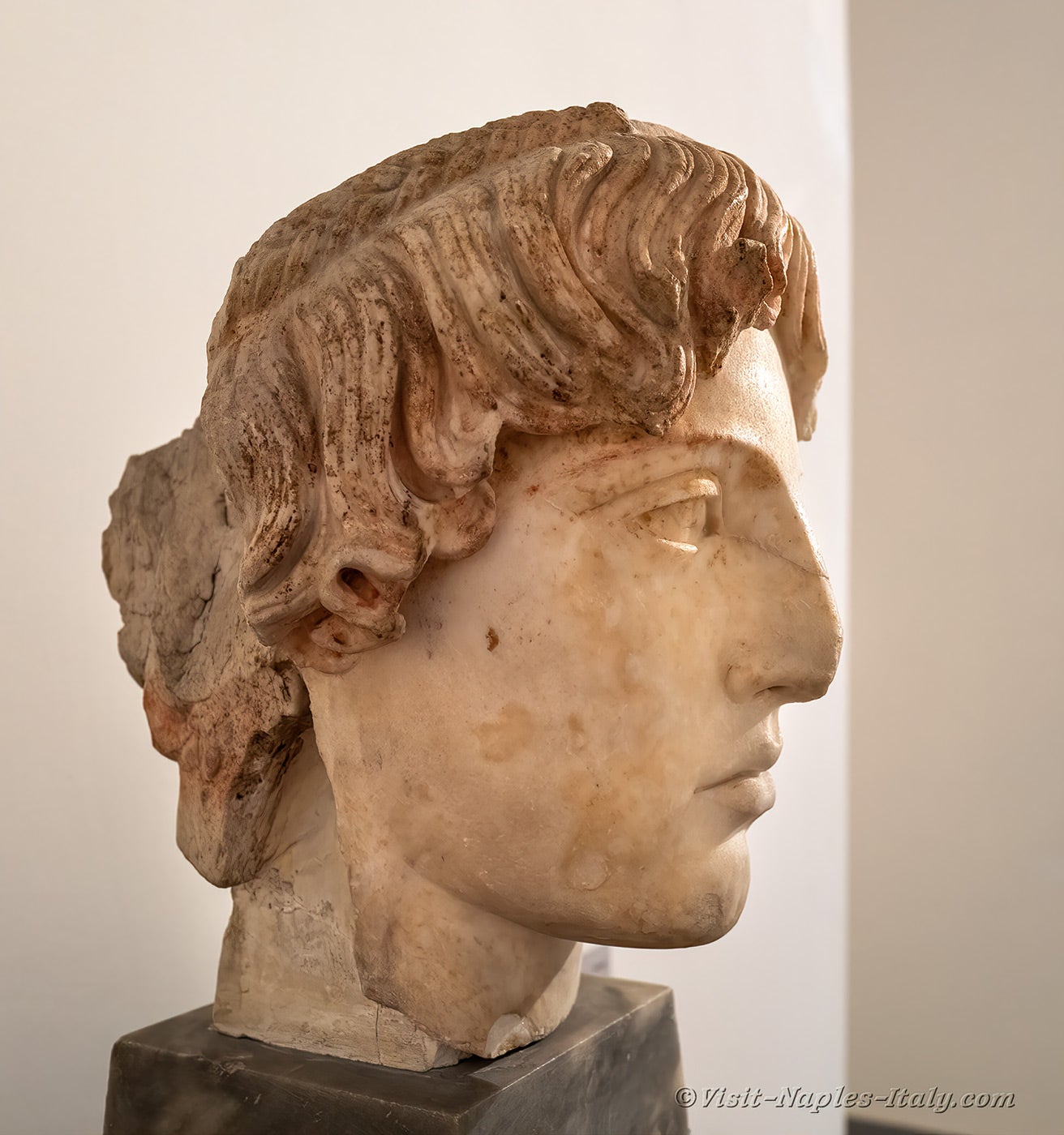
Apollo of the Omphalos This is a white marble head dating from the first half of the 2nd century and found in Baia.
It was discovered in the Temple of Mercury, which was located within the imperial palace.
It is a Roman copy of the Apollo Alexikakos by the Greek sculptor Calamis.
The face is that of a young Apollo, with classical features that reveal his beauty.
The god’s long hair is tied around his head with a braided cord, as is often the case in depictions of Apollo.
His hair is not pulled back into a diadem above his forehead as in many other depictions that you can see on this page.
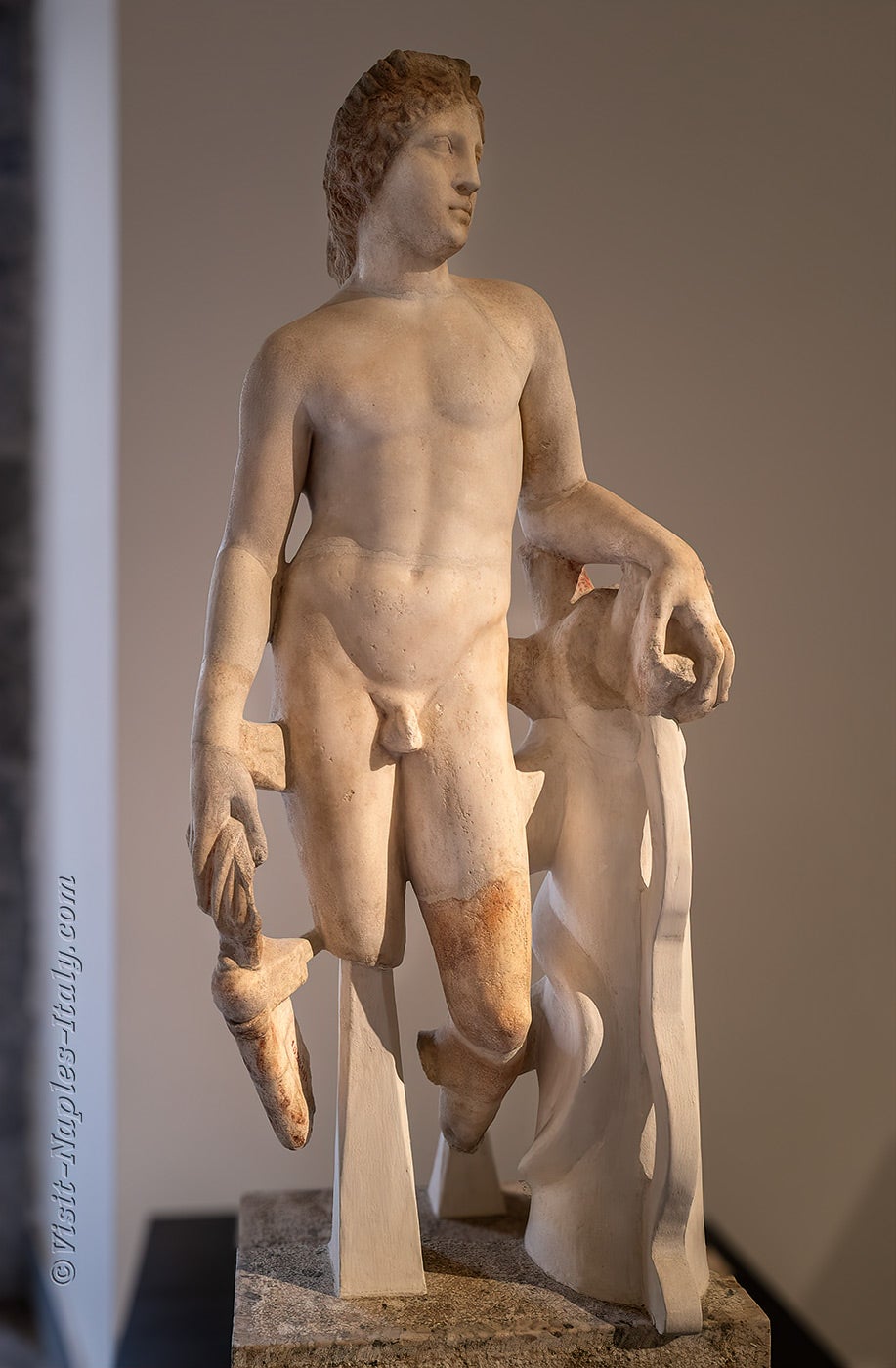
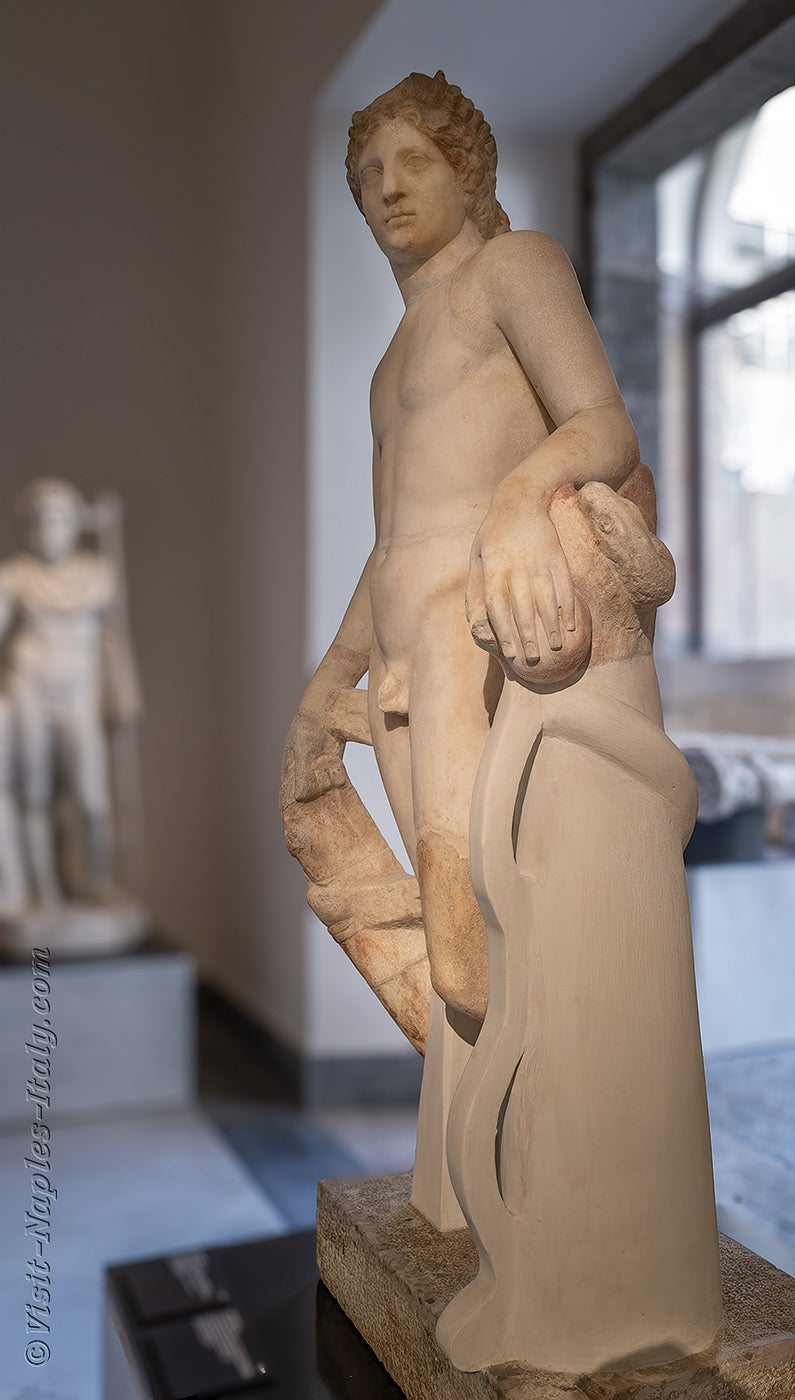
Apollo Helios, Temple of Mercury, Baia
Sculpture - Marble - Second half of the 2nd centuryThis white marble statue, dating from the second half of the 2nd century, was also found in Baia in the Temple of Mercury, which was located within the imperial palace.
The presence of the snake and the feather associated with Helios has enabled this sculpture to be identified as a representation of Apollo.
Apollo seated on a tripod, Herculaneum
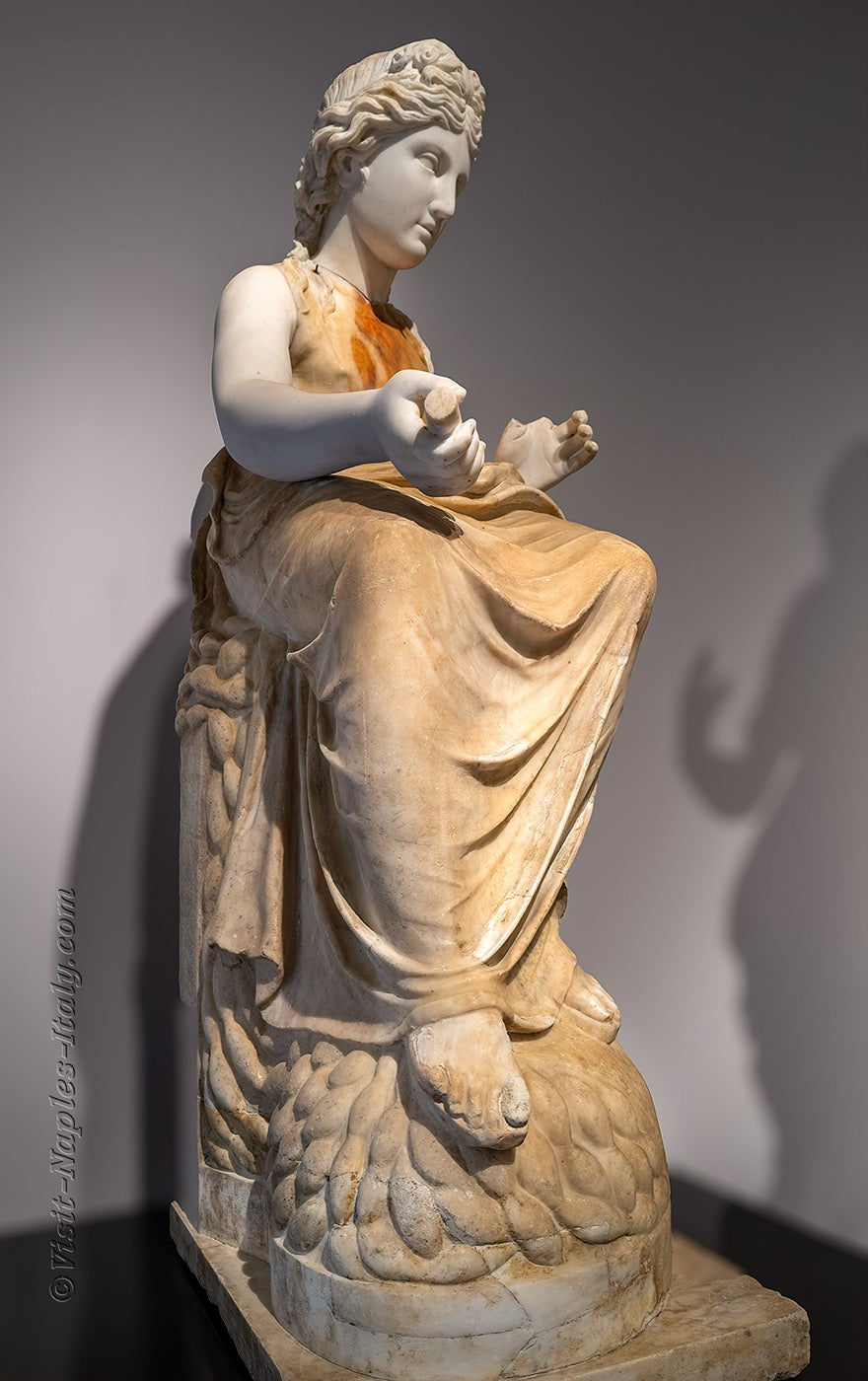
Apollo on a tripod Sculpture - Marble (Height 132 cm) 1st century
This white marble statue from the early 1st century depicts Apollo seated on a tripod with his feet resting on the Omphalos, the symbol of the sanctuary at Delphi.
The tripod is one of Apollo’s emblematic attributes, and at Delphi, the Pythia would prophesy whilst seated on this tripod.
This very tripod had been stolen by Hercules from the Pythia, but it was subsequently recovered by Apollo.
In this sculpture, the god is depicted in the style of the Apollo Pythios of Delphi.
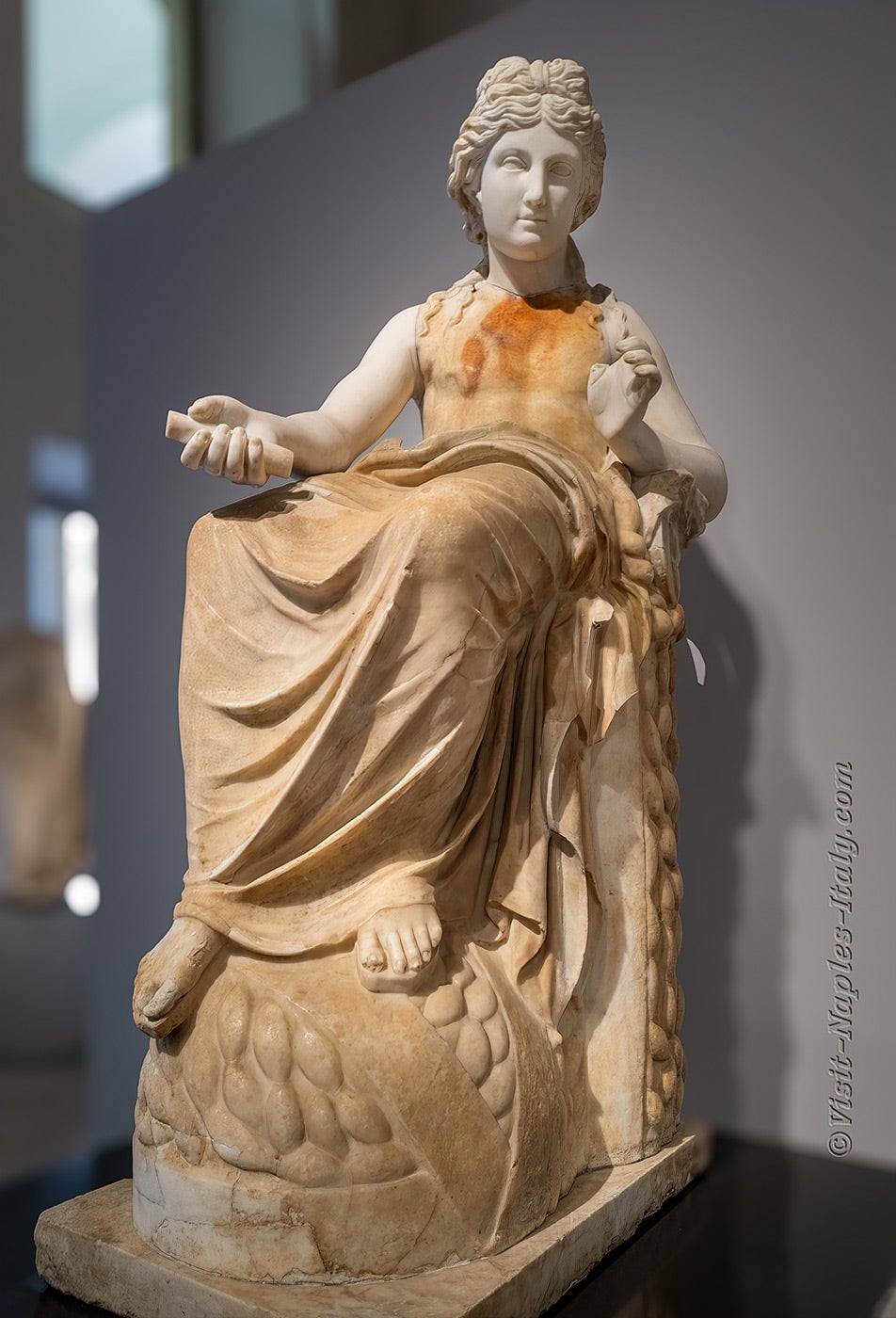
Apollo on a tripod Her himation is wrapped around her legs and covers the lower half of her body.
It is worth noting that the tripod and the Omphalos are covered with a woolen net, reminiscent of the cloth used by Rhea to deceive her husband Cronus.
Uranus and Gaia had foretold to Cronus that his own children would one day overthrow him.
To prevent this, Cronus swallowed all his children as soon as they were born.
But Rhea, weary of seeing her newborns devoured one after another by Cronus, resorted to a ruse to protect the child she had borne to Zeus and had just given birth to.
She wrapped a stone in a cloth and Cronus devoured it, thinking he was swallowing his latest-born child.
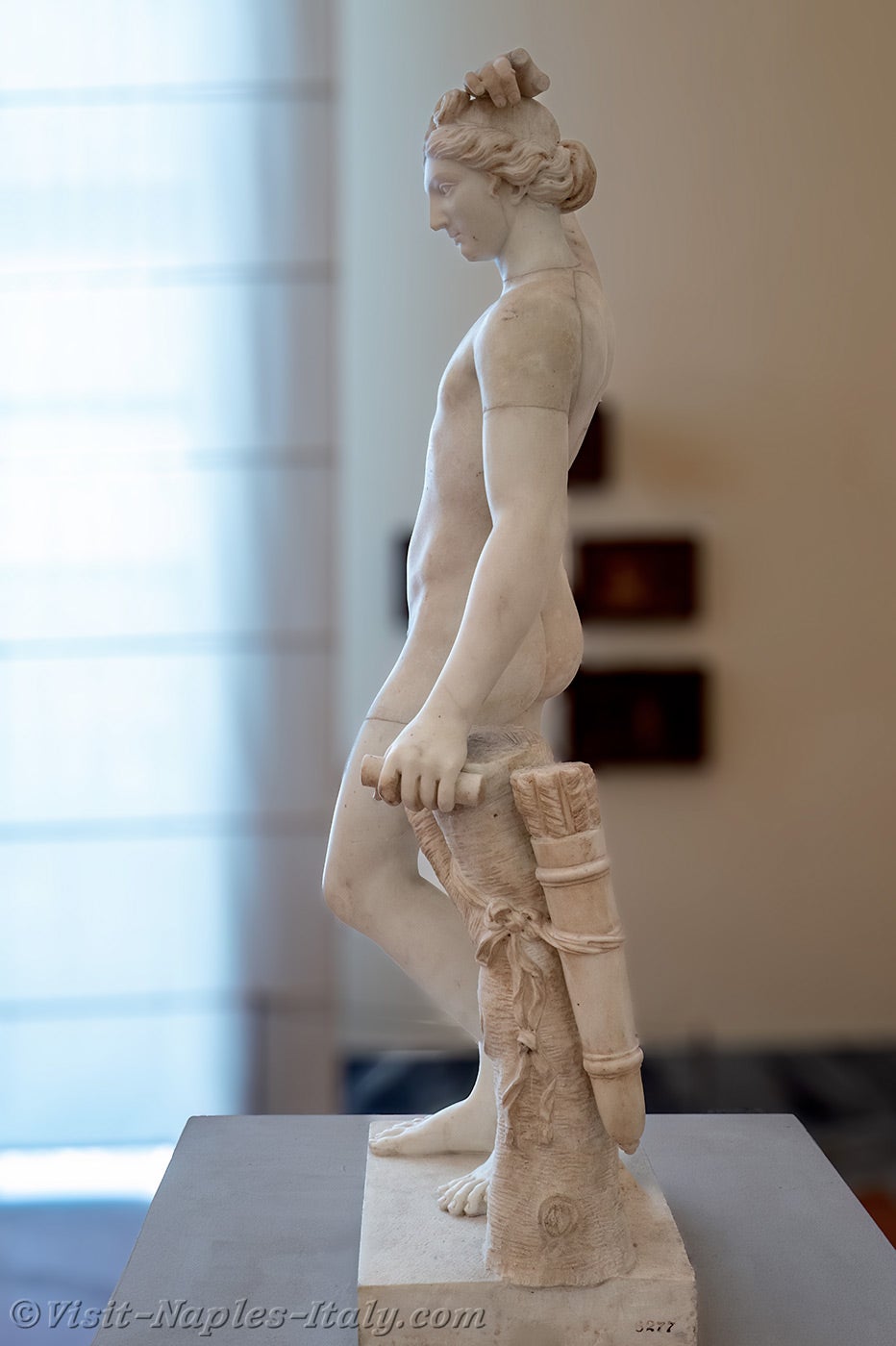
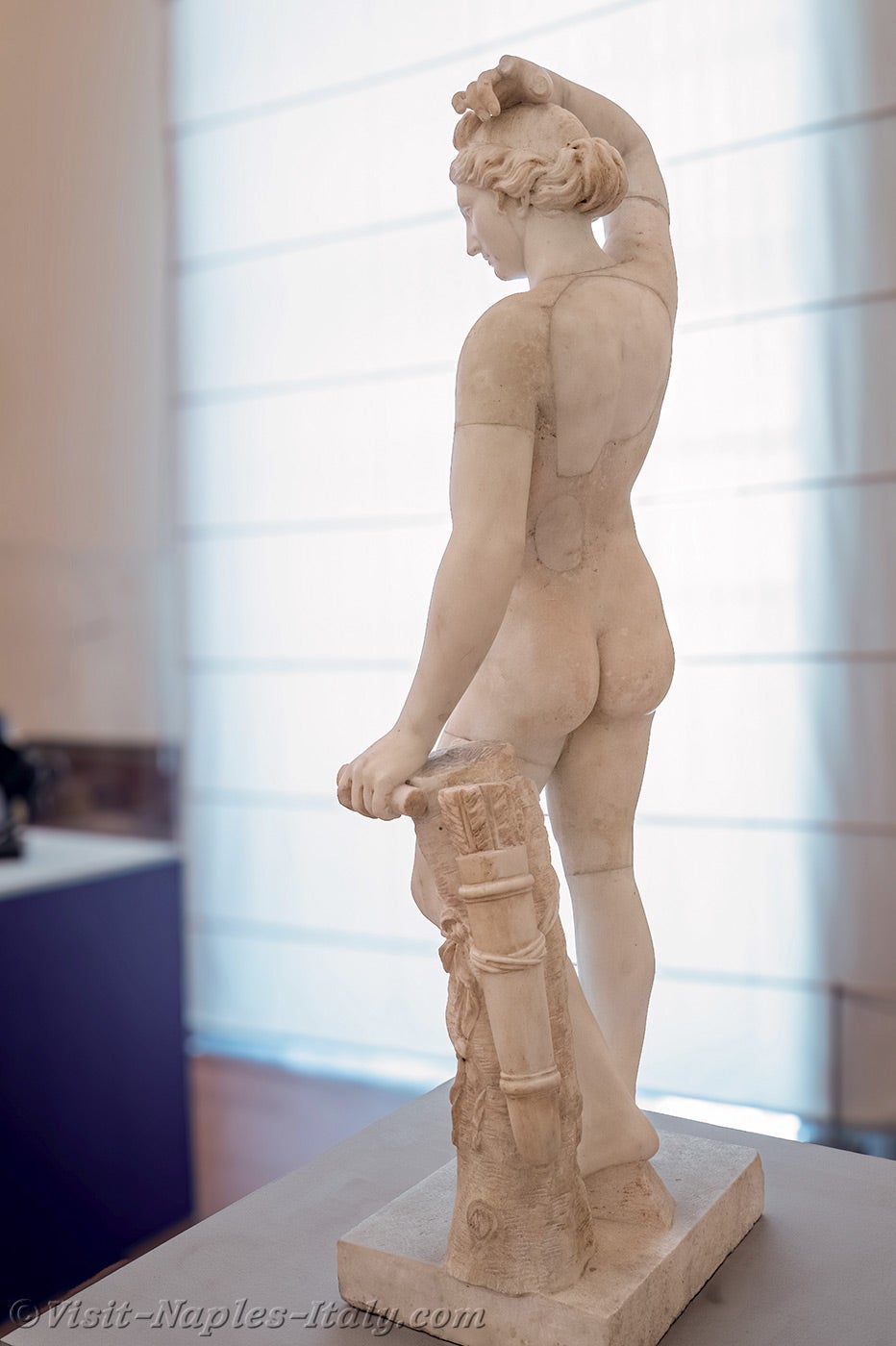
Hermafroditus Apollo with a quiver, Pompeii
Sculpture - Marble - 1-50 ADThis marble sculpture of Apollo, found in Pompeii, shows the god with an almost feminine face.
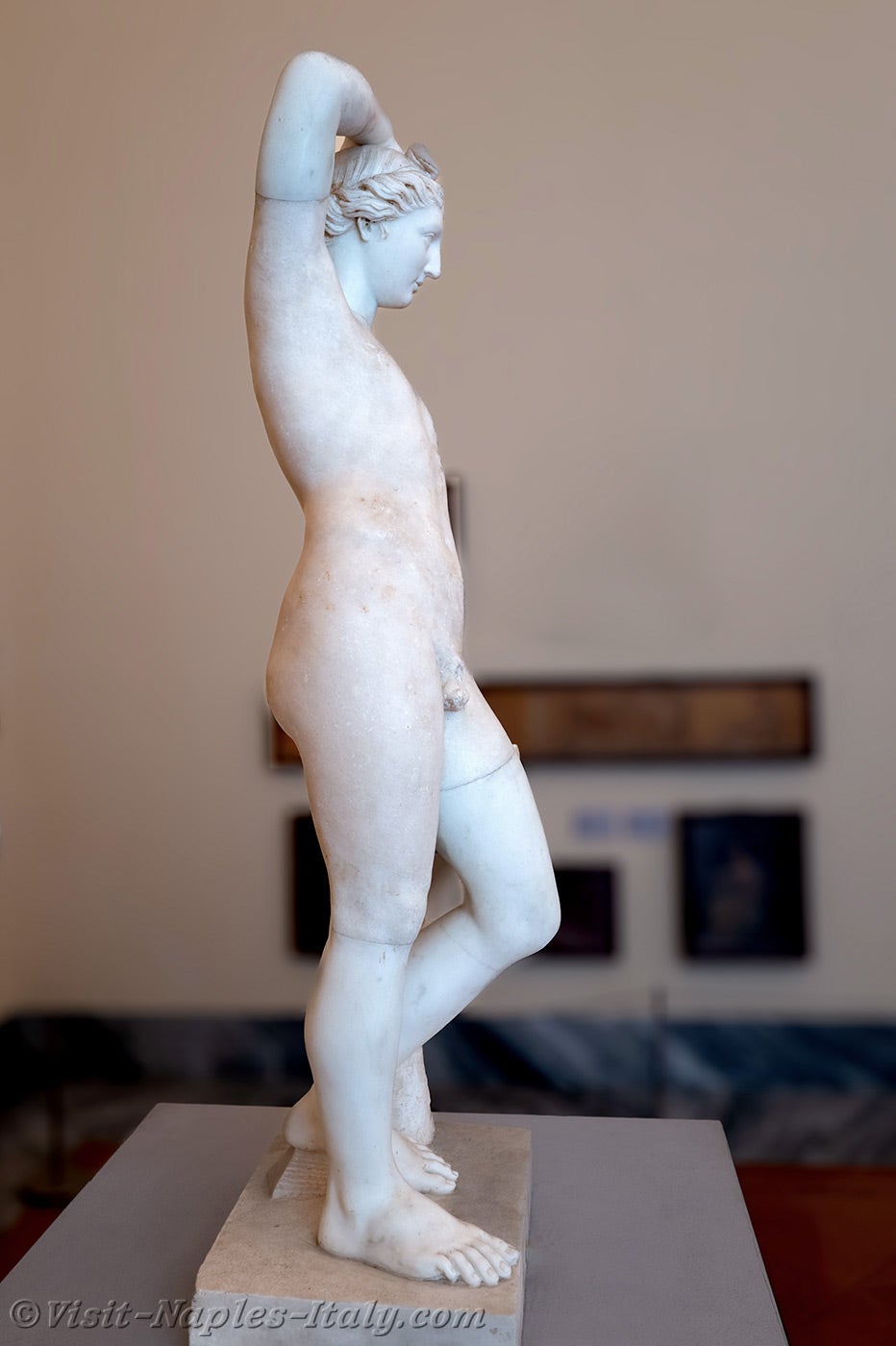
Apollo Hermafroditus It was therefore given the title “Apollo Hermafroditus”.
Admittedly, this Apollo has no breasts, but his posture, slightly arched, evokes that of a young girl.
The rest of the statue corresponds perfectly to the traditional image of Apollo, with his hand resting on his head.
His hairstyle is also the one found in many statues depicting Apollo.
Finally, the presence of his quiver and arrows is the most obvious masculine and symbolic feature to confirm that this is indeed Apollo.
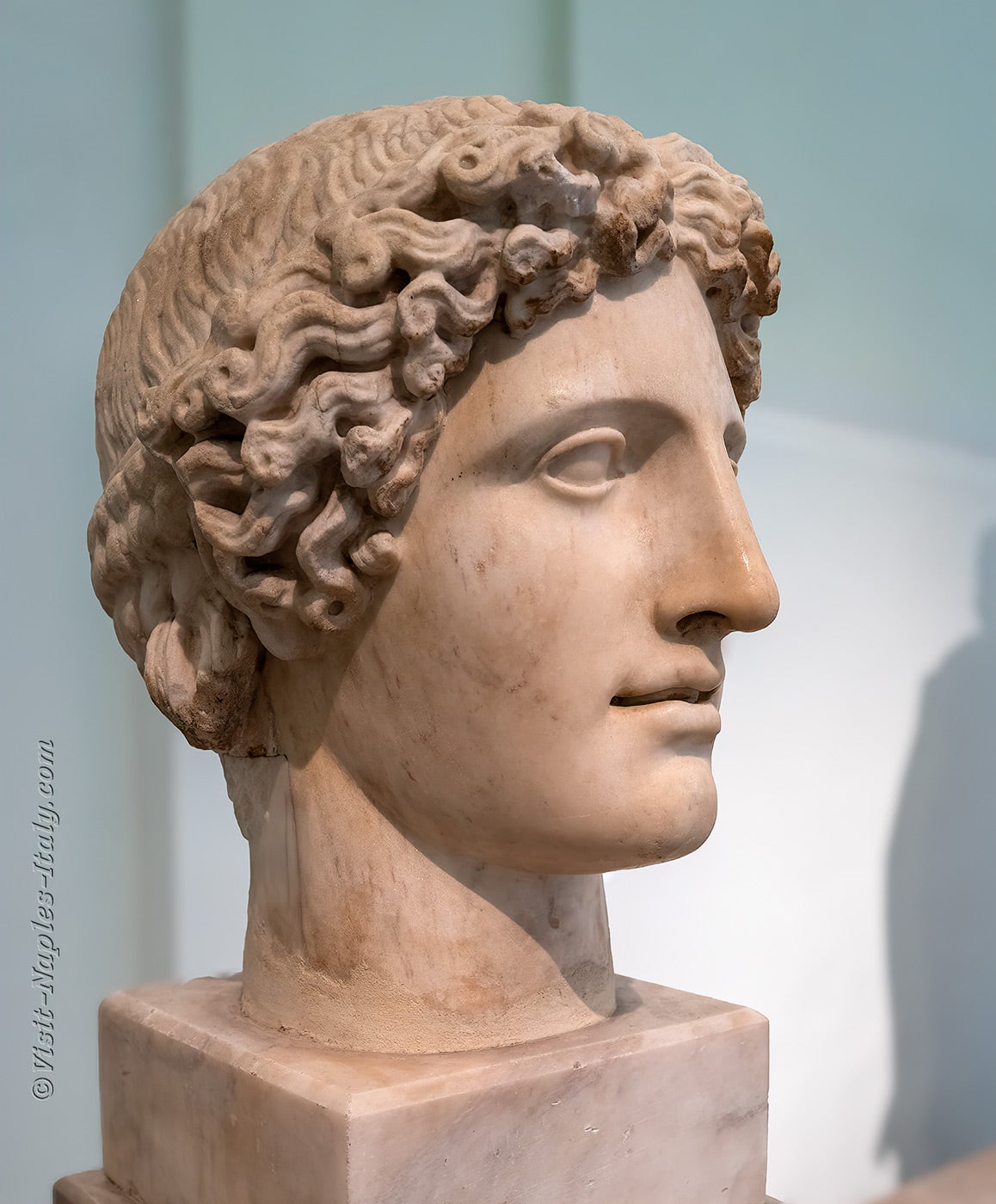
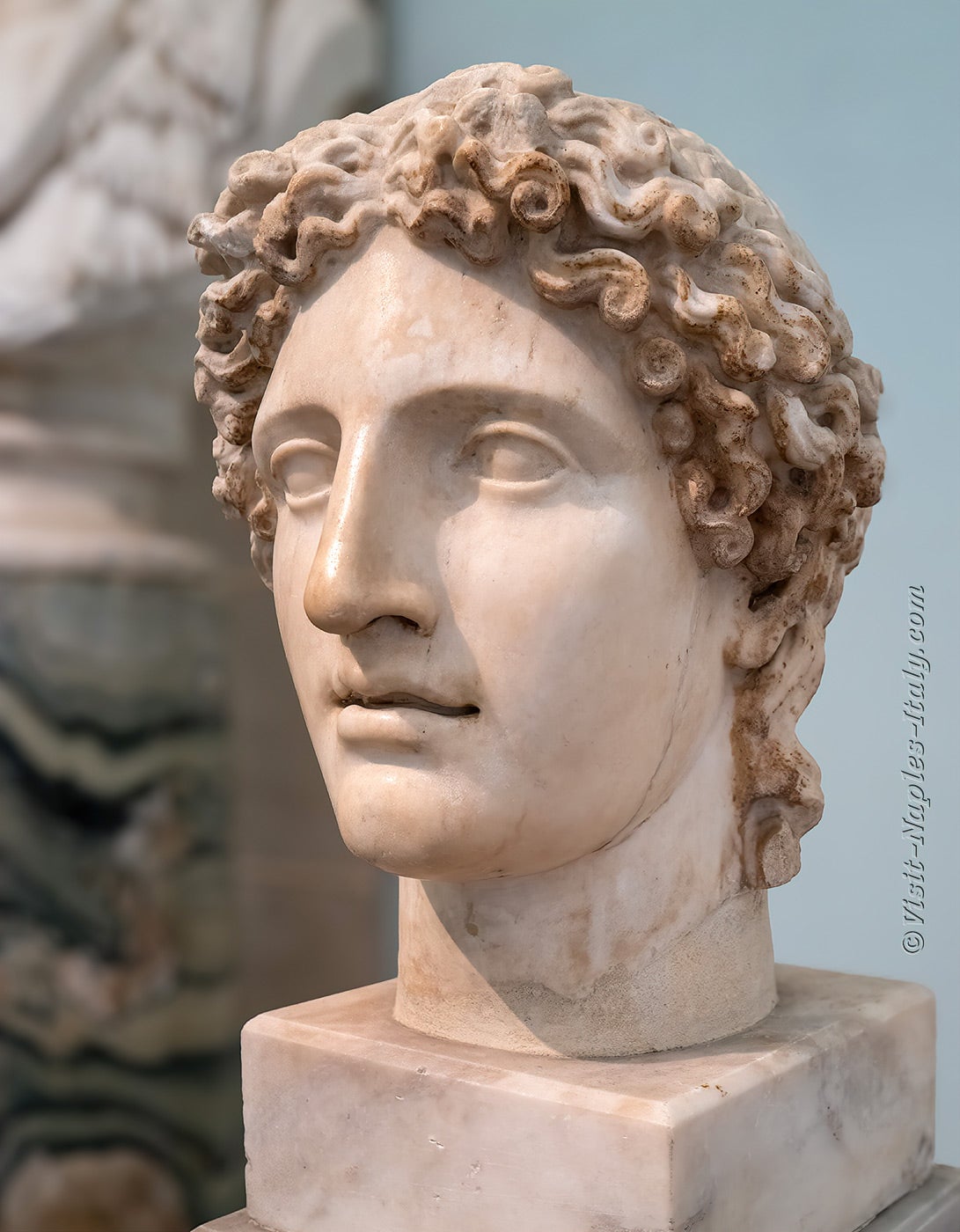
Head of Apollo, Cassel type, Farnese Collection
Sculpture - Marble (Height 32 cm) Late 2nd centuryThis sculpture depicts a young Apollo, whose long hair is held back by a cord that encircles his head whilst lifting his curls onto his forehead to form a diadem.
The original of this Roman copy was in bronze and is thought to have been created by Phidias in the mid-5th century BC.
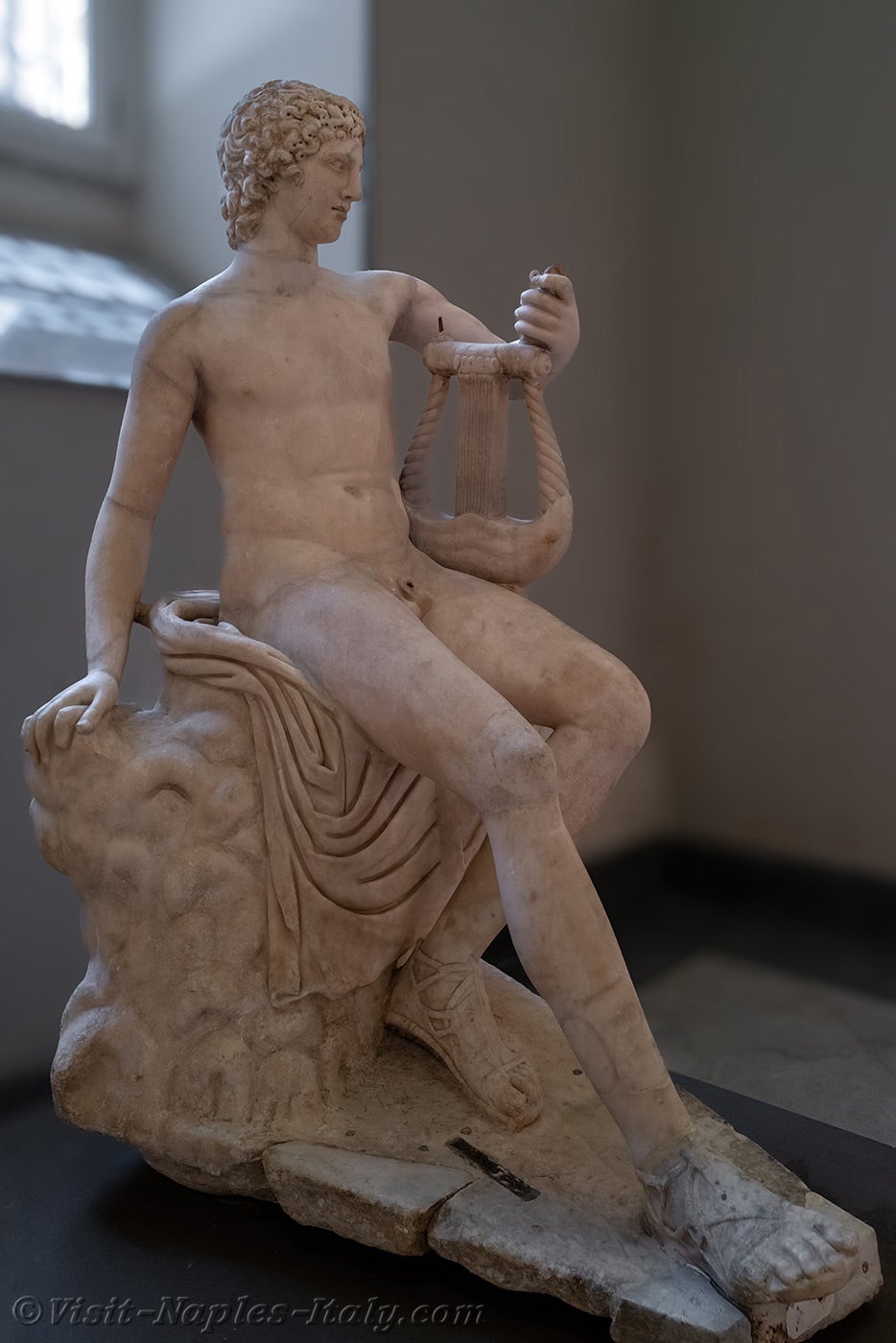
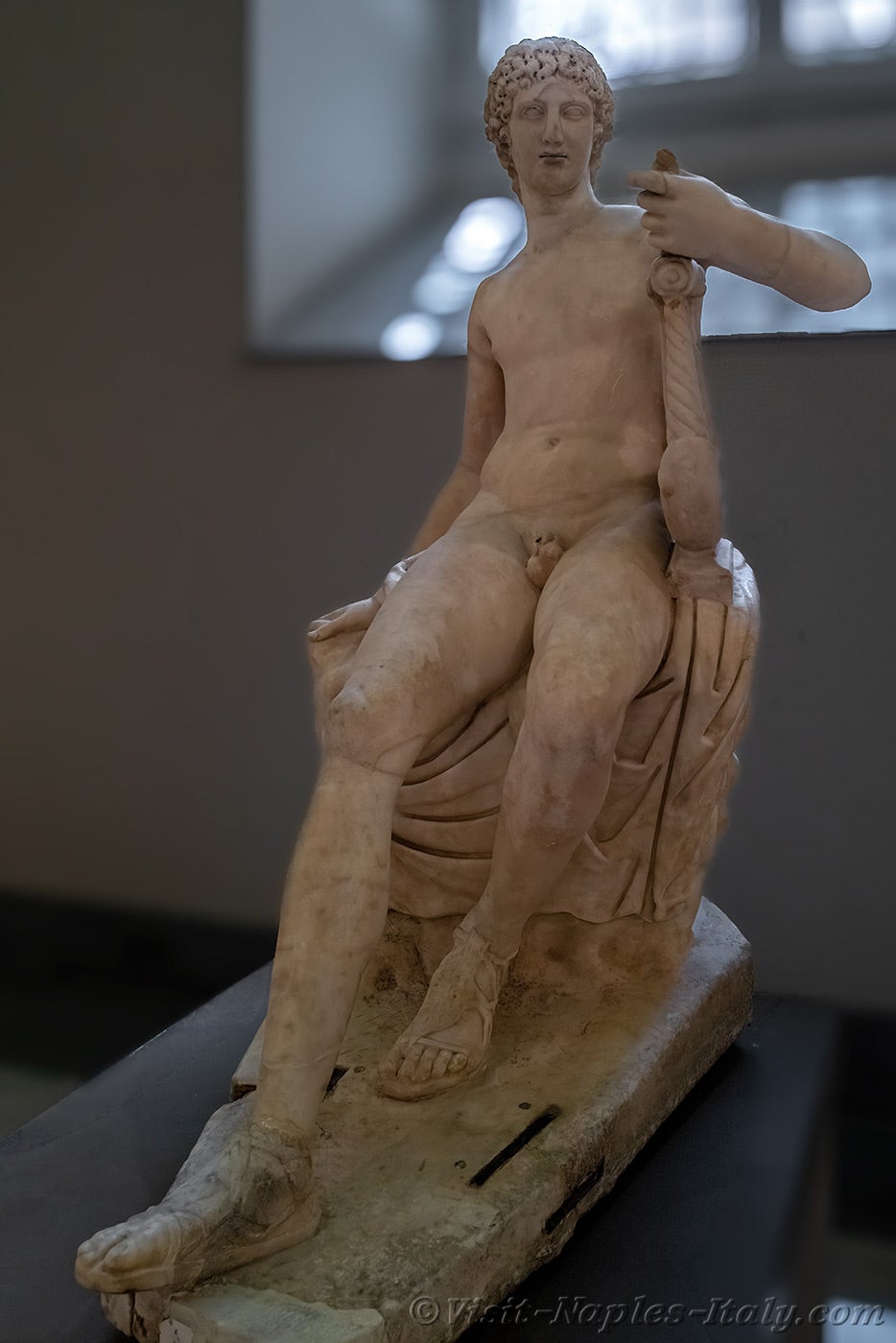
Apollo Ludovisi with a lyre, Farnese Collection
Sculpture - Marble (Height 150 cm) 2nd centuryThis sculpture depicts a young, naked Apollo seated on a rock covered by his cloak. He is holding a lyre.
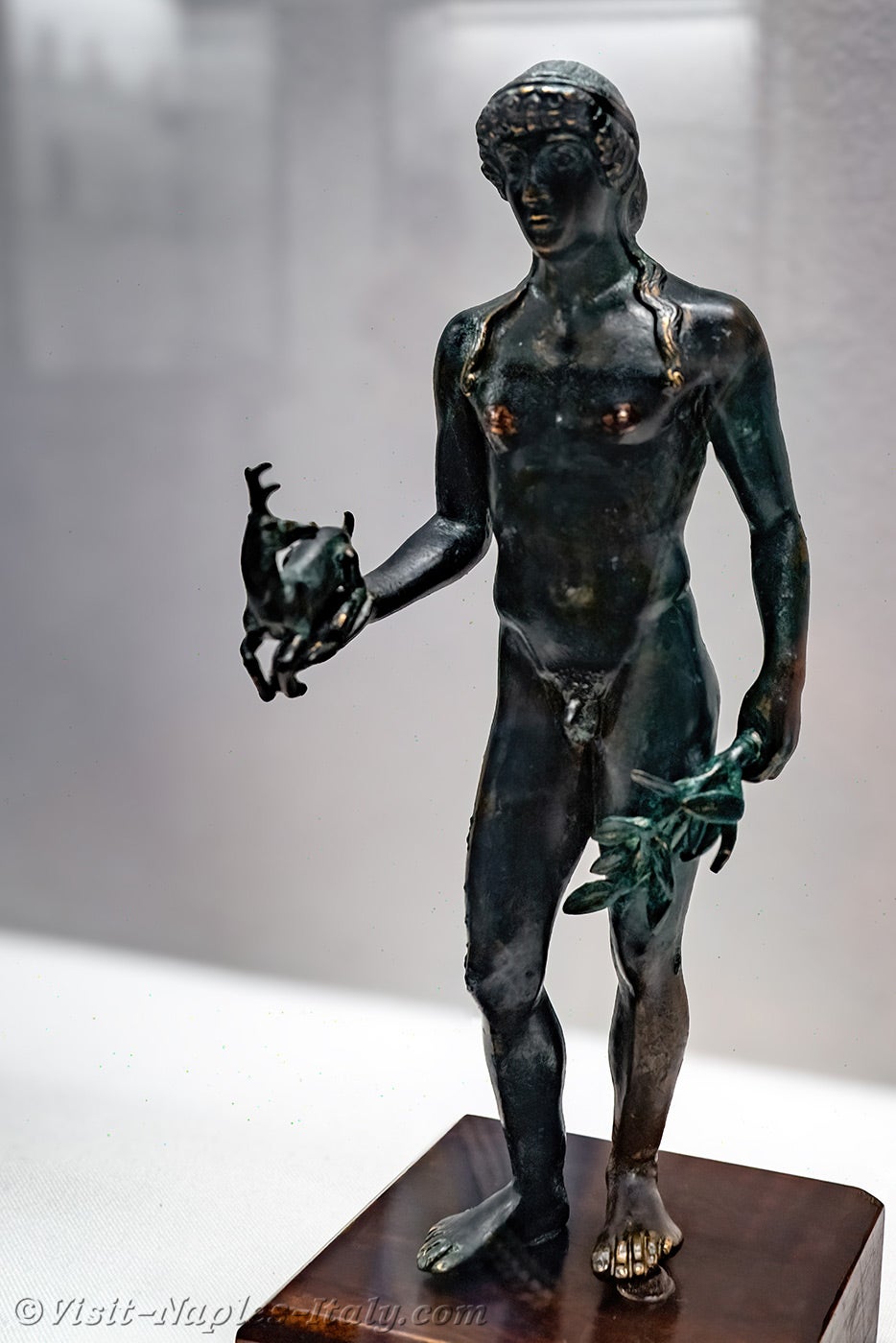
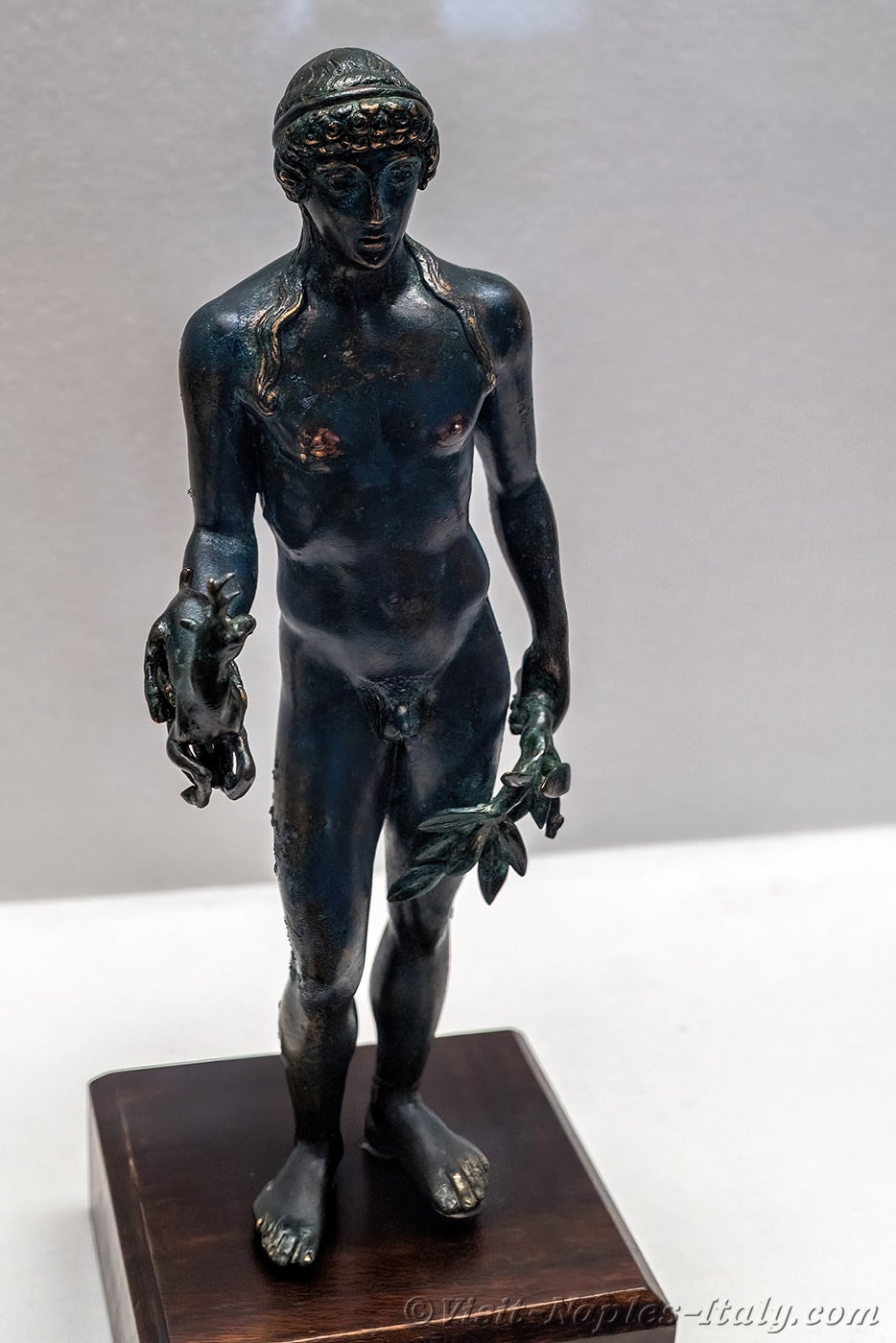
Standing Apollo with a stag and a laurel branch, Pompeii
Sculpture - Bronze - Late 1st century BC - Early 1st century ADThis beautiful bronze statuette depicts Apollo, holding a stag in his right hand and a laurel branch in his left hand, in homage to Daphne.
He is naked, standing, with a magnificent muscular body.
His long hair is tied around his head with a cord, and two long locks fall onto his chest.
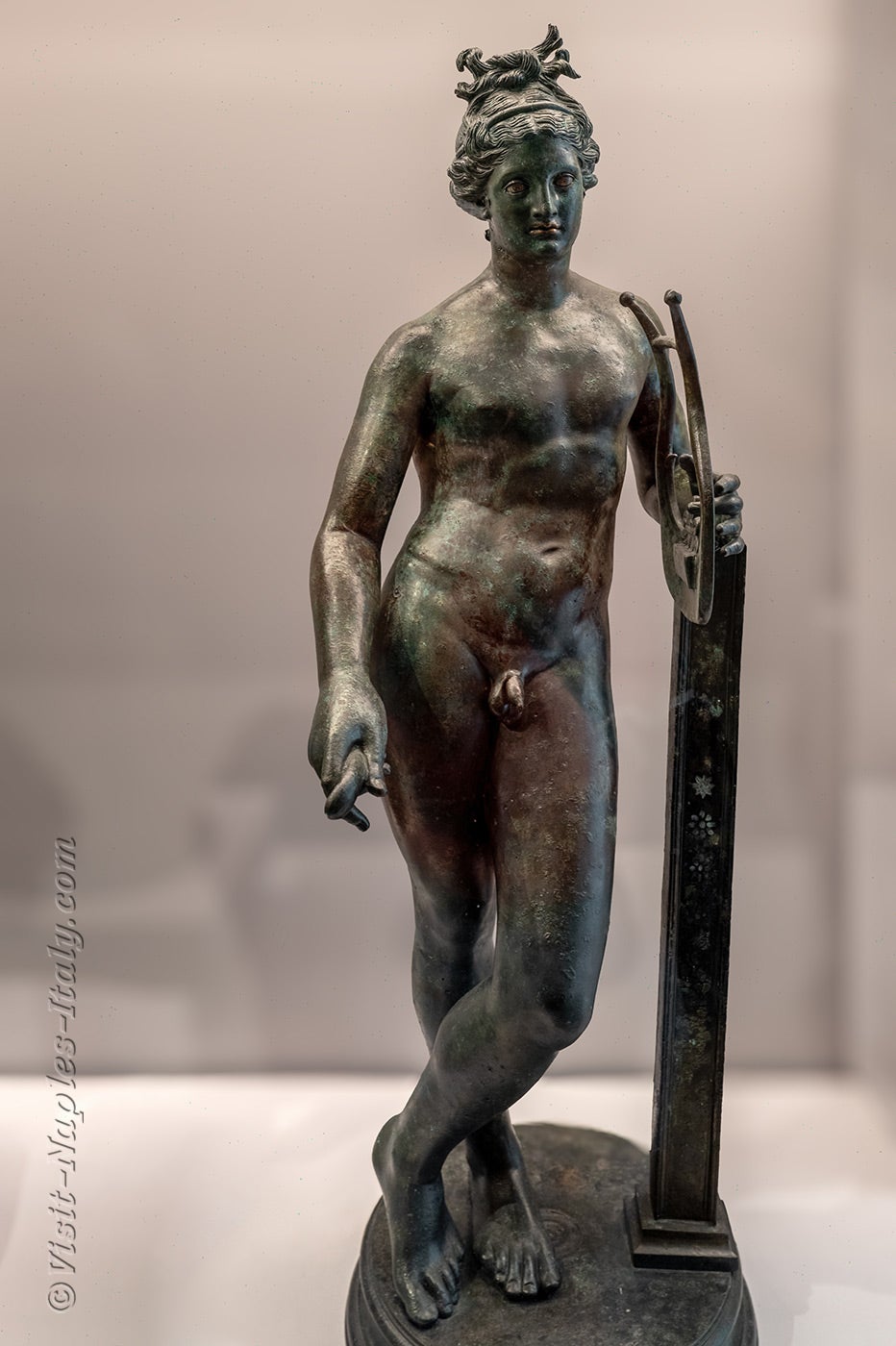
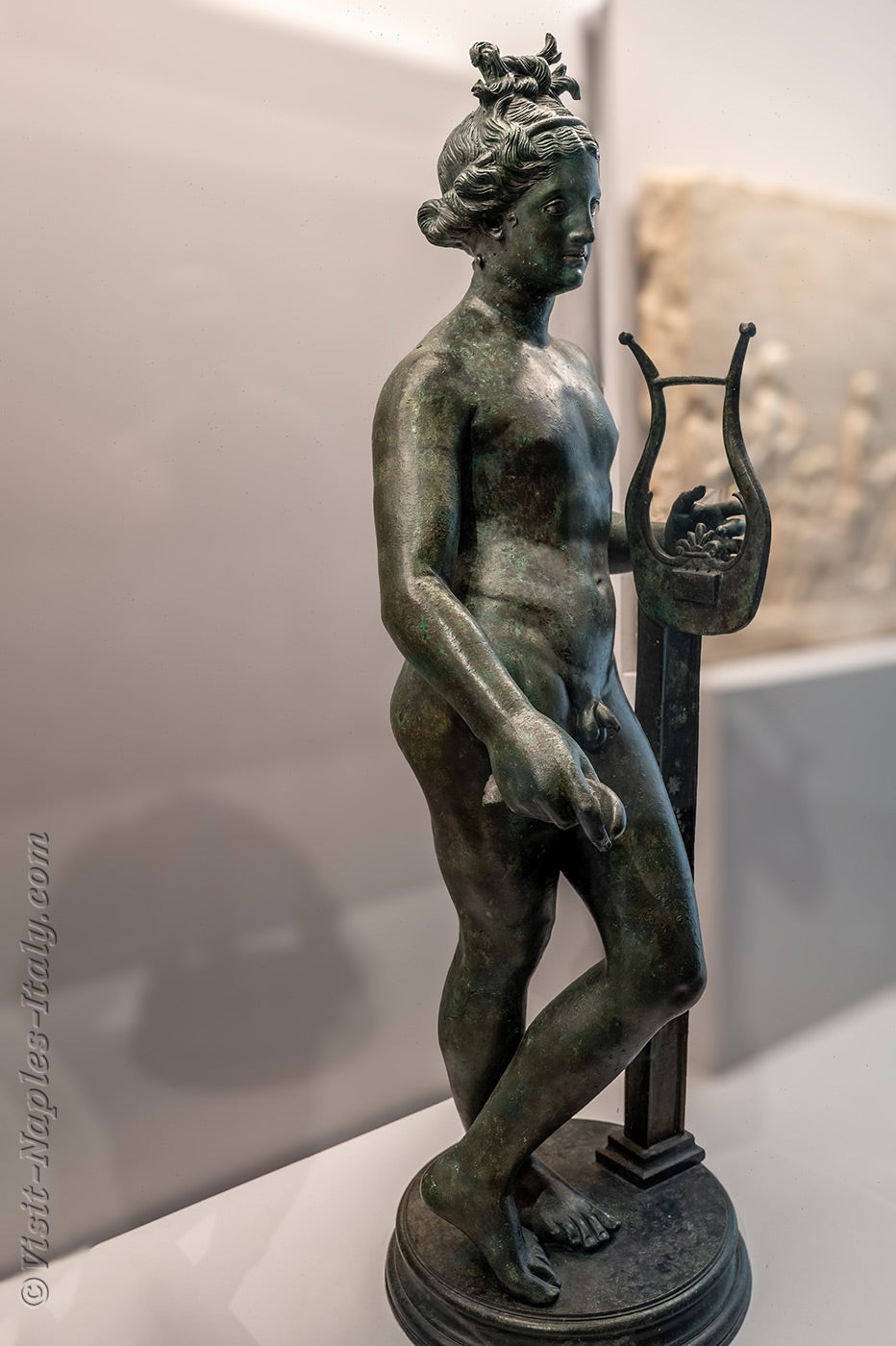
Apollo with a lyre, House of Apollo, Pompeii
Sculpture - Bronze and silver (Height 81 cm) 1st centuryApollo is nude, standing and at rest, holding his lyre and plectrum.
His long hair is tied around his head with a cord whilst the longest strands are knotted above his head.
This bronze statue has silver eyes, as must have been the strings of the lyre, which have unfortunately been lost.
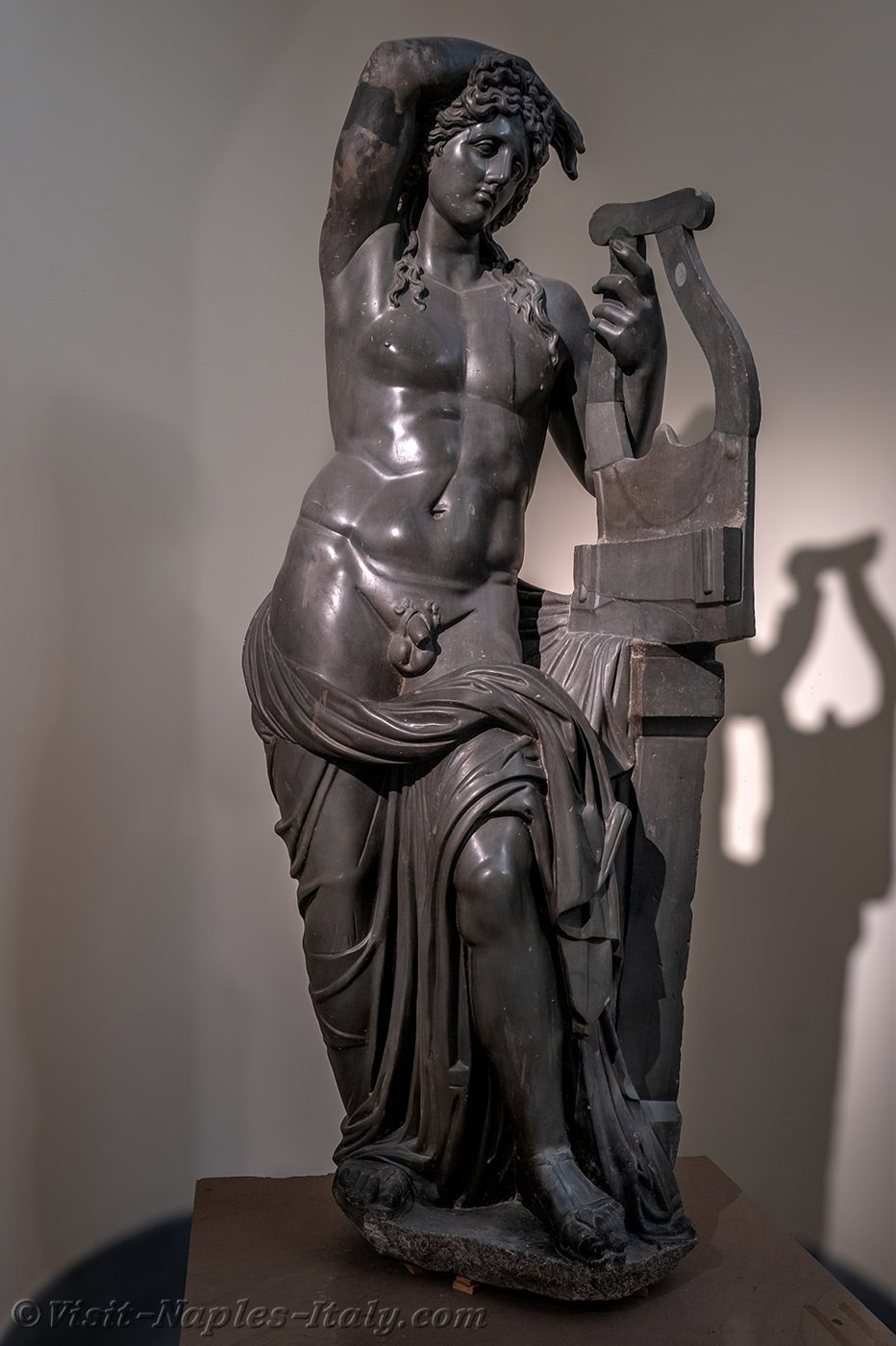
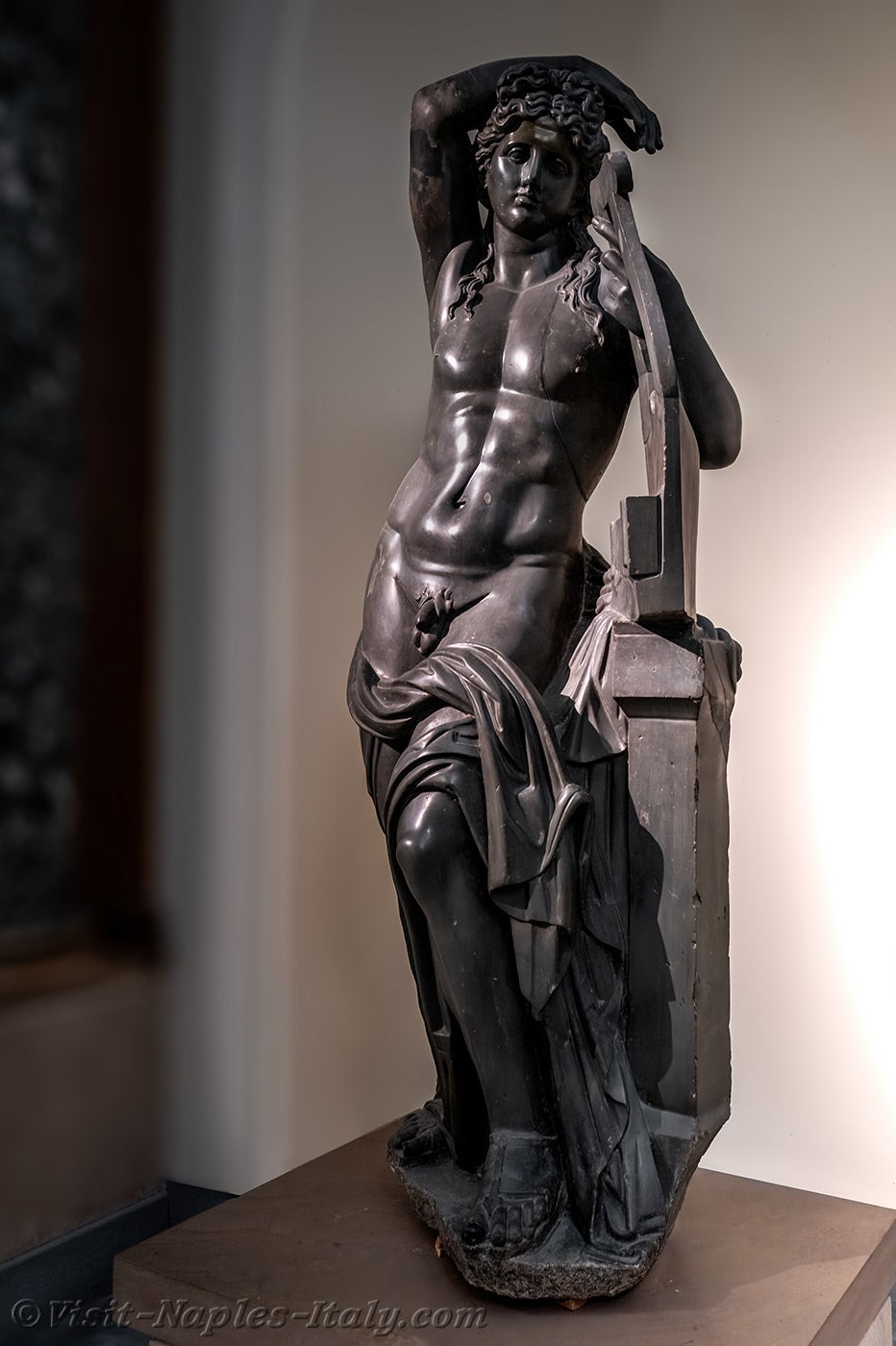
Apollo Citarede, Farnese Collection
Sculpture - Greenish-black basalt (Height 231 cm) 140 AD - 160 ADApollo is naked, with only his himation partially covering his thighs.
The kithara which he holds in his left hand rests on a pillar. His right arm rests on his head.
The Roman copy of this statue dates from the 4th century and originates from the school of Praxiteles.
Mythology Achilles | Aesculapius | Amazons | Aphrodite Venus | Apollo | Artemis | Athena Minerva | Atlas | Concordia | Danaids | Diomedes | Dionysus | Dirce | Flora | Ganymede | Hera Juno | Hercules | Hermes | Nike | Orestes | Psyche | River | Satyrs | Zeus
Sculptures Mythology | Persons | Animals | Bas-relief
Artworks Sculptures | Frescoes | Eroticism
MANN Artworks Schedule Tickets Location | Authorizations
Back to Top of Page