

MANN Artworks Schedule Tickets Location | Authorizations
Artworks Sculptures | Frescoes | Eroticism
Sculptures Mythology | Persons | Animals | Bas-relief
Mythology Achilles | Aesculapius | Amazons | Aphrodite Venus | Apollo | Artemis | Athena Minerva | Atlas | Concordia | Danaids | Diomedes | Dionysus | Dirce | Flora | Ganymede | Hera Juno | Hercules | Hermes | Nike | Orestes | Psyche | River | Satyrs | Zeus
The sculptures of Flora Majeure, Piccola Ercolanese and Pomona at the Archaeological Museum of Naples in Italy
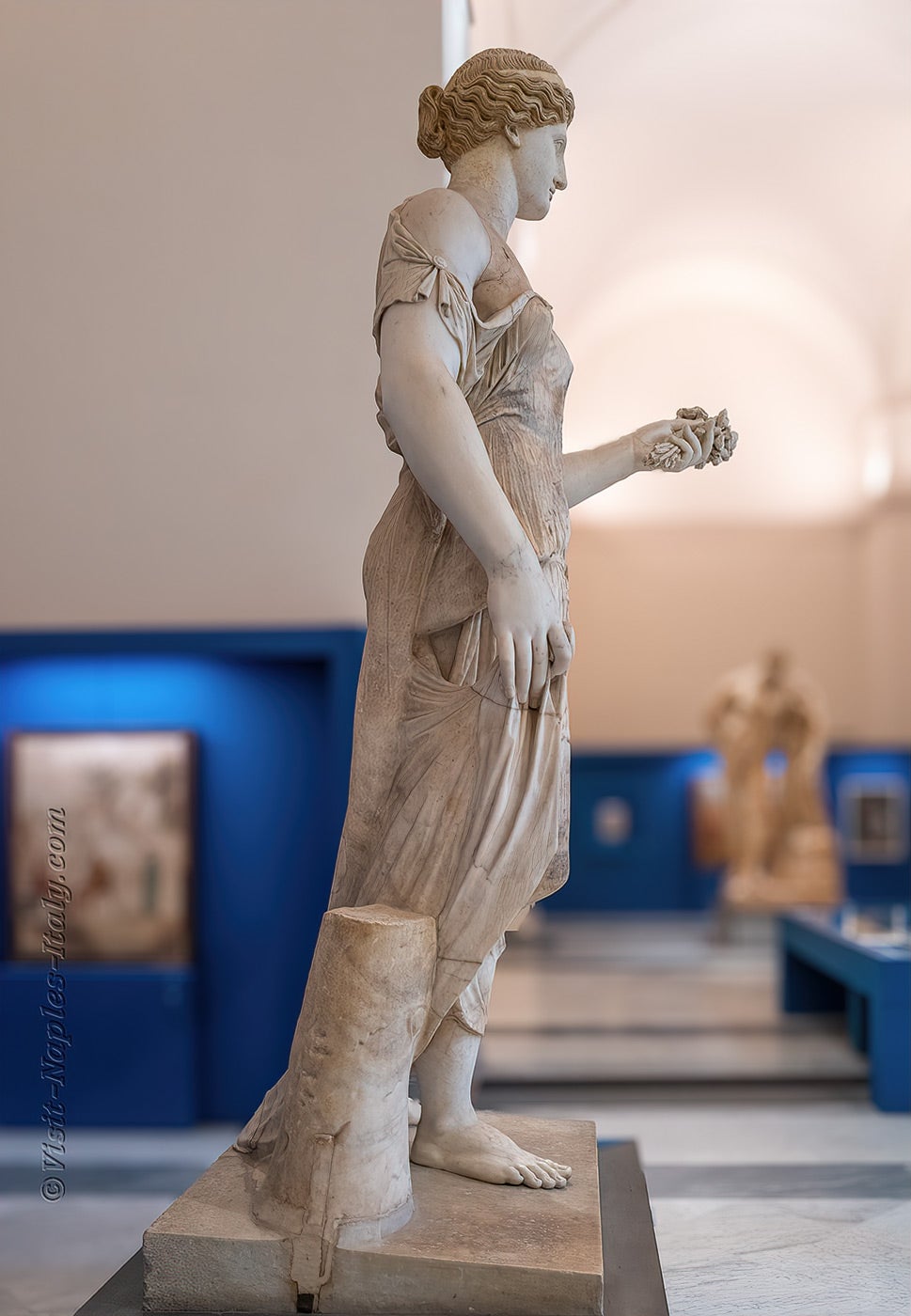
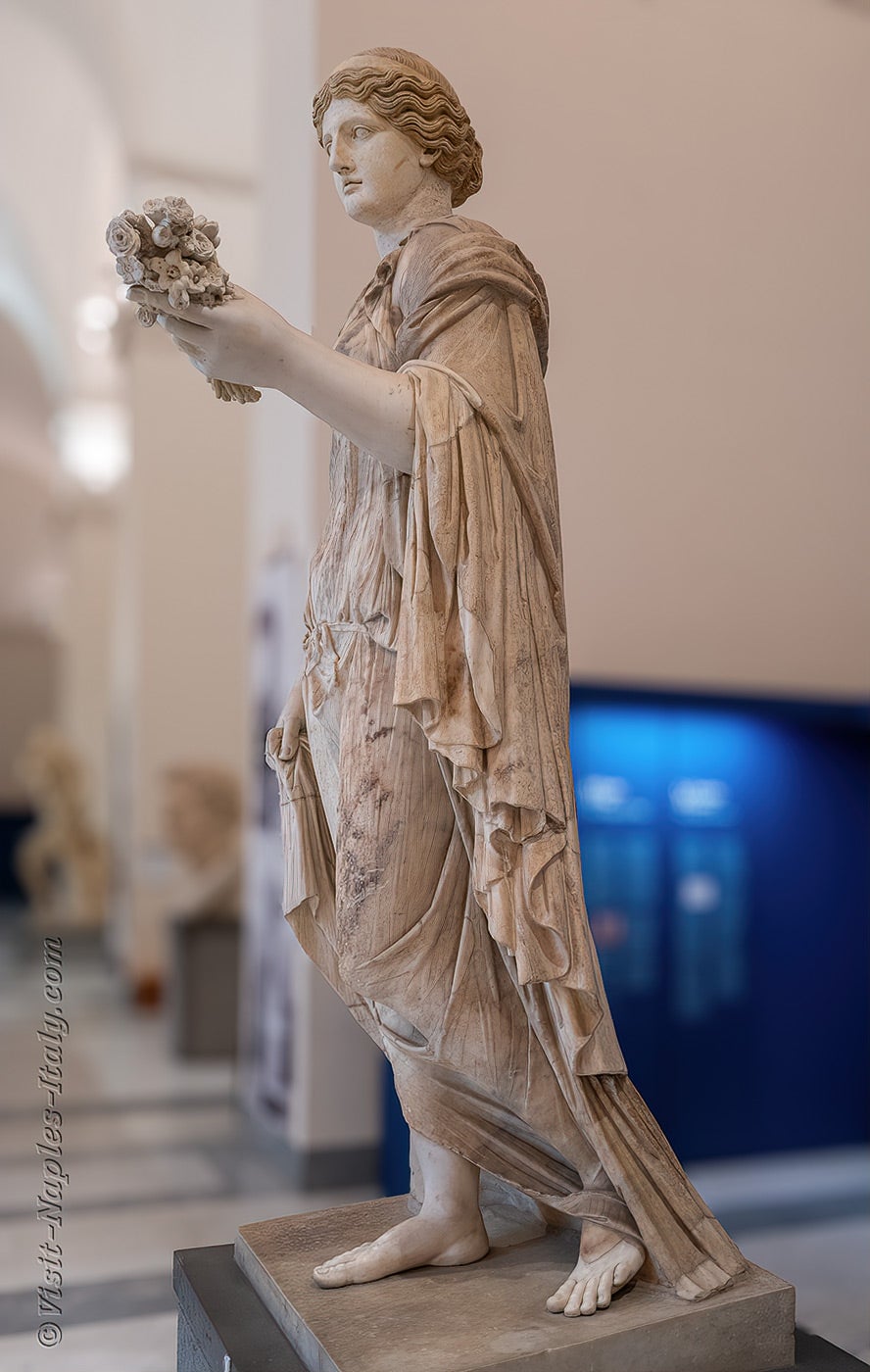
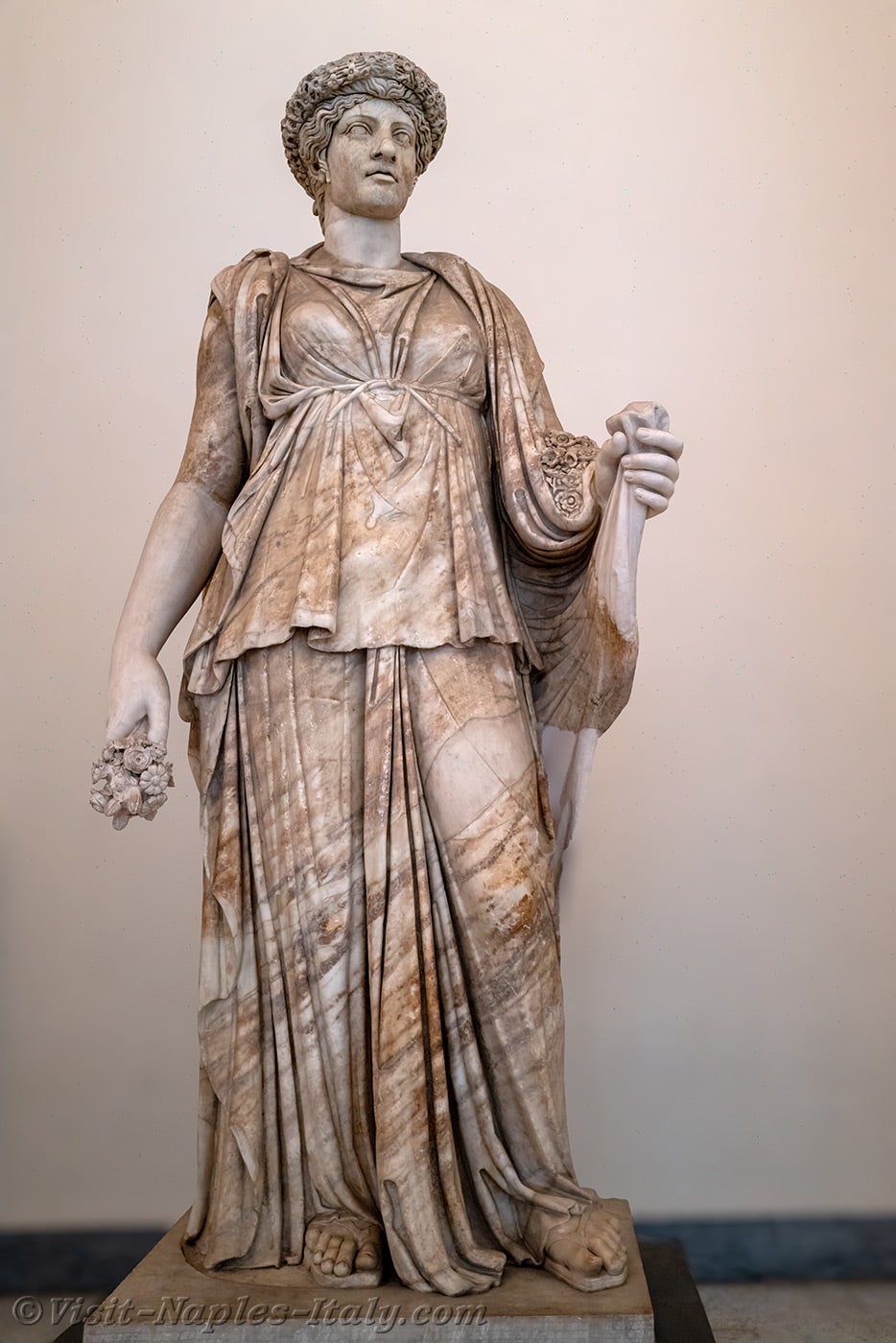
Flora Majeure, Farnese Collection
Sculpture - Marble, Plaster (Height 342 cm) Mid-2nd century ADThis monumental female statue was inspired by the Greek ideal, with its elegant contrapposto worthy of a sculpture by Praxiteles and its magnificent drapery hugging the contours of the body like that of the Winged Victory of Samothrace, the masterpiece of Hellenistic sculpture (2nd century BC).
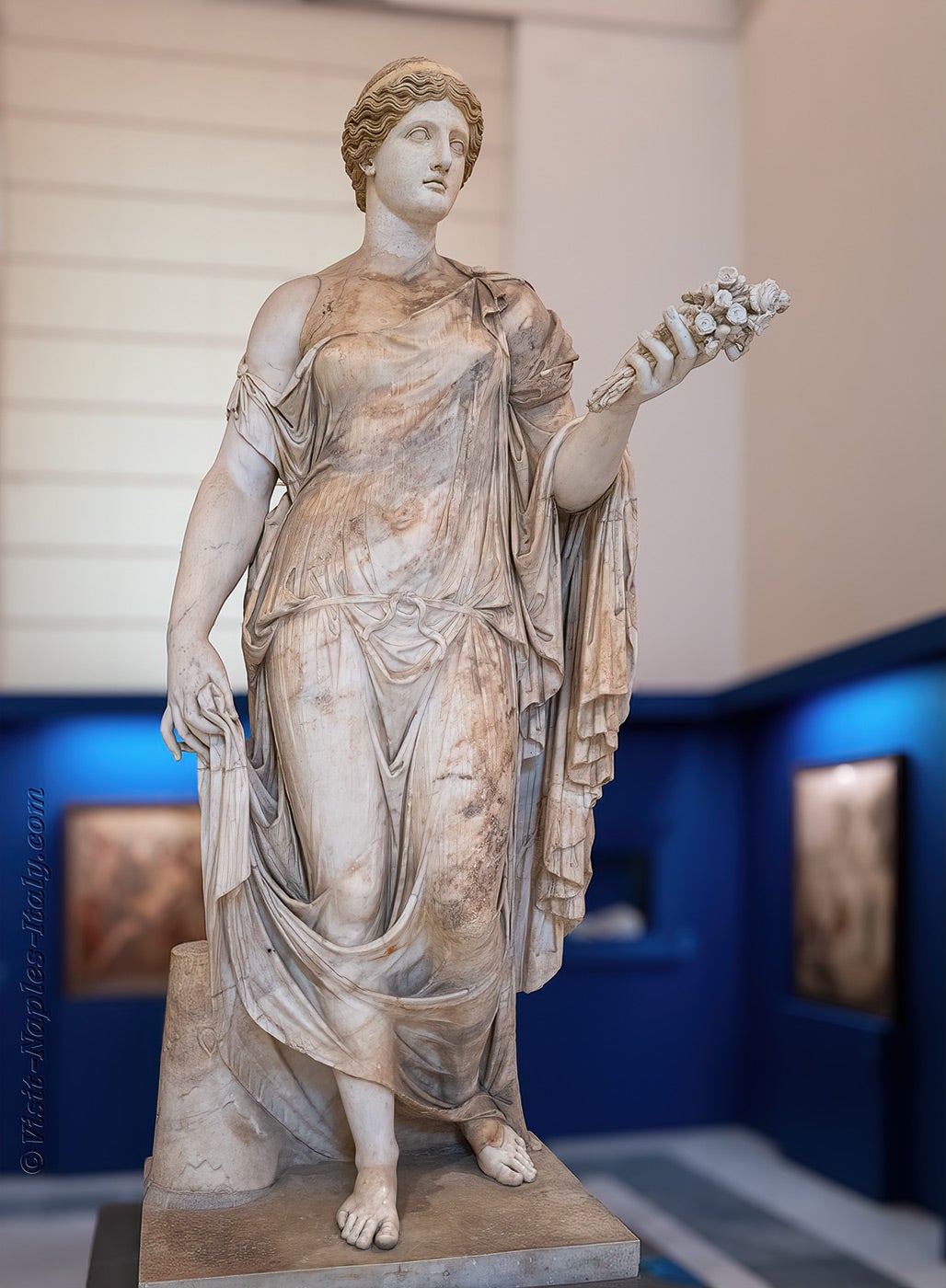
Flora Major Flora holds a bouquet of flowers in her left hand, whilst her right hand gently lifts a fold of her chiton, her long, sheer gown trailing to the ground and held in place by a clasp on her shoulder.
The fabric of the cloak draped over her left arm forms a light pleat that blends harmoniously with that of the dress lifted by her right hand, thus creating the natural image of a person in motion.
Flora, wife of Zephyr, was the protective goddess of the budding and flowering of plants.
“La Primavera”, Botticelli’s spring beautifully illustrates the benevolent action of Zephyr, who blows with all his might to bring about a blossoming near the mouth of Chloris, whose beauty blooms to become Flora, covering herself in a splendid gown of leaves and colourful flowers.
Ancient Rome dedicated five days of celebration to her, the Floralia.
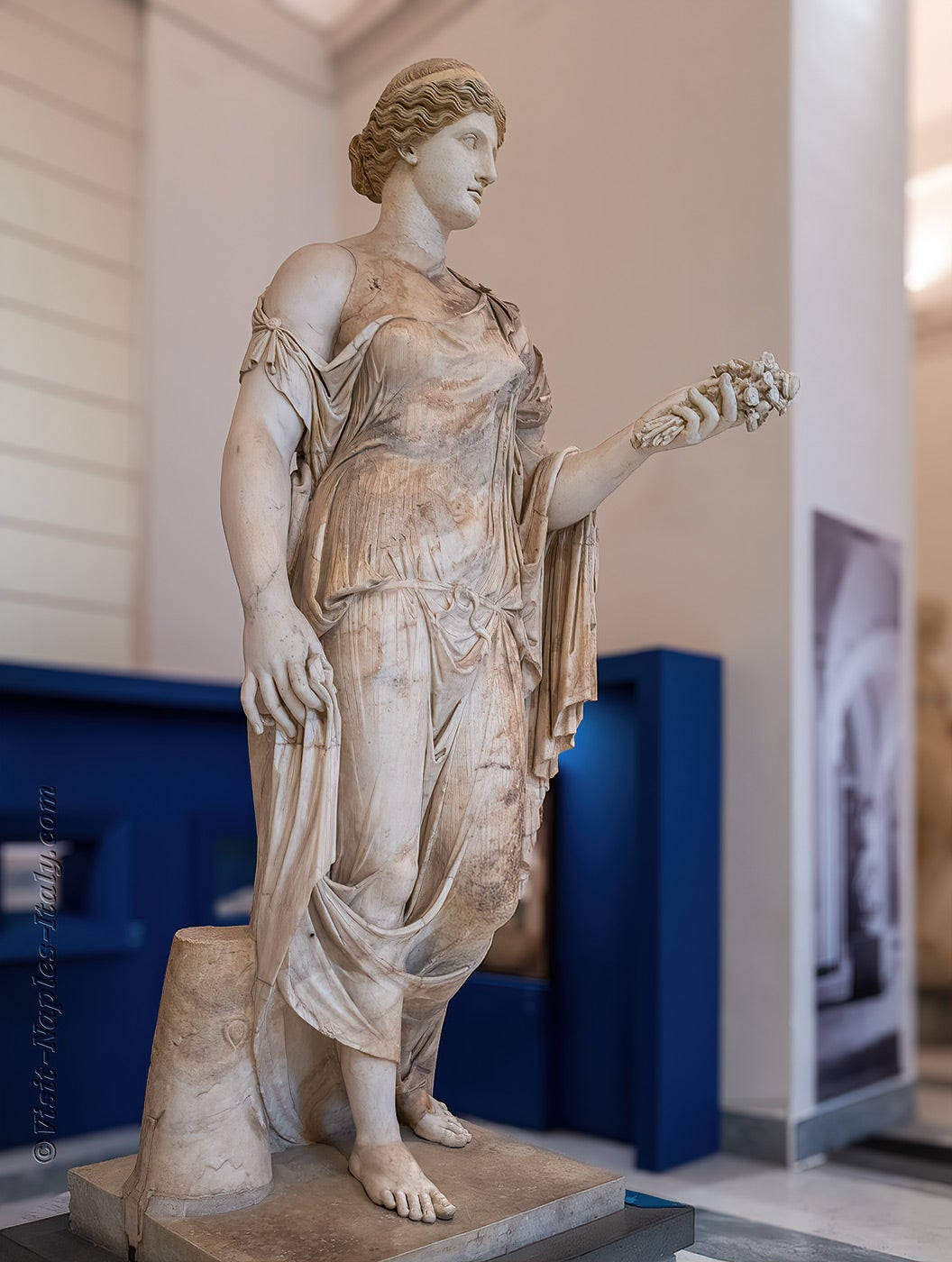
Flora Major Flora was associated with another goddess of spring, Pomona (Flora Minor), who loved and protected well-tended orchards and gardens.
A document dating from 1550 indicates that this statue of Flora stood in a fragmentary state in the courtyard of the Palazzo Farnese alongside that of Pomona.
They were headless and armless, and Battista Franco had completed the restoration of the missing parts in 1554.
Between 1786 and 1800, the statue of Flora was restored by Carlo Albacini, who replaced the 16th-century hand and garland with a hand holding a bouquet of flowers.
Flora’s head changed during the various restorations; the one visible today is made of plaster and was created by Filippo Tagliolini.
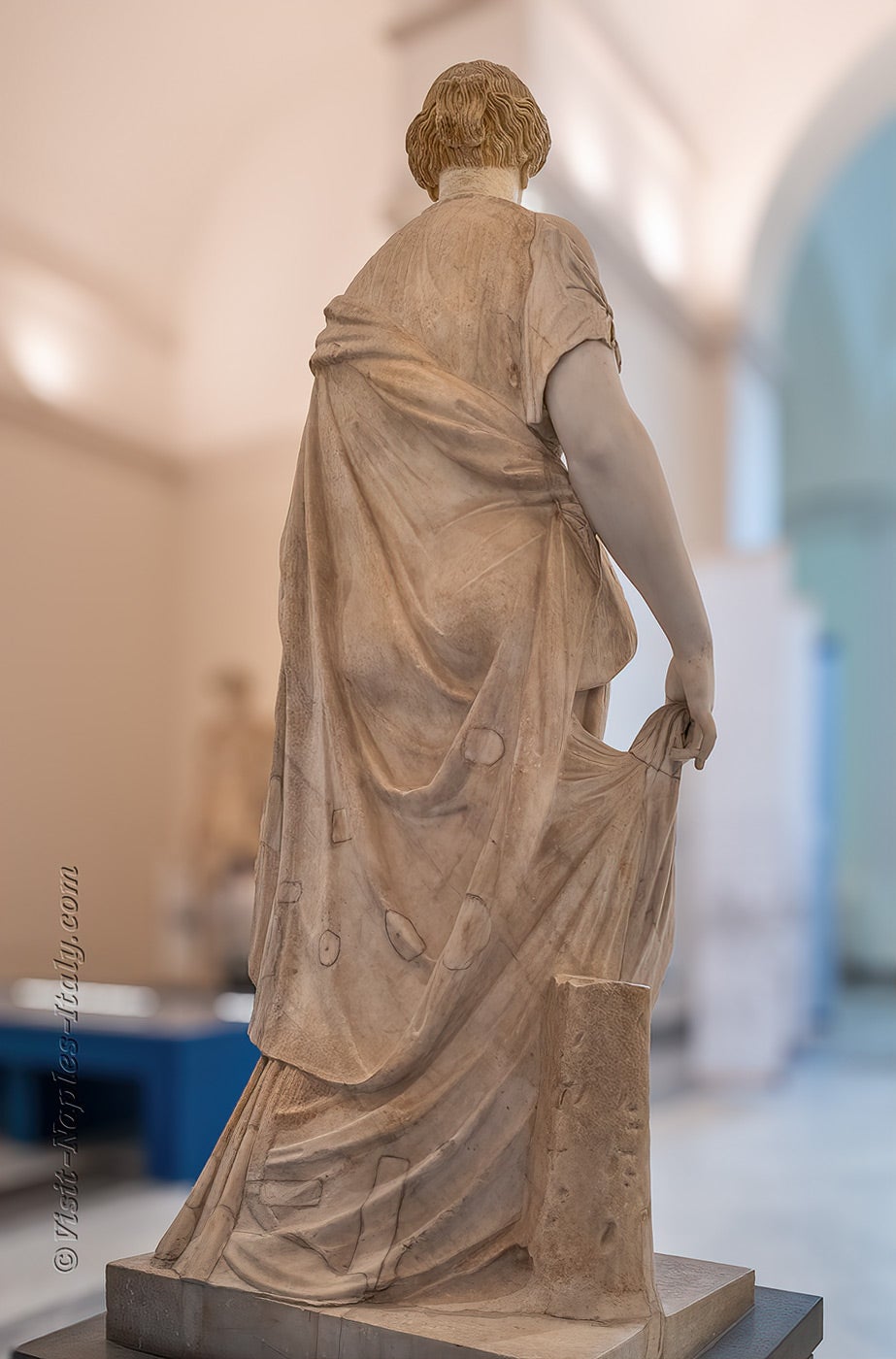
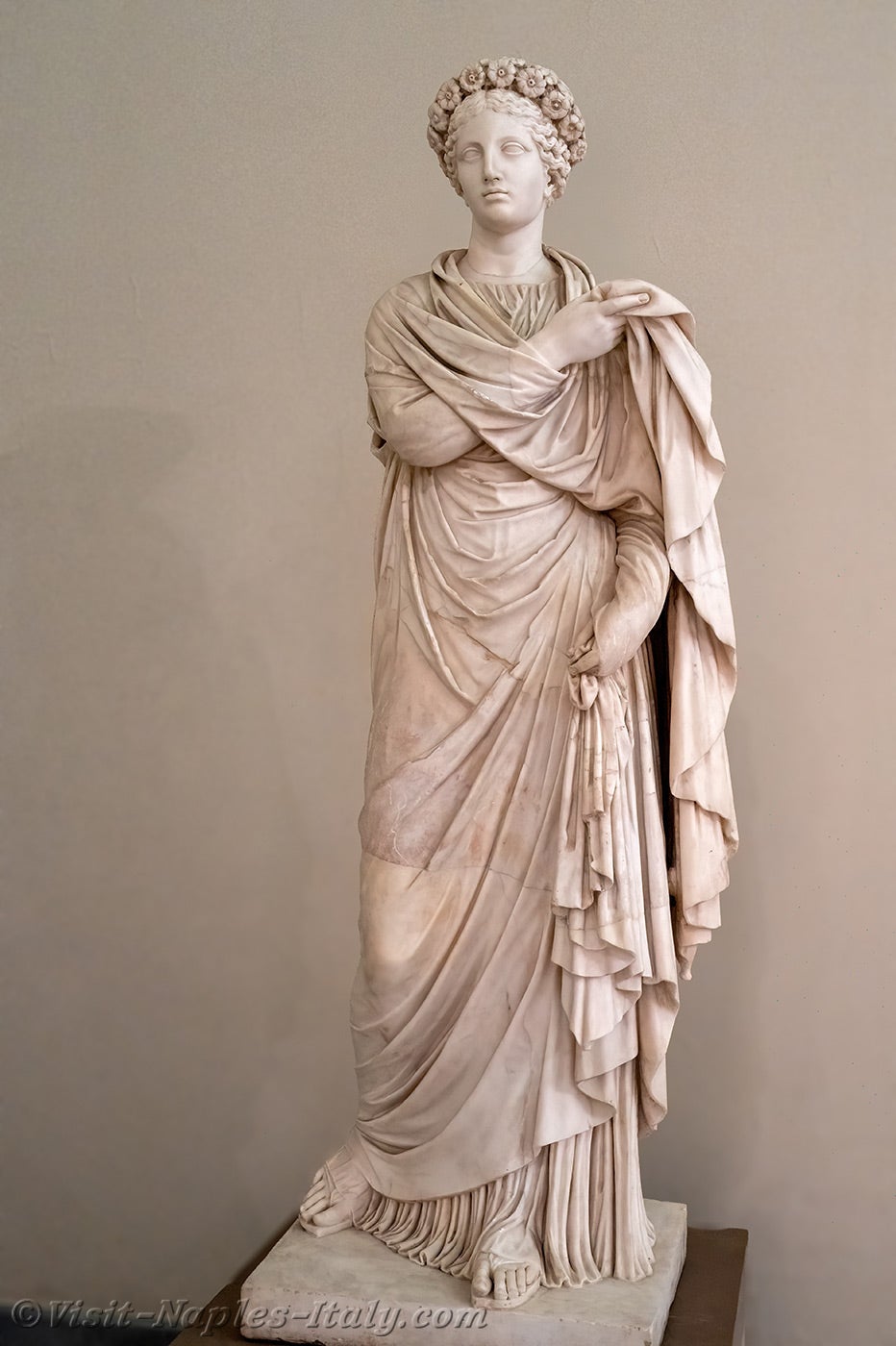
Flora Piccola Ercolanese, Farnese Collection
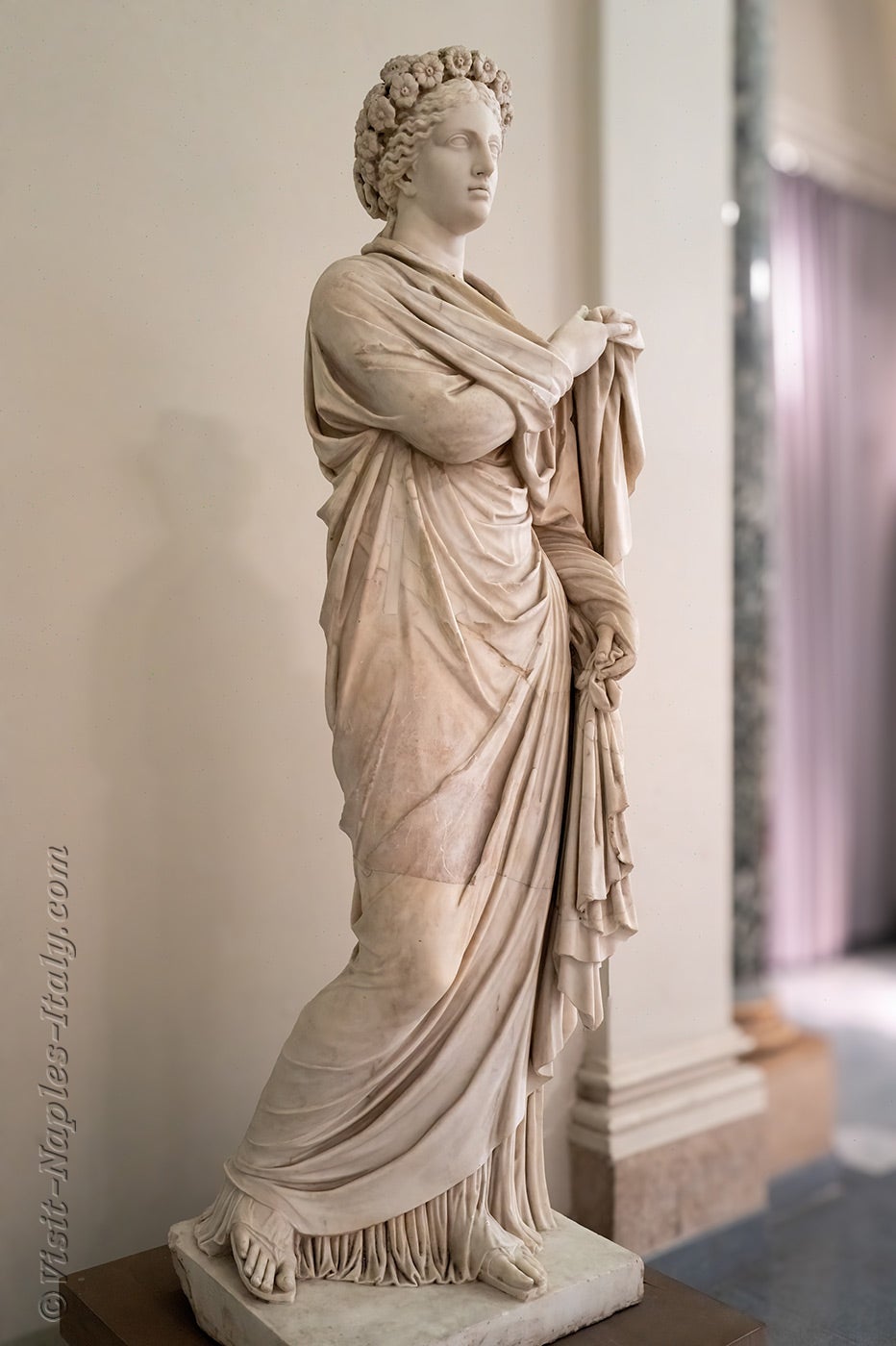
Flora Minor Sculpture - Marble (No. 187) 2nd century
This statue depicts Polyhymnia, one of the nine Muses, daughters of Zeus and Mnemosyne.
Mythology attributed various inventions to her, such as the lyre and agriculture.
She was known as the muse of the art of dance and of music.
As well as history and geometry.
This work is a replica of a sculpture by Praxiteles, known as “the Minor Ercolanese”.
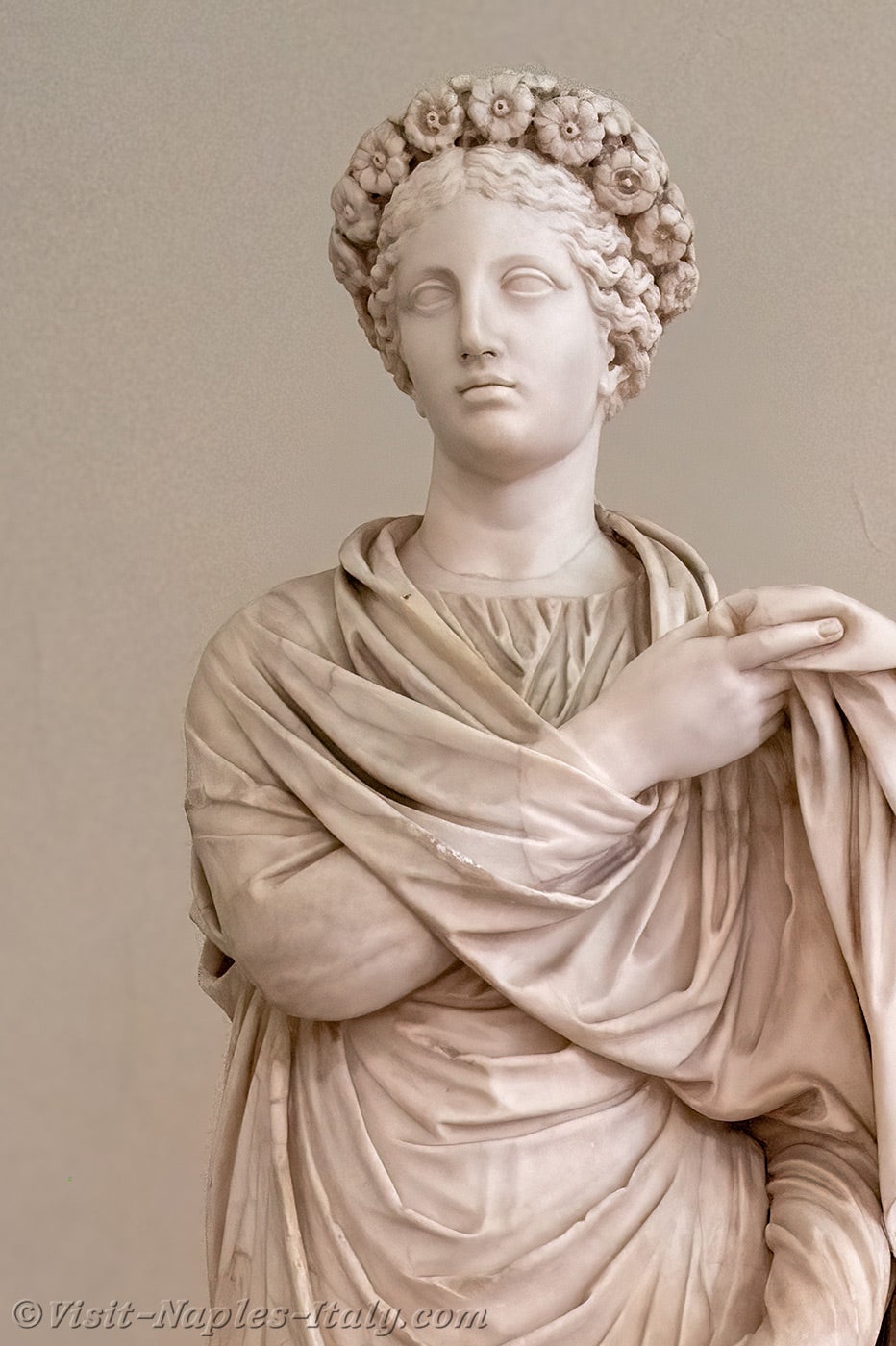
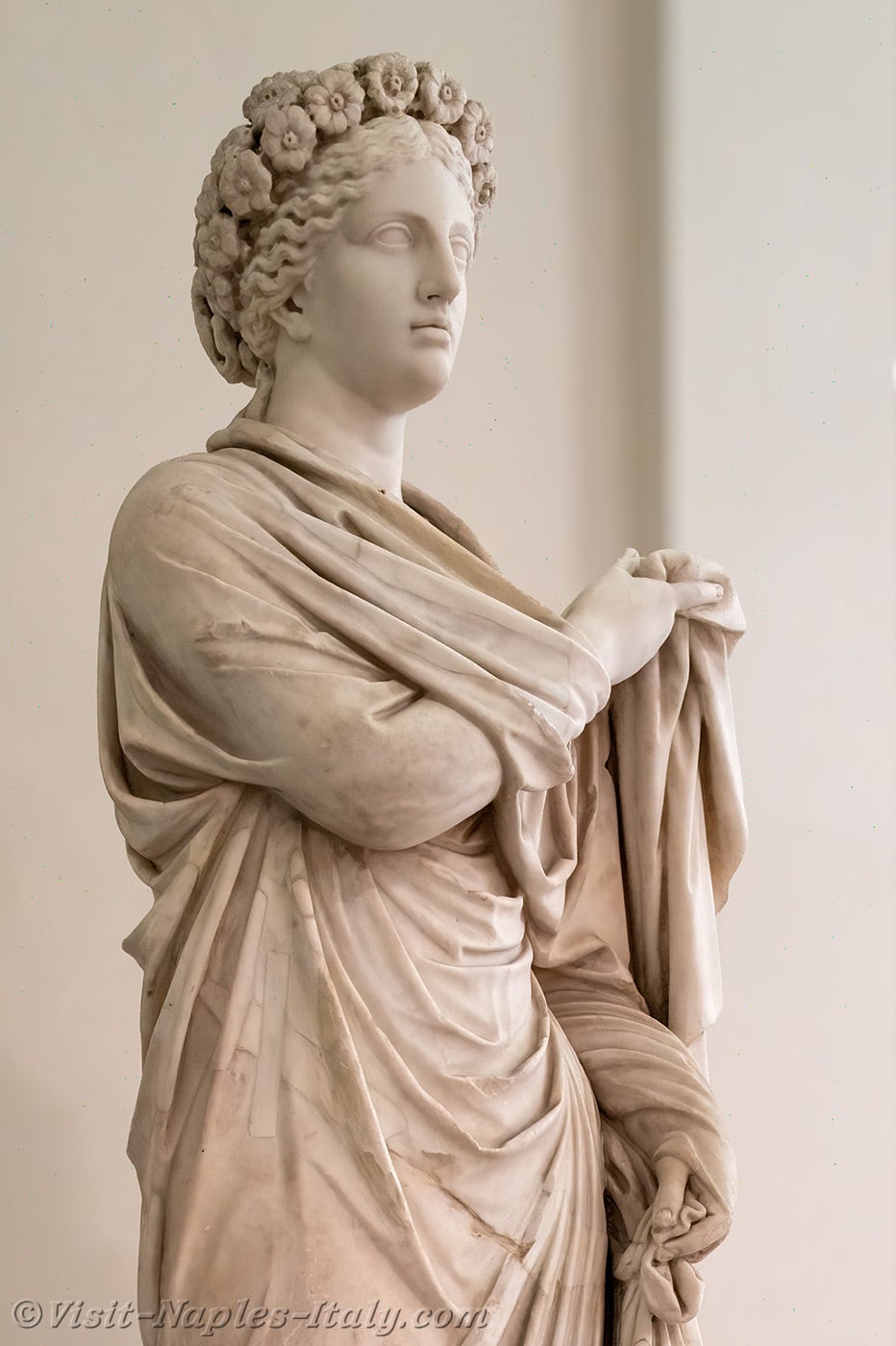
Flora Minor The muse Polymnia wears a wreath of flowers in her hair.
She is dressed in a long tunic.
Her right arm is half-covered by the fabric, and her hand holds at the level of her left shoulder, the part that covers her back.
Her left arm rests along her side, whilst her hand lifts her tunic with her fingertips, following the movement of her foot which protrudes from the magnificent pleats of her dress.
The drapery of this sculpture wonderfully suggests the feminine beauty moving with grace.
Flora and Pomona, Farnese Collection
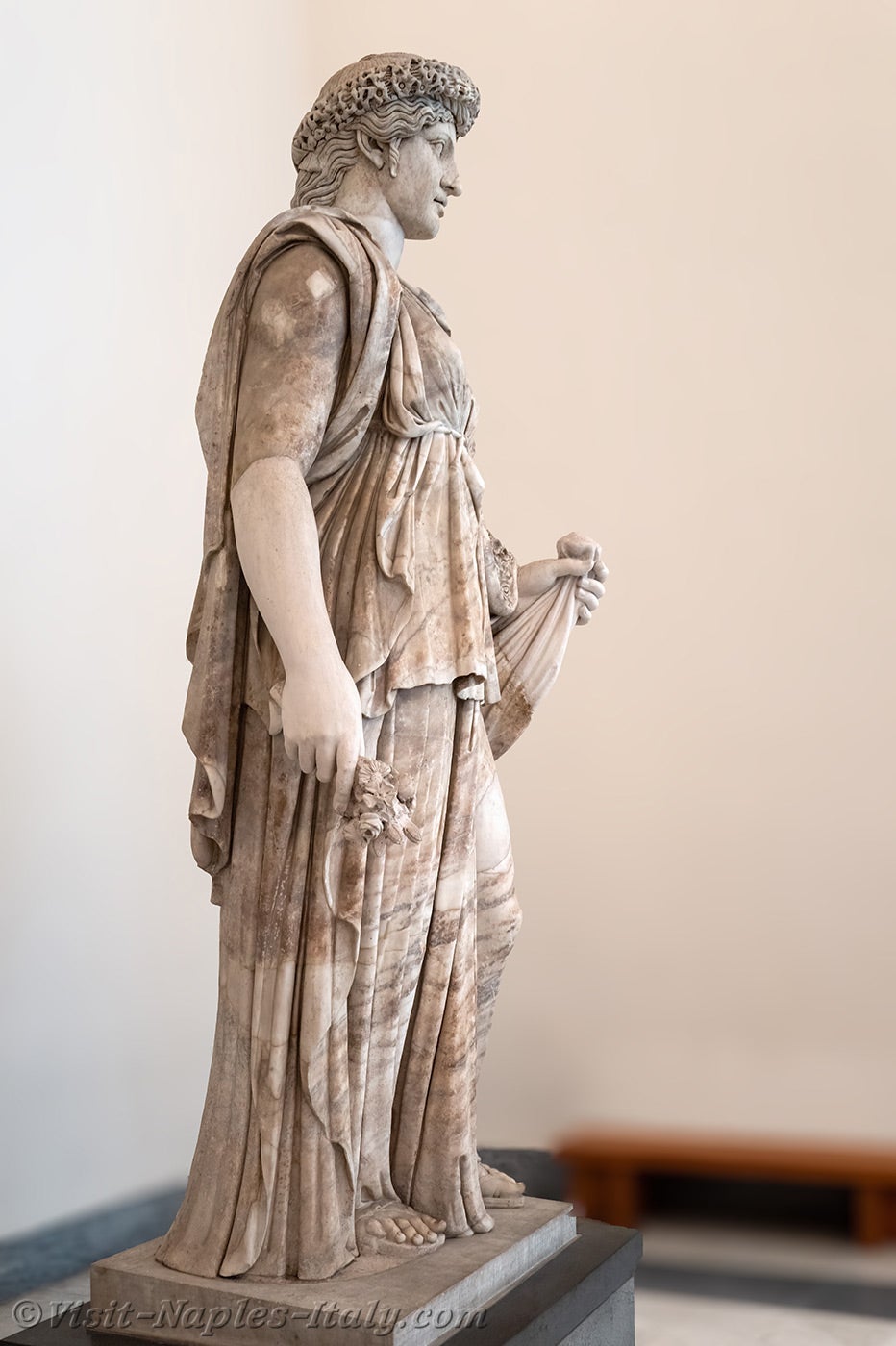
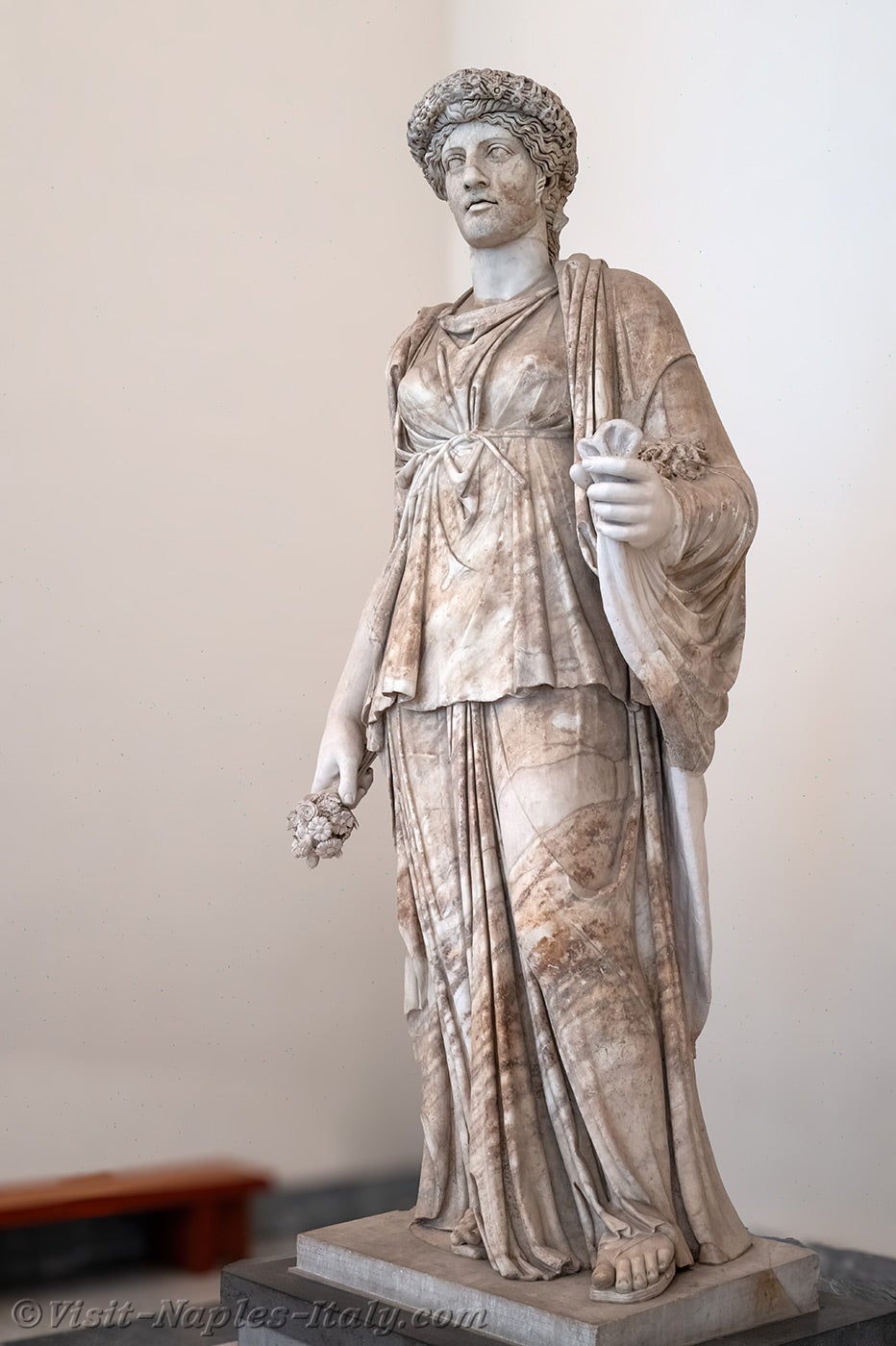
Sculpture - Marble (Height 358 cm) Second half of the 2nd century ADPomona was a Roman nymph charged with protecting orchards.
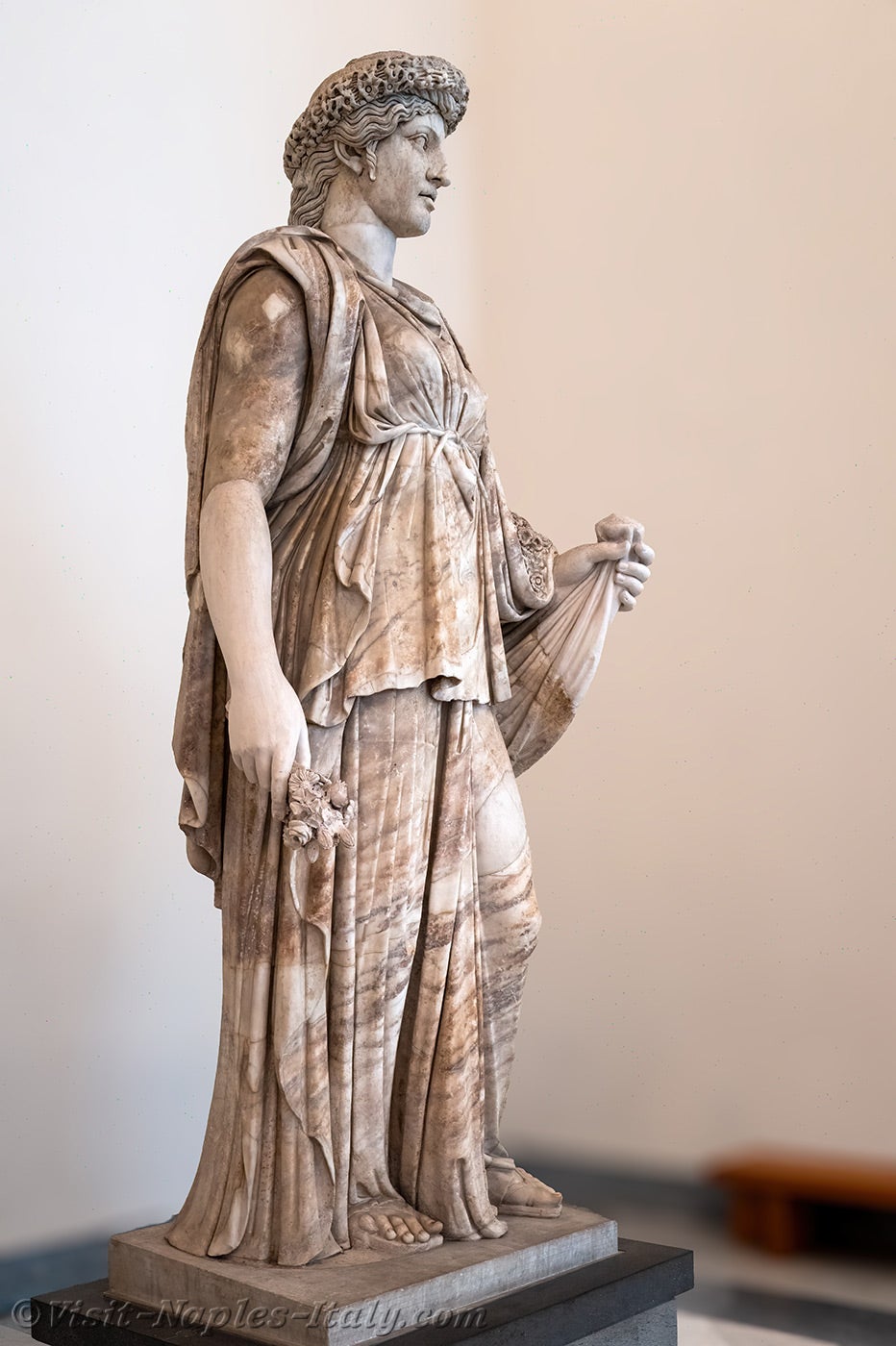
Flora Pomona She owned a sacred grove called Pomonal situated along the Roman road linking Rome to Ostia.
According to Roman poets, she was the wife of King Picus, who is said to have rejected Circe in favour of the alluring Pomona.
Circe is said to have taken her revenge by transforming Picus into a woodpecker.
She is dressed in the Roman style, wearing a tunic and a cloak covering her shoulders.
Her left hand firmly holds a fold of her cloak laden with fruit from the garden.
Her hair is adorned with a crown of roses, whilst she holds a bouquet of flowers in her right hand.
Mythology Achilles | Aesculapius | Amazons | Aphrodite Venus | Apollo | Artemis | Athena Minerva | Atlas | Concordia | Danaids | Diomedes | Dionysus | Dirce | Flora | Ganymede | Hera Juno | Hercules | Hermes | Nike | Orestes | Psyche | River | Satyrs | Zeus
Sculptures Mythology | Persons | Animals | Bas-relief
Artworks Sculptures | Frescoes | Eroticism
MANN Artworks Schedule Tickets Location | Authorizations
Back to Top of Page