

MANN Artworks Schedule Tickets Location | Authorizations
Artworks Sculptures | Frescoes | Eroticism
Sculptures Mythology | Persons | Animals | Bas-relief
Mythology Achilles | Aesculapius | Amazons | Aphrodite Venus | Apollo | Artemis | Athena Minerva | Atlas | Concordia | Danaids | Diomedes | Dionysus | Dirce | Flora | Ganymede | Hera Juno | Hercules | Hermes | Nike | Orestes | Psyche | River | Satyrs | Zeus
Zeus Jupiter at the Archaeological Museum of Naples in Italy
Zeus is the greatest and most powerful of the gods in the Greek pantheon.He represents the supreme deity of light and thunder whom humans fear, the universal power that governs the laws of the world and embodies the Cosmos.
He is often depicted at the summit of Mount Olympus, presiding over the assembly of the gods.
He is the guarantor of royal power, social hierarchy and the honouring of oaths, both amongst the gods and amongst men.
Olympus was the ethereal abode of the gods, beyond the summit of the mountain bearing that name.
Zeus exercises his prerogatives and duties as sovereign and impartial judge, concerned with maintaining order and justice; but he cannot help falling in love as soon as he catches sight of a beautiful woman, whom he immediately seduces by transforming himself into a friendly figure or an animal, to escape the watchful eye of his divine wife.
His extramarital affairs infuriate Hera, his eighth wife, who spends her time not punishing her unfaithful husband—she fears him too much—but his victims: the nymphs and young girls he has seduced, using every trick at his disposal to satisfy his desires.
Among the Romans, the Greek Zeus became Jupiter, god of the bright sky and protector of the city.
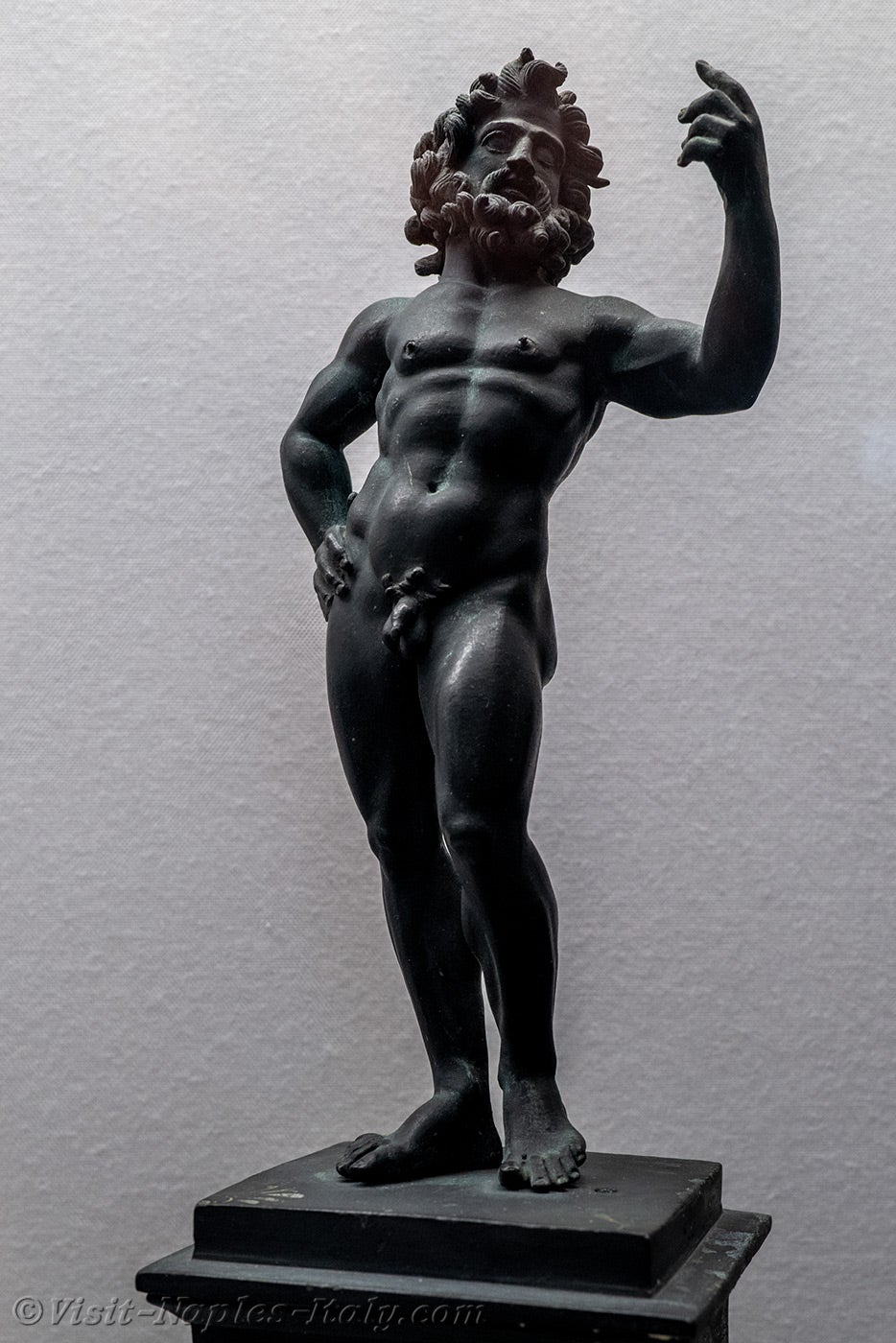
Jupiter holding a staff, Herculaneum
Sculpture - Bronze - 1st centuryJupiter is depicted naked, in the triumphant pose of a victorious athlete, one hand resting on his hip, whilst the other likely holds the thunderbolt, which is now lost.
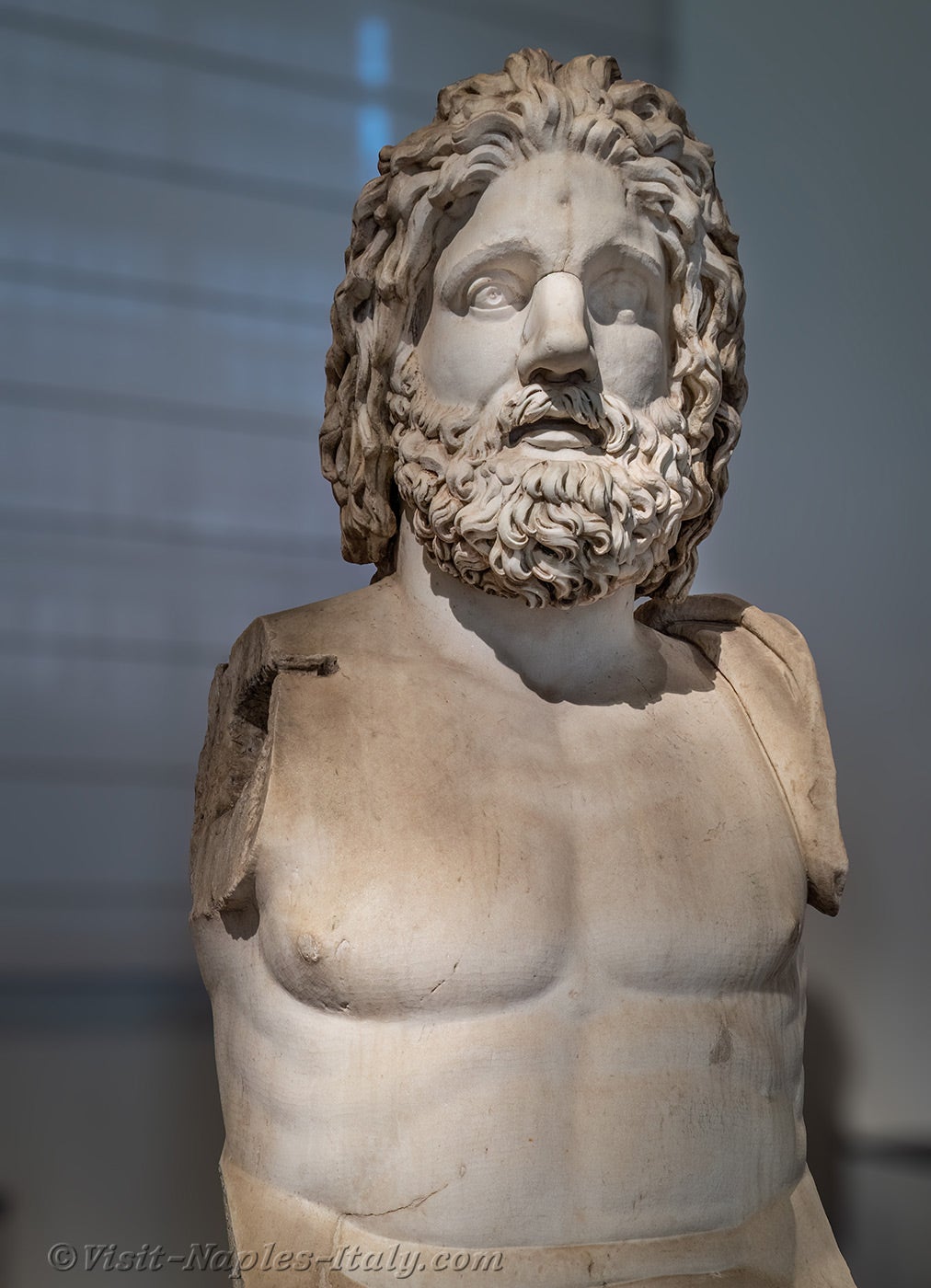
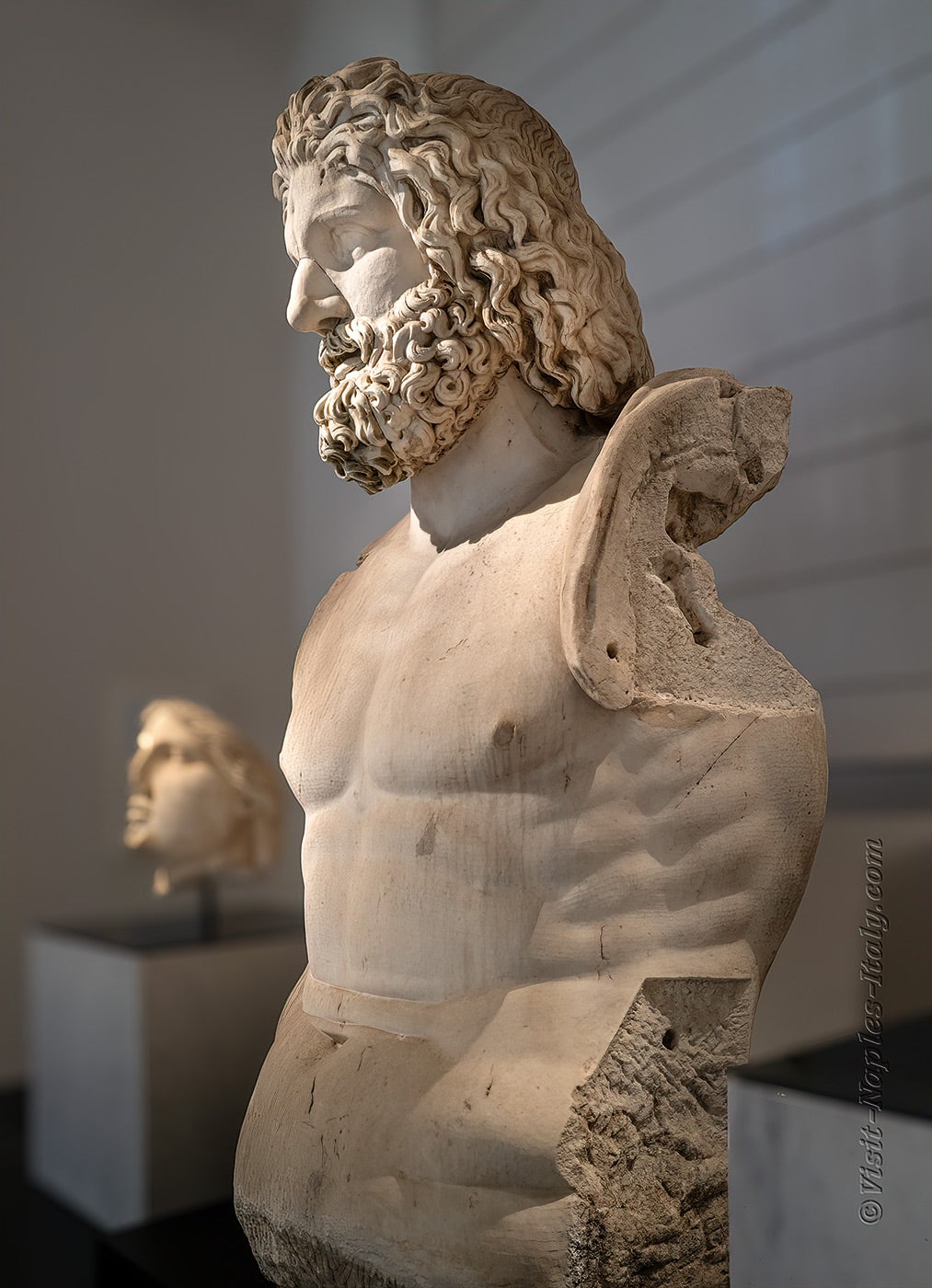
Jupiter Capitolinus, Capitolium, Cuma
Sculpture - Marble - 1st centuryThis bust embodies the majesty and sovereign power of Jupiter.
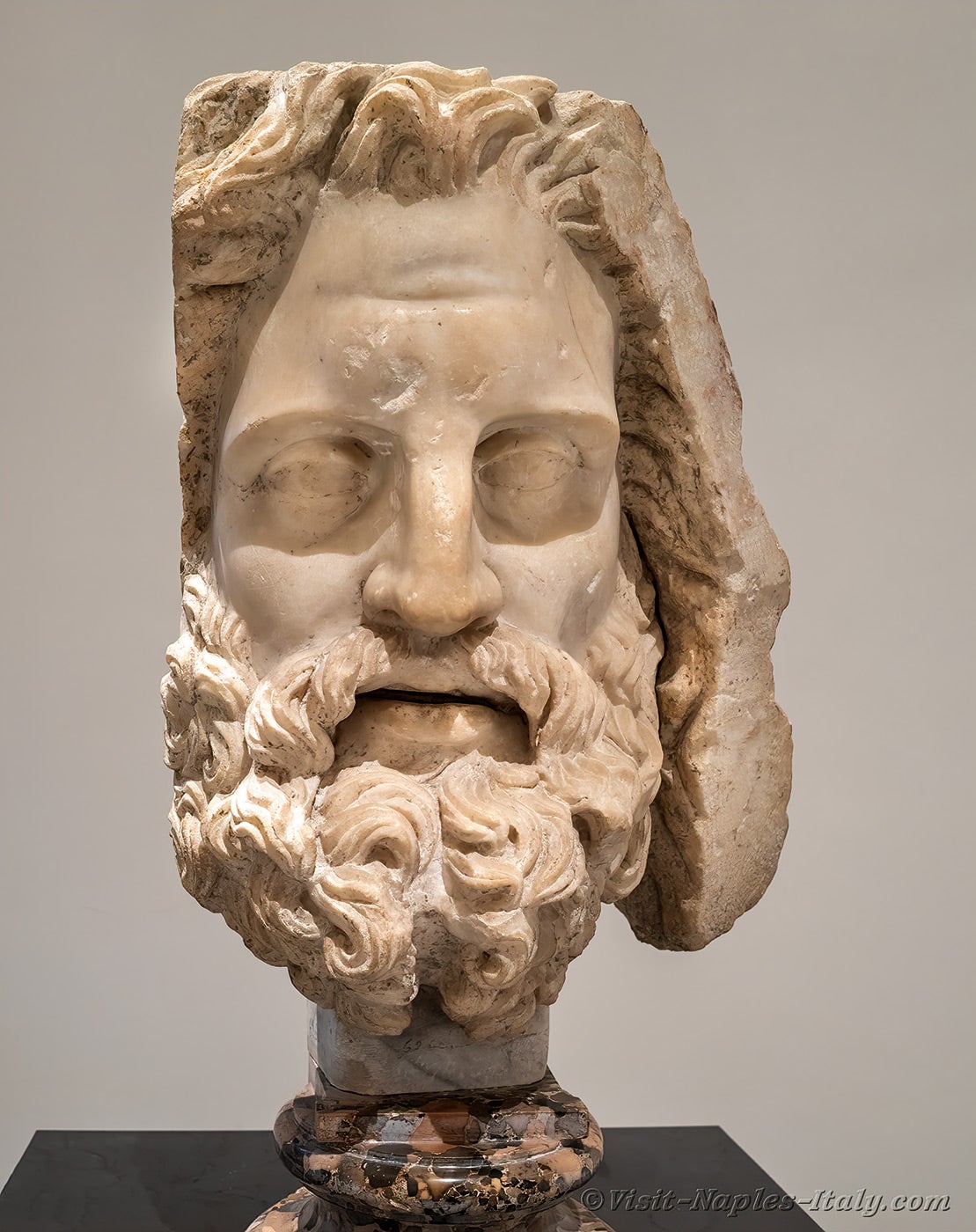
Jupiter, Farnese Collection, Capitolium, Pompeii
Sculpture - Marble (Height 53 cm) 80 BCThis head of Jupiter shows him to be both calm and imposing, lively and energetic, like a king commanding awe and respect.
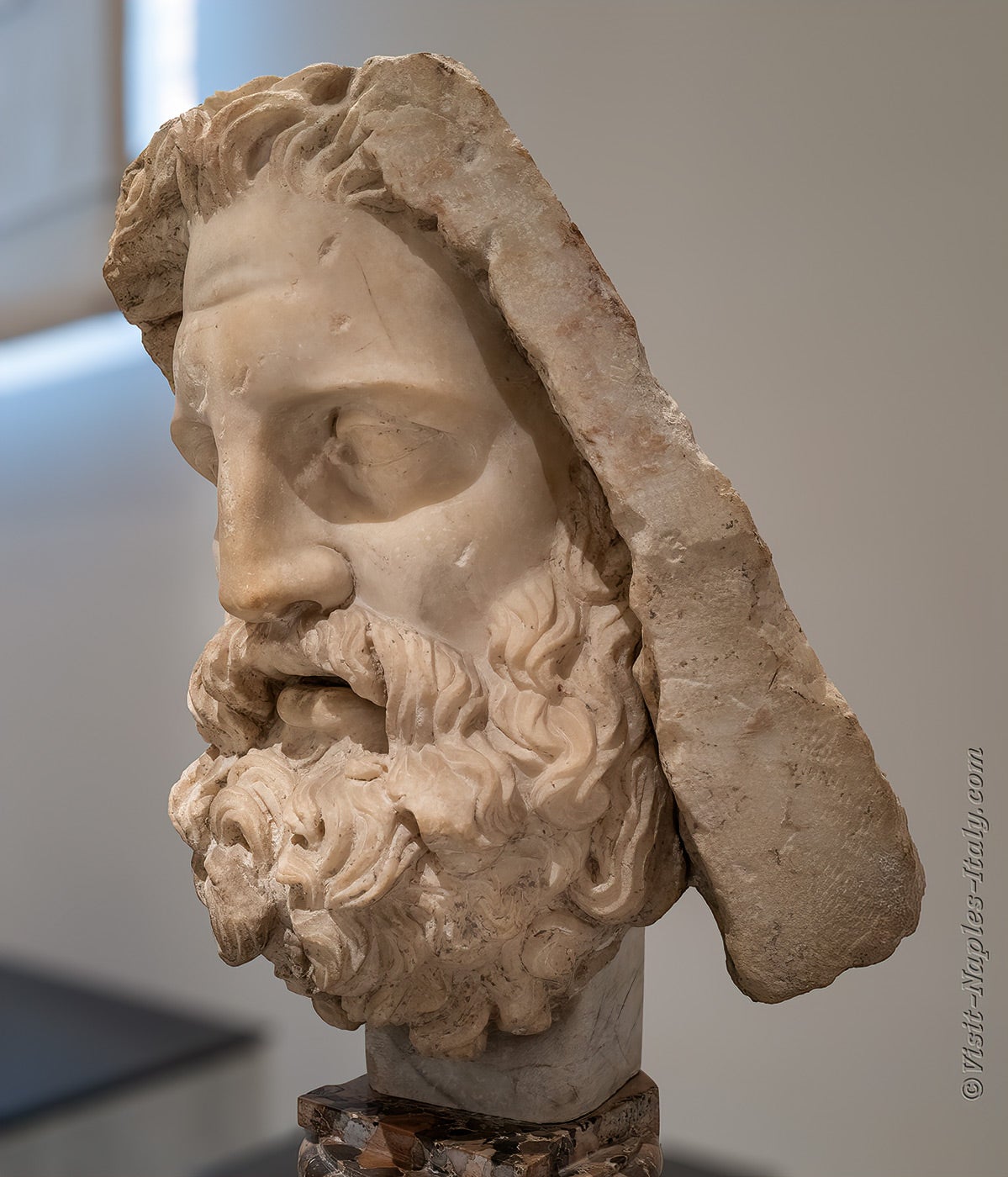
Otricoli-type Jupiter, Capitolium, Pompeii
Sculpture - Marble (Height 80 cm) 1st centuryThis Jupiter is of the same type as the Otricoli Jupiter on display at the Vatican Museum in Rome.
This type of Jupiter is a magnificent portrait of Zeus the sovereign depicted with a benevolent face and eyes set deep in their sockets.
And yet, this portrait of a Jupiter full of tenderness did not really correspond to his character or his deeds.
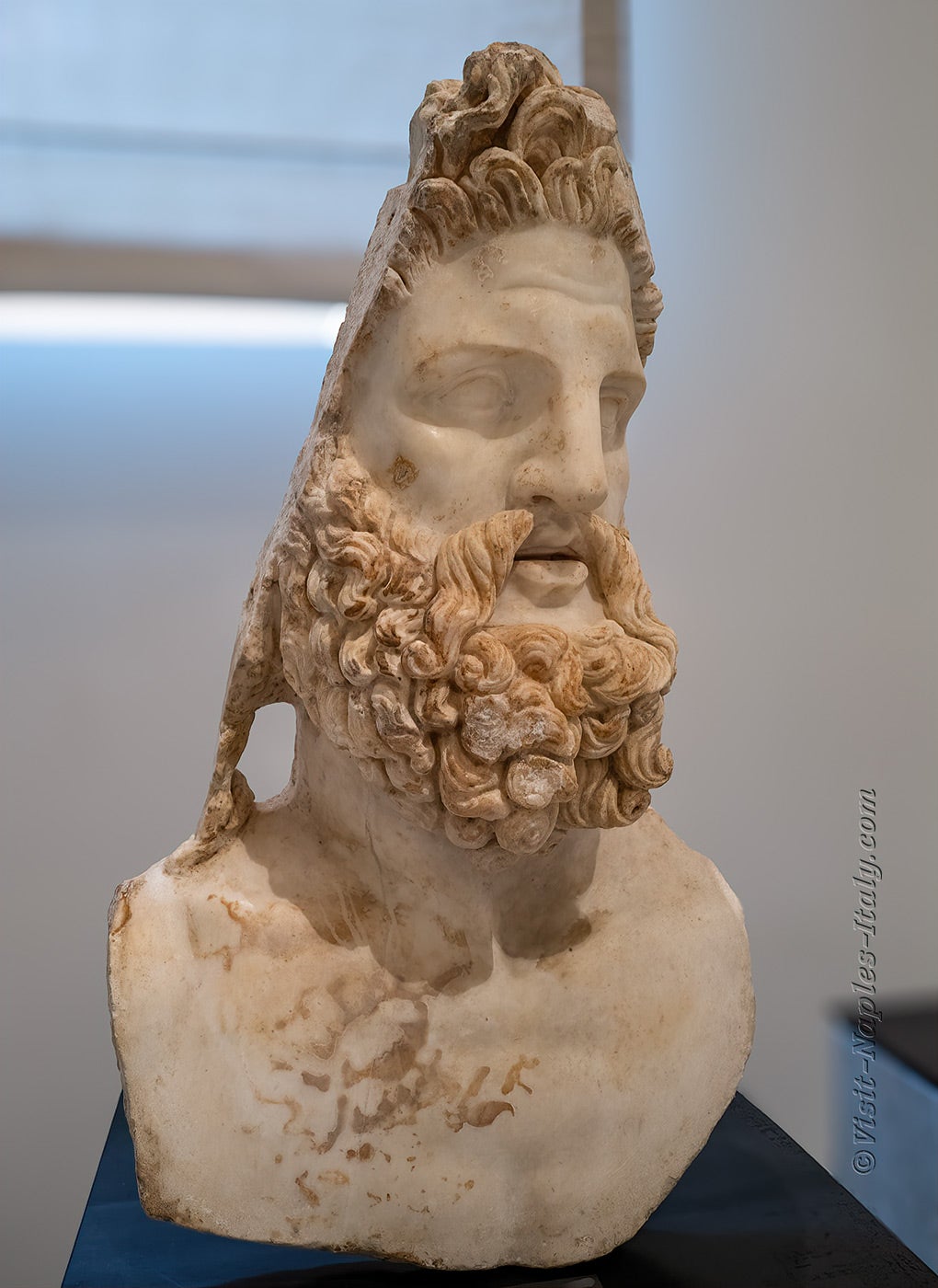
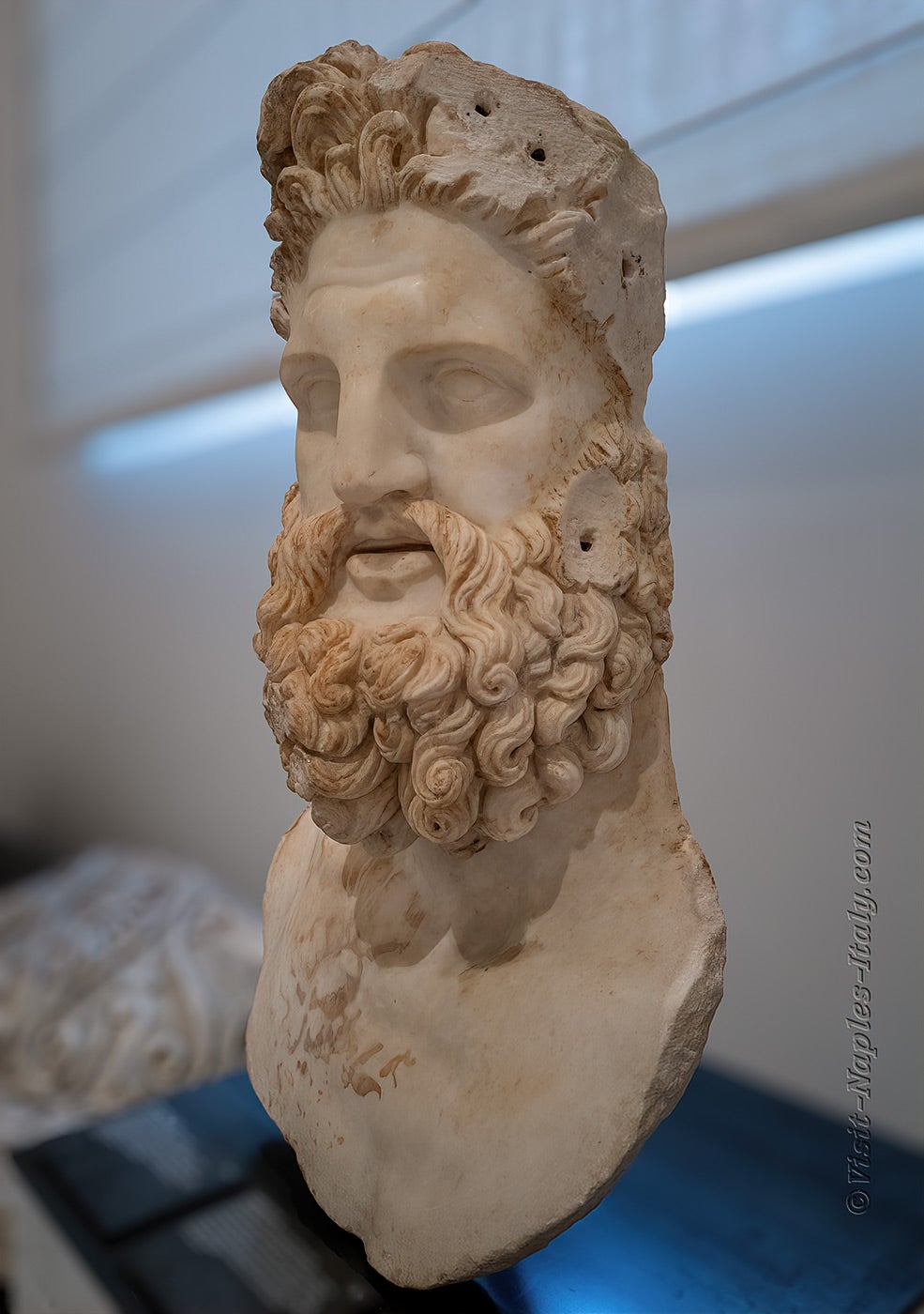
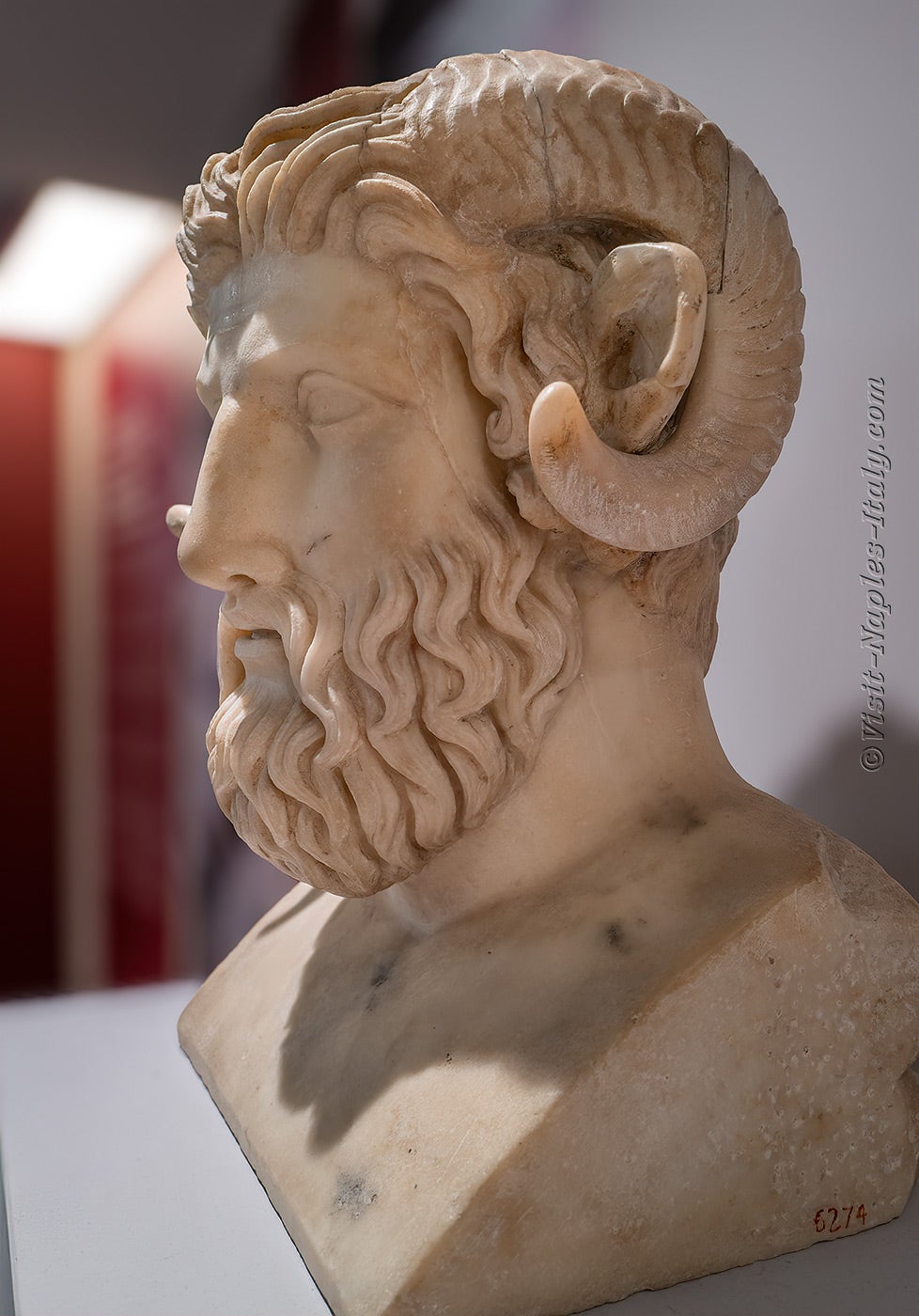
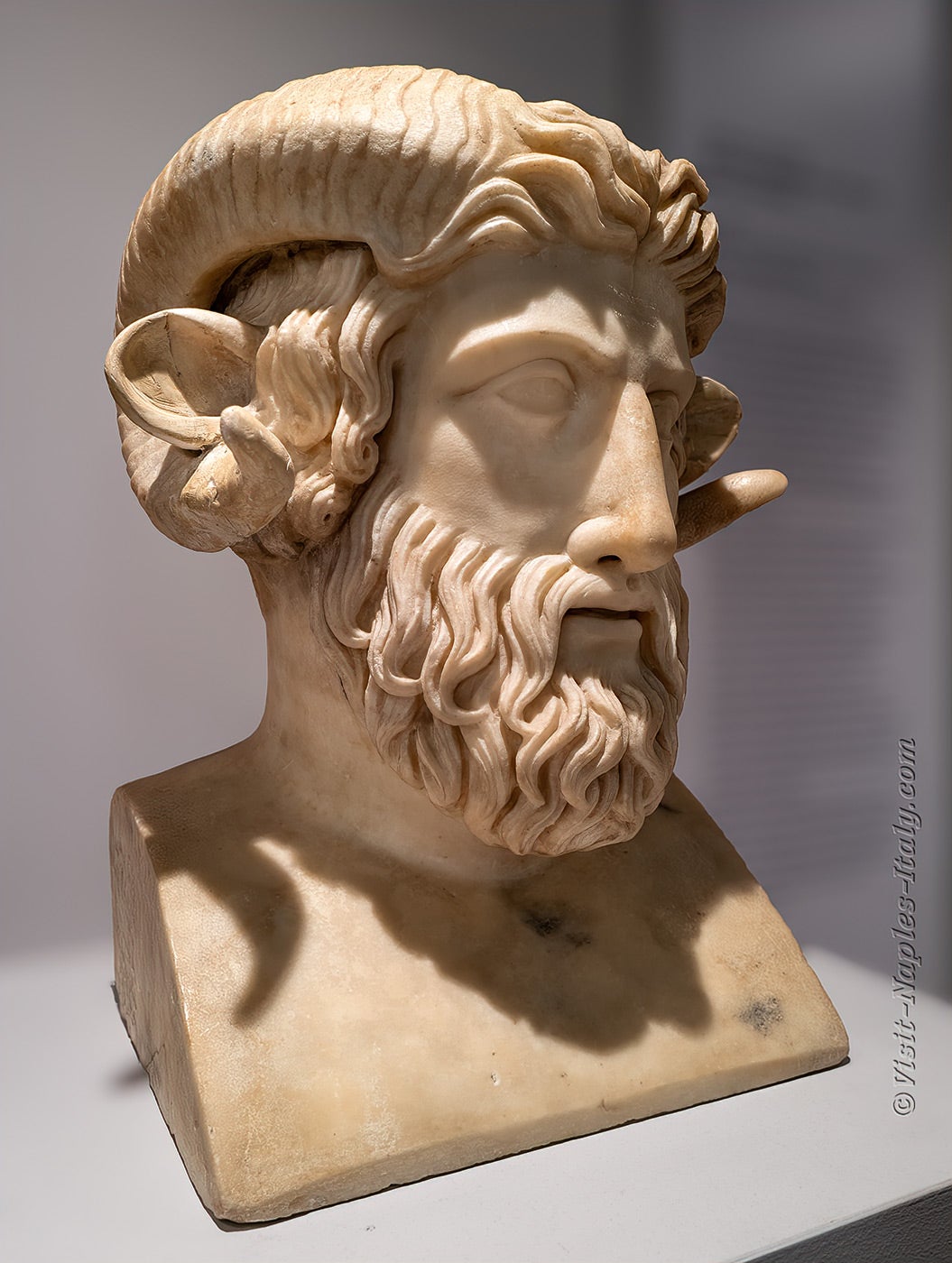
Hermes of Zeus-Ammon, Herculaneum
Sculpture - Marble (Height 43 cm) 1st century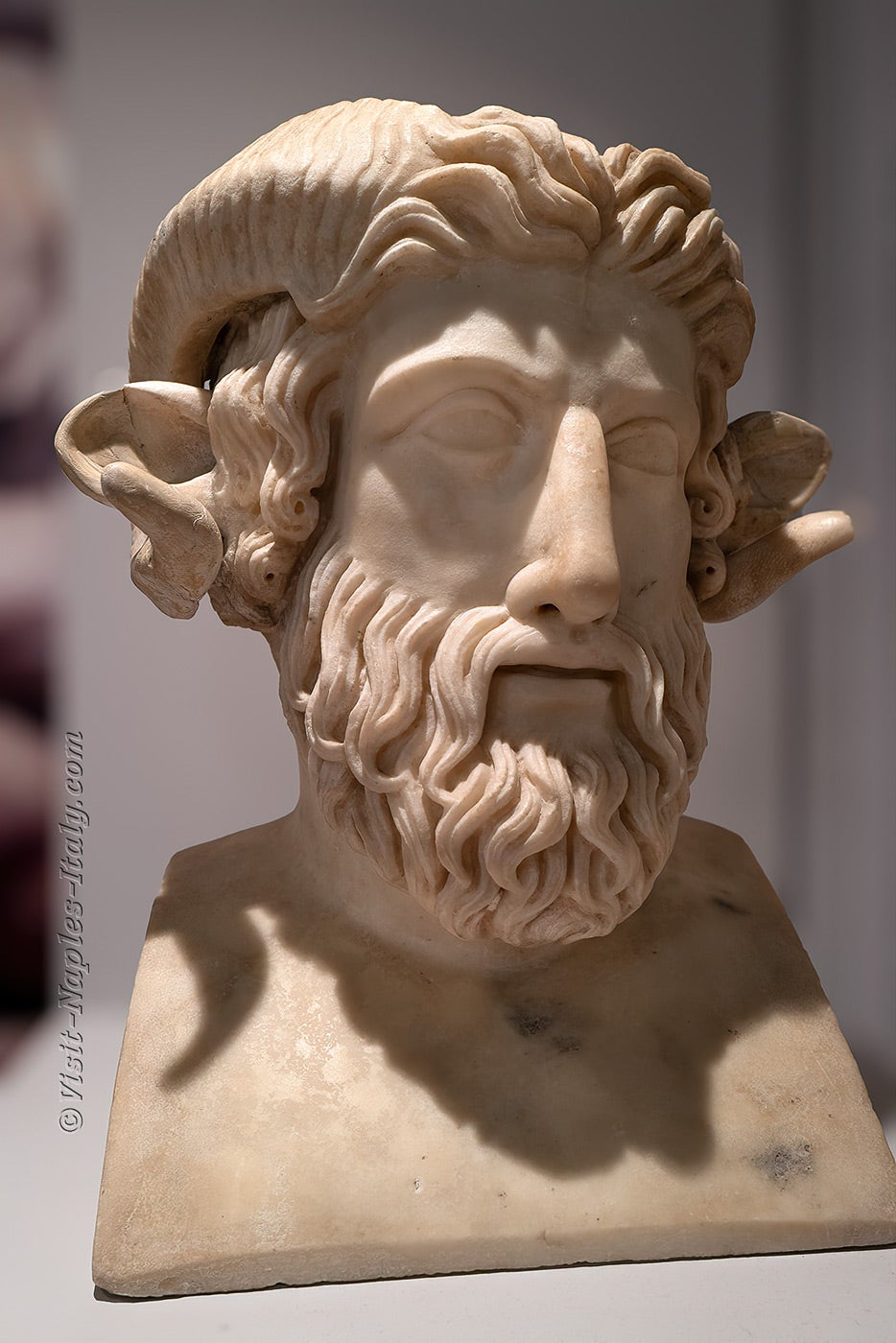
Hermes of Zeus-Ammon Zeus-Ammon is thought to have originated from the ram-god Amun, who first appeared in Libya, was then adopted by the Egyptians, and finally by the Greeks in Cyrene.
He was subsequently quickly identified with Zeus himself.
Another tradition holds that Zeus-Ammon was the son of Zeus and Pasiphaë.
It is, however, certain that Zeus-Ammon was the god of Cyrene in Greece, where he was worshipped under this name as early as the 4th century BC.
He is generally depicted as bearded, in the likeness of Zeus with ram’s horns and ears, as in this Hermes found at Herculaneum ; the original statue of this Zeus-Ammon was probably located in Cyrene.
Oscillum with Zeus-Ammon, Garden of House IX 1.7, Pompeii
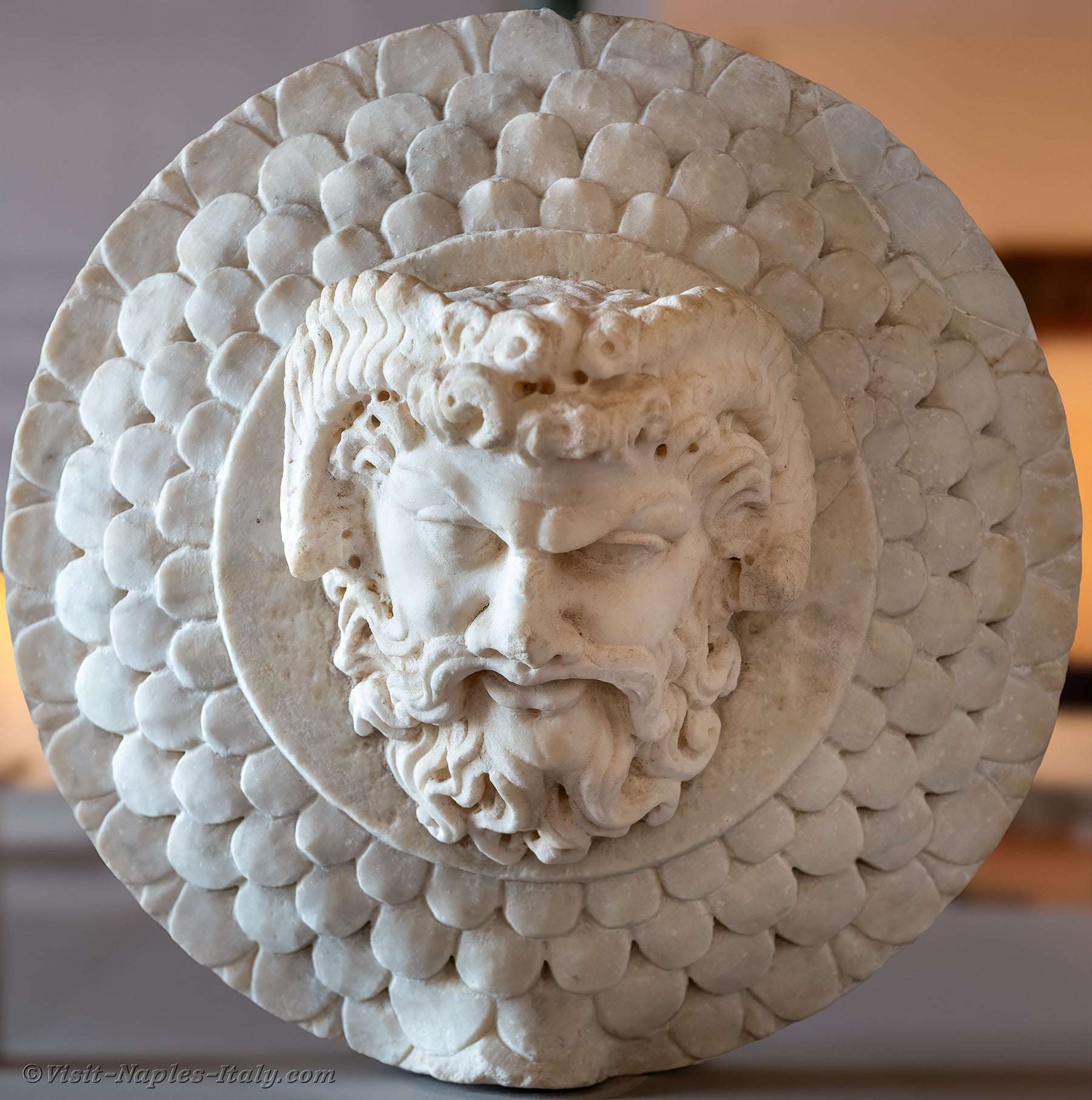
Oscillum with Zeus-Ammon Sculpture - Marble (35 x 35 cm) 50-79 AD
In Roman antiquity, the gods were honoured by hanging round bas-reliefs—carved on both sides—from cords or chains outside houses.
The wind caused these bas-reliefs to sway and oscillate.
It is for this reason that they were given the name oscillum.
Zeus-Ammon is depicted on this side, whilst the other side depicts a satyr.
Zeus-Ammon, with his ram’s horns protruding above his curly hair, frowns, observing, scrutinising the world below him.
Mythology Achilles | Aesculapius | Amazons | Aphrodite Venus | Apollo | Artemis | Athena Minerva | Atlas | Concordia | Danaids | Diomedes | Dionysus | Dirce | Flora | Ganymede | Hera Juno | Hercules | Hermes | Nike | Orestes | Psyche | River | Satyrs | Zeus
Sculptures Mythology | Persons | Animals | Bas-relief
Artworks Sculptures | Frescoes | Eroticism
MANN Artworks Schedule Tickets Location | Authorizations
Back to Top of Page