

MANN Artworks Schedule Tickets Location | Authorizations
Artworks Sculptures | Frescoes | Eroticism
Sculptures Mythology | Persons | Animals | Bas-relief
Mythology Achilles | Aesculapius | Amazons | Aphrodite Venus | Apollo | Artemis | Athena Minerva | Atlas | Concordia | Danaids | Diomedes | Dionysus | Dirce | Flora | Ganymede | Hera Juno | Hercules | Hermes | Nike | Orestes | Psyche | River | Satyrs | Zeus
Artemis Artemis Ephesus | Artemis-Diana
Artemis-Diana at the Archaeological Museum of Naples, Italy
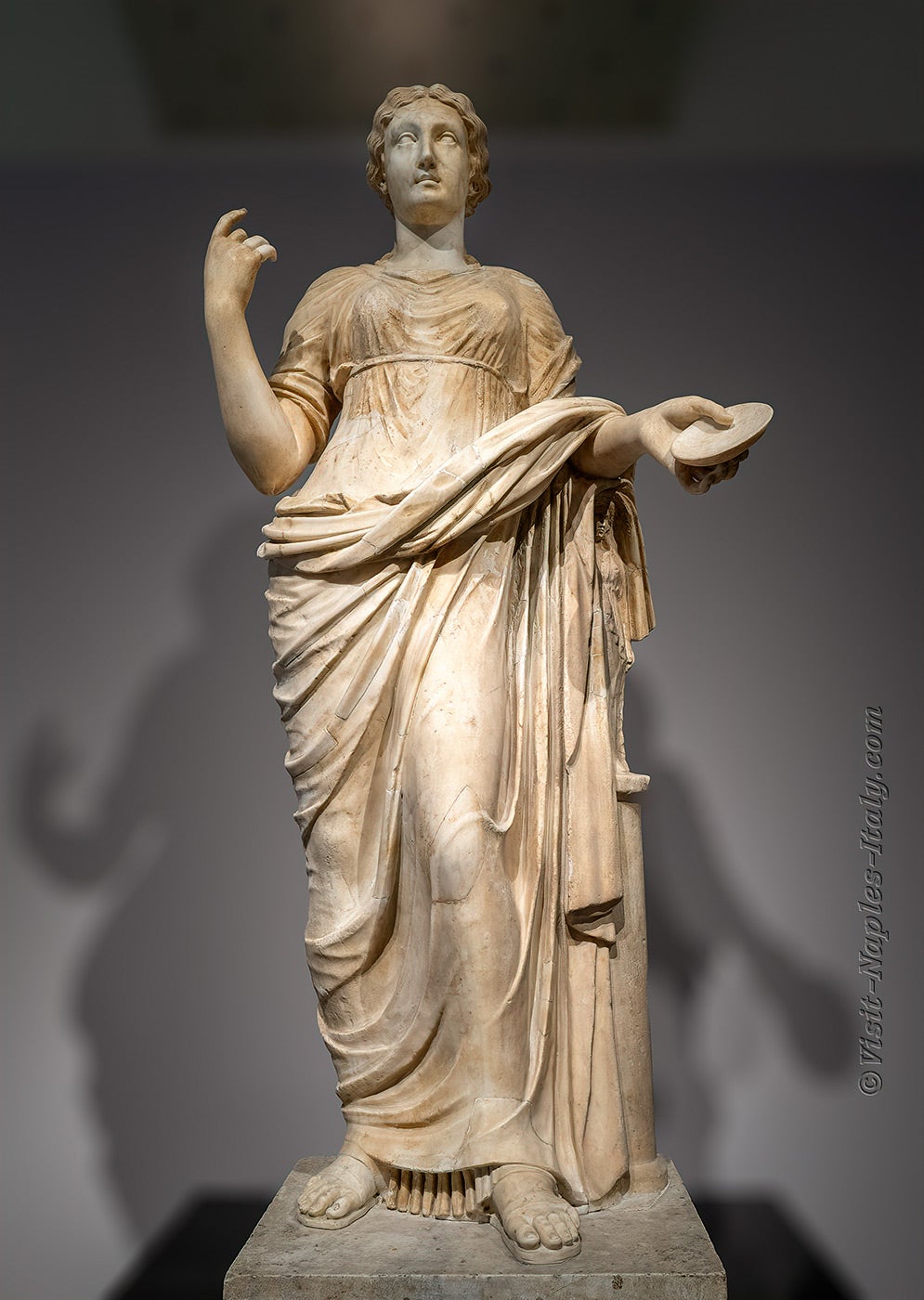
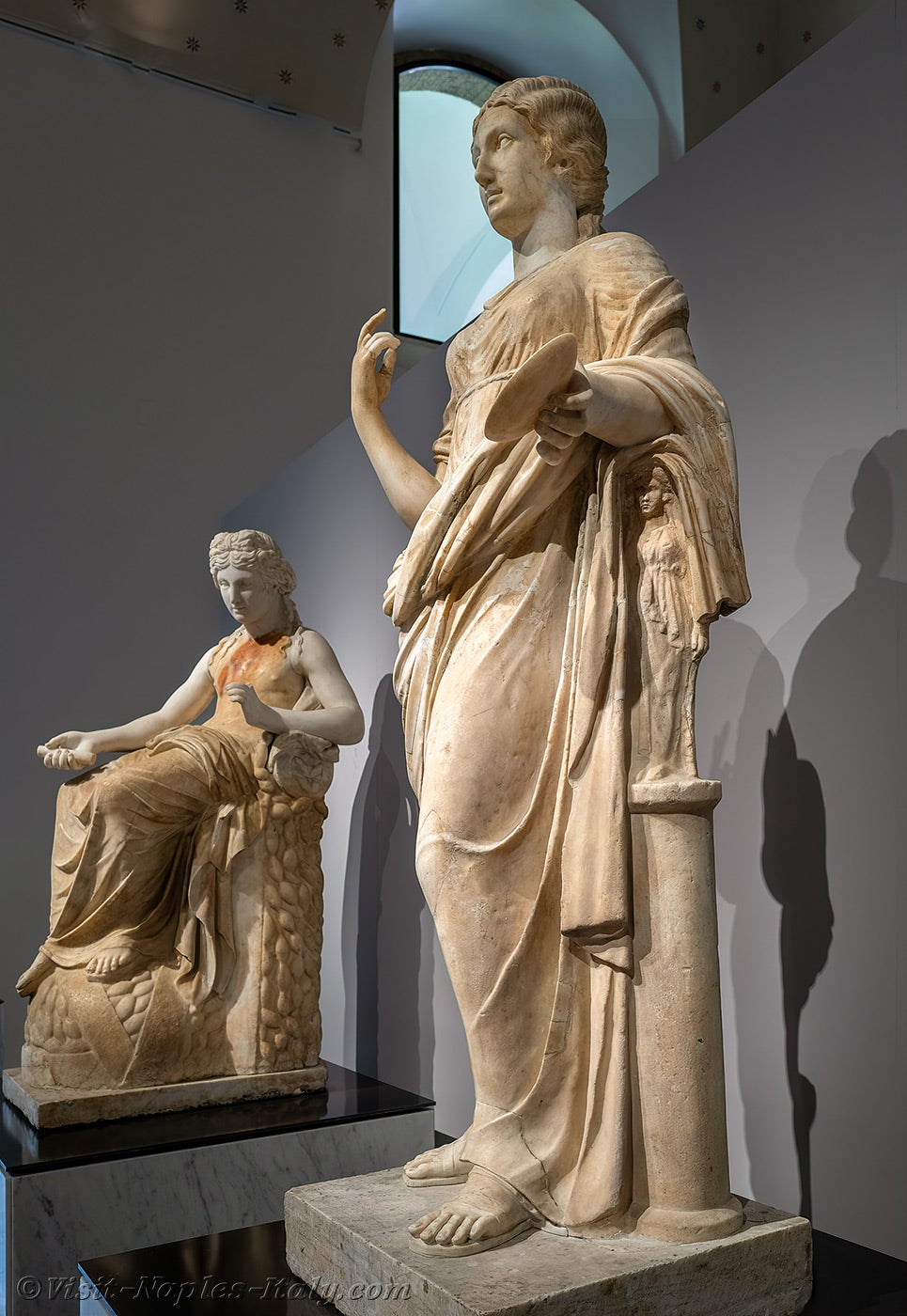
Artemis of the Lanarca type, Baia
Sculpture - Marble (Height 51 cm) 1st centuryThis statue depicts Artemis (Diana) in a pose very similar to that of the Diana of Gabii on display at the Louvre Museum.
It is not Diana the Huntress who is depicted here as she is wearing a chiton, a long tunic worn by women in ancient Greece.
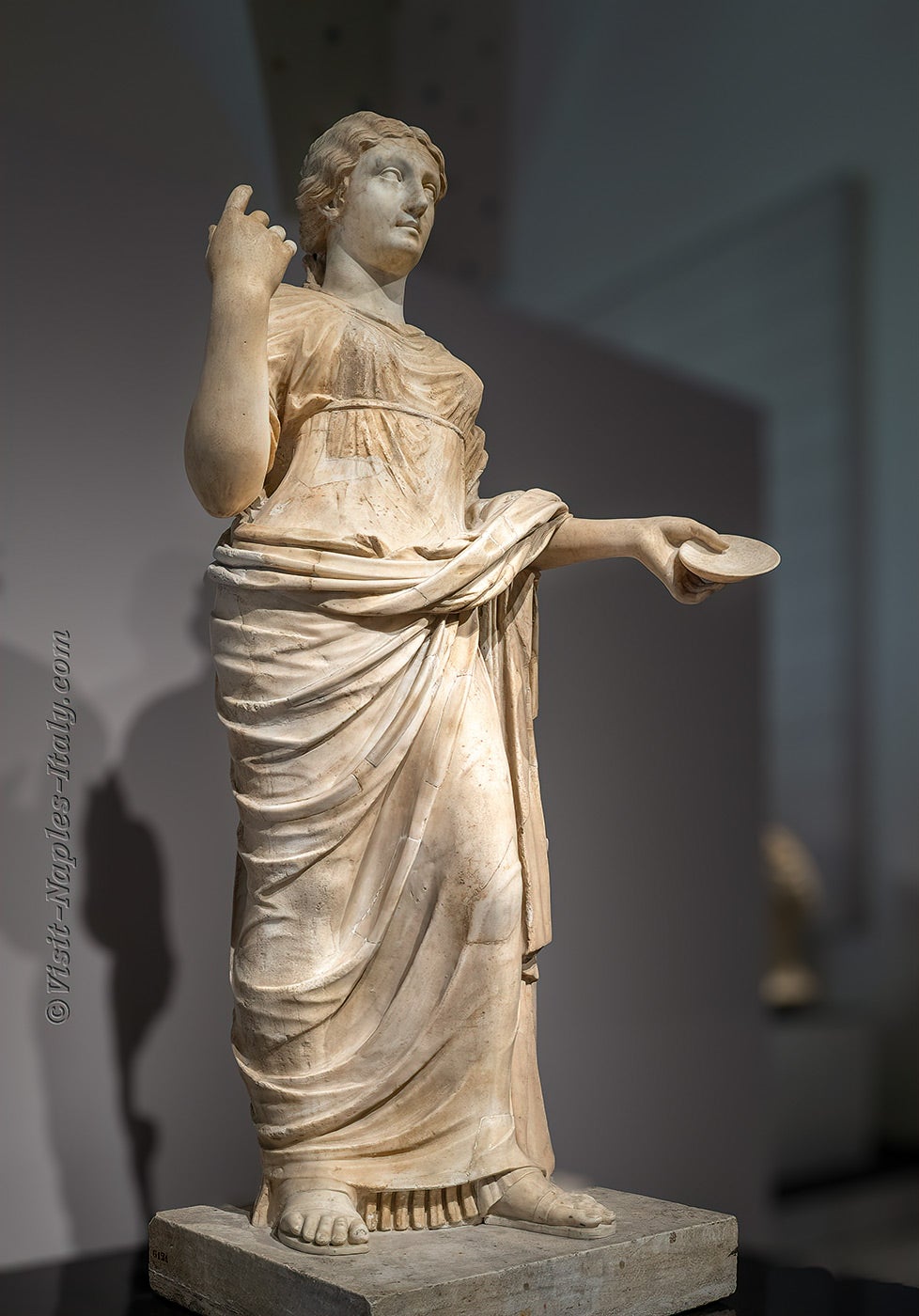
Artemis Lanarca She is a dignified and serene woman who leans gently against a column topped by a small female statue holding a small bowl in her hand which probably contained an offering.
Artemis-Diana was the daughter of Jupiter and Leto, and the twin sister of Apollo.
According to the myth, Diana was born first and grew up very quickly, so much so that she witnessed Leto’s labour pains whilst helping her to give birth to Apollo.
Diana was associated with the moon, whose phases are analogous to menstrual cycles, and which was also used to track the months of pregnancy.
This would therefore refer to the figure of Diana, goddess of fertility associated with childbirth, honoured by women in ancient Rome under the name Diana Lucina.
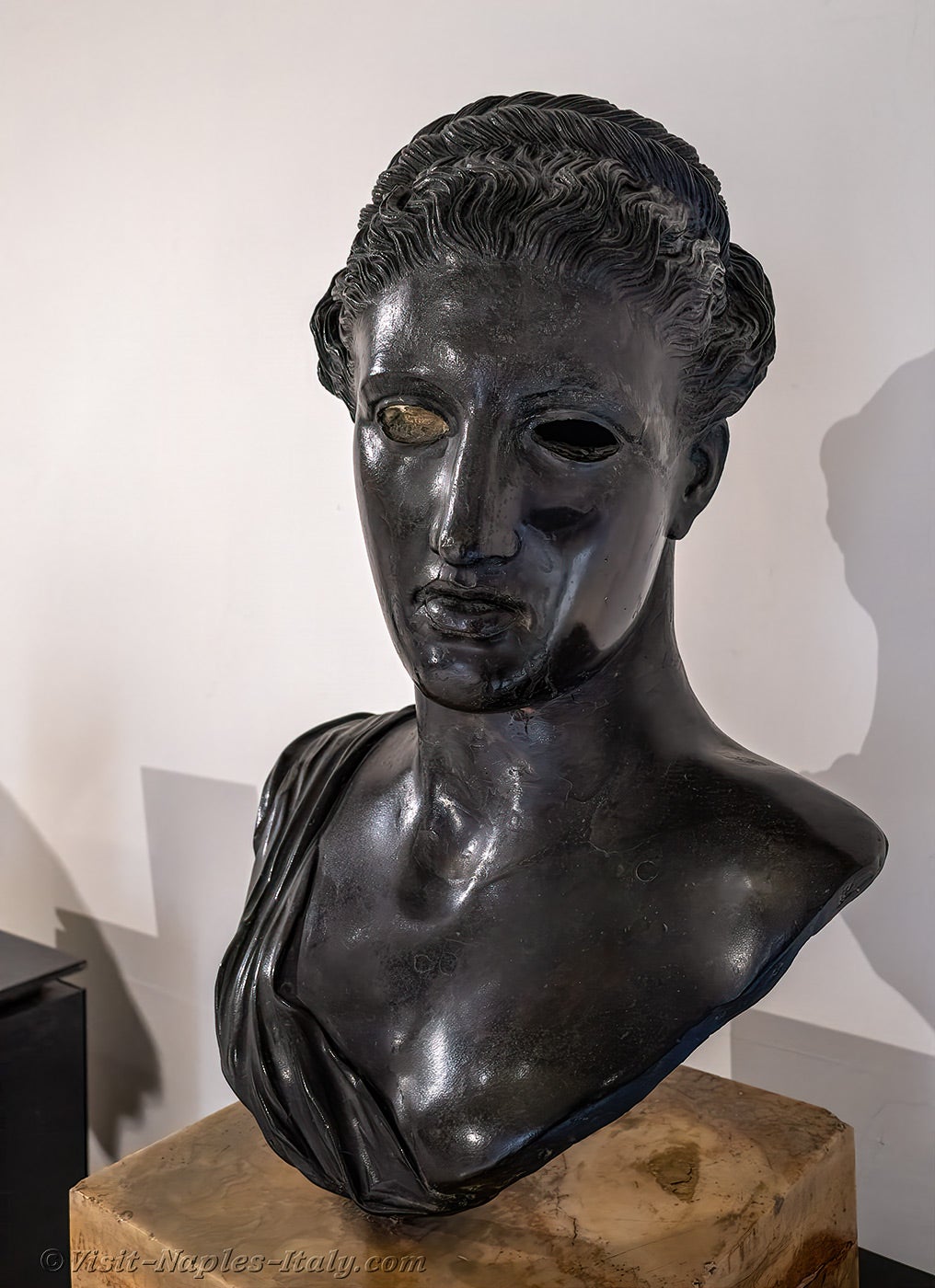
Artemis Berenice, Villa dei Papiri, Herculaneum
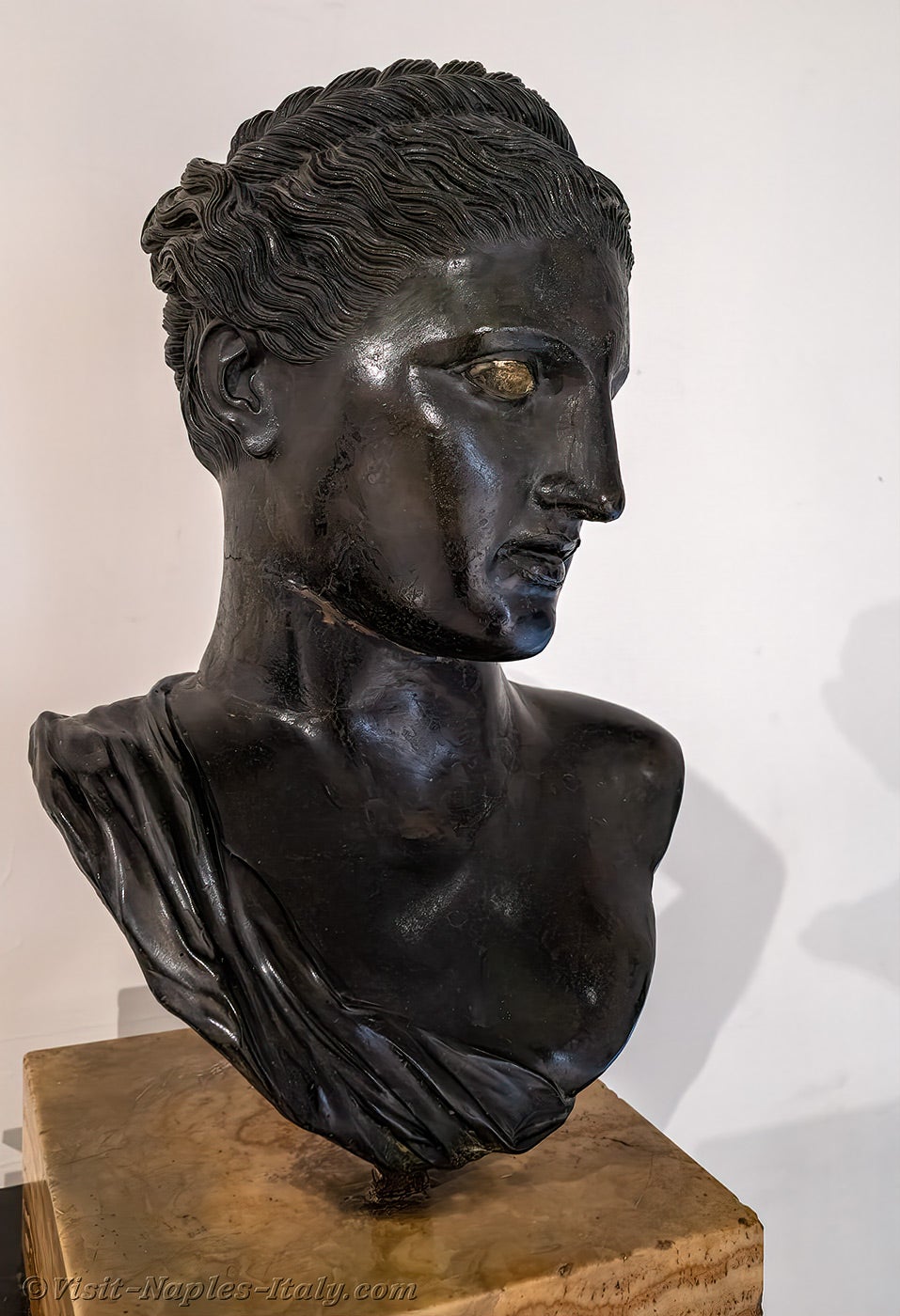
Sculpture - Bronze - 1st century BCThis bronze female bust was discovered in the Villa dei Papyrus at Herculaneum, between 1750 and 1761.
It was initially believed to be a bust of Queen Berenice II who reigned over Egypt from 246 to 222 BC, alongside Ptolemy III, her second husband.
In fact, the simplicity of the garment, leaving one breast half-exposed, and the serenity of this face with perfectly regular features suggest that it is more likely to be the goddess Artemis (Diana).
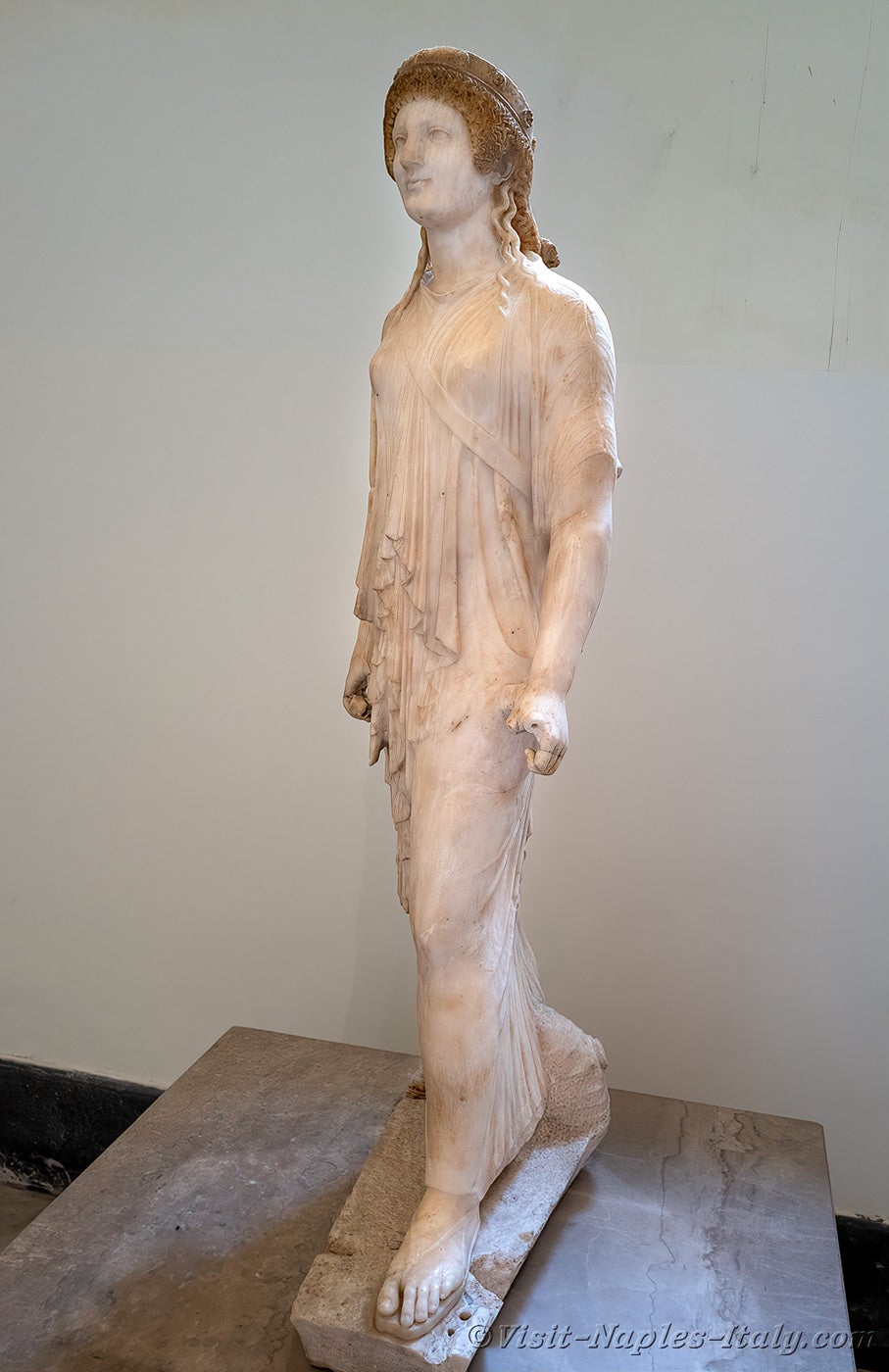
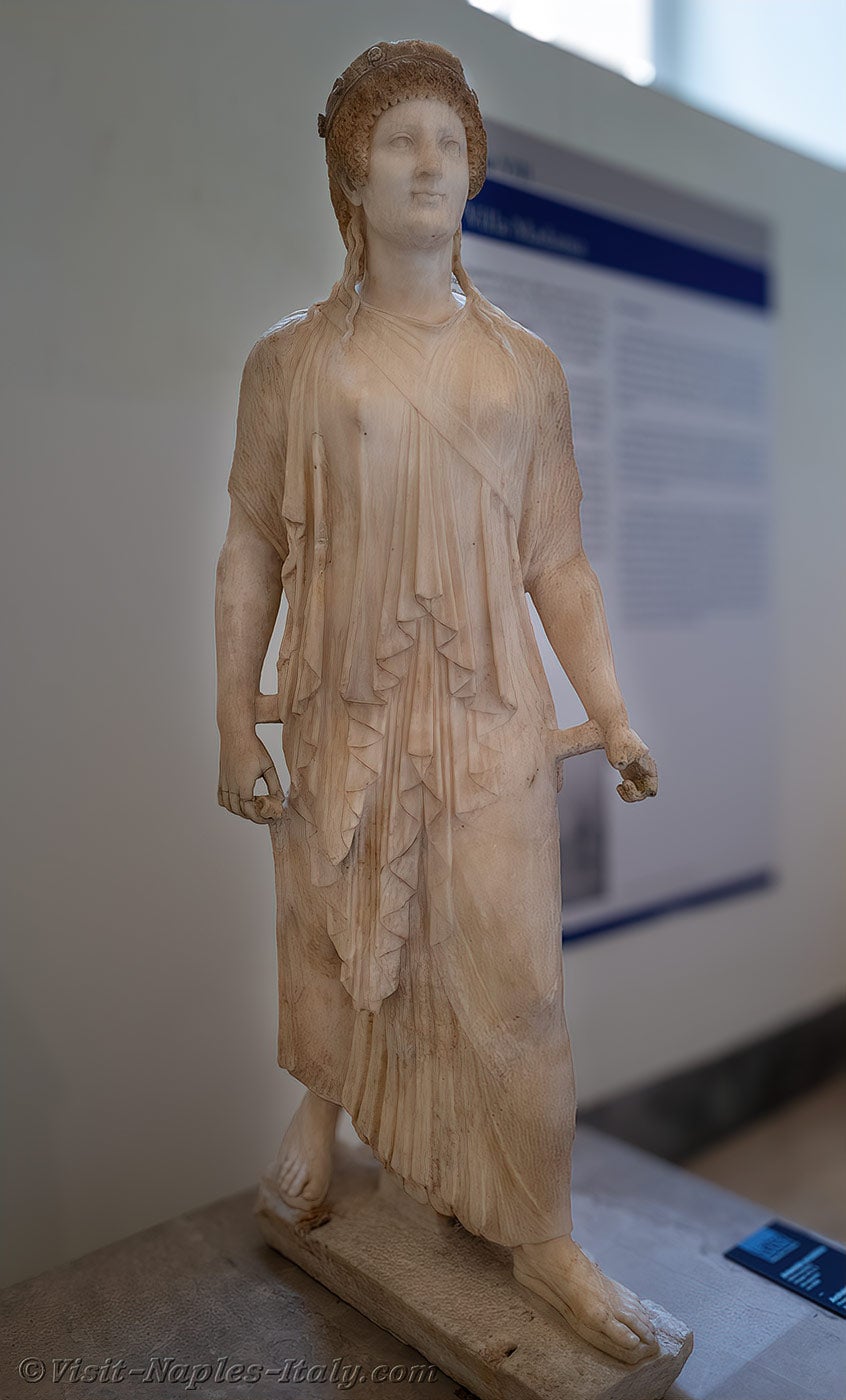
Archaic-style Artemis, Pompeii
Sculpture - Pentelic marble (Height 116 cm) 1st century BCThis Pentelic marble statue discovered in Pompeii is probably a replica of the famous Greek statue of Artemis at Segesta (in Sicily) mentioned by Cicero.
This Pompeian replica was produced by a Neo-Hellenistic workshop which successfully preserved the style and appearance of the original with this beautiful head crowned with a diadem decorated with rosettes, and above all the zigzag pleating of this garment which hugs the contours of a body in motion.
This Artemis is an heir to the genius of Praxiteles, whose works expressed the ideal of grace and beauty of a living body.
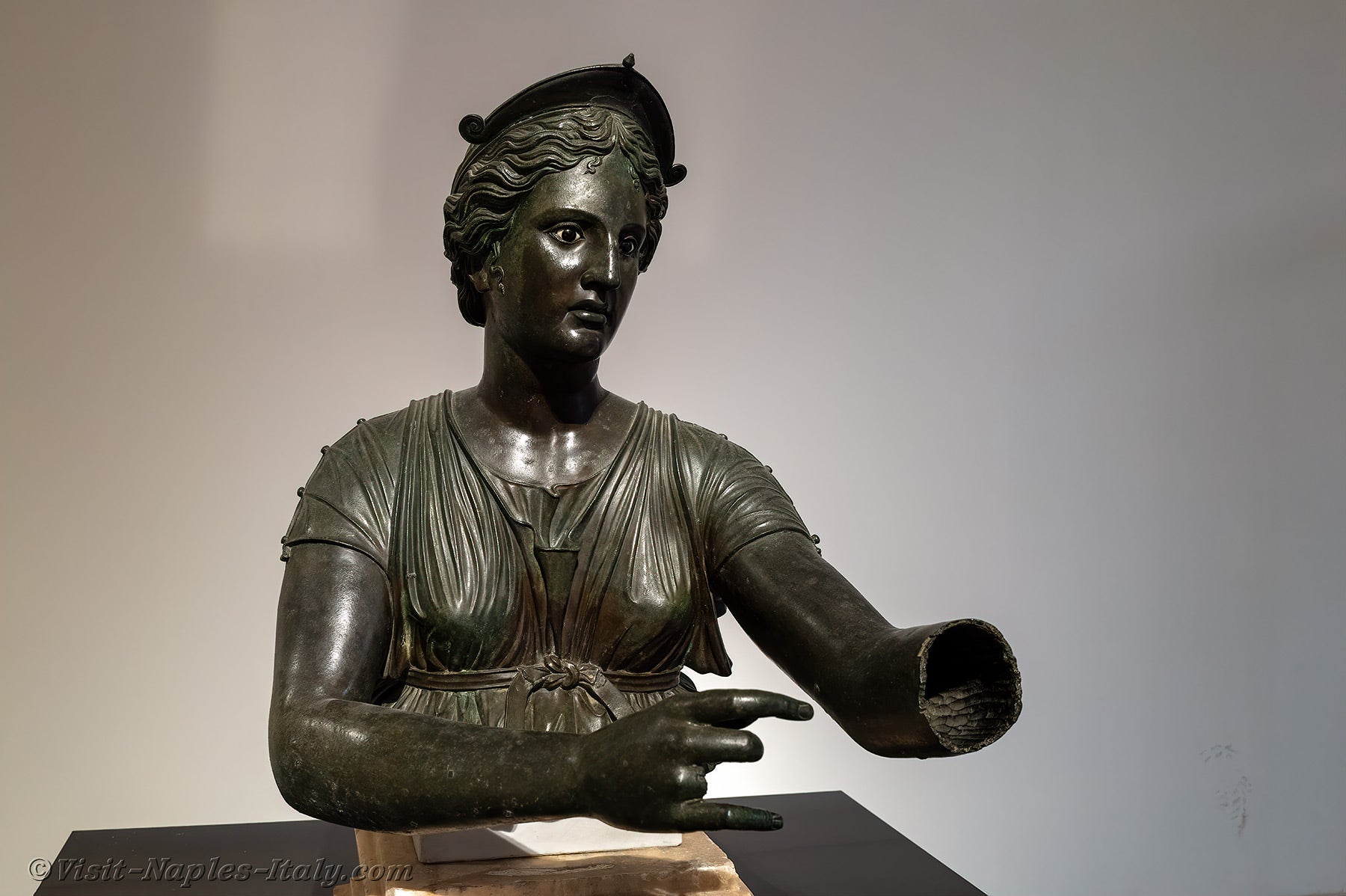
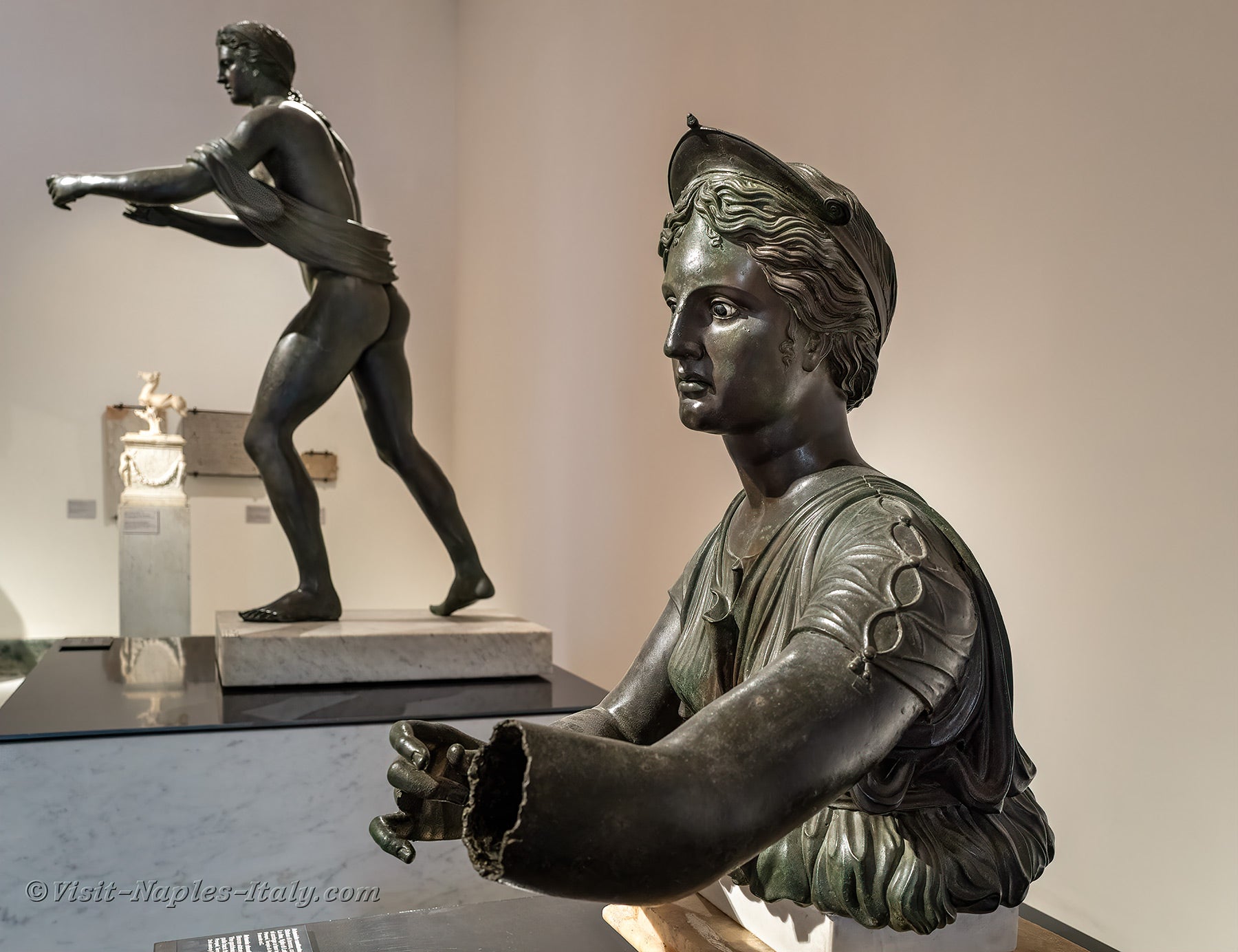
Artemis shooting an arrow, Temple of Apollo, Pompeii
Sculpture - Bronze (Height 55 cm) 2nd century BCArtemis (Diana to the Romans) was the daughter of Zeus and Leto, and twin sister of Apollo.
This statue of Artemis, of which only the upper section remains, missing its right arm, comes from the Temple of Apollo in Pompeii.
Despite these missing parts, it is clear that this is the elegant goddess of the hunt, perfectly depicted thanks to her beautiful face turned towards her target, the intensity of her gaze, the position of her left arm and her left hand with fingers curled to draw the bowstring—which are now invisible.
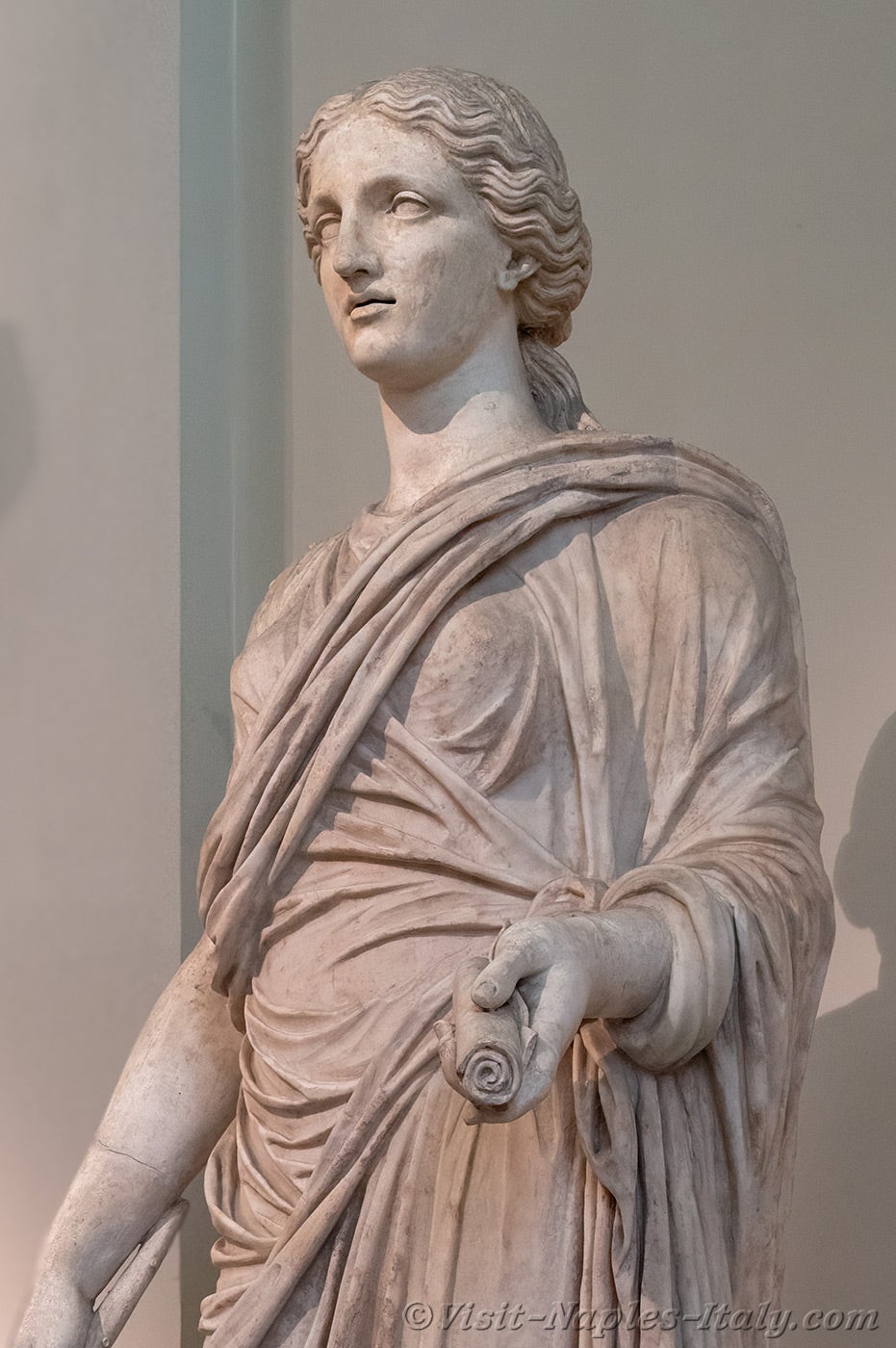
Artemis in the Leiden-Dion style, Farnese Collection
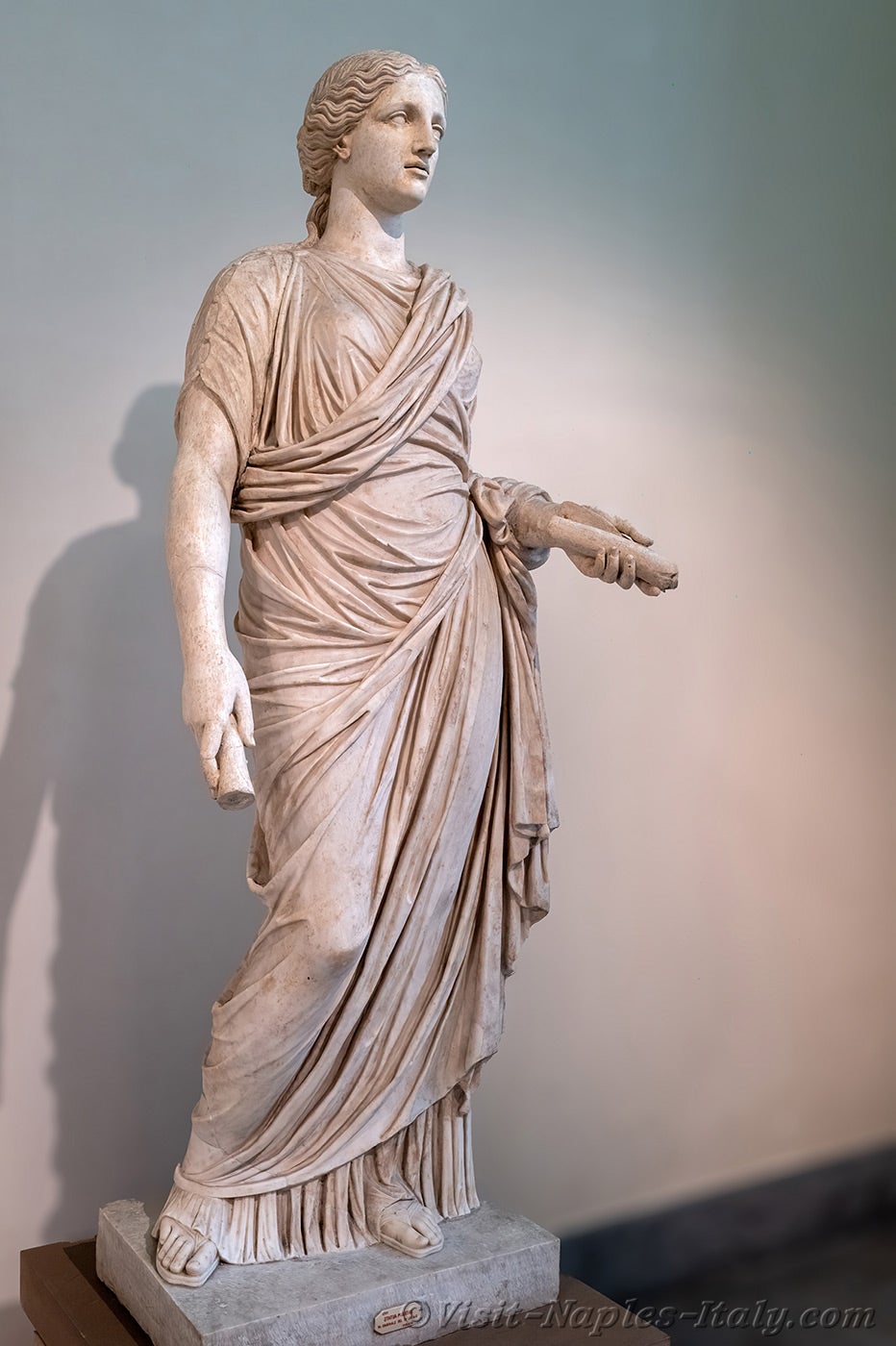
Artemis Leiden-Dion Sculpture - Marble (Height 204 cm) Late 1st century
This depiction of Artemis belongs to the category of Leiden-Dion statues.
It does indeed bear resemblances to other Roman sculptures of the same type preserved in Leiden, in the Netherlands.
More specifically, it is a Roman copy dating from the late 1st century.
This sculpture was inspired by an original Greek work created around the middle of the 4th century BCE.
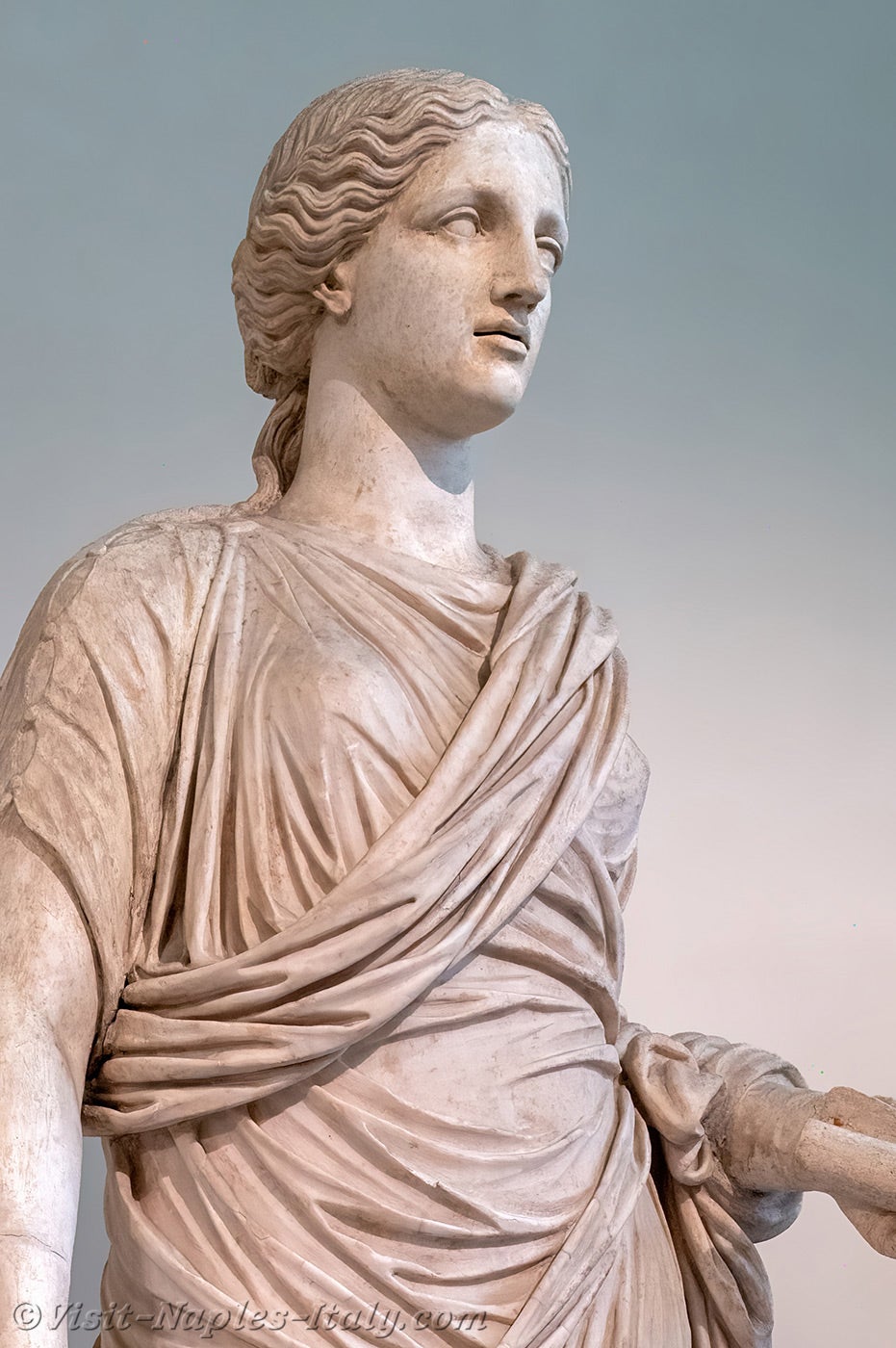
Artemis Leiden-Dion Artemis is here identified with Diana, like the Lanarca-type Artemis described above.
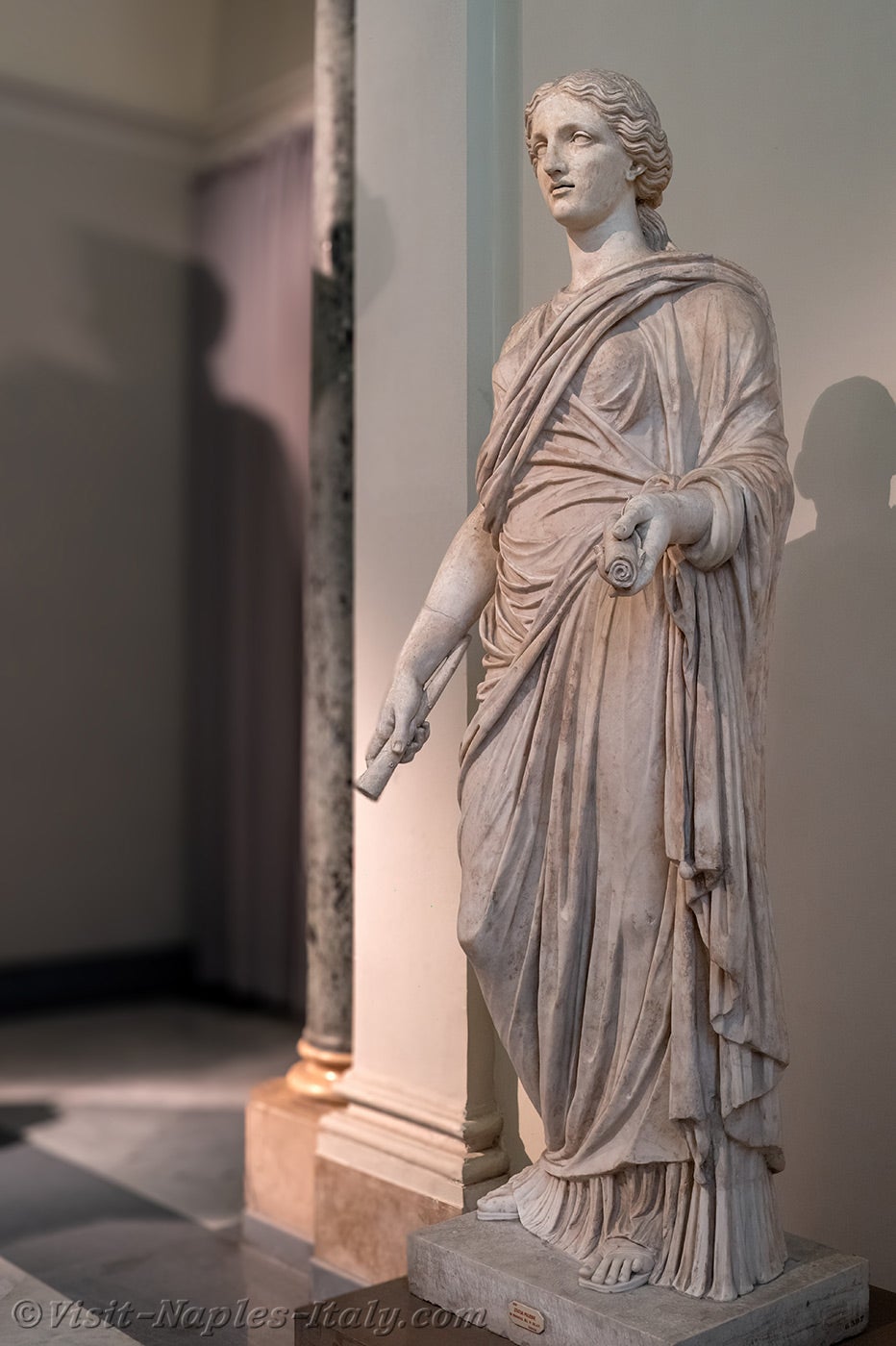
She is clad in magnificent drapery that falls down her body to gently cover part of her feet.
She is naked beneath an Ionic chiton with buttoned sleeves, as seen on her right shoulder, whilst a himation is draped over her left shoulder.
She holds a scroll of parchment in her right hand.
Her demeanour exudes grace and elegance in a pose that depicts her as both dignified and very feminine.
Artemis Artemis Ephesus | Artemis-Diana
Mythology Achilles | Aesculapius | Amazons | Aphrodite Venus | Apollo | Artemis | Athena Minerva | Atlas | Concordia | Danaids | Diomedes | Dionysus | Dirce | Flora | Ganymede | Hera Juno | Hercules | Hermes | Nike | Orestes | Psyche | River | Satyrs | Zeus
Sculptures Mythology | Persons | Animals | Bas-relief
Artworks Sculptures | Frescoes | Eroticism
MANN Artworks Schedule Tickets Location | Authorizations
Back to Top of Page