

MANN Artworks Schedule Tickets Location | Authorizations
Artworks Sculptures | Frescoes | Eroticism
Frescoes Mythology | Portraits | Life Leisure | Animals | Religion | Landscapes | Decoration
Mythology Achilles | Aeneas | Alcestis | Alexander | Aphrodite | Apollo | Arianne | Artemis | Ceres | Chryseis | Cupid | Daedalus | Dionysus | Dirce | Endymion | Flora | Galatea | Ganymede | Graces | Hephaestus | Hercules | Io Argos | Iphigenia | Isis | Leda | Marsyas | Medea | Nereids | Niobids | Odysseus | Pan | Paris | Perseus | Phaedra | Phrixus | Pirithous | Saturn | Satyrs | Sophonisba | Theseus | Troy | Zeus
Frescoes depicting Achilles, Briseis and Chiron at the Archaeological Museum of Naples in Italy
Achilles and Briseis, Pompeii, Casa del Poeta Tragico
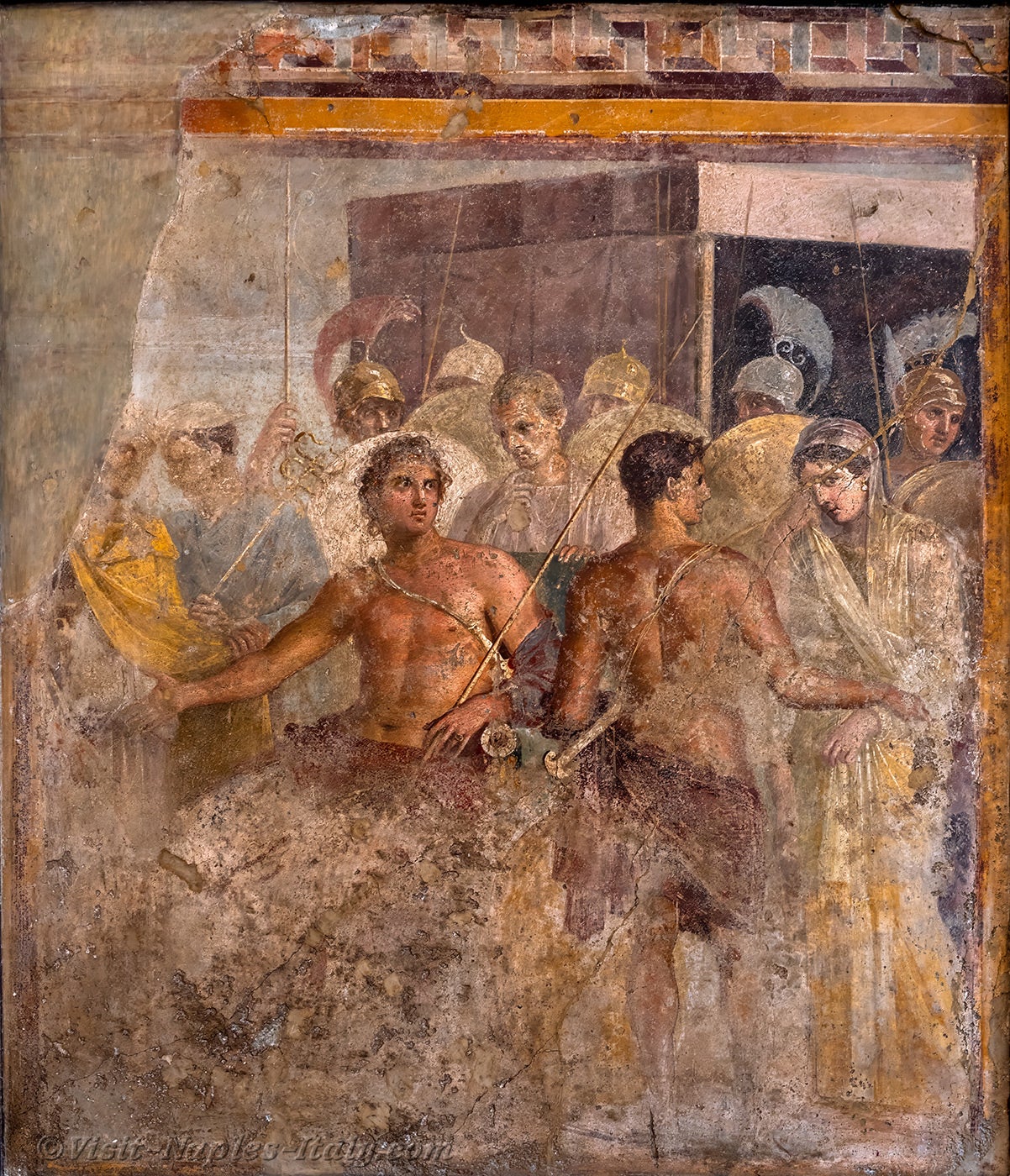
Achilles and Briseis Fresco - Water-based pigments on coating (127 x 122 cm) 62-79 AD
Achilles, the Greek hero of the Trojan War, is seated in front of his tent.
Achilles has his face turned towards his prisoner who has become his servant, Briseis.
Achilles is forced to give Briseis as spoils of war to King Agamemnon.
His best friend and comrade-in-arms, Patroclus, stands opposite the beautiful young girl and prepares to take her to Agamemnon.
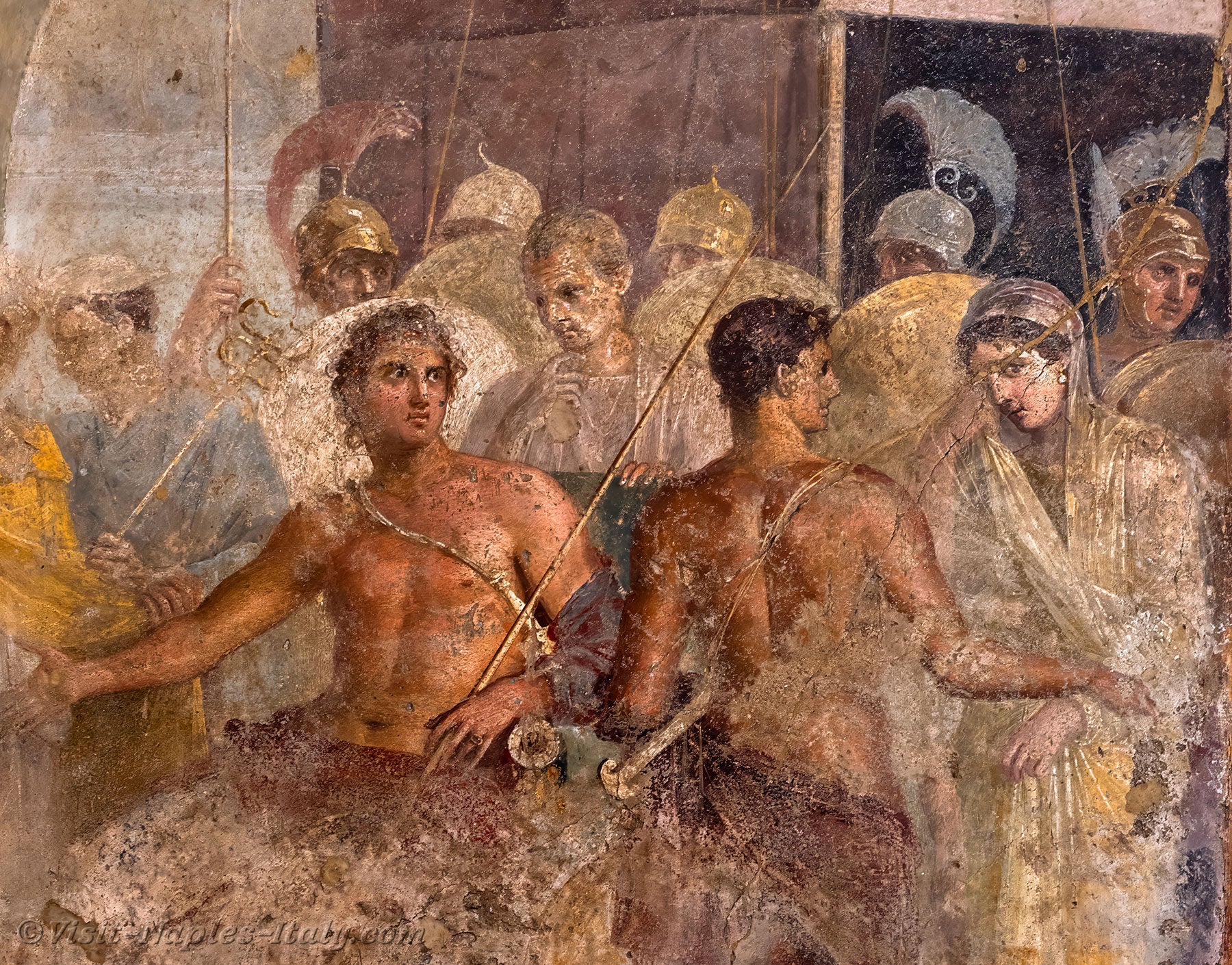
Achilles and Briseis Briseis expresses her sadness and submission by bowing her head to Achilles, who looks at her intently while inviting her to leave with the ambassador carrying the caduceus placed behind his outstretched arm.
A row of Achilles' soldiers (Myrmidons) stand guard with their shields raised behind a figure who watches Achilles with the anguished face of one who senses the disastrous consequences of this episode.
Deprived of the one he loves, Achilles expresses his anger by deciding to stop fighting.
Deprived of their best fighter, the Greeks suffered numerous defeats until he decided to take up arms again to avenge the death of Patroclus.
Achilles and Chiron, Herculaneum, Basilica
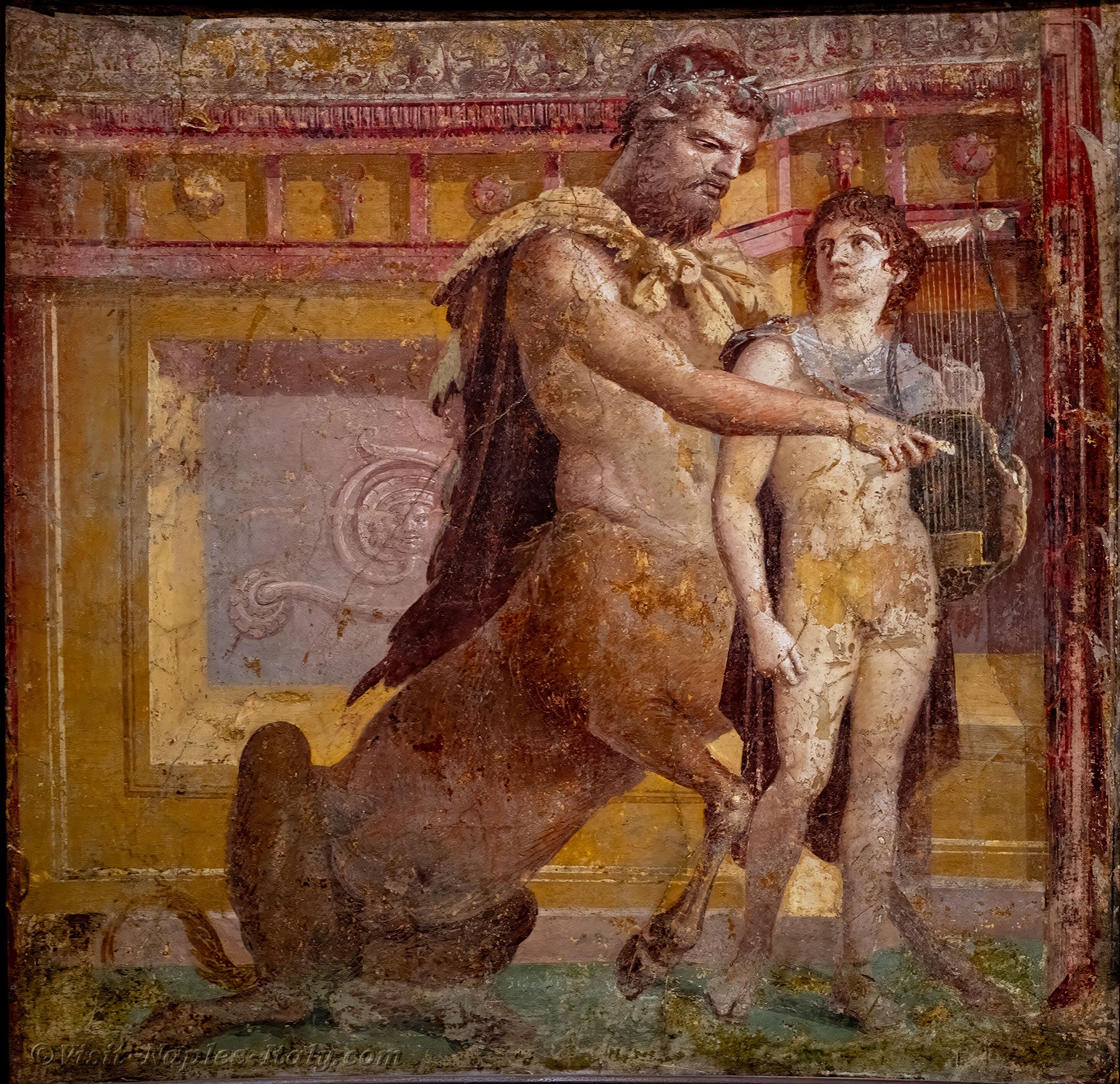
Achilles and Chiron Fresco - Water-based pigments on coating
Pelée, king of Phthie in Thessaly, entrusted his son Achilles to two prestigious tutors: Phoenix and Chiron.
Phoenix taught him the art of eloquence and the use of weapons, while Chiron taught him medicine.
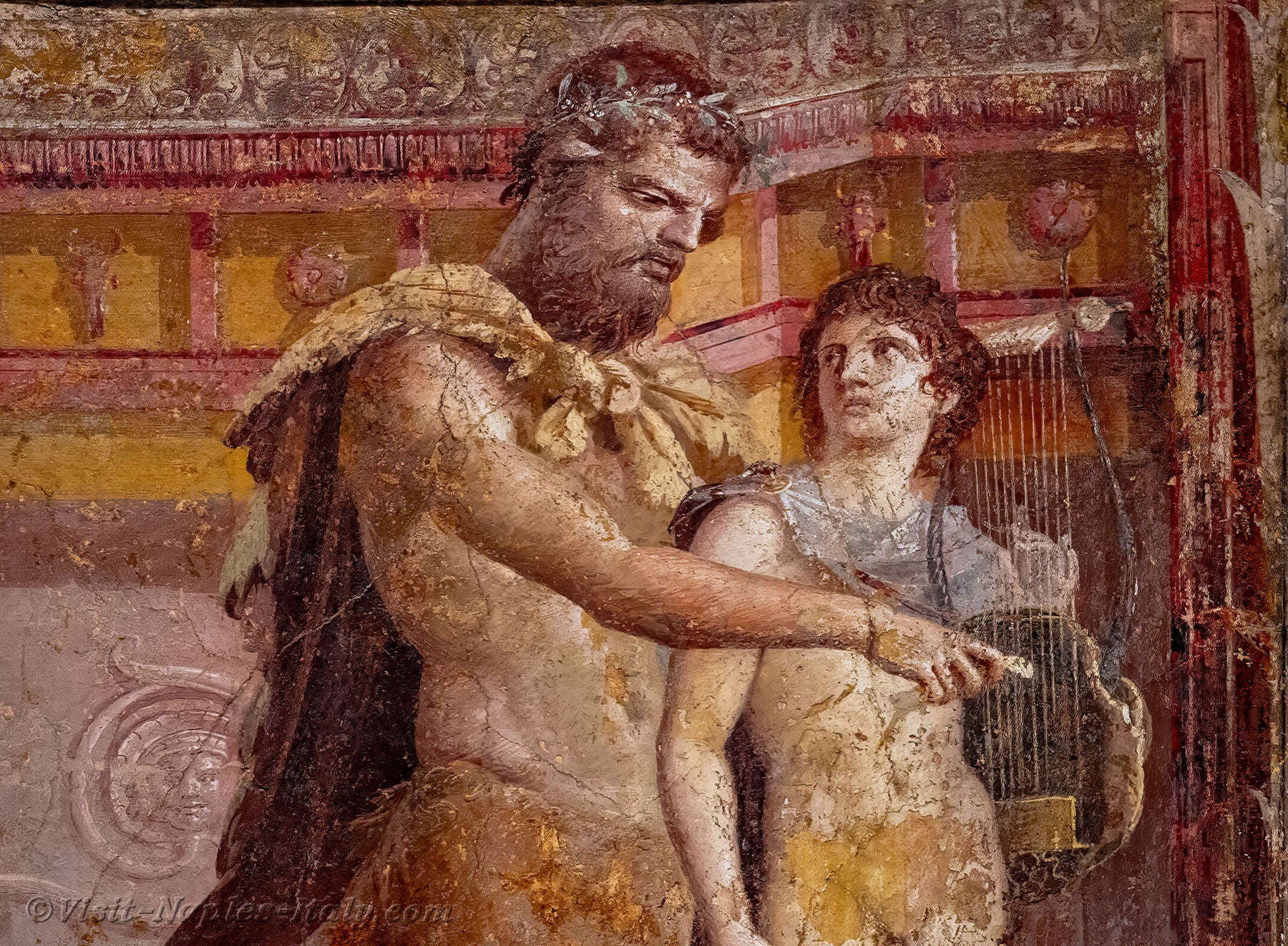
The fresco depicts Chiron crowned with laurels, leaning towards the young Achilles to teach him how to play the lyre, the instrument of the divine Apollo.
This shows the quality of the education of the future hero of the Trojan War, who embodied the strength and courage of an outstanding warrior who was also cultured and sensitive.
The centaur Chiron was a wise man who stood out from the other centaurs, who were known for their barbarity, because Apollo had taught him medicine and Artemis had taught him the art of hunting.
Patients came to Thessaly to consult Chiron, who received them in a cave at the foot of Mount Pelion.
Achilles in Skyros, Pompeii, House of the Dioskouros
Fresco - Water-based pigments on Coating (148 x 100 cm) 62-79 ADThetis, Achilles' mother, had sent him to the court of King Lycomedes to prevent him from participating in the Trojan War.
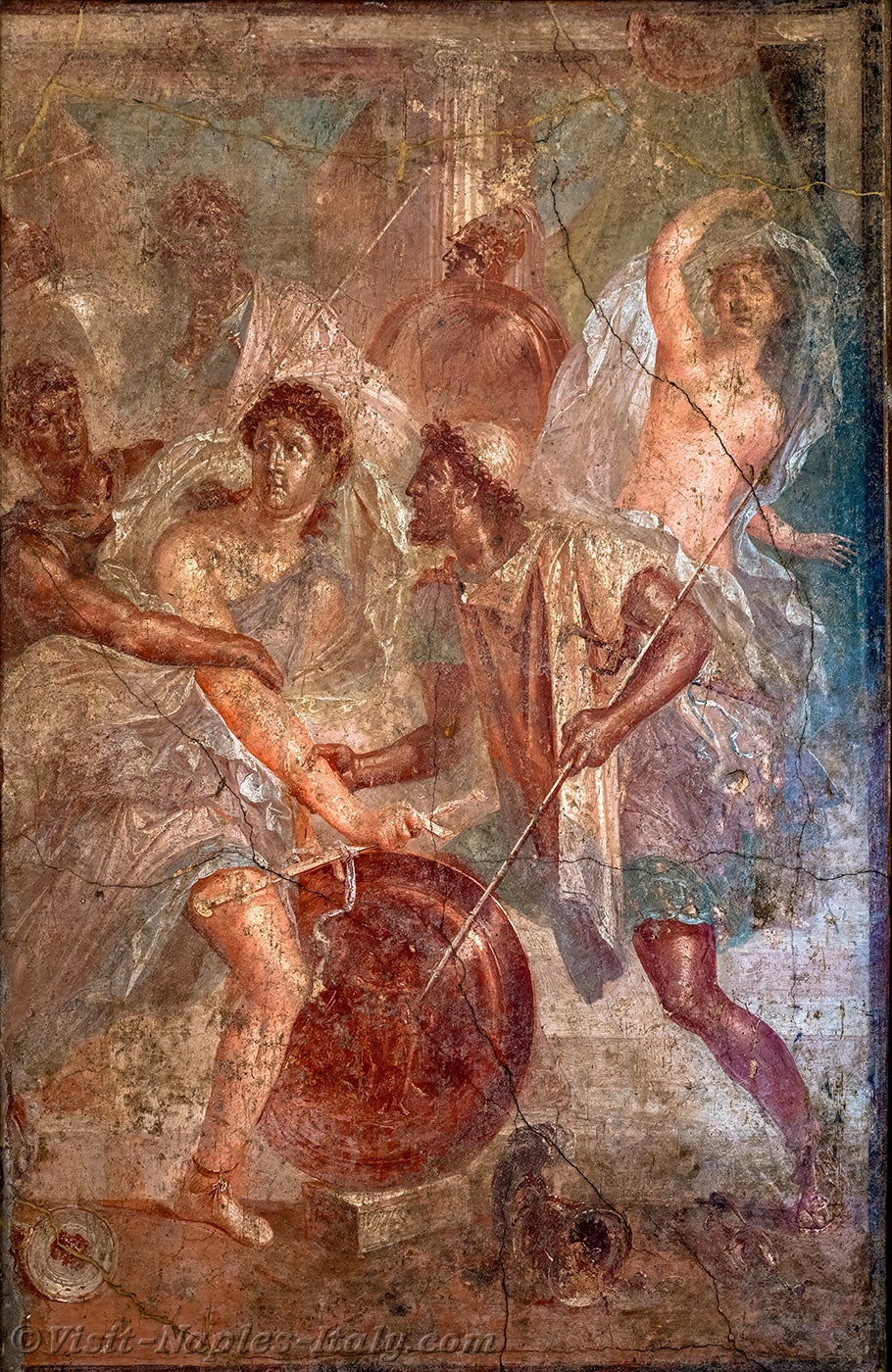
Achilles in Skyros Achilles was disguised as a woman under the pseudonym Pyrrha and mingled with the king's daughters when Odysseus, who had arrived to find him, succeeded in unmasking him through trickery.
Among his gifts to the king's daughters, Odysseus had mixed in weapons, which were immediately seized by Achilles as soon as the alarm was raised.
The fresco depicts the moment when Achilles reveals his warrior nature by breaking free from his disguise with a sudden movement from left to right to seize the weapons: the sword and shield that represent him as a child with Chiron, then the helmet that has fallen to the ground with the other gifts.
Achilles' liveliness is conveyed by the fluttering of his clothing caused by the amplitude of the movement of his leg and arm as he reaches forward to grab the sword.
Achilles' white drapery and fair skin contrast with the dark skin of the male bodies of Diomedes behind him on the left, who grabs his arm and shoulder, and that of Odysseus armed with his spear, who rushes towards him, grabbing his forearm.
The two men are both surprised and fascinated by his delicate face and long hair styled in a feminine fashion.
In the background, we see the surprised and powerless king, the guard behind his shield who raised the alarm, and a young girl running away, frightened by the violence of the scene.
Achilles' beauty was famous, and the painter of this beautifully composed fresco has depicted him wearing fine golden princess shoes.
Achilles seated, Pompeii, Cubiculo
Fresco - Water-based pigments on coating (29 x 31 cm) 20-10 BC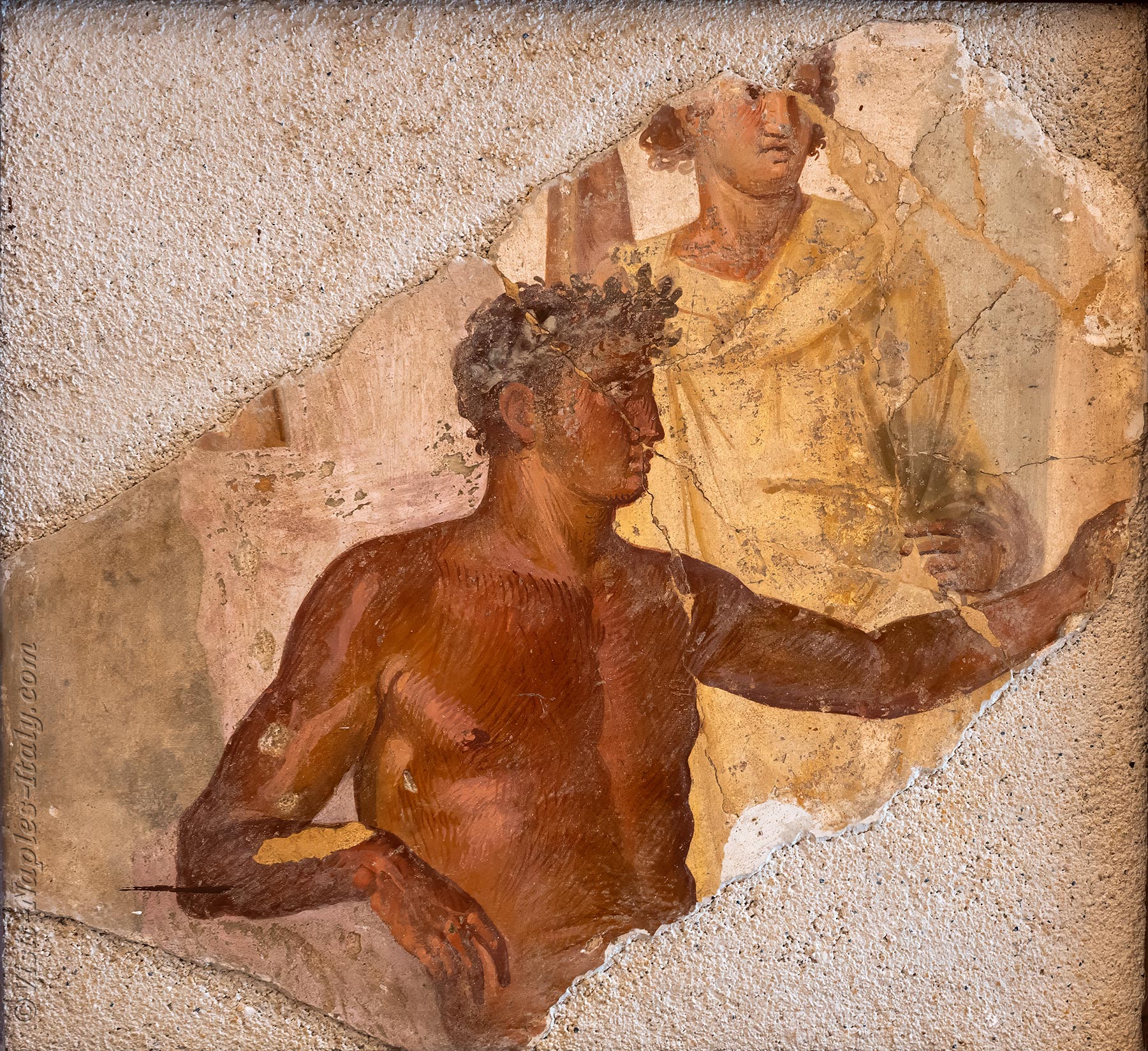
Achilles seated This fragment of a fresco depicting a young man seated, sketching a movement of the torso while extending his arm in an elegant gesture, is believed to be a portrait of Achilles on his throne, identifiable by his crowned head and perfect profile.
A woman dressed in yellow behind Achilles with a branch in her hand turns her head, following Achilles' movement towards the missing figure to whom he is addressing himself.
The fair complexion of this young woman with delicate features is in harmony with her yellow clothing, which highlights the physique of a Greek athlete who trains and spends most of his time outdoors.
The tree trunk rising behind Achilles' head indicates that the scene is taking place outdoors.
Two Heroes, Achilles and Patroclus, Herculaneum, Palestra
Fresco - Water-based pigments on coating (44 x 44 cm) 30-40 AD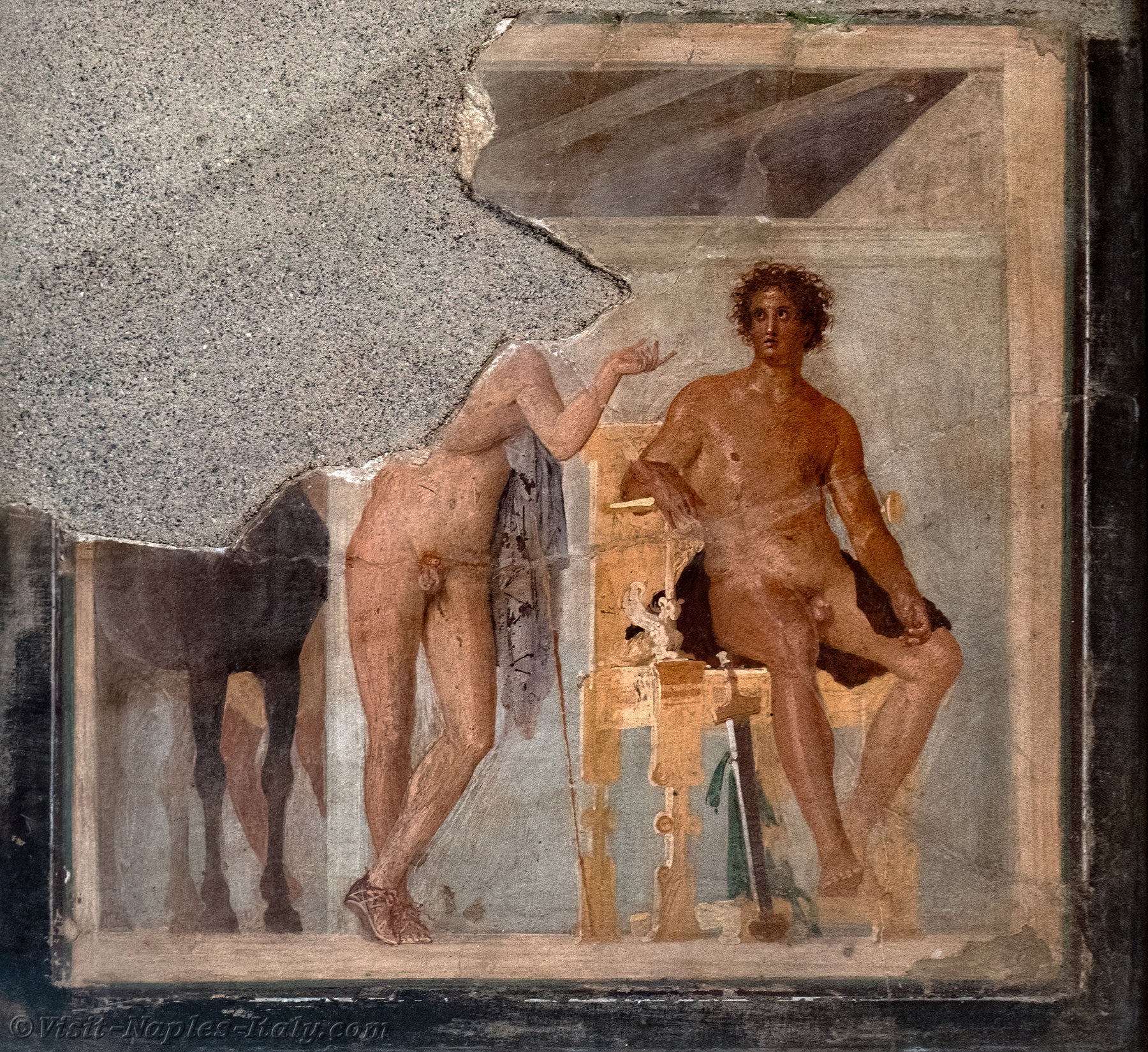
Two Heroes, Achilles and Patroclus The scene takes place in an interior where two naked men are engaged in conversation.
Achilles is seated on a finely carved golden throne decorated with sphinxes, his sword still in its sheath resting beside him: he is listening to the arguments of his friend Patroclus, who is standing in front of the open door.
Angry with Agamemnon since he had to give up Briseis to him, Achilles has decided to stop fighting, with the result that the Greeks are suffering defeats.
Patroclus, who had done the same to support his friend, has come to tell him that he is preparing to take up arms again and to change his mind.
He wears fine shoes and a simple horseman's cloak on his shoulders.
He wears fine shoes and a simple horseman's cloak over his shoulders.
The lower left corner reveals the legs and flank of a black horse and the legs of the groom who is tending to it.
Fresco of Achilles and Penthesilea, Pompeii, Casa di Giasone
Fresco - Water-based pigments on Coating (191 x 143 cm) 20-25 ADThe Queen of the Amazons, Penthesilea, had come to help the Trojans, who were discouraged by the death of Hector, their hero killed by Achilles.
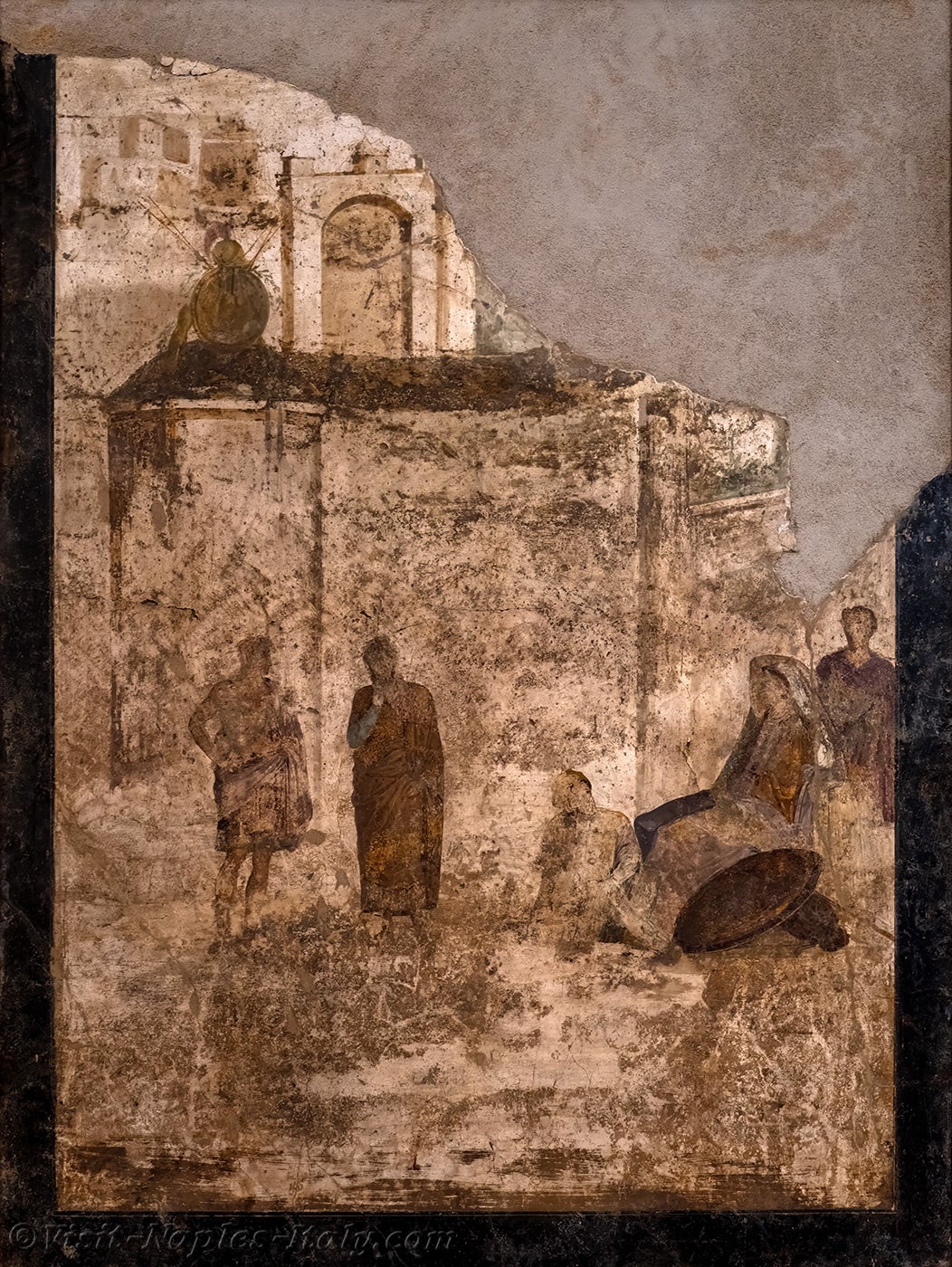
Achilles and Penthesilea Achilles confronted Penthesilea in battle and mortally wounded her, but when he saw her fall from her horse, he found her so proud and beautiful that he immediately fell in love with her.
Achilles mourned her death and wanted her to be buried with all funeral honours.
Achilles is the young man wearing a short garment on the left, accompanied by an older figure displaying the thoughtful demeanour of a wise advisor.
The three figures on the right, notably the seated woman holding her head with a young man crouching at her feet looking at her, are mourning beside the weapons of the Queen of the Amazons: her shield lying on the ground with her helmet and spear.
In the background are a funerary monument topped with the weapons of a Greek warrior, probably intended for Penthesilea according to Achilles' wishes, and the gate of a city surrounded by crenellated ramparts, which is likely to be Troy.
Dressing a lyre player, Achilles and the daughters of Lycomedes, Pompeii, Casa di Meleagro
Fresco - Water-based pigments on coating (80 x 120 cm) 62-79 ADThe fresco now only shows the lower part of the body of a young man dressed in a transparent drape similar to that of the young girl sitting next to him.
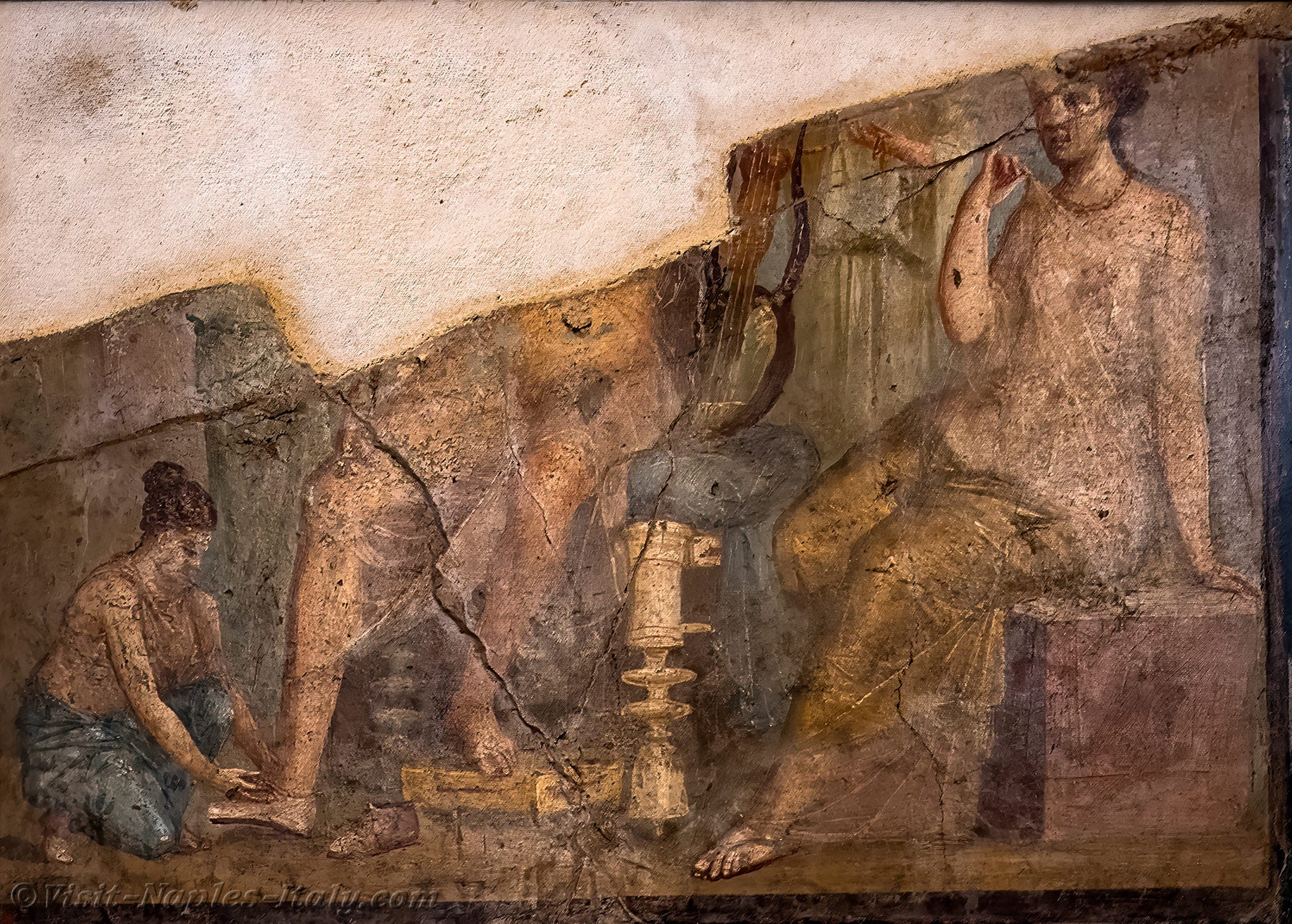
Achilles and the daughters of Lycomedes The man is seated on an ornate throne, which shows his superior status compared to the woman seated on a rudimentary chair, while a slave kneels at his feet, lacing his shoe.
The simplicity of the clothing and the small size of the kneeling woman indicate her servitude: she is in the service of Achilles dressed as a woman, hidden among the daughters of King Lycomedes to avoid going to war.
Achilles is preparing to play music with his lyre, the favourite instrument of Apollo.
Achilles, the future hero of the Trojan War, knew perfectly well how to adapt to court life because he was also a cultured man who had learned to play the lyre from Chiron.
Mythology Achilles | Aeneas | Alcestis | Alexander | Aphrodite | Apollo | Arianne | Artemis | Ceres | Chryseis | Cupid | Daedalus | Dionysus | Dirce | Endymion | Flora | Galatea | Ganymede | Graces | Hephaestus | Hercules | Io Argos | Iphigenia | Isis | Leda | Marsyas | Medea | Nereids | Niobids | Odysseus | Pan | Paris | Perseus | Phaedra | Phrixus | Pirithous | Saturn | Satyrs | Sophonisba | Theseus | Troy | Zeus
Frescoes Mythology | Portraits | Life Leisure | Animals | Religion | Landscapes | Decoration
Artworks Sculptures | Frescoes | Eroticism
MANN Artworks Schedule Tickets Location | Authorizations
Back to Top of Page