

MANN Artworks Schedule Tickets Location | Authorizations
Artworks Sculptures | Frescoes | Eroticism
Frescoes Mythology | Portraits | Life Leisure | Animals | Religion | Landscapes | Decoration
Mythology Achilles | Aeneas | Alcestis | Alexander | Aphrodite | Apollo | Arianne | Artemis | Ceres | Chryseis | Cupid | Daedalus | Dionysus | Dirce | Endymion | Flora | Galatea | Ganymede | Graces | Hephaestus | Hercules | Io Argos | Iphigenia | Isis | Leda | Marsyas | Medea | Nereids | Niobids | Odysseus | Pan | Paris | Perseus | Phaedra | Phrixus | Pirithous | Saturn | Satyrs | Sophonisba | Theseus | Troy | Zeus
Hercule Omphale | Telephus | Nessus
Frescoes depicting Hercules at the Archaeological Museum of Naples in Italy
Frescoes depicting Hercules and Omphale ➤
Frescoes depicting Hercules and Telephus ➤
Frescoes depicting Hercules and Nessus ➤
Hercules as a child strangling snakes, Herculaneum
Fresco - Water-based pigments on Coating - 45-79 ADHercules is the Latin name for Heracles, the Greek hero son of Alcmene and Zeus, who had transformed himself into Amphitryon, Alcmene's absent husband; Hera, the divine wife of Zeus, swore to take revenge for his infidelity.
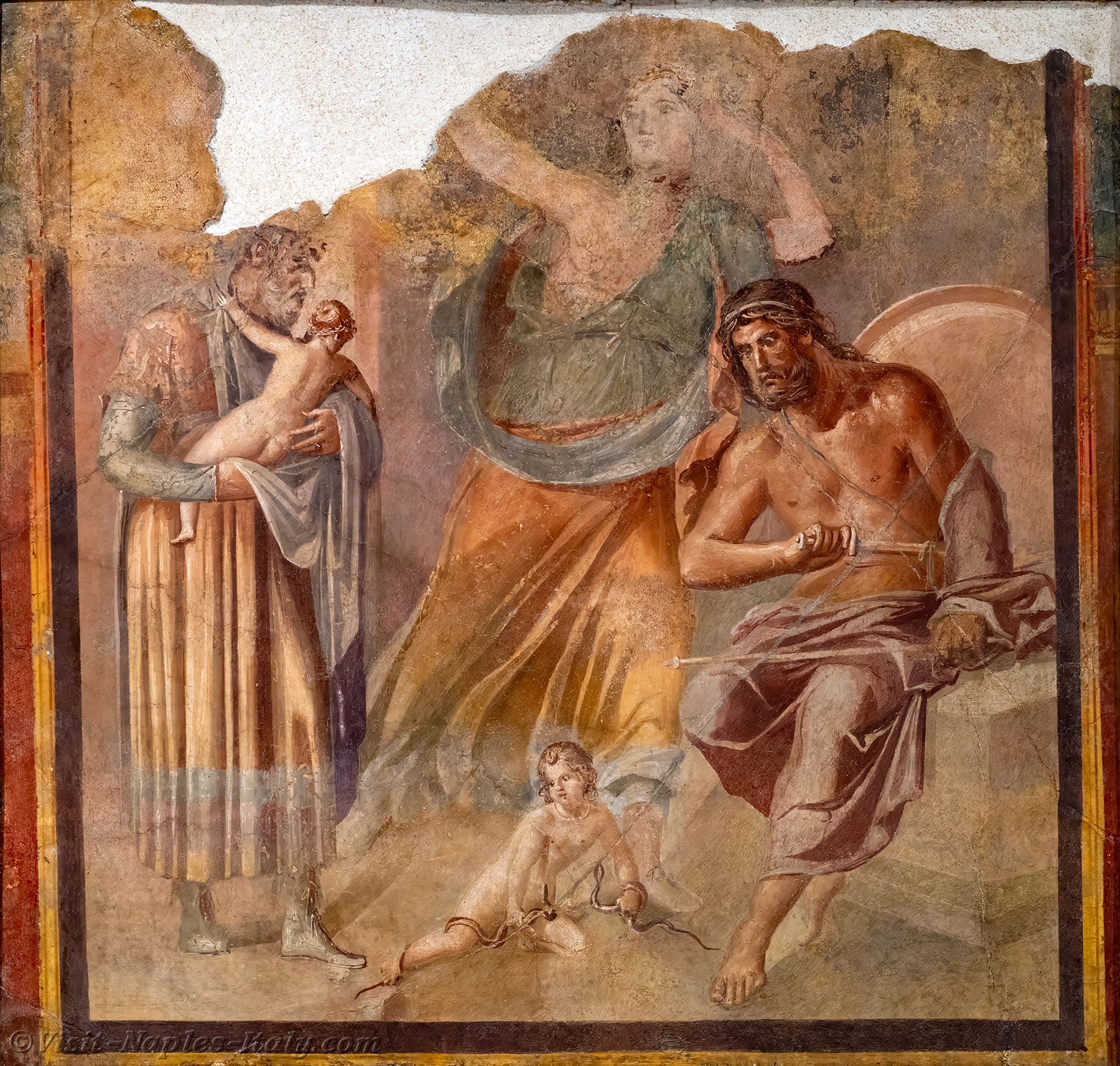
Hercules as a child strangling snakes When the innocent Alcmene gave birth to twins: Iphicles was the son of Amphitryon, while Heracles, being the son of Zeus, would suffer the relentless revenge of Hera, who sent two snakes to kill him.
The fresco shows young Heracles smothering the snakes under the protective gaze of Zeus, seated on the right, while his brother Iphicles takes refuge in the arms of Amphitryon.
Amphitryon and Zeus serenely share the protective attitude of fathers who care for their children, in contrast to the frightening dynamic of the spirit of vengeance that drives Hera.
An aesthetically remarkable fresco thanks to the beauty of the children, the realism of their poses, and the folds of the fabrics.
Hercules brings the Erymanthian boar to Eurystheus in a pot, Herculaneum, Augusteum
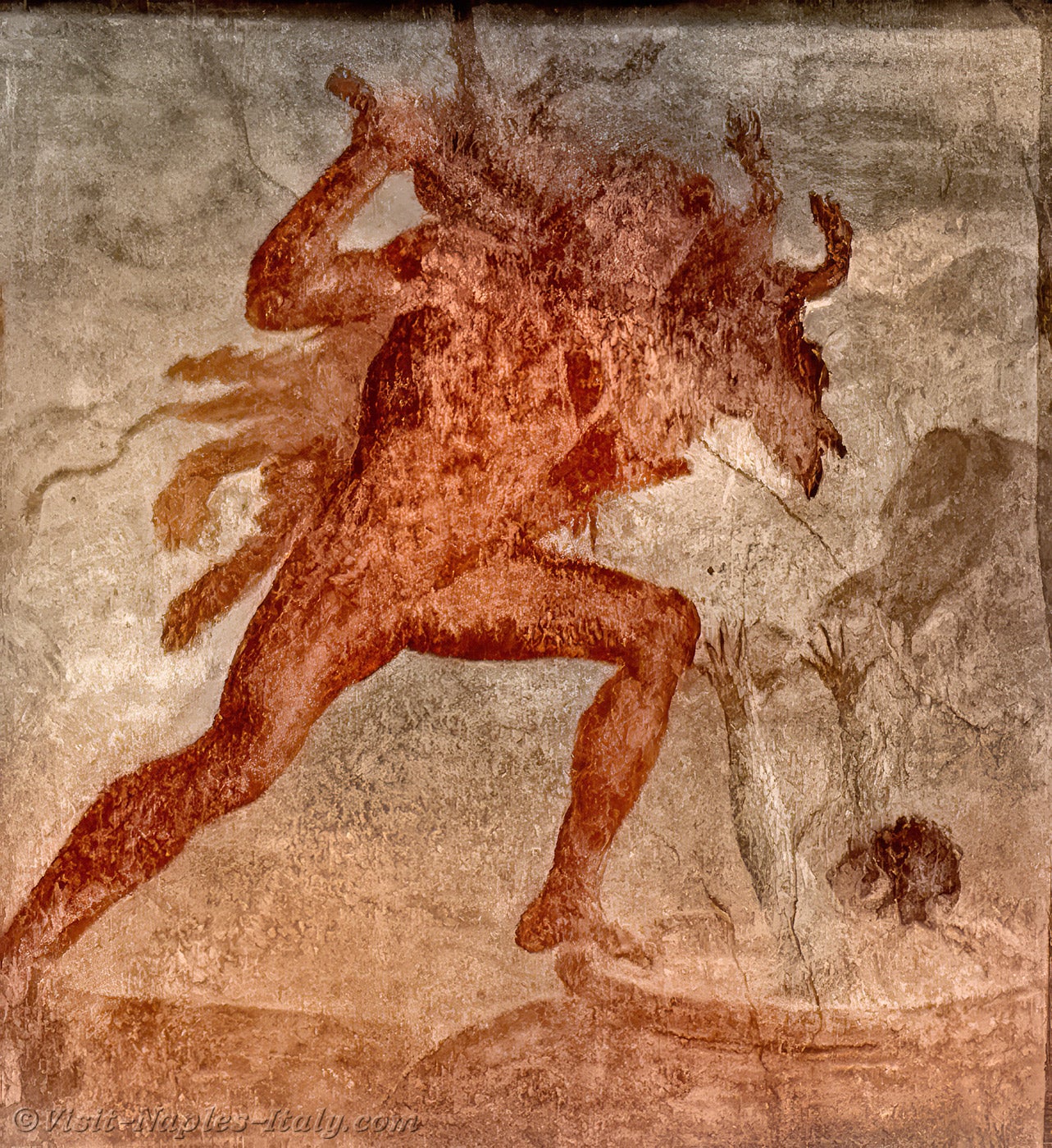
Hercules and the Boar Fresco - Water-based pigments on coating, 20-79 AD
Hercules had agreed to accomplish the twelve labours imposed by Eurystheus in order to atone for the murder of his own children committed in a moment of madness caused by Hera, and to gain immortality.
The capture of the Erymanthian boar was the third of the twelve labours imposed by Eurystheus on Hercules, who had to bring it back alive.
The fresco beautifully illustrates this famous episode from the myth, showing the hero carrying the boar on his powerful shoulders to deliver it to Eurystheus, who is white with fear and has taken refuge in a barrel upon seeing the size of the animal.
Hercule's liberation of Hesione, Pompeii, Insula Occidentalis
Fresco - Water-based pigments on coating (36 x 36 cm) 45-79 ADThe fresco depicts one of the many good deeds accomplished by Hercules in addition to his twelve labours.
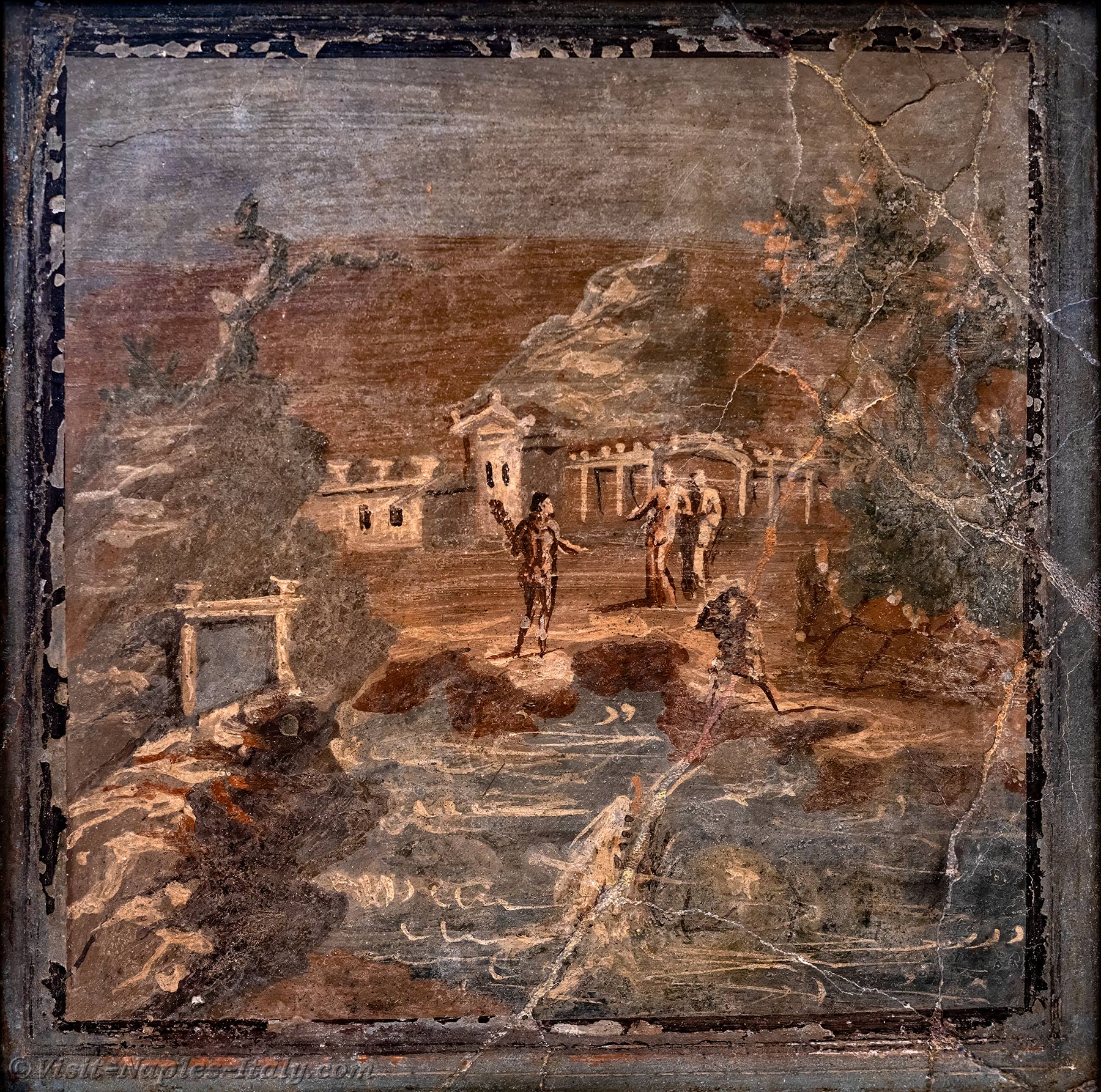
Hercule's liberation of Hesione In the foreground is the sea monster sent by Apollo and Poseidon as punishment for the ingratitude of King Laomedon, who had sought their help in building the walls of the city of Troy.
To ward off divine punishment, Laomedon had decided to sacrifice his daughter Hesione to the sea monster by tying her to a rock.
Hercules, who was passing by after completing his ninth labour, offered to kill the monster and save his daughter in exchange for his two white horses as a reward.
Hercules, seen from behind, naked and armed with his club, killed the monster lying on the surface of the water.
He speaks, reaching out his hand to the young Hesione, accompanied by a relative standing opposite him.
In the background of the scene are the ramparts of Troy surrounded by wild nature.
Hercules and Hylas captured by the nymphs, Herculaneum, Augusteum
Fresco - Water-based pigments on Coating (52 × 102 cm) 20-79 ADHercules and Hylas were part of the Argonauts' expedition to search for the Golden Fleece, under the command of Jason.
During a stopover, Hylas went to draw water from a river and was carried away by the nymphs of the venue, attracted by his beauty; in other words, he was swept away by the current.
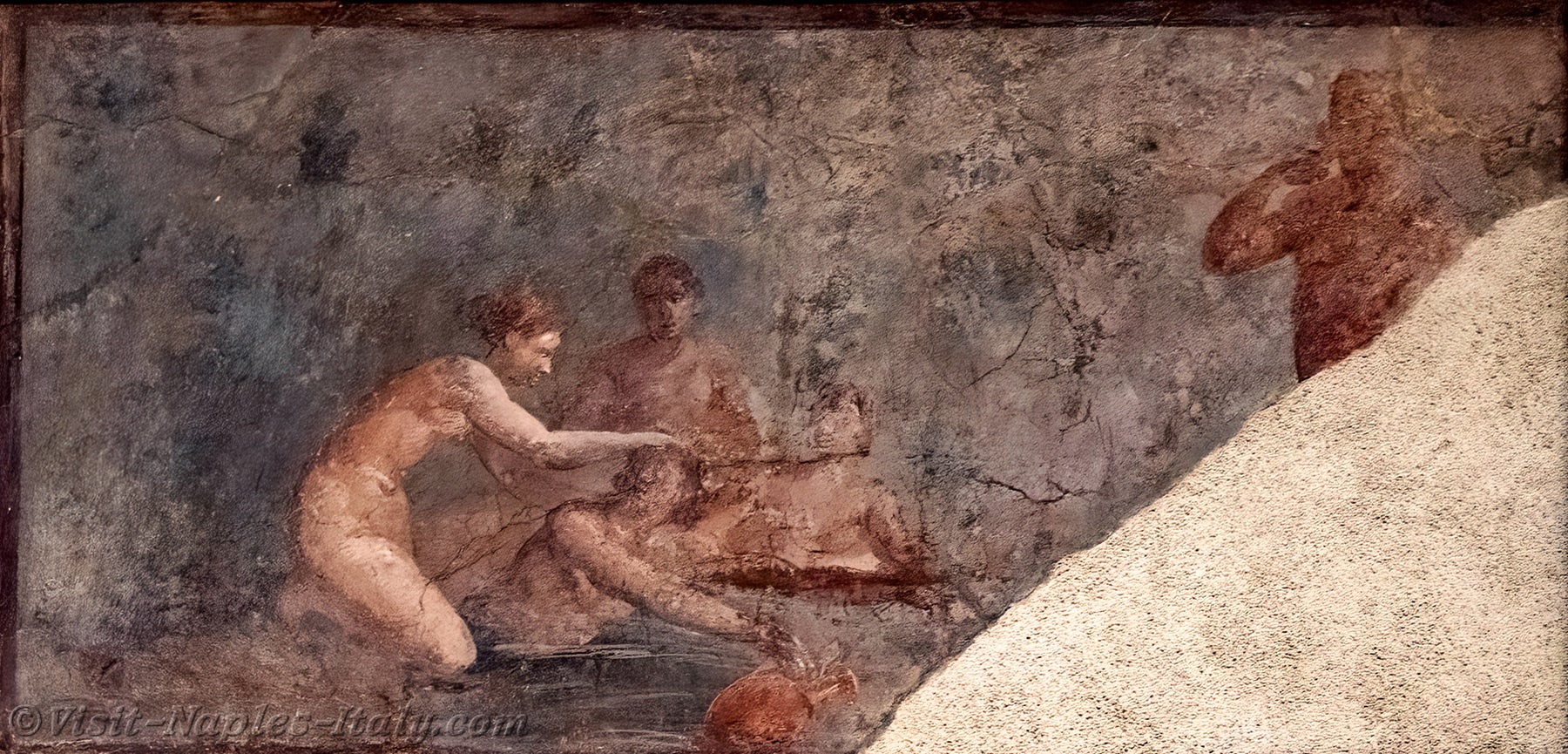
Hercules and Hylas captured by the nymphs The fresco depicts the nymphs of the river seizing Hylas as he is drawing water with a jar.
When his friend Hylas did not return, Hercules set off to search for him through the woods, accompanied by Polyphemus. Their search and calls were fruitless.
During their long and fruitless search for the missing man, the Argonauts had taken advantage of the favourable winds to continue on their way, leaving Hercules and Polyphemus behind.
Polyphemus settled permanently in Mysia and founded a city; before leaving, Hercules asked the inhabitants to continue searching for Hylas by calling out his name.
This search became a tradition that was repeated every year, with priests roaming the area shouting: Hylas!
Hercules with his club and crown, Herculaneum
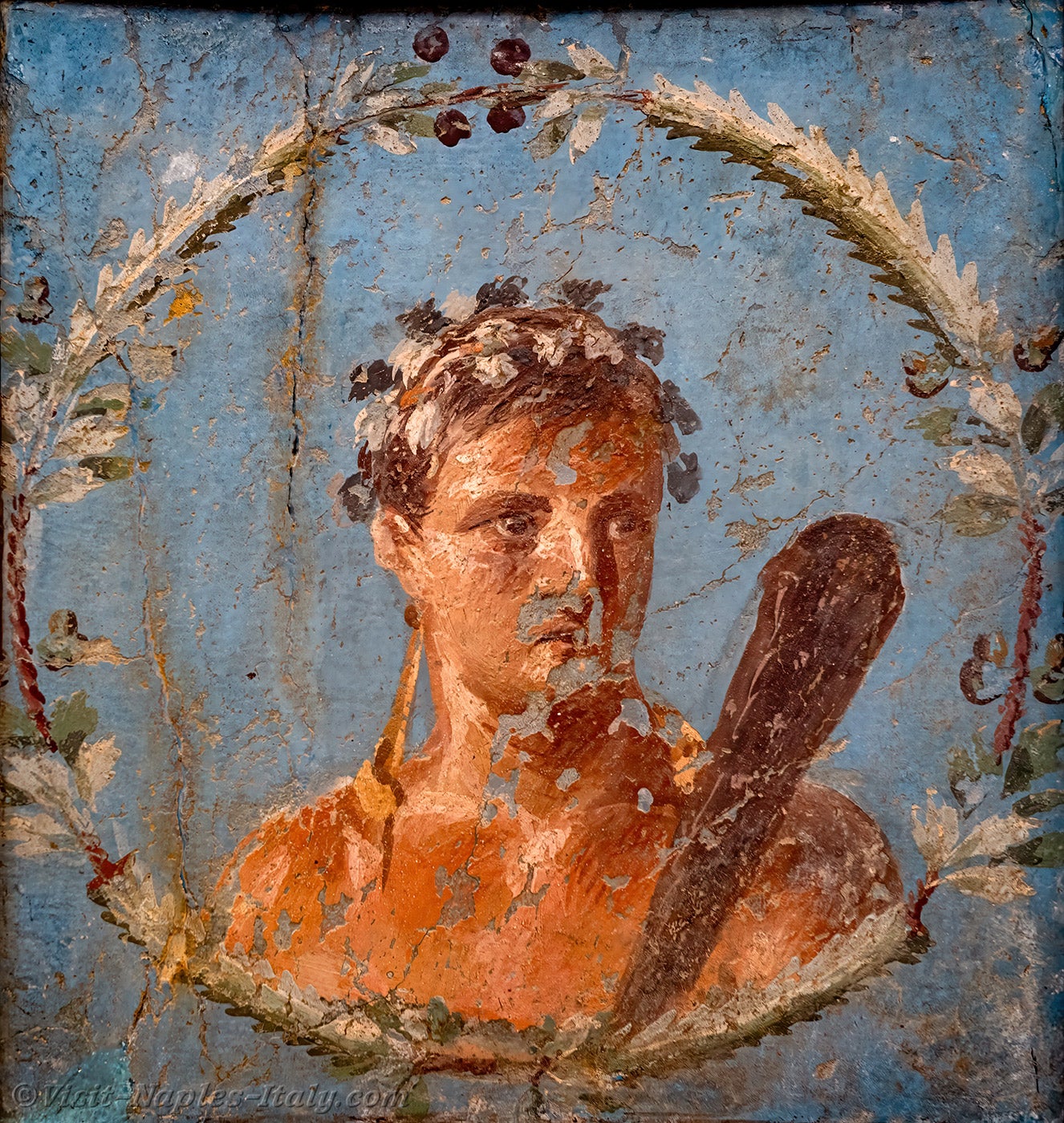
Fresco of Hercules being crowned Fresco - Water-based pigments on Coating - 45-79 AD
Hercules appears as an athlete wearing the crown of victory, immortalised and deified thanks to the superhuman feats he accomplished with his club.
He was regarded by the Greeks as a divine avenger who courageously faced the dangers threatening humanity, fought the wicked and punished treacherous kings.
The descendants of Hercules became the masters of the Peloponnese.
They have been associated with the historical invasion of the Dorians.
Thus, ancient Greek and Roman royal families claimed to have a Heraclid among their ancestors in order to legitimise their power.
Hercule Omphale | Telephus | Nessus
Mythology Achilles | Aeneas | Alcestis | Alexander | Aphrodite | Apollo | Arianne | Artemis | Ceres | Chryseis | Cupid | Daedalus | Dionysus | Dirce | Endymion | Flora | Galatea | Ganymede | Graces | Hephaestus | Hercules | Io Argos | Iphigenia | Isis | Leda | Marsyas | Medea | Nereids | Niobids | Odysseus | Pan | Paris | Perseus | Phaedra | Phrixus | Pirithous | Saturn | Satyrs | Sophonisba | Theseus | Troy | Zeus
Frescoes Mythology | Portraits | Life Leisure | Animals | Religion | Landscapes | Decoration
Artworks Sculptures | Frescoes | Eroticism
MANN Artworks Schedule Tickets Location | Authorizations
Back to Top of Page