

MANN Artworks Schedule Tickets Location | Authorizations
Artworks Sculptures | Frescoes | Eroticism
Frescoes Mythology | Portraits | Life Leisure | Animals | Religion | Landscapes | Decoration
Mythology Achilles | Aeneas | Alcestis | Alexander | Aphrodite | Apollo | Arianne | Artemis | Ceres | Chryseis | Cupid | Daedalus | Dionysus | Dirce | Endymion | Flora | Galatea | Ganymede | Graces | Hephaestus | Hercules | Io Argos | Iphigenia | Isis | Leda | Marsyas | Medea | Nereids | Niobids | Odysseus | Pan | Paris | Perseus | Phaedra | Phrixus | Pirithous | Saturn | Satyrs | Sophonisba | Theseus | Troy | Zeus
Frescoes depicting the Sacrifice of Iphigenia at the Archaeological Museum of Naples in Italy
The Sacrifice of Iphigenia, Pompeii, Casa del Poeta Tragico
Fresco - Water-based pigments on Coating (140 × 138 cm) 45-79 AD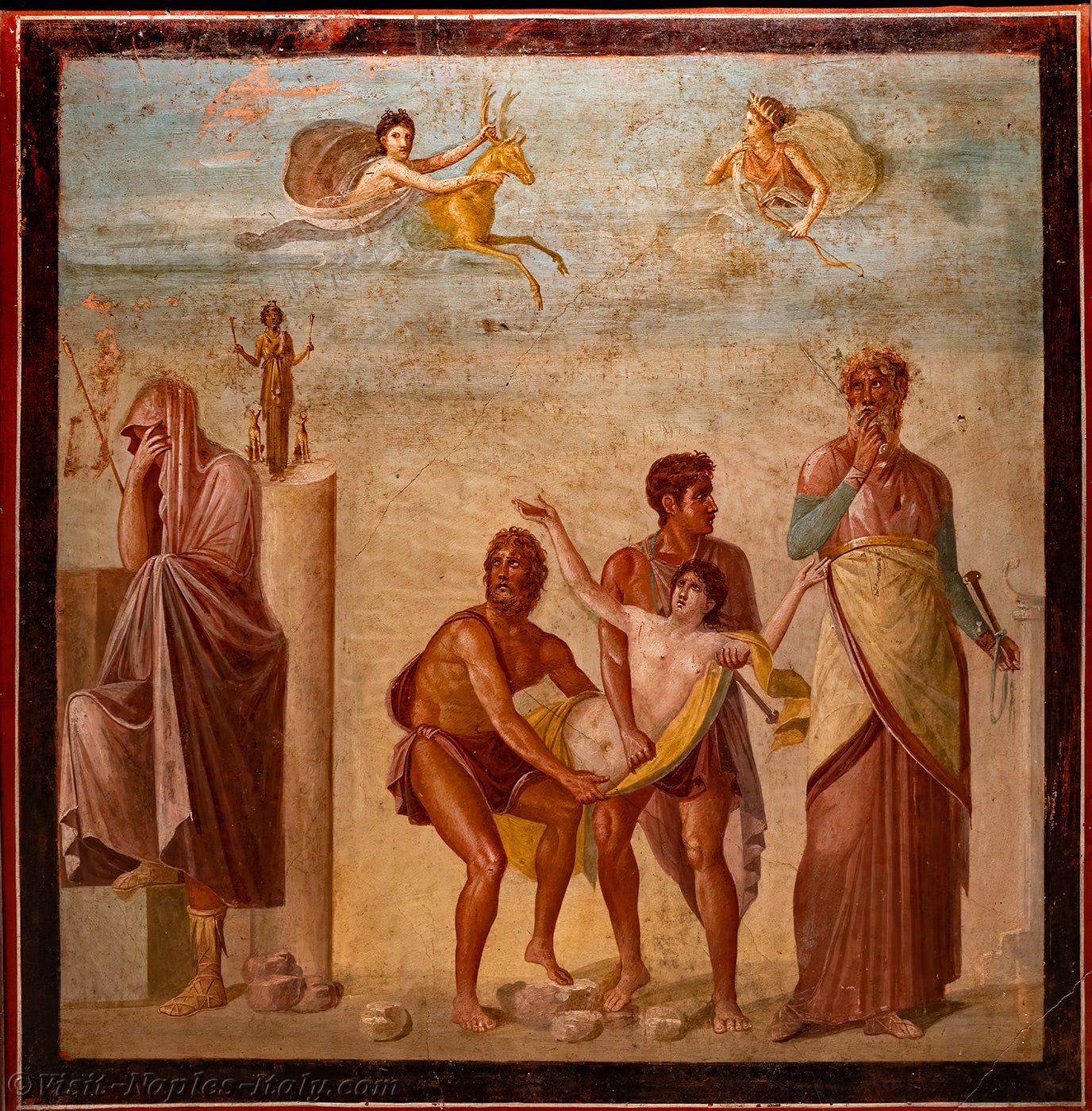
The Sacrifice of Iphigenia The ships carrying the Greek army on their way to Troy had been immobilised in Aulis by Artemis (Diana to the Latins).
According to the great seer Calchas, the sacrifice of Iphigenia, daughter of King Agamemnon, was necessary to appease the goddess and obtain favourable winds to set sail again.
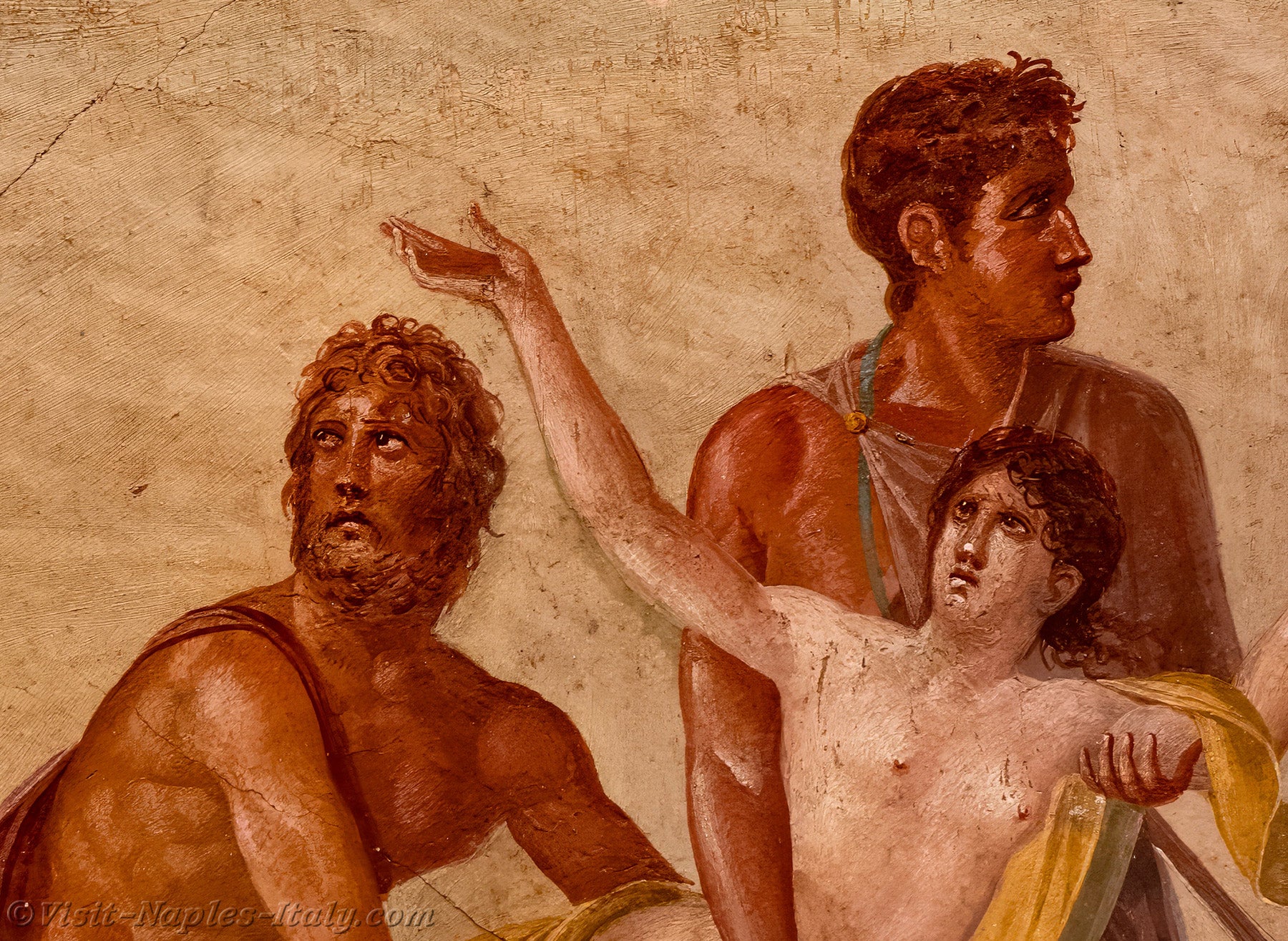
The fresco depicts Iphigenia, desperately raising her arms to beg for mercy while Odysseus and Diomedes carry her, half-naked and with her hair cut, towards the altar of sacrifice.
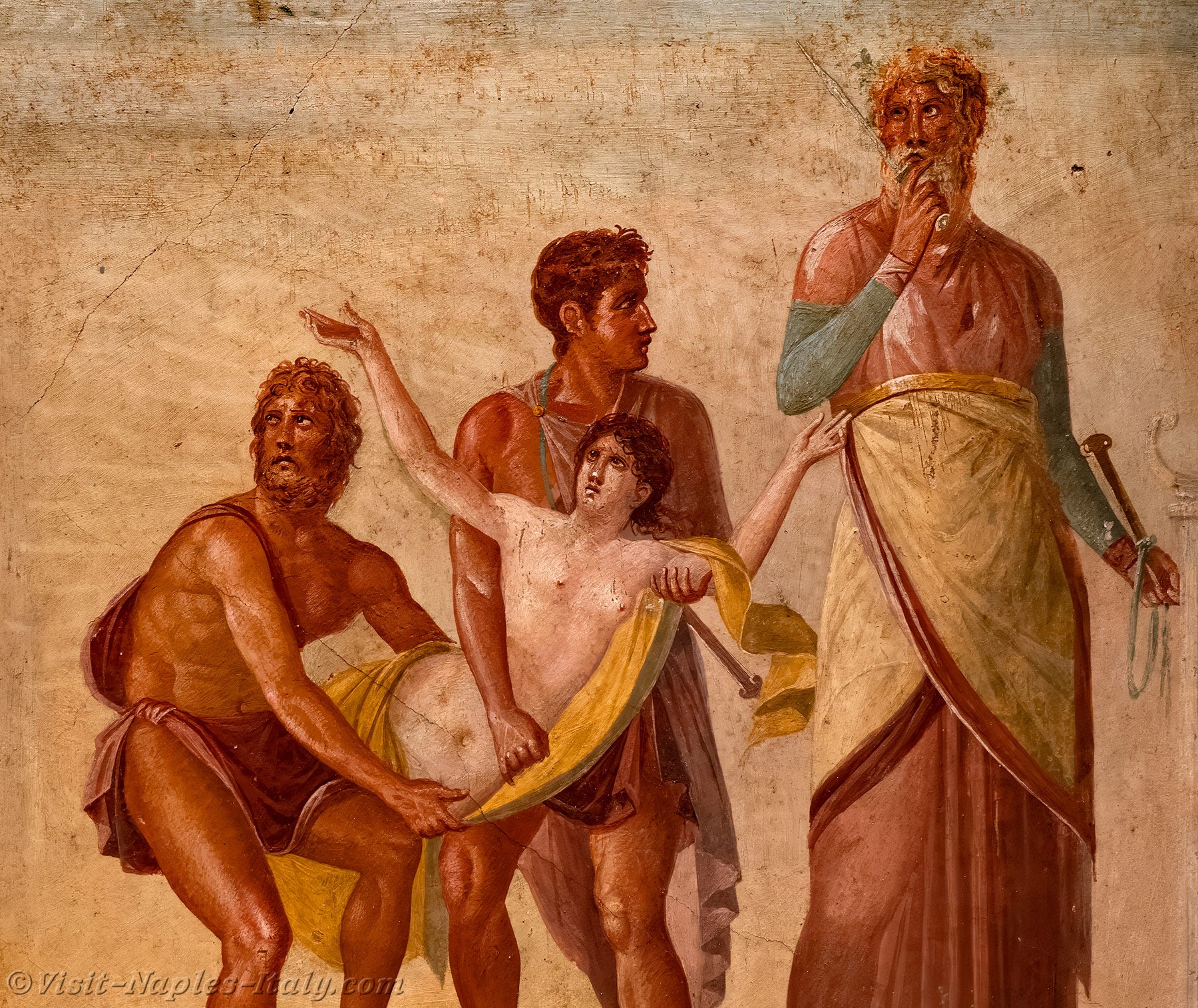
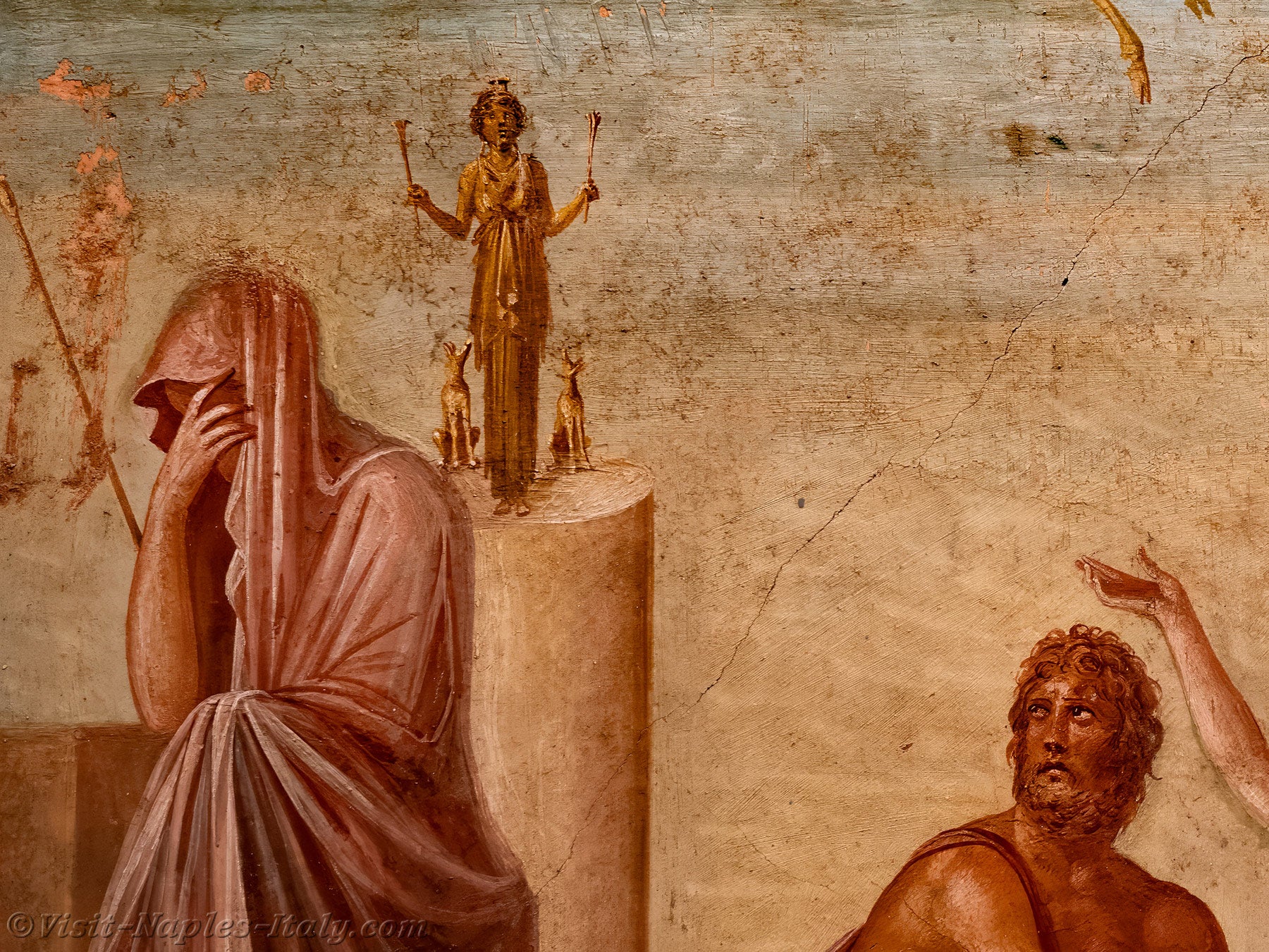
The Sacrifice of Iphigenia On the left, Odysseus sadly raises his eyes to the statue of Artemis standing on a column, while Agamemnon turns his back on him, covering his face to hide his immense pain.
On the right, Diomedes turns to Calchas, who raises his eyes to the sky and appears perplexed and worried as he brings the hand holding the sacrificial sword close to his face.
Artemis, who has appeared with her bow above the soothsayer, shows her sensitivity to the distress of the innocent girl by sending one of her disciples to bring a deer to be sacrificed in her place.
Iphigenia in Tauride, Pompeii, House of Caecilius Lucundus
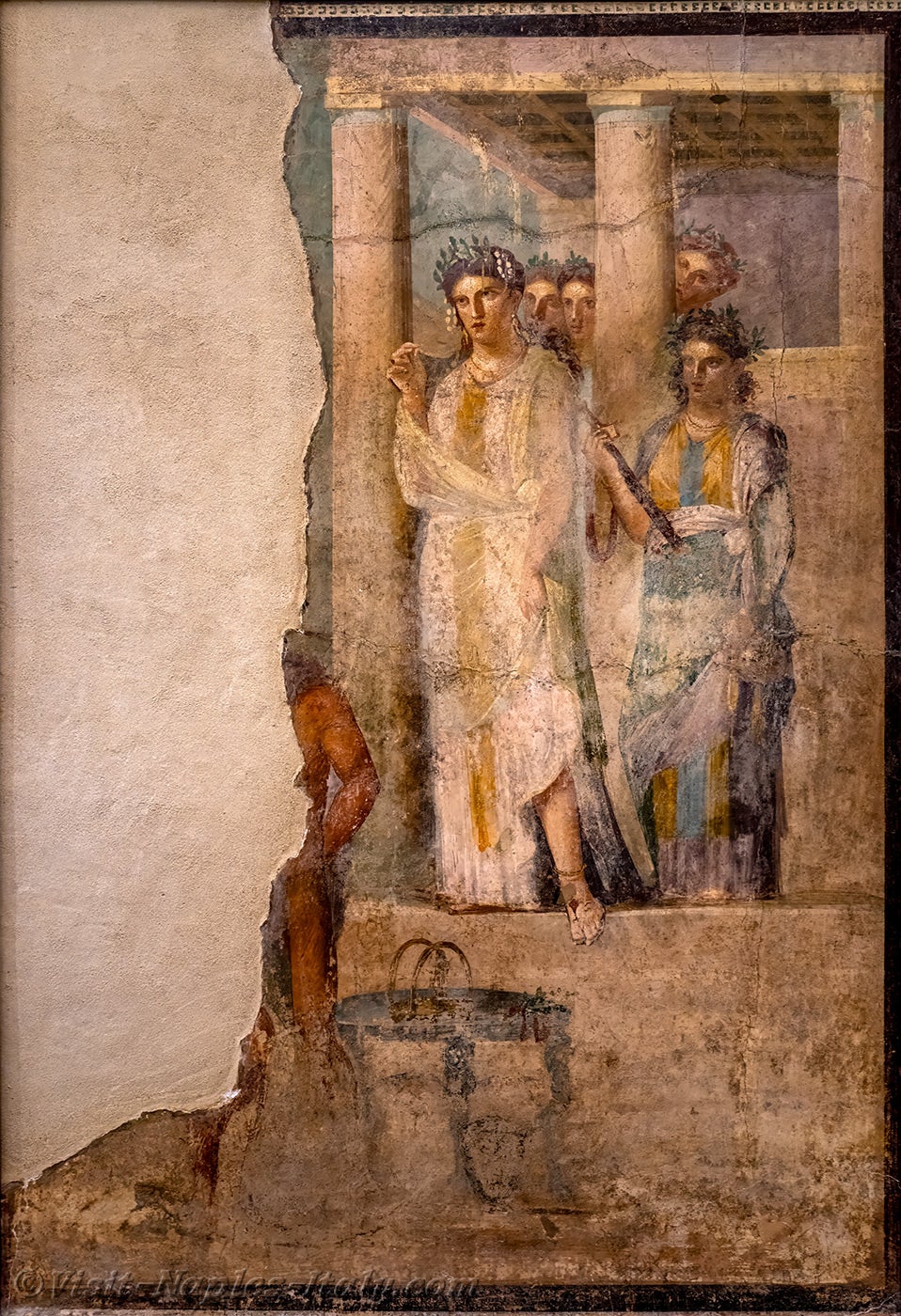
Iphigenia in Tauride Painting - Oil on canvas (112 × 87 cm) 35-45 AD
Agamemnon, the leader of the Greek armies ready to set sail to attack Troy, had boasted of having killed a doe with greater skill than that of the goddess of the hunt.
Artemis punished his impious pride by stopping the winds that were to enable him to set sail.
To appease her wrath, Agamemnon resigned himself to sacrificing his daughter on the altar of Artemis.
Agamemnon having brought Iphigenia under the pretext of marrying her to Achilles, Artemis took pity on this innocent girl about to be slaughtered.
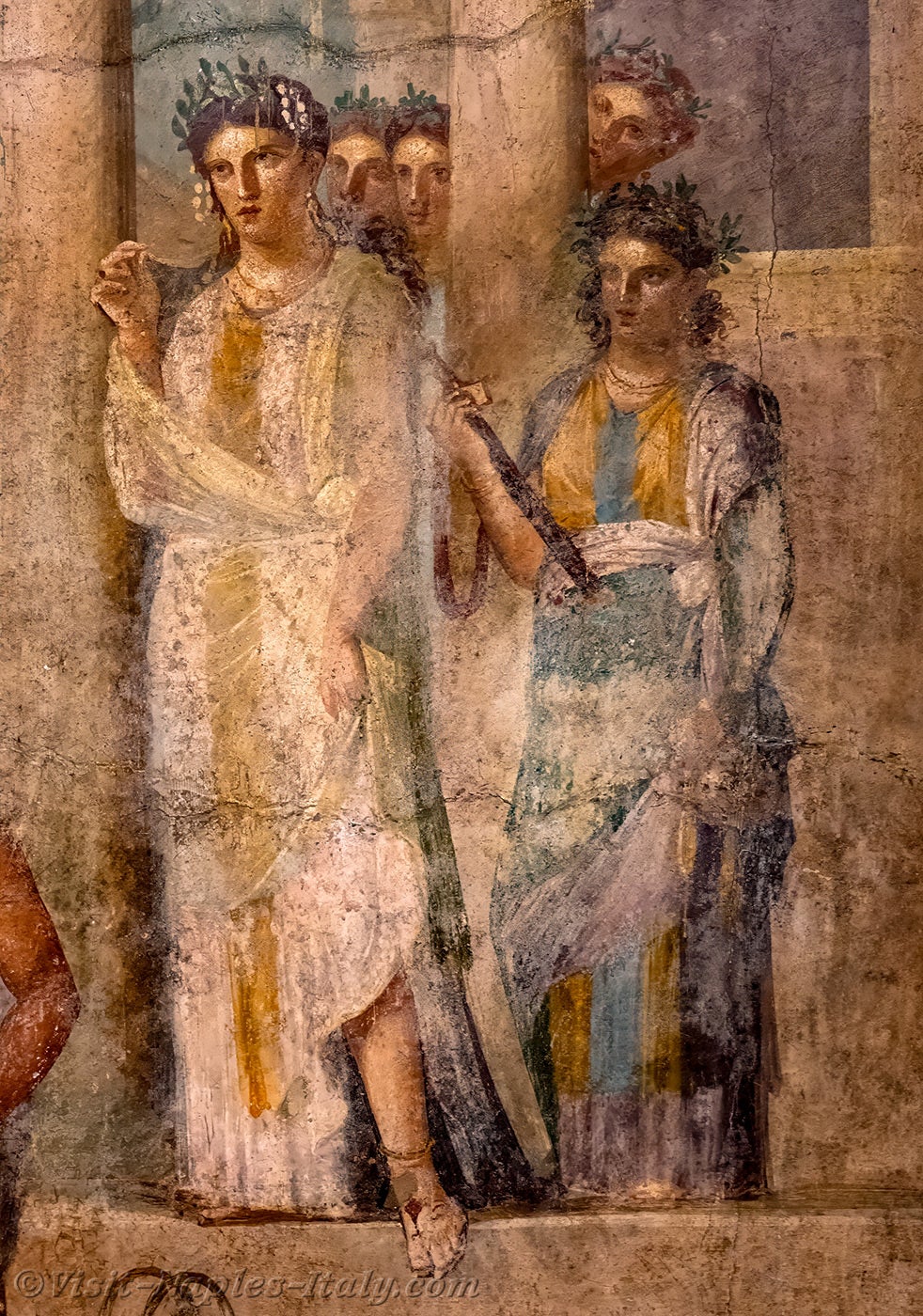
Iphigenia in Tauride She enveloped her in a cloud to replace her with a doe and carry her off to Tauride (a peninsula in Crimea).
The fresco depicts Iphigenia in Tauride in her white and gold costume as high priestess of Artemis, charged with sacrificing strangers.
She appears at the threshold of the temple with her assistants to receive foreign prisoners destined for sacrifice, who appeared in the missing part of the fresco.
This is believed to be Orestes, accompanied by his best friend, who is recognised by his sister, whom he believed to be dead.
Orestes and Pylades before Iphigenia, Herculaneum
Fresco - Water-based pigments on Coating (18 × 48 cm) 45-79 ADThe fresco depicts an episode from Euripides' Iphigenia in Tauride.
On the left, a guard dressed in white leads two foreign prisoners crowned with foliage destined to be sacrificed on the altar of the goddess Artemis.
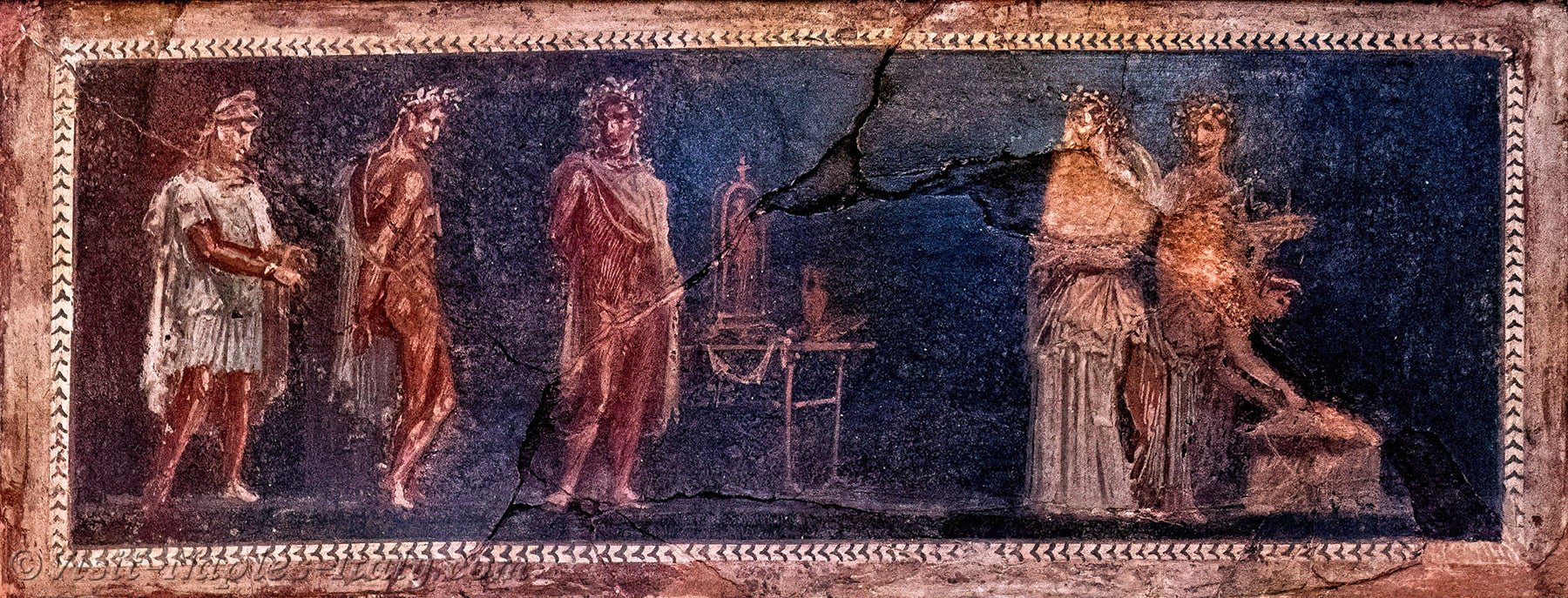
Orestes and Pylades before Iphigenia These are Pylades and Orestes, who have come to Tauride specifically to steal the statue of Artemis, protected by a hunting trophy placed on a small table displaying various objects of worship.
Standing next to the coveted statue, Orestes looks very disappointed as he turns to his cousin Pylades, who shares his sad fate.
On the right, the priestesses of Artemis are preparing the sacrifice while the high priestess Iphigenia, dressed in immaculate white, turns towards the two men and recognises her brother Orestes, who believed her to be dead.
Iphigenia suspended the sacrifice on the pretext that Orestes must first be purified because he had committed murder; then she took the statue and fled to Greece with Orestes and Pylades.
Mythology Achilles | Aeneas | Alcestis | Alexander | Aphrodite | Apollo | Arianne | Artemis | Ceres | Chryseis | Cupid | Daedalus | Dionysus | Dirce | Endymion | Flora | Galatea | Ganymede | Graces | Hephaestus | Hercules | Io Argos | Iphigenia | Isis | Leda | Marsyas | Medea | Nereids | Niobids | Odysseus | Pan | Paris | Perseus | Phaedra | Phrixus | Pirithous | Saturn | Satyrs | Sophonisba | Theseus | Troy | Zeus
Frescoes Mythology | Portraits | Life Leisure | Animals | Religion | Landscapes | Decoration
Artworks Sculptures | Frescoes | Eroticism
MANN Artworks Schedule Tickets Location | Authorizations
Back to Top of Page