

MANN Artworks Schedule Tickets Location | Authorizations
Artworks Sculptures | Frescoes | Eroticism
Frescoes Mythology | Portraits | Life Leisure | Animals | Religion | Landscapes | Decoration
Mythology Achilles | Aeneas | Alcestis | Alexander | Aphrodite | Apollo | Arianne | Artemis | Ceres | Chryseis | Cupid | Daedalus | Dionysus | Dirce | Endymion | Flora | Galatea | Ganymede | Graces | Hephaestus | Hercules | Io Argos | Iphigenia | Isis | Leda | Marsyas | Medea | Nereids | Niobids | Odysseus | Pan | Paris | Perseus | Phaedra | Phrixus | Pirithous | Saturn | Satyrs | Sophonisba | Theseus | Troy | Zeus
Frescoes depicting Medea at the Archaeological Museum of Naples in Italy
Medea with a sword, House of Jason, Pompeii
Fresco - Water-based pigments on coating (130 x 101 cm) 20-25 AD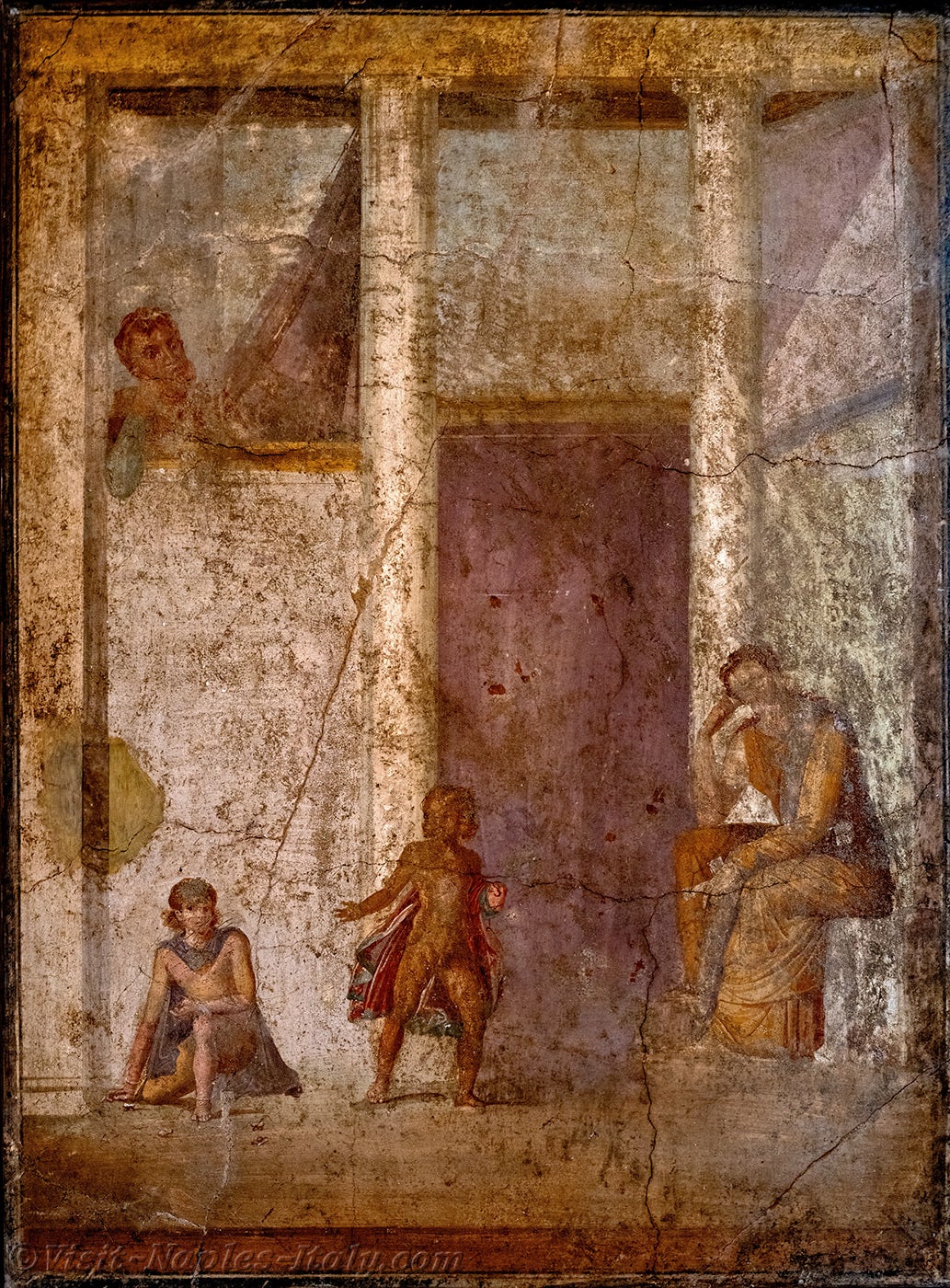
Medea with a sword The scene takes place in a palace, under the gaze of a man standing in the top left corner who is watching Medea.
Medea is seated, her left hand resting on the hilt of a sword, pondering her criminal plans to take revenge on Jason, who has abandoned her to marry Creusa, the daughter of Creon, King of Corinth.
She is tormented by her maternal love, which conflicts with her irrepressible desire for vengeance that will drive her to kill Pheres and Mermeros, Jason’s two sons, who are playing innocently at her feet.
Medea was the daughter of Aeetes, king of Colchis, who had welcomed Phrixus when he arrived at his court riding a winged ram with a golden fleece.
After sacrificing the ram to Zeus, Phrixus had offered his fleece to Aeetes, who had placed it under guard, before refusing to give it to Jason and the Argonauts who had come to seize it.
Jason had finally succeeded in obtaining the Golden Fleece thanks to the magical powers of Medea, who loved him, and who had fled Colchis aboard the Argos to marry him.
Medea and the Peliads, Casa del Gruppo dei Vasi, Pompeii
Fresco - Water-based pigments on Coating (120 x 110 cm) 1-25 ADThe scene takes place in Iolcus, in the palace of King Pelias, who had attempted to get rid of his nephew Jason by forcing him to set out on the quest for the Golden Fleece.
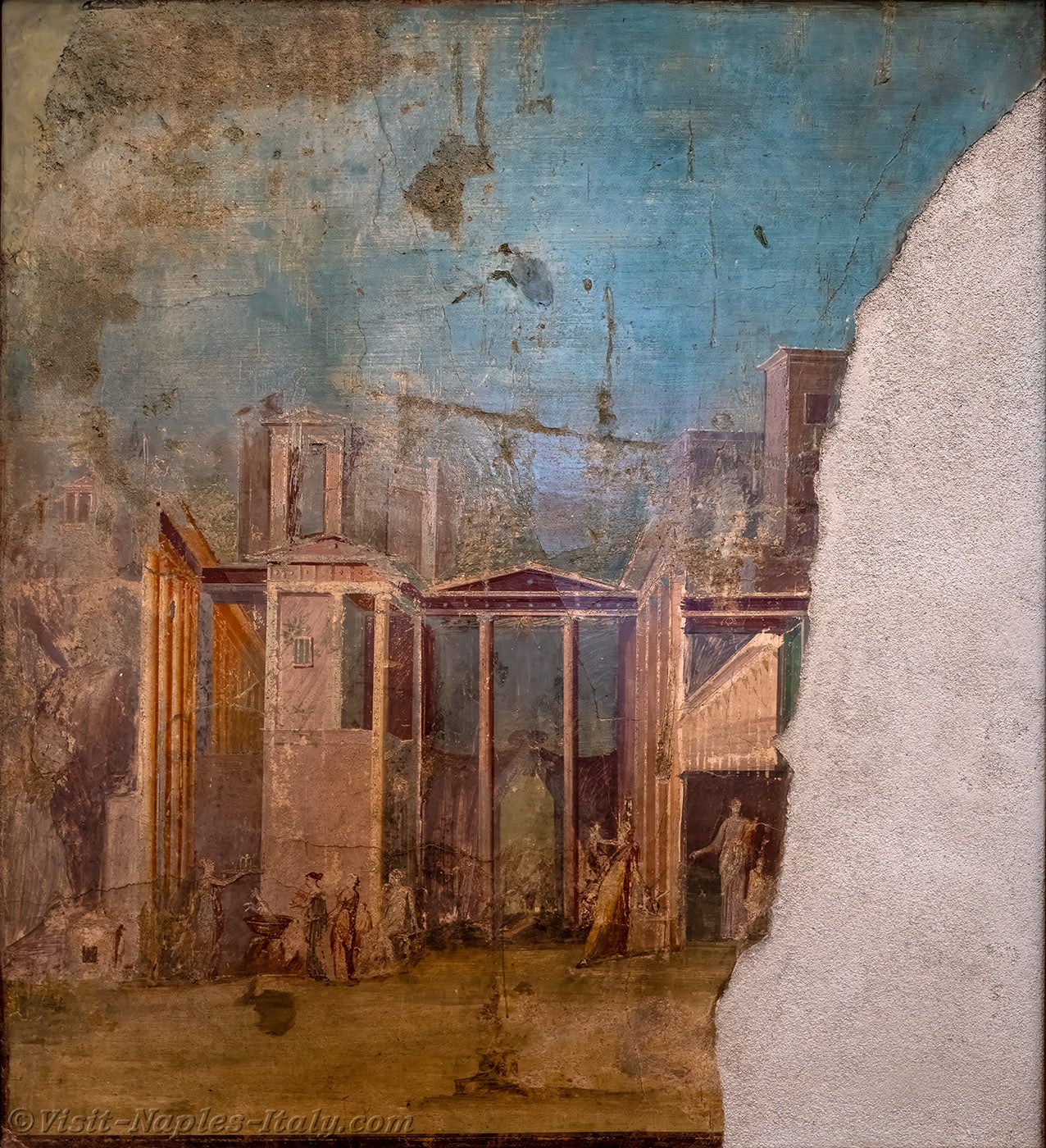
Medea and the Pleiades When the Argonauts returned to Iolcus with the Golden Fleece, Medea was the only one to disembark, in order to punish Pelias.
She presented herself at the palace as a priestess of Artemis, capable of rejuvenating any living creature by cooking it in a mixture with magical powers, the secret of which she alone knew.
The fresco depicts Medea demonstrating her magical powers to the old king’s daughters: after boiling an old sheep cut into pieces in a cauldron, she lifts the lid, and lo and behold, a lamb in prime condition emerges.
The daughters are astonished and marvelling, except for the one who sits with her hand on her chin in a sceptical gesture.
This lovely magic trick had convinced the Peliades (the daughters of Pelias) to kill their father so they could rejuvenate him in the cauldron.
Which they did; of course, Pelias did not come back to life, and the unfortunate girls fled, horrified.
Medea the sorceress was part of the legend of the Argonauts and was regarded as a heroine in Greek tragedy.
Medea and her children, House of the Dioskouros, Pompeii
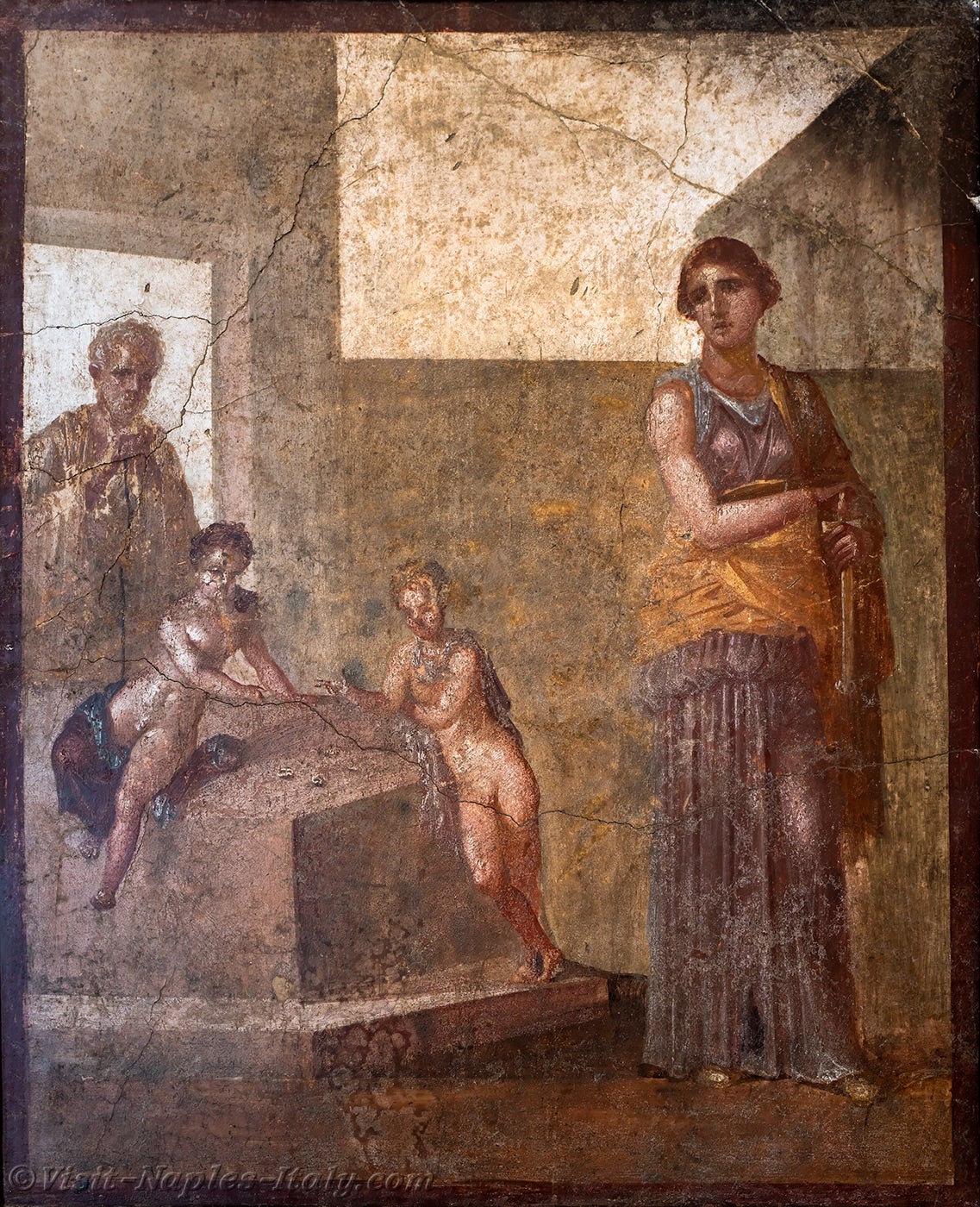
Medea and her children Fresco - Water-based pigments on coating (127 x 104 cm)
62-79 AD
The background is divided into two sections, in which the beautiful face of Medea is depicted.
The fresco illustrates the torment of a mother overwhelmed by her terrible desire for vengeance, which distracts her from the innocent beauty of her children.
The two boys sitting on a carved stone are playing knucklebones under the watchful eye of an old man.
He is probably their tutor; behind them, he makes a protective gesture, as if he sensed their tragic fate.
The lovely Medea has her back turned to them in her elegant blue and gold gown, hiding from them the sword that will be used to kill them.
Medea holding a sword, Villa di Arianna, Stabiae
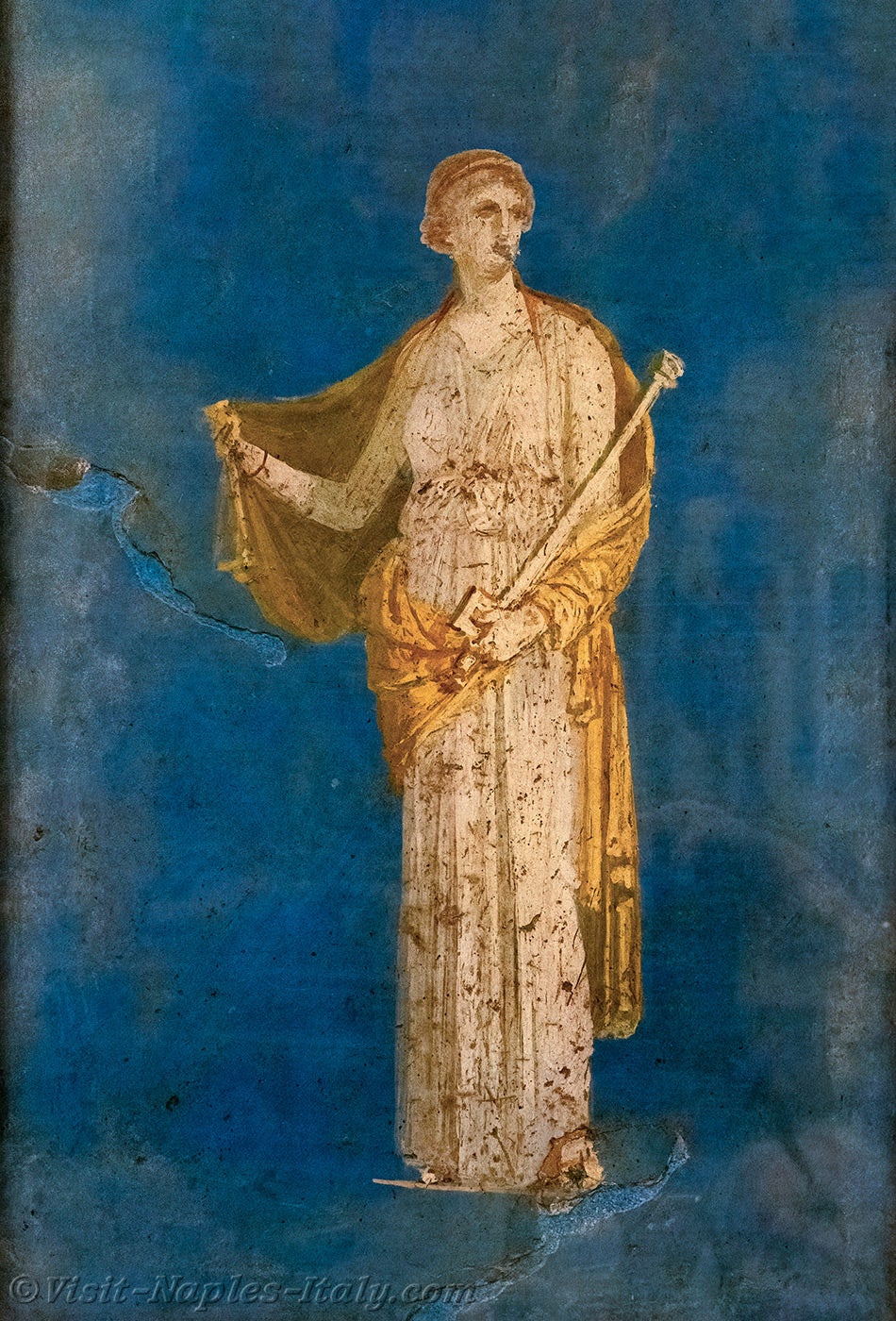
Medea holding the sword Fresco - Water-based pigments on plaster (38 x 26 cm)
1-45 AD
This stunning depiction of Medea against a plain blue background was discovered in 1759 during excavations led by Karl Weber.
Medea appears here against a neutral background, in the form of an official portrait.
She is depicted as a queen holding the sword like a sceptre.
A serene image of Medea contrasting with the usual depictions where she is shown consumed by anger and a desire for vengeance which drove her to crime and destruction.
Medea ponders the death of her children, Augusteum, Herculaneum
Fresco - Water-based pigments on Coating (42 x 133 cm) 70-79 ADMedea is tense, her face sombre and her eyes fixed on her children.
She clasps her hands, about to grasp the hilt of the sword placed just above her, ready to be drawn swiftly.
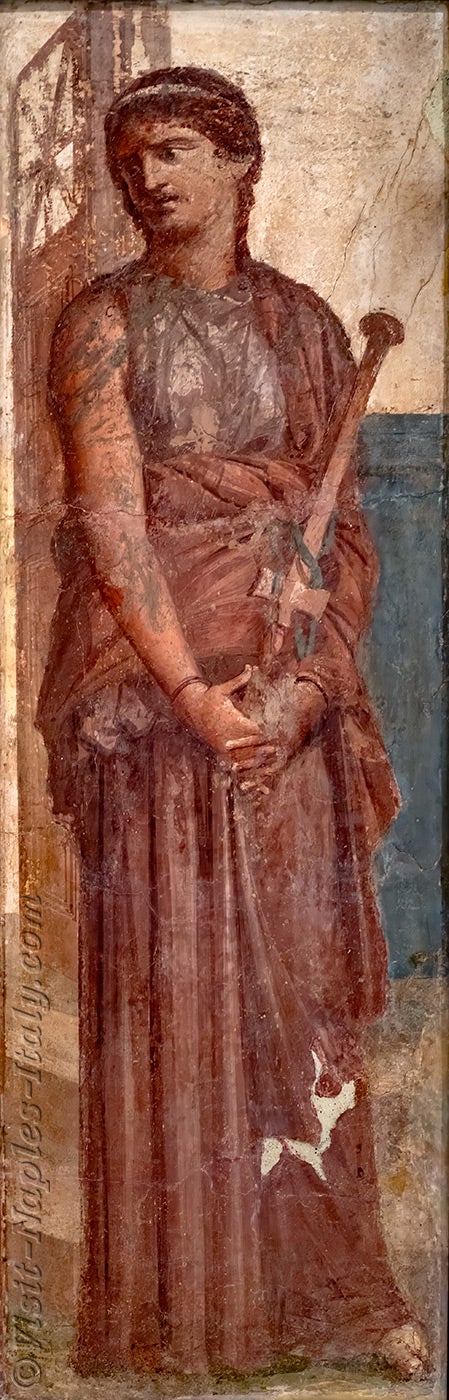
Medea meditating
Mythology Achilles | Aeneas | Alcestis | Alexander | Aphrodite | Apollo | Arianne | Artemis | Ceres | Chryseis | Cupid | Daedalus | Dionysus | Dirce | Endymion | Flora | Galatea | Ganymede | Graces | Hephaestus | Hercules | Io Argos | Iphigenia | Isis | Leda | Marsyas | Medea | Nereids | Niobids | Odysseus | Pan | Paris | Perseus | Phaedra | Phrixus | Pirithous | Saturn | Satyrs | Sophonisba | Theseus | Troy | Zeus
Frescoes Mythology | Portraits | Life Leisure | Animals | Religion | Landscapes | Decoration
Artworks Sculptures | Frescoes | Eroticism
MANN Artworks Schedule Tickets Location | Authorizations
Back to Top of Page