

MANN Artworks Schedule Tickets Location | Authorizations
Artworks Sculptures | Frescoes | Eroticism
Frescoes Mythology | Portraits | Life Leisure | Animals | Religion | Landscapes | Decoration
Mythology Achilles | Aeneas | Alcestis | Alexander | Aphrodite | Apollo | Arianne | Artemis | Ceres | Chryseis | Cupid | Daedalus | Dionysus | Dirce | Endymion | Flora | Galatea | Ganymede | Graces | Hephaestus | Hercules | Io Argos | Iphigenia | Isis | Leda | Marsyas | Medea | Nereids | Niobids | Odysseus | Pan | Paris | Perseus | Phaedra | Phrixus | Pirithous | Saturn | Satyrs | Sophonisba | Theseus | Troy | Zeus
Frescoes depicting Zeus, Europa and Hera at the Archaeological Museum of Naples, Italy
Europa on the bull, Pompeii, House of Jason
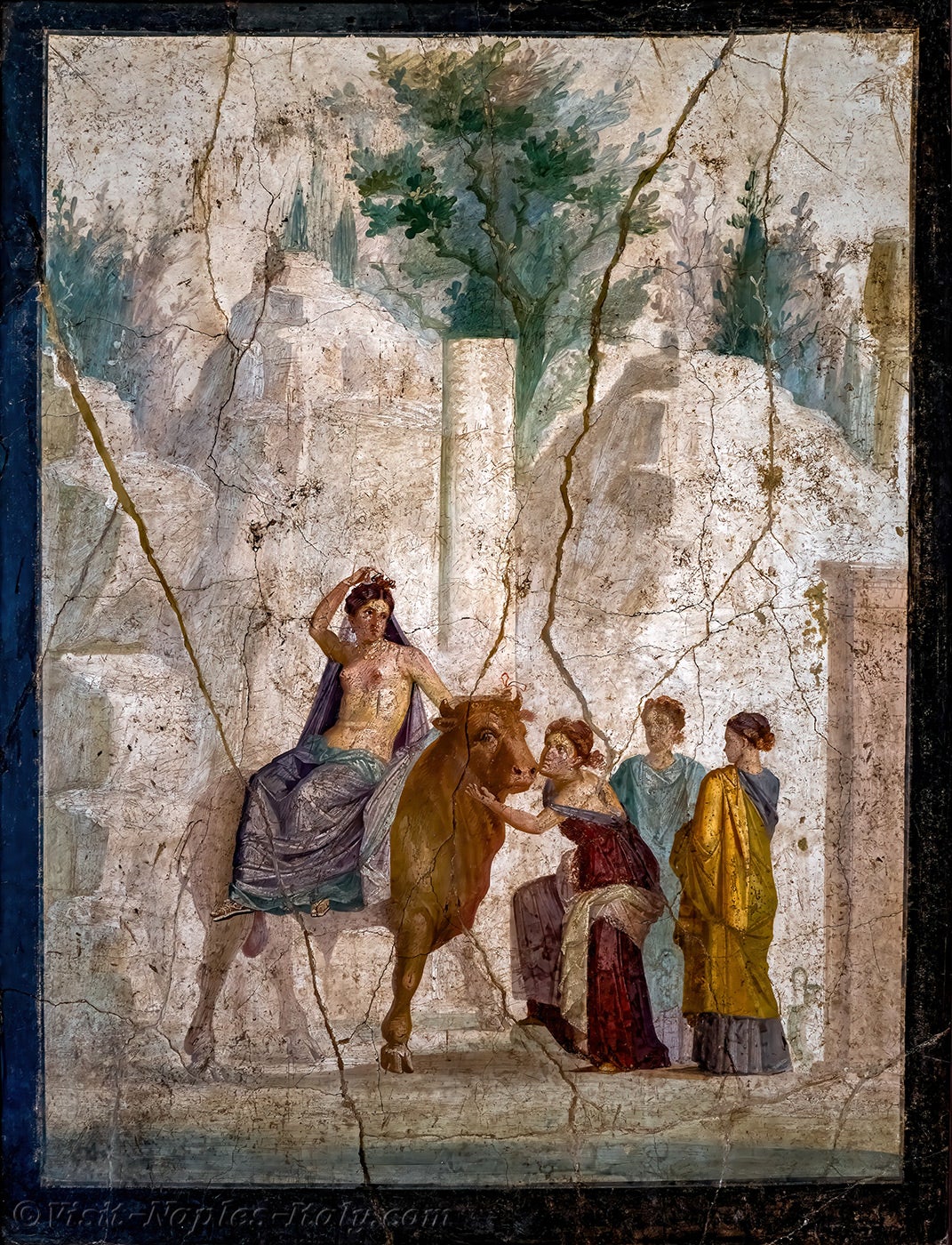
Europe on the bull Fresco - Water-based pigments on coating (125 × 95 cm) 20-25 AD
Europa was the daughter of Agenor, king of Tyre in Phoenicia.
She was playing on the beach with her attendants, when a herd of cattle approached the shore, amongst whom was Zeus, transformed into a magnificent bull determined to abduct her.
Ovid beautifully described the scene of seduction by the imposing animal as it sought to win the favour of the beautiful princess, who eventually approached him and climbed onto his back.
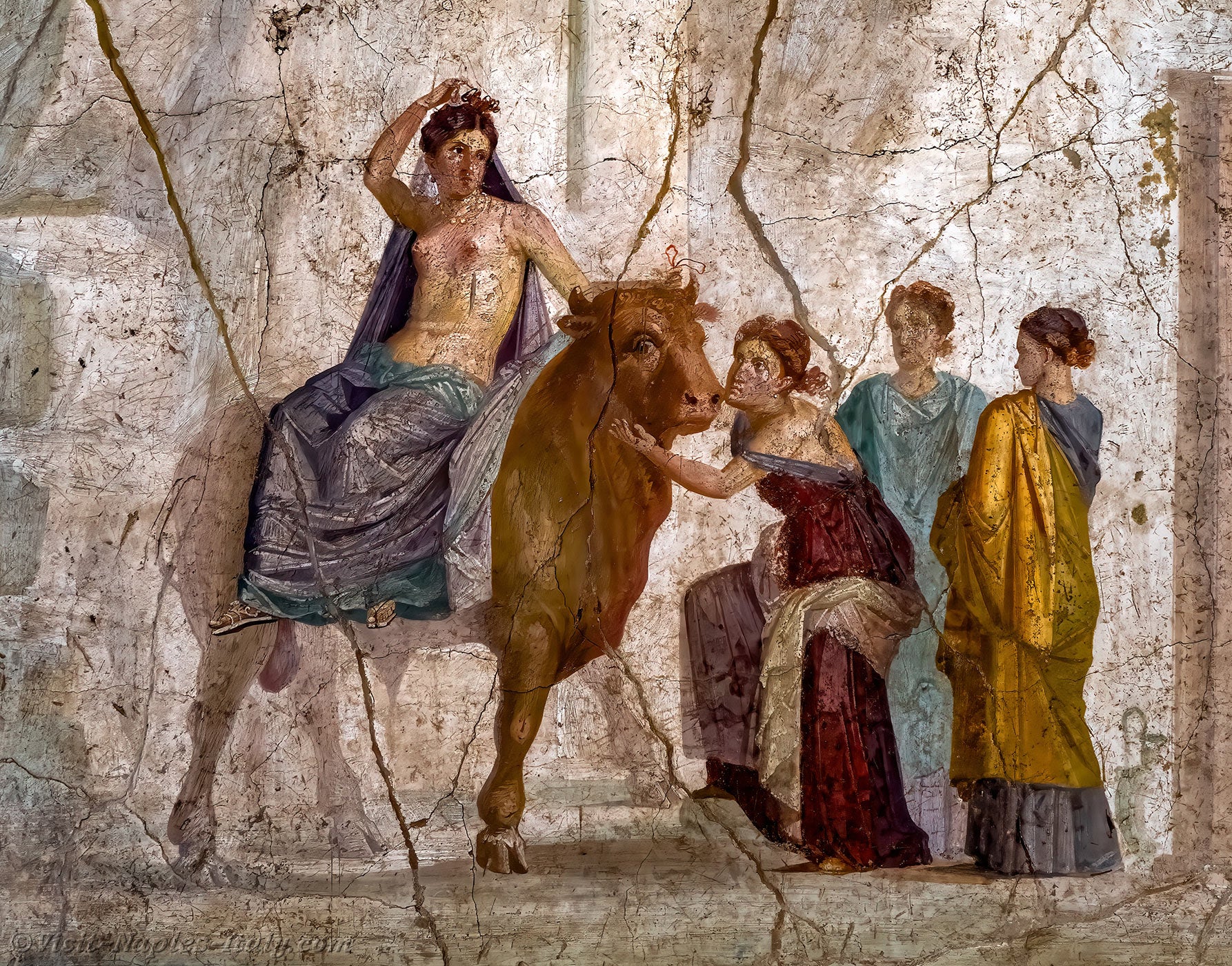
Europe on the bull The fresco depicts a half-naked Europa pulling her garment back in an elegant gesture to cover her hair, in a pose similar to that of Venus seated beside Mars.
She is seated on the back of the gentle-eyed bull, ready to walk away at a leisurely pace whilst a lady-in-waiting caresses his neck with complete confidence, whilst the other two prefer to keep their distance.
“Then the god, gradually leaving the dry ground of the shore, dips his deceptive feet into the first waves.
Then he goes further out and carries his prey out to the open sea.”
Ovid, Metamorphoses, Book II.
Hiérogamie Héra et Zeus, Pompéi, Casa del Poeta Tragico
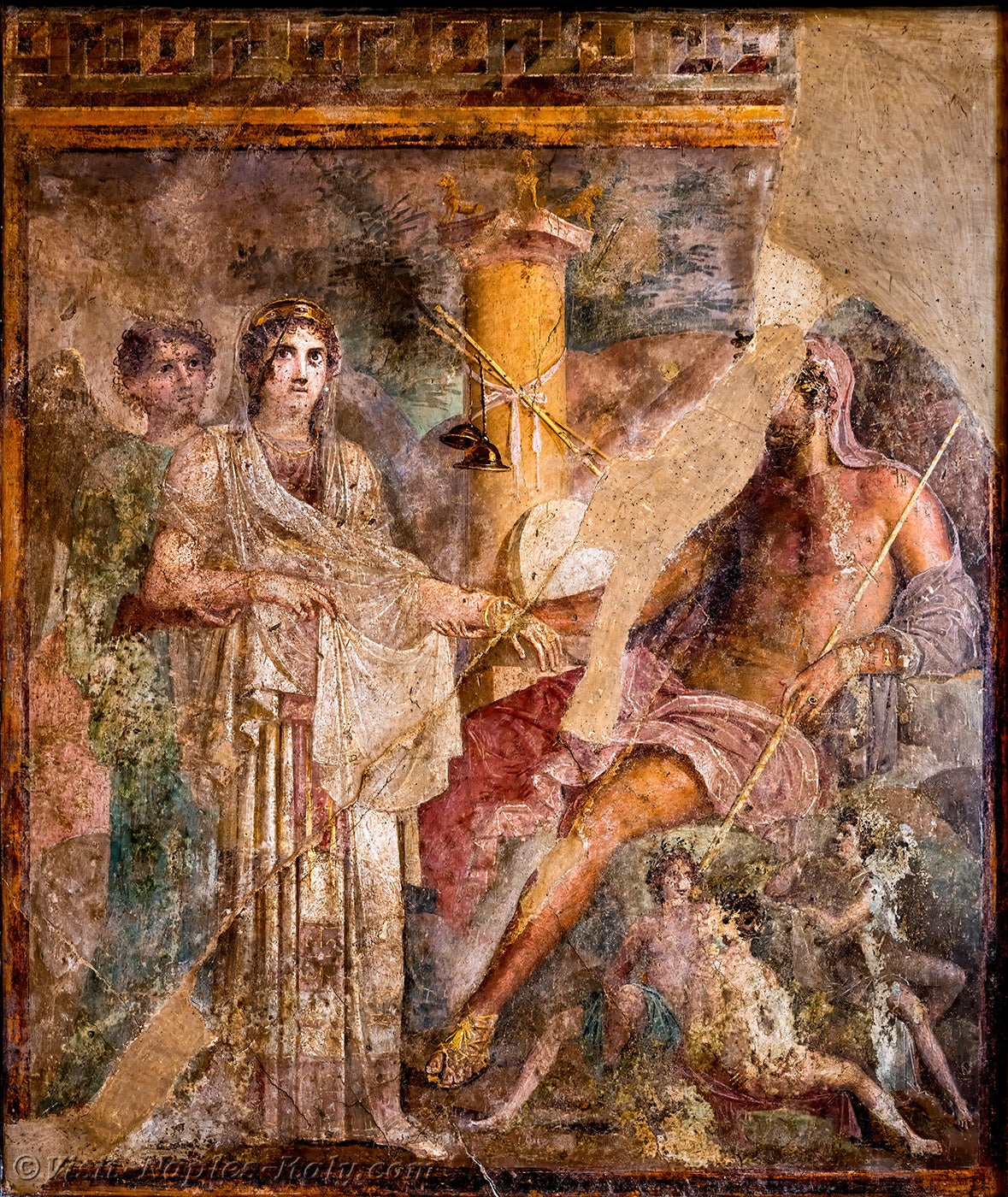
Hieros gamos of Hera and Zeus Fresco - Water-based pigments on coating (153 × 130 cm) 45-79 AD
Hieros gamos is the union of two complementary principles, or of two deities of opposite sexes ; here, it depicts the marriage of Zeus and Hera.
Zeus is seated, bare-chested, clad only in a red drape that covers his head and back, wraps round his left arm and covers his lower body.
The golden sandals and the sceptre in his left hand emphasise his status as a sovereign who is calm and confident in his power, welcoming his wife by gently taking her arm in his right hand.
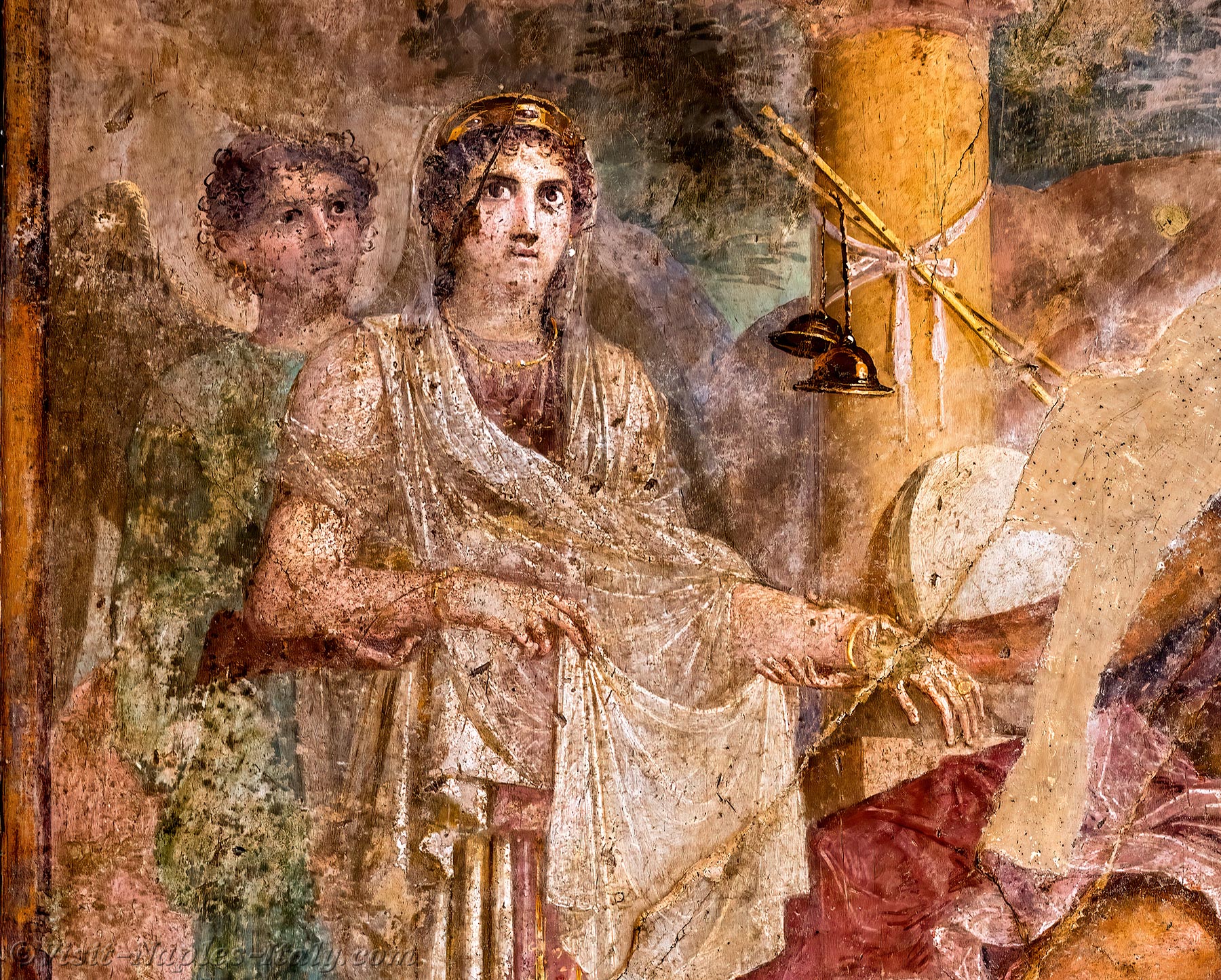
Hieros gamos of Hera and Zeus Hera stands, upright in her immaculate attire, her head adorned with a golden diadem that holds a transparent veil in place, avoiding looking Zeus in the face.
A winged figure, Iris, messenger of the gods, stands behind her and supports her arm, which still holds the veil of modesty that separates her from her husband.
Zeus is calm and relaxed, in stark contrast to Hera’s stiffness.
The small figures seated beside Zeus’s throne are the Curetes sent by his mother Rhea to look after him during his childhood, hidden from his father, who devoured his sons.
Zeus Amun, Stabiae, Villa Arianna
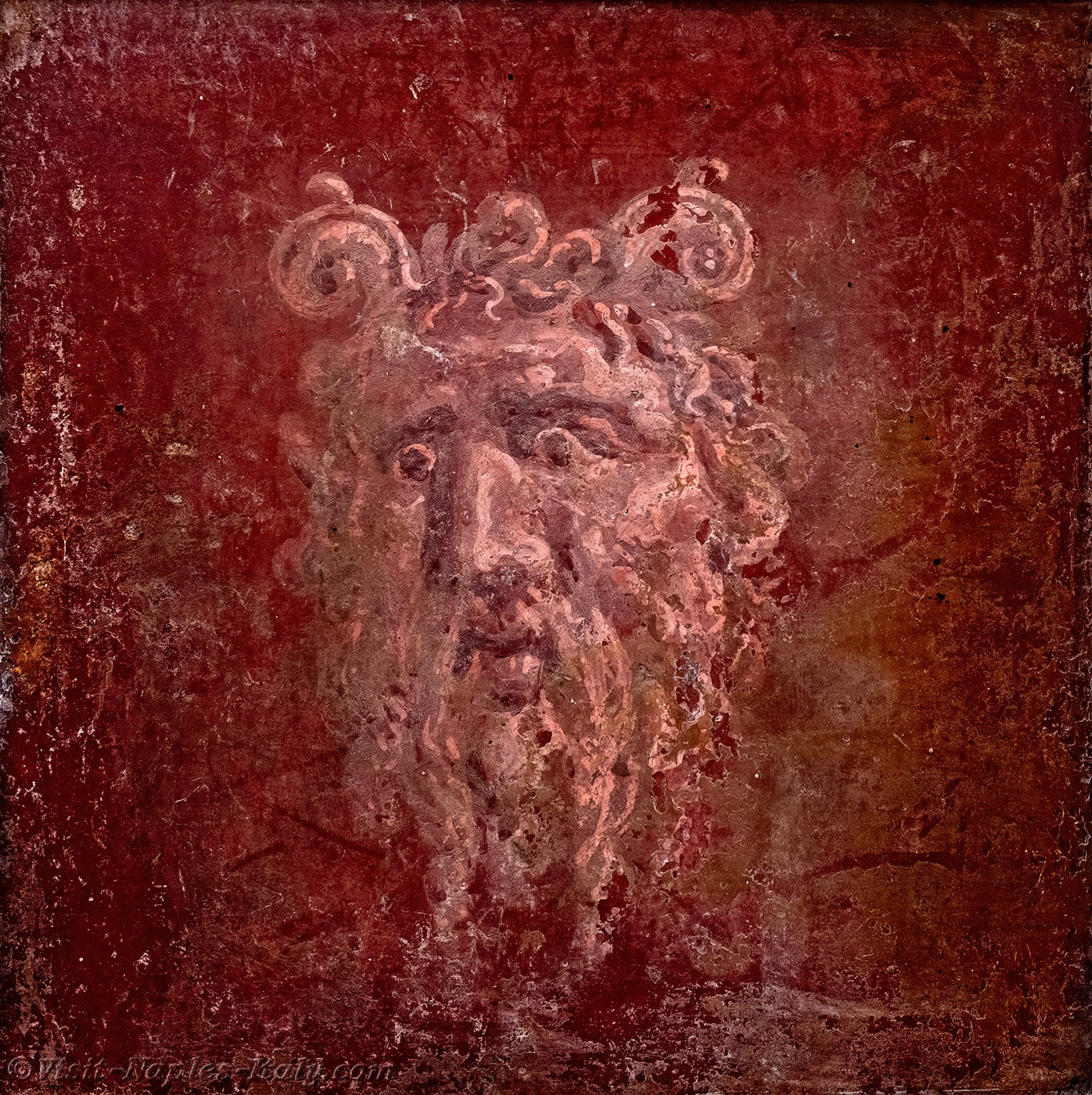
Zeus Ammon Fresco - Water-based pigments on coating (29.7 × 29.6 cm)
54-68 AD
Zeus is depicted in the guise of the Egyptian god Amun with the head of a ram, protector of Thebes.
This portrait is a synthesis of a human face framed by a beard and hair curled like a fleece coiled into small horns at the top of the head.
Zeus en trône, Pompéi, Casa dei Dioscuri
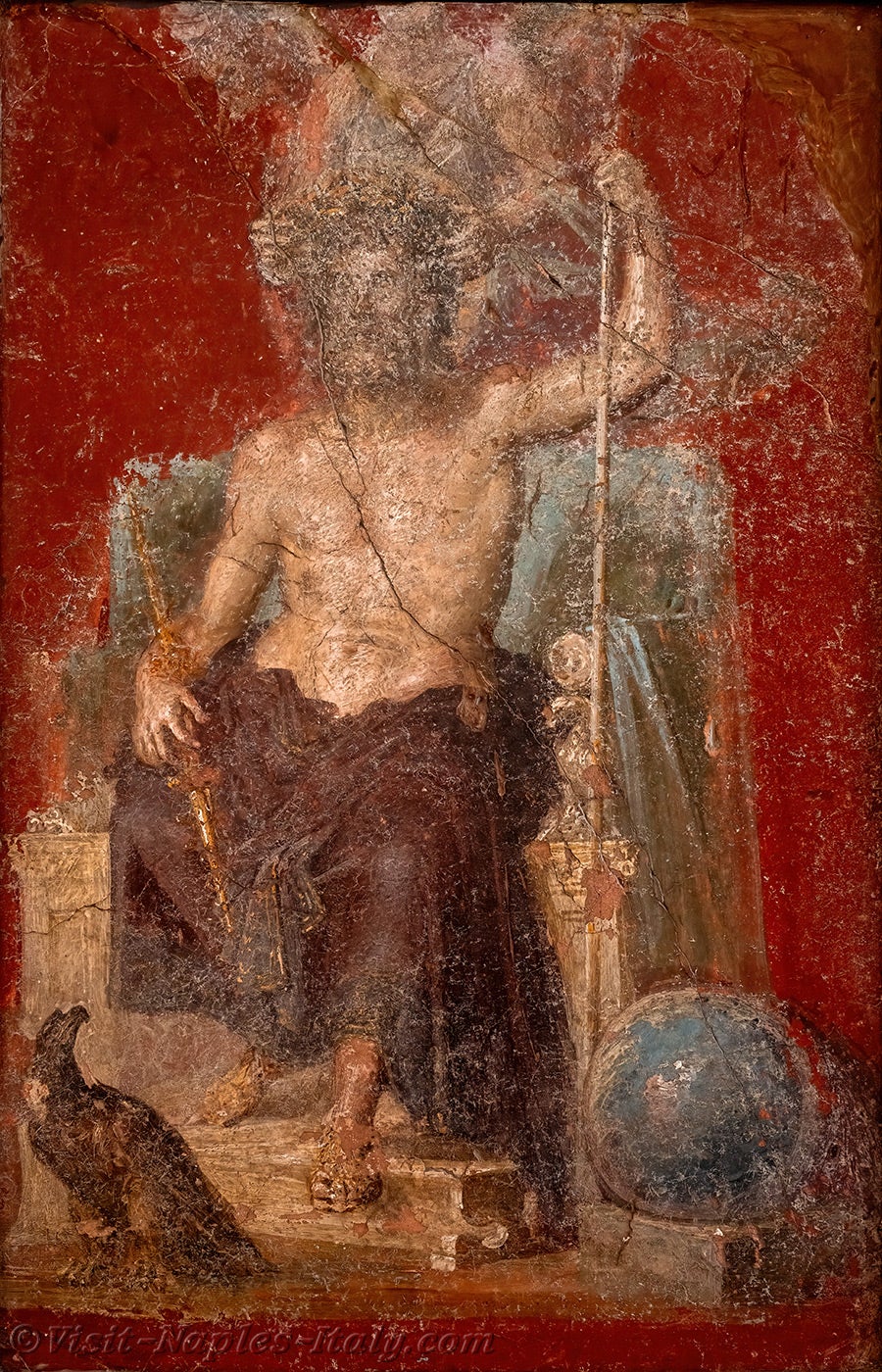
Zeus on his throne Fresco - Water-based pigments on coating (96 × 70 cm)
62-79 AD
The King of Olympus poses majestically whilst bearing the symbols of his power.
Namely, the sceptre of thunder in his resting right hand, and the long spear at the end of his left arm raised to the level of his head, adorned with ram’s horns.
He is seated on a throne half-covered by a drape, bare-chested, with his lower body and legs wrapped in royal purple.
At his feet, clad in golden sandals, lie the sacred eagle and the celestial globe.
Mythology Achilles | Aeneas | Alcestis | Alexander | Aphrodite | Apollo | Arianne | Artemis | Ceres | Chryseis | Cupid | Daedalus | Dionysus | Dirce | Endymion | Flora | Galatea | Ganymede | Graces | Hephaestus | Hercules | Io Argos | Iphigenia | Isis | Leda | Marsyas | Medea | Nereids | Niobids | Odysseus | Pan | Paris | Perseus | Phaedra | Phrixus | Pirithous | Saturn | Satyrs | Sophonisba | Theseus | Troy | Zeus
Frescoes Mythology | Portraits | Life Leisure | Animals | Religion | Landscapes | Decoration
Artworks Sculptures | Frescoes | Eroticism
MANN Artworks Schedule Tickets Location | Authorizations
Back to Top of Page